REVIEW · LE DOMUS ROMANE DI PALAZZO VALENTINI
Rome: Palazzo Valentini Roman Domus Multimedia Experience
Book on GetYourGuide →Operated by TOURISTATION · Bookable on GetYourGuide
Roman ruins, but with motion and sound. This Palazzo Valentini experience uses VR to bring a Roman Imperial-era domus back to life, so you’re not just staring at stones—you’re seeing how rooms, walls, mosaics, and everyday spaces likely functioned.
I particularly love how the experience connects the ancient site to what Rome looks like now. You also get a close look at details like mosaics, decorated walls, and polychrome floors, then watch a virtual reconstruction make them easier to understand as a complete home (not random fragments).
One thing to keep in mind: you’ll wear a VR headset, and it’s not suitable for claustrophobia or wheelchair users, so it’s worth thinking about your comfort level before you book.
In This Review
- Key things to know before you go
- Why the Roman Domus at Palazzo Valentini feels different
- Getting there and timing: how the 2 hours actually work
- The 25-minute multimedia Rome video: your mental warm-up
- VR at the Domus: mosaics, peristyles, and everyday elite life
- Trajan’s Column in a virtual close-up
- Optional FOROF: archaeology meets contemporary art and scent
- What the audio guide and smartphone app actually help with
- Price and value: is US$35 for 2 hours worth it?
- Who should book this, and who should skip it
- Should you book the Palazzo Valentini Roman Domus VR experience?
- FAQ
- Where is the meeting point for the Palazzo Valentini Domus experience?
- How long is the experience, and when does the VR part start?
- What’s included with the basic ticket?
- Is the FOROF experience included automatically?
- What languages are available for the experience?
- Who should not book due to comfort or mobility concerns?
Key things to know before you go
- Two-part flow: a 25-minute multimedia intro video, then the VR Domus visit starts one hour later
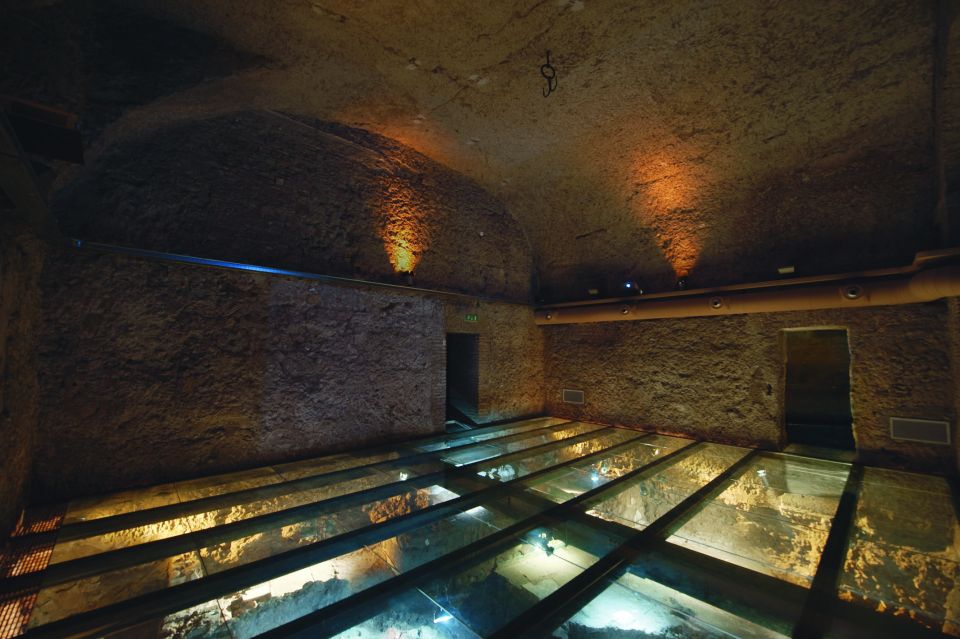
- VR reconstruction of rooms, peristyles, kitchens, baths, furnishings, and decorations
- Trajan’s Column comes with a virtual close-up of bas-reliefs and the story of the Dacian campaign
- Optional FOROF adds archaeology plus contemporary art (and even an olfactory component)
- Audio support includes a headset audioguide and a smartphone app for added context
- Clear meeting point: TOURISTATION ARACOELI, Piazza D’Ara Coeli 16 (look for the fountain and orange flags)
Why the Roman Domus at Palazzo Valentini feels different
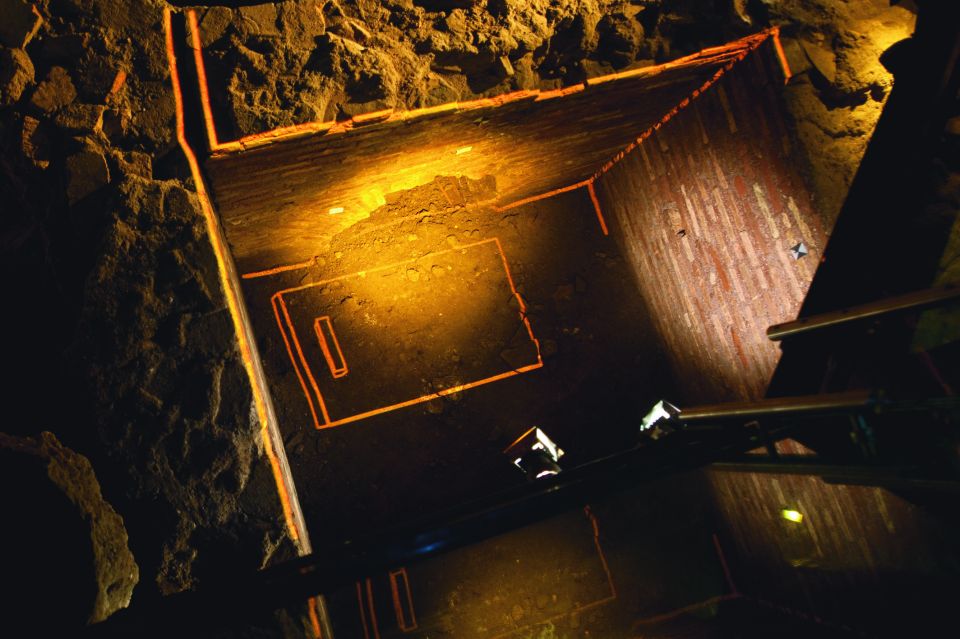
Most Rome visits give you time, then you take photos, then you move on. This one tries a different trick: it rebuilds the sense of place. The focus here is the remains of the Imperial Roman domus—an elite house—so your brain has something concrete to compare against the real fragments.
What makes it work is that the VR doesn’t just show sweeping views. You’re guided through spaces that matter: rooms and decorated walls, plus the “everyday” parts that help you understand status and routine—kitchens, baths, and furnishings. When it’s done well, that turns a museum exhibit into something more like architectural storytelling.
And there’s another smart angle: it helps piece together how the area fits into ancient, medieval, and modern Rome. That’s a big deal in a city like this, where you can feel like you’re walking over multiple centuries at once. Here, the experience gives you a framework to hold onto.
Getting there and timing: how the 2 hours actually work
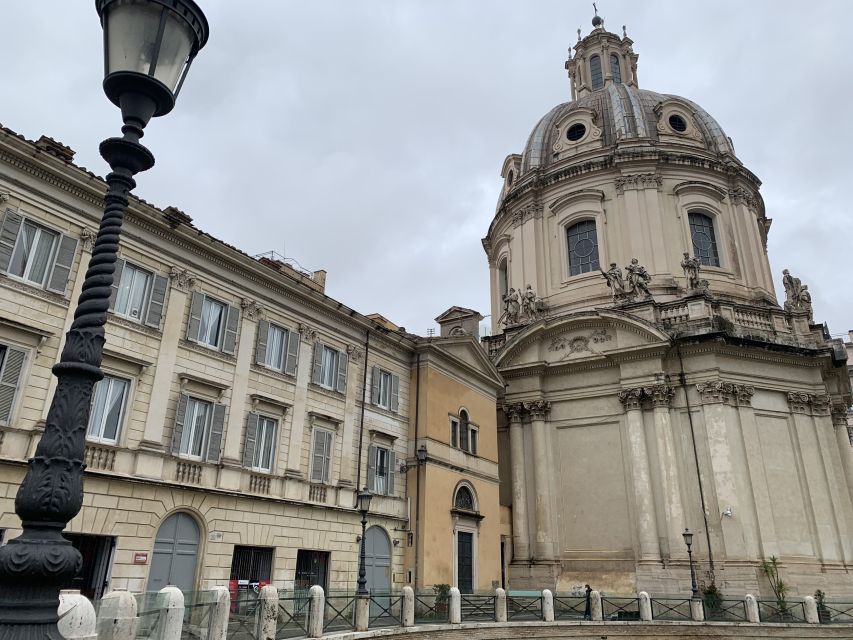
Your meeting point is TOURISTATION ARACOELI, Piazza D’Ara Coeli 16. The instructions are simple: find the building with the fountain and orange flags out front.
The timing runs like this: you start with the multimedia video shown inside the Touristation office. After that intro, the Domus visit begins one hour later, and your overall experience time is listed as 2 hours. So plan on arriving early enough to settle in, grab your headset if needed, and not rush the first part.
Two practical tips so your visit feels smooth:
- Wear comfortable shoes. Even if the star is the VR, you still need to move through the museum space.
- Travel light. Luggage or large bags aren’t allowed, so if you’re mid-trip, plan for storage before you come.
The 25-minute multimedia Rome video: your mental warm-up
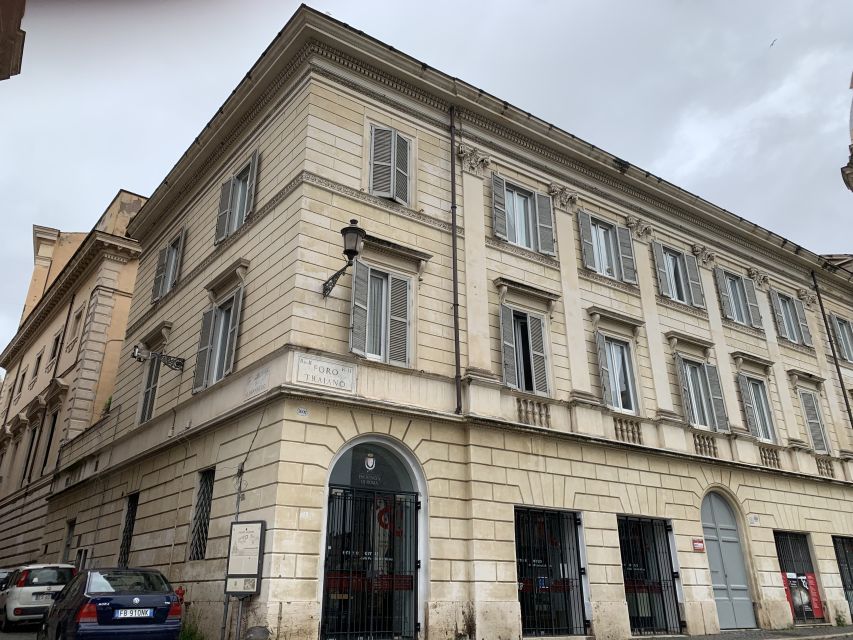
Before the headset comes out, you watch a 25-minute Ancient Rome multimedia video inside the Touristation office. The good part here is not only that it shows big-name monuments. It also helps you get your bearings fast—especially if you’re newer to Roman geography and eras.
The video covers major sites including the Colosseum, Roman Forum, St. Peter’s Basilica, Castel St. Angel, Circus Maximus, and Ara Pacis. Think of it as the “Rome on one page” version. You don’t need to be a scholar to follow it, and it’s a nice way to reduce the cognitive load once you switch into VR mode.
One note that I think matters: if you’re the kind of person who wants only the Domus VR itself, this intro may feel like an extra step. The upside is that it sets context so the Domus later feels less random.
VR at the Domus: mosaics, peristyles, and everyday elite life
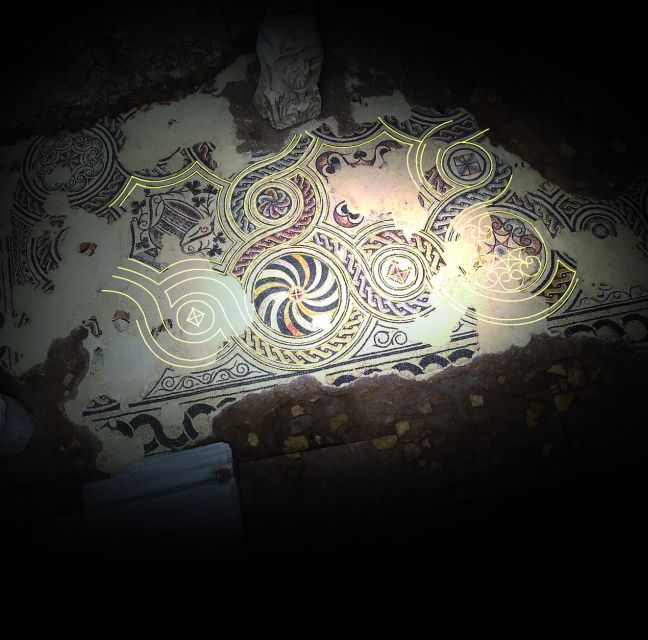
Then the Domus begins. You’ll use a VR headset and move through a virtual reconstruction of rooms, decorated walls, mosaics, peristyles, and the kinds of features that define a Roman house. The description includes kitchens, baths, furnishings, and decorations—so it’s aiming to be more complete than a short “walk through ruins” experience.
Here’s the practical value for your time in Rome: seeing mosaics and floor designs is one thing. Understanding how they relate to daily use is another. The VR sequence helps you connect decorative elements to layout and space—so you’re not just reading exhibits, you’re “experiencing” how the place could have functioned.
Another detail worth knowing: the experience also reveals how this area was important in Roman times and helps connect ancient, medieval, and modern layers. That’s a smart approach in central Rome, where “one site” can mean multiple eras piled on top of each other.
If you like architecture, interior design, and spatial layout, this is where the experience earns its keep. If you only want outdoor ruins and panoramic views, you may find the VR-heavy format less exciting. But for most people, it hits a sweet spot: it turns fragments into a coherent home.
Trajan’s Column in a virtual close-up
A standout feature is the chance to observe how the area of Trajan’s Column looked in older times. You get a virtual reconstruction of the column that gives a close-up view of the bas-reliefs.
And it’s not purely visual. The story centers on Trajan’s military campaign—the conquest of Dacia (present-day Romania). If you’ve ever seen a column in a postcard and wondered what you’re actually looking at, this part gives you the narrative thread. It helps you interpret the figures and scenes as part of a larger imperial message, not just decorative carving.
This is also a good complement to the Domus. You’re moving from domestic life (a Roman household) to imperial power (Trajan’s propaganda in stone). That contrast makes the session feel bigger than “just one museum room.”
Optional FOROF: archaeology meets contemporary art and scent
You can add the FOROF experience if you select the option. This is where the experience can go off-script in a good way. Instead of staying inside pure archaeology, FOROF blends archaeology and contemporary art through a regeneration concept inspired by cultural cafes of the 20th-century avant-garde.
A few specifics that make it interesting:
- It’s founded by Giovanna Caruso Fendi
- It’s located at Palazzo Roccagiovine, opposite Trajan’s Column at the Imperial Fora
- It preserves hypogeum environments with colored marble from the Basilica Ulpia pavement and remains of the eastern apse (2nd century A.C.)
- There’s a site-specific art project called Nimbus Limbus Omnibus by Bartolomeo Pietromarchi
- FOROF adds an olfactory experience, developed by professional “nose” Laura Bosetti Tonatto, aiming to return the spirit of a place and treat freedom as a universal theme
If you like art that responds to context—rather than art that just sits next to ruins—this option can be a memorable add-on. If you’re strictly archaeology-only, you might feel it’s a detour. For me, the value is in variety: you’re seeing the ancient fabric, then experiencing how modern creators use sound, space, and even smell to shape memory.
What the audio guide and smartphone app actually help with
You get an audioguide headset for the Domus, with English, French, German, Italian, Spanish, Russian, and Japanese listed for audio. For the Palazzo Valentini experience itself, the languages are explicitly listed as English, Italian, Spanish, French, and German.
On top of that, there’s a city app audioguide download on your smartphone. The app portion isn’t described in minute detail, but it’s clearly meant as an extra layer of explanation as you go.
Here’s what that means for you in practice:
- If you’re the type who likes to understand what you’re looking at, use the headset and let it pace your visit.
- If you prefer a calmer experience without constant narration, you can keep the sound low or use the app selectively—especially during visual moments like mosaics and bas-reliefs.
One small consideration: some people feel the video and app are extra, because the Domus VR carries the main story. I get that. But if you want to learn faster and connect the dots, the audio support can make your hour in the Domus more satisfying.
Price and value: is US$35 for 2 hours worth it?
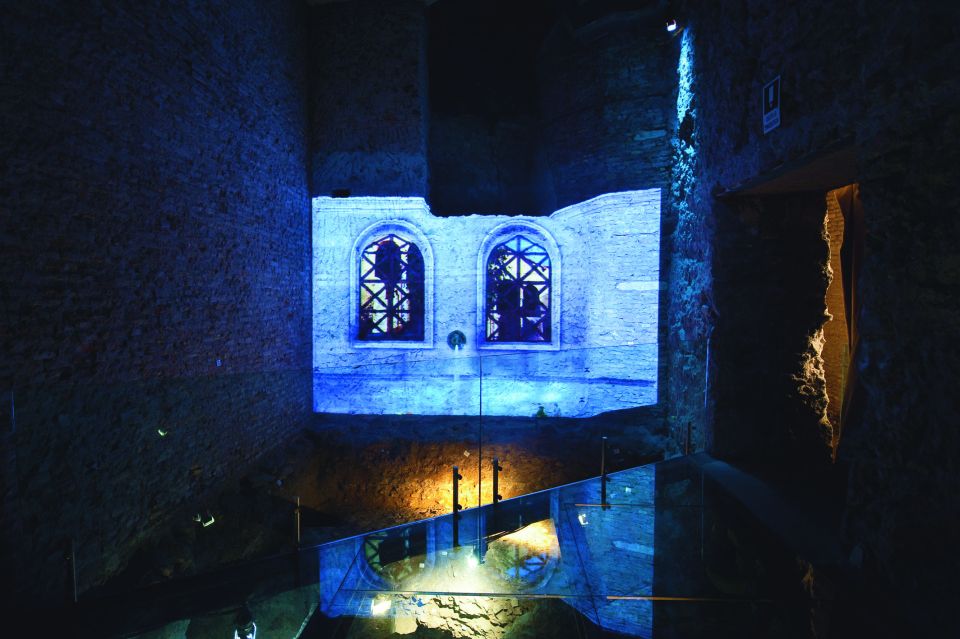
The price is listed as US$35 per person for an experience that runs about 2 hours and includes admission, a multimedia video, and the audioguide headset. That’s not “cheap museum change,” but it’s also not priced like a full guided tour with a live lecturer.
So where does the value come from?
- Admission to a Roman Domus museum area
- The 25-minute multimedia intro that gives context
- The VR reconstruction, which is the main product you’re paying for
- Audioguide and headset support
When VR is involved, value often depends on pacing and comfort. Since you’re not in VR the whole time (the video comes first, and then you tour), it’s closer to a structured program than a “start screen and wander” situation.
If you’re curious about Roman daily life and enjoy technology used thoughtfully, the price can feel fair. If you hate headsets, hate waiting, or simply prefer walking outside with maps in hand, you might decide your money could be better spent elsewhere in Rome.
Who should book this, and who should skip it
This experience is a strong match if you:
- Like Roman domestic architecture (rooms, mosaics, peristyles, baths)
- Want help connecting ancient sites to modern Rome
- Enjoy guided structure with audio support
- Want a narrative approach to Trajan’s Column imagery
It’s less of a fit if you:
- Have claustrophobia (VR headset requirement)
- Use a wheelchair (listed as not suitable)
- Are hoping for a classic long walking tour with outdoor ruins as the main event
If you’re traveling with kids, the info mentions passport or ID card for children, so it’s worth being prepared. And since pets and large bags are not allowed, it’s best to come ready to move lightly through the museum area.
Should you book the Palazzo Valentini Roman Domus VR experience?
I think this is worth booking if your goal is to understand the Roman world through a format that actually explains what you’re seeing. The VR reconstruction does the heavy lifting: it turns scattered architectural elements into a readable space—then ties that space to imperial Rome via the Trajan’s Column segment.
Book it instead of passing if you’re short on time in Rome or you want something different from the usual “forum + colosseum photos.” And consider adding FOROF if you’re open to how modern art and even scent can respond to ancient sites—especially because FOROF sits right opposite Trajan’s Column in the Imperial Fora area.
Skip it if you know VR isn’t your thing, or if comfort concerns (especially claustrophobia) make the headset a hard no. For the right match, this is one of those Rome experiences that gives you understanding, not just sightseeing.
FAQ
Where is the meeting point for the Palazzo Valentini Domus experience?
You meet at TOURISTATION ARACOELI, Piazza D’Ara Coeli 16. Look for a fountain and orange flags in front of the office entrance.
How long is the experience, and when does the VR part start?
The total experience is listed as 2 hours. You start with a 25-minute multimedia video first, and the Domus VR visit begins one hour later.
What’s included with the basic ticket?
The ticket includes admission to the Ancient Roman Domus museum, a 25-minute Ancient Rome multimedia video, and an audioguide headset for the Domus. A city app audioguide download is also included.
Is the FOROF experience included automatically?
FOROF is included only if you select the option. It blends archaeology and contemporary art and includes an olfactory experience.
What languages are available for the experience?
The audio guide is available in English, French, German, Italian, Spanish, Russian, and Japanese. For the Palazzo Valentini experience, the listed languages are English, Italian, Spanish, French, and German.
Who should not book due to comfort or mobility concerns?
The experience is not suitable for people with claustrophobia or wheelchair users. Pets and luggage or large bags are also not allowed.