REVIEW · OSTIA ANTICA
From Rome: Ostia Antica 4-Hour Guided Tour
Book on GetYourGuide →Operated by Roma Experience Tours · Bookable on GetYourGuide
Ostia feels like Rome without the lines. On this 4.5-hour guided tour, you ride out of the city in under 20 minutes and step into an ancient port world where daily life still shows up in mosaics, shops, and public buildings. I especially like the private-group pace, and I also love how the guide connects what you see to how Rome actually ran at the harbor.
The main drawback: this is an outdoor archaeological site, and it is not suitable for wheelchair users or people with mobility impairments. If you have any walking limits, plan carefully and wear proper shoes.
In This Review
- Key highlights you’ll care about
- Getting to Ostia Antica: train ride, pickup, and how the tour starts
- A Roman port city at the Tiber’s mouth: what the guide teaches as you walk
- The Roman theater: why it’s one of Ostia’s best anchors
- Capitolium and public life: where power shows up in stone
- House of Diana and the green feel: private spaces, not just monuments
- Temples and intact shops: mosaics, freshness of the layout, and the details that stay
- The local brothel: Rome’s attitude toward sex, law, and daily morality
- Necropolis tombs: the part that feels quiet, eerie, and human
- Taking breaks the smart way: the cafe and restaurant inside the park
- Price and value: what $648.74 per person buys you
- Who this tour fits best, and who should plan a different day
- Should you book Ostia Antica from Rome?
- FAQ
- How long is the Ostia Antica guided tour from Rome?
- What does the tour price include?
- Is food included?
- What languages are available for the live guide?
- Is pickup included?
- Is this tour suitable for wheelchair users?
- Is there free cancellation?
Key highlights you’ll care about
- Roman theater you can still imagine in use, including the fact that it sees occasional performances today
- A real sense of the port economy: where grains, marble, slaves, and wine moved through Ostia toward Rome
- Capitolium at the center of civic life, plus nearby baths and domestic spaces
- Necropolis tombs that feel eerie and personal, not just decorative
- Well-preserved temples, shops, and frescoes, including an intact fish shop with striking mosaics
- The brothel stop that explains Rome’s attitude toward sex, law, and everyday morality
Getting to Ostia Antica: train ride, pickup, and how the tour starts
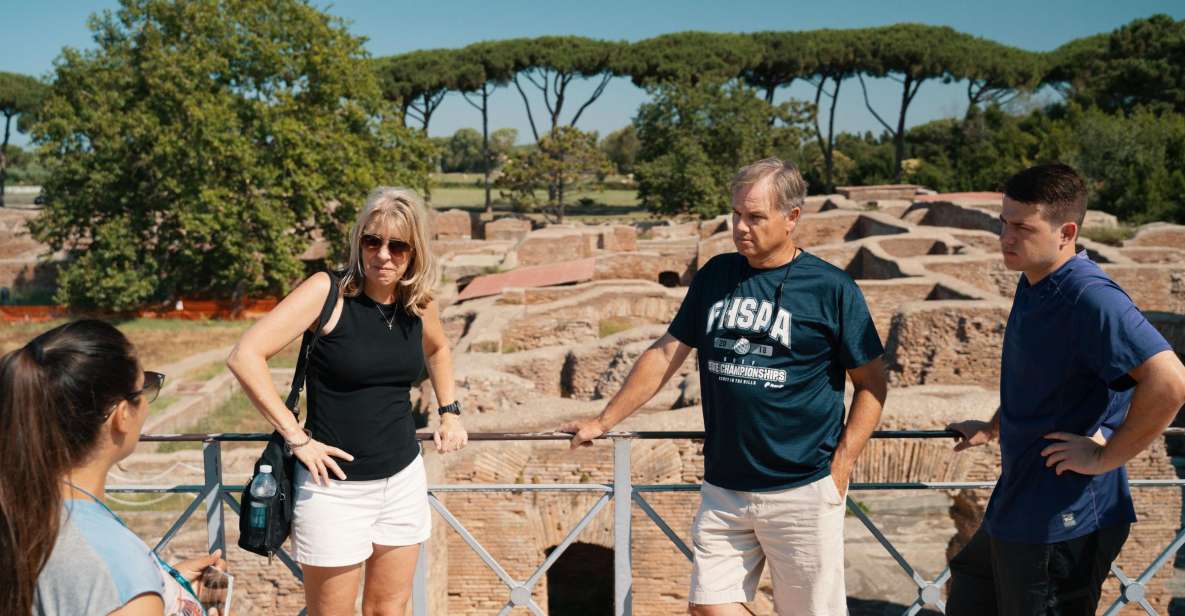
Ostia Antica is close enough to Rome that you can treat it like a half-day escape, not a full-day production. The tour meets you with train access from the city area, and the trip is described as less than 20 minutes by train, which keeps the morning from evaporating before you even reach the ruins.
Pickup can be included, but you need to tell the local partner your hotel or pickup address in advance. If your address falls outside the pickup area, you’ll get another meeting point after booking, so it pays to double-check that info so you arrive ready rather than hunting.
One practical note: if the meeting spot ends up around Piramide metro, give yourself extra time. I’ve found that waiting for a group in Rome can turn into a bit of street-waiting theater, and having a buffer makes it calmer.
You can also read our reviews of more tours and experiences in Ostia Antica.

A Roman port city at the Tiber’s mouth: what the guide teaches as you walk
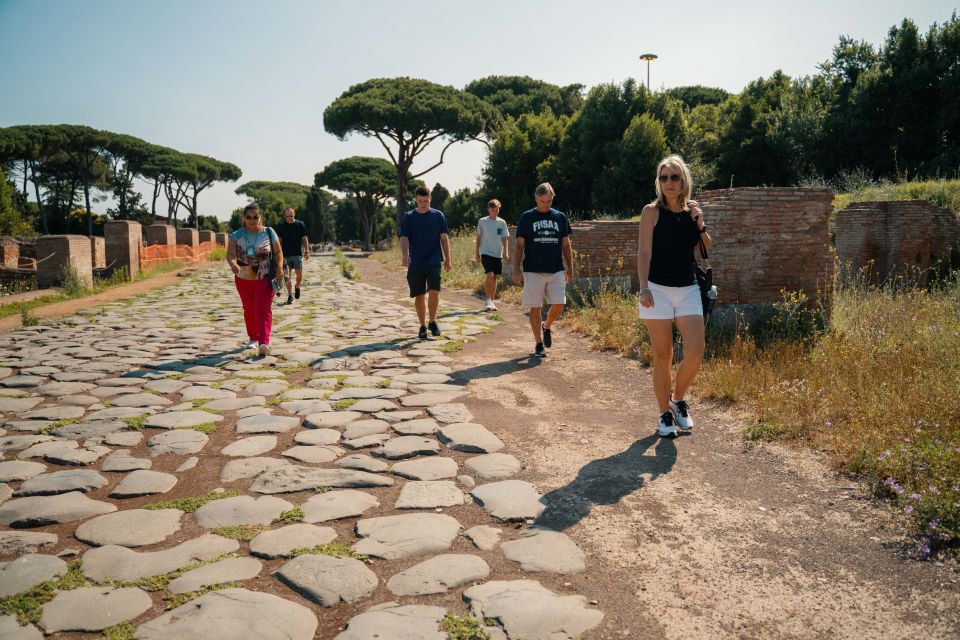
The heart of Ostia Antica is that it was the harbor city—the gateway and gate keeper for Rome. As you move through the site, the guide frames Ostia as the hinge between the Mediterranean and the imperial capital, which makes the ruins feel less like scattered stone and more like a working machine.
You’ll learn how goods moved through the port: grains from Sicily, marble from Africa, slaves from Asia, and wine from Spain all made stops here before reaching Rome. For a lot of visitors, that’s the turning point where Ostia stops being only “ruins you can photograph” and becomes a story about logistics—who arrived, what Rome consumed, and how that shaped the city.
This is also where the guide’s role really matters. The site is large, and the tour is designed so you hear the connections while you can still see the physical layout—street, shop front, public space—rather than trying to piece it together later.
The Roman theater: why it’s one of Ostia’s best anchors

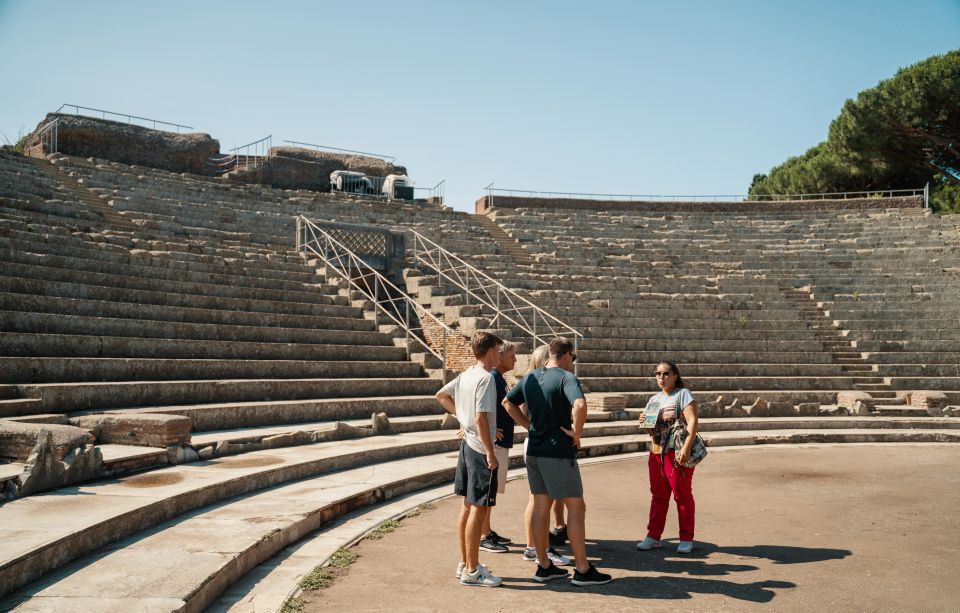
If you want one stop that tells you Ostia’s quality level fast, start with the theater. It’s described as the well-preserved Roman theater, and the best part is the sense that it still belongs to the living city. The tour notes that it is still used for occasional performances.
That detail changes how you look at the building. You stop thinking of a theater as an artifact and start thinking of it as infrastructure—sound, seating, stage lines, and crowd rhythms. Even if you’ve seen other Roman theaters, Ostia’s preservation makes it easier to picture the space in action.
There’s also a nice emotional effect when you’re guided. You get context in the moment, so it doesn’t become a checklist item. You can actually feel how theater, religion, and civic life overlapped in Roman urban spaces.
Capitolium and public life: where power shows up in stone
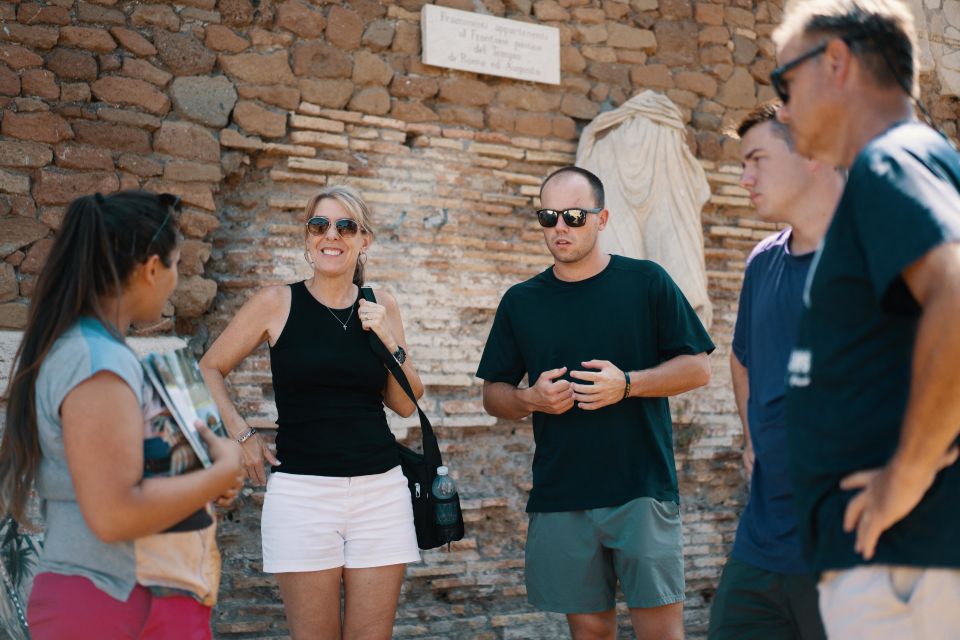
Central public buildings are where Rome’s priorities become obvious. At Ostia, the tour goes to the Capitolium, described as sitting at the heart of public life in the city. Standing in the vicinity of the Capitolium is a reminder that Rome didn’t separate politics from architecture—civic identity was built into the city plan.
From there, you’ll also visit the Baths of Neptune. Baths were social and practical spaces, and seeing them within the same tour gives you a fuller picture of what people did after work or between errands. Instead of treating baths as a standalone curiosity, you experience them as part of the same urban rhythm as temples and theaters.
The guide also leads you through the idea that Ostia was both functional and ceremonial. It wasn’t only a warehouse for imports; it had a civic center that acted like a statement of Roman values, authority, and identity.
House of Diana and the green feel: private spaces, not just monuments
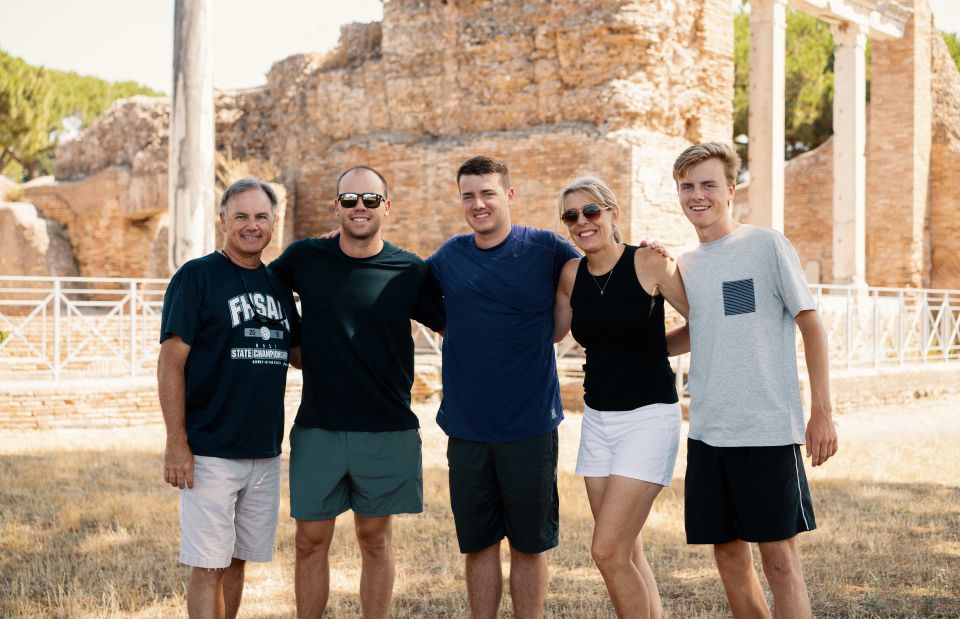
One reason I like Ostia more than many “big famous ruins” is how the tone changes when you move from public buildings to former homes. The tour includes visits to the House of Diana, and it highlights private houses of former citizens in pleasant, green surroundings.
That shift matters. Roman houses aren’t just romantic backdrops—they show how wealthy and middle-status residents organized daily life. Even when you don’t see everything at full height, you can still understand the layout by how the rooms open, how courtyards were used, and how domestic space related to the street and public institutions.
House stops also give your brain a break from the biggest scale monuments. After standing near major civic sites, you get a more human scale to focus on, and the guide helps translate what you’re looking at into something that feels understandable.
Temples and intact shops: mosaics, freshness of the layout, and the details that stay
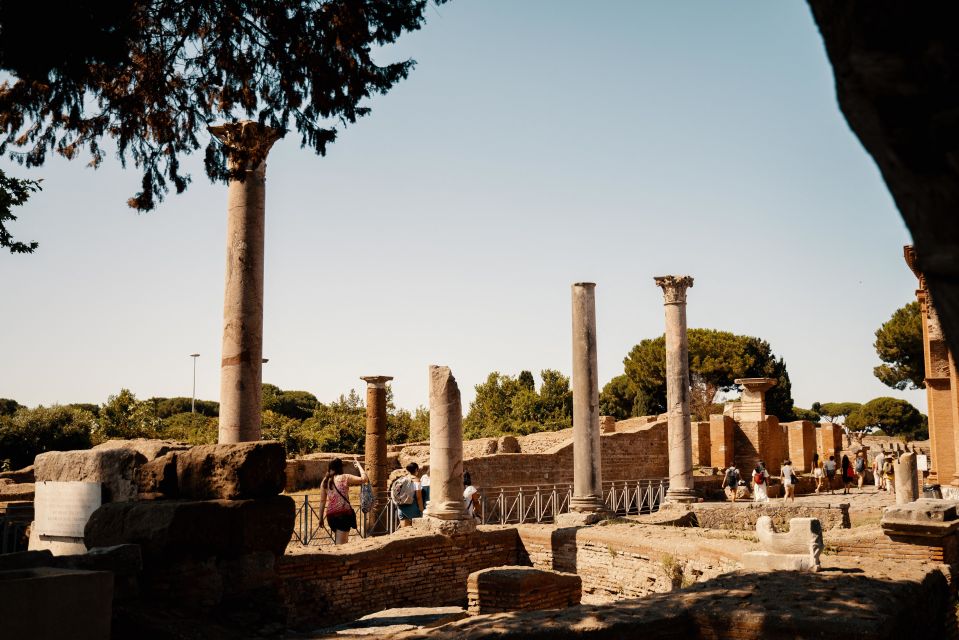
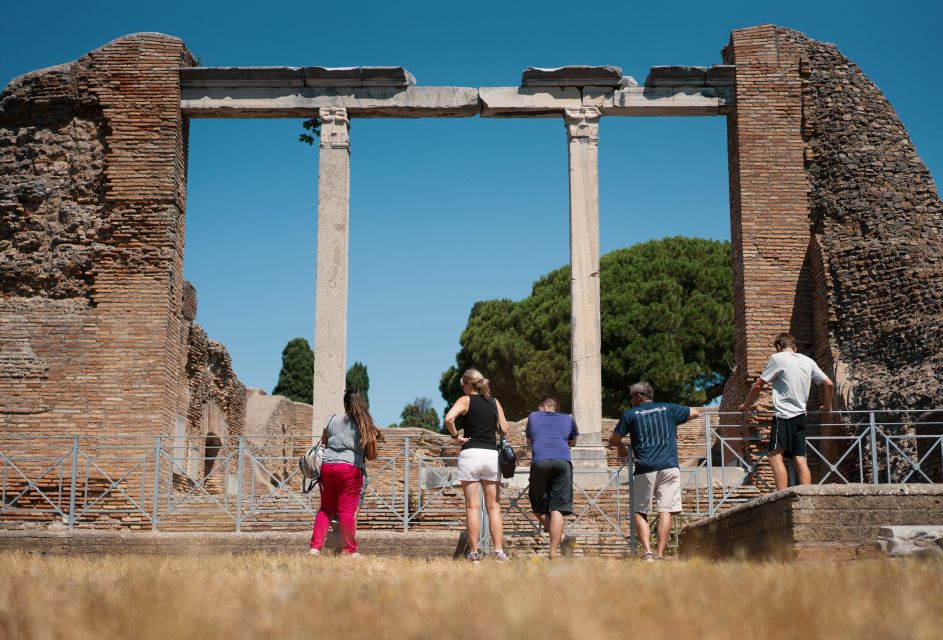
Ostia’s temples and shops are where the site surprises people. The tour notes remarkably well-preserved Roman temples and ancient shops that remain intact. This isn’t only about the grand structures; it’s about the street-level texture of a working city.
A standout example is the fish shop with its stunning mosaics. Shops like this are powerful because they make the economy visible. You’re not just hearing that the port supplied Rome—you can point to a space designed for selling specific goods, laid out for customers, and decorated in ways that communicated status and pride.
As you move through shopfront areas, it helps to look for patterns: how entrances line up, where goods would have been displayed, and how people likely moved through the street. The guide’s job here is to keep you from getting lost in the aesthetics, so you remember what each space likely did.
The local brothel: Rome’s attitude toward sex, law, and daily morality
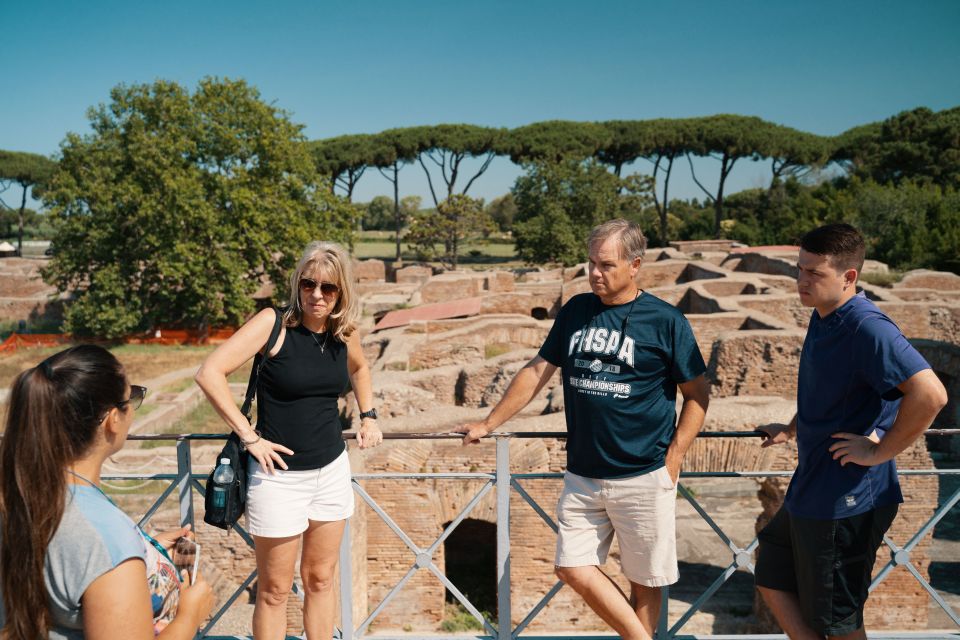
The tour includes a stop tied to Rome’s sinful side: the local brothel. It’s not framed as scandal for scandal’s sake. Instead, the guide uses it to show how Romans handled sex as a social reality rather than treating it as only a private matter.
This is a good stop if you like cultural history. Rome can feel formal and monumental, but places like this remind you that every empire has its unofficial systems alongside its official ones. Seeing the brothel in a guided context helps you understand why it existed in a city like Ostia, where workers, visitors, and commerce were constant.
If you prefer your ruins strictly family-friendly, you might want to mentally prepare for this section. It’s part of the tour’s story about the full social texture of Roman life.
Necropolis tombs: the part that feels quiet, eerie, and human
One of Ostia’s most memorable emotional stops is the Necropolis. The tour highlights the eerie tombs at Ostia’s Necropolis, and that description fits the experience well. These spaces tend to feel removed from the loud civic centers, even though you’re still within an urban archaeological site.
A necropolis visit changes the pacing of the tour. After theaters, baths, and civic buildings, you’re confronted with mortality and memory—how people planned for the future, how families claimed space, and how death sat inside the city’s story.
In a good guided tour, this doesn’t turn into gloom. It becomes a study of what Romans valued enough to mark permanently. You come away thinking about the city as more than commerce and entertainment; it was also a place where people tried to stay present after they were gone.
Taking breaks the smart way: the cafe and restaurant inside the park

You won’t be left hungry or stuck improvising. The tour notes that a restaurant and cafe are located inside the park for convenience. Food and drinks aren’t included, so you’ll want to plan for either a snack stop or a proper meal depending on your timing.
What I recommend: use the cafe as a reset, not a delay. Once you leave a major section, it’s hard to restart your attention, especially in a large site. If you’re the type who likes to keep momentum, grab something simple, drink some water, and then get back to the route while your guide is still drawing the connections for you.
Also, this is Rome, so heat can matter. Comfortable clothing and a hat are strongly recommended, and that’s not just “tour operator talk.” It’s the difference between enjoying the day and feeling worn down halfway through.
Price and value: what $648.74 per person buys you
At about $648.74 per person, this isn’t a cheap outing. The way to judge value here is to look at what’s actually included in that price.
You get an admission ticket, a train ticket, and a live guide, plus skip-the-ticket-line entry. For many people, the biggest practical win is time saved and reduced friction. Rather than spending your limited half-day figuring out transit timing, ticket logistics, and routing, you show up and the tour takes you through a curated path.
There’s also the private-group angle. A private group typically means you can ask questions, and the guide can adjust how fast you move based on what you want to see. That can be worth real money if you hate rushing or if you’re the kind of person who wants explanations, not just photos.
Is it worth it? For me, it makes sense if you want a guided, high-quality interpretation of Ostia Antica rather than a self-guided wander. If you’re happy spending hours reading on your phone and navigating by yourself, you might feel the price is high. But if you want the port-economy context, the brothel stop explained, and the necropolis framed properly, this is priced like an experience, not just transport.
Who this tour fits best, and who should plan a different day
This tour is well-suited for people who want a guided walkthrough of a major archaeological site in a manageable time window. You’re covering public monuments, private houses, markets, and tombs in one route, and you’ll come away with the big picture of how Ostia functioned as Rome’s gateway.
It also fits travelers who want fewer crowds. The description positions Ostia Antica as more beautiful and certainly less crowded than Pompeii. You may find it feels calmer, and that matters if you like looking closely rather than trying to see through shoulder-to-shoulder motion.
The big mismatch is mobility. The tour is not suitable for wheelchair users or people with mobility impairments. Even with the best guide in the world, this is still an outdoor archaeological environment with walking involved.
Should you book Ostia Antica from Rome?
I’d book this tour if you want Ostia Antica to feel like a coherent story instead of a pile of ruins. The mix of Roman theater, Capitolium, baths, intact shops, necropolis tombs, and the brothel stop gives you the full social range of Roman life in one afternoon.
A few smart moves before you commit:
- Wear comfortable shoes and plan on walking the whole route without expecting shortcuts.
- Bring a hat and expect you’ll need sun protection.
- If you’re sensitive to meeting-point chaos, arrive early enough to handle a brief wait at the metro pickup location.
- When you’re choosing what to photograph, prioritize the mosaics and street-level shop fronts, not only the big monuments. That’s where Ostia’s preservation really shines.
If you can handle the walking and you like your ancient sites guided, this is one of the best ways to see Ostia Antica without losing time.
FAQ
How long is the Ostia Antica guided tour from Rome?
The tour lasts about 4.5 hours.
What does the tour price include?
It includes an admission ticket, a train ticket, and a live English-language (and other languages) guide.
Is food included?
No. Food and drinks are not included, though there is a restaurant and cafe inside the park.
What languages are available for the live guide?
The live guide is available in English, Arabic, French, and Spanish.
Is pickup included?
Pickup is included. You need to inform the local partner in advance of your hotel or requested pickup address. If your address is outside the pickup area, a pickup location will be provided after booking.
Is this tour suitable for wheelchair users?
No. It is not suitable for wheelchair users or people with mobility impairments.
Is there free cancellation?
Yes, you can cancel up to 24 hours in advance for a full refund.