REVIEW · VATICAN CITY
Rome: Guided Tour of St. Peter’s Basilica, Grottoes & Square
Book on GetYourGuide →Operated by Touriks · Bookable on GetYourGuide
St. Peter’s can stop you mid-step. This guided hour hits the most meaningful parts efficiently, starting in St. Peter’s Square (with its famous illusion effects) and then moving inside the Basilica to explain what you’re seeing as you go. I love the professional art-historian guide for turning big visual moments into clear stories, and I love that the route includes Michelangelo’s Pietà plus the tomb-and-grotto level without dragging on all day.
One heads-up: this is not a skip-the-line tour, and the security queue can run from 15 to 120 minutes.
In This Review
- Key things to know before you go
- St. Peter’s Square: start with Bernini’s visual tricks
- Inside St. Peter’s Basilica: marble, mosaics, and a 150-year rebuild
- Michelangelo’s Pietà and the canopy you can’t miss
- Vatican Grottoes: touch the ancient walls below
- The guide experience: headsets, pacing, and real storytelling
- Timing and value: what you’re really paying $22 for
- Rules that actually affect your day: dress, IDs, bags, and lines
- Should you book this St. Peter’s tour?
- FAQ
- How long is the St. Peter’s Basilica, grottoes, and square tour?
- Is this tour private or small group?
- What’s included in the tour price?
- What isn’t included?
- Does this tour skip the security line?
- Will I see Michelangelo’s Pietà and St. Peter’s tomb?
- Are the Vatican grottoes always included?
- What do I need to bring for entry?
- What dress code is required for the Basilica?
Key things to know before you go
- St. Peter’s Square first, so you understand the “wow” before you enter the church
- Sterilized headsets so you can actually hear your guide in the marble echo
- Pietà + St. Peter’s tomb + original basilica walls in one route
- The canopy is nearly 98.5 feet high, and your guide explains why it matters
- Underground grottoes with frescoed walls and St. Peter’s burial site
- Guides focus on pacing through long waits, using stories and humor to keep momentum
St. Peter’s Square: start with Bernini’s visual tricks
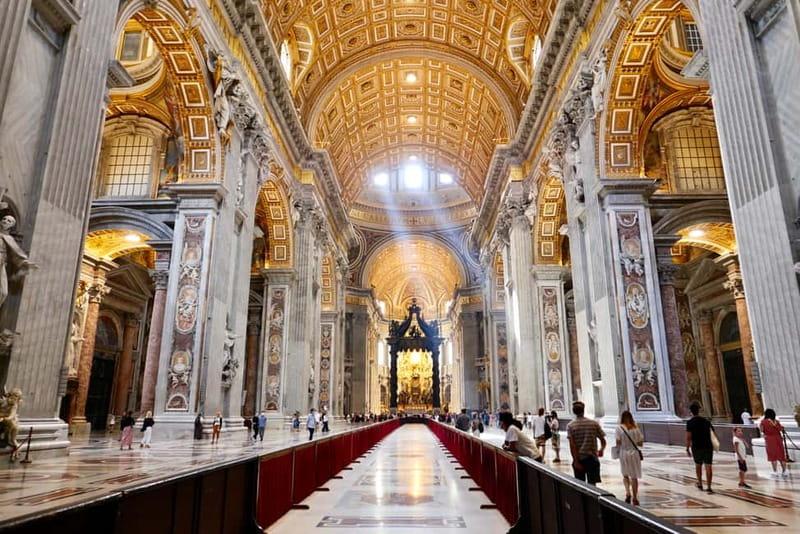
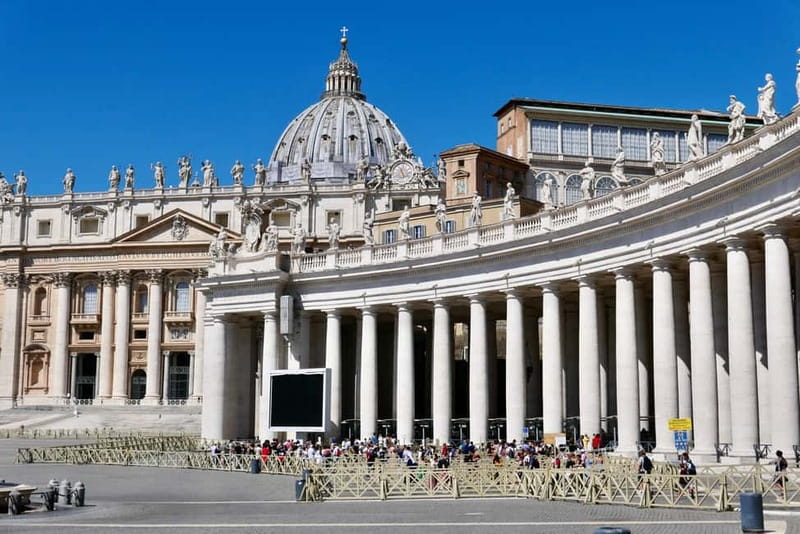
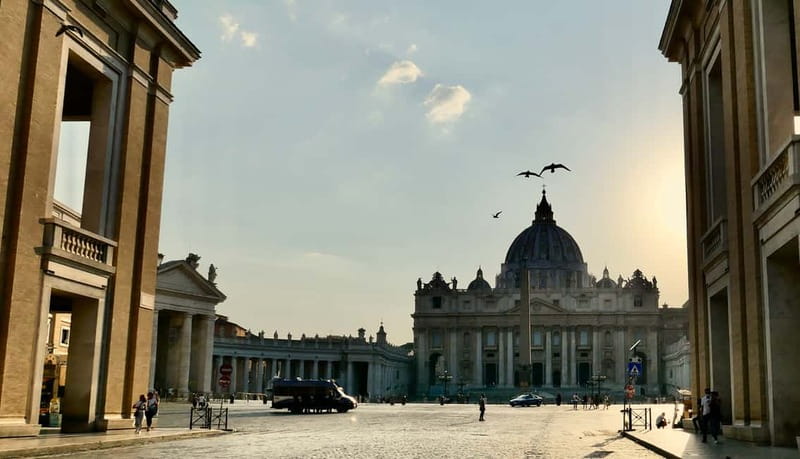
Your tour starts outside St. Peter’s Square before you clear security, so the experience begins with orientation. Expect to pass through metal detectors right at the square, and then walk in with your guide pointing out architectural ideas that you’d miss if you just drifted in.
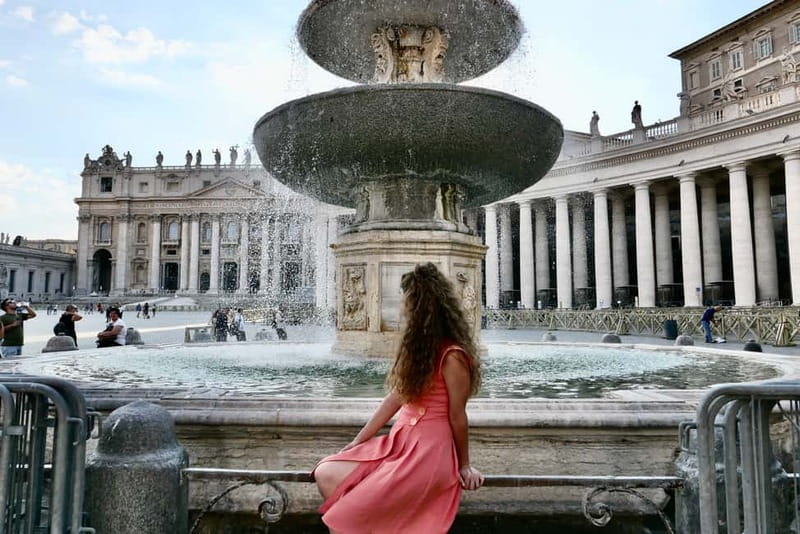
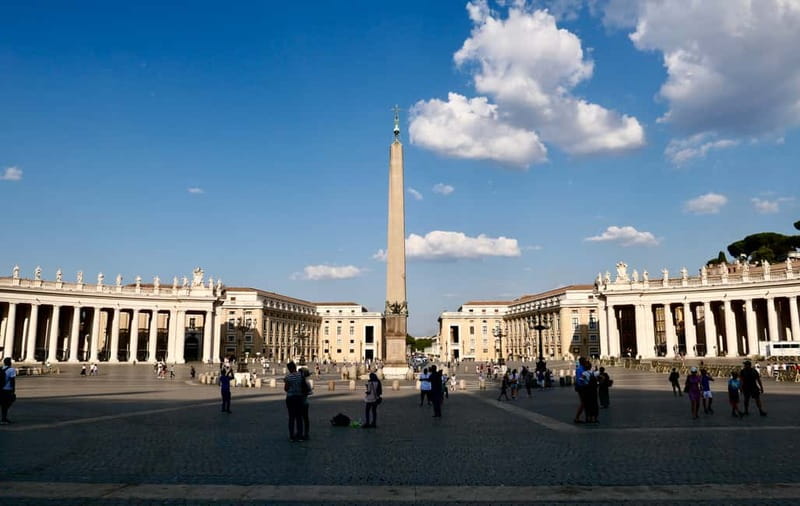
Even before you enter the Basilica, St. Peter’s Square gives you clues about the designer’s thinking. The tour focuses on the “optical illusions” connected to Bernini’s plan—these are the sort of effects where your eye wants to simplify what it sees, and your guide helps you understand how the space manipulates distance, scale, and perspective.
This first stop is also your best chance to get your bearings fast. The space is huge, the lines can be slow, and the Basilica can feel like it’s suddenly everywhere at once. Starting here means you won’t feel lost when you finally step inside.
Practical note: the meeting point is outside the Basilica area and before security. If you’re even slightly late, you can end up missing the start of the guided portion.
You can also read our reviews of more tours and experiences in Vatican City.


Inside St. Peter’s Basilica: marble, mosaics, and a 150-year rebuild
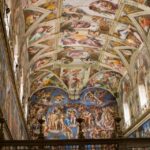
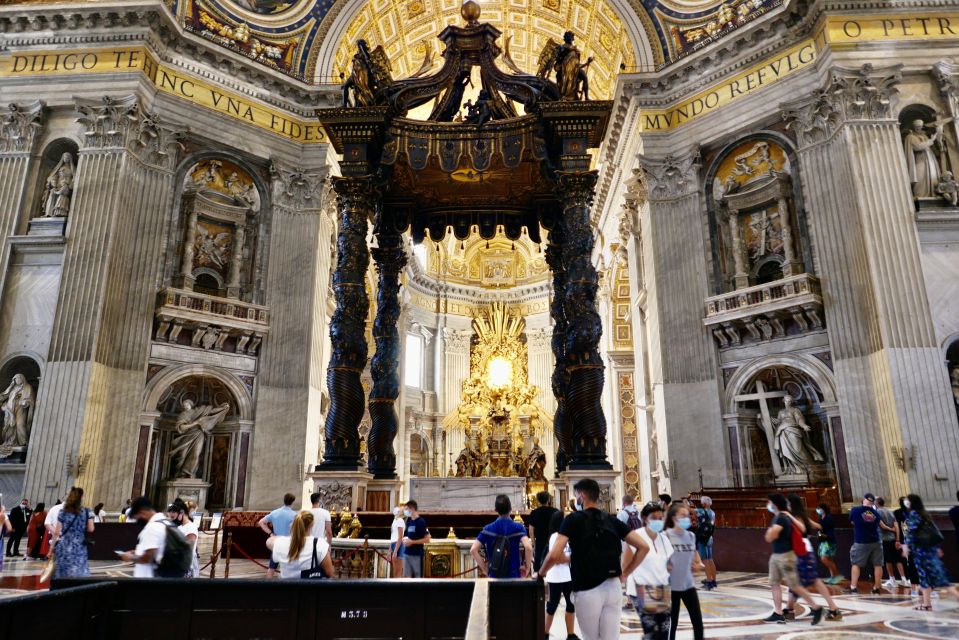
Once you’re through the square’s security checks, the tour shifts into the Basilica itself for about 40 minutes. This is where the guide’s job matters most: the Basilica is packed with details, and without context it can turn into a blur of gold and stone.
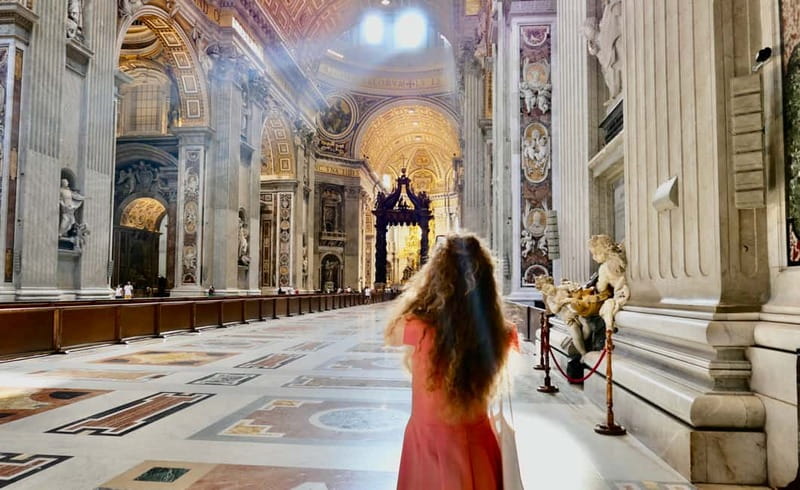
You’ll get time focused on the big visual layers—marble, mosaics, and the soaring ceilings—plus the story behind the rebuilding effort that took 150 years. Those years aren’t just a trivia fact; they explain why the Basilica feels like it grew through different eras rather than appearing all at once.
There’s also a practical element here: you’ll walk past major works of Renaissance and Neoclassical art with guidance that connects form to meaning. Your guide isn’t just narrating; they’re helping you read the space. That’s why small moments land harder—like noticing how the mosaics guide your eye, or understanding why certain locations feel intentionally framed.
You’ll have a photo stop as well, but don’t treat photos as the main event. This part works best if you pause, look up, and let the guide steer your attention to the ceiling lines, the mosaic fields, and the materials—because the marble and mosaic surfaces are part of the message, not decoration.
Michelangelo’s Pietà and the canopy you can’t miss
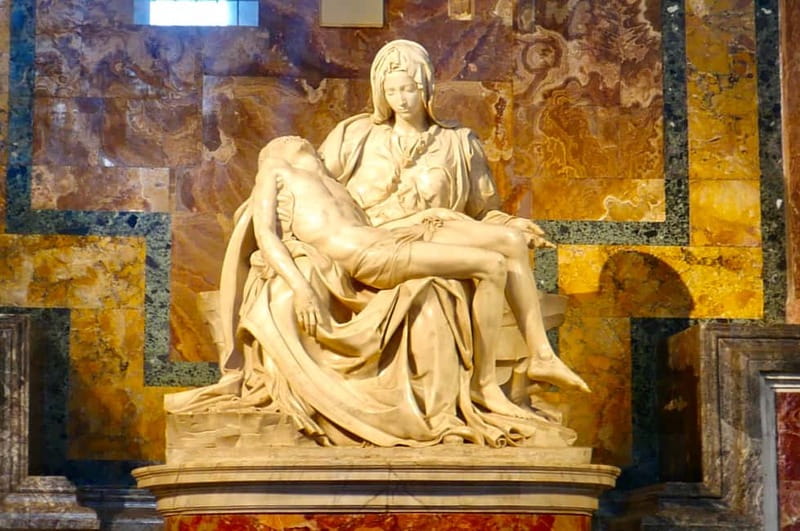
The emotional center of the visit is Michelangelo’s Pietà. Your guide will bring you to it so you can appreciate the sculpture’s balance and expressive power—especially its delicate details, which are easy to overlook if you’re rushing.
Near the Pietà, the tour also highlights the harmonious canopy above the altar area, described as 98.5 feet high. Knowing the height isn’t enough; the value is having someone point out how the canopy’s form sets a tone for everything around it. It’s one of those design choices where the scale changes how you stand and how you look.
As you move through this section, you’ll also learn about where St. Peter’s Tomb fits into the Basilica’s layout. The tour includes time for seeing the tomb area and the original Basilica walls—the 4th-century fabric underneath the later grandeur. That blend of eras is what makes St. Peter’s feel spiritually and architecturally layered at the same time.
And yes, there’s humor in the experience when your guide’s style is strong. Guides who’ve led these tours—like Tom (attentive and quick with answers) and Valentin (great performance even with long waits)—tend to keep the energy up so the art history doesn’t feel like a lecture.
Vatican Grottoes: touch the ancient walls below
After the Basilica portion, the tour goes underground to the Vatican Grottoes for about 10 minutes. This short segment is packed, because it’s where the Basilica’s story becomes physical. You’ll see St. Peter’s tomb area and the surrounding underground spaces.
The tour description also emphasizes touching the ancient walls of the original 4th-century Basilica. That tactile element changes the whole feel of the visit. It’s no longer only about seeing; it becomes about realizing that the place is literally built on older foundations.
You’ll also spend time with the frescoes in the grottoes—another moment where guided attention matters. Frescoes can look like “more decoration” if you’re not told what to look for, but with the guide’s framing you’ll understand the scenes as part of the broader devotional and artistic design.
Important flexibility: if the grottoes or certain areas of St. Peter’s Basilica are closed, your guide adapts the itinerary by highlighting alternative sites and artworks within the Basilica. The overall duration and quality should stay the same, so you’re not likely to feel like the tour fell apart.
The guide experience: headsets, pacing, and real storytelling
This tour is powered by your guide. You get a professional art-historian guide and sterilized headsets, which is a big deal in a place where echoes can swallow casual explanations. Clear audio means you can keep looking at what matters while you listen, instead of turning your head every few seconds to catch a word.
The guide also helps manage the reality of the location: there can be long security lines. Some guides are praised for keeping people engaged while waiting—like Vladimir (with entertaining pacing) and Daniele V (patient and knowledgeable). Others are noted for keeping the group moving efficiently, like Ellenora in English (focused on passing through the line quickly).
One repeat tip from the experience style: being on time matters. Maria is praised for emphasizing punctuality, and the tour depends on everyone starting together so the guide can keep the rhythm inside.
Since this isn’t skip-the-line, you should plan mentally for delays. I like tours that give me context while I wait instead of wasting the time with silence, and this one is built for that.
Timing and value: what you’re really paying $22 for
At about $22 per person for roughly 1 hour, the value comes from concentration. You’re not paying for an all-day Vatican Museums marathon; you’re paying for guided access to the most signature St. Peter’s experiences—Square, Basilica highlights, and grottoes—in a tight, structured loop.
What’s included is straightforward and useful:
- a professional art-historian guide
- a guided tour of St. Peter’s Basilica
- sterilized headsets
- full on-site assistance
What’s not included is equally important for expectations:
- Vatican Museums
- Sistine Chapel
- skip-the-line service
- entrance ticket to the Dome (and the climb isn’t included)
That last point is worth weighing. Some people arrive assuming everything is covered under one ticket. Here, the Dome climb is optional on your own after the tour, with a ticket cost noted as 10€. If the Dome is your top goal, you’ll want to add it deliberately to your plan instead of assuming it’s included.
If you’re short on time and want the core St. Peter’s story—Basilica art, Pietà, tomb, and the underground level—this tour is priced like a shortcut that still feels guided.
Rules that actually affect your day: dress, IDs, bags, and lines
This is where I see most first-timers lose time, so it’s worth syncing expectations now.
You must bring passport or an ID card. Names matter too: tickets are nominative, and the full names of all travellers must match what you provide when booking. If the names don’t match the documents, entry can be denied.
Dress code: the Basilica requires modest clothing—knees and shoulders should be covered. That means no shorts and no sleeveless shirts. If you’re arriving from a beach or warm-weather outing, this can be the difference between smooth entry and scrambling.
Bags and strollers: luggage or large bags aren’t allowed, and strollers are not allowed inside the Basilica. The good news is there’s a luggage deposit available, but you’ll want to arrive with carry-minimal expectations so you’re not late or stressed.
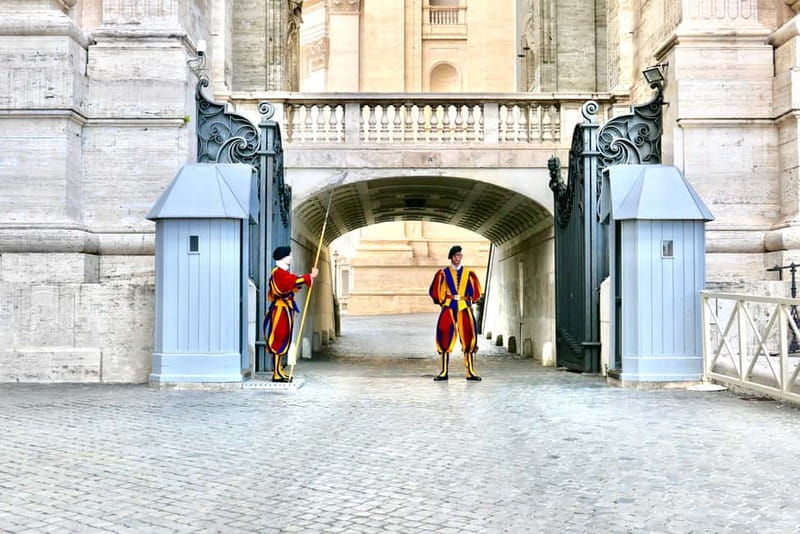
Security: you’ll have to pass through metal detectors at the entrance of the square. And because this is not skip-the-line, security queues can take time—people have seen ranges from 15 to 120 minutes. If you hate uncertainty, that’s the main reason some folks don’t love this specific format.
Should you book this St. Peter’s tour?
Book it if you want a guided, high-impact St. Peter’s experience without spending half your day switching between major Vatican attractions. It’s a strong pick for first-timers who want the Pietà, the tomb area, and the underground grottoes, plus a guide who explains what you’re seeing as you move.
Skip it (or pair it with something else) if your priority is the Vatican Museums and Sistine Chapel, since this tour doesn’t include them. Also consider choosing a different format if you’re extremely line-averse, because security queues are part of the reality here.
If you do book: be on time, dress correctly, and treat the hour like a focused “best-of” guided route. That mindset makes the entire visit—square tricks, Basilica scale, and the 4th-century walls—feel connected instead of random.
FAQ
How long is the St. Peter’s Basilica, grottoes, and square tour?
The duration is listed as 1 hour, and you should check availability to see the starting times.
Is this tour private or small group?
You can choose between a small-group option and a private tour (private group is available).
What’s included in the tour price?
Included items are a professional art-historian guide, a guided tour of St. Peter’s Basilica, sterilized headsets, and full on-site assistance.
What isn’t included?
The tour does not include the Vatican Museums, the Sistine Chapel, skip-the-line service, or an entrance ticket to the Dome.
Does this tour skip the security line?
No. It is not a skip-the-line tour, and security checks may take 15 to 120 minutes.
Will I see Michelangelo’s Pietà and St. Peter’s tomb?
Yes. The tour highlights include seeing Michelangelo’s Pietà, St. Peter’s tomb, and the original Basilica walls.
Are the Vatican grottoes always included?
The tour includes Vatican Grottoes, but if grottoes or certain areas are closed, the guide adapts the itinerary by highlighting alternative sites and artworks within the Basilica while keeping overall duration and quality the same.
What do I need to bring for entry?
Bring a passport or ID card.
What dress code is required for the Basilica?
You need modest clothing, with knees and shoulders covered. Shorts and sleeveless shirts are not allowed.