
REVIEW · ROME
Ostia Antica: Small group tour from Rome
Book on GetYourGuide →Operated by Estaalia · Bookable on GetYourGuide
Ostia feels like Rome’s lost port. This small-group tour helps you see the main ruins fast, with skip-the-line entry and an expert guide who ties everything together. I also like the practical plan: you ride the local train out from Rome and return the same way. One catch: expect a moderate amount of walking, so it’s not a great match if you have mobility limits.
You’ll start at Roma Ostia Lido Station and head to the archaeological park, where the site feels larger than it looks from the entrance. Ostia Antica was Rome’s port city, and the ruins survived in part because the river shifted and the city got covered by silt and mud. Your guide turns those facts into a clear picture of daily life—work, worship, shopping, and even a bit of leisure.
The tone is very “you’re on the ground here,” not museum-on-a-chair. You’ll cover theater, bath houses, and homes, plus the Square of the Guilds that gives you a sense of how commerce actually worked.
In This Review
- Key things to know before you go
- Catch the local train: why this start matters
- First steps inside Ostia Antica: preserved by mud, not luck
- The outdoor theater: plays, fights, and crowd energy
- The Square of the Guilds: where trade meets public space
- Public baths: daily routine, not just a famous building
- House of Diana: nighttime inside an ordinary life
- Food, water, and walking comfort: what you’ll need
- Price and value: why $113.17 can make sense
- Group size and guide quality: where the tour earns praise
- Who should book this Ostia Antica tour
- Should you book Ostia Antica from Rome?
- FAQ
- How long is the Ostia Antica small-group tour?
- Where do I meet for the tour?
- What time does the tour start?
- Is the train ticket included?
- Do I need to buy tickets to enter Ostia Antica?
- What sites will we see during the tour?
- What’s not included in the price?
- What should I bring?
- Is the tour suitable for wheelchair users or limited mobility?
- Is luggage allowed?
Key things to know before you go
- Train ticket included (roundtrip) so you’re not figuring out transit mid-trip
- Skip-the-line tickets to the Ostia archaeological park to save time for walking and learning
- Licensed live guide in English, Spanish, or French (depending on the departure)
- Big daily-life highlights: theater, guild square, public baths, and the House of Diana
- No large bags allowed, so pack like it’s a true day outing
Catch the local train: why this start matters

Meeting in front of Roma Ostia Lido Train Station (Piazzale Ostiense, 9) is a big part of the experience. You’re not dropped off with a bus and a schedule-only vibe. Instead, you take the local train to the archaeological park, and that short ride helps you switch gears from Rome city mode to ancient-city mode.
Why I like this approach: you learn the route once, with a small group, and it makes the whole trip feel doable. You’ll also notice how the area around the station is built for daily life, not just tourism. It’s a small detail, but it helps you see Ostia Antica as a real place that sat near people and trade routes.
This is also where timing matters. You should arrive 15 minutes before departure so the group can roll out smoothly. If you’re late, you’re the one who gets rushed.
You can also read our reviews of more tours and experiences in Rome.

First steps inside Ostia Antica: preserved by mud, not luck
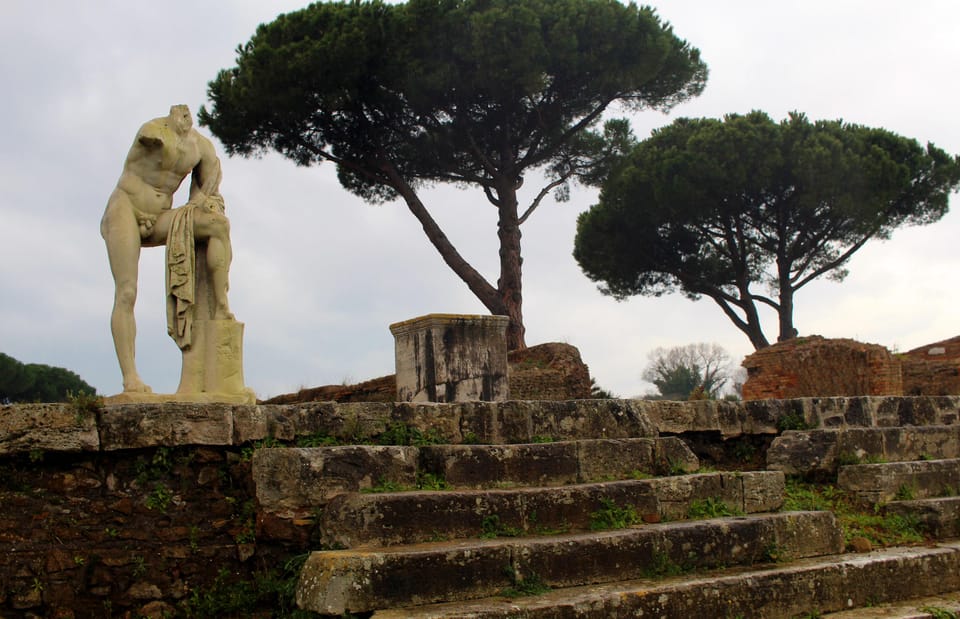
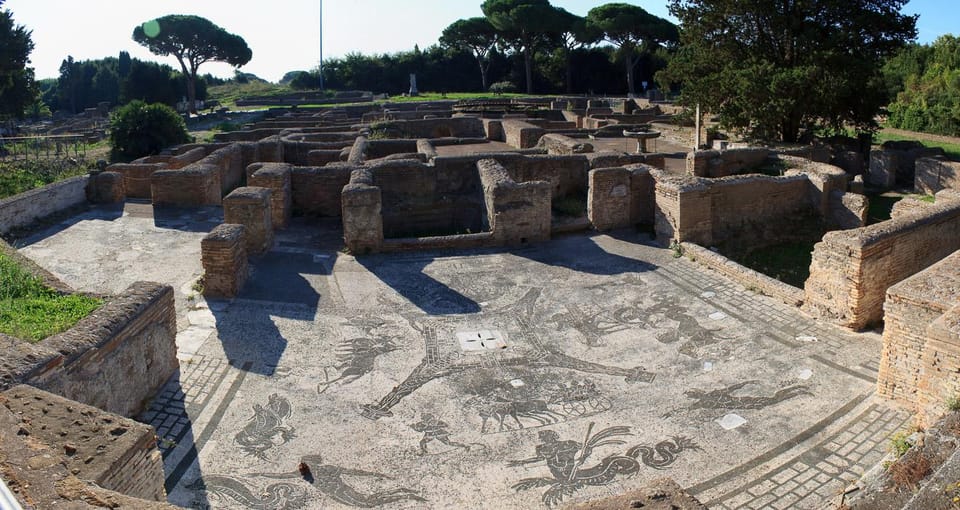
When you reach the archaeological park, the place hits you with an important reality: Ostia isn’t one single monument. It’s an urban sprawl—temples, houses, public spaces—laid out like a city you could actually navigate.
Your guide gives you the big picture early: Ostia was Rome’s thriving port city and commercial center. After the Roman Empire declined, the city was abandoned. Then the river changed course, and silt and mud covered the buildings. That protective layer is one of the reasons many features still feel so readable today—and why the ruins don’t feel like random rubble.
That context changes how you walk. You’re not just collecting photos of columns. You’re trying to picture what people did in the street outside those walls, where they met, where they bought goods, and where they relaxed.
Even if your Roman history is light, don’t worry. The tour is built for clarity: your guide explains what you’re looking at as you move from point to point.
The outdoor theater: plays, fights, and crowd energy
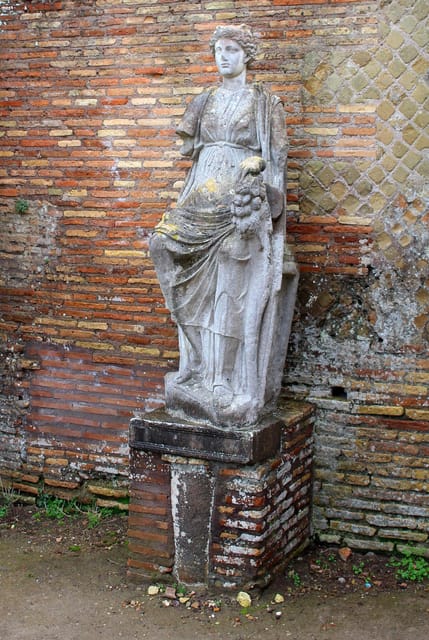
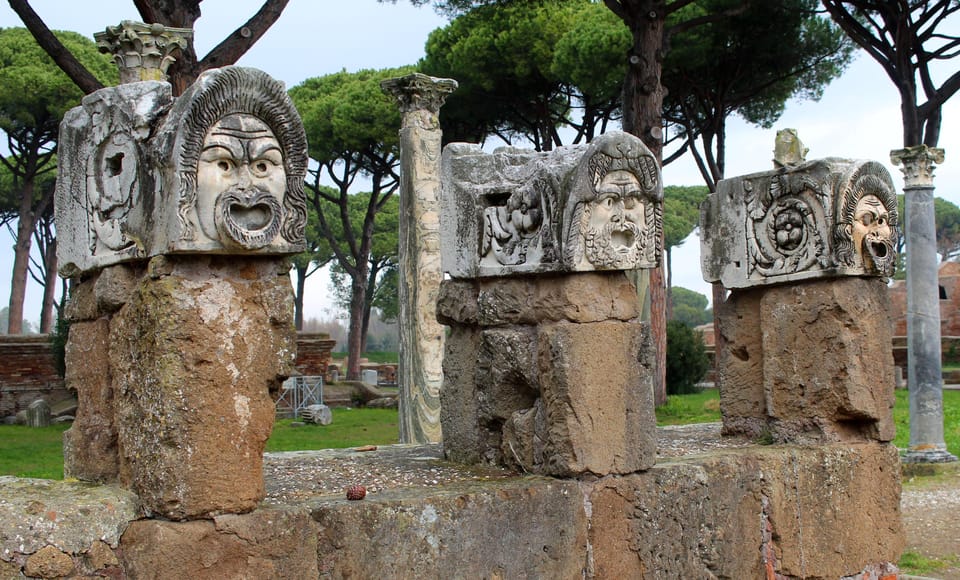
One of the most dramatic stops is the grand outdoor theater. This is the kind of place that makes ancient Rome feel like it had a pulse. The theater hosted plays, and it also staged gladiator fights—so it served more than one kind of entertainment.
What you’ll get here is scale and function. Look at the open-air design and think about sound carrying across the seating area. Then connect that to the idea that Ostia wasn’t only commerce; it was community life. When the crowds showed up, they weren’t visiting a relic. They were going to a regular event.
A practical note: since this is an outdoor setting, comfort matters. Wear solid shoes, and plan for sun exposure. Bring water, because you’ll be on your feet through several areas.
The Square of the Guilds: where trade meets public space
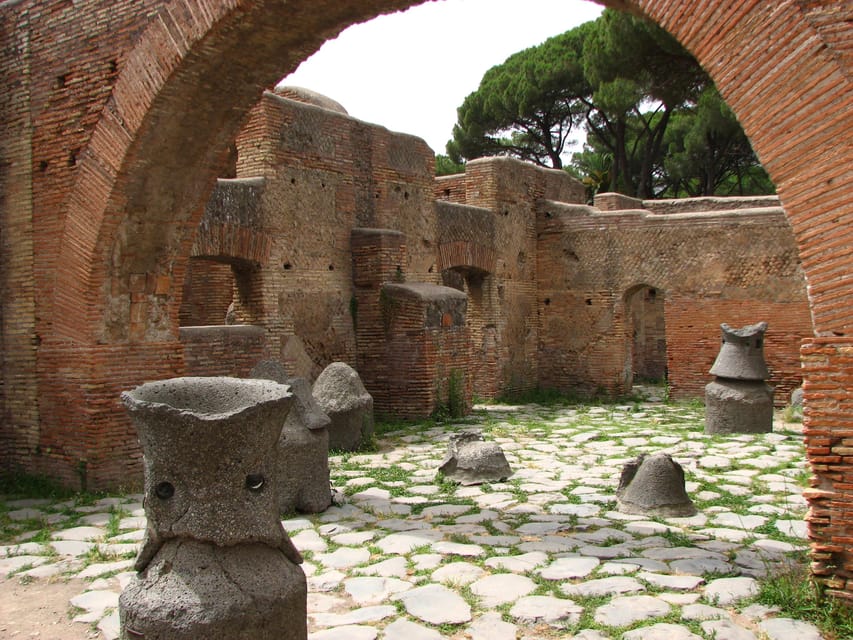
Down the street, you’ll move into the Square of the Guilds. This part of Ostia is key because it shows how money and work shaped city life. Ship owners and merchants tried to make their fortunes here, and the square reflects the kind of social energy you’d expect in a port city.
The value of this stop is understanding the rhythm of the place. Ports don’t just move goods; they move people, news, money, and ambition. Your guide’s explanations help you connect the physical layout to that reality, so it doesn’t stay abstract.
If you like cities that feel lived-in—where commerce, religion, and leisure overlap—this is one of the best moments on the tour.
Public baths: daily routine, not just a famous building

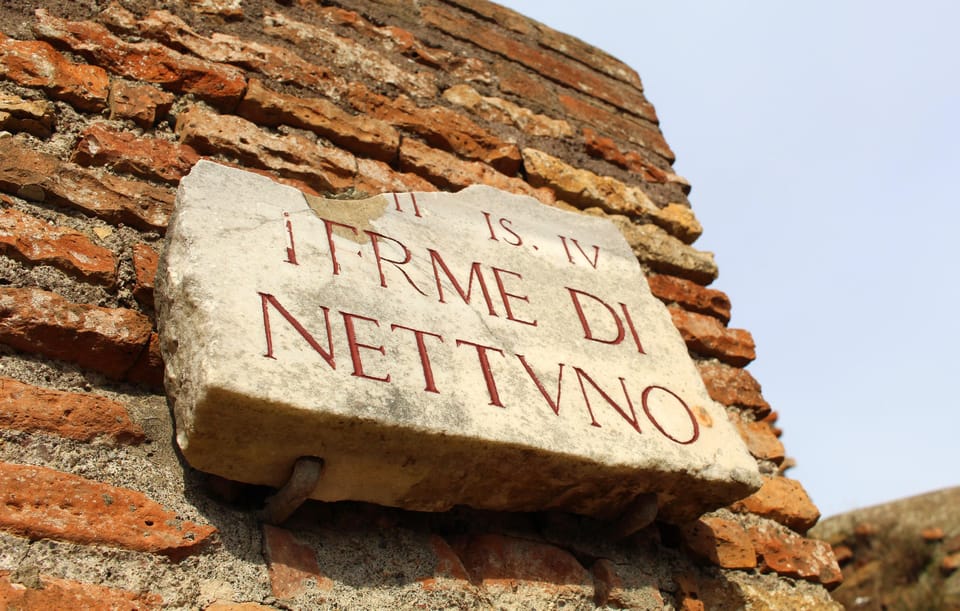
Next comes the public baths. Ostia’s bath houses were where people could lounge in pools, work out, and clean themselves with olive oil. It’s one of those stops that makes ancient culture feel oddly familiar.
Here’s how to get the most out of it: don’t treat it like a single photo stop. Instead, try to picture the sequence—exercise, bathing, cleaning, social time. These spaces were practical and social at the same time, which is why they matter.
This is also one of the spots where a guide really earns their pay. The ruins can look like “interesting architecture” until someone puts daily behavior behind the walls.





House of Diana: nighttime inside an ordinary life
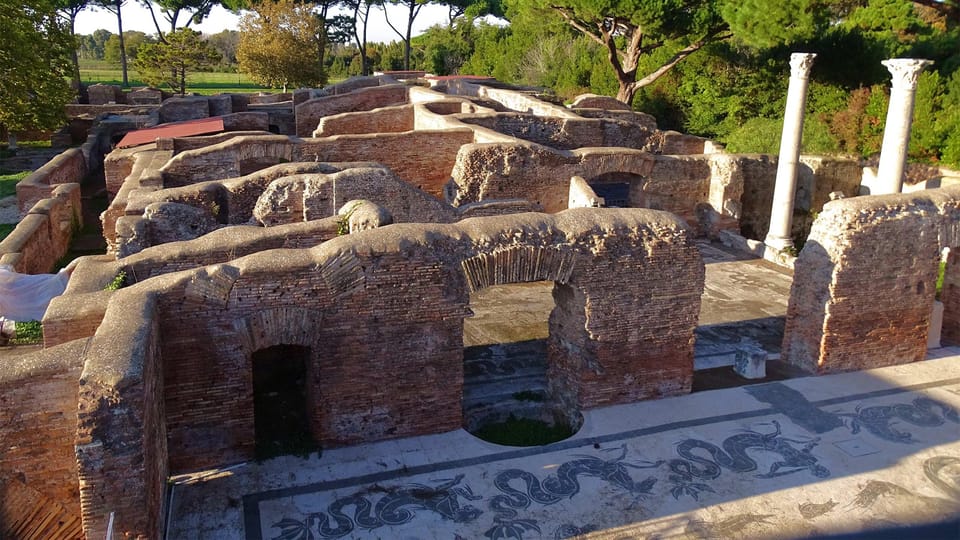
You’ll then walk to the House of Diana. This is a residential stop, and it helps balance the big public spaces you’ve already seen. You’ll see where ancients laid their heads at night, which grounds the story in lived experience.
I like this part because it shifts the perspective from crowds to quiet. Even though the House of Diana is still a ruin, it gives you a sense of how households worked and where daily routines played out.
The takeaway you’ll likely carry: Ostia wasn’t only for business and events. It had domestic life, too. That mix is what makes the city feel human.
Food, water, and walking comfort: what you’ll need
This tour is about sights, not meals. Food and beverages are not included, so plan ahead if you get hungry. A bottle of water is strongly worth it, especially in warmer weather.
Also, there’s a simple equipment rule: bring comfortable shoes. The site involves a moderate amount of walking, and you’ll be moving between multiple areas. There’s no wheelchair access on this experience, and luggage or large bags are not allowed. If you’re traveling with only a daypack, you’ll be happiest.
For your identity documents, bring your passport or ID card. A copy is accepted, but it’s easiest to just bring the real thing.
Price and value: why $113.17 can make sense
At $113.17 per person for a 4-hour tour, you’re not buying a quick photo shuffle. You’re paying for a structured, guided visit that includes transportation and entries.
Here’s the value equation that matters:
- Roundtrip train ticket is included, which removes a hassle (and a cost) from your planning.
- Skip-the-line tickets to the Ostia archaeological park save time on site.
- You get a small-group format plus a licensed live guide in English, Spanish, or French.
- The guide gives you context across multiple highlights, including the theater, guild square, public baths, and House of Diana—so you don’t have to interpret everything alone.
Where the value can wobble is if you personally hate walking or prefer to linger without a guide. This is a moving tour with stops that build on each other. If you love free-roaming for hours, you might find it too structured.
Group size and guide quality: where the tour earns praise
The biggest compliment you can give a ruin tour is whether the guide makes the site click. This experience leans hard into that. You’ll get plenty of information while you walk, and the guide helps connect what you see to what the city was doing when it was alive.
One detail I appreciate: the guide doesn’t just teach the ruin. They also share practical tips for what you might want to do next—like local transport info for another stop you’re thinking about. That kind of guidance is useful because it turns the day trip into a smarter Rome plan rather than an isolated detour.
Who should book this Ostia Antica tour
This is a strong choice if:
- You want Roman ruins with clear stories, not just scattered sights
- You like small groups and guided pacing
- You’re staying in Rome and want a day trip that starts with easy local transit
- You enjoy mixing public monuments (theater, baths) with residential life (House of Diana)
It’s less ideal if:
- You need step-free or very limited walking
- You rely on wheelchair access (this tour isn’t suitable for wheelchair users)
- You’re carrying large luggage (it’s not allowed)
Should you book Ostia Antica from Rome?
If you’re the type of traveler who wants the ruins to mean something, I’d book it. The combination of train + skip-the-line + guided highlights makes it efficient without feeling rushed.
Before you go, do the simple prep: comfortable shoes, water, a hat, and a plan for no included meal. Also double-check that a 4-hour walking tour fits your energy level.
If you want a day trip where you understand how Ostia worked as a port city—then see the theater, guild square, baths, and a home inside the same visit—this tour is a solid value use of your time in Lazio.
FAQ
How long is the Ostia Antica small-group tour?
The tour lasts 4 hours.
Where do I meet for the tour?
Meet in front of Roma Ostia Lido Train Station, Piazzale Ostiense, 9.
What time does the tour start?
Starting times vary, so check availability to see your departure options.
Is the train ticket included?
Yes. You get a roundtrip train ticket.
Do I need to buy tickets to enter Ostia Antica?
Skip-the-line tickets to the Ostia archaeological park are included.
What sites will we see during the tour?
You’ll see the outdoor theater, the Square of the Guilds, the public baths, and the House of Diana.
What’s not included in the price?
Food and beverages are not included, and there’s no hotel pickup or drop-off.
What should I bring?
Bring comfortable shoes, a hat, sunscreen, water, and your passport or ID card (a copy is accepted).
Is the tour suitable for wheelchair users or limited mobility?
No. It is not suitable for wheelchair users or people with mobility impairments.
Is luggage allowed?
No. Luggage or large bags are not allowed.