REVIEW · ROME
Explore Colosseum and Roman Forum with an Archaeologist
Book on GetYourGuide →Operated by Askos Tours · Bookable on GetYourGuide
You feel ancient Rome before you even start walking. This archaeologist-led tour pairs fast entry with smart explanations, so the sites make sense instead of just looking huge. I especially like two things: the skip-the-line start at the Colosseum and the way the route links key monuments together as a single story. One thing to consider: the walking pace is light, but it is still a lot of standing and moving inside major ruins.
I also like that you get high-value viewpoints, not just one angle. From the Colosseum’s higher levels, you’ll see down into the arena area and across to the wider historic landscape, including views toward Palatine Hill. Then the tour shifts to the Roman Forum, where you slow down and take in the political heart of the empire, with major sites like the Altar of Caesar and the House of the Vestals. The main drawback is practical: the experience is not designed for wheelchair users.
In This Review
- Key Things That Make This Tour Worth It
- A Skip-the-Line Colosseum Start You’ll Feel Immediately
- Entering the Colosseum: Higher Views and Better Understanding
- Arch of Constantine: Seeing the Message in the Stone
- Septimius Severus and Titus: Short Stops, Big Payoff
- The Velian Hill Moment and the Domus Aurea Tunnel
- Roman Forum: The Public Heart, Not Just Ruins
- Palatine Hill View: Scale That Changes How You See Everything
- What the Tour Is Really Like Day-of
- Price and Value: Is $198.25 a Smart Deal?
- Before You Go: Tickets, ID, and Practical Rules That Matter
- Who This Tour Suits Best (and Who Might Skip It)
- Should You Book This Colosseum and Roman Forum Archaeologist Tour?
- FAQ
- FAQ
- Where does the tour start?
- How long is the tour?
- What does the ticket include?
- What are the main stops during the walk?
- What languages are available?
- Is it accessible for wheelchair users?
Key Things That Make This Tour Worth It
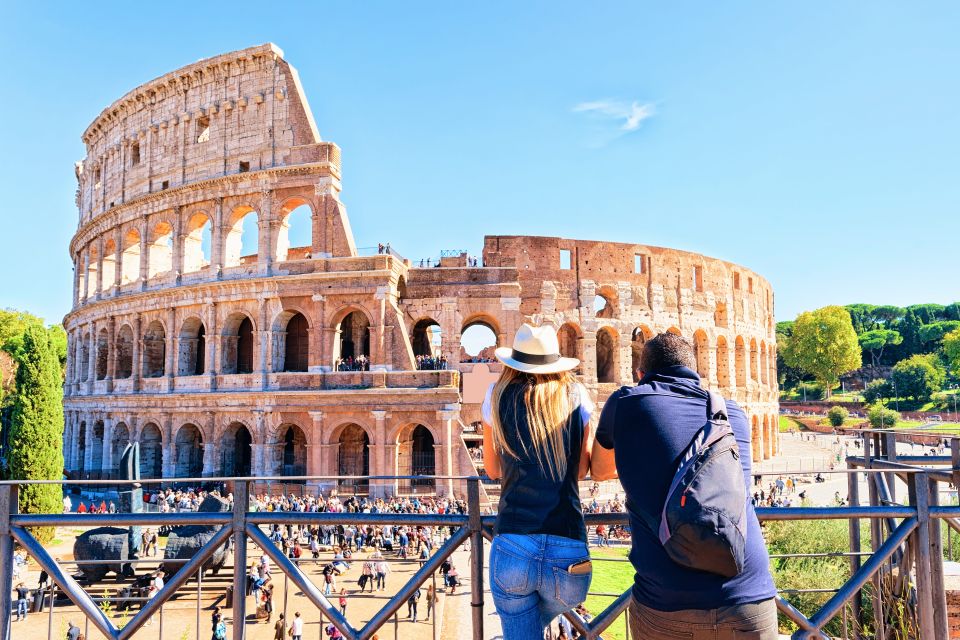
- Skip-the-line access to the Colosseum helps you spend more time looking and less time stuck.
- Archaeologist guide style explanations turn ruins into real places, with clear context you can actually use.
- Panoramic viewpoint from higher up in the Colosseum gives you a sense of scale and layout.
- Forum-to-monument connections keep the walk coherent, linking arches and hills to the story.
- Roman Forum anchors you in the daily life of ancient public power, from basilicas to vestal spaces.
- Private group means you can ask questions and keep your own rhythm.
A Skip-the-Line Colosseum Start You’ll Feel Immediately
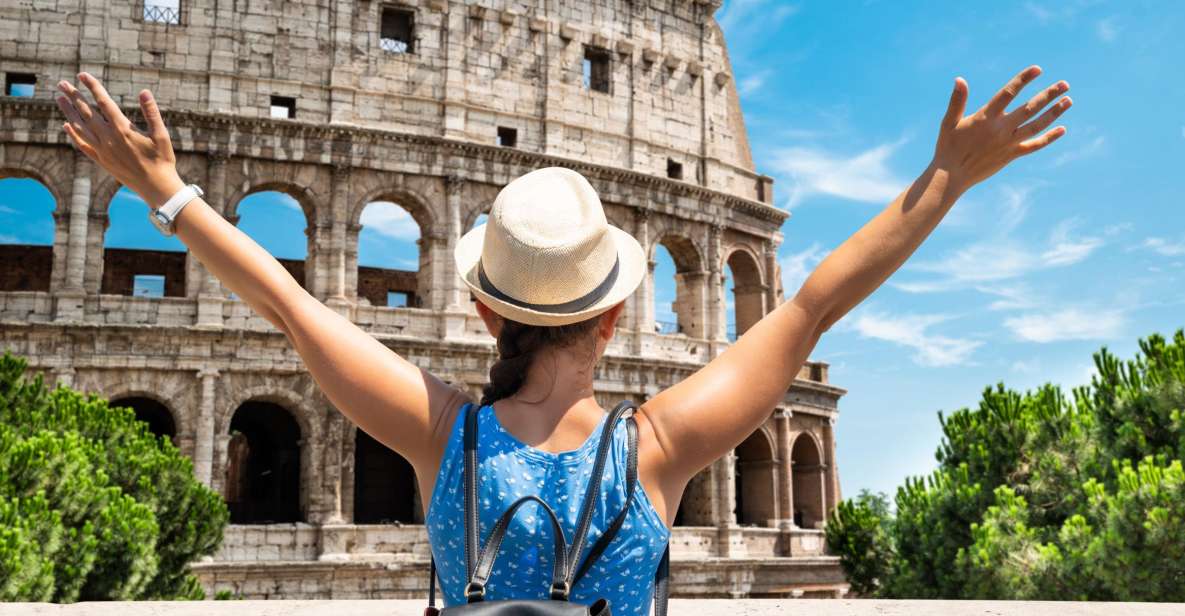
The best part of this tour is the momentum. You start at the green newspaper kiosk outside the exit to the Colosseo Metro station, and your guide holds a sign with your name so you can spot them quickly. From there, the whole plan is built around getting you through the Colosseum efficiently, then letting the guide do the heavy lifting of interpretation.
At the Colosseum, timing matters. Rome’s most famous ruin attracts crowds, and waiting too long can turn what should be awe into frustration. With skip-the-line admission included, you’re more likely to arrive ready to look closely instead of scanning for where the line ends.
This is also a private group, so you aren’t trapped in a herd pace. That matters for the Colosseum, where it’s easy to miss details if you’re rushing.
You can also read our reviews of more tours and experiences in Rome.

Entering the Colosseum: Higher Views and Better Understanding
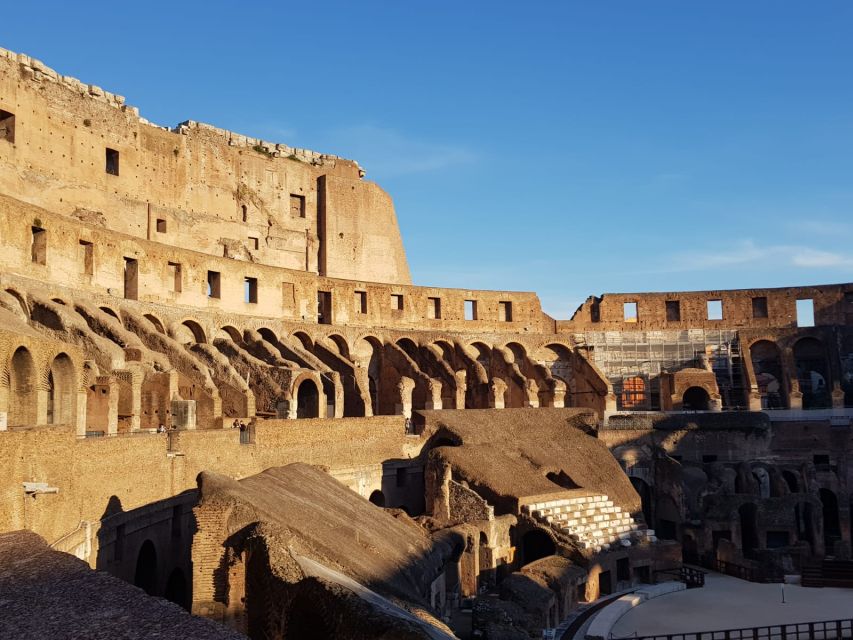
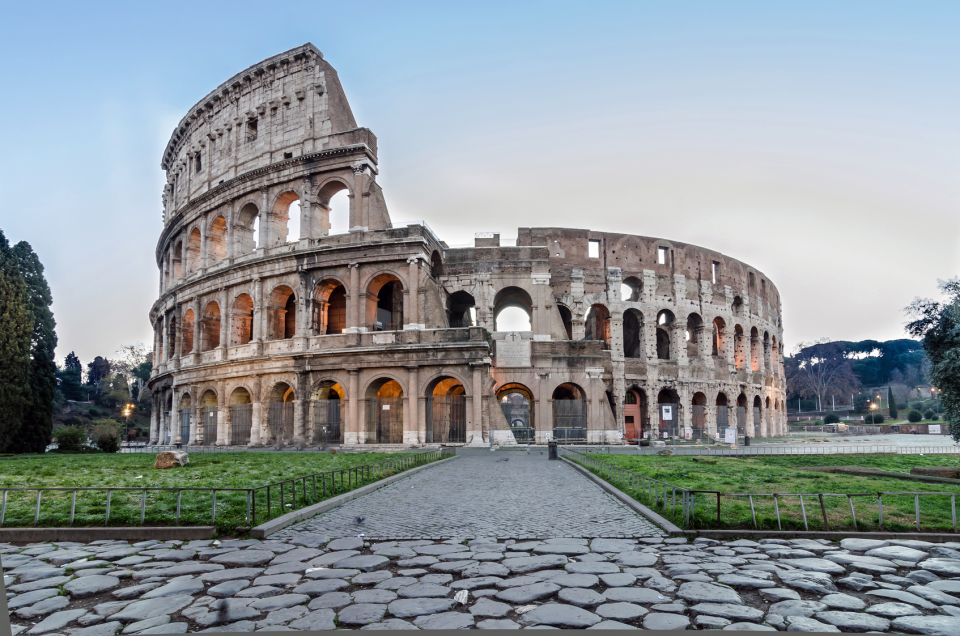
The Colosseum portion runs about 75 minutes, which is a strong amount of time for a guided visit when you’re focused rather than wandering. You’ll tour the Colosseum with a guide who reads the space like a map.
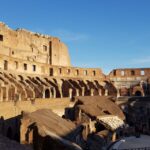
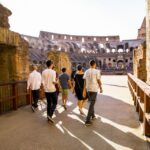
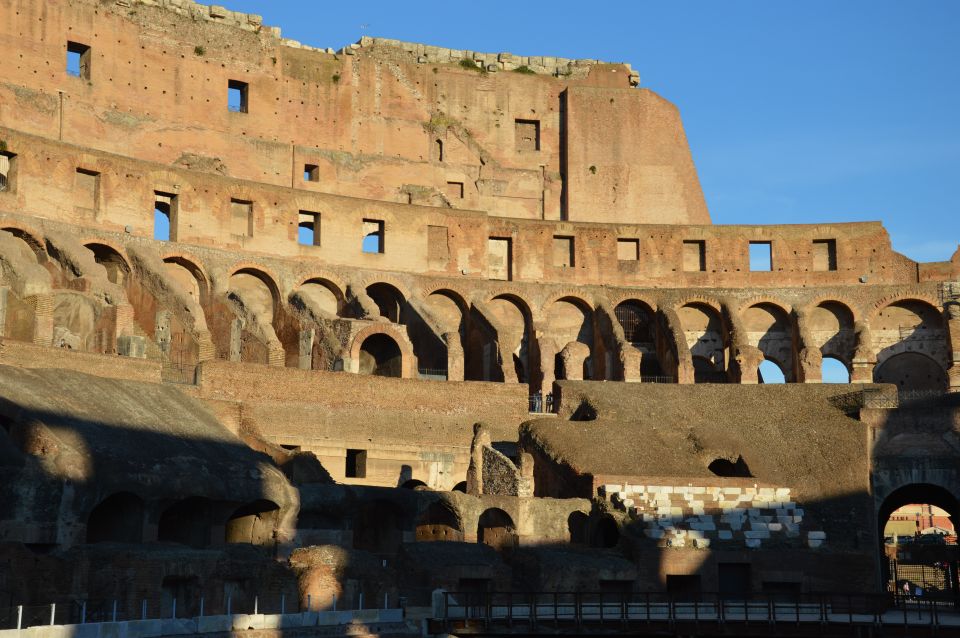
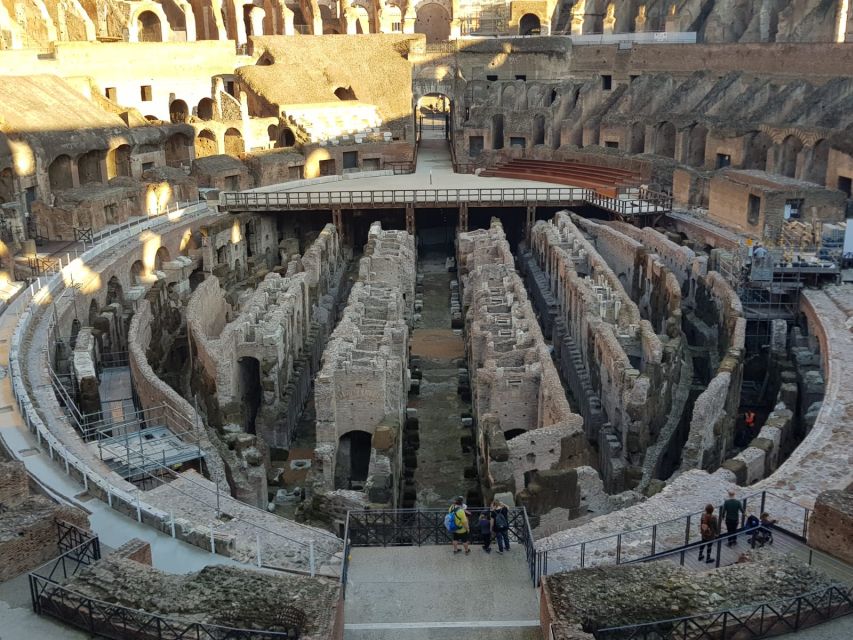
One of the most useful moments comes when you go up to the second ring. From there, you get a bird’s-eye perspective of the monument’s interior and the bustling square below. This is where your brain finally catches the building’s layout. Up close, you can see stones and layers. From up higher, you see structure, movement, and the relationship between the arena and the surrounding urban landscape.
The guide also points out specific sights tied to big-name Rome storytelling. You’ll look at the enormous base area tied to the Venus and Rome temple, including visible remains of the colonnade and walls. This is the kind of detail that’s hard to gather on your own because there’s no built-in signage that tells you what you’re looking at in plain language.
If you want a single takeaway angle from this part of the tour, it’s this: you don’t just see the Colosseum. You start understanding the surrounding setting and why the building dominated that part of the city.
Arch of Constantine: Seeing the Message in the Stone
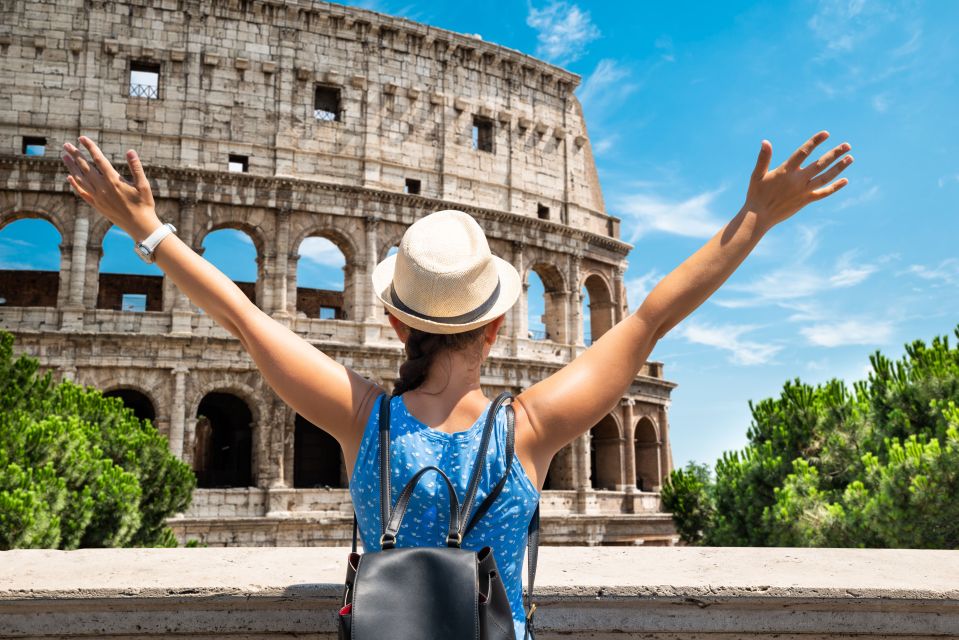
After the Colosseum, the route includes a stop at the Arch of Constantine. This isn’t only a photo moment. It’s a way to read Rome’s habit of using monuments as political messaging.
Here’s why this stop helps you: once you’ve gained perspective from higher in the Colosseum, the arches around the area stop feeling random. They become part of a visible network of approaches, celebrations, and imperial branding.
Your guide gives you the context to connect what you saw in the arena to what was meant to be seen by people walking through the city. Even if you’re not a classics person, that connection tends to click fast.
Septimius Severus and Titus: Short Stops, Big Payoff
You’ll make brief guided visits at additional arches:
- Arch of Septimius Severus (about 10 minutes)
- Arch of Titus (visited next in the sequence)
Short stops can sound like filler, but these arches do real work in this route. They help you understand how Rome marked victories and authority in visible places that everyday people could pass and recognize.
The best practical way to use these moments is to treat them as checkpoints. Each arch frames the next leg of the walk, so the story stays connected. You’ll also get helpful sightline context for what’s coming after.
The Velian Hill Moment and the Domus Aurea Tunnel
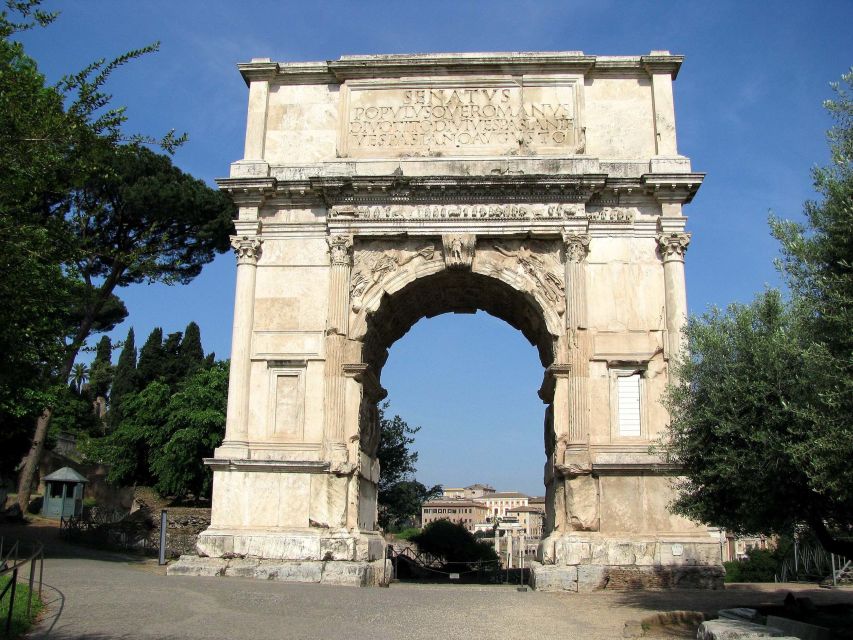
As the tour continues, you move toward the Velian Hill area. You’ll pass through the Arch of Titus and then travel through an underground tunnel connected with the Domus Aurea.
This is one of those experiences that changes how you picture ancient Rome. The Colosseum is loud in your mind because it’s iconic. The Forum is powerful because it’s complex. The underground element adds a different layer: it hints at how much of the city’s past lived below the surface, with routes and spaces that modern visitors rarely think about.
If you like the feeling of being guided along a path that suggests how people moved back then, this part will land well. It adds variety, and it breaks the walking rhythm so the tour doesn’t become repetitive.



Roman Forum: The Public Heart, Not Just Ruins
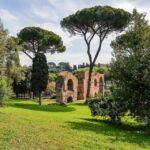
The tour culminates in the Roman Forum with about 1.5 hours dedicated there. This is the right amount of time, because the Forum isn’t one single landmark. It’s a whole working environment—administration, religion, law, ceremony—all layered into stones.
The guide helps you focus on major stops so the Forum stops being a blur of columns. You’ll see and learn about:
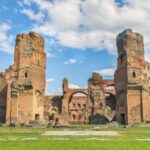
- Basilica of Maxentius
- House of the Vestals
- Temple of Antoninus and Faustina
- The Altar of Caesar
This set of sights covers the Forum’s different roles: public law and meeting spaces (basilica), religious authority (vestals), imperial worship and monument-style devotion (temple), and ceremonial power (Altar of Caesar).
If you’ve ever looked at the Forum and thought, I see ruins, but where does the story start, this is the fix. The route gives you anchors in the right order, so you can build a mental map as you walk.
Palatine Hill View: Scale That Changes How You See Everything
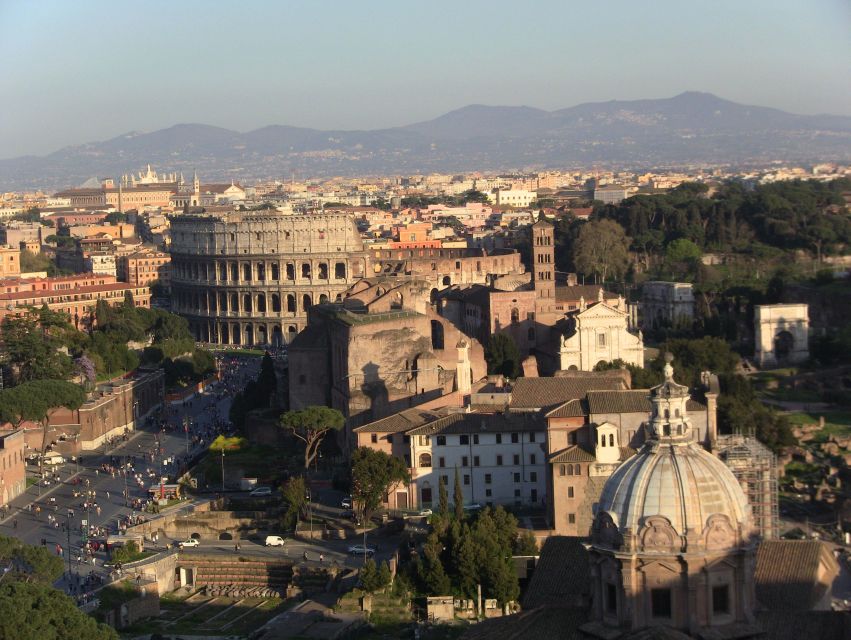
The highlight list calls out a view from Palatine Hill, and that fits perfectly with the tour logic. The Colosseum is massive, but it can also feel like an isolated monument. View moments correct that.
When you catch sight from higher angles and the surrounding hills, the city stops looking like “ruins on a flat plan.” You start to see elevation, movement corridors, and how the landscape helped shape Rome’s power centers. Even if you don’t count elevations for fun (I don’t), the visual context makes the Forum and imperial sites feel less random.
What the Tour Is Really Like Day-of
This experience runs for 3 hours total, and the activity level is listed as minimal. That means you won’t be doing a strenuous hike, but you should still plan for:
- steady walking on uneven historic ground,
- time spent standing to look at monuments,
- and plenty of time with your attention aimed upward and outward.
The route also has a clear structure, so you aren’t constantly asking where you are headed next. That helps a lot when you’re in Rome’s biggest sites, where it’s easy to lose your bearings even with a map.
The language options are wide—English, Italian, Spanish, French, German—so you can match your comfort level. And because it’s a private group, you’ll likely get more interaction than you would on a crowded large-group bus-style tour.
Price and Value: Is $198.25 a Smart Deal?
The price is $198.25 per person for a 3-hour private walking tour with an archaeologist guide, skip-the-line Colosseum access, and included admission and skip-the-line tickets (with the Colosseum ticket cost listed as 18 euro).
On pure cost alone, it’s not the cheapest way to see the Colosseum and Forum. But on value, it’s worth serious consideration because you’re paying for three things that are hard to replicate cheaply:
- time savings from skip-the-line entry,
- expert interpretation from an archaeologist-style guide rather than generic commentary,
- and route efficiency, with multiple major monuments packed into a coherent flow.
If you’re the type who wants to understand what you’re looking at—why certain ruins are where they are and what each site meant—you’ll feel the value quickly. If you just want selfies and the shortest possible visit, then a self-guided route might cost less.
For most people, this hits a sweet spot: enough structure that you don’t waste hours, enough time in the Forum that it actually sinks in, and enough viewpoints that you leave with more than surface photos.
Before You Go: Tickets, ID, and Practical Rules That Matter
A few “don’t get stuck at the gate” items are essential here.
You’ll need to provide the full names and ages of all travelers when booking. Also, carry a voucher that contains full names; failing to present that at the ticket office can lead to denied access to the Colosseum and Roman Forum.
Bring an identification document. Access can be denied even if you have tickets, if you can’t show ID.
And keep dates in mind: the Colosseum is closed on December 25th and January 1st.
The tour has restrictions too, including no pets, no weapons or sharp objects, no oversize luggage, and no strollers or mobility devices like scooters (and it is not suitable for wheelchair users). If you’re traveling with kids, the policy also notes unaccompanied minors aren’t allowed.
It’s a lot of rules, but they’re the kind that save you from arriving at a famously strict checkpoint unprepared.
Who This Tour Suits Best (and Who Might Skip It)
I think this tour is a great fit if you want:
- a guided archaeology lens that helps ruins make sense,
- a time-efficient Colosseum visit that avoids line stress,
- and a Roman Forum walk organized around major public sites rather than random wandering.
It’s also a strong choice for couples and small groups who want the experience to move at a comfortable pace with the ability to ask questions.
You might consider another option if you:
- need wheelchair access (this one is not suitable for wheelchair users),
- want a very long stay per stop (this is paced and structured for a 3-hour window),
- or prefer pure self-paced exploring with no guide interpretation.
Should You Book This Colosseum and Roman Forum Archaeologist Tour?
If you care about understanding more than just taking photos, I’d book it. The combination of skip-the-line entry, an archaeologist guide, and a Forum route built around major sites makes the time feel well spent. The pacing also seems to be a standout strength—this is the kind of tour where you don’t feel rushed from one landmark to the next.
If you’re visiting for the first time and want a “best hits plus context” plan, this is one of the smartest ways to do it. You’ll leave with a clearer picture of how the Colosseum, the imperial arches, and the Forum fit into one lived landscape.
FAQ
FAQ
Where does the tour start?
It starts at the green newspaper kiosk outside the exit to the Colosseo Metro station. Your guide holds a sign with your name on top.
How long is the tour?
The total duration is about 3 hours.
What does the ticket include?
Admission and skip-the-line tickets for the Colosseum are included, and you get a dedicated personal tour guide.
What are the main stops during the walk?
You’ll visit the Colosseum, the Arch of Constantine, the Arch of Septimius Severus, the Arch of Titus, and then spend time in the Roman Forum including stops like the Basilica of Maxentius, the House of the Vestals, the Temple of Antoninus and Faustina, and the Altar of Caesar.
What languages are available?
The live guide is available in English, Italian, Spanish, French, and German.
Is it accessible for wheelchair users?
No. The activity is not suitable for wheelchair users, and it also restricts certain mobility devices and strollers.