REVIEW · ROME
Rome: Caracalla, Colosseum, Circus Maximus Private Tour
Book on GetYourGuide →Operated by Tour in the City - Travel Agency Rome - · Bookable on GetYourGuide
Three sites, one clear storyline. This private Rome tour ties together the Colosseum, Circus Maximus, and the Baths of Caracalla—so you’re not just looking at ruins, you’re seeing how Romans played, competed, and bathed at a huge scale.
I love the way the guide keeps everything moving and makes the details click. I also like that you get a professional art historian style approach, with explanations that turn big stone structures into living Roman daily life. One thing to consider: you’ll walk a moderate amount and you’ll face airport-style security at the Colosseum, so wear comfortable shoes and plan for possible wait time in busy seasons.
A private format also matters here. When the group is just you, your guide can adjust pace and questions, and that good leadership shows in how smoothly the stops connect—especially between the Colosseum, the chariot arena of Circus Maximus, and the calmer, high-style ruins of Caracalla’s Baths.
In This Review
- Key Things I’d Highlight Before You Go
- A Private 3-Hour Rome Trio: Colosseum, Circus Maximus, Caracalla
- Where You Meet and How Early to Arrive
- Entering the Colosseum Without the Headache
- From Arena to Chariots: Circus Maximus
- Caracalla’s Baths: Roman Luxury in Ruins
- Guide Style, Headsets, and Why Private Works
- Price and Value: Is $215.23 Per Person Fair?
- What to Pack (and What Rome Won’t Let You Bring)
- Timing, Security, and the Realistic Flow of the Day
- Who This Tour Fits Best (and Who Might Want Something Else)
- Should You Book This Private Tour of Rome’s Colosseum and Caracalla?
- FAQ
- How long is the private tour?
- Where do I meet the guide?
- What time should I arrive?
- Do I need to buy tickets for the sites?
- Will I be able to enter the Colosseum?
- What languages are available for the guide?
- Is the tour wheelchair accessible?
- What items are not allowed during the tour?
Key Things I’d Highlight Before You Go
- Skip-the-line entry at the Colosseum helps you use your time well.
- Private, guided access through three major ancient sites for one focused theme.
- Headset listening kicks in for groups over 8, so the guide stays audible.
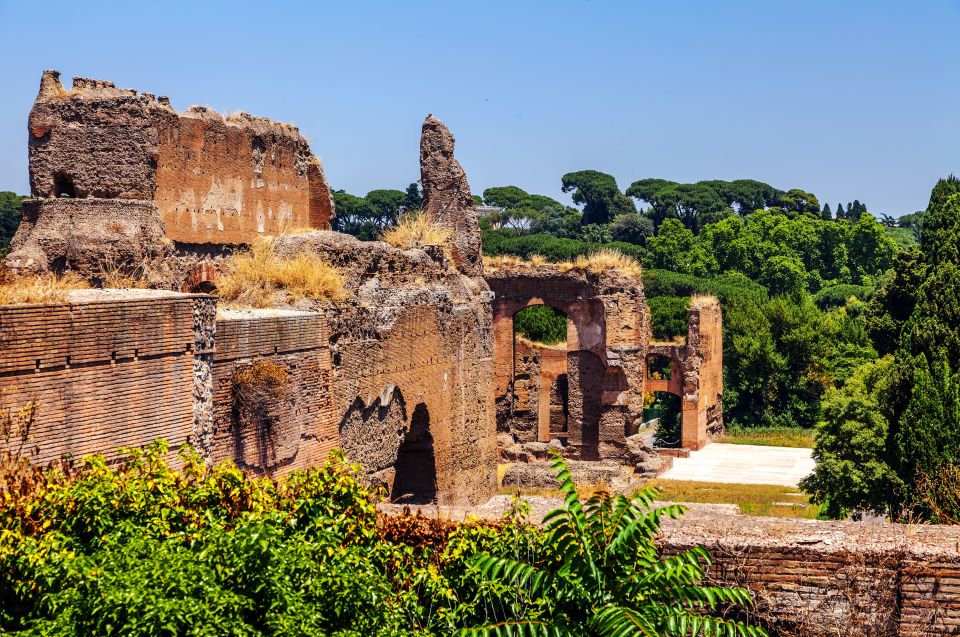
- Baths of Caracalla are top-tier preserved ruins, not just another quick stop.
- Roman capacity facts feel real once you stand in the locations—250,000 at Circus Maximus is hard to picture.
- Professional art historian guidance makes construction and daily life easier to understand.
A Private 3-Hour Rome Trio: Colosseum, Circus Maximus, Caracalla
This is a concentrated Rome archaeology tour built around Roman “public life” in three different forms. You start with spectacle and combat in the Colosseum. Then you shift into competitive speed and spectacle at Circus Maximus. You finish with public bathing—Roman social life, but in marble, water, and architecture designed for crowds.
The big value of a private setup is how much cleaner the experience feels. You’re not trying to keep up with a large group while you wrestle with questions, photos, and pace. Instead, you can settle into the story your guide is telling and actually follow the logic from site to site.
Also, this route is smart because the sites are different enough that you avoid ruin fatigue. The Colosseum has towering drama. Circus Maximus feels wider and more open in your imagination. Caracalla’s Baths bring things back to human scale with rooms, circulation, and the sense of how people lived in a public complex.
You can also read our reviews of more private tours in Rome

Where You Meet and How Early to Arrive
Meet at the tour supplier’s office on Via della Polveriera 11, located above and behind the Colosseum Metro Station. You’ll cross a small pedestrian bridge just up from and to the side of the 2nd level of the Colosseum Metro, then walk about 100 meters straight ahead from there.
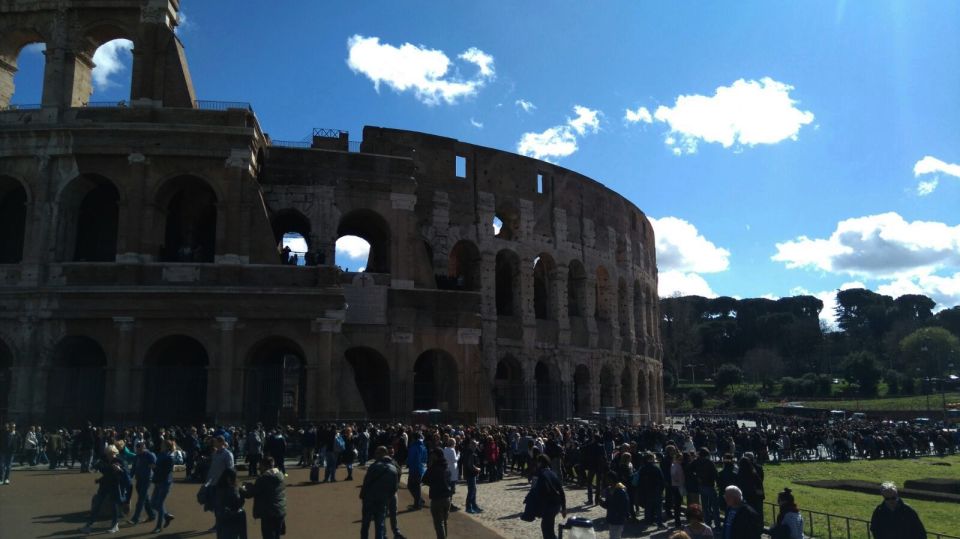
Arrive at least 30 minutes before departure. That buffer matters because security and ticketing can eat time. And yes—this tour requires airport-style security at the Colosseum. During high season, the wait at security may be up to 30 minutes, so the early arrival helps you avoid the stress spiral.
The day also has a stated “starting location” at Via delle Terme di Tito, 72. In practice, think of it as the first on-site point your guide works from right after your meeting near the Colosseum area. Either way, show up early so you can match up with your guide without rushing.
Entering the Colosseum Without the Headache
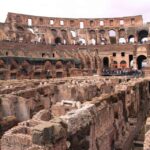
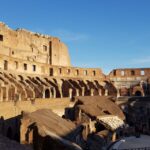
The Colosseum is the obvious headline, but the key here is how the tour handles getting inside. You’ll enjoy skip-the-ticket-line access and a guided visit inside one of the most famous monuments in the world. Once you’re in, your guide focuses on what made these spectacles possible: construction methods and the practical reality behind the show.
You’ll also hear stories connected to gladiators and the entertainments organized there. The goal isn’t just names and dates. It’s context—how the building functioned, how people would have moved, and why the architecture was built for repeated large-scale events.
One practical tip: photos and security rules can be tricky. Selfie sticks are not allowed inside the Colosseum for security reasons. Sunglasses are also listed as not allowed, so plan accordingly (for many people that just means swapping to contact lenses or leaving them in your day bag, but follow the rule given at the venue).
And remember the luggage situation. You can’t enter the Colosseum with large bags, backpacks, or suitcases. You may bring a small bag, but there’s no cloakroom service listed to accommodate large items. If you’re traveling light, you’ll feel calmer at security and at entry.
From Arena to Chariots: Circus Maximus
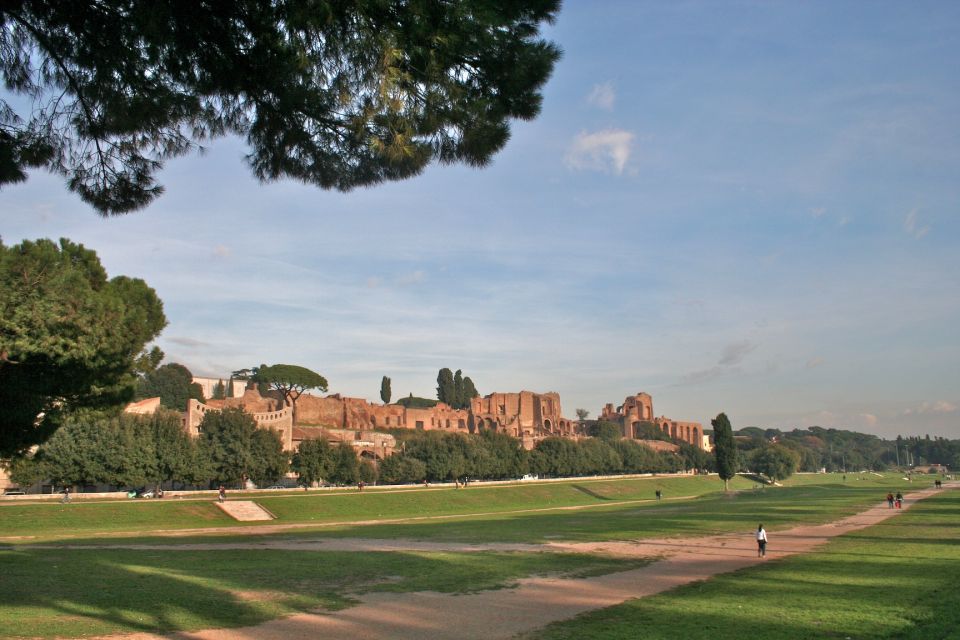
After the Colosseum, the tour moves to Circus Maximus, the Roman site for chariot racing. This is the place that helps you expand your sense of what “entertainment” meant in ancient Rome. It wasn’t one-off drama. It was a major public system with crowds on a huge scale.
This stadium is described as the first and largest in ancient Rome, with a capacity of more than 250,000 spectators. Standing in the area where those races happened, that number stops being trivia and starts being a mental challenge. Your guide helps you picture it—how dense the crowd would have been, and why this kind of event mattered politically and culturally.
One downside of Circus Maximus, compared with the Colosseum, is that it doesn’t feel like a fully enclosed monument today. The bones are mostly there, but the structure reads differently in the modern landscape. That’s exactly why having an expert guide helps. Without explanation, you might not “see” the shape of the original experience. With guidance, you can connect the geography to the spectacle.
Caracalla’s Baths: Roman Luxury in Ruins
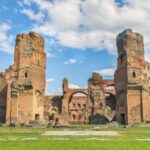
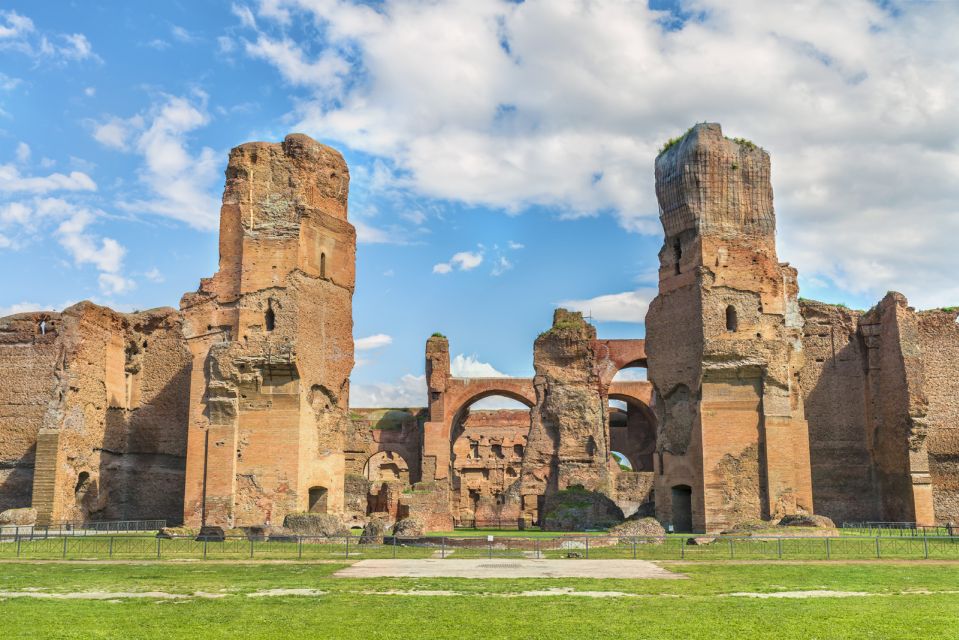
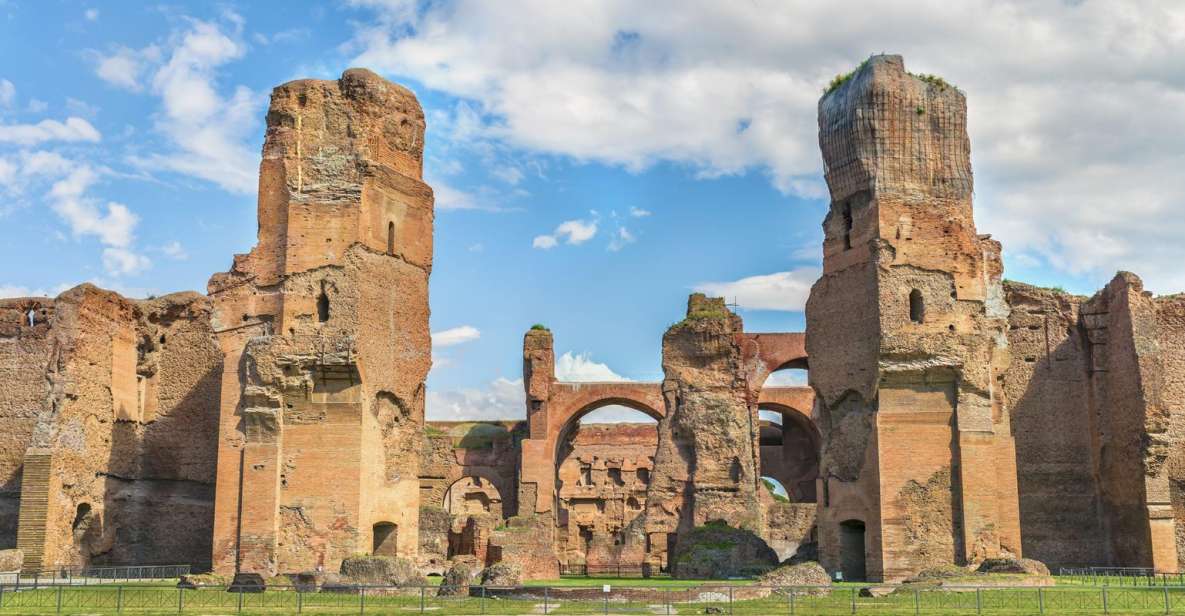
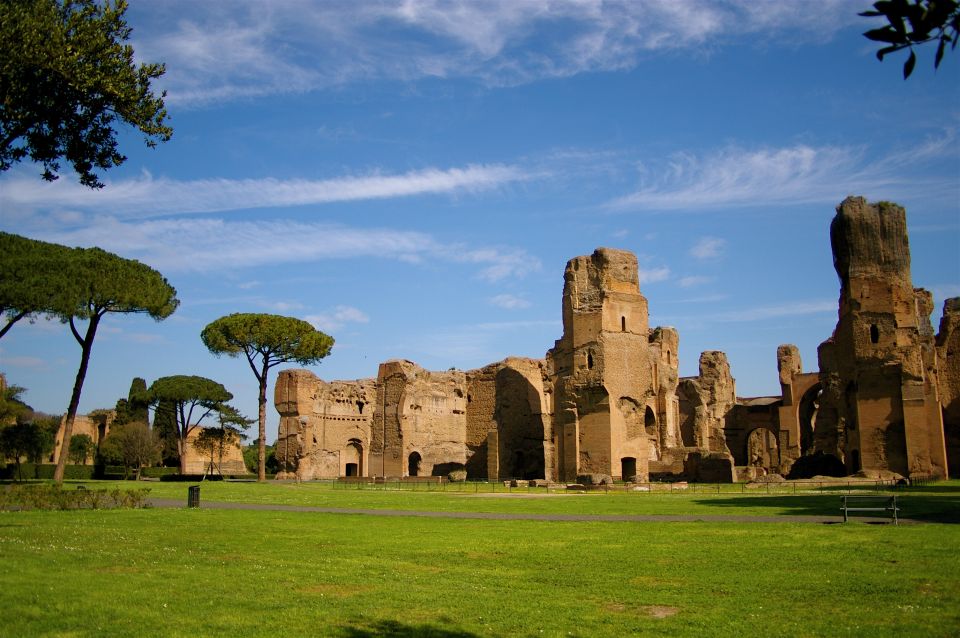
Caracalla’s Baths are a powerful way to end this tour. They’re the second-largest Roman public baths, built in Rome between AD 212 and 217 during the reigns of Septimius Severus and Caracalla. The scale is hard to ignore: the complex could host more than 1500 bathers.
What makes these baths special is that they’re among the best preserved. That means you’re not only looking at leftover walls—you’re more likely to feel the planning, the flow, and the seriousness of the architecture. Your guide will frame them as a masterpiece of Roman building design, not just a pile of stones.
This stop is also a nice change of pace. The Colosseum and Circus Maximus are about crowd energy and performance. The baths are about circulation—space for people to gather, wash, and socialize within a monumental public environment. Even if you’re not a “bath person,” it’s worth treating this as one of Rome’s best architecture lessons.


Guide Style, Headsets, and Why Private Works
This tour is led by a professional art historian guide, and that influences the whole experience. Instead of treating the sites as separate “photo backdrops,” your guide explains connections—construction choices, public space design, and how Rome engineered entertainment and daily routines for massive audiences.
The private format keeps it practical. You can ask a question without waiting your turn, and you don’t have to guess whether your guide will circle back to a point. The leadership is part of why the tour scores well overall: it feels organized, controlled, and easy to follow from stop to stop.
One small but helpful detail: headsets are included for groups over 8 people. Even on a private tour, this matters because you’ll be outdoors and moving, and it can be hard to hear a guide over foot traffic. With headsets, you can focus on listening instead of constantly repositioning for sound.
The tour language options are broad—Spanish, English, French, German, Italian, Portuguese, Russian—so you can pick a guide who matches your comfort level.
Price and Value: Is $215.23 Per Person Fair?
At $215.23 per person for about 3 hours, the main question is whether you’re paying for access, explanation, and convenience—and whether those add up for you.
Here’s what you’re getting for the price:
- A private tour (not a mixed group shuffle)
- Professional art historian guidance
- Guided walking through three major sites
- Skip-the-line entry
- Entrance fees are listed as included in the tour details
- Headsets for larger groups
One note to keep you confident: the information includes a contradiction where entrance fees appear both as included and also listed as not included. The safest approach is to check your booking confirmation. But the overall package clearly aims to bundle entry access and guide time into one ticketed experience, which is where a private tour can feel worth it.
If you’re the type who likes understanding how things work—why they were built, how people used them, how spectacle and public space were engineered—this price is more justified. If you only want a quick look and don’t care much about explanations, you might find cheaper group tours. But if you want three sites explained in one coherent run, this format is built for value.
What to Pack (and What Rome Won’t Let You Bring)
This tour is simple, but there are rules. Here’s what you should plan for so your day stays smooth.
Bring:
- Passport or ID card
- Comfortable shoes
Dress and day comfort:
- Smart casual is suggested
- You’ll do a moderate amount of walking
Leave at home (not allowed):
- Pets
- Sunglasses
- Weapons or sharp objects
- Smoking
- Luggage or large bags
- Selfie sticks
- Walking frames
- Sprays or aerosols
The overall theme is “keep it light.” No cloakroom service for large items is listed. If you’re carrying more than a small bag, you’ll likely face delays or be forced into a rethink.
Timing, Security, and the Realistic Flow of the Day
Expect airport-style security at the Colosseum. During high season, the wait may be up to 30 minutes. That’s not unique to this tour—it’s standard for entering the site—but it’s important to schedule your energy around it.
The tour itself is about 3 hours. That’s long enough for real guided content across three stops, but short enough to keep it from turning into a full-day marathon. If you’re pairing this with other Rome highlights the same day, build in extra time around the Colosseum because that’s where security and entry rules matter most.
Weather can also change the final order or route. The tour notes that the itinerary may vary depending on weather conditions or events beyond the travel agency’s control. In other words: don’t schedule an ultra-tight connection immediately afterward.
Who This Tour Fits Best (and Who Might Want Something Else)
This private tour works especially well if you:
- Want one guide to connect the Colosseum, Circus Maximus, and Caracalla’s Baths into a single story
- Prefer skip-the-line entry and a structured flow over DIY time
- Like architecture and how public spaces were engineered for huge crowds
It’s also a good fit for adults and families who can handle moderate walking. The tour isn’t wheelchair accessible, so if that’s a requirement, you’ll need a different option.
Kids discounts apply only with a valid ID card, which is a detail worth remembering when you book if you’re traveling with children.
One more practical note: a minimum of 2 people is required per booking. If you’re solo, you’ll need to confirm whether the operator can match you with others or whether single-person bookings aren’t available for your date.
Should You Book This Private Tour of Rome’s Colosseum and Caracalla?
I’d book it if you want a guided Rome experience that goes beyond looking and starts making the sites make sense. You’ll get skip-the-line access, a professional art historian guide, and a private setup that keeps things focused. The route also ends in a smart way, with Caracalla’s Baths shifting you from spectacle to Roman social life.
I’d think twice if you’re short on time, want a very hands-off experience, or don’t want to deal with security and tight bag rules. Also, if you need wheelchair access, this specific tour isn’t built for it.
If you’re aiming for value in understanding—not just photos—this one hits the sweet spot.
FAQ
How long is the private tour?
It lasts 3 hours.
Where do I meet the guide?
You meet at the tour supplier’s office, Via della Polveriera 11, above and behind the Colosseum Metro Station. The instructions say to cross the small pedestrian bridge just up from and to the side of the 2nd level of the Colosseum Metro, then walk about 100 meters straight ahead.
What time should I arrive?
Please be at the meeting point at least 30 minutes prior to your tour departure time.
Do I need to buy tickets for the sites?
Entrance fees are listed as included, and the tour also states skip the ticket line. However, the info includes a contradiction about entrance fees, so check your booking confirmation.
Will I be able to enter the Colosseum?
Yes. The tour starts at the Colosseum with a private guided tour inside.
What languages are available for the guide?
Spanish, English, French, German, Italian, Portuguese, Russian.
Is the tour wheelchair accessible?
No, it is not wheelchair accessible.
What items are not allowed during the tour?
Pets, sunglasses, weapons or sharp objects, smoking, luggage or large bags, selfie sticks, walking frames, and sprays or aerosols are listed as not allowed.