REVIEW · ROME
Rome:Hop-On Hop-Off Panoramic Open Bus Ticket 3 Circuits x 1
Book on GetYourGuide →Operated by Green Line Tours · Bookable on GetYourGuide
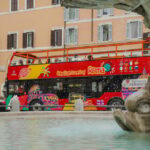
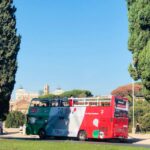
Jump on, and Rome clicks into place. This Rome hop-on hop-off ticket gives you panoramic views from an open-top bus while multilingual audio helps you connect each stop to what you’re actually seeing. It’s one of the easiest ways to get oriented fast, especially if you’re starting on day one.
I love the practical setup: buses run about every 20 minutes, you can hop on and off as many times as you like during the ticket window, and you’ll be dropped close to major sights. One drawback to keep in mind is audio quality: some buses/headphones may not be perfect, so plan to share or switch headphones if a few audio ports are temperamental.
In This Review
- Key Highlights at a Glance
- Why This Open Bus Tour Works in Rome
- Price and Value: Paying $20 for Flexibility
- Getting On at Piazza dei Cinquecento (Terminal 1/A)
- How the 3 Circuits Fit Together
- The Ride Stops: What You Should Watch For
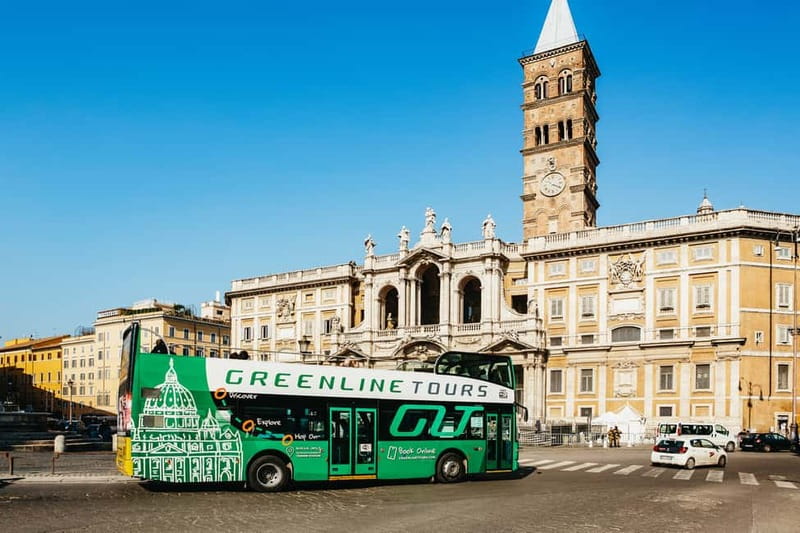
- Santa Maria Maggiore: A Strong Start in Central Rome
- Colosseum and the Ancient Core
- Circus Maximus: Space for Perspective
- Piazza Venezia: A Central Crossroads Feel
- Vatican City: St. Peter’s Square and Basilica Area
- Villa Borghese and Barberini: Views and City Rhythm
- Testaccio Quarter: Pyramids, Cemeteries, and a Different Rome
- Eataly Rome: A Food Stop That’s Also a City Stop
- Borghese Gallery Area: For the Art Crowd
- Bioparco di Roma: Zoo Time If You’re Traveling with Kids
- Villa Giulia and Museum-Hopping Energy
- Auditorium Parco della Musica and MAXXI: Modern Rome by the Bus Window
- Audio Guide Tips That Make a Difference
- Timing: Buses Every 20 Minutes Means You Can Loosen Your Schedule
- What’s Not Included (So You Don’t Get Surprise-Booked)
- Who Should Book This Hop-On Hop-Off Ticket
- Should You Book This Ticket?
- FAQ
- FAQ
- How long is the ticket valid?
- Where do I start the tour?
- How often do the buses run?
- What does the ticket include?
- Is food or entry to attractions included?
- Is it wheelchair accessible?
Key Highlights at a Glance
- 3 circuits with unlimited hop-on hop-off during your ticket validity
- Multilingual audio in 16 languages with narration as you ride
- Frequent service (about every 20 minutes) so you’re not stuck waiting
- Onboard perks like free Wi-Fi, live bus tracking, and an assistant
- Stops close to classics plus modern food and arts areas like Eataly and MAXXI
Why This Open Bus Tour Works in Rome
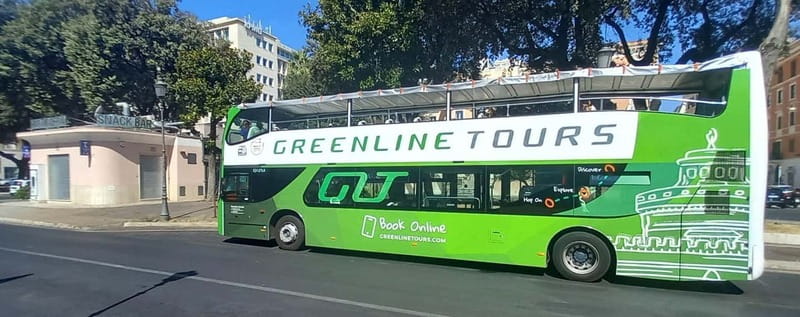
Rome has a way of making plans… elastic. Streets twist, sights are spread out, and you often do better when you can switch from sightseeing mode to walking mode whenever you feel like it. A hop-on hop-off bus is a simple tool for that. You get a loop that keeps you moving through key areas, and you decide which monuments deserve your feet and which ones you can admire from the curb.
This ticket is especially good because it includes audio commentary and not just a route map. When you’re looking at the Colosseum or St. Peter’s area, it helps to know what you’re seeing without needing to stop and read signage every five minutes. Plus, the bus is open-top, so you’re not stuck behind glass while you scan skylines and domes.
You can also read our reviews of more tours and experiences in Rome


Price and Value: Paying $20 for Flexibility

At around $20 per person, the value comes from the combination of things you’d otherwise pay for separately: multiple circuits, repeated use over a short window, and built-in guidance. Instead of buying a bunch of separate guided tours just to learn where things are, you’re buying time and context.
Here’s why the math often works out in your favor:
- You can ride for the full valid period (from 9 hours up to 3 days depending on what you select).
- You can hop on and off repeatedly, not just once.
- You get audio in many languages, plus free Wi-Fi and live bus tracking, which helps you plan your next move.
If you only want one or two attractions, it may feel like overkill. But if you want to see a lot and choose what to walk without committing to a rigid tour schedule, this is one of the most efficient ways to do it.
Getting On at Piazza dei Cinquecento (Terminal 1/A)
Your starting point is Piazza dei Cinquecento, corner Via Cavour (Terminal 1/A). This matters more than you’d think. A clear meeting location reduces the stress of your first hour in Rome. And since the buses run frequently, arriving a little early is usually just fine.
Practical tip: bring comfortable shoes and keep your sunglasses and sun hat handy. Rome’s sun can hit hard, and you’ll be getting on and off often enough that you’ll feel it.
Also note: you need to show the original booking on the day of your activity, not a screenshot. That small detail can save you from standing around while everyone else boards.
How the 3 Circuits Fit Together
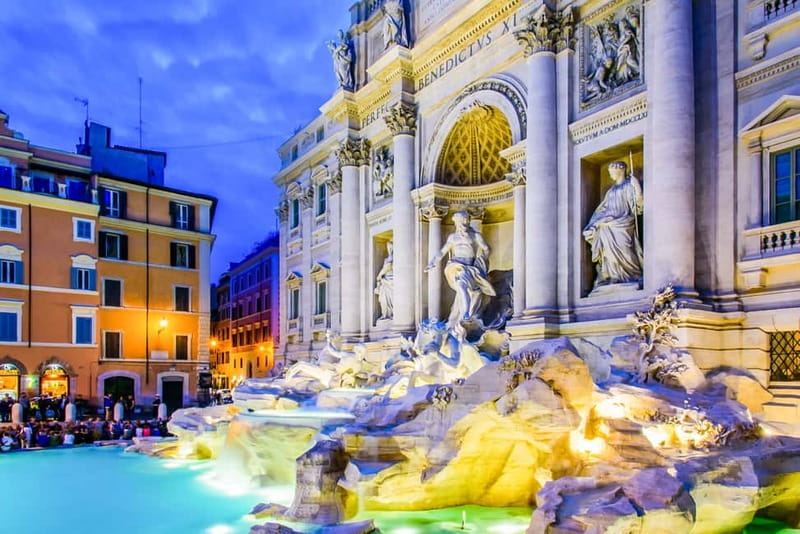
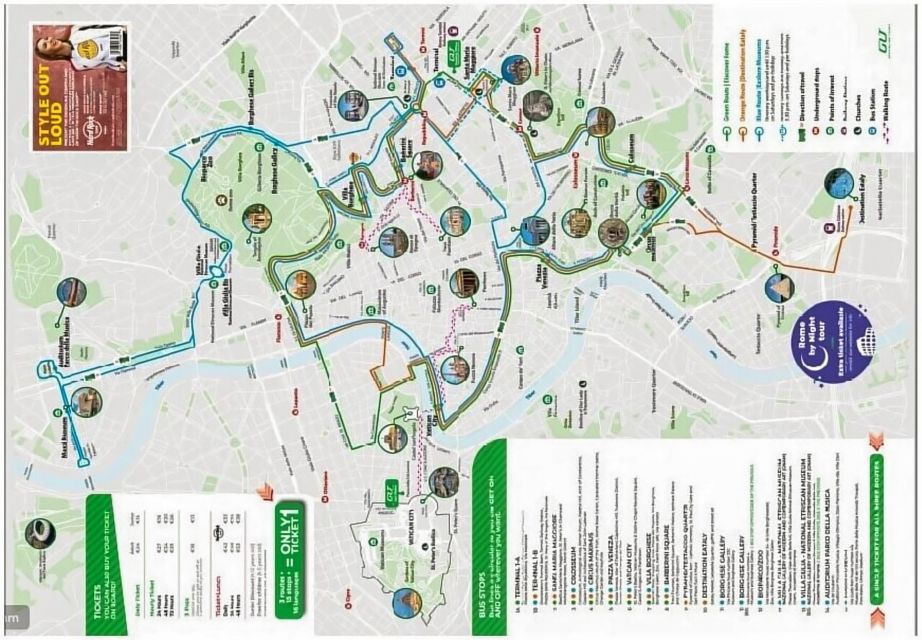
This ticket includes access to three routes/circuits with unlimited stops during your validity window. The idea is simple: you’re not locked into one tight loop. You can spend one chunk of the day in the “big classics” zone, then swap to other areas for museums, viewpoints, shopping, and food.
Even if you don’t have time to get off at every stop, you’ll still benefit from riding the route. You’ll build a mental map: where the big ancient sites sit in relation to central Rome, how the Vatican area lines up, and how far certain neighborhoods feel from the main tourist cores.
The Ride Stops: What You Should Watch For
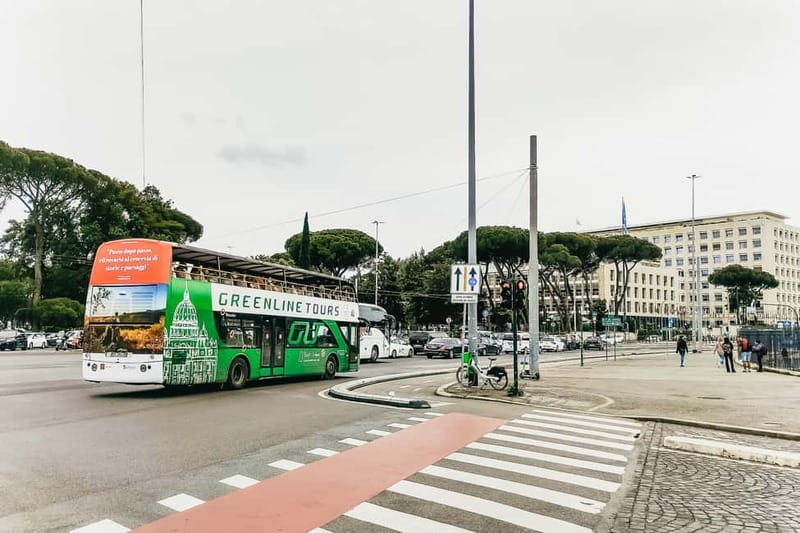
Below is the route flow as it circles through major areas. I’ll focus on what each stop area gives you and what to watch for when you’re deciding whether to hop off.



Santa Maria Maggiore: A Strong Start in Central Rome
Your first “drop-close” stop is Santa Maria Maggiore (Piazza dell’Esquilino, 12). From here, you’re positioned well for understanding the city’s layout. Even if you don’t go inside right away, it’s a helpful anchor point because it sits in the broader historic center rather than at the edge of everything.
Why hop off: if you want an early taste of Rome’s church-and-baroque streetscape rhythm before you hit the heavyweight sites.
Why stay on the bus: if your goal is just to get your bearings and save energy for later.
Colosseum and the Ancient Core
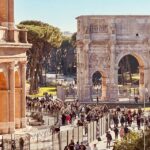
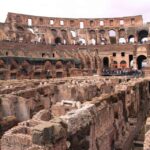
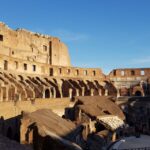
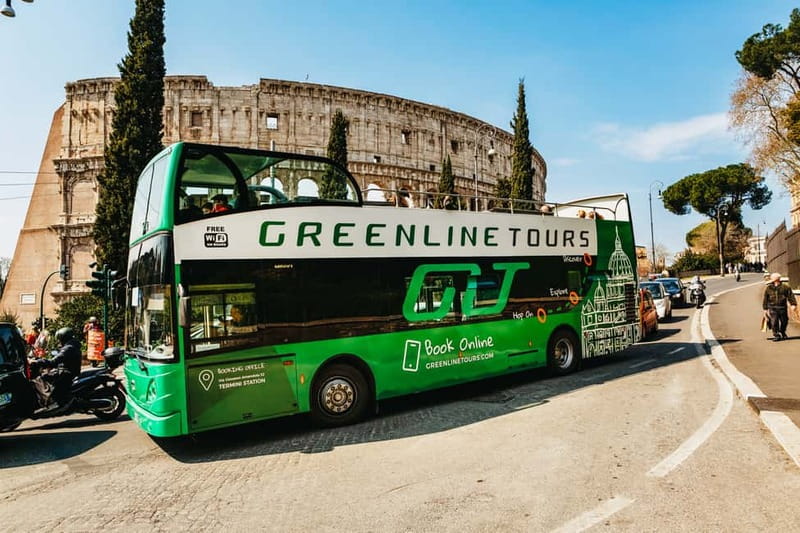
Next up is the Colosseum area (Via di San Gregorio, close to the Palatine entrance). This is your “wow” stop—whether you step down to explore or just look around as the bus rolls by.
From the open-top vantage point, you can scan how the Colosseum complex fits into the surrounding streets. That matters when you later plan where to walk. You get a quick sense of direction, exits, and how the area connects to other ancient zones.
Drawback to consider: the bus can’t replace standing close to the stone. If you have time, stepping off and getting your own photos at ground level is worth it.
Circus Maximus: Space for Perspective
You’ll pass by Circus Maximus (via del Circo Massimo Belvedere Romolo e Remo). This stop is great for changing perspective. The Colosseum is tight and vertical; Circus Maximus is about scale. Even from the bus, you’ll feel the difference in how Rome’s ancient spaces were designed.
If you’re the kind of person who likes a mix of “architecture facts” and “I want to see what scale feels like,” this is a good one to mark as a hop-off candidate.
Piazza Venezia: A Central Crossroads Feel
Piazza Venezia (Via del Teatro Marcello in front of civic numbers 32–34) is one of those Rome stops where you can orient quickly. It sits near multiple historic corridors, so it’s useful if you want to shift from major landmarks to central strolling.
This is also a logical pause point if you want to break up the day: ride for a while, hop off for a wander, then reboard when your legs need a reset.
Vatican City: St. Peter’s Square and Basilica Area
Next, you reach Vatican City (Lungotevere Tor di Nona 7). You’re in the right zone for St. Peter’s Square and St. Peter’s Basilica. The value here is that the bus gets you close enough to understand the Vatican layout without you having to cram everything into one timing window.
What to do from the bus: use the ride to line up sightlines and understand where key areas are relative to where the stop drops you.
What not to expect: the bus itself doesn’t replace entry tickets or a full visit inside major religious sites, since other entrance tickets are not included.
Villa Borghese and Barberini: Views and City Rhythm
You’ll pass Villa Borghese (Via Ludovisi, 48) and later Barberini Square (Via Barberini, 14). This stretch is more than a break from the ancient-heavy loop. It’s where Rome starts to feel like a lived-in city again: shops, cafes, and long “walkable” corridors.
Why hop off: if you want a calmer pace and a chance to mix sightseeing with browsing.
Why stay on: if you’re tired and just want that sweeping view rhythm from above.
Testaccio Quarter: Pyramids, Cemeteries, and a Different Rome
The route continues toward the Pyramid/Testaccio Quarter, with the area around the Pyramid of Cestius, the Non-Catholic Cemetery, and the vicinity of St. Paul Outside the Walls (as described by the stops). This is where the bus does you a favor: it brings you to a less “postcard-only” part of town.
Why this is worth it: it helps you see Rome beyond the most photographed corners.
Possible consideration: if you want only the biggest headline monuments, you might skip this hop-off and spend more time near the Vatican/Colosseum.
Eataly Rome: A Food Stop That’s Also a City Stop
Then there’s Eataly Rome (linked with the Garbatella Quarter and street-art area). This is one of the best “no-brainer” options for a quick food break because it’s designed for browsing.
Just keep expectations straight: food and drinks aren’t included, but you can use this stop to refuel without having to plan far in advance.
Borghese Gallery Area: For the Art Crowd
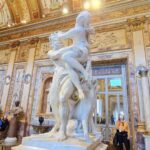
The route includes Borghese Gallery (Via Pinciana 33). This is a strong option if your trip includes at least one major art museum experience.
Since entry tickets aren’t included, use the bus as your positioning tool. Hop off to figure out the walk route and plan timing so you’re not scrambling later.
Bioparco di Roma: Zoo Time If You’re Traveling with Kids
You’ll reach Bioparco/Zoo (Via Mercadante 34, 36). If you’ve got kids—or if you simply want a break from monuments—this is a useful stop to know exists. The bus keeps it easy to reach without hunting for local transport.
Villa Giulia and Museum-Hopping Energy
Next is Villa Giulia / National Etruscan Museums around Piazza Thorvaldsen and the museum cluster noted on the route. The tour also lists the National Gallery of Modern and Contemporary Art in the same area description.
This is a good zone if you want your Rome day to include something less “ancient ruins” and more museum-focused.
Auditorium Parco della Musica and MAXXI: Modern Rome by the Bus Window
Near the route end, you’ll pass:
- Auditorium Parco della Musica (Via de Coubertin)
- MAXXI Museum (Via Guido Reni 4/a)
This is a nice reminder that Rome isn’t only ancient stone. The bus routes here let you shift from classical sites to modern arts spaces without re-planning everything.
Audio Guide Tips That Make a Difference
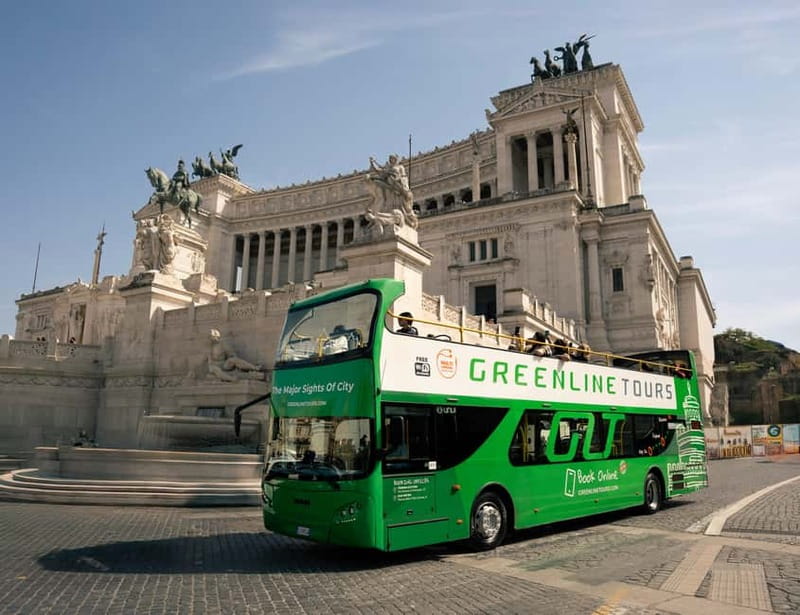
The ticket’s big advantage is that audio commentary is included, with an option across many languages. You can listen in Italian, English, Dutch, French, German, Spanish, Arabic, Chinese, Japanese, Portuguese, Russian, Hindi, Korean, Greek, Hebrew, Polish.
Two practical tips based on real-world issues people run into:
- Seat choice can affect how well you hear the commentary. If it sounds low, try moving to another spot or switching headphones.
- Some units can be finicky. If you notice one side doesn’t play, share headphones or request a replacement if staff can help.
Also, take advantage of the fact that this style of audio tour is meant for flexible listening, not forced pacing. You can keep it on while you ride, then turn it down while you walk and look around.
Timing: Buses Every 20 Minutes Means You Can Loosen Your Schedule
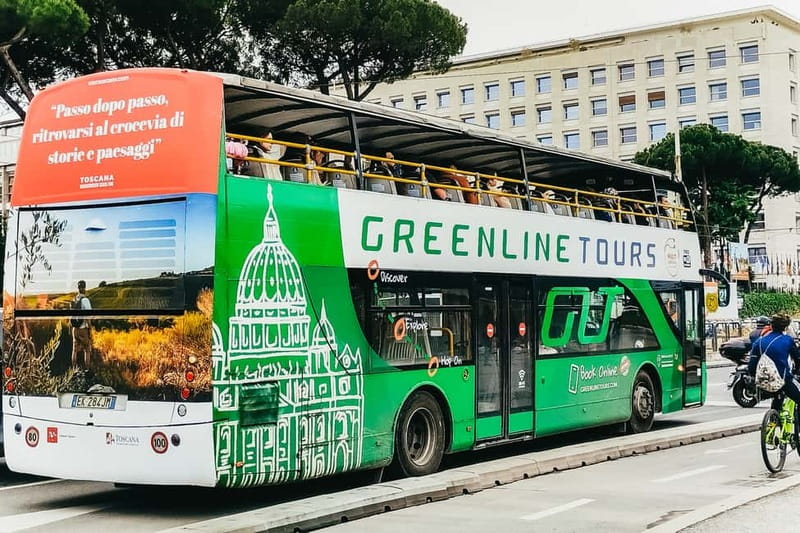
The buses run approximately every 20 minutes. That frequency is exactly what you want for Rome, because it gives you options:
- If you hop off and your walk turns into a long café break, you don’t feel trapped.
- If you’re running late, you’re usually not stuck for long.
A smart approach: ride one circuit early to set your mental map, then use the rest of your validity time to do 1–3 deeper on-foot visits.
What’s Not Included (So You Don’t Get Surprise-Booked)
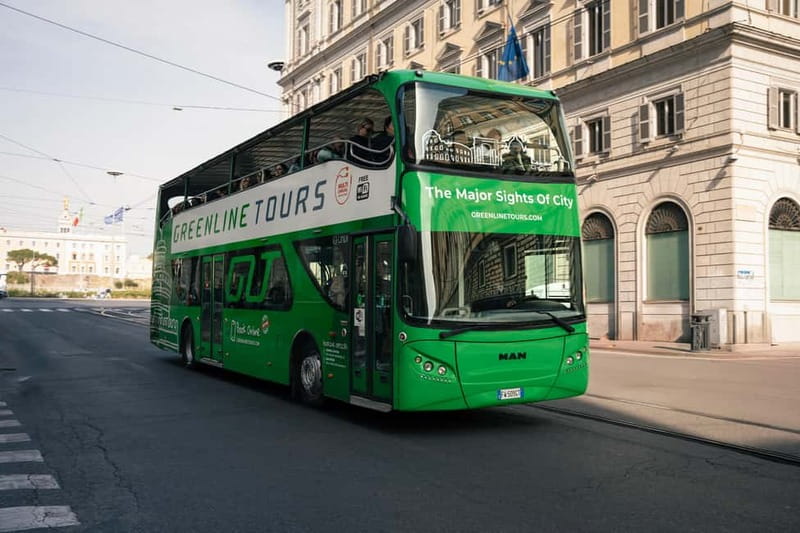
This ticket includes transport, audio, and onboard amenities, but it doesn’t include:
- Entrance tickets to attractions
- Food and drinks
That’s normal for a bus pass. The key is to treat it like transportation plus guidance, not a full-coverage museum ticket.
Who Should Book This Hop-On Hop-Off Ticket
This works best if you want:
- A first-day orientation so you know how Rome’s neighborhoods connect
- A flexible plan that mixes riding with walking
- A low-pressure way to cover major sights without stacking multiple guided tours
It may be less ideal if you prefer a single, timed, in-depth tour experience at every stop. In that case, you might still use the bus once for orientation, but you’ll likely want separate tickets for the sites you truly care about.
Also, it’s listed as not suitable for wheelchair users, which is important to plan around.
Should You Book This Ticket?
Yes, if you want a practical Rome overview and you value flexibility. The combination of 3 circuits, unlimited hop-on hop-off within your validity window, and audio in 16 languages makes it a strong deal for time-starved trips.
Skip it or use it lightly if you’re only chasing one or two sights and you’re already confident navigating Rome on foot. Otherwise, this is a smart first move: get your bearings, pick your favorite areas, and spend your walking time where it matters most.
FAQ
FAQ
How long is the ticket valid?
Your ticket is valid for 9 hours to 3 days, depending on what you book. You’ll need to check available starting times to match your plan.
Where do I start the tour?
The tour starts at Piazza dei Cinquecento (corner Via Cavour), Terminal 1/A. It ends back at the same meeting point.
How often do the buses run?
Buses run approximately every 20 minutes.
What does the ticket include?
You get access to all bus routes, multilingual audio commentary, single-use earphones, an assistant on board, live bus tracking, and free Wi-Fi onboard.
Is food or entry to attractions included?
No. Other entrance tickets and food and drinks are not included.
Is it wheelchair accessible?
No. This activity is listed as not suitable for wheelchair users.