REVIEW · ROME
Rome: Colosseum Arena, Palatine Hill & Forum Guided Tour
Book on GetYourGuide →Operated by Show Me Italy · Bookable on GetYourGuide
The Colosseum feels different when you enter the right way. This guided tour gets you into the amphitheater through the Gladiator’s Gate, then continues into the Roman Forum so you connect the arena action to Rome’s political life. Two things I especially like: you get fast-track access that helps you move past the worst waits, and the tour spotlights the areas most people miss, like the senator seating and animal-release trap door.
I also like that the guide doesn’t just point at ruins. If you choose the arena floor option, you’ll see a partially reconstructed section to help your brain picture what the building looked like in use. You’ll also get close-up views from the edge of the arena floor that frame the underground chambers and gladiator pathways.
One consideration: this is not suitable for wheelchair users or people with mobility impairments. You’re walking on ancient, uneven surfaces and spending time outdoors, so plan for a solid walking pace in real-world Roman heat or rain.
Key highlights to look for
- Gladiator’s Gate entry so you start with the right drama and viewpoints
- Fast-track entrance to cut down on time, not just sightseeing
- Arena floor access (optional) with a partially reconstructed view
- Arch of Constantine featured during the Colosseum walk
- Palatine Hill + Roman Forum for the full “who ruled and how” story
- Guides often tailor the pace and photo stops, with standout named by name like Magda, Radu, and Tiziana
In This Review
- Entering the Colosseum Through Gladiator’s Gate
- Fast-Track Security and Getting There Without Losing Your Day
- What You See Inside: Senator Seats, Trap Doors, and the Underground
- Arena Floor Option: A Partly Reconstructed Perspective
- Arch of Constantine: The Colosseum’s Big Landmark Moment
- Palatine Hill: Where Rome’s Power Story Gets Personal
- The Roman Forum: Entering the Heart of Political and Social Life
- Pacing, Group Size Energy, and Photo Time
- Price Value: Why $73.89 Can Make Sense
- What to Bring (and What to Skip)
- Tour Languages and Who It Suits Best
- Should You Book This Colosseum, Palatine Hill & Forum Tour?
- FAQ
- How long is the tour?
- Does this include skip-the-line entry?
- What’s included in the Colosseum portion?
- Is access to the arena floor included?
- Do I also visit Palatine Hill and the Roman Forum?
- What languages are the guides available in?
- What should I bring and what’s not allowed?
- Is it refundable if I change my plans?
Entering the Colosseum Through Gladiator’s Gate
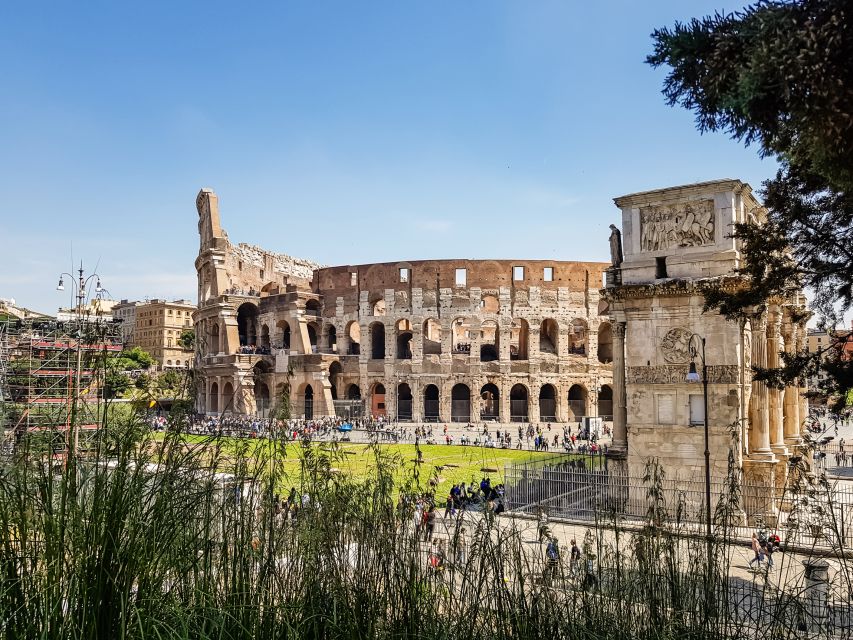
This tour is built around a simple idea: start at the Colosseum in a way that makes sense for the story. Instead of approaching from the generic crowd flow, you enter via the Gladiator’s Gate, which immediately changes how you feel standing inside the amphitheater. The mindset shift is real—you’re not just looking at old stone; you’re stepping into the building’s original “stage entrance.”
From the first moments on site, your guide’s job is to turn what you see into something you can read. Expect clear explanations of how the Colosseum was brought to life, how events unfolded, and what the different parts were used for. It’s one of those tours where you leave knowing more than a few trivia facts—you understand the layout and why people gathered where they did.
Fast-Track Security and Getting There Without Losing Your Day
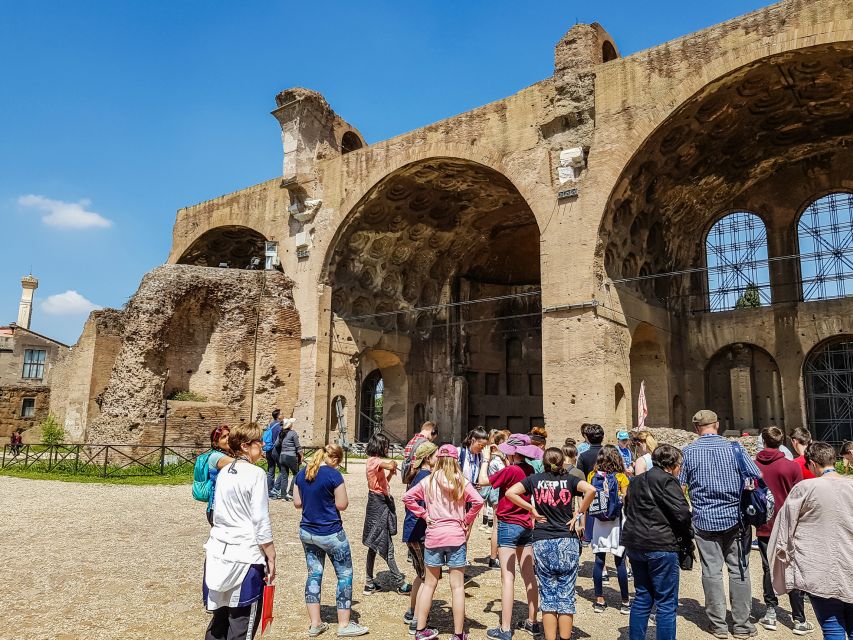
You do get fast-track entrance, but it’s important to understand what that really means. There are mandatory security checks at the Colosseum and the other sites, and the time for that check can still be significant at peak times. The ticket line can move faster, but the security line is a separate reality.
That’s why I tell you to treat timing like a practical sightseeing rule, not a guess. Show up with a little buffer so you’re not rushing through check-in while trying to stay calm. Also, the meeting time can change and you’ll be contacted by email if it does—so keep an eye on your inbox once you book.
You can also read our reviews of more guided tours in Rome
What You See Inside: Senator Seats, Trap Doors, and the Underground
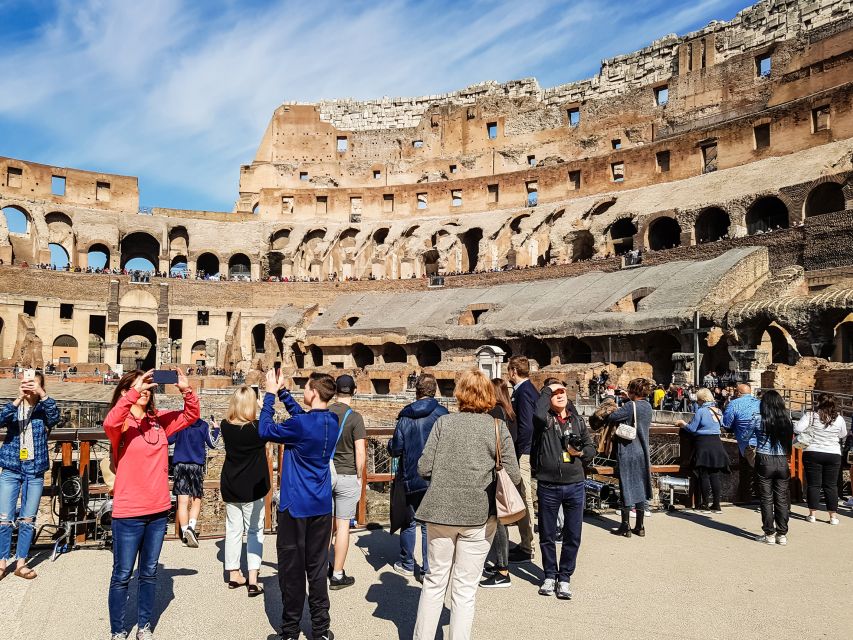
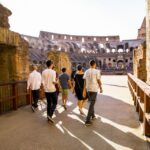
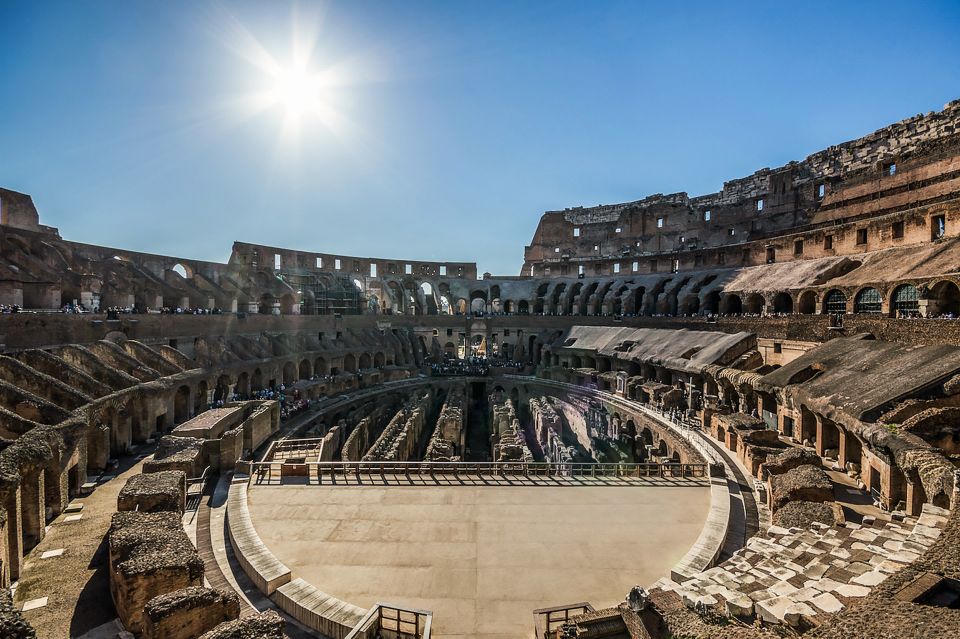
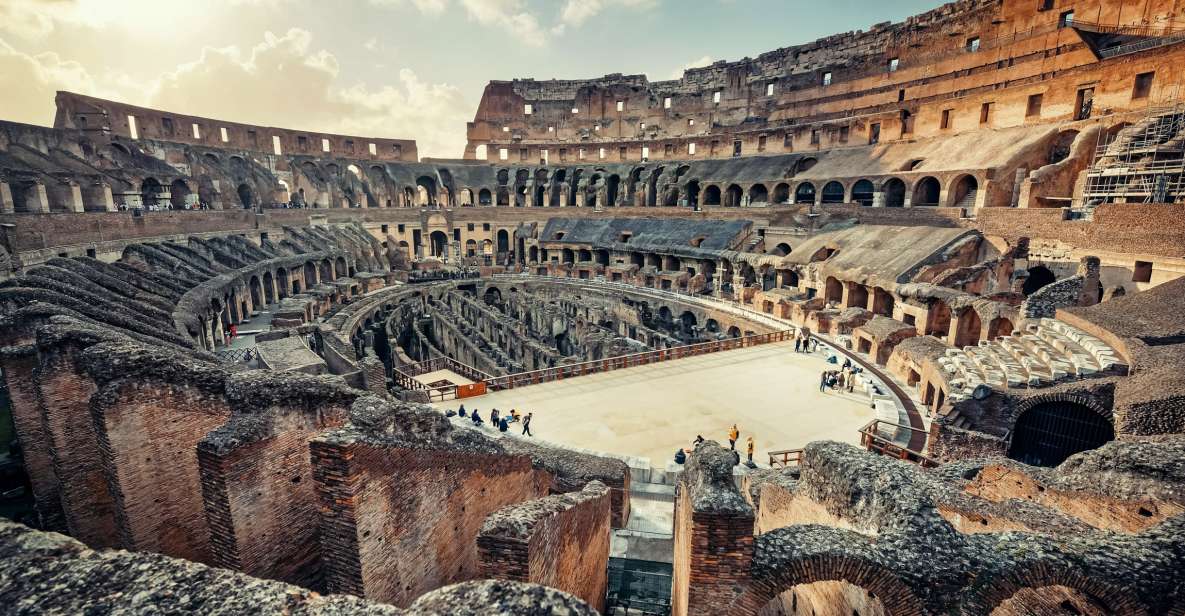
After you get in, the guided portion focuses on the Colosseum as a working machine. You’ll stand on the arena level and get a close-up view of the senator seats. That’s a smart stop because it anchors the story in power—who watched, where they sat, and what that meant in Roman society.
Then comes one of the most striking elements: the trap door area where wild animals were released for public entertainment. Your guide explains how battles and spectacles played out over time, and how different spaces connected above ground to what happened below.
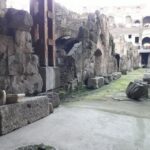
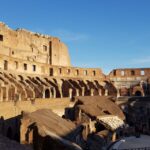
If you look outward from the arena floor edge, you can also see toward the underground chamber areas and the pathways taken by gladiators. Even without special effects, the way it’s structured gives you that “oh, this is how they moved people” clarity. It’s the kind of detail that makes the Colosseum feel less like a photo backdrop and more like a system.
Arena Floor Option: A Partly Reconstructed Perspective
If you selected the arena floor add-on, you’ll spend about 20 minutes on that extra access. The value here is not just proximity—it’s context. You’ll see a partially reconstructed section of the arena floor, which helps you build a mental image of what the stage looked like when it was active.
This is a great option if you like visualization. The arena floor is hard to fully picture from the stands, especially if you’ve never tried to map what a crowd would see. With the reconstruction, your brain starts linking levels and functions instead of just admiring scale.
One more practical note: that extra time is short on paper, but it’s timed to keep the flow of your tour. You’re not stuck waiting around; you move in, see the key parts, and then continue to the bigger story on Palatine Hill and the Forum.
Arch of Constantine: The Colosseum’s Big Landmark Moment
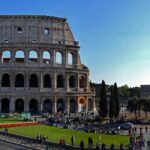
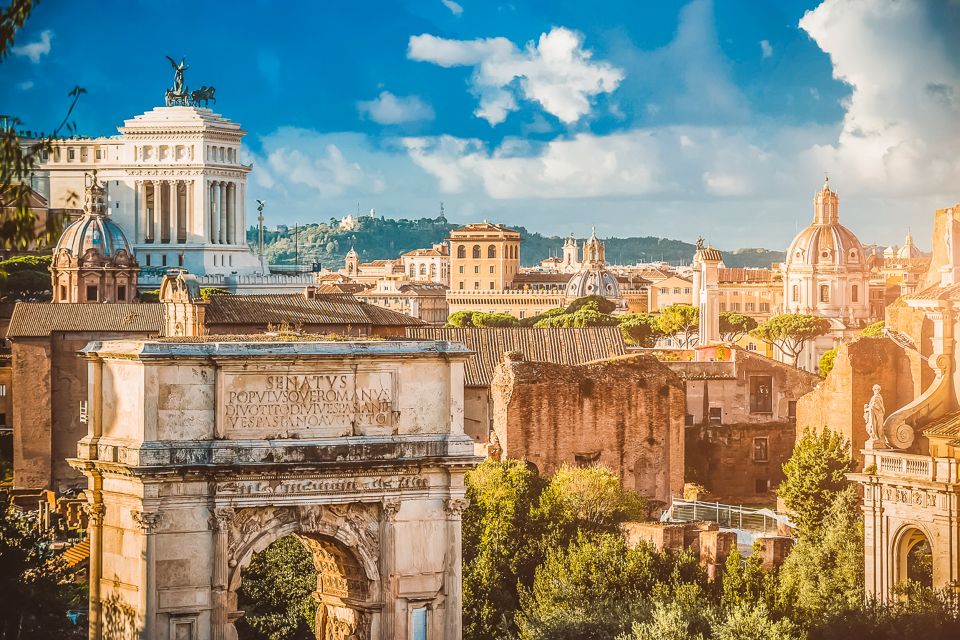
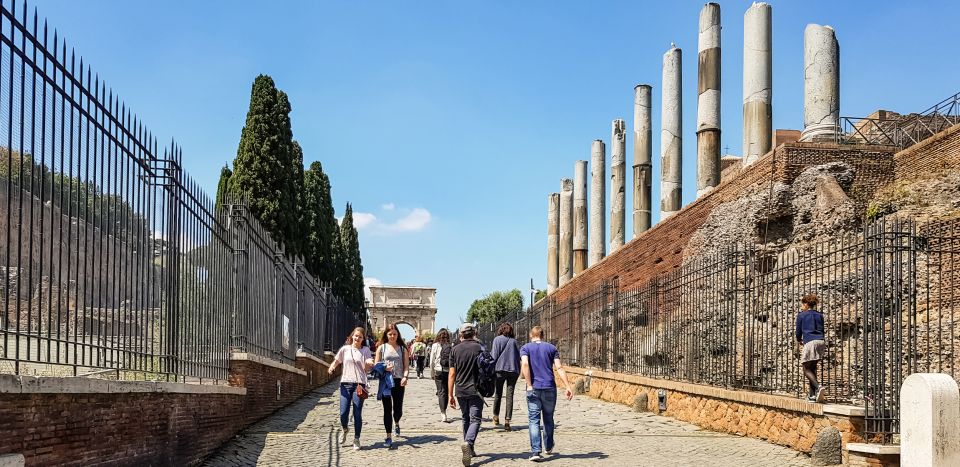
During the Colosseum portion, you’ll also see the Arch of Constantine. It’s not just a “look at that” moment. It helps you connect the amphitheater to the wider world of Roman monuments, where arches, inscriptions, and public architecture functioned like political messaging.
When this is done right, it gives your eyes a new job: not only spotting what’s inside the Colosseum, but also reading the Colosseum’s role inside a larger monumental landscape. Even if you’re not a history expert, you’ll feel the architecture tying together storylines of power and celebration.
Palatine Hill: Where Rome’s Power Story Gets Personal
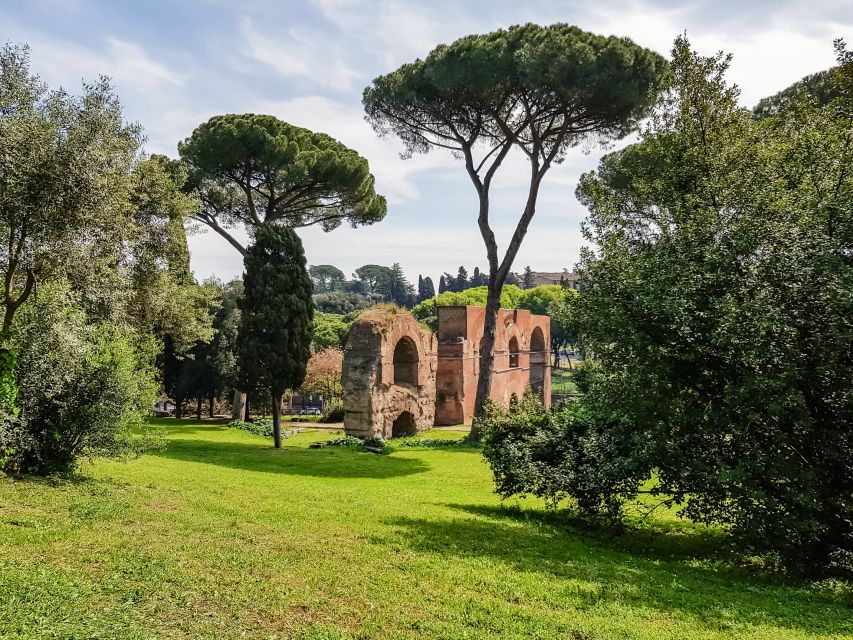
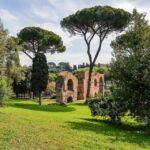
After the Colosseum, you head to Palatine Hill for about 30 minutes of guided time. Palatine is where Rome’s myth and authority overlap. It’s one thing to understand the arena as entertainment; it’s another to see the hill that represents elite status and early Roman centrality.
Your guide’s commentary matters here. You’ll hear how the site connects to the social and political center of Rome, and you’ll get viewpoint moments that help you see why Palatine has always been valuable real estate. This stop is often the one that turns “I saw the Colosseum” into “I get where Roman life was headed.”
Practical tip: wear comfortable shoes and keep your pace steady. Hill routes can feel deceptively uneven. Also, don’t plan to be too casual about shade. Reviews often highlight guides who actively look for cooler spots and share good photo angles, which you’ll appreciate on hot or sunny days.


The Roman Forum: Entering the Heart of Political and Social Life
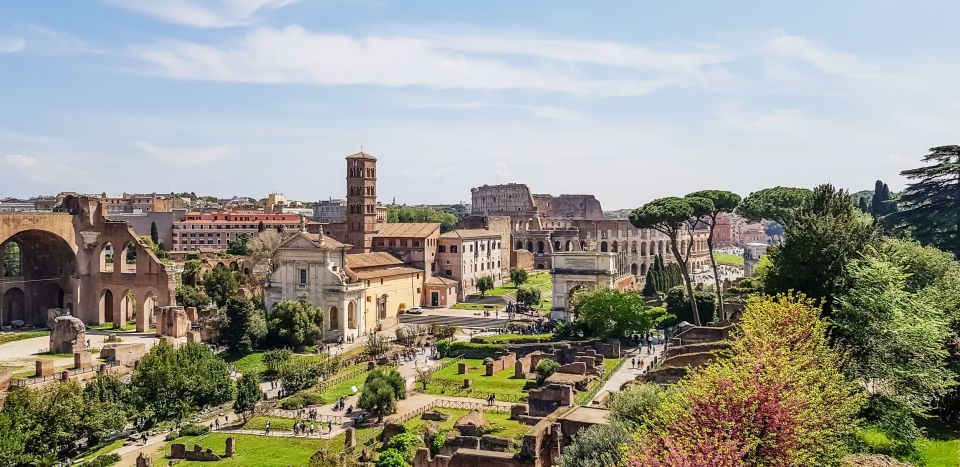
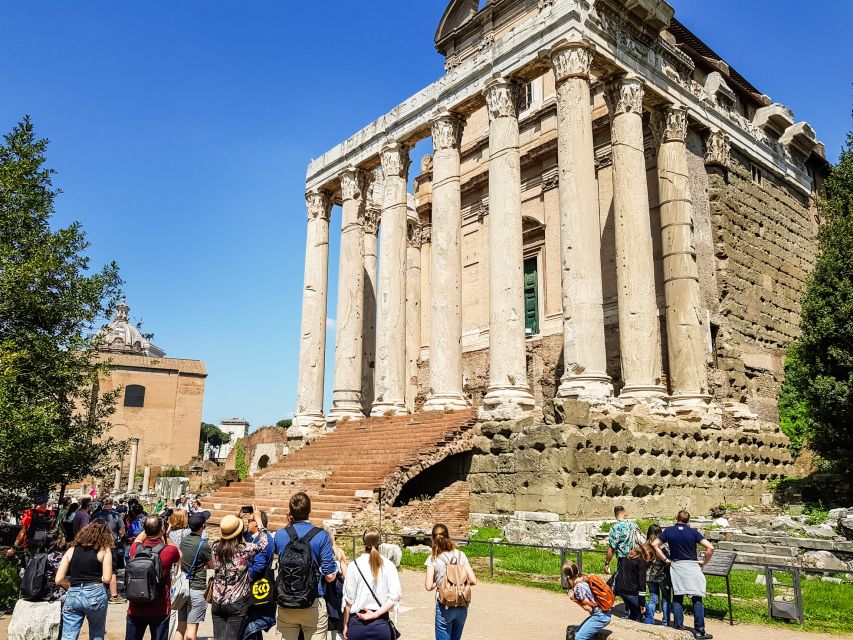
Then you move into the Roman Forum, where the tour spends about 1 hour guided. This is the best part for understanding Rome beyond spectacle. The Forum was the center of political and social life in Ancient Rome, and the tour helps you make sense of why people moved through these spaces and what they were there to do.
Your guide leads you through key areas so you can follow the logic of the city: public life, leadership display, civic movement, and the everyday rituals of power. It’s not just “buildings and columns.” It’s a map of where decisions were made and how that played out in public view.
This is also where you get a payoff for choosing a guided format. The Forum is enormous, and it’s easy to walk through it like a museum hallway—if you don’t have a guide to translate what you’re seeing.
Pacing, Group Size Energy, and Photo Time
A lot of the satisfaction in this type of tour comes down to pace. The time budget is tight: roughly 2.5 to 3 hours total, with different guided segments (Colosseum ~1.5 hours, arena floor option ~20 minutes, Palatine ~30 minutes, Forum ~1 hour). That’s why the guide’s ability to keep movement smooth matters.
Based on repeated feedback, the best guides tend to find good photo points without stalling the whole group. People also note that guides keep things at a good pace and manage the crowded feeling intelligently. If you end up with a guide like Magda or Radu—names that come up often—you’re likely to get extra energy and humor, plus help spotting strong viewpoints and photo angles.
And yes, there can be uneven ground and crowd density. Even with the fast-track benefits, you’re in a high-demand place. Keep your expectations realistic: you’re there to learn and see, not to wander slowly like it’s a quiet park.
Price Value: Why $73.89 Can Make Sense
At $73.89 per person, you’re paying for three things working together: entry access, guided interpretation, and time savings. If you were to piece together tickets for the Colosseum, Roman Forum, and Palatine Hill on your own, you’d still face long waits at security and you’d lose the “how to read this place” element that a live guide provides.
This tour also includes official guide time across multiple sites and fast-track entrance that helps you get through the worst bottlenecks. The arena floor is an extra perk if you select that option, but even without it, the Colosseum portion includes the parts many self-guided visits skip—like trap door context and the senator seating viewpoints.
Is it the cheapest way to see Rome’s ruins? No. But for a first-time visit when you want structure, clarity, and less wasted time, this price can feel like good value. You’re buying momentum and meaning.
What to Bring (and What to Skip)
Keep it simple. Bring:
- Passport or ID card
- Comfortable shoes
- Water
- Comfortable clothes
Don’t bring:
- Weapons or sharp objects
- Luggage or large bags
- Glass objects
- Electric wheelchairs
- Sprays or aerosols
This is one of those tours where a “light and ready” approach pays off. With security checks in multiple locations, fewer things in your bag can mean less stress for you.
Tour Languages and Who It Suits Best
The live guide is offered in Portuguese, English, German, French, and Spanish. If you prefer guided narration in your own language, that’s a big deal here because you’ll want to understand the arena mechanics and the Forum’s political context.
This tour is a strong fit for:
- First-timers to Rome who want maximum signal in limited time
- People who like storytelling explanations, not just photographs
- Travelers who want to connect Colosseum spectacle to the Forum’s civic world
It’s not a good fit for:
- Wheelchair users or people with mobility impairments
- Anyone who struggles with uneven outdoor walking
Should You Book This Colosseum, Palatine Hill & Forum Tour?
I’d book it if you want the best chance of seeing the Colosseum’s core story fast, then immediately understanding the Forum without getting lost in scale. The Gladiator’s Gate entry and the focus on arena function (senator seating, trap door references, underground area context) are the kind of details that make the experience feel worth more than “another stop on the map.”
I’d think twice if you’re worried about mobility limits or if you’re hoping for a laid-back stroll. This is a structured, guided format with security checks and real walking demands.
If your schedule is tight and you care about understanding what you’re seeing, this one is a solid choice.
FAQ
How long is the tour?
The tour runs about 2.5 to 3 hours, depending on the start time you book.
Does this include skip-the-line entry?
Yes. It includes fast-track entrance and express security check access.
What’s included in the Colosseum portion?
You get a guided visit of the Colosseum (about 1.5 hours), plus official guide interpretation. The Arch of Constantine is part of what you’ll see during the Colosseum time.
Is access to the arena floor included?
Arena floor access is included only if you select the option that includes it. With the option, you’ll get about 20 minutes of guided time on the arena floor.
Do I also visit Palatine Hill and the Roman Forum?
Yes. Palatine Hill is included with about 30 minutes guided, and the Roman Forum is included with about 1 hour guided.
What languages are the guides available in?
Guided tours are available in Portuguese, English, German, French, and Spanish.
What should I bring and what’s not allowed?
Bring your passport or ID card, comfortable shoes, water, and comfortable clothes. Not allowed items include weapons or sharp objects, luggage or large bags, glass objects, electric wheelchairs, and sprays or aerosols.
Is it refundable if I change my plans?
Yes. Free cancellation is available up to 7 days in advance for a full refund.