REVIEW · ROME
From Rome: Pompeii Day Trip by Fast Train and Car
Book on GetYourGuide →Operated by Through Eternity Tours · Bookable on GetYourGuide
Pompeii feels close on this Rome day trip. I like the fast train to Naples plus private car pickup, because it keeps the day moving without constant station chaos. I also love the skip-the-line entry and an expert English-speaking guide, which makes Pompeii click instead of feeling like random ruins. One real consideration: this is a walking archaeological park with steps and uneven ground, and luggage or large bags aren’t allowed.
The best part is how the schedule is built around your time. After a short train hop from Rome Termini to Napoli Centrale (about 1 hour 10 minutes), your driver meets you and handles the transfer to Pompeii Scavi, so you can focus on the ruins.
The tour itself is a focused, intimate route through the ancient city that was buried by lava and choking ash in 79 A.D. You’ll cover a lot in 2.5 hours, but you won’t see every corner of Pompeii, so it’s best for people who prefer depth on key stops over trying to sprint the whole park.
In This Review
- Key points at a glance
- Fast Train Plus Private Car: How the Rome to Pompeii Day Works
- Skip-the-Line Entry and Your Archaeologist Guide
- Pompeii in 2.5 Hours: The Route You’ll Walk
- A note on the ground rules (so you’re comfortable)
- Forum Baths: Daily Life Under One Roof
- Amphitheater of Pompeii: Where Entertainment Became History
- House of the Faun: Pompeii’s Big-Statement Home
- House of the Vettii: Art, Power, and Private Drama
- What This Private Walking Tour Feels Like on the Ground
- Return to Naples and the Train Back to Rome
- Who This Tour Suits Best
- Should You Book This Rome to Pompeii Day Trip?
- FAQ
- How long is the Pompeii guided tour?
- What’s the route from Rome to Pompeii like?
- Does this tour include skip-the-line entry?
- What stops are included during the Pompeii portion?
- What language is the guide?
- Is it wheelchair accessible, and what should I bring?
Key points at a glance
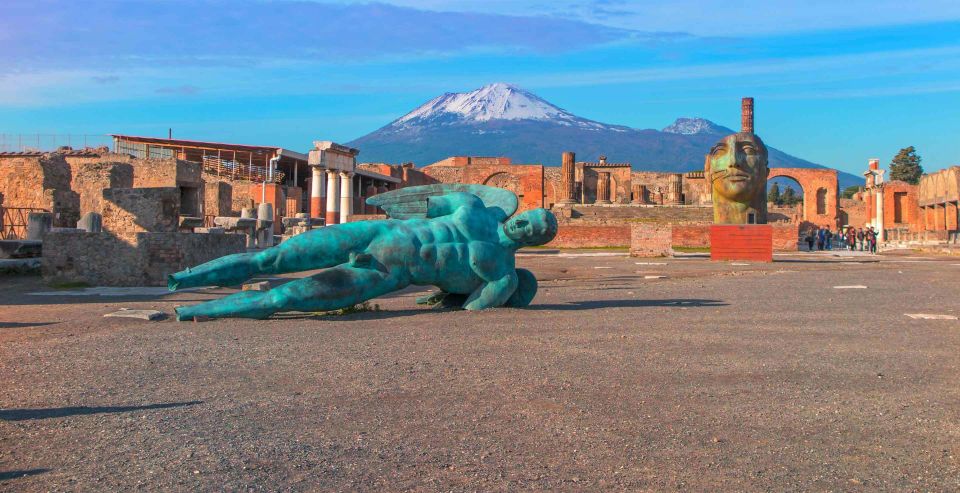
- Fast train + private car: Rome Termini to Napoli Centrale, then door-to-entrance transfer to Pompeii Scavi
- Skip-the-line access: Enter through a separate entrance and go straight into the site with your escort
- Expert archaeologist guide: English/Italian commentary tailored to a small group
- Smart, anti-big-group route: You’ll walk Pompeii’s paved streets with time to actually look
- Big-ticket stops included: Forum Baths, Amphitheater, House of the Faun, and House of the Vettii
- Comfort matters: Uneven walkways and steps, so bring comfortable shoes and water
Fast Train Plus Private Car: How the Rome to Pompeii Day Works
This is one of those Pompeii trips where logistics matter almost as much as the ruins. You start from Rome Termini, then take the train to Napoli Centrale in about 1 hour 10 minutes. That’s short enough that you’re not spending half your day commuting, yet it still gets you out of Rome efficiently.
Once you arrive at Napoli Centrale, the private driver meets you at the platform. You’re then transferred with your guide to Pompeii Scavi, the main jump-off for Pompeii. This matters because Pompeii is big, and the less time you spend figuring out trains, buses, and ticket lines, the more time you have for the actual site.
Your private tour begins at 9:30 AM, which is a good start time. Earlier entry usually means fewer crowds to squeeze through, and you get that first-walk feeling when the streets are still calm.
You can also read our reviews of more tours and experiences in Rome



Skip-the-Line Entry and Your Archaeologist Guide
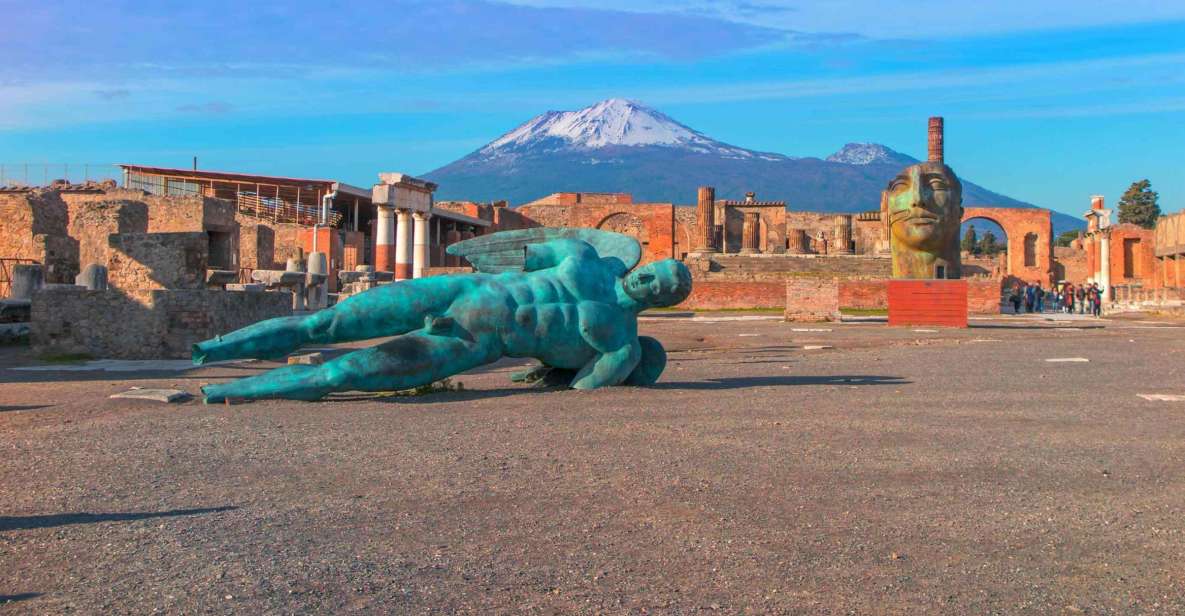
Pompeii can feel overwhelming if you arrive on your own. The ruins are spread out, the signage is inconsistent, and you can end up admiring pretty stones without understanding why they matter.
That’s where the guide earns their keep. You get skip-the-line entry through a separate entrance, and you’re escorted directly inside. Then you have an intimate 2.5-hour guided walk with an expert archaeologist, in English or Italian. The result is that you’re not just moving from highlight to highlight. You’re learning what you’re seeing as you walk.
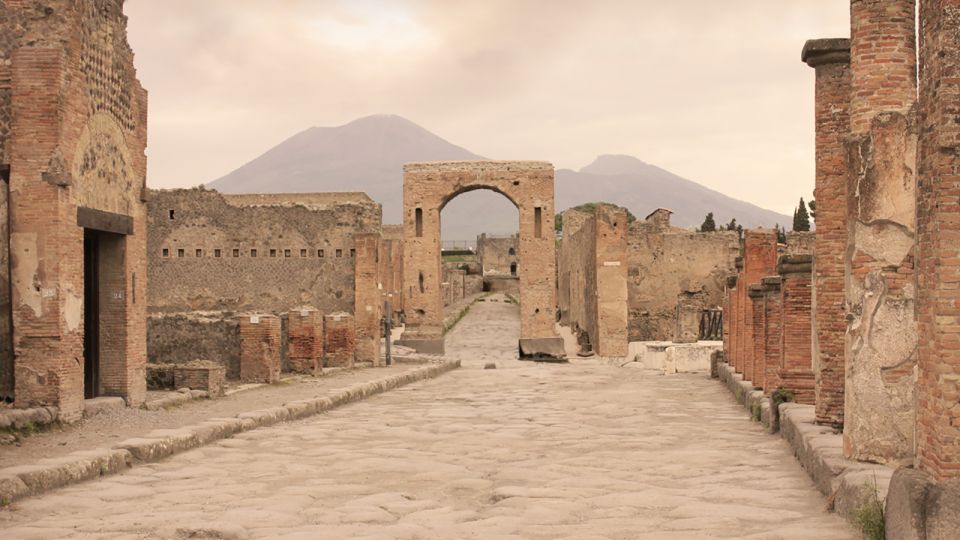
The guide’s role is also about perspective. Pompeii isn’t only temples and big monuments. Your route is built around how people lived: daily routines, public spaces, and private homes. Walking through the abandoned streets—still paved with ancient flagstones and worn by Roman wheeled traffic—starts to explain why the city survived as a kind of instant freeze-frame.
Pompeii in 2.5 Hours: The Route You’ll Walk
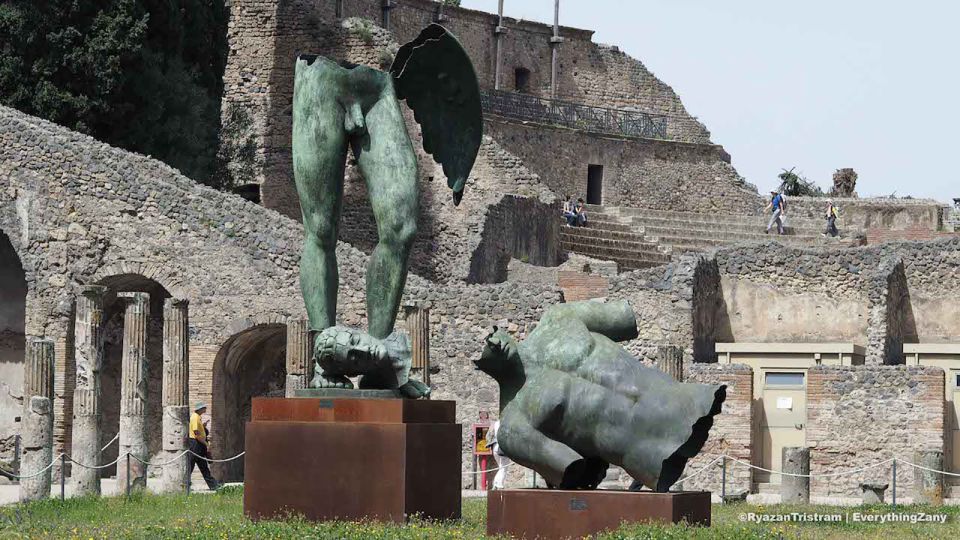
You’ll spend the guided portion at a steady walking pace across some of Pompeii’s most talked-about areas. The trick with Pompeii is accepting that 2.5 hours is not “everything.” Instead, think of it as the high-value core that helps you decode the rest of the city if you ever return.
You’ll move through a sequence that follows the logic of an ancient Roman city:
- public life (baths, forum-area energy)
- entertainment and spectacle (the amphitheater)
- elite private spaces (two standout houses)
Because it’s a private group, you can ask questions without feeling rushed or competing with a moving wall of tour groups. That small-group feel is one of the clearest reasons this style of tour works well.
A note on the ground rules (so you’re comfortable)
You are walking in an archaeological park with steps and uneven walkways. Plan for a workout. Bring a bottle of water and wear shoes that won’t punish you by hour one. Also, no luggage or large bags are allowed, so pack light and carry what you truly need for the walk.
Forum Baths: Daily Life Under One Roof
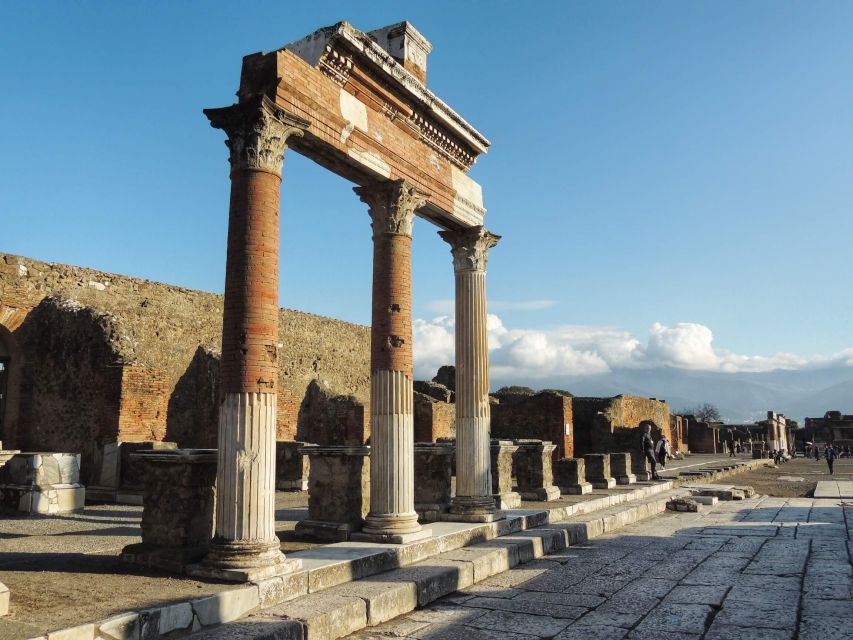
Your tour starts with the Forum Baths. Baths in Roman cities weren’t just about washing. They were social hubs. People met friends, traded gossip, relaxed, and stayed for a while. Seeing these spaces with context is the difference between seeing rooms and understanding behavior.
In Pompeii, the baths also show how Roman engineering made comfort possible. Even when buildings are damaged, you can still spot how the spaces were meant to flow. A good guide can point out what each area likely served and how visitors moved through the complex.
The drawback with baths is also why they’re worthwhile: they’re atmospheric and thought-provoking, but they’re not a single “postcard view.” You’ll get value from paying attention to layout and purpose rather than hunting for one photo spot.






Amphitheater of Pompeii: Where Entertainment Became History
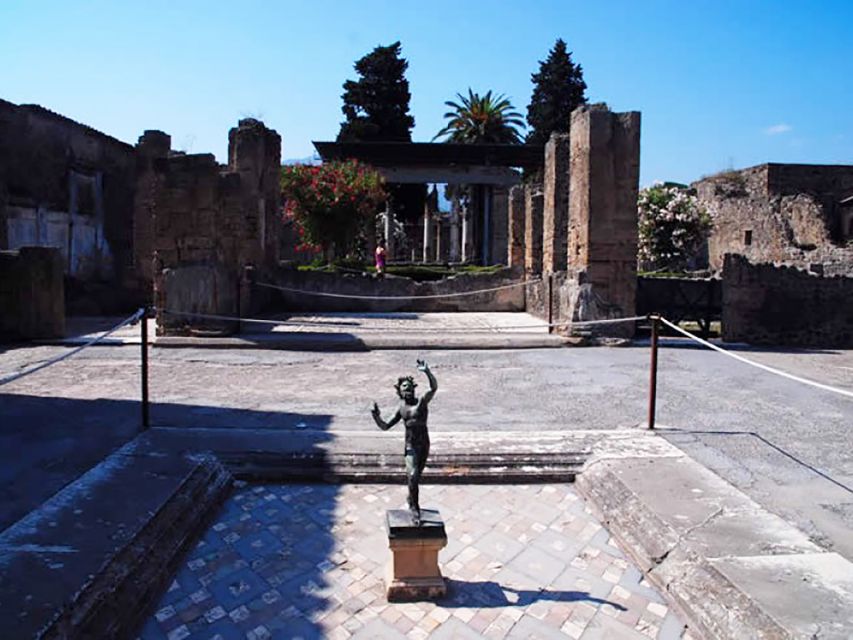
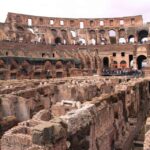
Next up is the Amphitheater of Pompeii, a place where the city’s public life could turn loud and competitive. Even in silence, it’s easy to picture what it must have felt like when crowds filled the seats and games or events began.
This stop is powerful because it connects Pompeii’s daily routine to its big public culture. Rome’s amphitheaters were built for mass spectacle. When you walk the scale of the venue with a guide, you start to understand how entertainment helped define community identity.
One practical tip: you’ll want to pause and look at sightlines and seating arrangement. That’s where the “how could this fit so many people” feeling kicks in. This tour’s pace gives you time to actually do that, instead of racing through like a slideshow.
House of the Faun: Pompeii’s Big-Statement Home
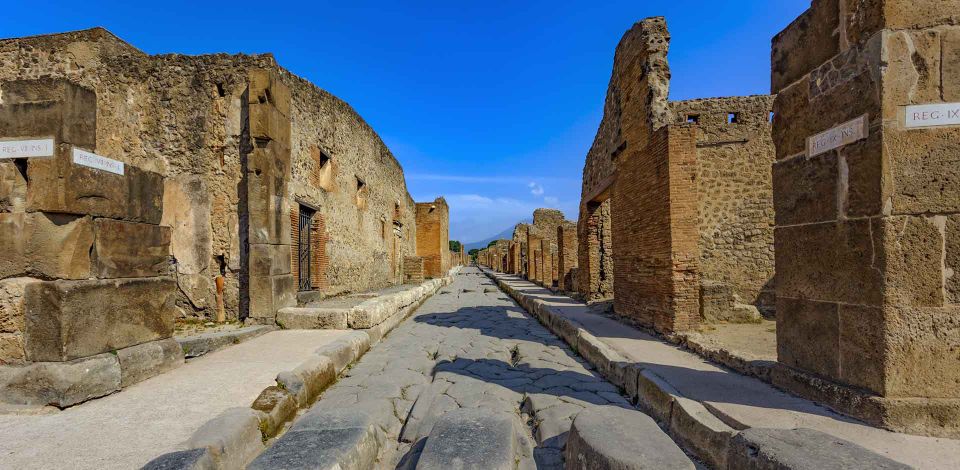
The House of the Faun is one of the best stops on the route if you want a sense of wealth and status in Roman private life. This isn’t just a residence. It’s a public statement made of stone, space, and design.
When you enter a major house in Pompeii, you’re basically watching architecture tell you who mattered. A guide helps you see connections between room layout, function, and the kinds of art and decoration you might still recognize from fragments.
You’ll walk through a home that helps you picture how daily life looked for people at the top of society. And it gives you a good baseline for comparison when you see the next house, where style and storytelling take over in a different way.
House of the Vettii: Art, Power, and Private Drama
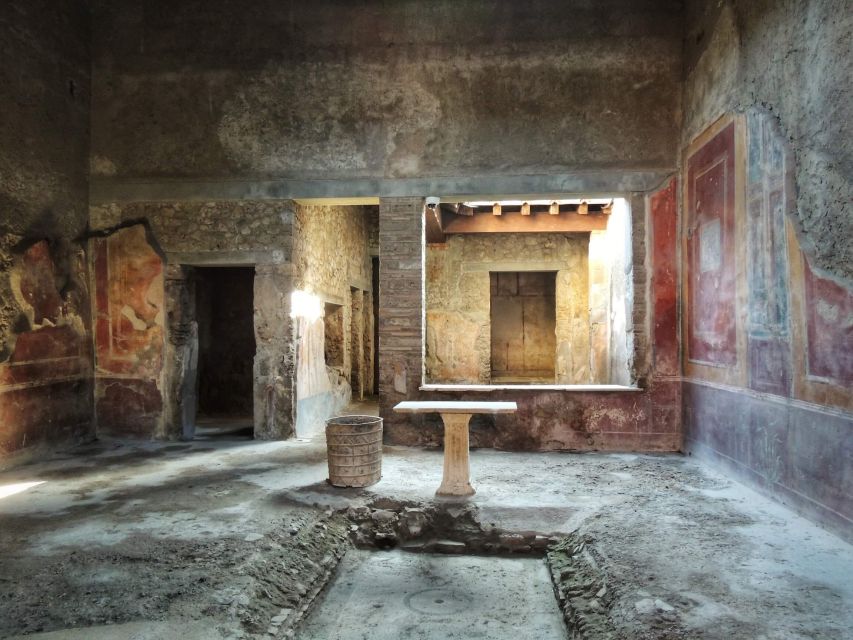
Then comes the House of the Vettii, a standout for anyone who likes the human side of history. Big houses tend to impress, but this one also gives you plenty to think about in how it was used and how it was decorated.
This is the kind of visit where a guide’s interpretation matters. Pompeii’s homes can feel like shells until you connect them to how people lived, entertained, and displayed taste. You’ll be looking for meaning in details, like how spaces were designed to guide your movement.
The value here is emotional clarity. Pompeii’s tragedy can make the site feel distant. Homes like these pull the story back toward real people with real preferences, habits, and social ambitions.
What This Private Walking Tour Feels Like on the Ground
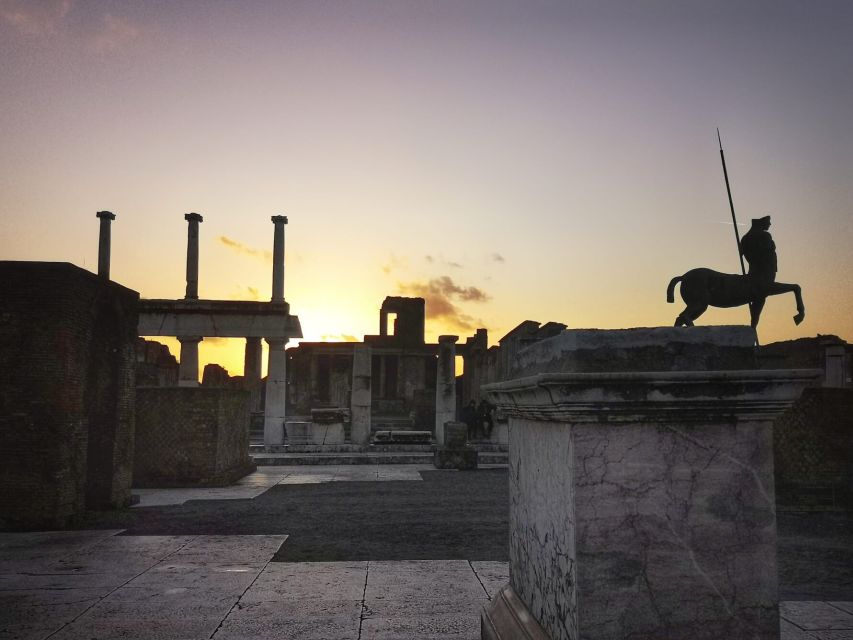
What I like about this style of Pompeii trip is that it doesn’t try to treat the site like a checklist. You’ll walk Pompeii’s beautifully preserved streets, and you’ll get that eerie sensation of moving through a city that was abruptly interrupted.
The pacing helps. The tour is long enough to learn and look, but tight enough to keep momentum. The route also makes sense chronologically in your brain: public life first, then the more personal world inside elite homes.
The main challenge is physical, not mental. Expect steps, uneven surfaces, and lots of walking. If you have mobility concerns, the right move is to flag them ahead of time so the provider can best accommodate you. Wheelchair accessibility is listed, but the park conditions still require realistic planning for how you’ll move through the spaces.
Return to Naples and the Train Back to Rome
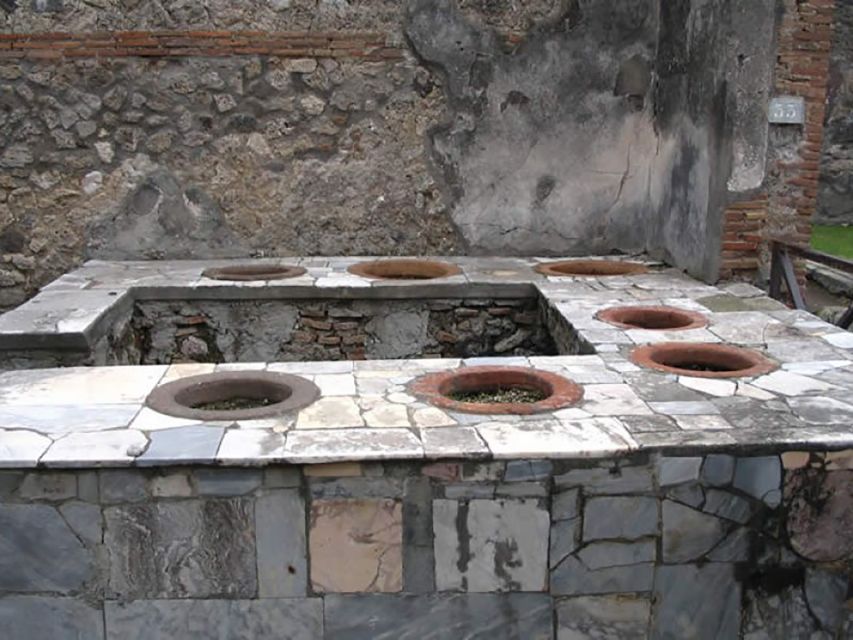
After your guided tour, your driver takes you back to Napoli Centrale so you can catch the train to Rome on time. This kind of built-in transfer is a big deal. Pompeii days can get stressful fast if you’re the one coordinating transport while your legs are tired.
Having the car waiting on schedule means your day doesn’t collapse into guessing games. You also avoid the risk of losing time on local connections when you could be enjoying the last moments in Pompeii with a calmer head.
One extra nice point from past experiences: because the driver portion is private, you sometimes get practical help around Naples after your tour, like steering you toward good pizza and coffee if time allows. Even if that doesn’t happen for every day, having a driver who’s used to the area can make the gap between Pompeii and your train feel far less awkward.
Who This Tour Suits Best
This tour fits best if you want Pompeii to feel understandable, not just impressive.
Choose it if:
- you want an English-speaking expert guide who can explain what you’re seeing as you walk
- you prefer private or small-group pacing over big bus-style crowds
- you like Roman cities with a mix of public buildings and elite homes
- you value time-efficient transportation from Rome
It might not be the best fit if:
- you want to spend most of the day wandering on your own
- you expect Pompeii to be easy on the body
- you’re traveling with luggage that you can’t leave behind (large bags aren’t allowed)
Should You Book This Rome to Pompeii Day Trip?
If you want a Pompeii visit that feels like a guided story—with less wasted time and fewer crowd bottlenecks—this is a strong choice. The combination of fast train, private car transfer, and skip-the-line entry is exactly what helps a day trip work in real life.
I’d book it if your top priority is understanding Pompeii, not just collecting photos. The route through the Forum Baths, Amphitheater, House of the Faun, and House of the Vettii gives you a solid sense of what Pompeii was like at street level and behind closed doors.
If you’re the type who wants total freedom to roam every inch, you may feel slightly constrained by the guided timeframe. But if you want the best value of your limited time in Campania, this is the kind of schedule that respects your day.
FAQ
How long is the Pompeii guided tour?
The guided tour is listed as 2.5 hours at the Pompeii Archaeological Site.
What’s the route from Rome to Pompeii like?
You take a train from Rome Termini to Napoli Centrale (about 1 hour 10 minutes). Your private driver meets you at Napoli Centrale, and then you go with your guide to Pompeii Scavi for the tour.
Does this tour include skip-the-line entry?
Yes. You get skip-the-line access through a separate entrance.
What stops are included during the Pompeii portion?
The tour includes the Pompeii Archaeological Site plus guided visits tied to stops such as Forum Baths, the Amphitheater, the House of the Faun, and the House of the Vettii.
What language is the guide?
The live tour guide is available in English and Italian.
Is it wheelchair accessible, and what should I bring?
Wheelchair accessibility is listed. The tour involves walking on uneven walkways and steps, so comfortable shoes and a bottle of water are strongly recommended. Luggage or large bags aren’t allowed.