REVIEW · ROME
Borghese Gallery Small group tour and skip.the-line entrance
Book on GetYourGuide →Operated by ROME WITH SILVIA · Bookable on GetYourGuide
Rome’s best art detour is only two hours. This small-group tour gets you inside the Borghese Gallery fast, then guides your eyes through major Italian Old Masters, from Bernini to Caravaggio and Raphael. I especially like the headsets/radios setup, which makes it easy to hear your guide without craning your neck.
Two more things I like: you get a true sense of the collection as a designed villa experience (not just rooms with paintings), and you also get a priority-entry plan via reserved tickets and a separate entrance. The main drawback to consider is timing and meeting logistics can be a bit fussy; it’s smart to arrive a few minutes early and keep your confirmation handy, just in case your group is a little hard to spot at first.
In This Review
- Key highlights at a glance
- Borghese Gallery: why this villa still feels like an art collector’s playground
- Getting in fast: skip-the-line entry and your 2-hour reality check
- Inside the villa: your route through lavish rooms and sculptures
- Paolina Room: the statue that makes you look longer
- Bernini’s world: emotion, realism, and why his fame still works
- Caravaggio in one place: what makes this collection so special
- Raphael and the balance of styles
- Your guide experience: small group pacing and clear listening
- Price and value: what $88 gets you, and what it costs you
- Who this Borghese tour suits best
- Should you book this skip-the-line Borghese Gallery tour?
Key highlights at a glance
- Small group cap (15 people max): easier pacing and more time to ask questions.
- Skip-the-line, separate entrance: you avoid the longest bottlenecks and start the visit sooner.
- Art historian guide: the “why” behind the art lands better when someone frames each stop.
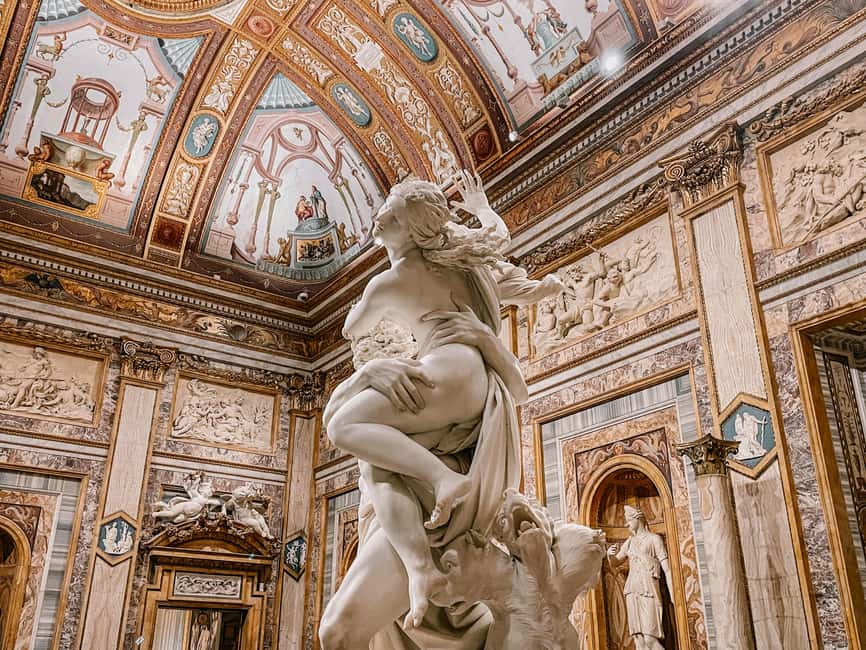
- Bernini’s sculptures in context: you see the drama and realism that made his name.
- Caravaggio’s strongest single-collection draw: a standout lineup of major works in one place.
- Priority tickets plus reserved entry: smooth entry for a timed, timed-ticket museum.
Borghese Gallery: why this villa still feels like an art collector’s playground
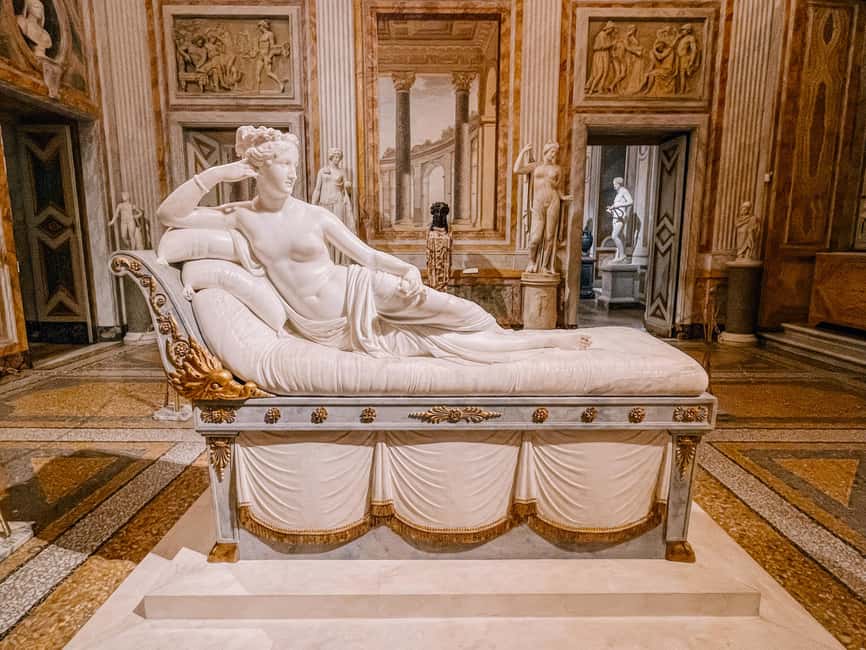
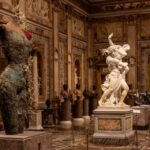
The Borghese Gallery isn’t housed in some neutral box. It’s inside the Villa Borghese, built in the early 1600s to display Scipione Borghese’s personal collection. That matters because the place is planned like a theatrical route: rooms, sight lines, and sculpture placements all work together to tell you how to look.
Scipione Borghese wasn’t collecting casually. This was a power move and a passion project. The result is that the museum experience feels close to the original intent: see masterpieces, but also see how a family wanted to show taste and status through art. It’s one reason the gallery is often described as Rome’s first museum spirit—long before museums became the standard format.
As you move through the rooms, you’ll notice the collection includes both sculpture and painting, which is huge for your enjoyment. Sculpture changes your pace. You’ll slow down, look at details from different angles, and read emotion through posture and surface. That’s especially true with Bernini.
And yes, you’ll get the star names: Bernini, Caravaggio, and Raphael. The big win is not just seeing them, but seeing them in a collection that gives them room to breathe.
You can also read our reviews of more museum experiences in Rome
Getting in fast: skip-the-line entry and your 2-hour reality check
This tour is only 2 hours, so the biggest practical question is: can you cover enough to feel satisfied? The answer is yes, but only if you go with the right expectations. You’re not trying to see everything in the building. You’re focusing on the major works your guide brings to the front.
The tour includes skip-the-line entry tickets and uses a separate entrance. That’s valuable in Rome, where the difference between starting on time and wandering around the lines can be the whole day. When you have reserved entry, you want to protect that time.
Plan to show up at the meeting point—in front of the museum entrance at Piazzale del Museo Borghese—and give yourself a little buffer. One thing to watch: some groups can be hard to identify immediately, especially if the guide isn’t standing in exactly the most obvious spot. Having your passport or ID ready helps too, since you’ll need it for entry.
Headsets/radios are included, which is a lifesaver in a place where you may be moving room-to-room with other groups. It means you can follow the story without hovering right next to your guide or missing key explanations while you’re trying to see the art.
Inside the villa: your route through lavish rooms and sculptures
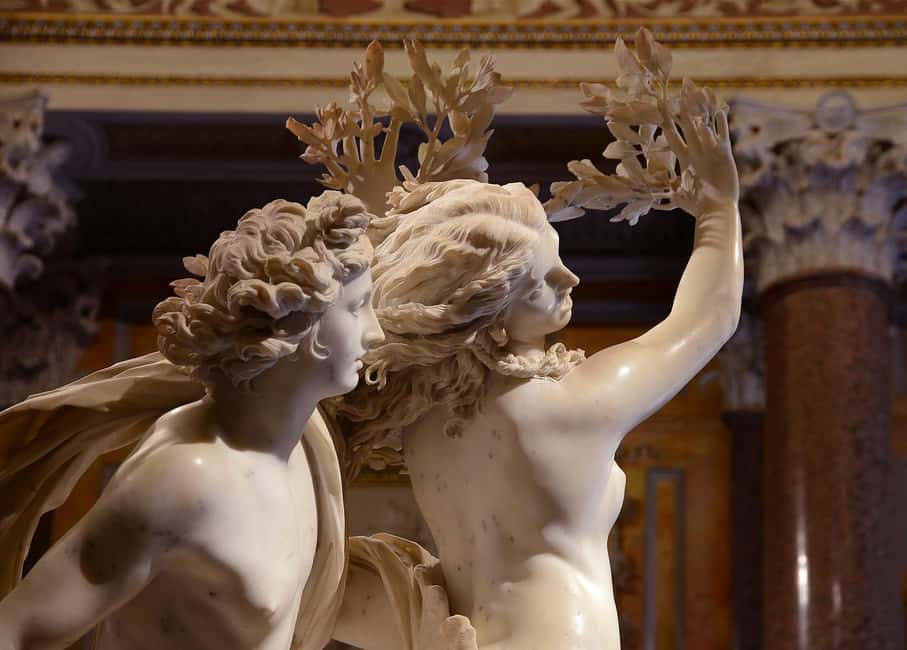
Once you’re in, the experience doesn’t start with a lecture. It starts with the setting itself. The Borghese rooms were designed to feel regal and intense, and the collection fits that mood. Even before you hit the major names, you get a feel for how this villa functions as a gallery stage.
You’ll spend your guided time moving through rooms where sculpture plays a starring role. That’s a smart choice for a short tour because sculpture rewards attention. A guide can point you to what your eyes might otherwise miss: how a face turns, how hands communicate tension, how expression shifts when you view from a slightly different angle.
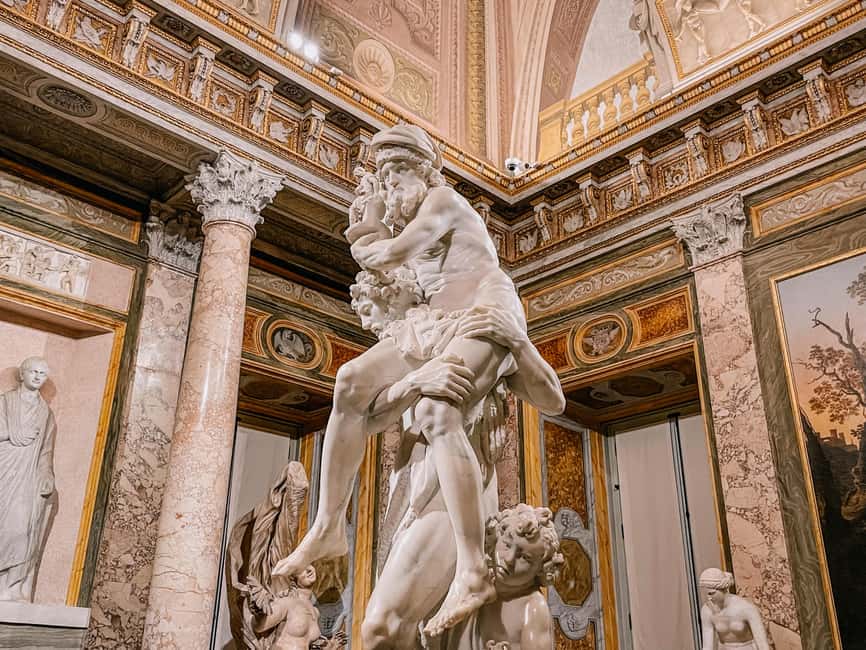
A few key sculpture moments your tour route should cover include Bernini’s works such as The Truth and Scipione Borghese’s Bust, plus Bernini’s self-portraits. This is where an art historian guide really earns their place. Bernini isn’t just impressive because he’s famous. He’s impressive because his work looks like it’s caught mid-action—movement turned into stone.
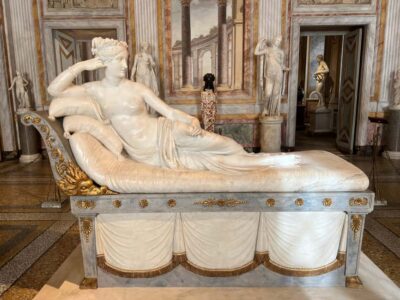
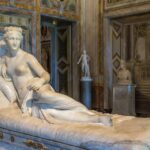
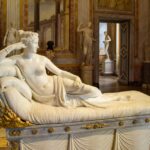
You’ll also likely encounter Antonio Canova’s famous statue Paolina Borghese, shown in the guise of Venus. That “almost naked” presentation is part of the statue’s early impact—the piece was shocking in its time because it pushed the boundaries of what sculpture in that setting could look like. Expect the guide to connect the nudity to the mythic framing and the political-style display of the family.
If you’re the kind of person who likes to “read” art like a story, this structure helps. You’re not just memorizing titles. You’re building a sense of how the villa’s collection communicates power, beauty, and identity.
Paolina Room: the statue that makes you look longer
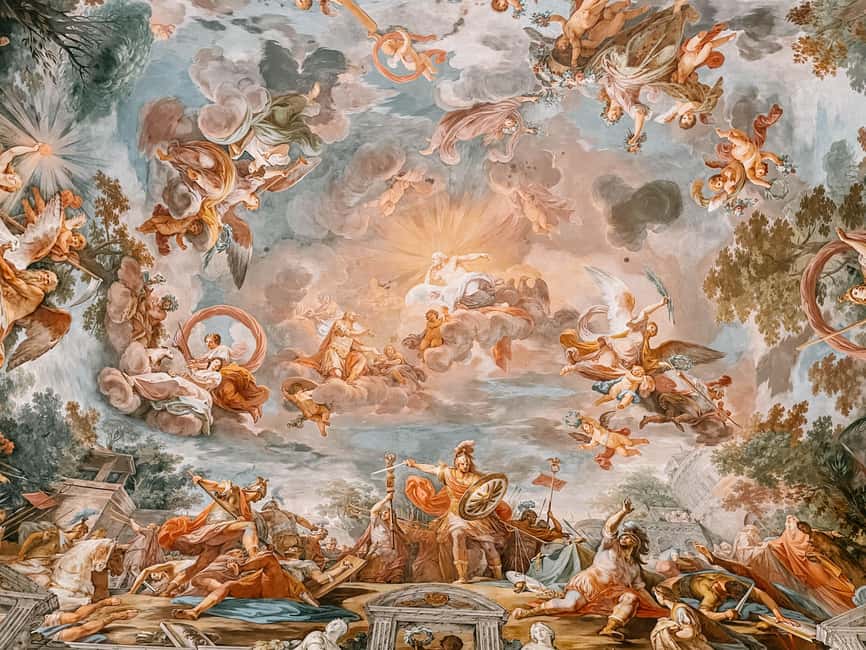
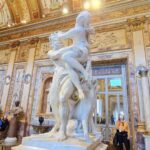
Paolina Borghese can’t be rushed. Even if you know the name, seeing it in person tends to reset your timing. The statue represents Camillo Borghese’s wife, portrayed as Venus, with Paolina lying on a dormeuse. That pose draws you in—and then holds you there, because your eye keeps noticing new details as you shift your angle.
This is also the type of artwork where context matters. Without a guide, you might register it as a famous nude statue and move on. With context, you start understanding why it created a stir when it first appeared: the combination of mythological style and elite display, in a setting built to impress.
In a two-hour guided format, your guide’s pacing matters here. You want enough seconds to actually absorb the pose and the expression. You don’t want a fast stop. The good news: small group size helps. When you’re not herded, it’s easier for the guide to slow down when the room demands it.
If you’re traveling with kids or anyone who gets impatient in museums, this is a great anchor moment. It’s visually immediate, and it gives everyone a shared “wait, look at this” point before you move back into deeper sculpture stories.
Bernini’s world: emotion, realism, and why his fame still works
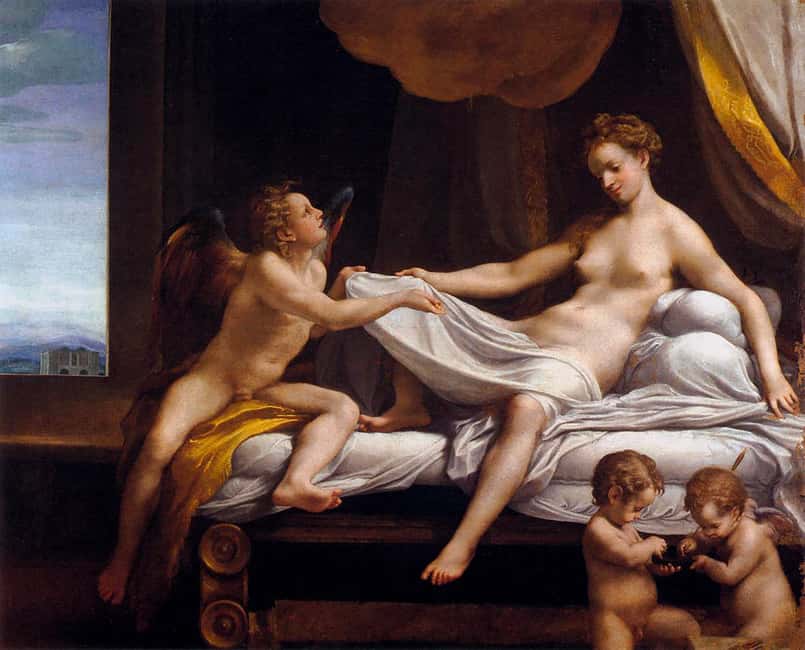
Bernini isn’t merely a name on a ticket. In person, his approach to sculpture can feel almost theatrical. He makes faces expressive, hands purposeful, and bodies alive in a way that’s hard to fully photograph. That’s exactly why this tour works so well for people who want more than a checklist.
Key Bernini stops include The Truth and Scipione Borghese’s Bust, plus Bernini’s self-portrait works. The most practical advantage of a guided stop here is that you get a framework for what to notice. You’ll usually hear about what the pieces communicate—about belief, power, identity, and the collector’s image.
One of the smartest parts of seeing Bernini at the Borghese Gallery is that the collection isn’t random. These works are placed in a villa built to showcase a specific taste. That means you see Bernini not only as a brilliant sculptor, but as the kind of artist who fit Scipione’s ambition.
You might also run into Bernini-related themes that connect across rooms. A guide can help you see patterns: how realism functions, how drama is created through posture, and how the collection turns art into a kind of biography for the family and their era.
If you care about why art looks the way it does, this is where your time pays off.


Caravaggio in one place: what makes this collection so special
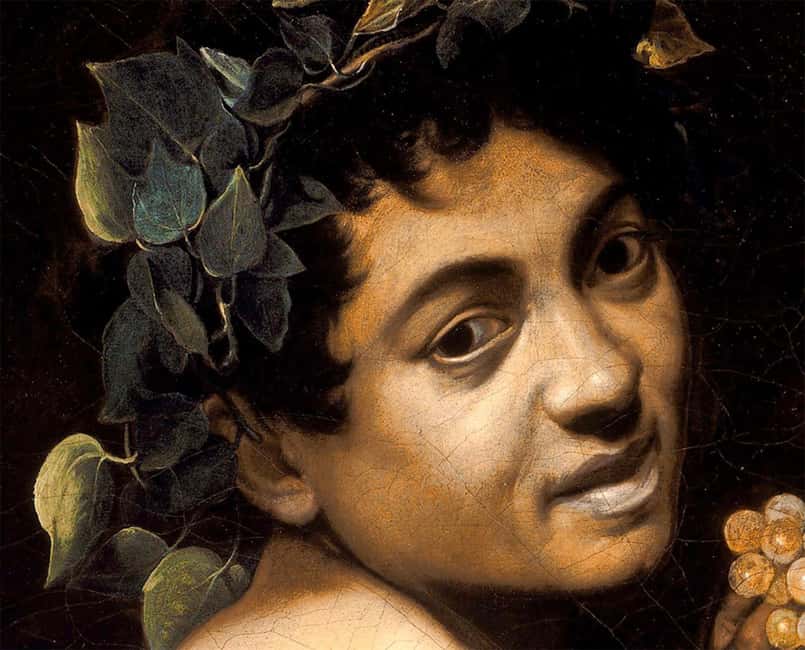
Caravaggio has a talent for making you feel like the scene is happening right now. His figures look caught in a half-second of emotion—half realism, half stage drama. The Borghese Gallery is famous because it holds one of the largest gatherings of Caravaggio’s works in a single collection.
On your tour, you’ll likely see major works such as:
- David with the Head of Goliath
- Boy with a Basket of Fruit
- St Jerome
- Self-Portrait as Bacchus
And the experience becomes more than “look at this painting.” With a guide framing the scenes, you can connect how Caravaggio’s style creates tension. His lighting and sharp realism aren’t just technique for technique’s sake; they drive mood. You end up noticing small choices in pose and expression that affect the whole story.
The value of seeing Caravaggio here is density. Instead of chasing one Caravaggio painting in one random museum, you get a clustered experience. That lets your brain compare styles and mood shifts as you move from work to work. It also makes it easier to remember what you saw because you saw it in context—same overall collection, same curatorial intent, same villa-world.
If you’re short on time in Rome and Caravaggio is your priority, this tour hits a practical sweet spot.
Raphael and the balance of styles
Not every masterpiece has to be dark and dramatic. Raphael’s presence helps you rebalance your eyes after Caravaggio and the intensity of Bernini’s sculpture.
On this tour route, Raphael highlights can include:
- Lady with Unicorn
- Portrait of Pope Julius II
These works are useful stop-points because they shift the tone of the collection. You get a sense of how Renaissance portraiture and idealized symbolism function in a setting that also holds baroque realism and myth-inspired sculpture.
A good guide will connect the dots. For example, you’ll likely hear how portraits and allegories work to communicate identity, status, and values. That’s the kind of explanation that transforms a painting from something you admire to something you understand.
And since this tour is only two hours, Raphael gives you variety without pushing the schedule out of control. You won’t feel like you’re stuck in one visual mood for the entire visit.
Your guide experience: small group pacing and clear listening
This tour works because the group is capped at 15 people max. That matters more than it sounds. In a museum like Borghese, where rooms and doorways can get tight, a large group turns everything into marching. A smaller group lets your guide pace the art and your attention.
The included headsets and radios help too. Even when you’re a few steps away, you can hear the guide’s explanations clearly. It also makes it easier to keep your eyes on the artwork instead of scanning for the person talking.
You may see names like Sylvia, Lia, and Vincenza associated with guides on this experience. Different guides can change the feel of the tour, especially for anyone who’s sensitive to accents or rapid speech. One practical tip: if you rely on English explanations, stick close enough to hear comfortably, even with headsets.
There’s also one logistical note to take seriously. If you’re given a meeting spot, treat it like your responsibility to find them quickly. Arrive early, confirm what you’re looking for, and keep your phone confirmation accessible. That protects you from delays that can eat into your museum time.
Price and value: what $88 gets you, and what it costs you
At around $88 per person, this isn’t a bargain tour—but it can be good value if your priority is time and guidance. Here’s what you’re paying for:
- Reserved skip-the-line entry: You’re buying back stress and waiting time.
- An art historian local guide: You’re paying for context, not just access.
- Headsets/radios: Better listening improves how much you get from a short visit.
- Small group size: Less crowding means better pacing for a two-hour tour.
What it doesn’t do is replace full self-guided museum time. Borghese rewards deep looking, and two hours can only cover selected highlights. If you want to linger for your own reasons—maybe you want ten minutes alone with Caravaggio’s expression—this tour format might feel structured.
Still, for many visitors, $88 is a fair trade because Borghese is not easy to “optimize” without some help. Timed entry plus the villa setting makes it easy to waste time. This tour is built to reduce waste and focus you on the big names that actually move the needle.
Who this Borghese tour suits best
This is a strong fit if:
- You want Bernini, Caravaggio, and Raphael in one focused visit.
- You like art history explanations that connect emotion, symbolism, and technique.
- Your time in Rome is limited and you hate line delays.
- You appreciate small groups and want to hear the guide without shouting across a room.
It might be less ideal if you’re the type who likes to wander at your own pace without any structure. A two-hour tour is a guided highlight reel, not a slow museum day.
It also helps if you can move comfortably through rooms and pay attention for stretches of time. Museums in villa settings often involve stair steps and changing room layouts.
Should you book this skip-the-line Borghese Gallery tour?
If you want a smart, guided introduction to the Borghese Gallery without spending your morning fighting entry lines, I think this tour is worth considering. The biggest reasons: the small group cap, the skip-the-line separate entrance, and the fact that an art historian guide helps you see more than the obvious titles.
If you do book it, show up early to the meeting point by Piazzale del Museo Borghese and bring your passport or ID card. Keep your expectations aligned with the two-hour format: you’ll hit major works like Bernini sculptures, Paolina Borghese in the Paolina Room, and key Caravaggio paintings, plus Raphael highlights, but you won’t see every single corner of the collection.
For art lovers who value their time and want a well-paced route through some of Rome’s most important Old Masters, this is a practical, high-value way to go.