REVIEW · ROME
Rome: Leonardo da Vinci Exhibition Entrance Ticket
Book on GetYourGuide →Operated by Mostra di Leonardo da Vinci · Bookable on GetYourGuide
Leonardo’s machines feel strangely real. In Palazzo della Cancelleria, a multimedia setup turns da Vinci’s drawings into 65 full-scale inventions and 3D holograms you can explore in a few focused sections.
I really like that many displays are hands-on, so you can touch and test almost everything instead of just staring. I also love the mix of holograms and interactive stations, which makes da Vinci’s ideas feel practical, not just historical.
One possible drawback: the exhibition is small and a bit “workshop-like,” with floor-level areas and touch rules, so very young kids may need close supervision.
In This Review
- Key things to know before you go
- Leonardo at the Palazzo della Cancelleria: the setting makes it feel special
- Ticket basics: what you get for the $10 entrance price
- What the exhibition experience feels like in real time
- The four sections and the best way to pace yourself
- Touch, test, and build: the hands-on inventions you’ll actually try
- Holograms in 3D: the moment the exhibit clicks
- Water, Air, Fire, Earth: why the science theme feels smart
- The 43 BC tomb and the underground pond: a bonus you’ll remember
- Audio and language support: how to get the most from the information
- Staff, crowds, and comfort: the small-museum advantage
- Gift shop value: don’t skip the last stop
- Who should book this Leonardo da Vinci ticket
- Should you book this Leonardo da Vinci exhibition ticket?
- FAQ
- Where is the Leonardo da Vinci exhibition located?
- How much is the ticket?
- How long should I plan to spend inside?
- What’s included with the ticket?
- Is a guide included?
- What kinds of exhibits can I expect?
- Until what time can I enter?
- Is it wheelchair accessible?
- Is free cancellation available?
Key things to know before you go
- 65 full-scale machines built from da Vinci’s designs: big, physical models that bring paper ideas into 3D.
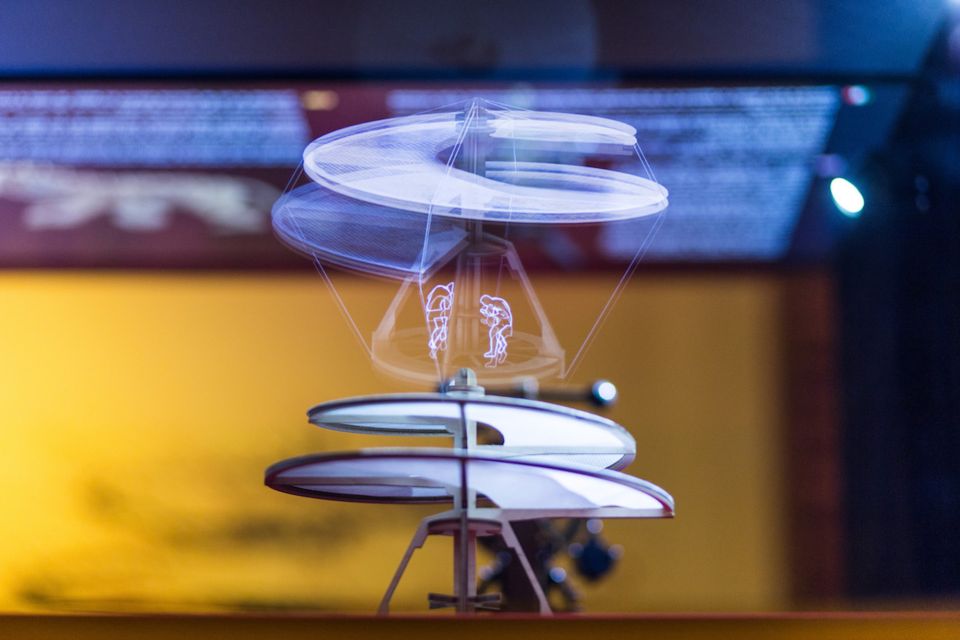
- Nine holograms in 3D: a highlight if you like seeing images move and explain how things function.
- Seven interactive installations: you don’t just watch; you build, test, and manipulate.
- Da Vinci’s engineering themes across four sections: organized around his engineering mindset, not only his art.
- Water, Air, Fire, Earth studies: a thematic thread that helps you connect inventions to natural forces.
- A 43 BC tomb inside the same Palazzo: you’re in a place with its own dramatic underground story.
Leonardo at the Palazzo della Cancelleria: the setting makes it feel special
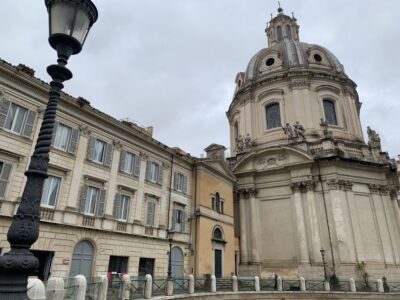
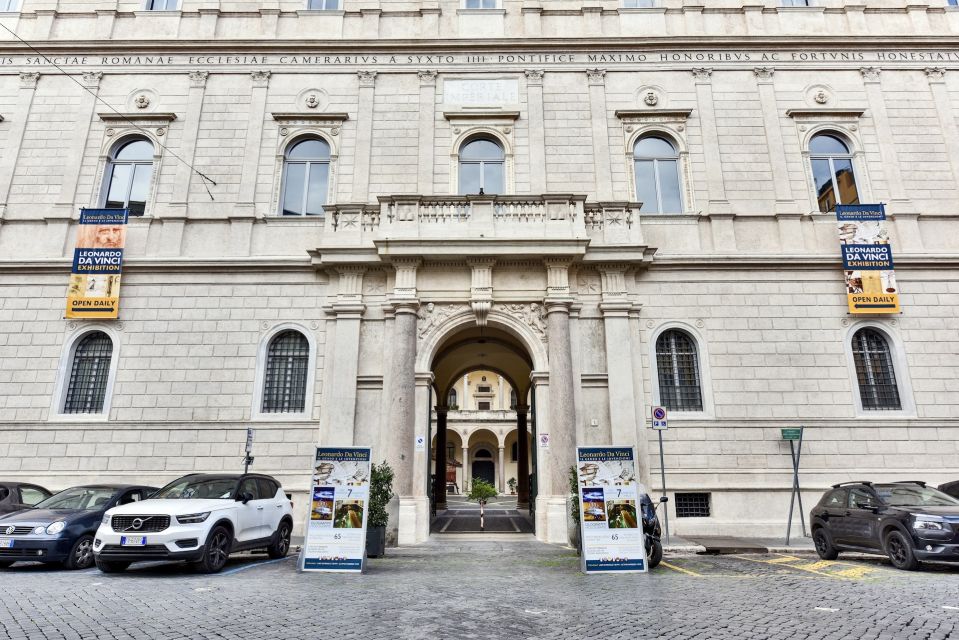
This ticket isn’t just for an exhibition room. It’s in the Palazzo della Cancelleria, a building owned by the Vatican, and the architecture alone is worth a quick look as you arrive.
If you’ve wandered around Campo dei Fiori or headed toward Piazza Navona, this area is easy to blend into a day. The address is Piazza della Cancelleria 1, and the location is close to those big sights without being inside the loudest crowd zones.
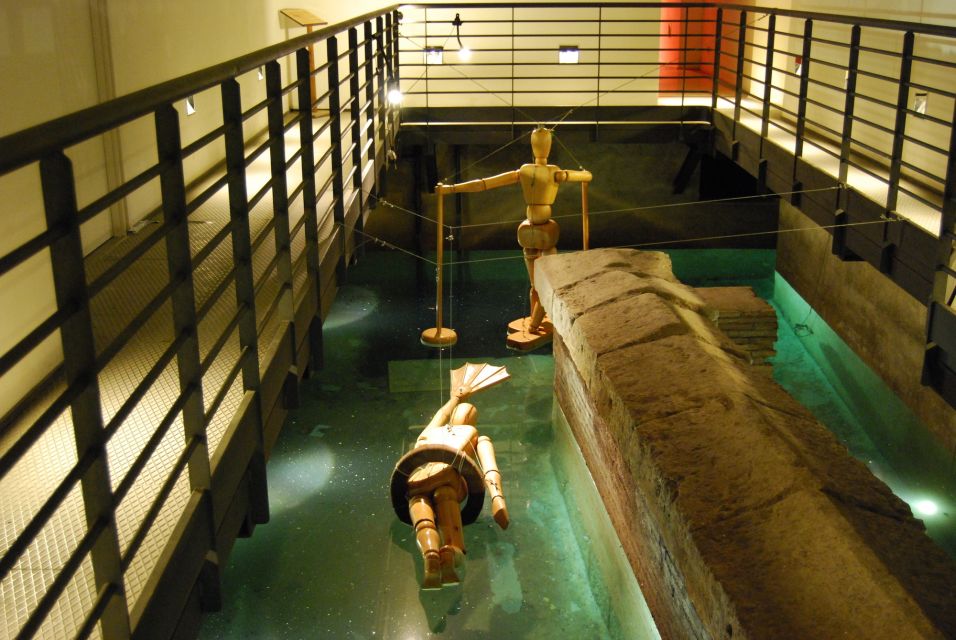
One neat twist: the Palazzo isn’t only about da Vinci. The upper floor is linked to the Sacra Rota (a church court process tied to marriage dissolutions), and the building also includes the tomb of the architect Auro Irzio from 43 BC, set in an underground natural pond. That background gives the exhibition a layered feeling, like you’re exploring genius inside an ancient place.
You can also read our reviews of more tours and experiences in Rome


Ticket basics: what you get for the $10 entrance price
The price listed is $10 per person, and you’re getting an entrance ticket plus a gadget. The big practical win here is that it’s not a long, complicated day-tour setup.
Your visit is timed by the exhibition’s opening hours, with entrance available until 1 hour before closing time. That flexibility matters because Rome can run on hot sidewalks, long lines, and sudden schedule changes.
What you do not get: a guide. That doesn’t make the experience worse, but it does mean you’ll want to rely on the provided audio option (if you choose it) and the on-site explanations. The upside is that self-paced exploring is the right fit for an exhibit built around touching and testing.
What the exhibition experience feels like in real time
Plan on about 45 to 60 minutes for a full visit, but you might stretch to around 90 minutes if you slow down and try every interaction. The museum itself doesn’t feel huge, and that’s part of the value: you can fit it between bigger Roman landmarks without feeling like you’ve lost a whole day.
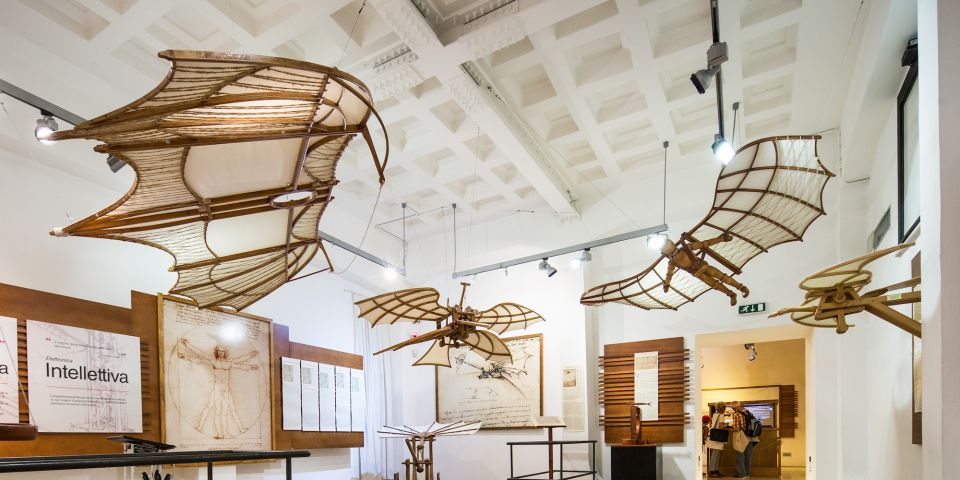
The experience is organized into four sections. Each section builds on da Vinci’s inventions with full-scale reproductions, interactive elements, and multimedia support, so you’re not stuck repeating the same style of display.
The layout also has a “flow” that makes sense once you’re inside. Still, I’d give yourself a little mental patience at the start. The rooms are staged clearly, but the exhibit includes enough stations and hands-on areas that you can want to confirm you’re moving in the right sequence, especially if you’re using the audio.
The four sections and the best way to pace yourself
Here’s a practical way to move through the exhibit without rushing or missing the points that make it worth the money.
Start with the big picture. In the first part, look for the overall engineering principles and how the show frames da Vinci as an inventor who worked across fields. This section sets expectations: you’re not only learning “what he made,” but also “how he thought.”
Then go hands-on quickly. In later sections, the interactive stations are the heart of the experience. If you wait too long, you’ll be done exploring before you’ve actually tested the most fun machines.
Use the audio/headphones as support. The audio option is described as excellent, and it can add detail that isn’t always repeated right next to the artifact. One detail to keep in mind: the audio discussion may not match the room order exactly, so treat it like a guided layer over a self-guided walk, not a strict checklist.
Touch, test, and build: the hands-on inventions you’ll actually try
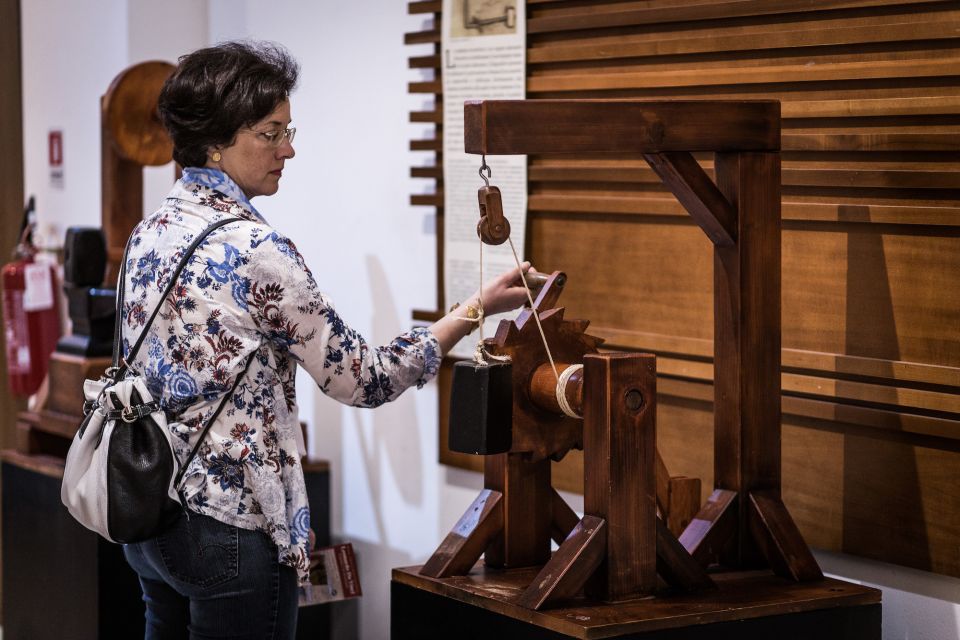
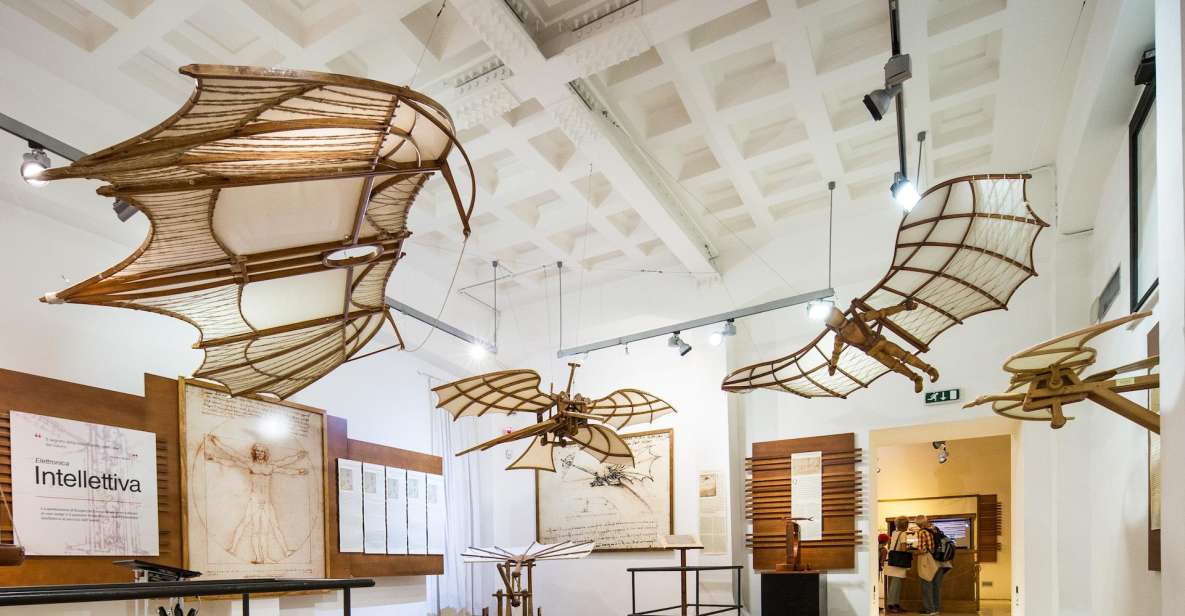
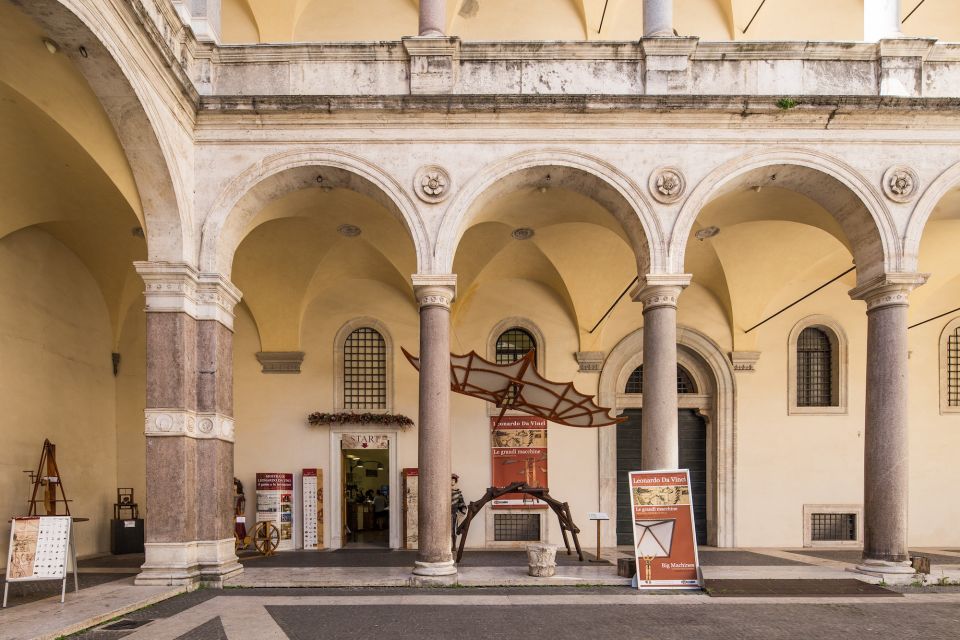
A big reason this place earns high marks is simple: you can interact. The exhibit includes over 65 full-scale machines made based on da Vinci’s designs, and you’re encouraged to touch and play with almost all of the displays.
Expect a “model workshop” vibe more than a traditional glass case museum. That matters because da Vinci was a draftsman and engineer first. When you can move a mechanism, test a structure, or run a concept in miniature, his sketches start to feel less like art and more like engineering prototypes.
There’s also a clear focus on creation and experimentation. One of the interactive options lets you build your own version of a bridge da Vinci invented. Even if your bridge-building isn’t perfect, the activity helps you understand the concept behind the design instead of memorizing a description.
If you care about engineering history, you’ll likely enjoy how the exhibit connects the dots between early mechanical ideas and later transportation and architecture concepts. If you’re traveling with kids, the interactive stations are where you’ll see the “we can try this” energy kick in.
You can also read our reviews of more museum experiences in Rome





Holograms in 3D: the moment the exhibit clicks
The show’s multimedia standout is nine holograms featuring da Vinci’s paintings and inventions in 3D. This is the part that turns static museum learning into a more “active” kind of understanding.
If you like seeing how diagrams become something you can visualize, these holograms do a great job. They help you imagine movement and function, especially for inventions that would be hard to grasp from a single model alone.
I also appreciate that the holograms aren’t used as a gimmick in place of learning. They support the engineering theme, so you’re not just watching light effects. The goal is clarity: how the invention connects to a real concept.
Water, Air, Fire, Earth: why the science theme feels smart
Da Vinci gets taught as an artist in many places, but this exhibition takes the engineering approach seriously. You’ll spend time looking at studies tied to Water, Air, Fire, and Earth.
That theme works because it shows how broad his thinking was. These aren’t random topics; they’re the physical forces behind many inventions. When you see them grouped this way, you start to understand why his work could lead to ideas across aviation, military engineering, and general scientific instruments.
You’ll also get close to inventions tied to those themes. That “get up close” part matters here, because the models are full-scale reproductions. You’re not just reading about concepts. You’re seeing how a design might be assembled, built, or operated.
The 43 BC tomb and the underground pond: a bonus you’ll remember
Even if your focus is da Vinci, don’t miss the fact that the Palazzo includes a real historical surprise: the tomb of architect Auro Irzio from 43 BC, immersed in an underground natural pond.
This isn’t presented as a side-show. It’s part of the building’s identity, and it gives you a sense of place as you walk through the experience. Rome can sometimes feel like one sight after another, but this is one of those stops where the building itself adds a story layer.
Audio and language support: how to get the most from the information
The exhibition is set up for self-paced viewing, and audio support is a big upgrade if you’re the type who likes context behind the mechanisms. Many people specifically call out the audio as excellent, and for good reason: the audio explanations add detail that can be hard to catch from room labels alone.
One practical note: the audio doesn’t always line up in the exact order you see things. That’s not a problem if you treat it as a learning tool while you explore. If you want the smoothest experience, I’d recommend you start the audio early and then follow the matching displays when you hear a reference.
Also, the exhibit mentions languages. You can check which language options are available at the time of your visit, but the key point is that English information exists and the setup is geared toward visitors who want real explanation, not just visuals.
Staff, crowds, and comfort: the small-museum advantage
This is a compact exhibition. That’s a plus for most people because it’s easier to navigate, and it also tends to feel less stressful than Rome’s bigger, louder attractions.
Comfort is another big factor. The exhibition is underground, so it can be a welcome break from Rome heat. Many visitors describe it as a quieter pause compared to the usual hit-list sights, and the fact that you can cool down while still learning is a real travel win.
Staff are described as friendly and welcoming, including at the desk. That matters because for a self-guided museum, a quick orientation helps you get your bearings fast and choose how long to spend in each section.
Gift shop value: don’t skip the last stop
There is a gift shop, and it comes up in comments as better than average. If you’re buying something small to remember the trip, this shop is a convenient final stop without needing to leave the area and search again.
The merchandise isn’t described in detail, but the consistent point is that it’s a pleasant, easy add-on after the exhibits.
Who should book this Leonardo da Vinci ticket
This ticket is a strong match if you want hands-on history. If you like engineering, science, aviation ideas, or you simply like watching paper designs turn into working-style models, you’ll feel satisfied.
It also works well as a family activity, because the interactive installations keep kids engaged without turning it into a purely kid-focused show. Just plan for closer supervision for smaller children due to floor-level movement and touch rules.
If you mainly want blockbuster art history and famous masterpieces only, you might find the engineering focus is more than you bargained for. But if you’re curious about what made da Vinci tick, the setup is exactly the point.
Should you book this Leonardo da Vinci exhibition ticket?
Yes, if you want a short, high-value, hands-on Leonardo experience that fits into a Rome day. The combination of full-scale machines, 3D holograms, and interactive stations makes it feel like learning you can do with your hands, not just your eyes.
I’d especially book it if you’re traveling during warm months and want a cool indoor break underground. At $10, it’s also easy to justify as a focused stop that won’t blow up your budget or your schedule.
FAQ
Where is the Leonardo da Vinci exhibition located?
The exhibition is at Piazza della Cancelleria 1 in Rome, near Campo dei Fiori and Piazza Navona.
How much is the ticket?
The entrance ticket is $10 per person.
How long should I plan to spend inside?
It’s described as a 1-day activity, and many visitors finish in about 45 to 60 minutes, depending on how much you interact with the machines.
What’s included with the ticket?
Your ticket includes the exhibition entrance fees and you receive a gadget.
Is a guide included?
No. A guide is not included with the ticket.
What kinds of exhibits can I expect?
You’ll see over 65 full-scale machines based on Leonardo’s designs, nine 3D holograms, and seven interactive installations. You can also explore studies related to water, air, fire, and earth.
Until what time can I enter?
Entrance is available until 1 hour before closing time.
Is it wheelchair accessible?
Yes, the exhibition is wheelchair accessible.
Is free cancellation available?
Yes. You can cancel up to 24 hours in advance for a full refund.