REVIEW · ROME
Rome: Appian Way & Catacombs Golf Cart Shared Tour
Book on GetYourGuide →Operated by EcoBike Roma - Parco Appia Antica · Bookable on GetYourGuide
Spartacus left fingerprints on the road. This 3-hour ride through the Appian Way and down into the Catacombs mixes big-name history with a surprisingly peaceful, off-the-radar pace. You’ll also hit sites tied to the Christ–Saint Peter story and the underworld of Roman power.
I especially like how the small-group setup (limited to 5) keeps the whole day from feeling like a cattle line. And the guide matters a lot here: I was impressed by how guides like Federico and Shannon can connect the dots so you understand what you’re looking at, including the striking detail of trilobites in the marble floor during the Catacombs visit.
One drawback to plan around: the Catacombs are stair-heavy and not wheelchair accessible, with about 50 irregular steps down and the same back up, plus it stays around 16°. If stairs or tight, dark spaces are a deal-breaker, you’ll want a different tour.
In This Review
- Key highlights worth writing on your day planner
- Starting out on Via Appia Antica (and why the cart is the smart move)
- Riding the Appian Way: Spartacus, Crassus, Commodus, and the art of not rushing
- Domine Quo Vadis church: a faith story placed in real stone
- Going underground: Catacombs of Rome (ticket included, stairs and cool temps included too)
- Circus of Maxentius: more than a relic, with a movie connection
- Tomb of Cecilia Metella, Capo di Bove, and Quintili’s Villa: quick stops with heavy narrative weight
- Is $95 worth it for 3 hours with a catacomb ticket?
- Who this tour is best for (and who should skip)
- The guide can make or break it: what I’d watch for
- What to pack and how to plan your day around it
- Should you book the Rome Appian Way & Catacombs golf cart tour?
- FAQ
- How long is the Rome Appian Way & Catacombs golf cart shared tour?
- Where is the meeting point?
- What is included in the price?
- Is hotel pickup included?
- Is the Catacombs tour wheelchair accessible?
- Are pets allowed on this tour?
- What is the cancellation policy?
Key highlights worth writing on your day planner
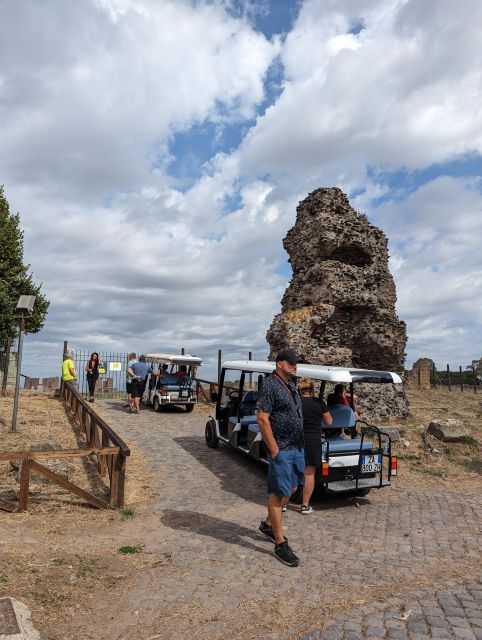
- Golf cart makes the Appian Way feel doable without rushing
- Catacombs with a guided ticket included so you’re not stuck figuring it out
- Circus of Maxentius gets real context, including its link to Ben-Hur
- Tomb of Cecilia Metella pass-by moments that add flavor without extra walking
- Quintili’s Villa stories tied to plots involving Emperor Commodus
- Small group experience with English-speaking local guidance
Starting out on Via Appia Antica (and why the cart is the smart move)

You meet at Via Appia Antica, 60 and check in at the desk about 10 minutes early. From the start, the tour is built for comfort and time. You’re not spending your whole day threading through crowds near Rome’s big-ticket monuments.
The golf cart portion matters because the Appian Way isn’t a “one photo and done” road. It’s a protected archaeological area (about 4,580 hectares) with more than 2,000 years of history. With the cart, you can actually enjoy the drive and the scenery while your guide tells the stories that make the stones feel less random.
This is a shared tour, not a private escape. Still, the group cap at 5 participants helps keep it friendly. If you like asking questions and hearing the answers without shouting over chaos, this format is a plus.
You can also read our reviews of more tours and experiences in Rome.


Riding the Appian Way: Spartacus, Crassus, Commodus, and the art of not rushing
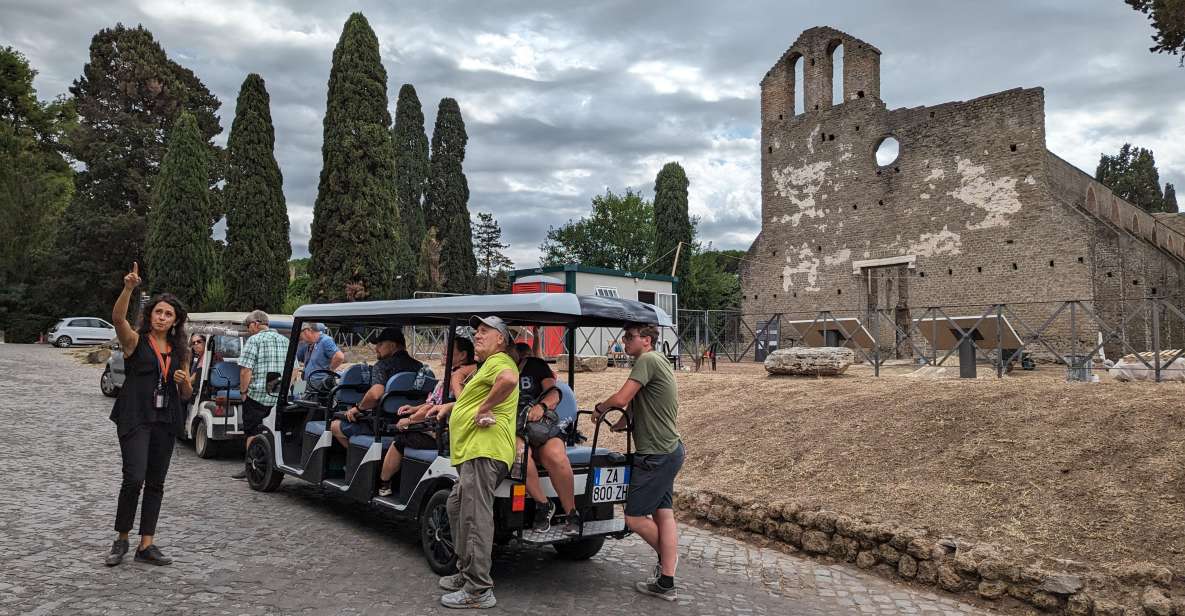
The tour’s first meaningful stretch is a guided Appian Way segment (about 10 minutes within the ride). You’ll get scenic views along the way, but the bigger value is what your guide points out.
This road is famous because it connects names you’ve heard in history class to real places you can see. The tour centers on the famous stretch where Spartacus, Crassus, and Commodus are tied to the area in one way or another. That framing helps you understand why Romans kept building, controlling, and memorializing power along this route.
Here’s the practical benefit: the tour tries to get you away from the usual “stamp collecting” rhythm. Instead of racing between major sites, you’re moving through a living archaeological park at a calmer pace. That’s how you get the feeling that you’re still in Rome, but not stuck in the busiest pockets of it.
Domine Quo Vadis church: a faith story placed in real stone
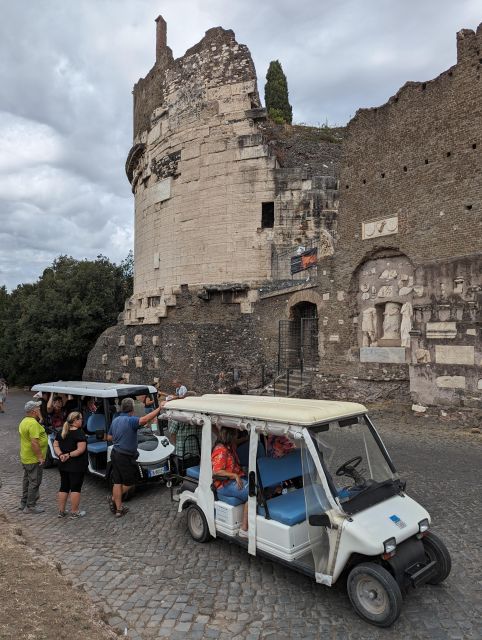
One of the listed highlights is the Domine Quo Vadis church, including the encounter between Christ and Saint Peter. Even if you’re not visiting for religious history, this stop gives you a different lens on Rome than the purely political storylines.
What I like about including a faith-focused stop alongside the ancient “hard power” sites is contrast. You see how Rome’s meaning layers on itself over time. Stone that once served civic and imperial purposes eventually becomes part of spiritual storytelling too.
Because the itinerary doesn’t pin this stop into a long walking block, you’re not stuck with a long detour. It’s a brief, guided moment that adds texture to the overall arc of the tour.
Going underground: Catacombs of Rome (ticket included, stairs and cool temps included too)
Next up is the Catacombs of Rome with a guided tour of about 50 minutes. Entrance fees are included with the tour price, which is genuinely useful. Catacombs planning can turn into a checklist headache, so having the ticket handled lets you focus on the experience.
This is also where the tour earns its “parallel world” idea. Your guide frames the catacombs as a mix of law and faith in a space physically dug underground. Even when you’ve seen photos, the setting feels different in person—smaller, quieter, and more controlled by the architecture than by your usual sense of space.
Now, the important practical part: this catacombs visit is not wheelchair accessible. The tour information is very clear about why: there are about 50 irregular steps down, 50 up, no lift, and no chance to sit along the way. Also, it mentions it’s roughly 16°, so dress accordingly.
If you’re generally mobile and comfortable with stairs, the time (50 minutes) is a good length. Long enough for your guide to build context, short enough that you’re not exhausted before the later surface stops.
Circus of Maxentius: more than a relic, with a movie connection
After the underground portion, you’ll visit the Circus of Maxentius for a guided tour. The listing frames it as the history of one of the biggest circuses, and it also notes a pop-cultural connection: it served as a set for Ben Hur.
Even if you’re familiar with the film, what you’ll likely enjoy here is how the guide connects scale to purpose. A circus isn’t just a big oval of stone. In Rome it becomes a stage for politics, spectacle, and public life—things people in power could influence.
This stop works well after the Catacombs because it flips the mood. You go from tight corridors and low light to open space and broad lines. Your brain gets a reset before the remaining sites.





Tomb of Cecilia Metella, Capo di Bove, and Quintili’s Villa: quick stops with heavy narrative weight
Not every stop here is a long time block, and that’s intentional. You’ll have:
- a pass by the Tomb of Cecilia Metella
- a guided tour at Capo di Bove
- a pass by of Villa dei Quintili
The Tomb of Cecilia Metella is presented as the story of an unknown woman connected to the richest man of Rome. Even as a pass-by, that kind of framing helps you look at the structure like it has a person behind it, not just a landmark.
Capo di Bove gets a guided tour, so it’s not just a photo pull-over. This is one of the places where a guide’s explanations can turn a “we’re here” moment into “now I get why it matters.”
And at Villa dei Quintili, the theme is political intrigue: plots against Emperor Commodus. That topic fits perfectly with the tour’s overall arc, which keeps circling power—who had it, who lost it, and how stone remembers the story.
A small warning, though: because some parts are pass-by moments, you won’t get a long deep-lecture feel at every stop. If you prefer a slow, museum-style pace, you might wish one or two of these segments were longer. If you want an efficient sampler with guided context, you’ll probably like this approach.
Is $95 worth it for 3 hours with a catacomb ticket?
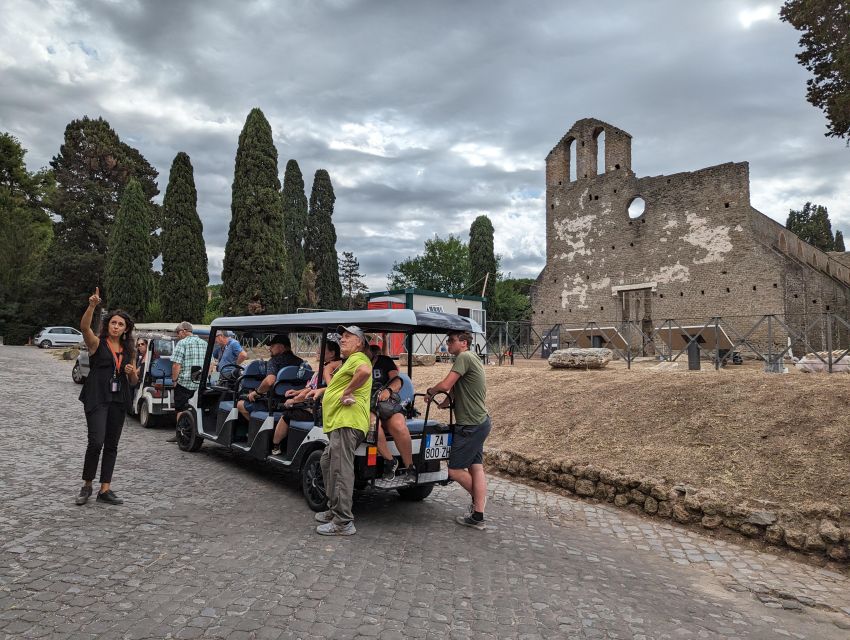
At $95 per person for 3 hours, this tour can be a strong value if you care about two things: guided interpretation and avoiding the ticket-planning friction.
You’re paying for:
- an English-speaking expert local guide
- the golf cart tour along the Appian Way
- 1/2 liter of water per person
- Catacombs entrance fee (and the guided Catacombs tour)
What you’re not paying for is also important. The listing notes that aqueducts area is not included, and there’s no hotel pickup and drop-off. Food and drinks aren’t included either, so plan to eat before or after.
My rule of thumb: this price makes sense when you want the Catacombs included and you’re okay meeting at Via Appia Antica, 60 yourself. If you were already planning to visit the Catacombs and wanted a guide to stitch together the Appian Way sites into one story, then $95 feels like “convenience plus context” rather than just transportation.
Who this tour is best for (and who should skip)
This tour is built for people who want Rome’s layers without spending the day in traffic or lineups. The pace is designed to feel calmer than the most crowded zones, and the cart helps you cover ground while keeping your energy.
It’s also a good fit if you:
- like guided storytelling tied to specific places
- want a small group experience (max 5)
- are comfortable with a stair-heavy Catacombs visit
It’s not a fit if you:
- use a wheelchair (Catacombs restrictions apply)
- are pregnant (not suitable per tour info)
- need a stroller-friendly, very young-child day (not suitable for children under 2)
- rely on pets being welcome (pets are not allowed)
If you’re on the fence because of the Catacombs, consider the tradeoff: the underground part is a major reason this tour feels special, but it comes with stairs and limited comfort options.
The guide can make or break it: what I’d watch for
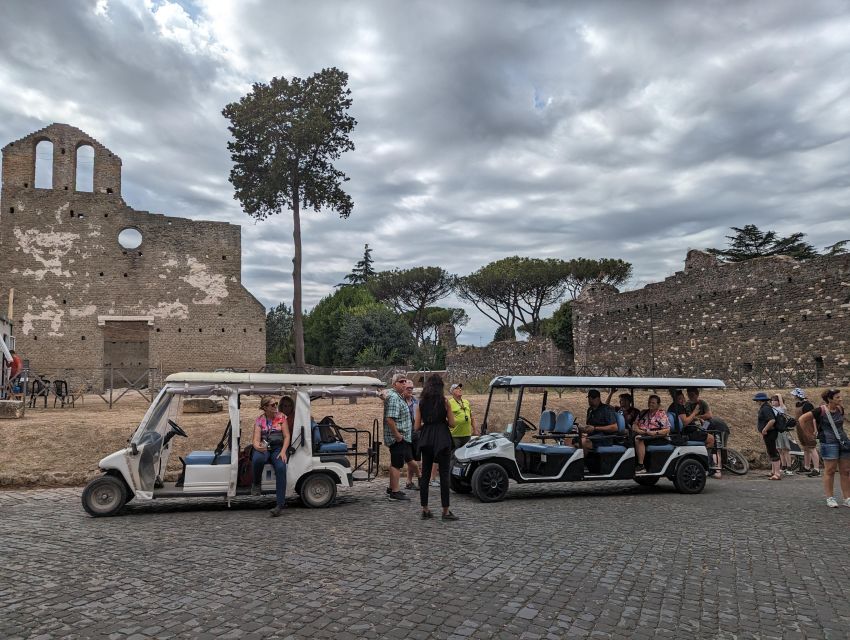
The tour’s success depends heavily on the guide’s communication. The information you provided highlights that the tour uses English-speaking guides, and the experience includes a strong emphasis on storytelling.
In particular, guides like Federico impressed with friendliness and strong explanations, while Shannon was noted for being amazing and for excellent English. That tells me the tour tends to work best when your guide can bring the sites to life with clear pacing.
One balanced note: as with any group tour, delivery style can vary. If you’re picky about tour narration sounding scripted rather than engaging, that’s worth keeping in mind when you pick a departure time and language day.
What to pack and how to plan your day around it
Because the Catacombs are about 16°, you’ll want layers. Even in Rome, an underground visit can feel colder than you expect, and the tour advises dressing appropriately.
Also plan for:
- stairs you can’t avoid in the Catacombs (no lift, irregular steps)
- no sitting breaks along the way
- water provided (but food not provided)
Since there’s no hotel pickup, build buffer time for getting to Via Appia Antica, 60 and checking in. Arriving early helps you avoid stress right before you start.
Should you book the Rome Appian Way & Catacombs golf cart tour?
I’d book this tour if you want a structured, small-group way to see multiple Appian Way sites plus the Catacombs, without turning your day into a series of long lines and guesswork. The inclusion of the Catacombs entrance and the cart ride value the time you’re spending in Rome.
I’d think twice if you need aqueducts access in the same outing (those aren’t included), if you need hotel pickup, or if the Catacombs stairs would be uncomfortable or unsafe for you. In those cases, you’ll likely enjoy a different tour that better matches your mobility and priorities.
If your goal is to understand why the Appian Way matters—and then experience what “underground Rome” feels like—this one is a practical, memorable way to do it in about three hours.
FAQ
How long is the Rome Appian Way & Catacombs golf cart shared tour?
The tour lasts about 3 hours.
Where is the meeting point?
You meet at Via Appia Antica, 60. You should arrive about 10 minutes early and check in at the desk.
What is included in the price?
The tour includes an English-speaking local guide, the golf cart tour along the Appian Way, 1/2 liter of water per person, and the entrance fee for the Catacombs (with a guided tour included).
Is hotel pickup included?
No, hotel pickup and drop-off are not included.
Is the Catacombs tour wheelchair accessible?
No. Wheelchairs are not permitted in the Catacombs because of architectural barriers, including about 50 irregular steps to descend and about 50 to climb, with no lift.
Are pets allowed on this tour?
No, pets are not allowed.
What is the cancellation policy?
You can cancel up to 24 hours in advance for a full refund.