REVIEW · ROME
Appia Antica & Aqueducts e-Bike Tour – Official Provider
Book on GetYourGuide →Operated by EcoBike Roma - Parco Appia Antica · Bookable on GetYourGuide
The Appian Way is a time machine on two wheels. This Appia Antica & Aqueducts e-Bike Tour trades Rome’s crowded blocks for the Regional Park’s 4500 hectares of ruins and road traces. I like the way the route mixes famous set pieces with quieter park corners, and I especially like that you get an expert guide to connect the dots. One thing to consider: if your group has newer riders, the ride pace can feel slower.
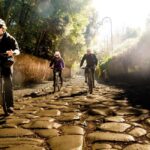
I also like the hands-on feeling here: you literally touch 2000-year-old stones on the Regina Viarum, where wagon ruts from horse-drawn traffic still mark the pavement. And yes, the Roman aqueduct arches look even better when you’re moving under them instead of staring from a viewpoint. The possible drawback is that the tour includes some stretches with traffic, so you’ll want to feel comfortable riding an e-bike in real roads.
If you want Rome beyond the usual postcards, this tour is built for that mood. It’s also a solid choice after you’ve already done the classic center sightseeing and you want something more open, more historical, and more physical without being exhausting.
In This Review
- Key Highlights You’ll Feel (Not Just Read About)
- Why the Appian Way Beats Rome’s Usual Highlights
- Getting Rolling: E-Bike Comfort and What 3.5 Hours Actually Means
- Starting at EcoBike: Where the Appian Adventure Begins
- Domine Quo Vadis and the Appian Way’s Original Road Trace
- Circus of Maxentius: The Roman Circus Complex You Can Walk Through
- Cecilia Metella and the Fortress Story on a Lava Plateau
- Villa dei Quintili and the Regina Viarum Rhythm
- Parco degli Acquedotti: Roman Aqueduct Arches in Motion
- Caffarella Valley: Churches, Park Space, and a Slower Pace
- Optional Catacombs: St. Sebastian or St. Callixtus
- Price and Value: Is $59 Worth It?
- Who This Tour Fits Best (and Who Should Skip It)
- Tips to Avoid the Common Friction Points
- Should You Book This Appia Antica & Aqueducts e-Bike Tour?
- FAQ
- How long is the Appia Antica & Aqueducts e-Bike Tour?
- Where does the tour start?
- What’s included in the price?
- Is the tour offered in English?
- Are catacombs included, or are they optional?
- What should I bring for the tour?
- Is the tour rain or shine?
- How much of the route is off-road?
Key Highlights You’ll Feel (Not Just Read About)
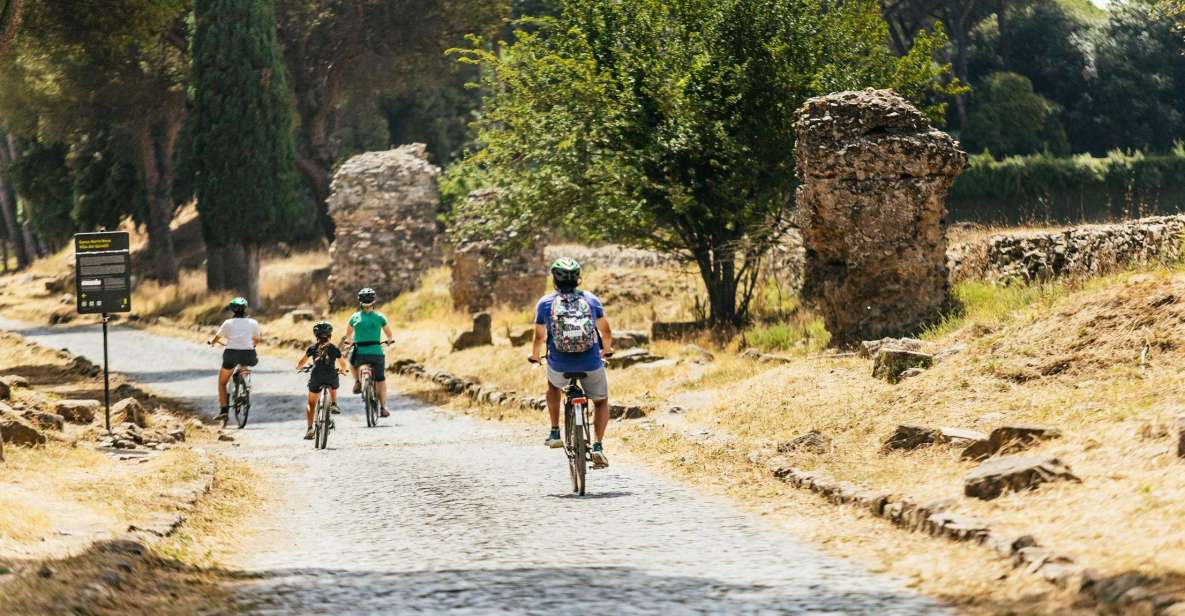
- Regina Viarum road stones you can touch, including wagon-truck traces from ancient horse logistics
- Domine Quo Vadis stop with the legend of Peter’s encounter leaving footprints on the pavement
- Circus of Maxentius plus the connected villa and Valerio Romolo mausoleum area, with film history tied in
- Cecilia Metella on a lava plateau, plus how the spot later became a strategic fortress
- Parco degli Acquedotti with the “Roman engineering bottleneck” feeling: arches, scale, and function
Why the Appian Way Beats Rome’s Usual Highlights
Rome is great, but some days you crave breathing room. This is one of those routes that shifts you from city traffic energy to long-vanishing roads and park paths. The Appian Way was first built for military movement, then used by traders, pilgrims, and travelers for centuries—so the place feels layered, not just “old.”
What makes it work is the combination of movement and storytelling. You ride through archaeological highlights that most visitors only see in fragments. And because you’re on an e-bike, you can cover more ground than you would on foot without turning the whole day into a workout marathon.
You’ll also get the “Queen of all roads” angle in a practical way. The route isn’t just about looking at ruins—it’s about understanding how roads, water, and power shaped daily life in ancient Rome.
You can also read our reviews of more cycling tours in Rome



Getting Rolling: E-Bike Comfort and What 3.5 Hours Actually Means
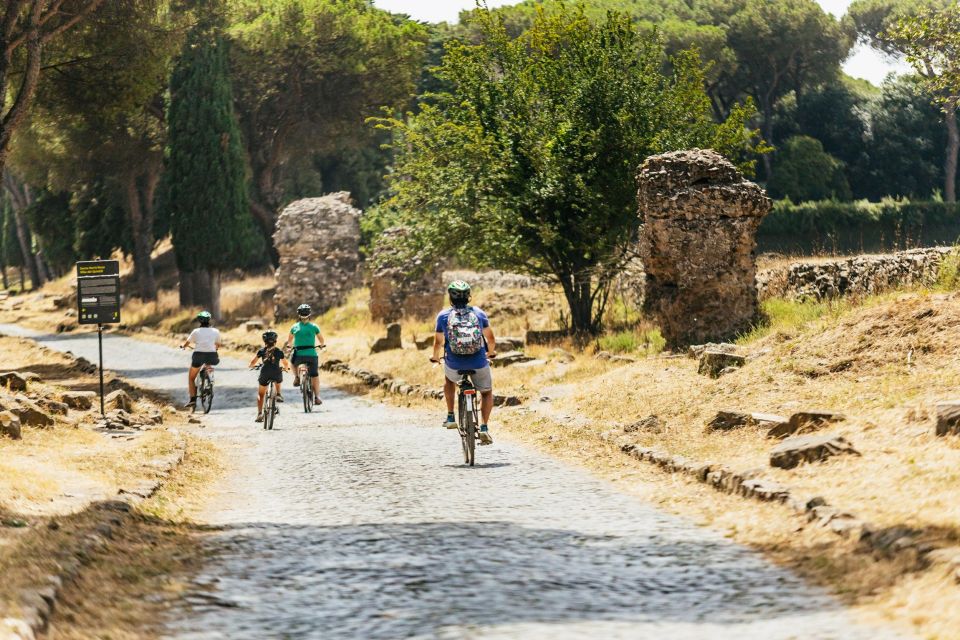
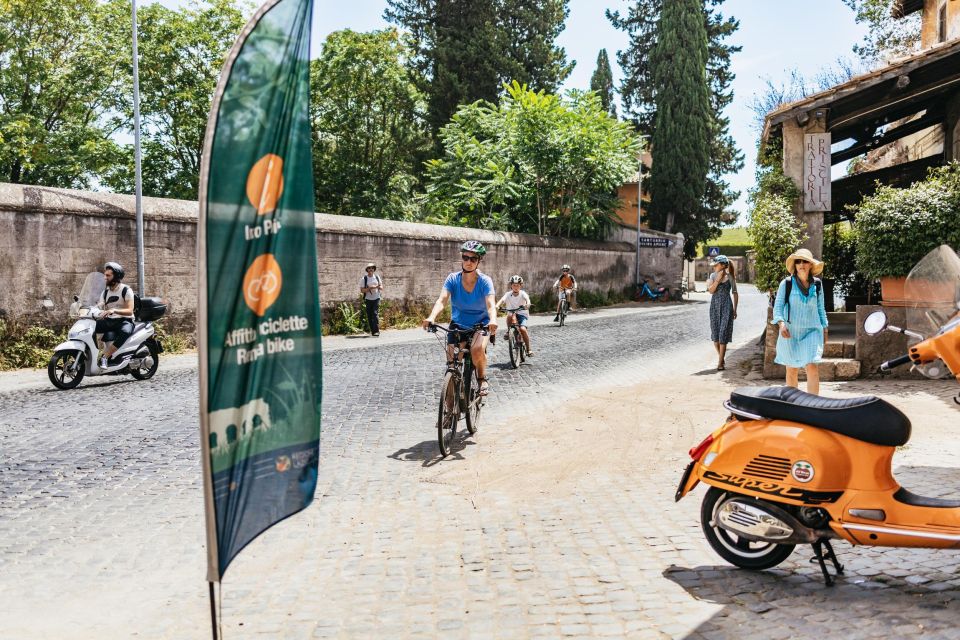
The tour is about 3.5 hours, and it’s designed for people who want to see a lot without spending the entire time walking. You’ll get a high-quality e-bike, plus a helmet, locks, and maps. There’s a half-liter bottle of mineral water too.
E-bikes help most riders handle longer stretches and uneven park surfaces without white-knuckle fatigue. One review nailed the mix: about 70% off-road and 30% streets, which is a useful expectation if you like the idea of nature paths more than only paved viewpoints.
Still, plan for shared group pacing. One reviewer noted that less experienced bike riders slowed the tour. So if you’re unsure of your riding comfort, consider leaning into the guided structure anyway, and accept that you may move at the group’s rhythm rather than setting your own tempo.
Starting at EcoBike: Where the Appian Adventure Begins
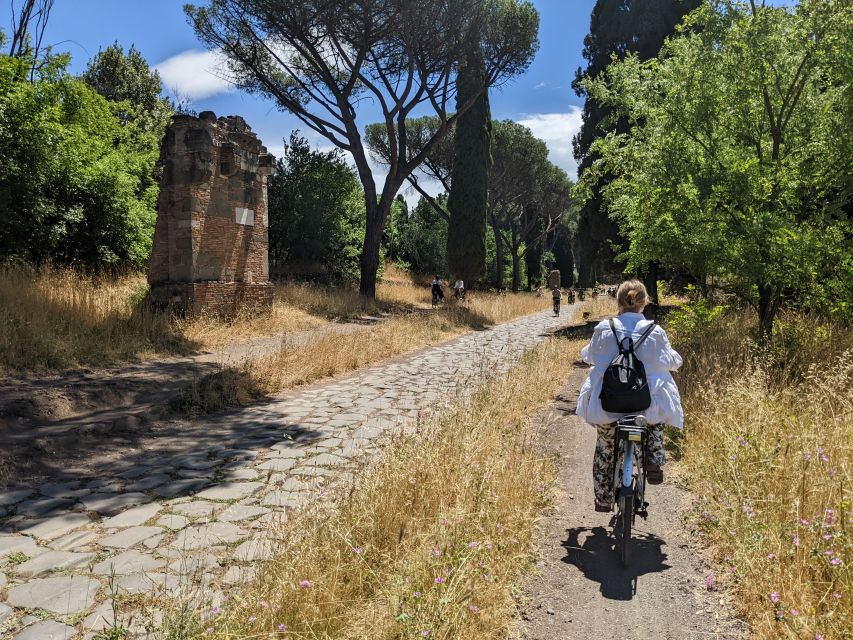
You start at the Centro Servizi Appia Antica – EcoBike location for bike pickup. This matters because the tour is structured around an efficient sequence of landmarks inside the Appia Antica Regional Park area, not random stop-and-go sightseeing.
The guide gives you an intro to the area first, plus a quick orientation to riding the e-bike. That’s a big deal here because the route includes a variety of surfaces and some stretches with traffic. You’ll want to be confident before you roll.
Also keep in mind the tour runs rain or shine. Bring appropriate layers because the park doesn’t stop being scenic just because clouds show up.
Domine Quo Vadis and the Appian Way’s Original Road Trace
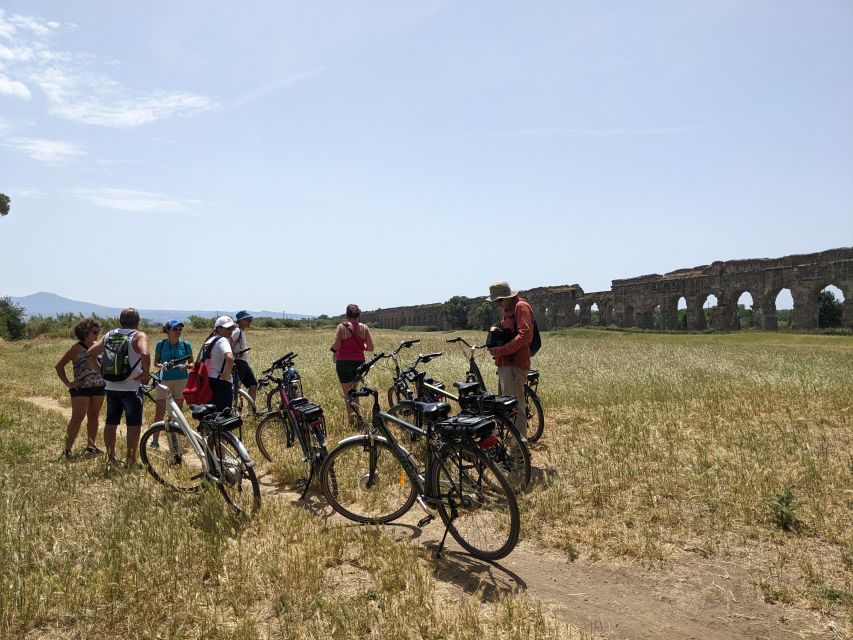
Your first major stop connects you to the legend-grade start of the route: the church of Domine Quo Vadis. According to the story, Saint Peter encountered Jesus while fleeing persecution, and Jesus’s disappearance left footprints on the pavement. Whether you treat it as faith history or folklore history, it’s an instantly memorable entry point.
Then you move along the Appian Way section between the Domine Quo Vadis area and toward the Aqueducts Park. This is where the experience turns from “nice ride” into “wait, people actually drove on this.”
You get to touch 2000-year-old stones marked with wagon tracks—those deep impressions left by horse-drawn transport. It’s a surprisingly emotional detail because it turns archaeology into something physical. You’re not just seeing evidence; you’re feeling the wear patterns left by real movement.
Circus of Maxentius: The Roman Circus Complex You Can Walk Through
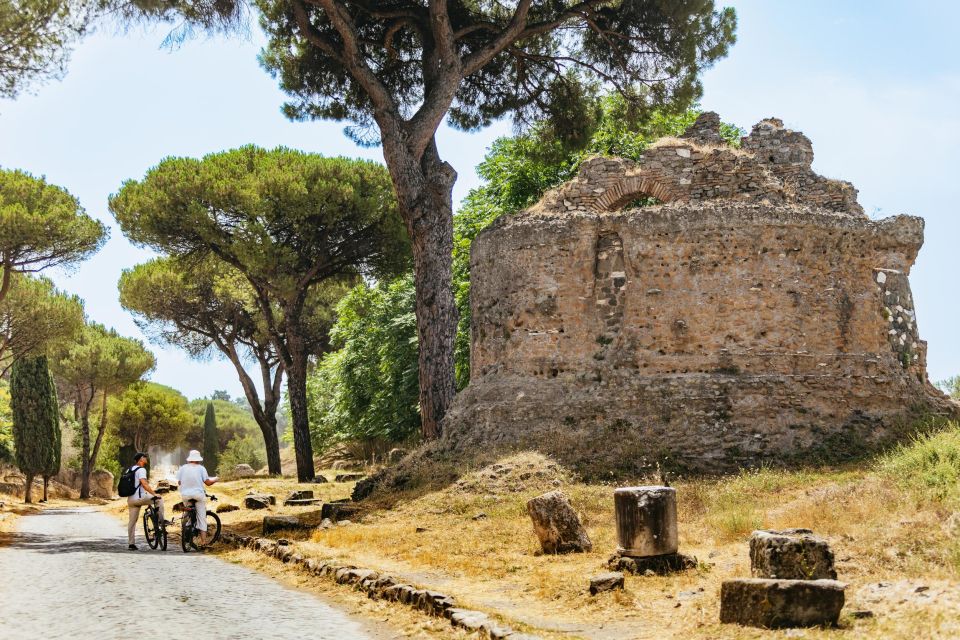
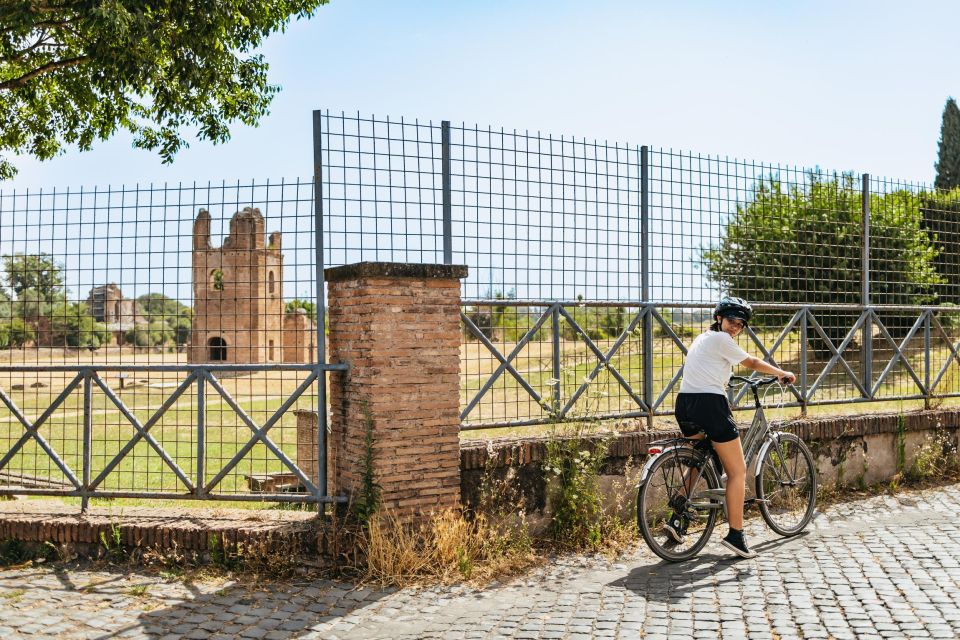
Next comes the Circus of Maxentius, one of the best-preserved Roman circus sites. You’ll go beyond a quick exterior glance. The complex includes the circus structure, plus the villa and the mausoleum of Maxentius’s son, Valerio Romolo.
A fun bonus that the guide may bring up: scenes from Ben-Hur (William Wyler, with Charlton Heston) were filmed here, especially the chariot race sequence. Even if you don’t care about film trivia, it helps you understand how cinematic ancient architecture can feel when you’re standing inside the remains.
This stop also shows you something important about how Rome functioned: entertainment wasn’t separate from politics and elite power. The circus is a clue to what the ruling class wanted the public to see—and do.
You can also read our reviews of more tours and experiences in Rome

Cecilia Metella and the Fortress Story on a Lava Plateau
Then you shift to one of the park’s dramatic icons: the Tomb of Cecilia Metella. It sits on a lava plateau dating back more than 260,000 years, and it dominates the area the way big monuments always do—by being impossible to ignore.
You might know the tomb only as a silhouette from afar. Close up, it makes more sense as a strategic landmark. The tour includes narration about Cecilia Metella—though records are limited—and it also explains a later life for the structure. During the Middle Ages, the tomb area was used as a fortress, including control by the Caetani family, who took advantage of the position to manage access and build a self-sufficient village.
So you don’t just learn ancient Roman names. You learn how later people re-used old Roman power points because the geography still worked.
Villa dei Quintili and the Regina Viarum Rhythm
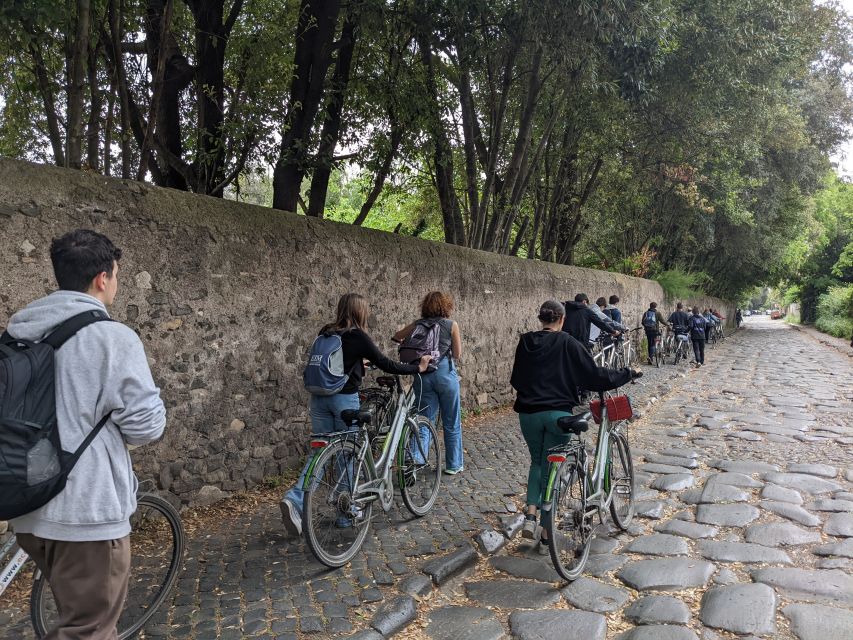
From there you pass the Villa dei Quintili and continue along the bigger itinerary thread tied to the Regina Viarum route. The tour’s goal is an “itinerary feeling,” where each stop is a chapter in how the Appian Way evolved—road, villas, entertainment, burial sites, and then the key engineering systems that brought water.
You’ll also pass the Quintili Nympheum area on the way toward the waterworks portion. Even when you’re not stopping long, these passes matter. They show you that the park isn’t only tombs and arches; it includes elite spaces and leisure structures too.
The rhythm is also practical. On a route like this, you want a guide who keeps the movement smooth. The reviews highlight guides who stayed attentive at crossings and helped the group stay safe before you roll into busier spots.
Parco degli Acquedotti: Roman Aqueduct Arches in Motion
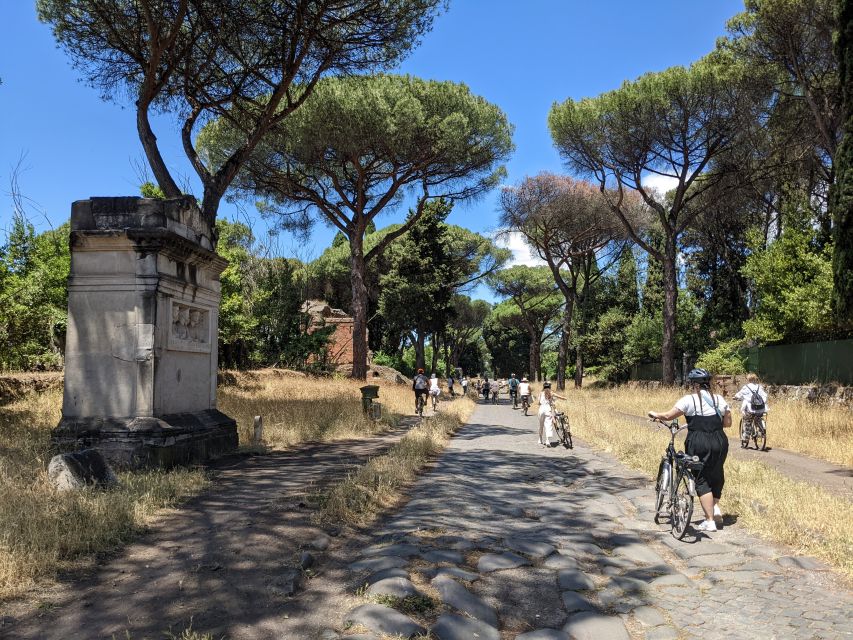
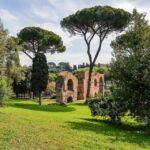
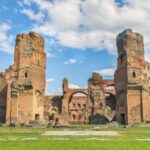
Now you reach the main engineering show: Parco degli Acquedotti. This is where the aqueducts move from “historic structure” into “daily-life infrastructure.” You get guided time in the park, focused on what you’re seeing—arches, alignment, and the sheer scale of systems built to move water.
You’ll ride among the ruins with the big arches around you, which is a different experience than seeing them from a distant vantage point. It feels more like part of the original setting, because your position changes as you go. That motion helps your brain connect the engineering logic with the landscape.
This is also one of the biggest reasons the e-bike format works. Walking the whole thing would limit how much water-works context you could absorb before fatigue wins.
Caffarella Valley: Churches, Park Space, and a Slower Pace
The itinerary also includes Parco della Caffarella with a guided stop. This part is more “park experience” than monument experience. Think open green space paired with historical structures like churches and tombs that sit alongside the broader Roman remains.
If you’re the type of traveler who likes nature breaks between heavy ruins, this section helps. It also adds variety because you’re not always climbing toward the next icon. The guide keeps the pacing manageable while you transition from road-and-transport themes into a more human-feeling park atmosphere.
And yes, this is still part of the Appian Way story. The old road shaped settlement patterns and burial choices, and the valley area reflects that long-term use.
Optional Catacombs: St. Sebastian or St. Callixtus
One of the easiest decisions is whether to add the underground stop. You can pay on site (not included in the base tour price) to visit the catacombs of either Saint Sebastian or Saint Callixtus, at €10 each.
This optional add-on is worth considering if you want a contrast: everything aboveground is roads, aqueducts, and monuments. The catacombs take you down into the cemetery system beneath your feet. It also turns the tour into a full “surface plus underground” history lesson.
If you prefer lighter days, you can skip it. The tour is still designed to cover major landmarks without forcing you into the underground option.
Price and Value: Is $59 Worth It?
At $59 per person for about 3.5 hours, you’re paying for three things: a guide, an e-bike setup, and a route that targets high-density highlights inside the park. You’re not just renting a bike and hoping you can connect all the historical dots yourself.
For value, I like that your included items reduce friction: helmet, locks, maps, and water are all handled. And the guide time matters most at stops like Domine Quo Vadis and the circus and tomb areas, where context changes how you interpret what you’re looking at.
Compare it to doing this on your own. You’d save money only if you’re already confident with navigation through the park and you don’t need the stories to make the remains click. If you want the “why” behind the stones, the guided format is the smart bargain.
Who This Tour Fits Best (and Who Should Skip It)
This tour works well for active travelers who want history plus movement. It’s aimed at riders comfortable with an e-bike and with the idea of doing a longer route (not a short stroll). If you enjoy off-road park paths and appreciate Roman engineering beyond the Colosseum, you’ll get a lot from it.
Fit well if:
- You’ve already done the classic Rome highlights and want a different Rome angle
- You like ruins where the physical traces matter, like road stone ruts
- You want a mix of monuments and park scenery in one outing
Skip or reconsider if:
- You’re under 13 (the tour notes it isn’t suitable for children under 13)
- You’re pregnant or you have back problems
- You don’t feel comfortable riding in a group that may include mixed experience levels
Also note the e-bike requirements: e-bikes are available from 9 years old with a height of 135 cm / 4.40 feet, and adults are homologated up to 90 kg. At the same time, the tour itself says not suitable for children under 13. That means you should check the operator’s fit for your specific ages and needs before you plan your day.
Tips to Avoid the Common Friction Points
This is the kind of tour where small prep prevents big annoyances. Here’s what I’d do before you roll.
First, wear supportive shoes. The tour specifies no bare feet, and that’s about safety and grip on bikes. Bring layers because it runs rain or shine, and Rome weather can change its mind fast.
Second, if you’re a newer rider, take your time during guidance. One review called out that inexperienced riders slowed the tour. The e-bike makes riding easier, but it doesn’t replace attention at crossings and tighter spots.
Third, plan your food timing. Lunch isn’t included, so you’ll want to eat before or plan afterward.
Finally, don’t bring alcohol in the vehicle. It’s prohibited, and you’ll avoid any awkward moments with the staff.
Should You Book This Appia Antica & Aqueducts e-Bike Tour?
Book it if you want a guided way to see the Appian Way’s big set pieces—Domine Quo Vadis, Maxentius Circus, Cecilia Metella—then connect them to the water system in Parco degli Acquedotti. It’s also a strong option if you value a guide who explains route choices and stays careful at crossings. Reviews include examples of guides like Federico, Sara, and Alex delivering clear, entertaining storytelling and staying on top of safety cues.
Pass if you dislike any traffic exposure during sightseeing or you know you won’t ride well in a group setting. And if you only want a strict self-paced itinerary with no shared rhythm, you might prefer a self-guided bike day instead.
If your goal is authentic Rome beyond the center, this tour is the kind of outing that changes how you see the city—because you ride the infrastructure and monuments that once made Rome work.
FAQ
How long is the Appia Antica & Aqueducts e-Bike Tour?
The tour lasts about 3.5 hours.
Where does the tour start?
The meeting point is the Centro Servizi Appia Antica – EcoBike (bike rental area).
What’s included in the price?
Included items are a professional guide, high quality e-bikes, helmets, locks & maps, and 1/2L mineral water.
Is the tour offered in English?
Yes, the live guide provides the tour in English.
Are catacombs included, or are they optional?
Catacombs are optional. You can add a visit to either the catacombs of Saint Sebastian or Saint Callixtus by paying €10 each on site.
What should I bring for the tour?
Bring your passport or ID card (a copy is accepted). Also wear suitable footwear; bare feet are not allowed.
Is the tour rain or shine?
The tour takes place rain or shine.
How much of the route is off-road?
One review describes the ride as about 70% off-road and 30% streets thanks to the e-bike assistance.