REVIEW · ROME
Rome:Appian Way E-bike Tour with Catacombs, Aqueducts & Food
Book on GetYourGuide →Operated by ESBIKE TOURS & EXPERIENCES · Bookable on GetYourGuide
Your Rome day starts in the open air. I really like the double-suspension CUBE PRO 120 that makes bumpy ground manageable, and I like how the ride shifts you off the city noise and onto the Appian Way countryside lanes. The one caution: you’ll be on off-the-beaten-track paths and you need basic-medium comfort on a bike, including a few busier-road moments.
I also love the two main “wow” stops packed into just 5 hours: the catacombs and the Parco degli Acquedotti aqueduct remnants. You’re not just looking at ruins from a sidewalk—you get motion, space, and changing scenery as the tour moves through the natural park.
This isn’t the slow, sightseeing-only version of Rome. It’s built for people who want a bit of effort with their history, with an electric bike that keeps it fun, not punishing.
In This Review
- Key highlights I’d bet you’ll care about
- First pedal out: the Appian Way rhythm that changes your whole day
- The CUBE PRO 120 e-bike: why double-suspension is the real upgrade
- Catacombs stop: Saint Callixtus on most days, San Sebastiano on Wednesdays
- Passing Villa of Maxentius and the Mausoleum of Cecilia Metella
- Parco degli Acquedotti: seeing aqueduct remnants with actual breathing room
- Lunch or aperitivo: a real break in the countryside, not just a pit stop
- Guides and pace: why the small-group feel matters on this route
- Price and value: is $96.29 worth it for 5 hours?
- Who should book this and who should skip it
- Should you book this Appian Way e-bike tour?
- FAQ
- What’s the tour duration?
- Which catacombs are included?
- Are catacombs included on holidays?
- What’s included in the price?
- Where does the tour start and end?
- What bike experience do I need?
- Who isn’t this tour suitable for?
Key highlights I’d bet you’ll care about
- Full-suspension CUBE PRO 120 e-bike built for rougher terrain, not flat-city cruising
- Appian Way riding through the Natural Park feel, with ruins along the route
- Catacombs visit with tickets included (Saint Callixtus or San Sebastiano depending on the day)
- Parco degli Acquedotti aqueduct views where the ruins actually feel big in context
- Food tasting for lunch or aperitivo, with a break that’s part of the day, not a rushed stop
First pedal out: the Appian Way rhythm that changes your whole day
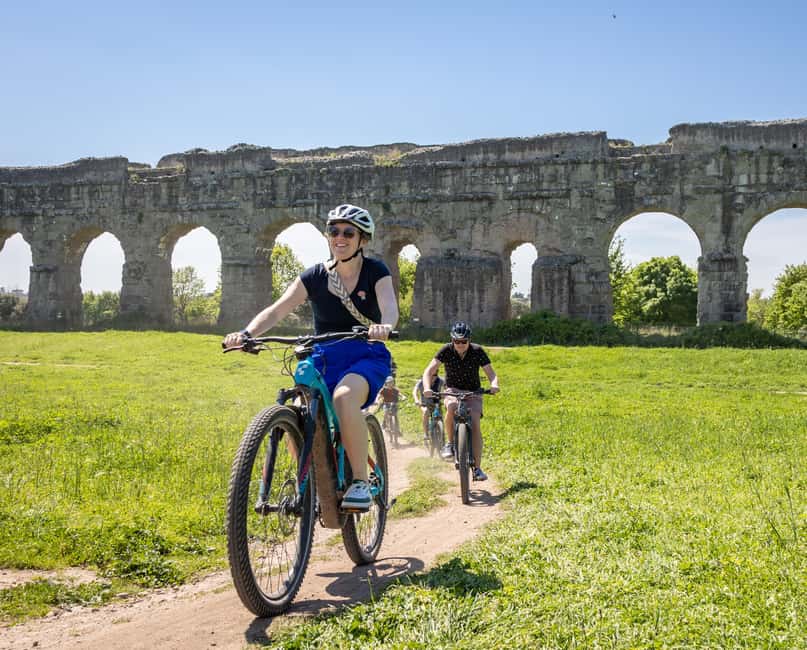
The start matters. Instead of staying trapped in central Rome traffic and crowds, this tour gets you moving early and sends you toward the Appian Way—often quieter, more open, and way more “Roman countryside” than you expect for a half-day.
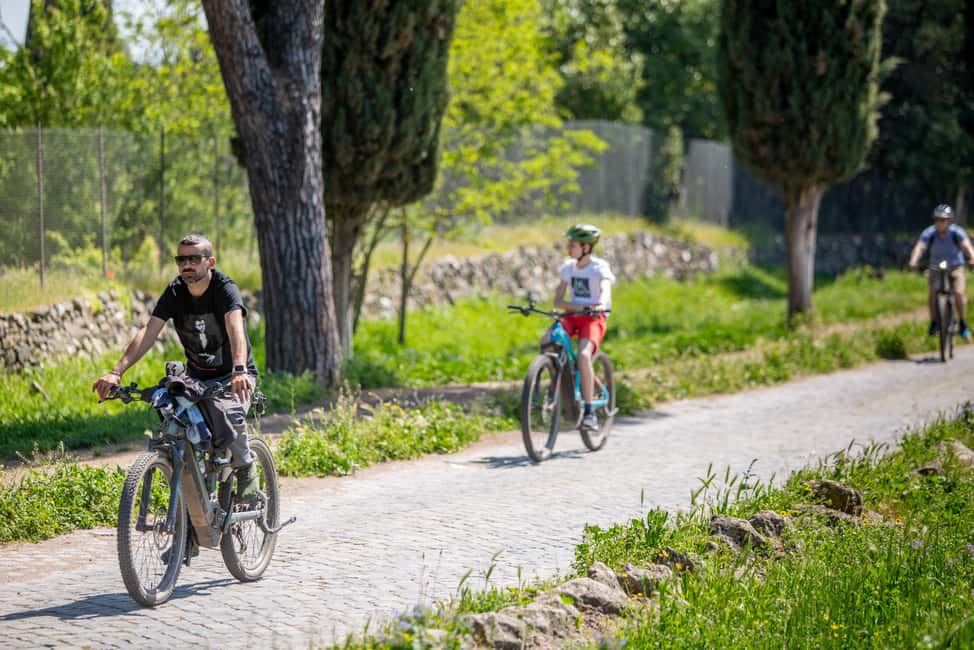
The Appian Way is still one of Rome’s most dramatic corridors. You’ll feel it right away: the route switches from city edges to park-like stretches where the soundscape changes. That shift is more than scenery. It changes how you look at everything you’re seeing. A ruin viewed while riding through the countryside hits differently than the same ruin photographed from behind a barrier.
You also pass through the kind of places that are hard to stitch together on your own. The tour threads catacombs, ancient landmarks, and aqueduct park remnants into one ride. That means less planning time for you and more time spent getting the atmosphere, not just collecting photos.
And it’s not only “ride and look.” The tour has built-in stops for explanations and breaks, so the pace stays human. It’s a good fit if you want exercise without turning your day into a training session.
You can also read our reviews of more food & drink experiences in Rome

The CUBE PRO 120 e-bike: why double-suspension is the real upgrade
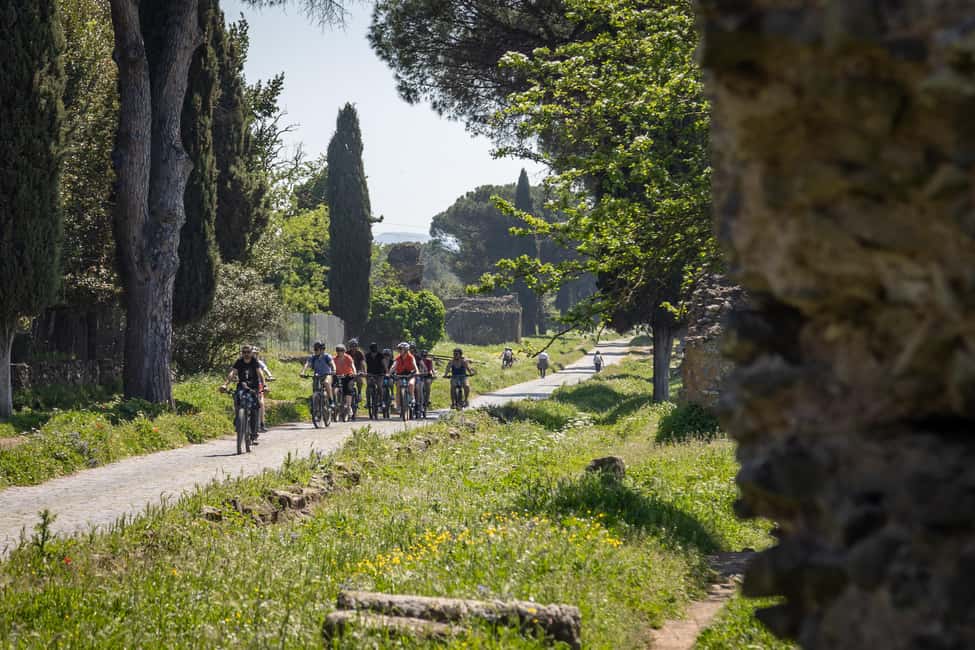
The bikes here are double-suspension CUBE PRO 120 units. That might sound like gear talk, but it matters because the route isn’t just smooth pavement. The Appian Way area can involve uneven surfaces and rougher ground, and suspension helps you stay in control instead of battling the terrain.
If you’re used to city bikes, you’ll notice the difference fast. With an e-bike, you’re not “spinning for survival.” You’re using pedal assist to keep effort comfortable while your tires roll over bumpy sections. One practical tip: when you hit a rough patch, stay calm and keep a steady cadence. Let the bike do its job, not your legs.
One more reality check: this is not a totally car-free fairy tale. There can be stretches with real traffic as you move between sights. The good news is that the tour is guided and paced for safe travel. The better news is that the bikes are powerful and stable enough that the ride stays manageable—so long as you meet the requirement of basic-medium comfort on a bike.
For you, the biggest value of this e-bike setup is confidence. You’ll spend less time worrying about balance and more time watching what’s around you: ruins, aqueduct lines, and the feel of Roman landscapes outside the center.
Catacombs stop: Saint Callixtus on most days, San Sebastiano on Wednesdays
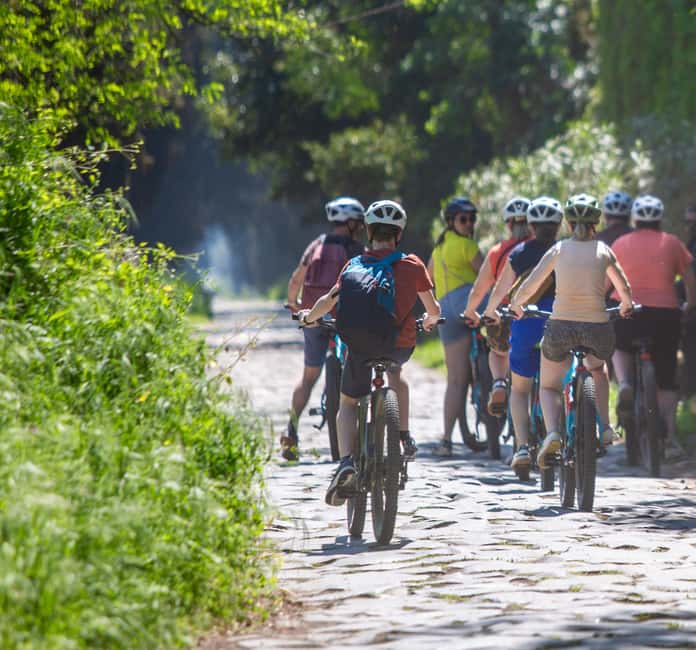
Catacombs are intense, and this tour handles them in a structured way. Tickets are included, and you’ll start with a catacombs visit before settling into the longer ride.
Which catacombs you visit depends on the day:
- Monday, Tuesday, Thursday, Friday, Saturday, Sunday: catacombs of San Callisto (Saint Callixtus)
- Wednesday: catacombs of San Sebastiano
You should also know the catacombs are not included on Christmas, Easter, and New Year’s Day, since the tour states exceptions for those dates. In practice, this matters for planning your travel week.
Inside the catacombs, your guide’s job is to give you bearings fast—what you’re looking at, why it mattered, and how to read the space without getting lost. The guides named in feedback, like Bruno and Silvia, are repeatedly praised for being clear and for keeping the group moving safely.
Also, if you’re English-speaking, you may find extra onsite support for interpretation at the catacombs themselves. The tour guide is multilingual (English, French, Italian, Spanish), so you’re not left alone. Still, it’s smart to be mentally ready for a quieter, more formal atmosphere once you step underground.
This stop is where the day becomes less “scenic ride” and more “Roman world.” If you enjoy atmosphere, symbolism, and stories tied to places—not just big monuments—this is the part you’ll remember.
Passing Villa of Maxentius and the Mausoleum of Cecilia Metella
Between catacombs and aqueduct park time, you ride past major ancient landmarks that most visitors rarely see on foot.
Two names are key along the way:
- Villa of Maxentius
- Mausoleum of Cecilia Metella
Here’s why this matters for you: these are not just random ruins. They’re markers of power, status, and how the Appian Way functioned as a real route through Roman life, not a decorative road for today’s postcards.
Riding past them lets you judge scale in a way you can’t get from a quick bus drop-off. From the bike, you get motion and perspective: you see how the site sits relative to the road corridor, and you understand why travelers built and lived alongside this route.
Drawback to keep in mind: because you’re cycling, you’re not stopping at every single landmark like a slow walking tour. The good trade is that the tour stays efficient, with time saved for the catacombs and aqueduct park, where the “slow down and absorb” moments actually matter most.
If you’re the type who likes your sightseeing with a side of exercise, this section is one of the best balances of “learning” and “riding.” You feel like you’re moving through history, not just arriving at it.
Parco degli Acquedotti: seeing aqueduct remnants with actual breathing room
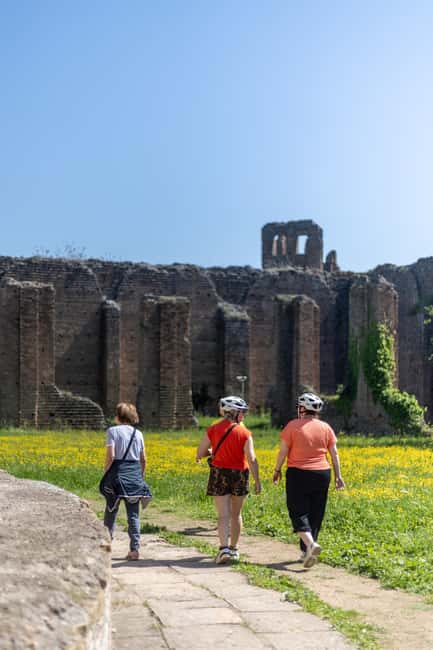
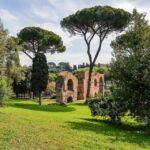
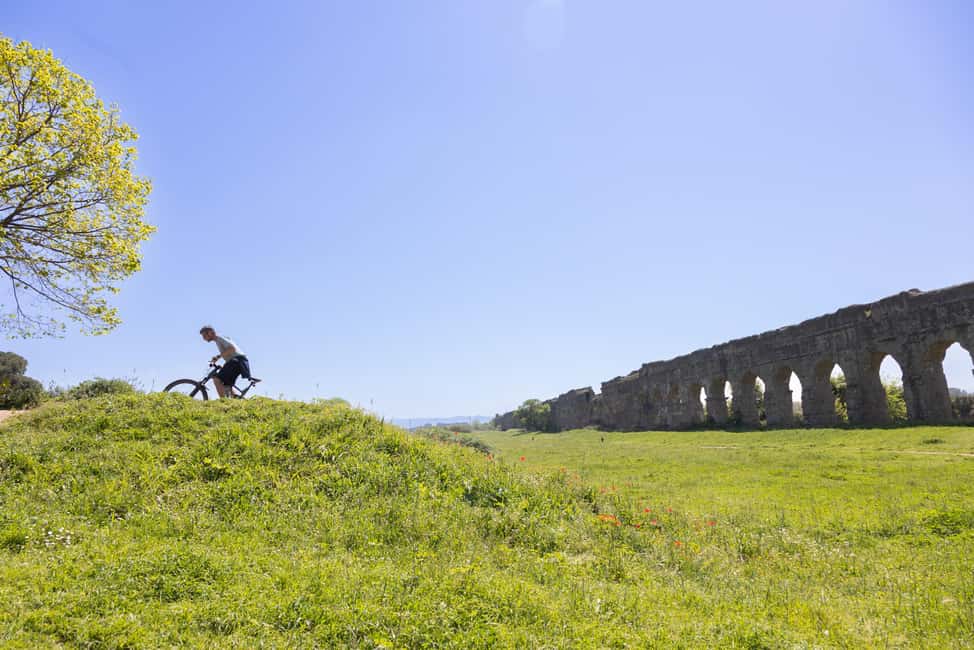
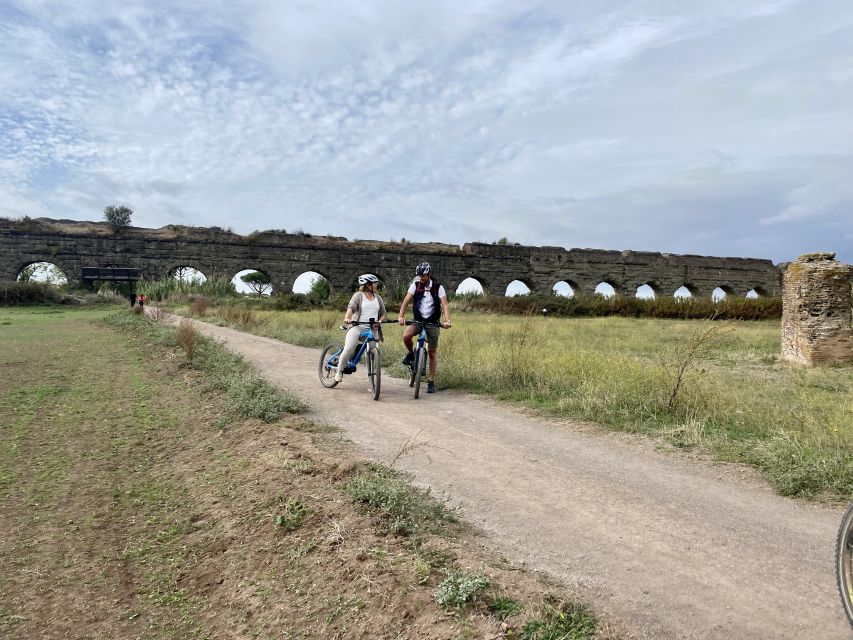
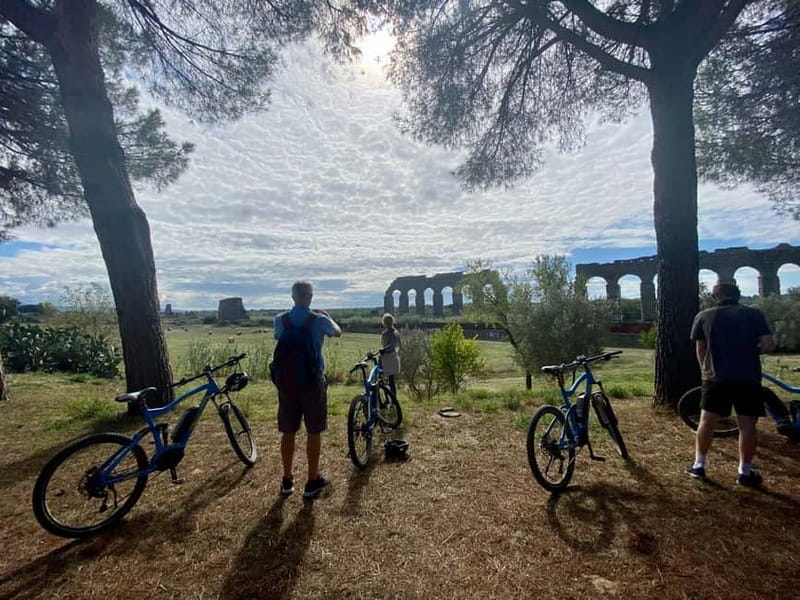
After the ride through ancient road sites, the tour heads into Parco degli Acquedotti, the aqueduct park area. This is one of those stops that sounds straightforward until you’re there.
The value isn’t only that the aqueduct remnants are cool. It’s that you get to experience them in context. On a bike, you’re not stuck behind crowds or squeezed into a tight viewing platform. You can feel the relationship between the terrain and the long lines of infrastructure—how water systems shaped the landscape.
And because the day isn’t all indoor stops, this section gives you a mental reset. The park time is your chance to breathe, catch the rhythm of the route, and enjoy the feeling of Rome stretching outward.
You’ll likely have photo moments here, but don’t treat this stop like a quick snapshot stop. Let the scale land. Aqueducts make more sense when you see the remnants in space, not just in a framed close-up.
One more practical note: this is also the part of the day where good pacing matters. If you’ve been conserving energy for the catacombs, now’s when you’ll notice whether you’re comfortable maintaining a steady effort on the bike. The e-bike support helps, but your comfort with basic cycling technique still counts.
You can also read our reviews of more tours and experiences in Rome





Lunch or aperitivo: a real break in the countryside, not just a pit stop
The tour includes a food tasting of local products for lunch or an aperitivo. This is one of those inclusions that feels small until you realize it changes the whole experience.
First, it keeps you from relying on random snack searches. Second, it gives you a stop that fits the day’s theme: ancient routes and Roman countryside calm, paired with food that feels appropriate to the setting.
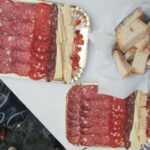
From descriptions you might see, the lunch stop can include items like meat choices, cheese, salad, and a small dessert, plus a traditional espresso shot with sambuca. I can’t promise every meal will be identical, but you should expect a proper sit-down or semi-sit-down tasting that’s meant to be enjoyed, not gulped.
For you, here’s the best part: you get the break you need without losing tour time to chasing a restaurant. That’s what makes the whole 5-hour structure feel tight in a good way.
If you’re someone who gets cranky when tours run past your hunger window, this included food moment is a relief. You’ll have energy for the final ride stretch back out into nature.
Guides and pace: why the small-group feel matters on this route
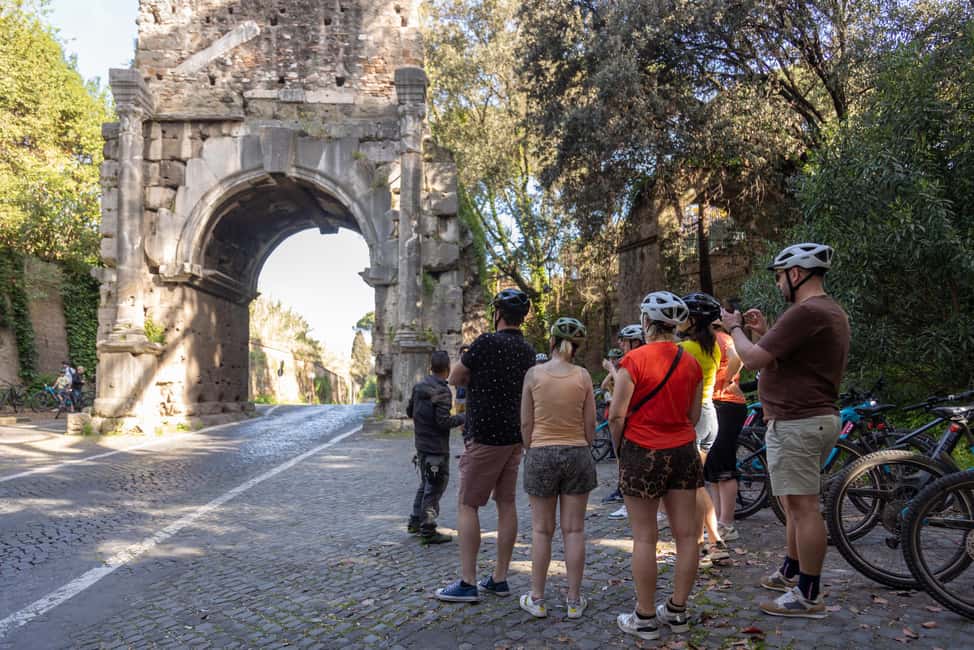
This tour runs with a multilingual guide (English, French, Italian, Spanish), and it can be private or in small groups. In small groups, the guide can actually manage the flow: where you wait, when you stop, and how you regroup after turns.
In feedback, guides like Duarte and Iman get praise for guiding safely through more challenging road segments and for keeping people at an appropriate pace. People also call out Silvia and Bruno for being clear and upbeat, which matters because part of this day is moving through places that can be disorienting if you’re biking without local guidance.
Here’s what to expect for your comfort:
- You’ll have structured stops so you’re not constantly trying to read signs or landmarks.
- You’ll get reminders about where to look and what you’re seeing.
- You’ll move at a pace that balances riding time with learning and rest.
The practical catch is still your own cycling comfort. The tour explicitly asks for basic-medium bike riding skills, and it happens off the beaten track and in the countryside. So if you’re new to cycling, plan to take this as practice with guidance—not as a casual stroll.
If you can ride confidently, you’ll likely find the day fun and surprisingly smooth. If you’re nervous on bikes, pick the private option if available, or choose a different Rome tour that stays entirely on easy surfaces.
Price and value: is $96.29 worth it for 5 hours?
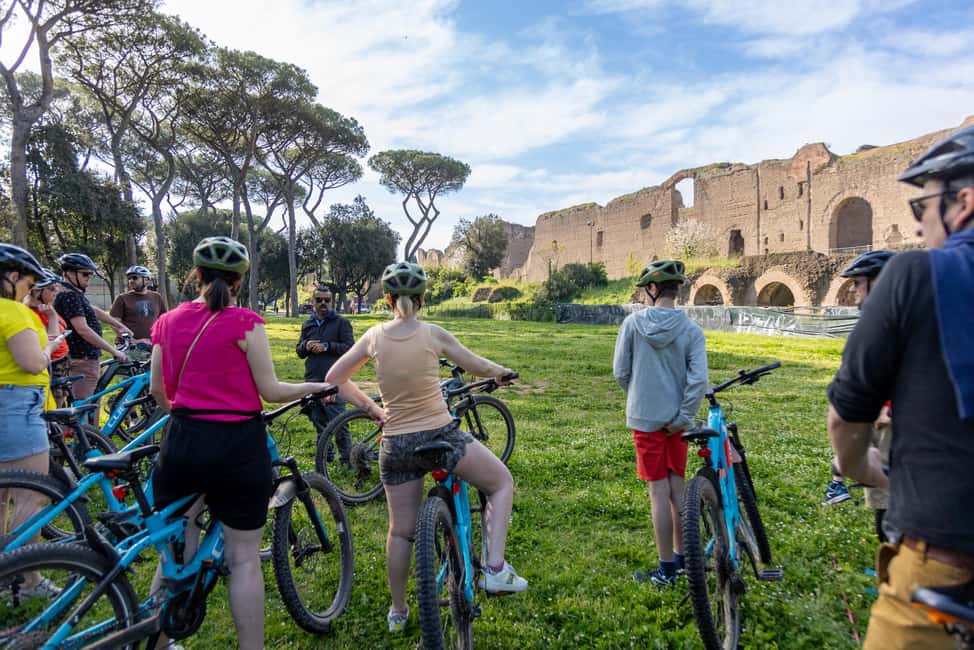
At $96.29 per person for a 5-hour experience, you’re paying for three big things at once:
1) A high-end e-bike (a double-suspension model designed for rough ground)
2) Entry tickets to the catacombs
3) A guided route that strings together multiple major stops plus included food
If you tried to DIY this, you’d quickly spend money on separate transportation and bike rental, and you’d still need to handle catacomb entry logistics. Even then, you might miss the “route logic” that makes Appian Way riding feel coherent instead of random.
The value is especially strong if you want to see both underground sites and outdoor ruins in one morning/afternoon slot. Catacombs alone are not a quick add-on. Aqueduct parks are also best experienced when you have time to breathe.
So for you, the question isn’t only price. It’s whether you want a managed day where the hardest part—getting between sites on the right kind of roads—is handled.
If you’re already comfortable biking and you like food stops, the included tasting helps justify the cost. If you hate any biking at all, skip this and choose a purely walking or tram-style tour.
Who should book this and who should skip it
This is built for active sightseeing. It’s a good match if:
- You can handle a bike ride with basic-medium skill, and you’re okay with off-road or uneven sections
- You want to trade some Rome crowds for countryside space
- You want catacombs plus aqueduct ruins without spending a whole day piecing things together
It’s not a match if:
- You can’t ride a bike or you’re not comfortable with the kind of surfaces involved
- You’re traveling with children under 12
- You’re pregnant (this tour isn’t suitable per the provided info)
- You’re under 150 cm (4 ft 9 in) in height
- You want a fully car-free, purely paved route
One more fit note: this works well if you’re the type who enjoys small discoveries. People often leave pleased because the day isn’t just about the “usual Rome hits.” You get a different slice of the city’s reach—through the Appian Way corridor.
Should you book this Appian Way e-bike tour?
If your ideal Rome day includes movement, real atmosphere, and a route that connects catacombs, ancient road landmarks, and aqueduct park remnants, I’d say yes. The combination of a strong e-bike setup plus included catacombs tickets and included local food tasting is the backbone of the value.
Book it especially if you’re tired of only seeing Rome from inside buses and you’d rather feel like you’re traveling through the actual settings where these sites sit. The only reason to hesitate is if you’re not comfortable with bike riding on varied surfaces or you dislike any traffic exposure at all.
If you’re unsure, choose confidence: make sure your bike comfort is at least basic-medium, wear comfortable clothes, and give yourself time to arrive early so the day starts smoothly.
FAQ
What’s the tour duration?
It lasts 5 hours.
Which catacombs are included?
You visit catacombs of San Callisto on Monday, Tuesday, Thursday, Friday, Saturday, and Sunday. On Wednesday, San Sebastiano is visited instead.
Are catacombs included on holidays?
The tour states catacombs are excepted on Christmas, Easter, and New Year.
What’s included in the price?
The tour includes a CUBE PRO 120 double-suspension electric bike, entry tickets to the catacombs of Saint Callixtus, a multilingual guide, and food tasting for lunch or aperitivo.
Where does the tour start and end?
It starts with your guide greeting you right outside the departure point and ends back at the meeting point.
What bike experience do I need?
You need basic-medium bike riding skills. The route is off the beaten track and in the countryside.
Who isn’t this tour suitable for?
It isn’t suitable for children under 12, pregnant women, people who can’t ride a bike, or people under 150 cm in height.