REVIEW · ROME
Castel Sant’ Angelo: The most famous Fortress of Rome
Book on GetYourGuide →Operated by Vivicos International Travel · Bookable on GetYourGuide
Castel Sant’Angelo is Rome’s most dramatic comeback. One minute it’s a Roman emperor’s tomb, the next it’s a papal fortress with prisons and escape routes, all stacked into a visit that fits nicely into 2 hours. I love that you get classic must-see spaces like the Angel’s Terrace without being herded too hard, and I also like that this ticket gives you a practical way to plan your visit with optional audio.
Here’s the big trade-off to consider: if you pick the audioguide option, you’ll need to do a little prep first—a smartphone and headphones, plus downloading the audio before you start.
In This Review
- Key things to know before you go
- Castel Sant’Angelo in Two Hours: What You’ll Actually See
- From Hadrian’s Tomb to a Papal Escape Fortress
- Entering the Castle: The Separate Entrance Advantage
- The Papal Rooms: Where Power Feels Close
- Prison Spaces and Execution History: Dark, Important, and Specific
- Spiral Staircase and the Hall of Hadrian’s Ashes
- Angel’s Terrace: The Rome View You’ll Want to Stick With
- Audio Guide Option: Make It Work, Not Troubleshoot It
- Price and Value: Is $39 Worth It?
- Who This Ticket Fits Best (and Who Might Want a Different Plan)
- Practical Stuff You’ll Be Glad You Prepared
- Should You Book Castel Sant’Angelo?
- FAQ
- Where is Castel Sant’Angelo located?
- How long is the visit?
- What is included with the ticket?
- Is a live guide included?
- What audioguide languages are available?
- Do I need to download the audioguide?
- What do I need to use the audioguide properly?
- What should I bring for entry?
- What items are not allowed inside?
- Does the meeting point stay the same for everyone?
- Is free cancellation available?
Key things to know before you go
- Skip-the-line access via a separate entrance helps you start faster.
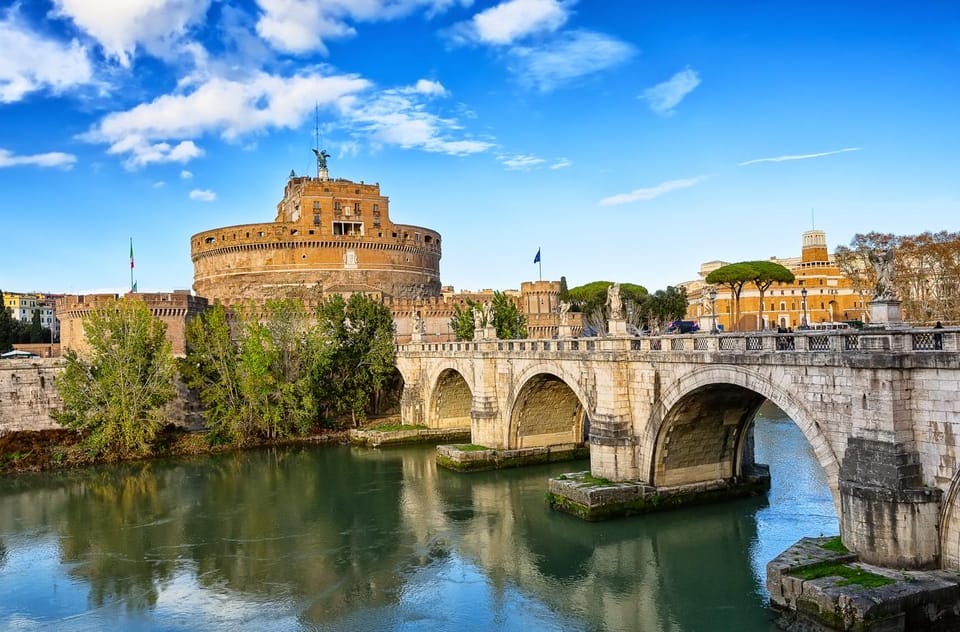
- Built as Hadrian’s tomb, later turned into a papal fortress, with prisons and execution spaces.
- You’ll see key indoor stops: Papal Rooms, the Spiral Staircase, and the Hall with Hadrian’s ashes.
- Angel’s Terrace is the payoff for city views.
- Nominative tickets require full names for each participant.
- Audio is optional, works offline after downloading, and comes in several languages.
Castel Sant’Angelo in Two Hours: What You’ll Actually See
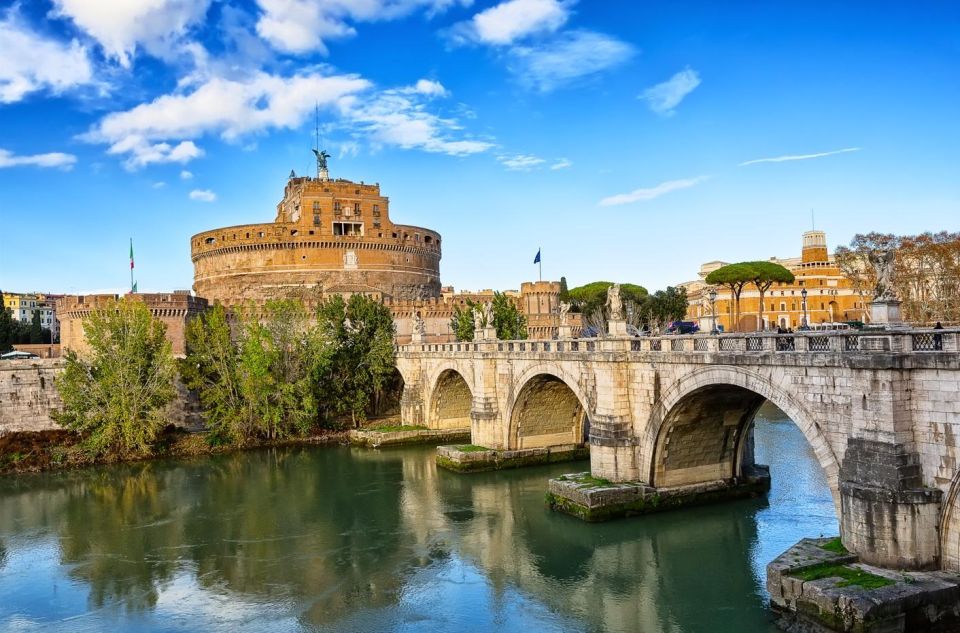
This isn’t one of those “stand in one room and leave” stops. In a tight 2-hour window, you’ll move through the castle’s story—from Roman engineering to papal power—then end with one of the best viewpoints in Rome.
The inside route is built around a handful of big moments. You’ll visit the Papal Rooms, go up through the Spiral Staircase, and reach a highlight hall tied to Emperor Hadrian. Then you’ll finish at Angel’s Terrace, where you can slow down and enjoy the view at your own pace.
You can also read our reviews of more tours and experiences in Rome.

From Hadrian’s Tomb to a Papal Escape Fortress
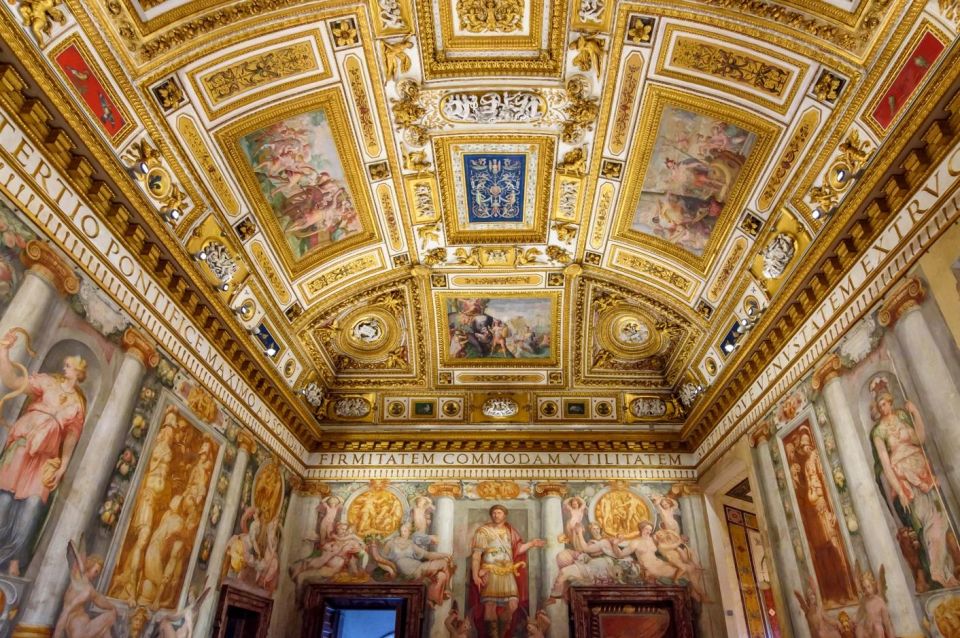
Castel Sant’Angelo starts as something very Roman: the tomb of Emperor Hadrian. Later, in the early Renaissance, it’s converted into a papal fortress. That shift matters, because the same stone moves from imperial memory to controlled defense.
What makes it feel real is how the function changes over time. Instead of imagining the castle like a museum piece, you’re walking through spaces that were used for holding prisoners and carrying out executions. And yes, it’s the same building connected to the Vatican Palace by a walkway that popes used to escape in danger.
If you like history with a cause-and-effect timeline, this is a strong stop. Hadrian’s legacy becomes papal strategy, and the building shows you how both worlds operated.
Entering the Castle: The Separate Entrance Advantage
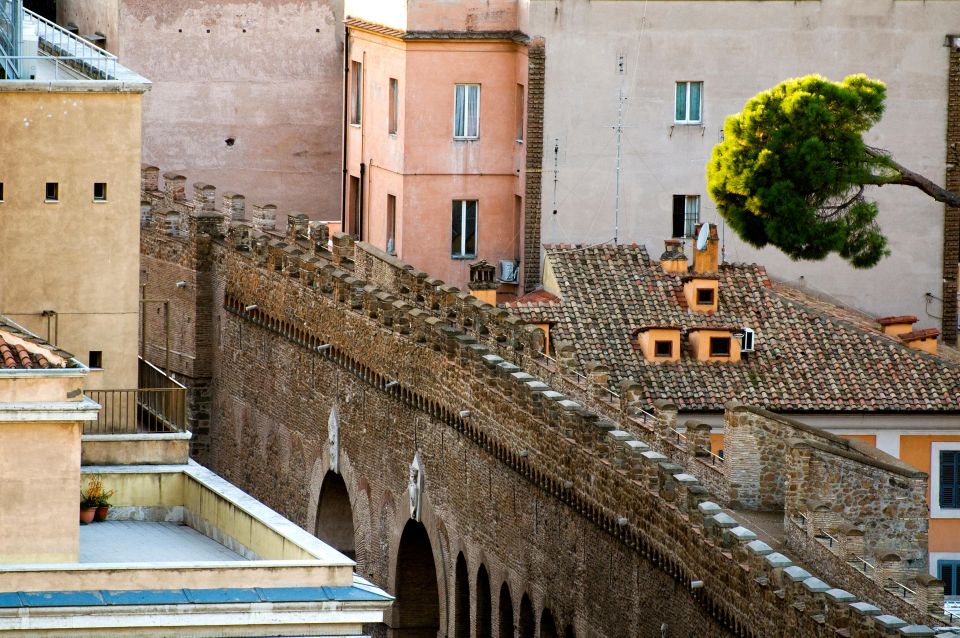
This ticket setup is designed to reduce waiting. You get skip the line access through a separate entrance, which usually makes a big difference in a city where lines can eat your whole morning.
The practical upside is simple: you start your visit sooner, and you can spend more of your time on the spaces that match your interests. If you’re the type who likes viewpoints, you’ll appreciate the time buffer before you reach the terrace.
One small caveat: meeting point can vary depending on what option you book. Keep an eye on your specific start instructions so you don’t waste time hunting for the right entry.
The Papal Rooms: Where Power Feels Close
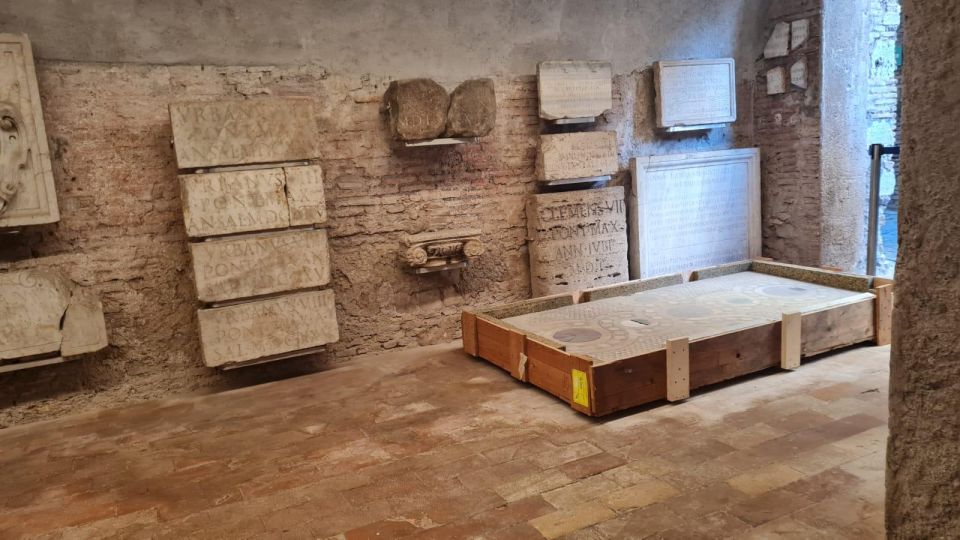
The Papal Rooms are the part that helps you understand the fortress as more than stone walls. You’re seeing the castle’s papal-era role in a sequence that’s meant to be walked through without rushing.
I like that this segment supports a slow read. Even if you only catch the key story points, you’ll feel the shift from Roman funerary purpose to a papal setting built for authority, control, and emergency planning.
Don’t treat this area like a quick photo stop. Plan a little time to look closely, because the castle’s layered history is the main reason Castel Sant’Angelo works so well.
Prison Spaces and Execution History: Dark, Important, and Specific
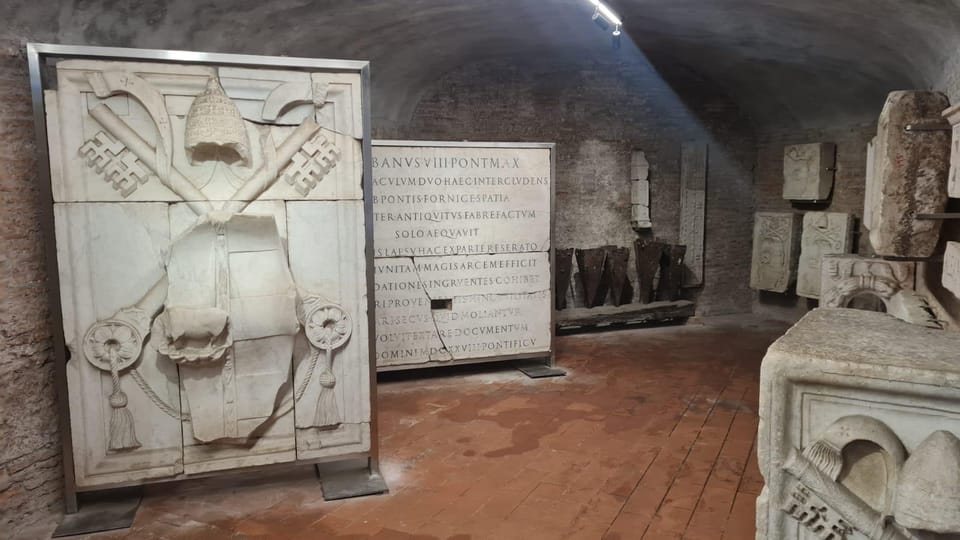
One of the most sobering aspects is that this fortress includes prison and execution spaces. That’s not just a vague label—it’s part of the castle’s identity, and it’s why the building has always held attention.
If you’re curious about famous names tied to those spaces, the castle connects to prisoners such as the goldsmith Benvenuto Cellini and Cagliostro. Even if you don’t know their stories well, seeing their names associated with the place makes the history feel less abstract.
A balanced note: this is a heavy topic. If you prefer history that stays lighter, you might want to go through these areas a bit more quickly and save your energy for the terrace views. The good news is the route still gives you that visual payoff at the end.





Spiral Staircase and the Hall of Hadrian’s Ashes
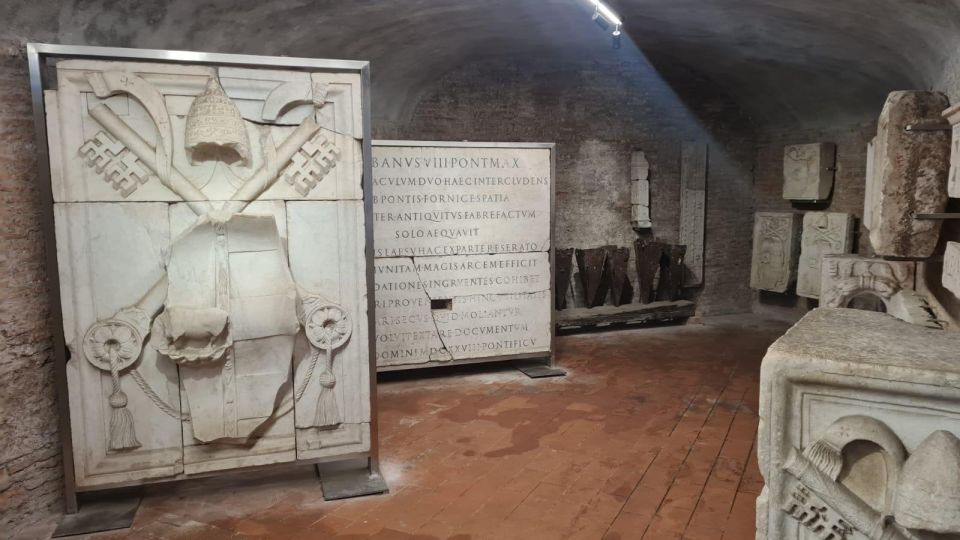
The Spiral Staircase is one of those classic architectural moments that changes how the castle feels. Instead of being a flat walk, it gives you movement through the building’s vertical story—like the structure is reminding you it was built for defense and flow.
Then comes the Hall of Emperor Hadrian’s Ashes. This is a key anchor in the whole experience because it brings you back to the original purpose of the site: Hadrian’s remains and memory.
Even if you only spend a short amount of time here, it’s worth it to pause. It’s the clearest reminder that you’re standing in a Roman foundation that got reinvented for later centuries.
Angel’s Terrace: The Rome View You’ll Want to Stick With
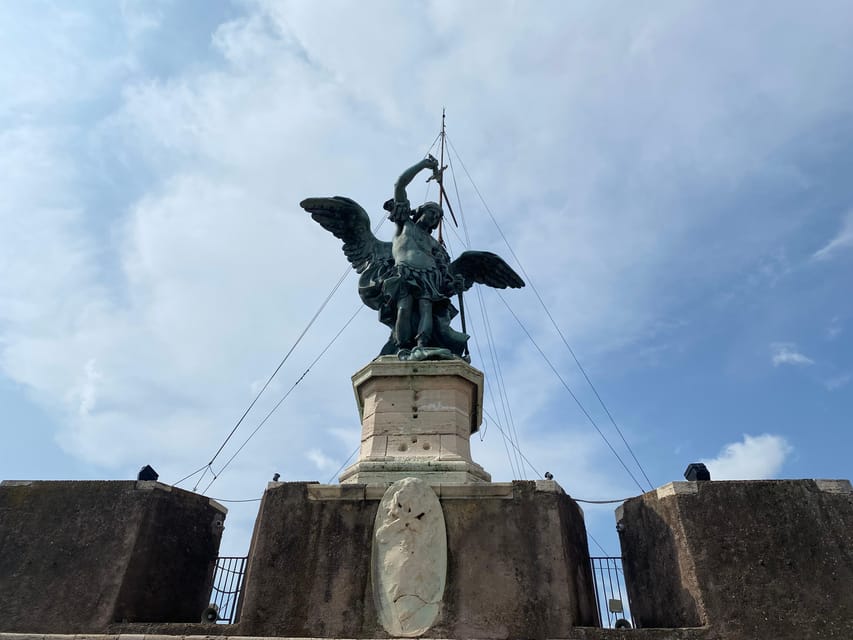
If you only remember one part, make it Angel’s Terrace. The viewpoints here are the reason people keep coming back, and the terrace is paced so you can actually enjoy the city instead of sprinting for photos.
What I like most is how the terrace balances atmosphere with practicality. You can take your time, scan the skyline, and get oriented. In a city as spread out as Rome, that orientation helps you later when you’re planning where you’ll go next.
Come prepared to linger. This is the kind of stop where you might start thinking about dinner, then realize you’ve been staring at the view for far longer than you planned.
Audio Guide Option: Make It Work, Not Troubleshoot It
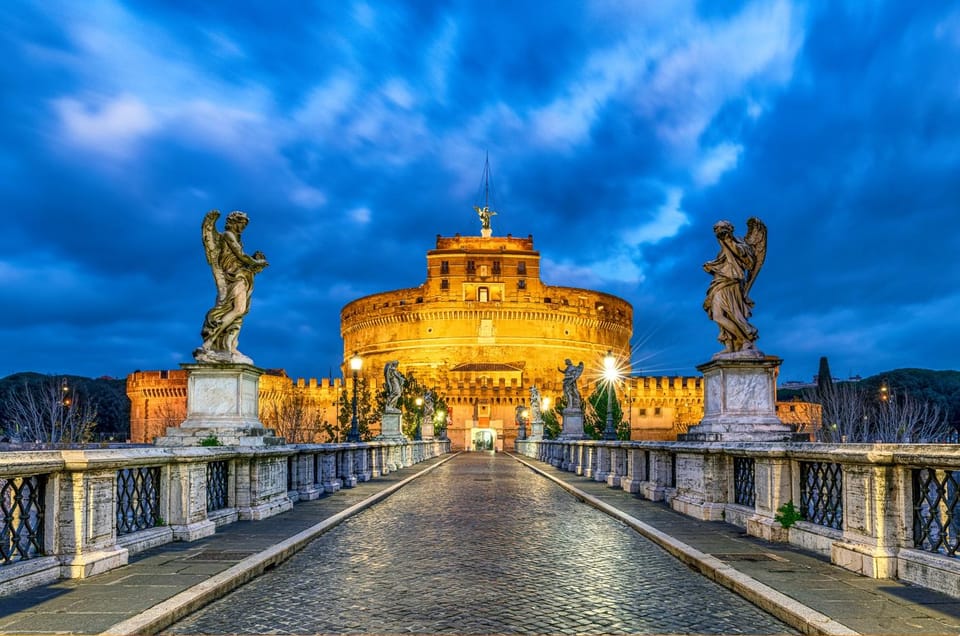
The audioguide can be a real help, especially when you’re walking through rooms that are more meaningful when you understand what you’re seeing. Audio is offered in several languages, including Spanish, French, Italian, English, German, and Chinese.
But you need to handle it correctly. If you choose the audio option, you should download the audioguide before you start your visit where you have Wi‑Fi, then it works without Wi‑Fi after that. You also must have a smartphone and headphones to use it properly.
One practical tip from real-world booking experience: if you’re traveling as a pair or family and buying multiple audioguides, double-check early that each person has a working audio device before you settle in. It’s far easier to fix issues right at the start than after you’ve climbed into the route.
Price and Value: Is $39 Worth It?
On paper, the price looks straightforward: $39 per person for this 2-hour experience. The catch is the ticket math. The entrance ticket cost for Castel Sant’Angelo is listed as €16 per person, and extra charges apply for service and processing fees.
So is it worth paying the bundled price? For many people, yes—because you’re not only buying entry. You’re paying for the smoother start, especially the skip-the-line setup, and for the option to add an audioguide if it fits your travel style.
Here’s how I’d decide:
- If you’d hate losing time in queues and want your visit to flow, the bundled ticket value tends to make sense.
- If you’re the kind of traveler who doesn’t care about time savings and you’re comfortable handling everything on your own, you might question the value.
- If you want audio help and prefer not to manage separate steps, the package becomes more attractive.
Who This Ticket Fits Best (and Who Might Want a Different Plan)
This is a good fit if you want the castle highlights with minimal fuss. If you like self-paced visits but still want structure—Papal Rooms, staircase, Hadrian’s hall, terrace—this route works well.
It’s also a solid choice if you’re visiting Rome for the first time and want a monument that mixes big-name figures, architectural drama, and skyline views.
If you strongly prefer a live guide narrative, this option may feel a bit too independent. A live guide is not included. You’ll be relying on the optional audioguide and your own curiosity to fill in the details.
Finally, if you’re sensitive to history’s darker side, just know the castle includes prison and execution spaces, so plan your emotional pacing.
Practical Stuff You’ll Be Glad You Prepared
Before you go, bring a passport or ID card. That’s required for entry, and it’s also useful if there’s any ticket name check.
Restrictions inside are clear-cut: no weapons or sharp objects, no baby strollers, no luggage or large bags, and no pets (assistance dogs are allowed). You’ll also want to skip alcohol and drugs.
One more planning point that matters: tickets are nominative. That means you’ll need to include all participants’ full names for the purchase. Double-check the spelling before you show up.
Should You Book Castel Sant’Angelo?
Yes, you should book if you want a fast, high-impact Rome monument with a smart mix of indoor history and a terrace view that actually earns your time. The skip-the-line entrance plus the built-in walk through the Papal Rooms, staircase, Hadrian’s ashes hall, and Angel’s Terrace makes it a strong use of limited sightseeing hours.
I’d especially book it if you like independence but still want help staying oriented. The optional audioguide can turn the visit into a smoother story you can follow room by room.
I’d think twice only if you know you won’t use the audioguide and you’re fine with extra waiting. In that case, you might prefer a simpler entry plan. Otherwise, Castel Sant’Angelo is one of those places where every turn has a different time period hiding in plain sight—and the terrace view is the payoff you’ll remember.
FAQ
Where is Castel Sant’Angelo located?
It’s located in Lazio, Italy.
How long is the visit?
The duration is listed as 2 hours.
What is included with the ticket?
The Castel Sant’Angelo ticket is included if you select that option, and the audioguide is included if you select the audio option.
Is a live guide included?
No. A live guide is not included.
What audioguide languages are available?
Spanish, French, Italian, English, German, and Chinese.
Do I need to download the audioguide?
If you selected the audioguide option, you should download it before you start where you have Wi‑Fi. Once downloaded, it works without Wi‑Fi.
What do I need to use the audioguide properly?
You must have a smartphone and headphones.
What should I bring for entry?
You should bring a passport or ID card.
What items are not allowed inside?
Weapons or sharp objects, baby strollers, luggage or large bags, and pets are not allowed (assistance dogs are allowed). Alcohol and drugs are also not allowed.
Does the meeting point stay the same for everyone?
No. The meeting point may vary depending on the option you booked.
Is free cancellation available?
Yes, free cancellation is available up to 24 hours in advance for a full refund.