REVIEW · ROME
Dark Heart of Rome: Facts, Legends, and Mystery Tour
Book on GetYourGuide →Operated by City Wonders Ltd. · Bookable on GetYourGuide
Rome turns darker after sunset. This 90-minute walk through central Rome mixes legends and facts while streetlights bring famous stone back to life.
I love how it spotlights lesser-seen corners like Via Giulia and the route toward Castel Sant’Angelo, not the usual big-ticket stops. I also love the storytelling style—guides like Elizabeta, Rob, Serena, Max, and Amanda have all been praised for clear English and lively, theatrical narration.
One thing to consider: the experience leans into story performance, so if you want only straightforward facts at a slow pace, you might find the pacing a bit fast or the structure a little rehearsed.
Key highlights you will feel on this tour
- Night-time legends around Campo de’ Fiori, Piazza Farnese, and Castel Sant’Angelo
- Hadrian’s Mausoleum area at Castel Sant’Angelo, with dramatic night views
- Renaissance planning insights through Via Giulia, one of the early designed streets
- Hidden-in-plain-sight streets like Via del Governo Vecchio (with a photo stop)
- English-speaking guides in blue attire, including guides praised for humor and clear speaking
In This Review
- Why Rome’s Dark Heart Works So Well at Night
- Starting Point by San Andrea della Valle: Findable, Not Fussy
- Campo de’ Fiori After Dark: Where the City’s Shadow Shows
- Piazza Farnese and the Granite Fountain Detail You’ll Actually Remember
- Via Giulia: Renaissance Rome as a Real Street, Not a Textbook
- Via del Governo Vecchio Photo Stop: Small Street, Big Atmosphere
- Castel Sant’Angelo at Night: Hadrian’s Mausoleum with Real Presence
- Price and Timing: Is $14 Good Value for 1.5 Hours?
- Pacing, Performance, and What to Expect From the Guide
- Footwear, Comfort, and Who Should Skip This Tour
- Should You Book the Dark Heart of Rome Night Tour?
- FAQ
- How long is the Dark Heart of Rome tour?
- How much does it cost?
- Where do I meet the guide?
- Where does the tour end?
- Is hotel pickup included?
- What language is the tour guide speaking?
- Is the tour wheelchair accessible?
- Can I bring a stroller?
- What is the cancellation policy?
Why Rome’s Dark Heart Works So Well at Night
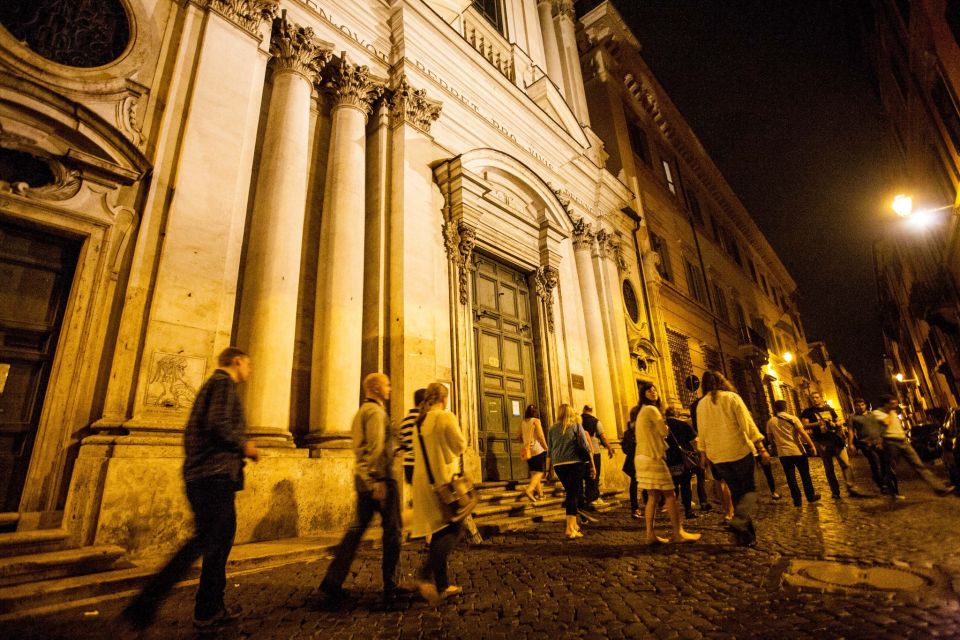
This is the kind of Rome tour that makes sense after a full day of monuments. By night, the city stops feeling like a checklist and starts feeling like a place where stories still echo off the stone. That is exactly what this walk is built for: a night-time walking tour where facts and legends sit side by side, and you follow them block by block.
I also like the balance of atmosphere and sights. You’re not just hearing spooky tales in the abstract—you’re standing near real locations tied to public punishment, civic power, and Renaissance design. And because the walk happens after evening illuminations light up the center, the same streets you’ve seen in daylight can feel totally different.
The best part is that the tour doesn’t try to compete with the big indoor museums. It gives you a human-scale Rome, one you can look at and listen to at the same time.
Starting Point by San Andrea della Valle: Findable, Not Fussy
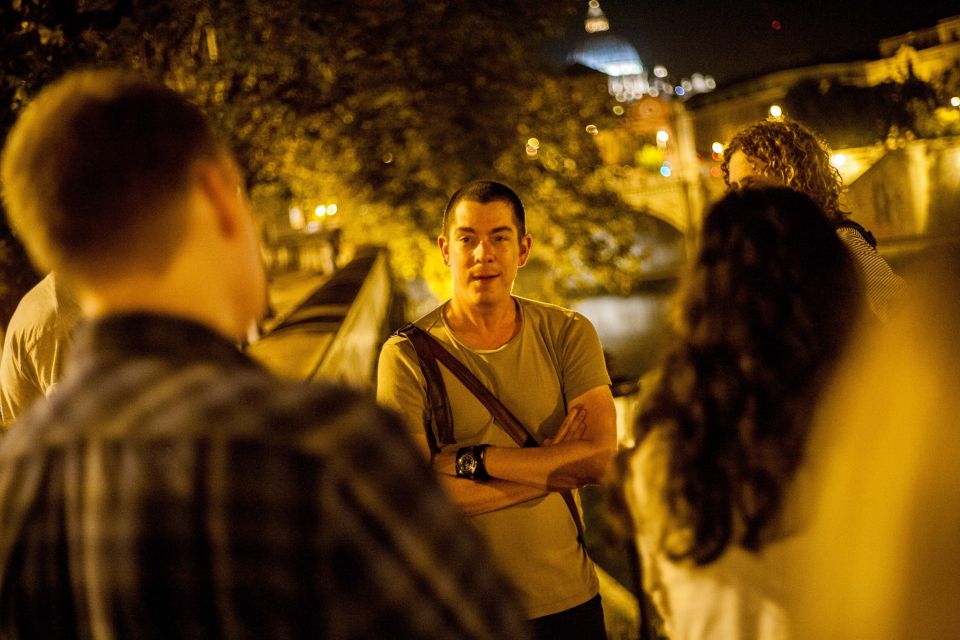
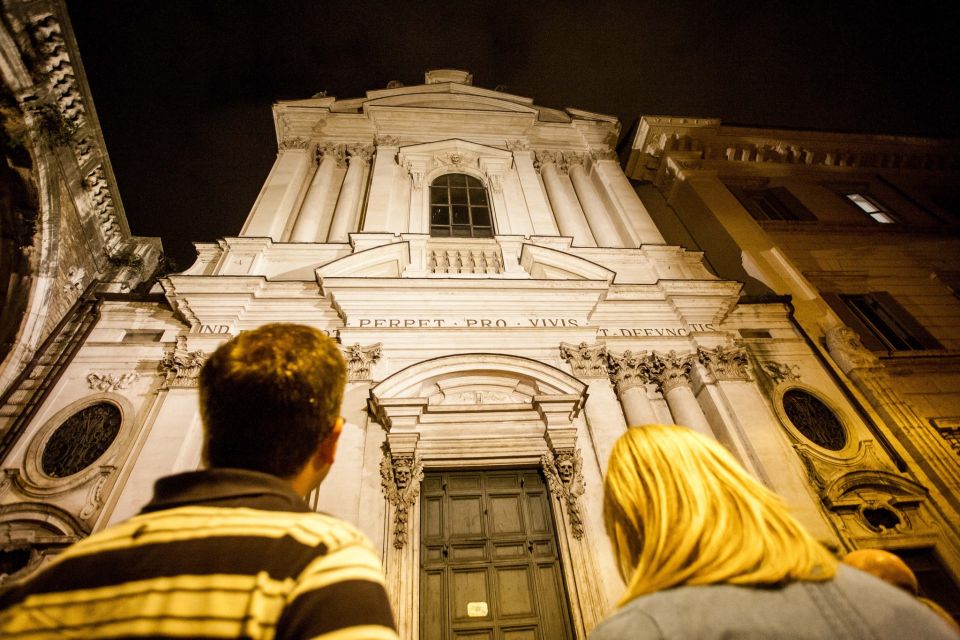
Meeting is on the steps of San Andrea della Valle Church, on Corso Vittorio Emanuele II. The church is about 150 meters from Largo di Torre Argentina; you’ll be on the left side heading toward the Tiber River. It’s also next to Piazza Vidoni and Piazza Sant’ Andrea della Valle.
Look for the guide in blue attire. That’s practical, and it matters because the meeting point sits in the middle of a busy visual maze. If you’re coming with transit, give yourself a few extra minutes to get your bearings and arrive unhurried.
Hotel pickup is not included, so you are responsible for getting yourself to the start point on time. For a 1.5-hour tour, that’s the only real logistics pressure.
You can also read our reviews of more tours and experiences in Rome.
Campo de’ Fiori After Dark: Where the City’s Shadow Shows
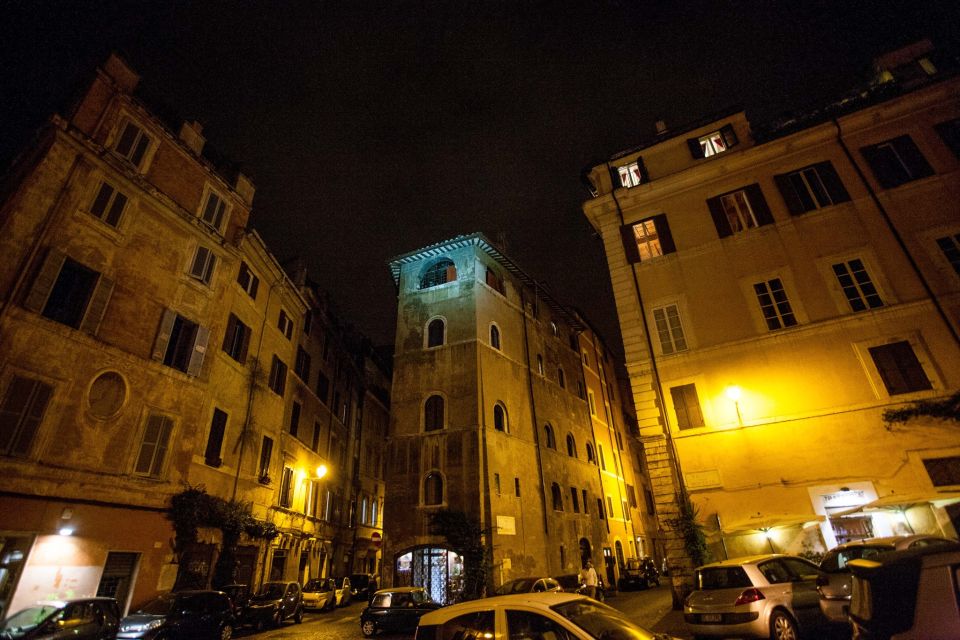
The first major stop your walk brings you to is Campo de’ Fiori. In daylight, it often feels like a lively square. After dark, it turns into something else—especially because the stories connect the location to the kind of Roman justice that once played out publicly.
On this tour, Campo de’ Fiori isn’t just a backdrop. You’ll hear what happened there in the past and how that shaped the darker reputation of the area. Standing near the square as evening light shifts, the legend parts start to make more sense—not as fantasy, but as the way Rome remembers its own pressure and violence.
This is also the first moment where you understand the tour’s tone. You’re walking in winding lanes and crossing between key squares, and the guide is building a chain of stories. If you enjoy true-crime-style atmosphere or ghost-story pacing, this is where the tour tends to click.
One practical note: the walk is on foot. Wear comfortable shoes, because these small historic lanes and uneven streets don’t forgive fashion choices.
Piazza Farnese and the Granite Fountain Detail You’ll Actually Remember
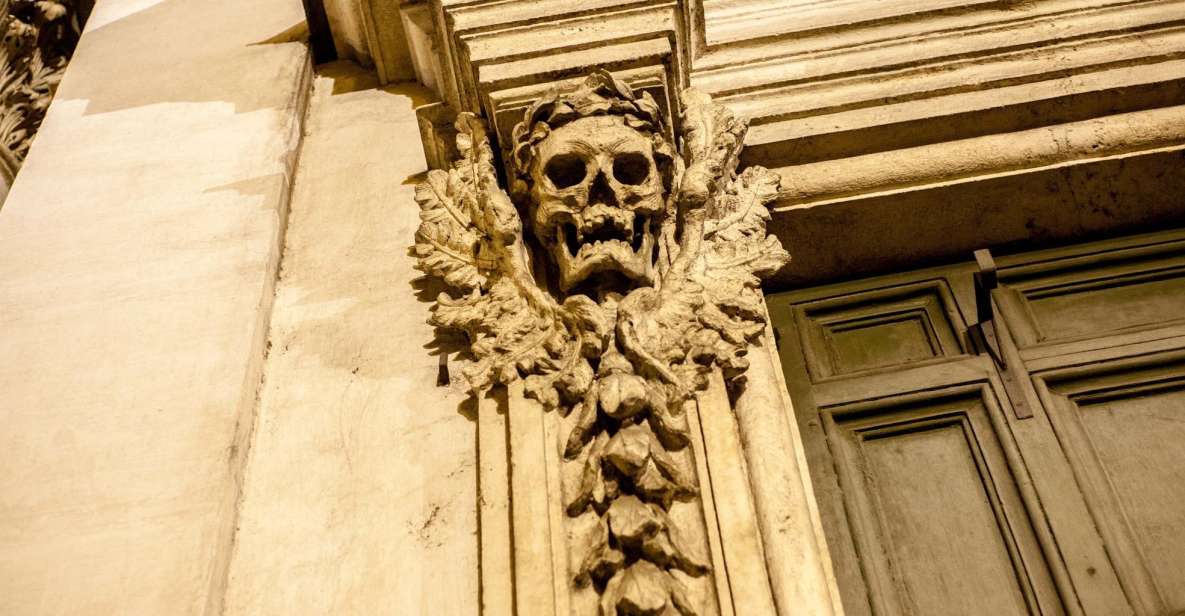
Next up is Piazza Farnese. This square is known for its fountains, including ones formed out of granite stone basins. On many Rome walks, a piazza gets a quick stop and a photo. Here, the piazza becomes a pause point—time to look up, notice the details, and let the story shift gears from harsh history to power, design, and public spectacle.
Piazza Farnese is also a good example of why a “dark heart” tour can still feel elegant. You’re not only chasing gore-and-gloom. You’re learning how Rome’s leaders used art, water, and architecture to shape what people saw and believed.
If you like moments where one place acts like a crossroads, Piazza Farnese works. It connects your earlier experience in the center with what’s coming next: Renaissance planning and the grand silhouette of Castel Sant’Angelo.
Via Giulia: Renaissance Rome as a Real Street, Not a Textbook
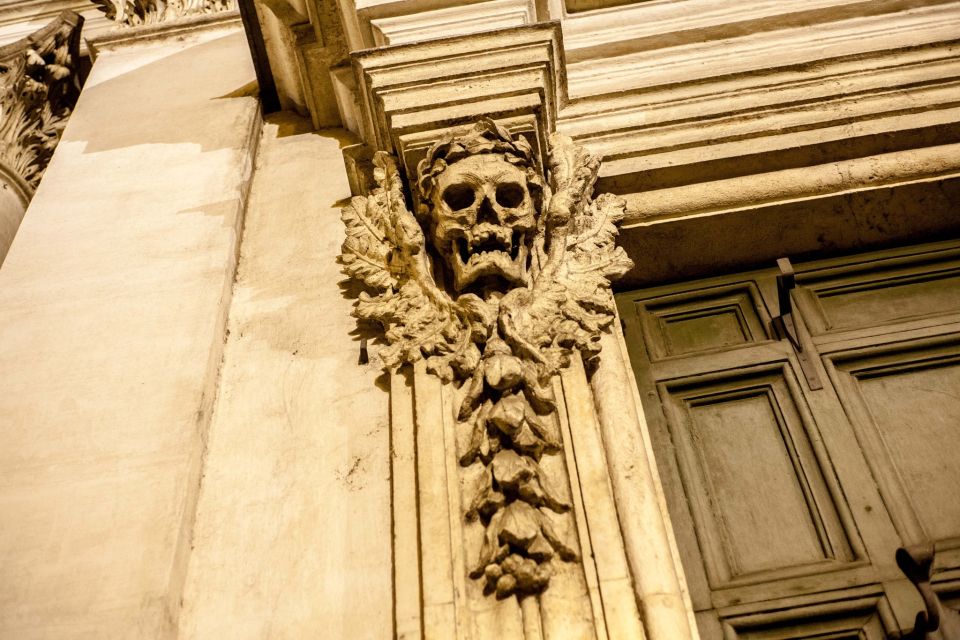
Then you head to Via Giulia, described as one of the first planning projects of Renaissance Rome. That detail matters because it changes how you read the street. Instead of treating it like a convenient corridor, you’re encouraged to see it as an intentional design—Rome directing movement and impression.
This is where the tour gives you variety. The “dark side” theme could easily stay stuck in executions and ghosts. Via Giulia pulls you back to the human side of urban planning: how streets were laid out, how movement was guided, and how an ambitious era shaped daily life.
I like this segment because it helps the tour avoid feeling one-note. You get to walk a street tied to a major shift in how Rome was built and organized, while still keeping the guide’s storytelling thread moving forward.
Via del Governo Vecchio Photo Stop: Small Street, Big Atmosphere
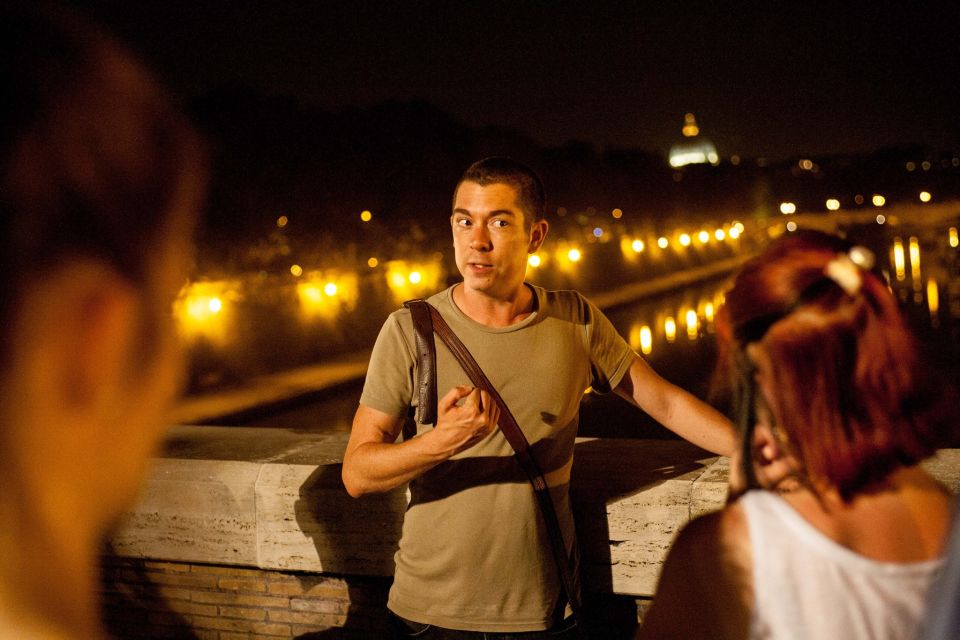
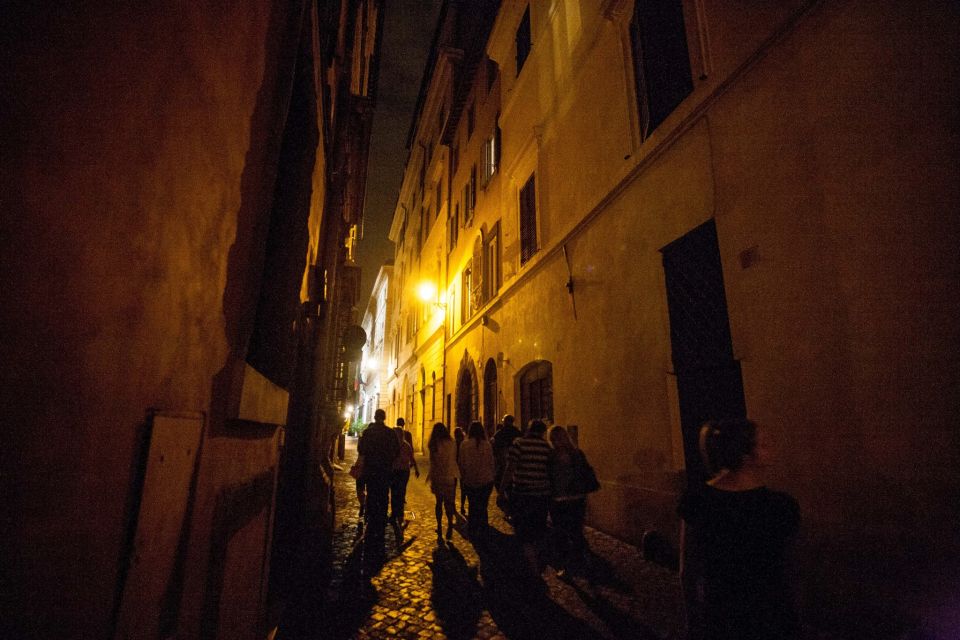
Your route includes Via del Governo Vecchio, with a photo stop built into the walk. Even without inventing extra details, you can feel why this is included. Narrow streets like this are where Rome looks most like itself—close walls, changing light, and corners that hide the next view until you reach it.
This segment is mostly about mood and memory. If you’ve been photographing the obvious monuments all day, this is a chance to get images that feel like you actually walked through a neighborhood, not a set.
Also, photo stops are one of those “simple” tour parts that can be surprisingly helpful. They give you a moment to catch up with the group and reset your eyes before the final big highlight.



Castel Sant’Angelo at Night: Hadrian’s Mausoleum with Real Presence
The tour’s biggest destination is Castel Sant’Angelo, tied to the Mausoleum of Hadrian. This is not just another stop to check off. At night, the fortress form and river-adjacent setting make it feel more theatrical—like the city is staging the story for you.
On this walk, Castel Sant’Angelo functions as a payoff. Earlier stops built the tone—public punishment, civic spaces, and designed streets. Now the guide brings everything into a place tied to imperial power and legacy.
There are two reasons this works for readers who worry about “dark tours” getting too grim. First, Castel Sant’Angelo is undeniably visually strong. Second, it anchors the legends in something concrete: a major historical structure that people have linked to power, fear, and memory for a long time.
You’ll also get a photo stop here, plus guided time as you approach and absorb the setting. When you leave, you’ll be able to point at Castel Sant’Angelo and say, I know what this place is tied to—and not just the postcard version.
Price and Timing: Is $14 Good Value for 1.5 Hours?
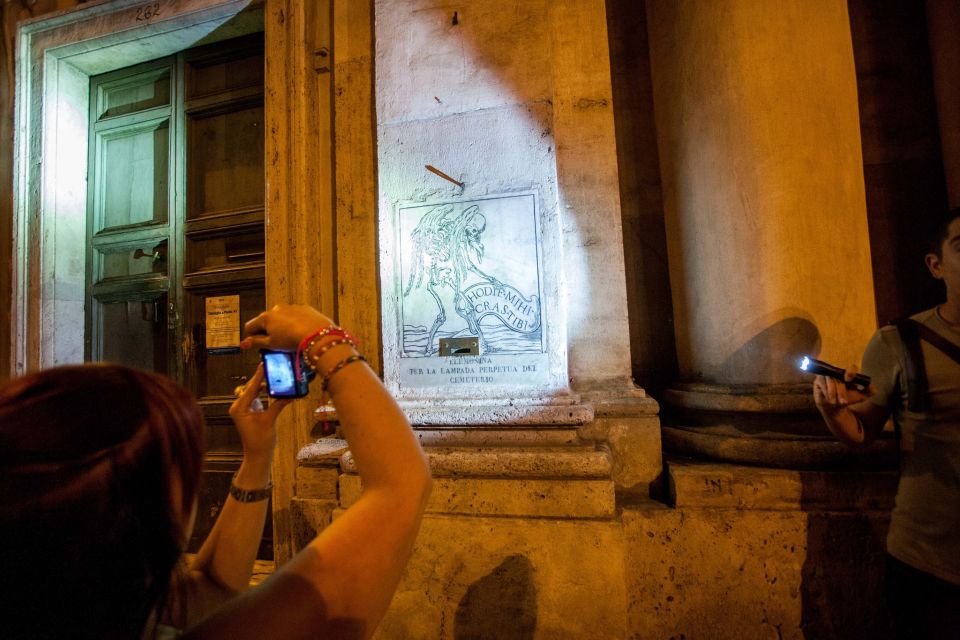
At $14 per person for 1.5 hours, this tour is priced for people who want something special without paying museum-level rates. And because it’s a walking tour built around a guided story thread, your money buys more than access. You’re paying for a guide who can make the places connect in your mind.
Even better: you cover multiple iconic-but-not-overexposed areas in one evening flow—Campo de’ Fiori, Piazza Farnese, Via Giulia, a photo stop on Via del Governo Vecchio, and Castel Sant’Angelo. For a single short outing, that’s a solid spread.
The big value question is what you enjoy.
- If you like narrative tours with legends and true-crime energy, this price feels easy to justify.
- If you only want straightforward explanations and prefer a slower, strictly academic pace, you may want to compare it against more history-focused walking tours.
Pacing, Performance, and What to Expect From the Guide
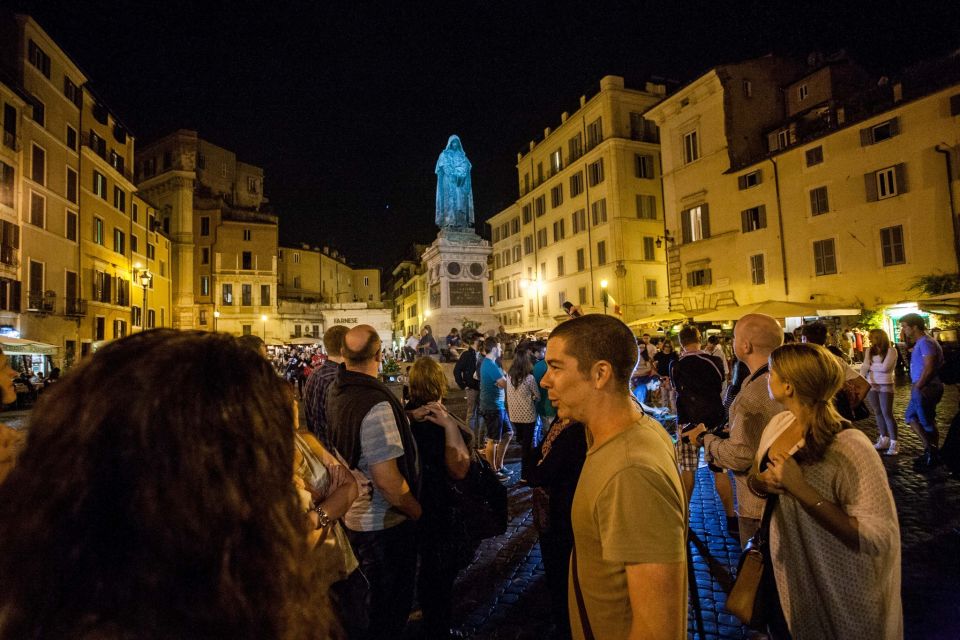
Many guides for this type of tour are natural storytellers, and you can see that pattern in the names associated with the experience. Elizabeta and Elisabetta stand out for charm and clarity. Serena and Alithia are noted for being very informative, artistic, and fun. Rob and Max are praised for passion, humor, and making stories feel alive.
That said, one caution comes from the same storytelling strengths. Some people have felt the tour can be a bit fast, or that the delivery can feel rehearsed. So go in with the right mindset: this is an evening walk where the guide performs the story, not a lecture.
If you want to maximize what you get:
- Take quick notes on any names or places the guide repeats.
- Don’t rush your own attention when the group stops—use those moments to look up, not only listen.
Footwear, Comfort, and Who Should Skip This Tour
The tour is straightforward: bring comfortable shoes. It’s a walking evening circuit with historic lanes and squares.
But it is also not for everyone. The activity states it cannot accommodate wheelchairs or mobility impairments, and strollers/pushchairs are not allowed. If you need mobility assistance or you’re traveling with a stroller, plan an alternative Rome evening option.
If you can walk comfortably for a short stretch and you enjoy stories in public spaces, this tour fits well. It’s also a nice pick for adults and teens who want more than the typical monument circuit—especially if you enjoy gruesome legend flavors mixed with real-world context.
Should You Book the Dark Heart of Rome Night Tour?
Book it if you want a story-driven Rome night that hits Campo de’ Fiori, Piazza Farnese, Via Giulia, and ends at Castel Sant’Angelo in about 90 minutes. The $14 price makes it easy to try, and the guide-led format means you won’t just wander—you’ll understand what you’re looking at.
Skip it if your ideal Rome evening is slow, quiet, and strictly factual. Some pacing issues show up for a subset of people, and the tour leans into performance and legend.
If you’re somewhere in the middle—curious about the city’s darker reputation but still wanting real places—this is a strong match.
FAQ
How long is the Dark Heart of Rome tour?
The tour lasts 1.5 hours.
How much does it cost?
It costs $14 per person.
Where do I meet the guide?
Meet on the steps of San Andrea della Valle Church on Corso Vittorio Emanuele II, about 150 meters from Largo di Torre Argentina on the left-hand side heading toward the Tiber River. The church is next to Piazza Vidoni and Piazza Sant’ Andrea della Valle. The guide wears blue.
Where does the tour end?
It finishes at Lungotevere Castello, 50, 00186 Roma RM, Italy.
Is hotel pickup included?
No, hotel pickup or drop-off is not included.
What language is the tour guide speaking?
The tour is guided in English.
Is the tour wheelchair accessible?
No. Wheelchairs or mobility impairments cannot be accommodated on these tours.
Can I bring a stroller?
No. Pushchairs or strollers are not allowed.
What is the cancellation policy?
Free cancellation is available up to 24 hours in advance for a full refund.