REVIEW · ROME
Rome: Circus Maximus Virtual Reality Game
Book on GetYourGuide →Operated by Ancient and Recent · Bookable on GetYourGuide
Chariot racing in ancient Rome sounds wild. This VR session at Circus Maximus turns you into a frontline competitor, with interactive chariot-racing plus a 3D replay of Roman streets and monuments that help you grasp what this huge arena meant. I also like that the experience is guided and not just a headset drop-and-go.
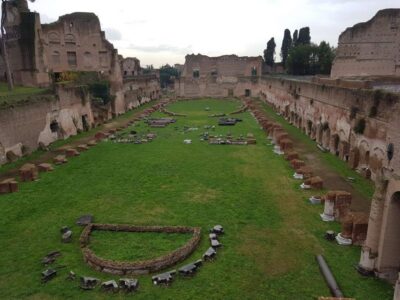
One thing to keep in mind: this is not a classic archaeological visit. Entrance to the Circus Maximus Archaeological Site isn’t included, so if you want to wander the real ruins and read every stone, you’ll still need another plan for that.
In This Review
- Key highlights you should know
- Circus Maximus in VR: what the experience really feels like
- Meeting at via San Gregorio: finding Ancient and Recent
- Walking recreated Rome streets: monuments you’ll actually recognize
- The brief pause before the race: why they reset you
- Inside Circus Maximus: seeing capacity at a whole new scale
- The quadriga chariot race: competing instead of watching
- The guides who make it smoother: Sara and Manuela
- Price and value: why $34 can make sense
- Practical tips: shoes, IDs, bags, and your group size
- Who this VR experience fits best
- Should you book Circus Maximus VR?
Key highlights you should know
- Interactive quadriga chariot racing where you compete as part of the action
- Faithfully reconstructed 3D visuals of Roman buildings and monuments around the Circus Maximus
- A guided walk through recreated Rome, with soldiers and ancient Romans in the streets
- A VR look at the interior scale of the Circus Maximus, built for up to 385,000 spectators
- Faction choice and scoring for the Emperor’s favor, so you’re not just watching
Circus Maximus in VR: what the experience really feels like
This is one of those activities that makes the past feel practical. You’re not reading a plaque about the Circus Maximus. You’re moving through a recreated setting tied to the city’s early days and later transformations, then stepping into the mindset of spectators and racers.
What makes it work is the mix of time formats. First, you get a guided walk through Rome as it’s rebuilt in 3D. Then you pause and return to the action with the chariot-race portion. The pacing matters because it gives your brain a chance to match the visuals to what you’re learning, instead of trying to do it all at once.
You can also read our reviews of more tours and experiences in Rome.

Meeting at via San Gregorio: finding Ancient and Recent
Meet at the intersection of via San Gregorio with via dei Cerchi. Staff welcome you with a small black flag that says Ancient and Recent.
I like this setup because it’s straightforward: you start at a specific corner, you finish back at the same meeting point, and you don’t have to figure out a second location. The key is to show up in decent time so you can get your headset fitting done without rushing.
Bring comfortable shoes. You’ll do some walking before the race, and the experience is designed for moving—especially as the staff leads you between different moments of the program.
Walking recreated Rome streets: monuments you’ll actually recognize
Before the chariot race, you’re guided through a VR journey centered on the Circus Maximus area and its changes over time. The experience is designed to feel like you’re moving through the city rather than floating in a screen.
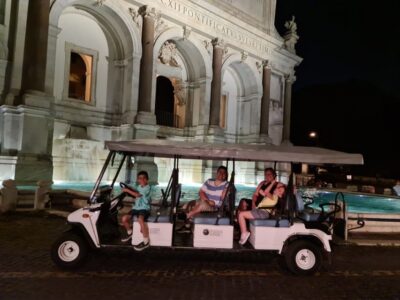
The most useful part is that it connects major landmarks to what you’re doing. While you’re “walking” live through the streets, you get views of monuments such as the Arch of Titus, a multi-story monumental fountain, and the Settizodio. Seeing these in a connected scene helps you build mental maps fast—especially if you’re planning to hit more sites later in Rome.
In a real city, you’d be looking over your shoulder at buildings as you move. Here, the visuals guide your attention, and the guide-led narration helps you understand why that location mattered in Roman public life—big events, crowds, politics-by-entertainment, and all that.
The brief pause before the race: why they reset you
After the street walk, staff bring you to the starting point of the chariot race. Then you put the VR headset back on again.
That break is not just a formality. VR works best when you have time to orient yourself. Taking a short reset helps you focus on the race rules and your role in the game, rather than carrying confusion from the walking segment into the driving segment.
If you’re the type who gets motion-itchy or overstimulated in VR, this pause is also helpful because it keeps the experience from feeling like one long continuous blur.
Inside Circus Maximus: seeing capacity at a whole new scale
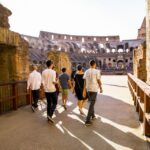
Now comes the big wow moment. In VR, you get a look at the internal structure of the Circus Maximus—built to hold up to 385,000 spectators.
Even if you’ve seen modern stadiums, that number changes how you understand the space. This isn’t a venue for a small crowd. It’s a civic machine for spectacle. In the headset, you get the sense of how the building was designed to keep people watching and cheering, not just attending.
And because this is delivered right before you race, it lands with purpose. You’re about to compete, so you’re seeing the environment like a participant—where the crowd scale and arena design directly shape the event.





The quadriga chariot race: competing instead of watching
Once the race starts, you choose a faction and take part in chariot competition to earn the Emperor’s favor. This is the heart of the experience, and it’s where the program earns its strong rating.
I especially like that the race is interactive for a group setting. You’re not stuck watching someone else play. Even with a headset on, you’re part of a shared moment with other participants, and the energy tends to rise fast.
The instruction and pacing also matter here. The VR assistant keeps things moving, and the integrated audio guide (English and Italian) supports the story and context while you focus on the race itself.
If you want a quick verdict: this is basically a well-run Rome history game, with your hands and senses tied to the spectacle.
The guides who make it smoother: Sara and Manuela
Good VR can be fun. Great VR feels like someone is steering you through it.
The experience is supported by staff who act as your VR assistant and guide the flow in the race and the walking segments. Names you may hear include Sara and Manuela, and the way the program is described points to a friendly, informed approach—one that keeps you from feeling like you’re missing context.
That matters because the value here isn’t only technology. It’s the narration and guidance that help the visuals connect to real places in Rome.
Price and value: why $34 can make sense
At about $34 per person, you’re paying for a full guided VR program (about 1.5 hours) including the headset and assistant support. You’re also getting integrated audio guide in English and Italian, plus RC insurance.
What you’re not getting is the archaeological-site entrance. So think of this as a “Rome comprehension in 90 minutes” activity rather than a replacement for walking the ruins.
For me, that makes it good value if:
- you want a fast way to understand the Circus Maximus area
- you like hands-on experiences more than museum reading
- you’re pairing it with other Roman stops and want context first
It may not be ideal if you’re the kind of traveler who needs physical ruins, long outdoor wandering, and ticketed access to everything on site.
Practical tips: shoes, IDs, bags, and your group size
A few practical rules will save you time and stress.
What to bring
- Passport or ID card
- Comfortable shoes
What to expect on site
- No pets
- No luggage or large bags
- The activity is suitable for up to 25 participants
That group size detail is important. Smaller groups usually mean less standing around and smoother headset changes. If you’ve ever waited in a long queue for an activity, you’ll appreciate a session designed around a manageable number of participants.
For kids: children under 18 must be accompanied by an adult and carry a valid ID document. If you’re traveling with teenagers, plan on keeping IDs handy and being ready for the start-time check-in.
Who this VR experience fits best
This is a strong choice for a specific type of trip.
You’ll probably love it if you:
- want a memorable, playful way to learn the Circus Maximus story
- like interactive activities more than purely observational ones
- enjoy Roman monuments but also want something that helps you picture them spatially
It can also work well for families who want a structured program, as long as the child requirements are met and you’re comfortable with VR headset use.
If you’re traveling with limited patience for anything tech-based, you might find this less satisfying. But if you like guided experiences, it’s a smart way to add variety to Rome without spending the entire day in lines.
Should you book Circus Maximus VR?
Yes, if you want a high-energy, guided VR experience tied to real Roman landmarks. The biggest reasons to book are simple: the interactive chariot race, the guided VR walk through recognizable monuments, and the chance to see Circus Maximus scale in a way a photo can’t replicate.
I’d skip or double-plan if you specifically want the archaeological site itself, since that entrance is not included here. Also, plan to wear comfortable shoes and travel light for bags and luggage rules.
If your Rome schedule needs one fun, story-driven stop that gives you context fast, this is the kind of activity that earns its strong rating.