REVIEW · ROME
Jubilee tour: art and popes in Rome in the golden age of Christendom
Book on GetYourGuide →Operated by Roman Art and History · Bookable on GetYourGuide
Rome turns into a timeline in 3 hours.
This Jubilee art-and-popes walk helps you connect the city’s art to the Church’s big moments, from the first Jubilee in 1300 to later celebrations. I especially like how the route mixes iconic views (like the Trevi Fountain area) with doorways into smaller, story-rich churches, and how the guide pulls the “why” out of the artwork and monuments. One catch: you’ll be doing a steady walk for three hours, so comfortable shoes matter, and the tour isn’t a great fit if you have mobility limits or get motion sick.
The tone is part history class, part street-level art tour. You get guided stops that point you to who mattered, what was built, and what was argued over—plus a finale built around Caravaggio’s turbulent reputation. If you want Rome explained through the Jubilee lens, not just photographed, this is a fun way to do it.
In This Review
- Key highlights at a glance
- Where the Jubilee story starts: Accademia di San Luca
- Trevi Fountain and the 1650 art rivalry
- Pontifical Gregorian University: baroque learning in the Jubilee age
- Piazza di Pietra, Piazza Colonna, and the art of “meeting points”
- Inside St. Ignatius: Jesuits, patrons, and the New World
- Santa Maria Sopra Minerva: the first Jubilee in 1300
- Pantheon: millennial Rome becomes Jubilee space
- Sant’Ivo alla Sapienza: where Jubilees were planned
- Caravaggio finale between S. Agostino and S. Luigi
- Michelangelo, Bernini, and the art-pop backdrop
- Price and walking reality: is $71 worth it?
- Guide quality matters: what you can learn from the small set of experiences
- Who this tour suits best (and who should pick something else)
- Should you book this Jubilee art-and-popes walk?
- FAQ
- FAQ
- How long is the Jubilee tour?
- Where do I meet the guide?
- Is the Pantheon entrance included?
- What languages is the live guide available in?
- What should I bring?
- Is this tour suitable for wheelchair users?
- What are the tour’s cancellation rules?
Key highlights at a glance
- A Jubilee timeline on foot: you’ll move from the first Jubilee era to later celebrations tied to Renaissance and Baroque Rome.
- Popes meet artists: the tour frames major art-makers like Michelangelo, Bernini, and Caravaggio in the Church’s orbit.
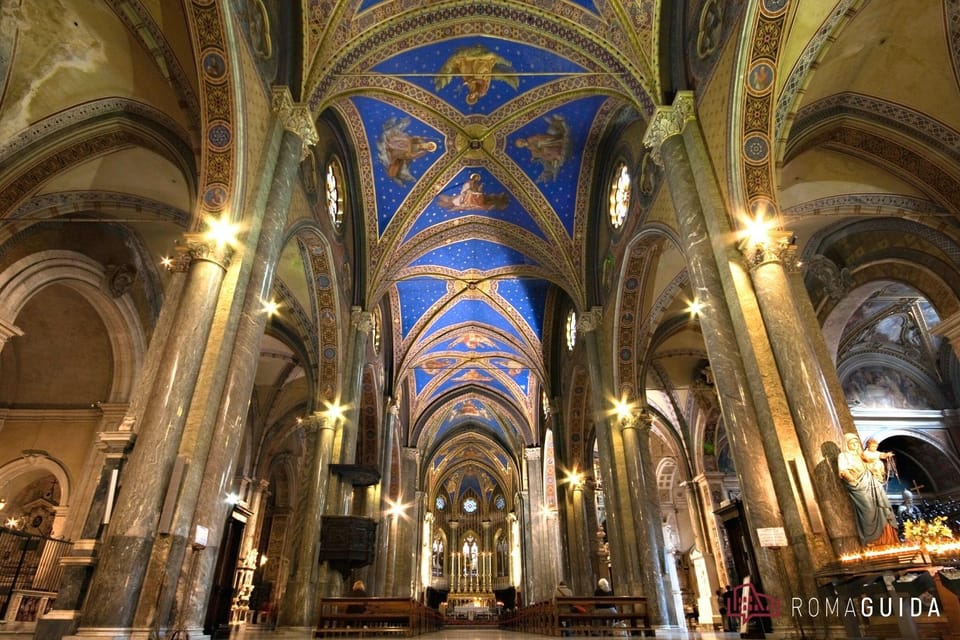
- Real church storytelling: you’ll step inside two churches that anchor key Jubilee moments and patron saints.
- Pantheon, but with planning: entrance isn’t included, so you’ll need to reserve through the Pantheon’s official site.
- Semi-private feel: it’s designed for small groups, with a live guide in English or Italian.
Where the Jubilee story starts: Accademia di San Luca
The tour kicks off at Piazza dell’Accademia di San Luca, in front of the Hotel all’Accademia. This is a smart starting point because it immediately places you in the world where artists worked for the Pope, not just for patrons with good taste. Even before you reach the loud landmarks, you get a sense that Rome’s art machine ran on relationships.
You’ll get a quick guided orientation inside the Accademia area (it’s brief), just enough to set up the big theme: why Jubilees mattered, and how art helped express power, faith, and ambition at the same time. It’s the kind of start that helps the rest of the walk make sense instead of feeling like a list of sites.
You can also read our reviews of more tours and experiences in Rome.
Trevi Fountain and the 1650 art rivalry
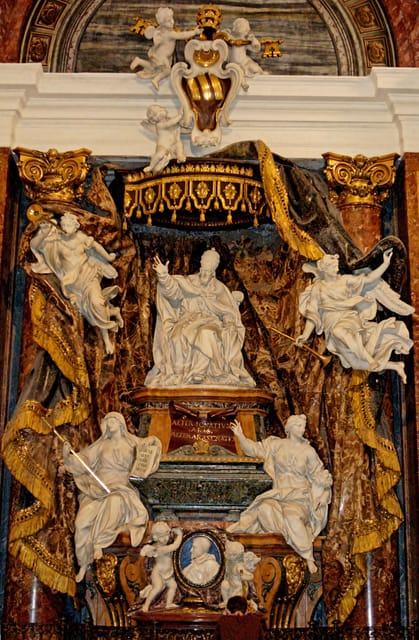
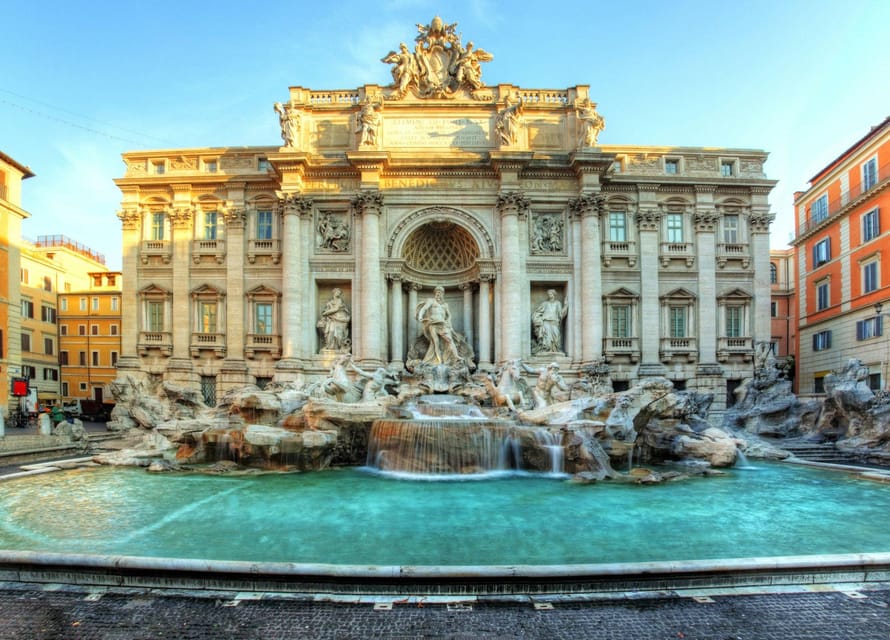
Next comes the Trevi Fountain area, with guided time focused on the Jubilee of 1650. This stop is more than a photo opportunity. The guide connects the fountain’s presence to competition among major artists—how prestige gets fought for, even when the goal is a religious celebration.
A good Jubilee theme here is that big events leave “branding” behind. The Jubilee can’t stay invisible, so it spills into architecture, sculpture, and spectacle. If you’ve ever wondered why Rome’s monuments feel like they’re arguing with each other, this is where it clicks.
Practical note: Trevi is busy, and that can change the feel of the stop. Expect to spend time listening and tracking details rather than rushing for the perfect angle.
Pontifical Gregorian University: baroque learning in the Jubilee age
From there, you head toward Piazza della Pilotta and the Pontifical Gregorian University area. The guide’s focus is how this “beacon of culture” fits into Baroque Rome—when education, the Church, and public life were tightly linked.
This is a good pause in the walk because the Jubilee story isn’t only about processions and churches. It’s also about systems: how ideas spread, how clergy were trained, and how institutions shaped what the public saw and believed. If you enjoy understanding how power organizes itself, you’ll like this stop.
Piazza di Pietra, Piazza Colonna, and the art of “meeting points”
The route then moves through the corridor of Galleria Sciarra, known for its frescoes, and into the open squares around Piazza Colonna and Piazza di Pietra. This section is where the tour earns its title “Ancient Rome meets the origin of Christianity.”
You’re not just looking at ruins and then looking at churches. You’re watching a city repurpose space. Rome builds on itself—sometimes respectfully, sometimes aggressively—and Jubilees gave the Church a reason to reframe old stones with new meaning.
One drawback to keep in mind: this portion is mostly outside. If the weather is rough, you’ll want a plan for shade or rain gear, since the tour keeps moving.
Inside St. Ignatius: Jesuits, patrons, and the New World
The first church entry is St. Ignatius. This stop is chosen for story, not just for architecture. The guide ties the church to the 15th-century world of popes, Jesuits, knights, and artists—and to the larger mindset of exploration and global ambition.
What I like about the church stops is how they connect people to places. Instead of treating St. Ignatius like a “pretty building,” you’re encouraged to see it as a statement: a place that reflected how Catholic Europe viewed its mission during major historical moments.
Don’t rush here. Even if you’re not a church detail-spotter, the guide’s framing helps you notice what’s typical of the era—and why it would matter during a Jubilee celebration.


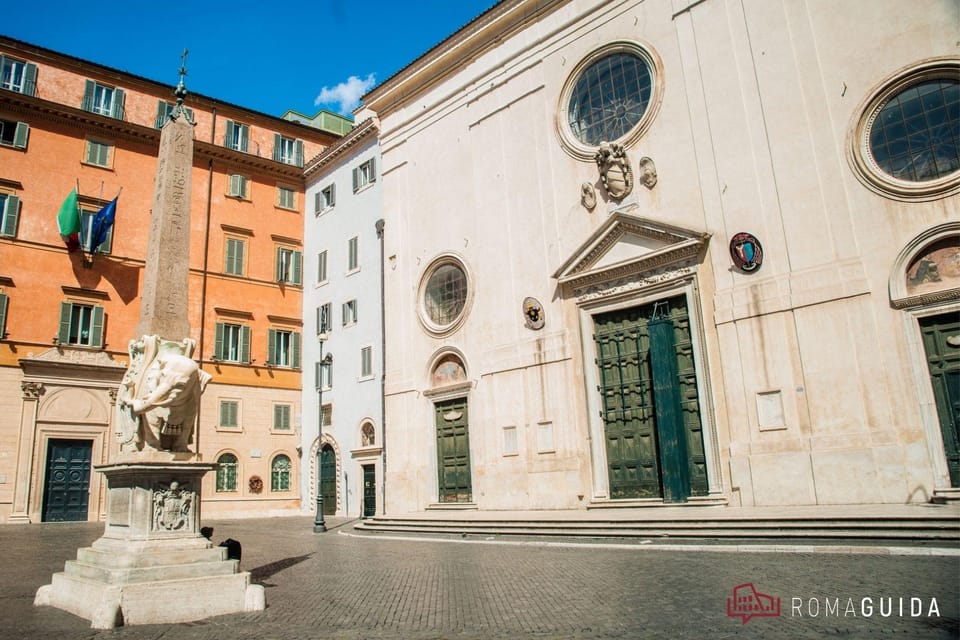
Santa Maria Sopra Minerva: the first Jubilee in 1300
Next is Santa Maria Sopra Minerva, one of the tour’s strongest anchors. Here the big point is the celebration of the first Jubilee in history in 1300, plus the fact that St. Catherine of Siena rests there.
This stop works because it turns “Jubilee” from a concept into a concrete historical location. You can stand in a space linked to the earliest Jubilee and feel the weight of continuity—how later Jubilees didn’t just repeat an event, they built on a founding memory.
Also, St. Catherine of Siena is a useful entry point because she turns the Jubilee story from politics into lived spirituality. If you like a human thread to history, you’ll probably appreciate this church.
Pantheon: millennial Rome becomes Jubilee space
The tour heads to the Pantheon, and this is where the Renaissance Jubilee connection matters. The Pantheon’s story spans from the Roman Empire to a later re-centering of meaning—so it becomes a Jubilee symbol when Renaissance-era culture reinterprets Rome’s classical legacy.
One very practical detail: Pantheon entrance is not included. You’ll need a nominal reservation to visit through the Pantheon’s official website. That’s not just paperwork—it can affect your experience, because you want to avoid losing time during the walk at the busiest stop.
If you plan ahead and secure your timed entry, this becomes a highlight rather than a stress point. Otherwise, you might end up watching the building from the outside when you want inside.
Sant’Ivo alla Sapienza: where Jubilees were planned
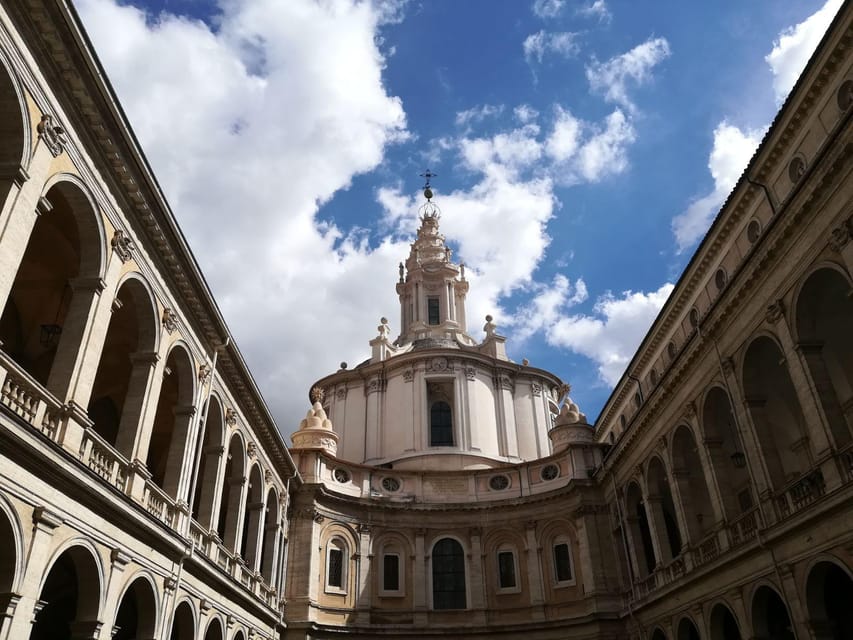
After Pantheon, you move to Sant’Ivo alla Sapienza and the courtyard/patio areas, with guided time that helps you see why the building belongs in a Jubilee story. The tour frames the key idea as decision-making rooms: among those spaces, major Jubilees of the past were organized and shaped.
This is a great stop for anyone who thinks Rome’s power only shows up in grand processions. It also shows up in offices, councils, paperwork, and planning sessions. Sant’Ivo adds that behind-the-scenes feel.
There’s also a natural “two-part” rhythm here: you’ll spend time with the guide on the architecture and the symbolism, and then later you get another guided stretch that keeps you from rushing past what you would otherwise miss.
Caravaggio finale between S. Agostino and S. Luigi
The walk ends by building toward a Caravaggio story between the churches of S. Agostino and S. Luigi. This is one of the most memorable themes of the whole experience because it shifts from institution and ceremony to individual risk.
The guide focuses on Caravaggio as a rebel artist of the 1600s—talent, passion, and a turbulent reputation. That tone fits well after the Jubilee planning and symbolic architecture. You see how the Church’s world wasn’t only about calm devotion; it was also a stage where artists pushed limits and where images could create real controversy.
You finish at Via degli Acquasparta, which is convenient because it leaves you somewhere you can keep walking, grab a snack, or connect to other sights.
Michelangelo, Bernini, and the art-pop backdrop
The highlights promise you major names—Michelangelo and Bernini—along with Caravaggio. Even if you aren’t trying to identify every artwork like a museum curator, the value is how these artists get positioned inside the Jubilee mindset.
Think of it this way: Jubilees are mass events. They need visible messages. Big artists were part of the strategy—turning faith into form, and Church authority into things you could see from a distance. That’s why the tour keeps mixing outdoor monuments with church interiors. You’re tracing a visual language.
If you love the connection between art and politics, this tour is built for you.
Price and walking reality: is $71 worth it?
For a $71 ticket and about 3 hours on foot, the value depends on how you like to travel.
If you’re the type who wants your Rome sightseeing to come with context—who sponsored what, why it mattered, and how it fits into the Jubilee idea—this pricing is reasonable. The guide time is the real product here, and the tour packs in multiple key sites without turning it into an all-day march.
If your goal is mostly “see the famous places fast,” you might feel the time pressure. This tour requires attention. You’ll be moving at a steady pace, and the best moments come from listening to the connections, not just passing by landmarks.
Also keep in mind: the Pantheon visit is ticketed separately. If you have to sort that out at the last minute, the cost/effort balance shifts.
Guide quality matters: what you can learn from the small set of experiences
The overall feedback is strongly positive about the guide’s performance. One reviewer highlights that the guide gave excellent information about the Jubilee. Another specifically praised a guide named Diana for being both knowledgeable and fun—exactly the mix that makes art-and-history walks feel like stories instead of lectures.
That said, one problematic experience was reported when a guide didn’t show up at the meeting point and calls went unanswered. In that case, a refund was issued. The practical lesson for you: confirm the meeting point clearly (front of Hotel all’Accademia) and give it a little extra buffer at arrival, especially if you’re navigating crowded streets or using public transit.
Who this tour suits best (and who should pick something else)
You’ll likely love this tour if you want Rome explained through the lens of Jubilees, and if you enjoy pairing religious history with the art that was made to serve it. It’s also a good option when you want a compact walk that still feels structured and purposeful.
You may want a different plan if you:
- need wheelchair access or have limited mobility (it’s not suitable for mobility impairments or wheelchair users)
- get motion sick
- want a slow, low-step pace
- are traveling with someone very elderly (people over 95 are noted as not suitable)
Should you book this Jubilee art-and-popes walk?
If your dream Rome day includes art that has a job to do, and history you can see with your own eyes, I’d book it—especially if you’re traveling in the Jubilee year and want the city’s sacred calendar to drive your route. The strongest part is the way the guide turns famous sites into a connected story of popes, patrons, and artists.
One step you shouldn’t skip: plan the Pantheon visit ahead since entrance isn’t included. If you handle that, the rest of the tour flows as a satisfying “big picture” walk with enough detail to keep it interesting.
FAQ
FAQ
How long is the Jubilee tour?
The tour lasts about 3 hours.
Where do I meet the guide?
Meet in front of Hotel all’Accademia at Piazza dell’Accademia di San Luca.
Is the Pantheon entrance included?
No. Pantheon entrance isn’t included, and a nominal reservation is required through the Pantheon’s official website.
What languages is the live guide available in?
The live guide offers English and Italian.
What should I bring?
Bring comfortable shoes, since it’s a walk through central Rome.
Is this tour suitable for wheelchair users?
No. It’s not suitable for wheelchair users or people with mobility impairments.
What are the tour’s cancellation rules?
You can cancel up to 24 hours in advance for a full refund.