REVIEW · ROME
Rome: Discovering the Jewish Ghetto guided tour
Book on GetYourGuide →Operated by Unlimited Explorations · Bookable on GetYourGuide
The Jewish Ghetto route in Rome is short on paper and big on meaning, mixing landmark sights with the lived story of a community that shaped the city. I especially love how this tour connects Piazza Mattei to quieter, more layered stops like the Portico d’Ottavia, so you’re not just sightseeing—you’re learning how Rome’s Jewish history sits right inside everyday streets. One drawback to plan for: you’ll be on your feet for about two hours, and the walk isn’t suitable for people with mobility issues or if motion sickness is a concern.
In This Review
- What you’ll feel as you walk
- Quick hits before you go
- Key moments you won’t want to rush
- Starting at Teatro di Marcello: setting the scene for Jewish Rome
- Jewish Ghetto streets: narrow lanes, visible signs of survival
- Piazza Mattei and the Fountain of Turtles: a playful landmark with a point
- Portico d’Ottavia: reading Roman stone while learning the community story
- Piazza Giudia and the sense of long timelines
- Great Synagogue of Rome: what you can see without counting on an entrance
- Ponte Fabricio and the walk toward Isola Tiberina
- San Bartolomeo all’Isola: a peaceful finish with relics and quiet weight
- Price and value: what $44.41 buys in a 2-hour walk
- What kind of traveler should book this?
- Practical tips that help you enjoy the walk
- Should you book the Rome Jewish Ghetto guided tour?
- FAQ
- How long is the Rome Jewish Ghetto guided tour?
- Where do I meet the guide?
- Where does the tour finish?
- Is the entrance to the Great Synagogue included?
- Is the entrance to San Bartolomeo all’Isola included?
- What language will the guide speak?
- Is this tour suitable for everyone?
- What’s included in the price?
What you’ll feel as you walk
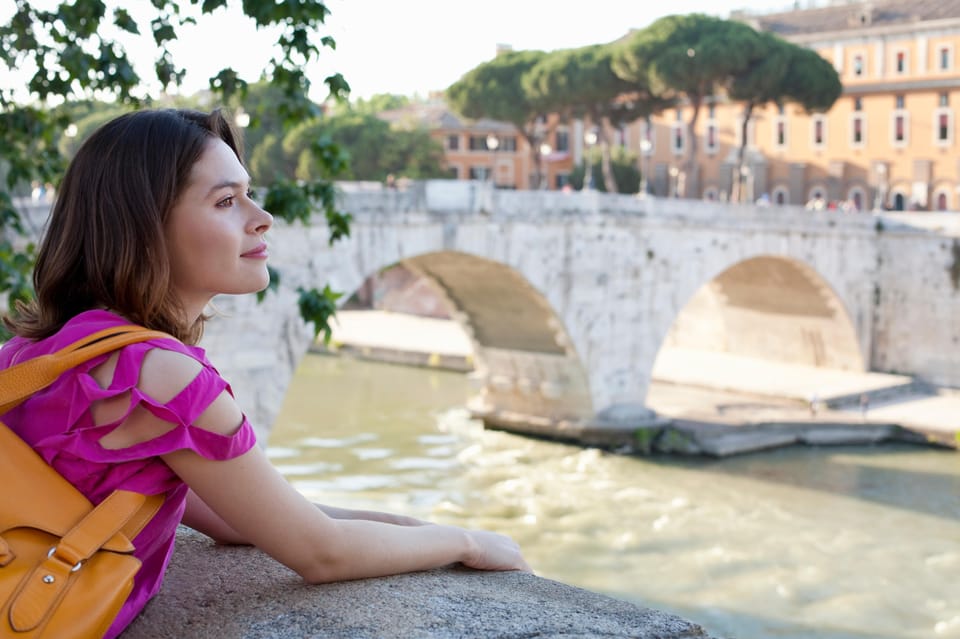
The pacing is designed for orientation: you start at Teatro di Marcello, then move across classic Roman footpaths toward the Tiber and the island church. The guide you get (Italian or English) can be bilingual or monolingual, and that can affect how much discussion you’ll hear. If you want context and clear storytelling, this format works well, especially because some interiors like the synagogue and church are not part of the included visit.
Quick hits before you go
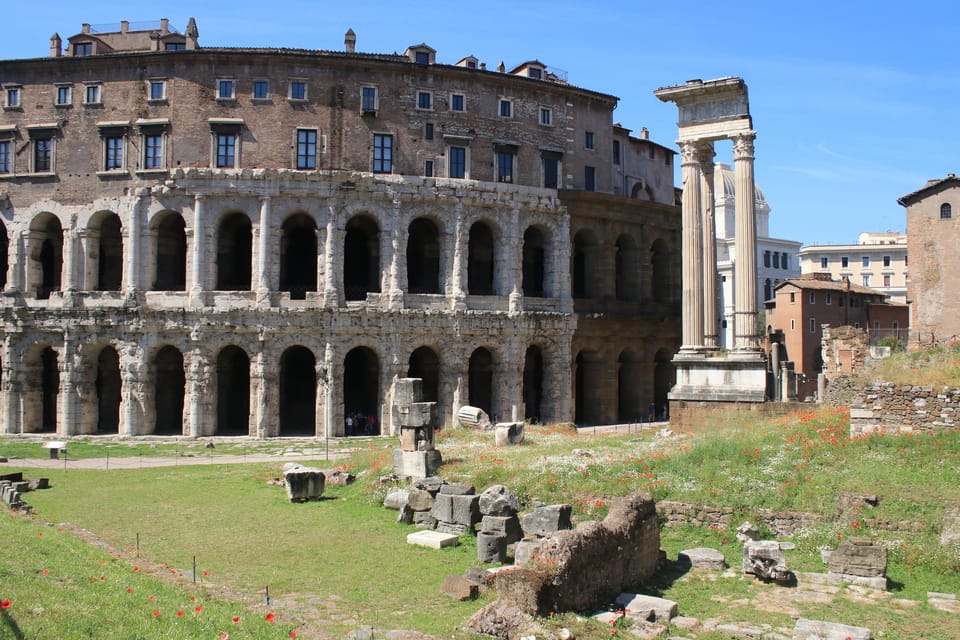
Expect a focused walking route with real sites you can point to later: the Fountain of Turtles in Piazza Mattei, the stone arcades of Portico d’Ottavia, the Great Synagogue area, and the calm of Isola Tiberina.
You can also read our reviews of more guided tours in Rome

Key moments you won’t want to rush
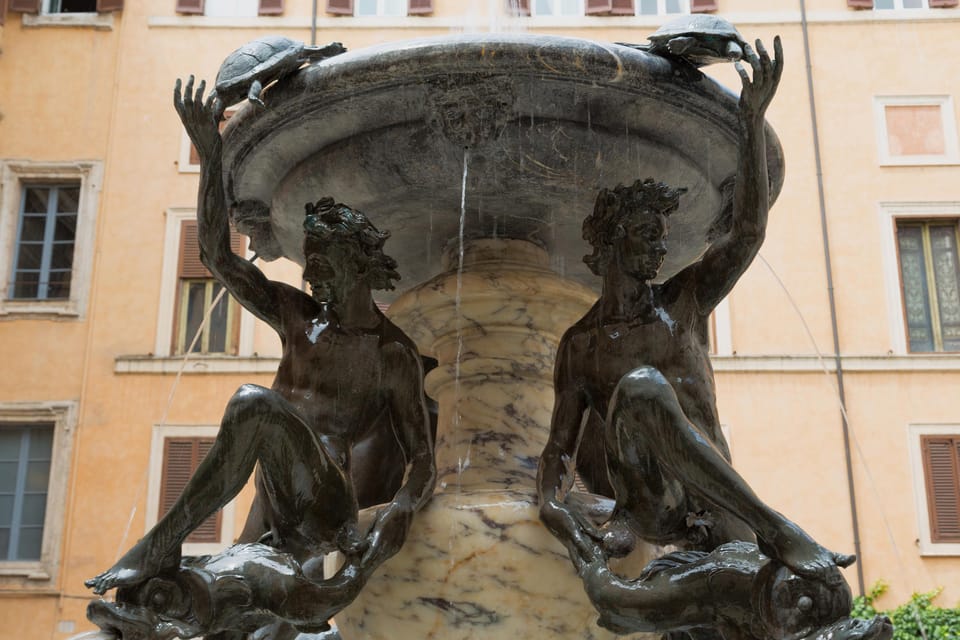
- Piazza Mattei’s Fountain of Turtles: bronze turtles tied to local symbolism, right in the middle of your walk
- Portico d’Ottavia: a historic portico you can read like architecture, not just pass by
- Great Synagogue of Rome: a major marker for the city’s modern Jewish community
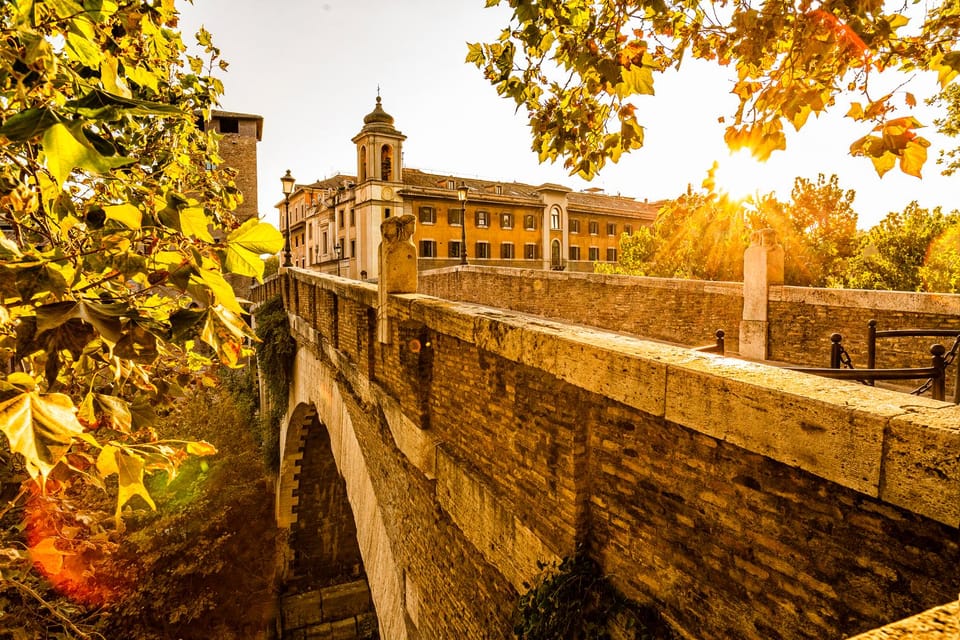
- Ponte Fabricio: one of Rome’s oldest bridges, with the right “crossing” feeling toward the Tiber
- San Bartolomeo all’Isola on Isola Tiberina: a quieter finish on one of Rome’s oldest islands
Starting at Teatro di Marcello: setting the scene for Jewish Rome
You meet at the intersection of Via del Foro Piscario, right in front of Teatro Marcello. It’s a great starting point because it anchors you in old Rome immediately. From there, the route makes sense: you’re not hopping randomly between far-flung neighborhoods—you’re walking through a corridor where Jewish life and Roman life have overlapped for centuries.
This is where a good guide matters. With an expert local, the Jewish Ghetto stops don’t feel like separate attractions. They feel like chapters that connect—how people lived, where they gathered, and how Roman architecture frames those stories.
Bring comfortable shoes. The streets here are narrow and you’ll be walking without long sits to reset.
Jewish Ghetto streets: narrow lanes, visible signs of survival
Once you’re in the Jewish Ghetto area, you’ll move through tight streets where the history is close to the ground—literally. You’ll pass notable places tied to Rome’s Jewish community, including the Synagogue of Rome area and traditional kosher restaurants in the neighborhood.
Two things make this portion valuable:
- You get context before you see the big landmarks. Instead of staring at buildings with no thread, you’ll understand why they matter.
- You notice details you’d otherwise miss. In a neighborhood like this, small architectural cues and location choices can hint at how the community organized itself over time.
There’s also a helpful realism here. This tour is focused on walking and storytelling, not on speed. That’s great for photos, but it’s even better for actually remembering what you saw.
Piazza Mattei and the Fountain of Turtles: a playful landmark with a point
Next up is Piazza Mattei, one of those places you think you’ve just stumbled on—until you realize it’s a visual anchor. The highlight is the Fountain of Turtles, with bronze turtles that have become a recognizable symbol.
Here’s why this stop works in the middle of a history-focused tour: it gives your brain a break. You go from Ghetto streets to an open square with a clear focal point. But it’s not just a pretty pause. Piazza Mattei helps you understand how Rome layers symbols into everyday space. The fountain is the kind of detail you would likely overlook on your own, yet it becomes a memory you carry for days.
If you like street-level Rome—small squares, old fountains, and places where locals actually linger—this stop is a morale boost.



Portico d’Ottavia: reading Roman stone while learning the community story
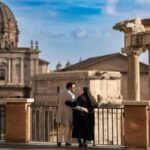
Then you walk to Portico d’Ottavia, one of the most historic monuments in the area. Porticos in Rome aren’t just decoration. They’re social space. They shelter people, connect streets, and shape how you move through a neighborhood.
With a guide, you’ll understand the portico in a bigger way: it’s part of the city’s older fabric, and it helps explain why Jewish life could exist in the same urban structure that defined everyday Roman routines. When you stand under those arches, you start noticing how architecture creates routes—routes that can affect where people gather and how communities stay connected.
A good consideration: because this is a walking tour, you won’t have a long, relaxed time to just wander on your own. Think of it as guided looking. If you’re the type who wants to linger without a schedule, you may feel slightly “on rails” at times.
Piazza Giudia and the sense of long timelines
From the portico area, the route continues toward Piazza Giudia. This is another place where the guide’s storytelling matters, because it helps connect names and locations to the long arc of Jewish presence in Rome.
The value of these in-between stops is that they prevent the tour from turning into a checklist. Instead of five big monuments, you get a walk that feels like a timeline: markers you can recognize, understand, and later revisit.
If you enjoy learning street geography—how neighborhoods evolved into what you see today—this segment will feel especially satisfying.
Great Synagogue of Rome: what you can see without counting on an entrance
The tour includes a stop at the Great Synagogue of Rome. You’ll get orientation and context from the guide so you know what you’re looking at and why it matters to Jewish Rome.
One key planning note: entrances to the Synagogue of Rome are not included. That means your experience here is likely about exterior viewing and guided explanation rather than a ticketed interior visit.
Even so, the stop can be powerful. Major institutions like this help you understand that Jewish life in Rome isn’t only about the distant past. It’s also present-day community structure, visible in the city’s landscape.
If synagogue interior access is a must for your trip, you’ll want to research separate entry options for your travel dates before counting on this tour to handle it.
Ponte Fabricio and the walk toward Isola Tiberina
Then comes a memorable Roman transition: Pons Fabricius (Ponte Fabricio), one of Rome’s oldest bridges. Crossing a historic bridge on foot changes the mood. You feel like you’re moving from one “chapter” to the next, toward the Tiber and the island.
Crossing points like this are great for photos, but the real win is the way the guide uses the moment to connect sites. You’re going from urban street-level history to a calmer, more reflective setting ahead.
Also, this is a good time to pace yourself. Two hours can feel quick until you’re counting steps. Drink water if you can, and keep your shoes ready—some stones and sidewalks can be uneven.
San Bartolomeo all’Isola: a peaceful finish with relics and quiet weight
You end at San Bartolomeo all’Isola Tiberina on Isola Tiberina, one of Rome’s oldest and most peaceful islands. The church is dedicated to St Bartholomew, and it houses relics of various martyrs, which gives this last stop emotional weight beyond its location.
Just like the synagogue, entrances to the church on Tiber Island are not included. So treat this as a guided visit to the site with viewing and explanation, not a guaranteed full interior tour.
Still, the setting helps. The island atmosphere is the point: after crowded streets, it feels like Rome quietly slows down. The church becomes a natural ending—one where you can absorb the contrast between dense history on the mainland and the stillness of the island.
The tour finishes back at the meeting point after your visits, so you’re not left stranded or forced to figure out your own route.
Price and value: what $44.41 buys in a 2-hour walk
At $44.41 per person for about 2 hours, this tour sits in the “small time, smart focus” category. You’re paying for what’s hardest to DIY here: getting the story straight. Jewish Ghetto neighborhoods can be visually confusing if you’re wandering alone because the buildings and names layer over time.
You also get an expert guide as the only included item. That means you should think of the cost as funding interpretation, not museum access. Since entrances to the synagogue and church are not included, you won’t feel like you’re paying for ticketed attractions that might cost more separately.
Value test: if you like learning while walking and you want your visit to the Jewish Ghetto to make sense, this price feels reasonable. If you mainly want to photograph from street level and don’t care about context, you could do parts on your own—though you’d likely miss the connections that make the route rewarding.
What kind of traveler should book this?
This works best for:
- You want a guided, story-first walk rather than a long museum day
- You’re interested in Rome’s Jewish heritage and want a route that connects sites
- You like compact itineraries that help you understand a neighborhood fast
It may not be ideal if:
- You need barrier-free access or have limited mobility
- You’re sensitive to motion or long continuous walking
If you’re traveling with teenagers or friends who are history-curious but don’t want a marathon, it’s a solid fit.
Practical tips that help you enjoy the walk
- Wear comfortable shoes. Expect uneven pavement and lots of steps.
- Bring a layer if the weather turns cool near the Tiber.
- If you care about interior access, plan on separate tickets for the synagogue and the church since entrances are not included.
- The guide is Italian/English, and bilingual vs monolingual can change how much you hear. If you prefer one language, you might want to confirm the day’s setup when booking.
One more note from guide feedback: one guide named Lucia received strong praise for being perfect, and another guide was praised for adding extra curiosities beyond the planned route. That’s a good sign. It suggests the guiding style tends to go slightly beyond a script.
Should you book the Rome Jewish Ghetto guided tour?
Yes—if you want your time in Rome to feel purposeful. This tour’s strength is not just the sites. It’s the way the route ties them together, from the start near Teatro Marcello to the calm of Isola Tiberina.
Book it if you’re the kind of traveler who enjoys walking, learning names and locations, and getting the why behind what you see. Skip it (or pair it with separate ticket plans) if your goal is mostly inside-the-buildings time, since synagogue and church entry aren’t included.
If you’re trying to fit Rome’s Jewish history into a tight schedule, this is a smart use of two hours.
FAQ
How long is the Rome Jewish Ghetto guided tour?
It runs for about 2 hours.
Where do I meet the guide?
Meet at the intersection with Via del Foro Piscario, right in front of Teatro Marcello.
Where does the tour finish?
It ends back at the meeting point after visiting the sites, including San Bartolomeo all’Isola Tiberina.
Is the entrance to the Great Synagogue included?
No. Entrances to the Synagogue of Rome are not included.
Is the entrance to San Bartolomeo all’Isola included?
No. Entrances to the Church of St Bartholomew on Tiber Island are not included.
What language will the guide speak?
The tour is offered in Italian and English, and the guide could be bilingual or monolingual depending on the group.
Is this tour suitable for everyone?
It is not suitable for people with mobility impairments or for people with motion sickness.
What’s included in the price?
An expert guide is included. Food, transfers, and entrances are not included.