REVIEW · ROME
Rome: Borghese Gallery Guided Tour with Tickets
Book on GetYourGuide →Operated by Crown Tours · Bookable on GetYourGuide
Bernini and Caravaggio, on a tight clock. This 2-hour guided visit to the Borghese Gallery is built for fast entry, clear commentary, and a focused route through Rome’s best-known Baroque collection.
I love two things most: you get skip-the-line entry with reserved tickets, and the art historian guide turns the works into stories you can actually follow room by room. You’ll also catch big-name highlights up close, from Apollo and Daphne to Caravaggio’s intense scenes.
One consideration: the route is tightly scheduled, so you’re seeing the top hits rather than every single room in the Villa Borghese complex. If you want to wander at your own pace for hours, you may wish you had more time.
In This Review
- Key takeaways before you go
- Why Borghese feels different from other Rome museums
- Price and value: why $57 makes sense here
- Meeting up: Fontana dei mascheroni or Piazzale del Museo Borghese
- Skip-the-line entry that actually helps your day
- Ground floor sculptures (first 50 minutes): Bernini up close
- Main gallery time (40 minutes): Caravaggio’s drama and Raphael’s calm
- Ground floor sculptures (final 30 minutes): your second look is the secret
- The art historian guide: what you’re really buying
- Hearing the guide: small comfort, big payoff
- Who this Borghese Gallery tour fits best
- Practical tips so the visit stays smooth
- Should you book this Borghese Gallery guided tour?
- FAQ
- What’s the duration of the Borghese Gallery guided tour?
- Where do I meet for the tour?
- Does this tour include tickets and skip-the-line entry?
- What’s included besides the guide?
- What languages are the tours offered in?
- What should I bring?
- What items are not allowed inside?
- Is there cancellation flexibility?
- Is the tour wheelchair accessible?
Key takeaways before you go
- Reserved entry + express security helps you start fast instead of waiting in lines
- Headsets and radios keep the guide easy to hear (no shouting over other groups)
- Bernini on the ground floor gets the full spotlight, including Apollo and Daphne
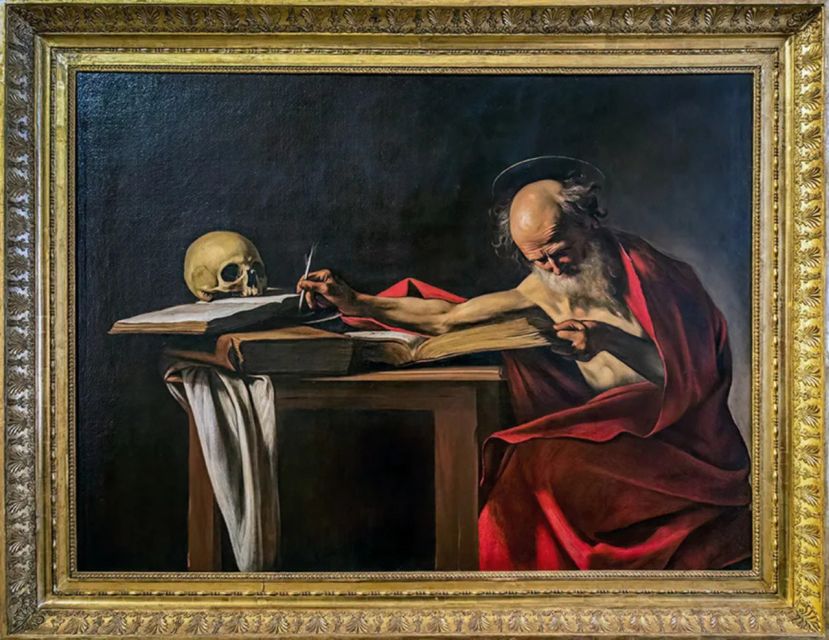
- Caravaggio’s big moments are front and center in the painting rooms
- A smart mix of masters includes works connected to Raphael, Titian, Canova, and more
- A time-boxed route hits ground-floor sculptures, then the main gallery, then a final sculpture pass
Why Borghese feels different from other Rome museums
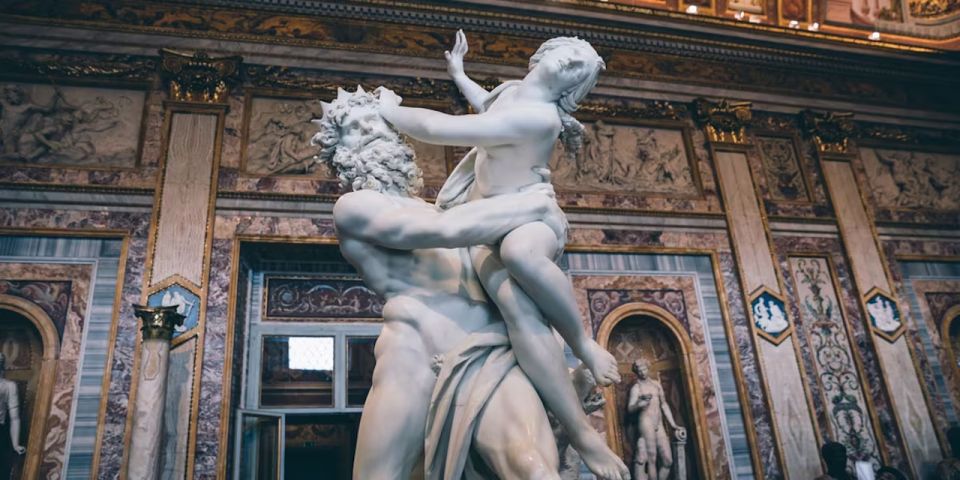
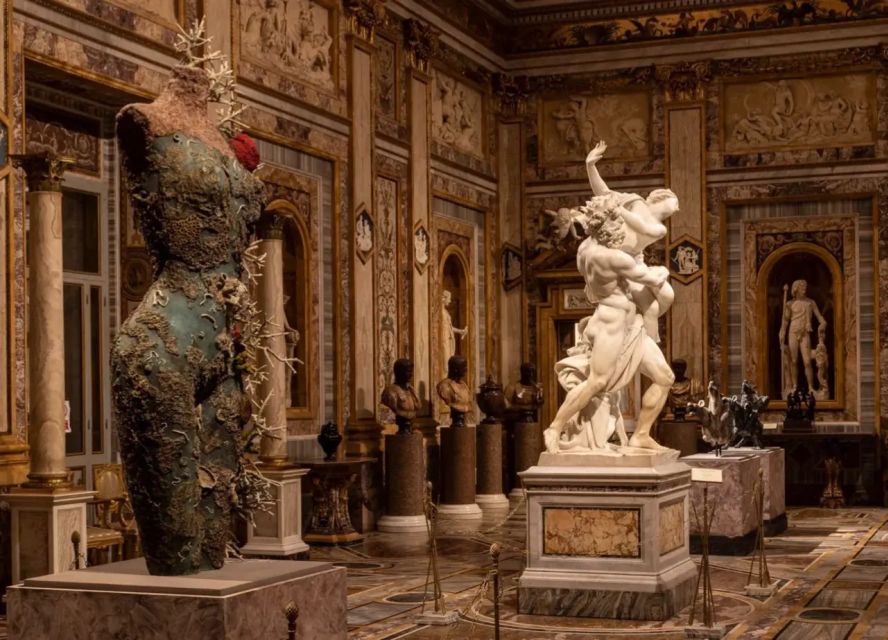
The Borghese Gallery is famous for a reason: it’s not a warehouse of art. It’s art staged in rooms that make you feel the drama—light, placement, and the Baroque sense of motion all matter here. Add a guide who knows how to explain what you’re looking at, and the collection stops being a checklist.
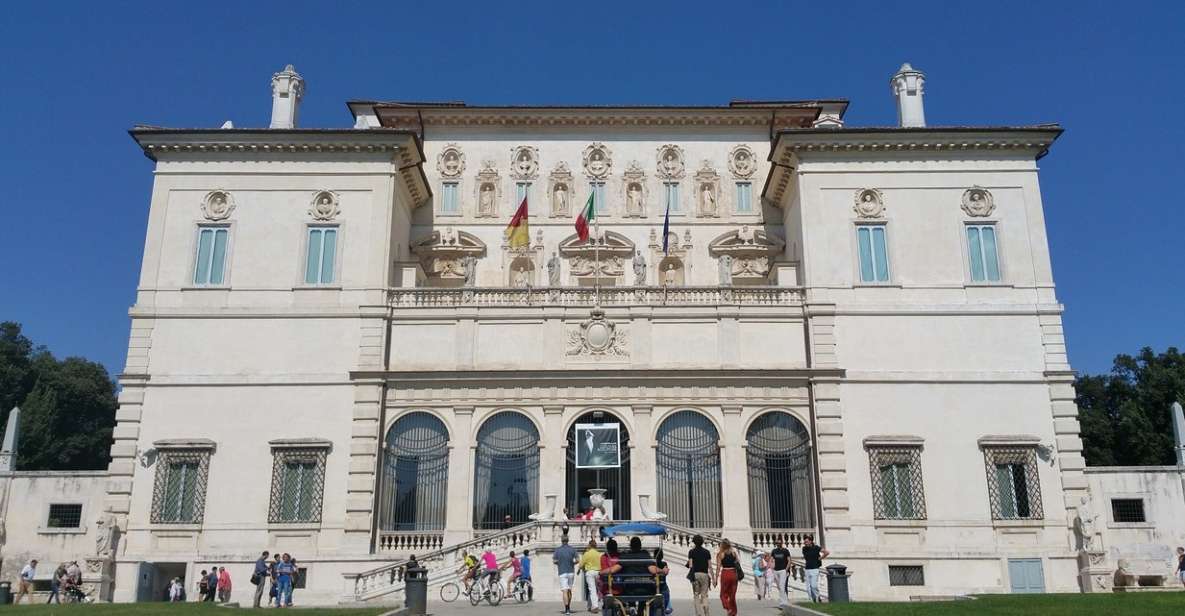
This tour leans into that “look closely” feeling. You’ll start outside the grand 17th-century villa area, then move through the decorated halls with commentary that connects the art to the people behind it. In a regular museum visit, you might notice great works and still miss the point. Here, you’re guided toward the details that explain why the art hits so hard.
The gallery is also compact enough that a 2-hour plan can still feel complete. You’ll cover the major sculpture and painting highlights without the usual Rome museum problem: “we spent an hour getting oriented and the best stuff was still ahead.”
You can also read our reviews of more tours and experiences in Rome


Price and value: why $57 makes sense here
At $57 per person for 2 hours, you’re paying for three things that matter in the real world: time, clarity, and context.
First, Borghese can be a ticket-and-timing situation. Your reserved entry and express security check reduce the chance of losing your momentum before you even reach the rooms. That’s not a luxury in Rome—it’s how you protect your sightseeing day.
Second, the experience includes an art historian guide plus headsets and radios. That’s huge inside a building where people naturally talk over each other. If you’ve ever spent a museum tour straining to hear, you’ll appreciate this setup right away.
Third, the guide’s job is not just naming artists. It’s helping you notice what’s going on: how sculptors sold emotion with surfaces and angles, and how painters like Caravaggio used lighting and contrast to make scenes feel immediate. For a museum that’s known for Baroque power, the extra context is exactly what you want.
Meeting up: Fontana dei mascheroni or Piazzale del Museo Borghese
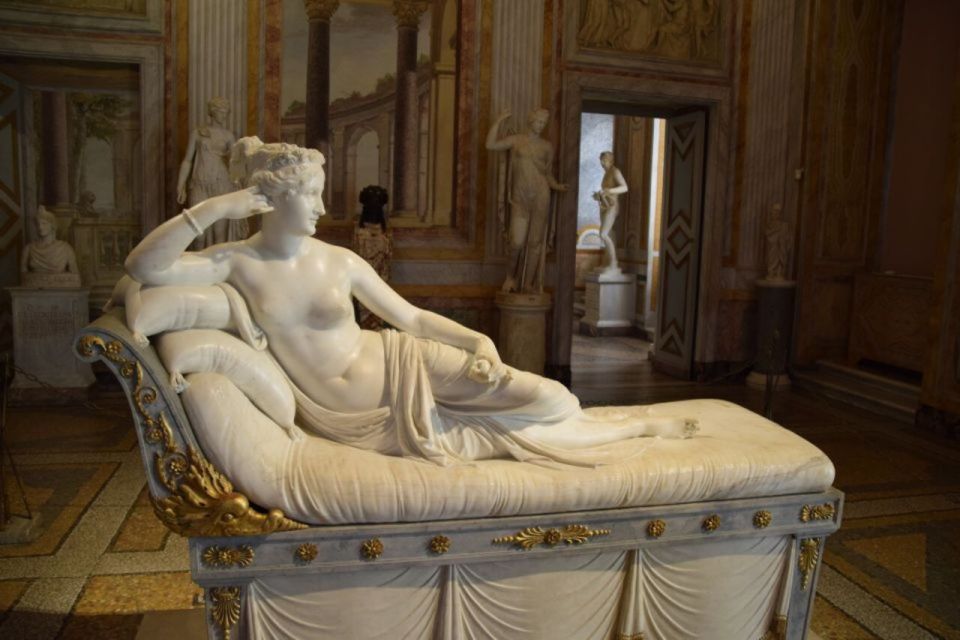
Your exact meeting point can vary based on the starting option you book. You’ll meet either at Fontana dei mascheroni or at Piazzale del Museo Borghese.
This matters more than it sounds. If you show up at the wrong entrance zone, you’ll waste the one resource you can’t easily buy back: time. Do yourself a favor and confirm your meeting point before you head out, then give yourself extra buffer for the walk inside the Villa Borghese park area.
Also pack light. The tour doesn’t allow pets, weapons or sharp objects, baby strollers, or luggage/large bags inside the gallery. If you have a larger bag, there’s a free cloakroom at the entrance to store it safely, which is a nice safety net if your packing plan goes off-script.
Skip-the-line entry that actually helps your day
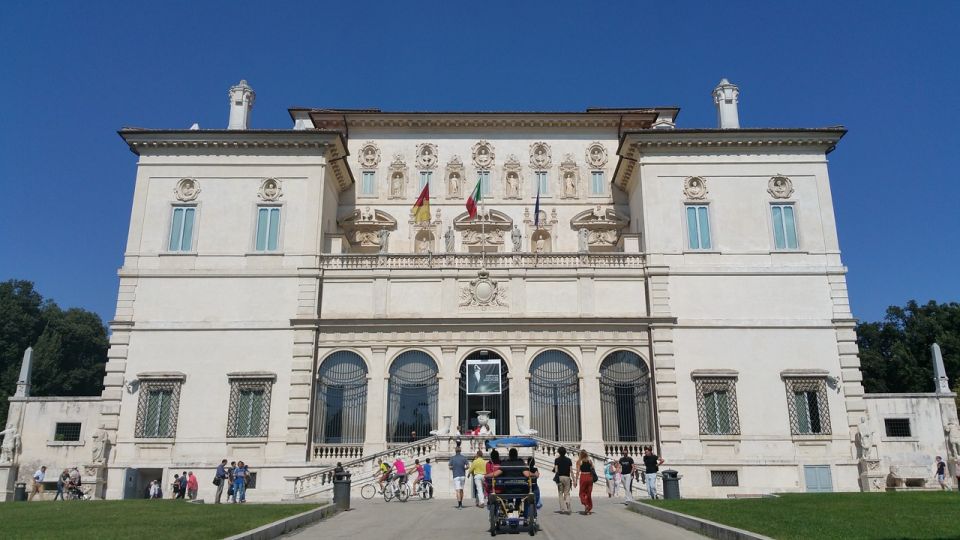
This tour includes skip-the-line entry through an express security check. In Rome, that’s often the difference between enjoying the afternoon and spending it in a slow queue.
Once you’re past security, you’re not left to figure out where to go. The route is guided and timed, so you can focus on the art instead of constantly checking signs or regrouping with your party.
One small practical tip: wear something comfortable for a couple of hours of moving indoors. The pace is efficient, and you’ll spend most of the time in galleries rather than stopping for long breaks.
Ground floor sculptures (first 50 minutes): Bernini up close
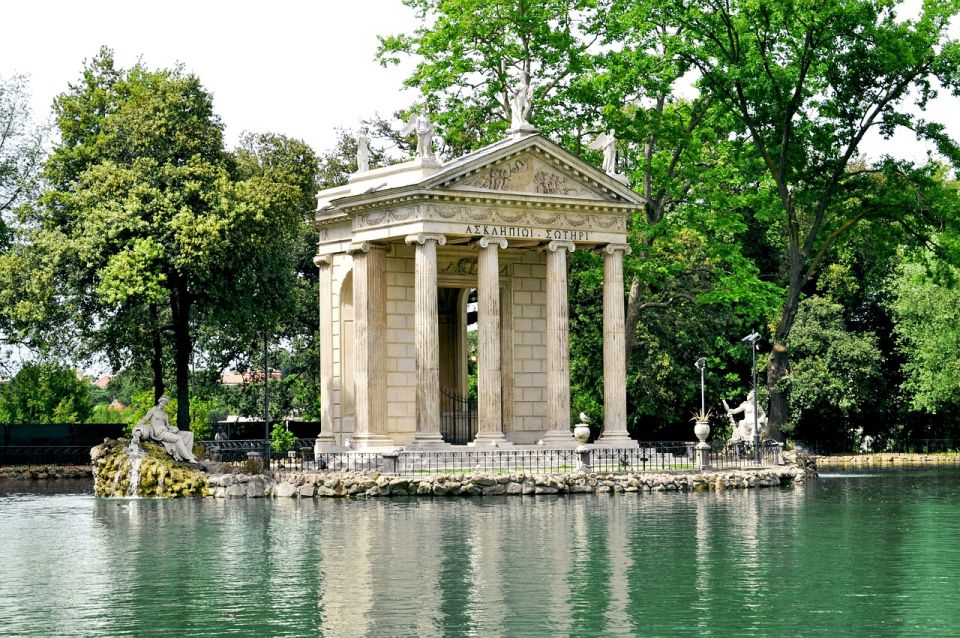
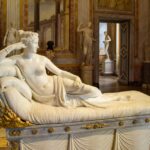
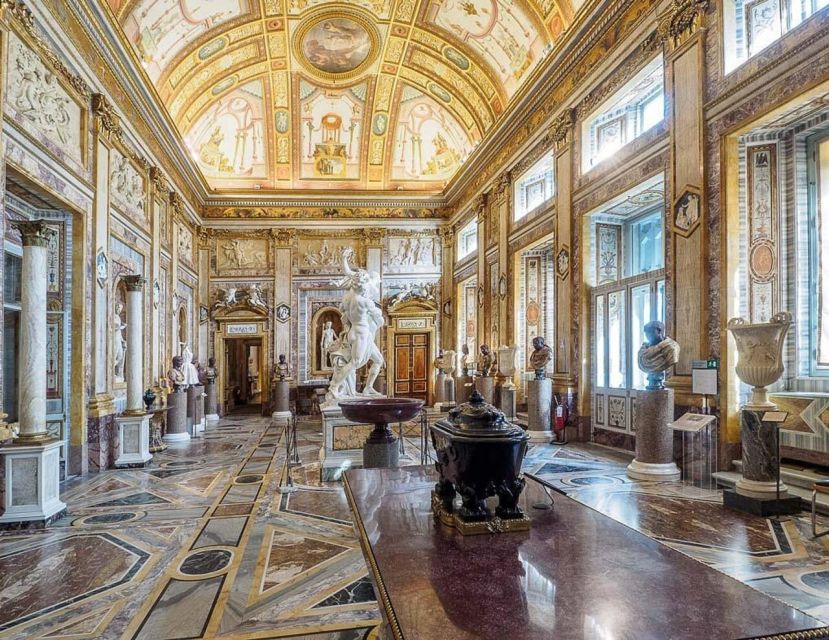
Your first main stop is the ground floor sculptures. This is where the tour really pays off, because Borghese is often about Bernini’s ability to make marble look alive.
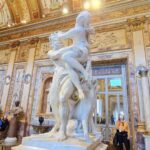
You’ll encounter major works such as Apollo and Daphne. The power of this piece isn’t just the subject. It’s the way the sculpture makes transformation feel physical—movement, tension, and emotion all built into the form. A good guide will point out what to notice so you’re not just standing there going, Wow.
You’ll also get a sense of how the collection was meant to be experienced. The ground floor layout encourages you to notice how sculptures relate to the surrounding rooms, not just as individual objects. That’s a key difference from big, generic museums where works can feel disconnected.
A note on route design: you’ll do another sculpture-focused segment later too. So think of this first part as the “set the baseline” round—once Bernini’s style clicks, the rest of the collection makes more sense.
You can also read our reviews of more guided tours in Rome
Main gallery time (40 minutes): Caravaggio’s drama and Raphael’s calm
Next comes the main Borghese Gallery segment, focused on paintings and major wall displays. This is the part where the mood swings.
Caravaggio is the headline. In the Caravaggio room, you’ll see works like David with the Head of Goliath and Boy with a Basket of Fruit. Caravaggio’s genius is contrast—light and shadow aren’t decorative here. They create emotion, spotlight gestures, and make the scene feel urgent.
Then, you’ll shift to Raphael’s style. Raphael is often about clarity and harmony, and it acts like a counterpoint to Caravaggio’s intensity. Seeing them in the same visit is a smart way to understand what changed between eras. You’re not just seeing two artists—you’re watching two ways of making a viewer feel.
The guide may also connect what you’re seeing to other big names you’ll encounter along the way, including artists linked to Titian and Canova. Even if you’re not an art expert, you’ll walk out with a better mental map of how Renaissance and Baroque styles differ in purpose and technique.
Ground floor sculptures (final 30 minutes): your second look is the secret
The last scheduled stop brings you back to the ground floor sculptures for about 30 minutes. This is more than a repeat. It’s timed for effect.
By the time you return, you’ve just processed the painting drama and the shifts in style. Bernini’s sculpture now reads differently because you have a fresh set of eyes. Details you might have missed on the first pass—surface treatment, gesture, and how posture communicates feeling—start to pop.
It’s also a practical win. Many museum tours race through the highlight and you’re done. Here, the structure gives you a chance to reset and re-notice, which makes the overall visit feel longer than 2 hours.
The art historian guide: what you’re really buying
This is not a “walk and point” tour. You get a live art historian guide plus headsets and radios so the commentary stays clear.
What I love about this format is how it changes your attention. The best guides here explain not only what an artwork shows, but how it works—lighting, technique, and even the way the works were collected and preserved. You’ll also hear stories connected to Cardinal Scipione Borghese and the ambition behind building this collection.
You might be led by guides such as Henry, Irene, Gaga, Enri/Enrico, Federica, Frederic/Federico, Vittoria, or Ursus. Names vary by group, but the common thread is story-first art history that helps you see.
One note from real experience of this kind of tour: the pace can feel fast if the guide has a lot to cover. If you’re the type who likes slow looking, pick one or two works to spend extra seconds on each time you pass them. The tour route moves, but your eyes don’t have to.
Hearing the guide: small comfort, big payoff
Included headsets and radios sound like a minor detail—until you try a tour without them in a quiet gallery full of people. With this setup, you’re more likely to catch the exact moment the guide points out what to notice.
If you’re sensitive to sound, choose a position where you can clearly hear the guide rather than getting stuck behind someone’s shoulder. In one case, a microphone placement issue made hearing harder, so don’t hide in the back if you want the full benefit.
Also, bring your ID/passport as requested. It’s a simple item, but it matters for entry.
Who this Borghese Gallery tour fits best
This tour is ideal for you if you want Rome art without the guesswork. You’ll get a strong hit of Bernini sculpture and Caravaggio painting, plus the context to connect Raphael and other names you see along the way.
It’s especially good if:
- You’re short on time in Rome but still want the major masterpieces
- You care about Baroque style, dramatic lighting, and emotional storytelling
- You prefer a small group or private format where the guide can stay conversational
It’s not the best choice if you need wheelchair access. The activity is listed as not suitable for wheelchair users, so plan an alternative if mobility is a factor.
Practical tips so the visit stays smooth
A few things can make your Borghese visit feel effortless:
- Bring a passport or ID card.
- Pack light. Small bags/purses only are allowed inside; larger bags go to the free cloakroom.
- Skip strollers and large luggage. Pets and sharp objects are not allowed.
- Expect some rooms or routes to vary if areas are closed for restoration. Your guide will adapt the path.
If you’re planning your day, build in a little buffer around the tour start time. With timed entry and security checks, you want to arrive calm, not sprinting.
Should you book this Borghese Gallery guided tour?
If you like art enough to want the story behind it, I think this is a strong booking. The combination of reserved entry, express security, headsets, and an art historian guide is exactly what makes a short visit feel complete.
Choose it over a self-guided approach if you want to understand Baroque technique, not just see famous names. You’ll also save energy by not fighting crowds right at the start.
If you want total freedom to linger in every room for hours, you might feel the tour route is too structured. But for most people visiting Rome with limited time, this is a smart way to hit Borghese at full power.
FAQ
What’s the duration of the Borghese Gallery guided tour?
The tour lasts about 2 hours.
Where do I meet for the tour?
The meeting point can vary. Options listed are Fontana dei mascheroni or Piazzale del Museo Borghese.
Does this tour include tickets and skip-the-line entry?
Yes. It includes skip-the-line entry tickets to Borghese Gallery, along with access through an express security check.
What’s included besides the guide?
You get an art historian guide, skip-the-line entry ticket, and headsets and radios so you can hear the guide clearly.
What languages are the tours offered in?
The live guide is available in English, Japanese, French, German, Portuguese, Russian.
What should I bring?
Bring a passport or ID card.
What items are not allowed inside?
Pets, weapons or sharp objects, baby strollers, and luggage or large bags are not allowed.
Is there cancellation flexibility?
Yes. Free cancellation is available up to 24 hours in advance for a full refund.
Is the tour wheelchair accessible?
No. The activity is listed as not suitable for wheelchair users.