REVIEW · ROME
Fountains and Squares of Rome 2-Hour Walking Tour
Book on GetYourGuide →Operated by Romaetravel · Bookable on GetYourGuide
Rome’s fountains are basically theater. This 2-hour walking tour strings together Renaissance and Baroque set pieces, from the half-sunken ship in Piazza di Spagna to the quiet awe of the Pantheon’s dome. I like how the route mixes legend with real architecture, and I love the fact that guides (like Felice, Federica, and Luisa) bring the stories down to earth with a pace that can flex for families and older groups.
The one thing to keep in mind is that you’re paying for a guided walk, so if you were hoping for a tour where everything (like any entry fees) is automatically handled, this may feel a bit expensive compared with options that bundle more.
In This Review
- Key things to know before you go
- How this 2-hour route actually gives you Rome’s “wow” factor
- Piazza Barberini start: where you can settle in fast
- Piazza di Spagna and the Fontana della Barcaccia half-sunken ship
- Trevi Fountain: the coin ritual plus the buildings behind it
- The Pantheon inside: how to read the dome in real time
- Piazza Navona: Bernini’s Four Rivers on Domitian’s old stadium ground
- Campo de’ Fiori finish: market square energy and a heavy story
- What you’re really paying for at $74 per person
- Guides, pace, and small-group benefits you’ll feel on the street
- Who should book this walking tour
- Should you book the Fountains and Squares of Rome 2-Hour Walking Tour?
- FAQ
- FAQ
- How long is the Fountains and Squares of Rome walking tour?
- Where does the tour start?
- What’s included in the price?
- Is hotel pickup or drop-off included?
- What languages are available?
- Do I get a refund if I need to cancel?
Key things to know before you go
- Small-group feel: you get more back-and-forth than you will on giant buses.
- Perfect starter route: Piazza Barberini to Campo de’ Fiori is short enough to finish fast, but packed enough to feel complete.
- Iconic photo stops with context: Trevi, Piazza Navona, and the Pantheon are explained, not just pointed at.
- Baroque drama, up close: the Fontana della Barcaccia half-ship is the kind of detail you’d miss alone.
- Historical layers under your feet: Piazza Navona sits on the old Stadium of Domitian.
- A memorable ending: Campo de’ Fiori pairs the lively market square vibe with the story of Giordano Bruno.
How this 2-hour route actually gives you Rome’s “wow” factor
Rome can feel endless when you’re wandering without a plan. This tour works because it doesn’t try to cover everything. It focuses on a tight ribbon of piazzas and fountains where the city’s style—Renaissance balance and Baroque showmanship—shows up in full force.
In just two hours, you’ll hit several of Rome’s biggest names: the Fontana della Barcaccia, the Trevi Fountain, the Pantheon, Piazza Navona with Bernini’s Fountain of the Four Rivers, and then you end at Campo de’ Fiori. That’s a lot of “major stop” energy for a short walk, which is ideal when you have jet lag, limited time, or you’d rather spend your energy looking than plotting.
Also, it’s not only visual. Expect guide talk that ties the monuments to the people and myths around them, including the coin ritual at Trevi and the grim public execution history connected with Giordano Bruno in Campo de’ Fiori.
You can also read our reviews of more walking tours in Rome

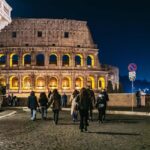
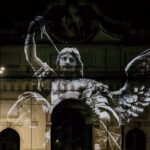
Piazza Barberini start: where you can settle in fast
The meeting point is simple: you’ll meet your guide in front of the fountain in Piazza Barberini. If you’ve ever been frustrated by meeting points that are vague or hard to spot, this is one of the better setups because the fountain is the landmark.
This first stretch matters because it sets the rhythm. Two hours goes by fast in Rome, and a good guide helps you move with purpose, without turning the whole experience into a sprint. Reviews highlight that guides like Felice can tailor the walk to the group, including kids and family interests, which tells you this tour is built to stay enjoyable even when the pace needs adjustment.
If you’re wearing shoes you love but don’t walk well in, switch them now. You’ll be standing, turning corners, and stopping often.
Piazza di Spagna and the Fontana della Barcaccia half-sunken ship
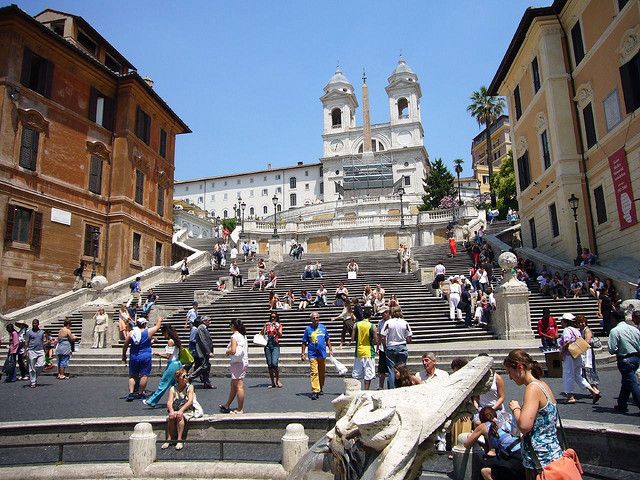
From Piazza Barberini you continue to Piazza di Spagna, at the base of the Spanish Steps. The steps connect the historic Bourbon Spanish Embassy with the Trinità dei Monti church, and the design is credited to architects Francesco de Sanctis and Alessandro Specchi. Even if you’ve seen the steps in photos, the spacing and scale feel different when you’re there, in the middle of the action.
The centerpiece you’ll focus on is Fontana della Barcaccia. It’s a Baroque fountain shaped like a half-sunken ship, which sounds whimsical until you’re standing close enough to notice the drama built into the design. Baroque art loves emotion: motion, weight, and theatrical symbolism. This fountain is basically a story you can walk up to.
One practical note: Piazza di Spagna can get busy. A guide’s job here isn’t just to explain; it’s to help you find the moment when you can actually look—without being stuck behind a crowd.
Trevi Fountain: the coin ritual plus the buildings behind it
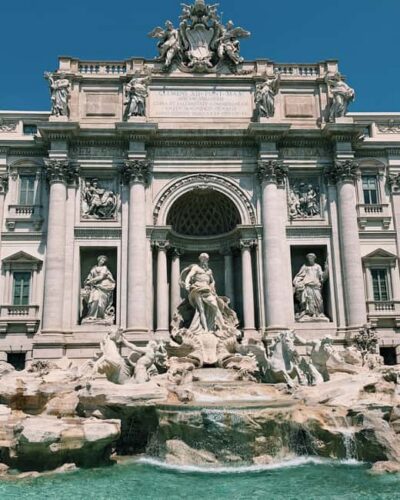
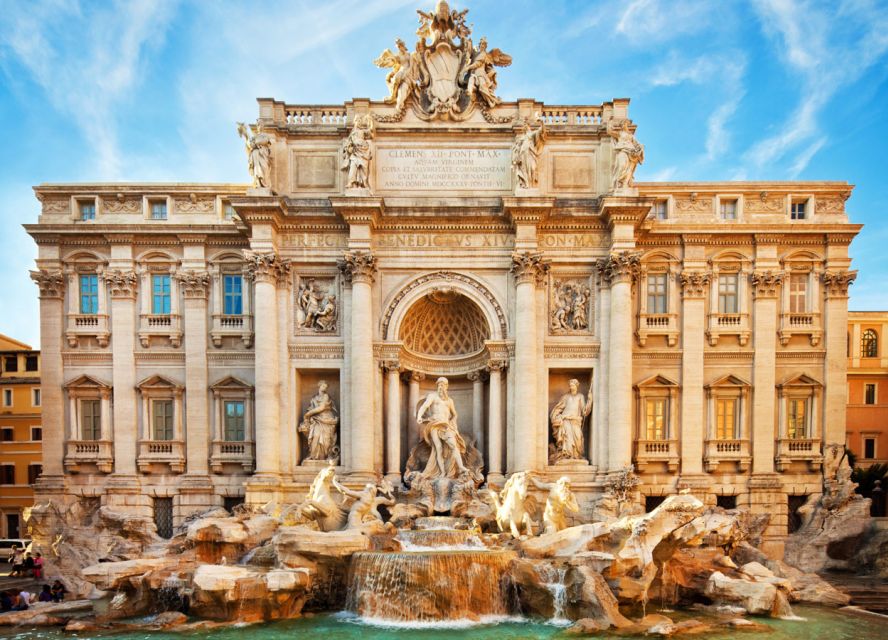
Next you’ll head to the Trevi district for Rome’s most famous fountain. The Trevi Fountain is set against the Palazzo Poli, which helps explain why it feels so grand. It’s not an isolated object; it’s part of the street-wall drama of Rome.
The highlight here is the ritual: you throw a coin into the water to help ensure you return one day. That’s the easy part. The more satisfying part is hearing how the fountain fits into the surrounding area and why it became the go-to place for this kind of legend.
Trevi is packed most times of day, so your experience depends on timing and how your guide handles crowds. A small-group setting usually helps because the guide can reposition you for better sight lines and keep the group moving at a manageable pace.
The Pantheon inside: how to read the dome in real time
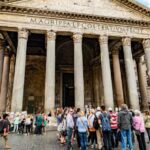
After Trevi, you’ll move to the Pantheon, dedicated to the Olympian gods, and one of the best-preserved monuments of Ancient Rome. This stop is the tour’s cleanest contrast: after Baroque fountains and theater-like piazzas, you get something that feels calm, solid, and timeless.
Once inside, you can marvel at one of the Pantheon’s biggest bragging points: the world’s largest non-reinforced concrete dome. That detail matters because it’s not just trivia. It gives you a way to understand why the interior feels so engineered, even though it was built long ago.
Also, the Pantheon is where a good guide can make you look differently. Instead of treating it like a quick photo stop, the guide will help you notice the scale and geometry so the space makes sense in your head. When you’re standing under a dome of that size, “reading” the architecture is half the magic.
If you want to plan ahead, consider this: the tour description doesn’t list entry tickets as included, and one review specifically flagged the cost of entry compared to other tours that bundle it. If the Pantheon requires any extra payment on your date, this tour cost might feel a little less like a bargain. Still, even with an extra ticket, the guided pacing through one of Rome’s top interiors can be worth it.
You can also read our reviews of more tours and experiences in Rome


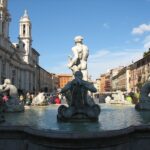



Piazza Navona: Bernini’s Four Rivers on Domitian’s old stadium ground
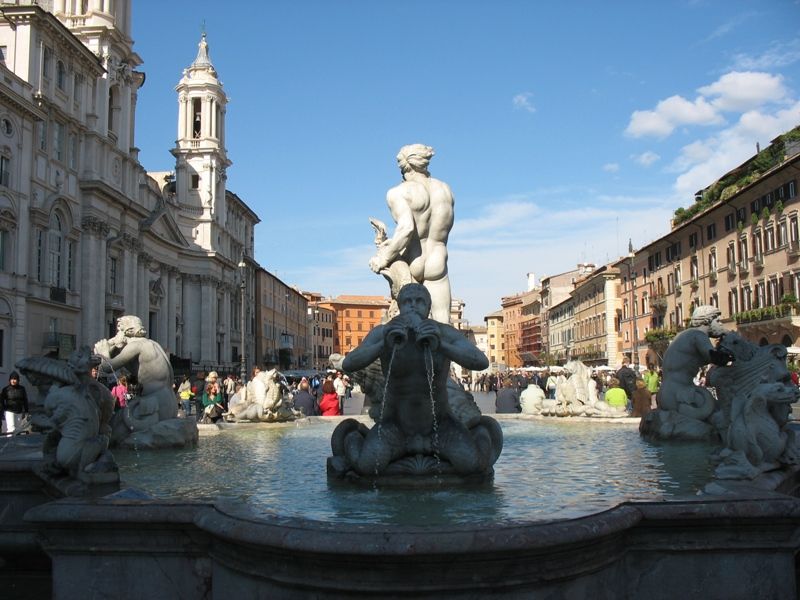
Your next stop is Piazza Navona, built on the site of the Stadium of Domitian. That single fact changes how you experience the square. Instead of seeing it as just a pretty Baroque hangout, you’re standing on ground that once had a very different purpose.
Today, Piazza Navona is one of Rome’s most elaborate Baroque squares, and the highlight is Bernini’s Fontana dei Quattro Fiumi (the Fountain of the Four Rivers). The fountain is famous, but it’s easy to skim it when you’re moving fast. On this tour, you’ll stop long enough to notice the idea behind it: the fountain represents major rivers and uses sculpture to bring political and geographic meaning into the visual language of art.
It’s also a nice place to catch your breath for a moment. By the time you reach Navona, you’ve already seen big icons, and you’re close to the tour’s end. The guide’s pacing here is important, because you want time to look without feeling rushed.
Campo de’ Fiori finish: market square energy and a heavy story
The tour ends at Campo de’ Fiori, known as the Field of Flowers and historically a medieval market site. This is a fun ending because the square often feels lively and social, but it also carries a serious layer of history.
In the center of Campo de’ Fiori, you’ll see a bronze statue of Giordano Bruno, a Dominican friar and philosopher who was burned at the stake for heresy in 1600. This isn’t a quick “sad fact and move on” moment. A thoughtful guide helps you hold both truths at once: the square’s daily-life atmosphere and the reason it became tied to public punishment.
It’s a good reminder that Rome’s beauty isn’t separate from its history. The city’s charm comes with weight. This stop gives you that context in a place where you can still feel present.
What you’re really paying for at $74 per person
At $74 per person for a 2-hour small-group walk, you’re paying for three things: a guided itinerary, the ability to see multiple top sights without planning, and someone to help you make sense of what you’re looking at.
If you’re the type of person who loves reading plaques, this might not feel “worth it” by itself. But if you’d rather have your questions answered while you’re standing in front of the thing, the guide value adds up fast. Reviews show strong consistency on that point, including guides who are patient with less-mobile groups and who tailor the walk to family interests. That kind of flexibility is hard to replicate when you self-tour.
Cost-wise, there’s one fair caution. One review called out that it felt costly compared with tours that include an entrance ticket. Since ticket inclusion isn’t clearly listed as part of the package, you should factor in that you might have to pay for any required site entry.
So here’s the honest value take: if you want a short, guided “greatest hits” walk with context, this price can make sense. If you want maximum included items for the lowest price, you’ll want to compare what other tours bundle besides the guide.
Guides, pace, and small-group benefits you’ll feel on the street
This tour’s reputation really centers on the guide experience. Multiple reviews praise friendliness, patience, and solid explanation. Names come up often: Felice is described as great and accommodating, and one review notes he helped arrange a cab back to a hotel when rain started right at the end. That’s not a standard tour skill, and it’s the kind of human detail that makes a trip feel taken care of.
Other reviews mention Federica as amazing, with lots of information delivered in a way that keeps older groups comfortable. Luisa is praised for mixing history with light, useful “chicche” that make the route easier to follow. Put simply: you’re not just getting facts. You’re getting a guide who helps you enjoy the route while holding the details together.
Pace matters on fountain-and-piazza tours because crowds can slow you down fast. Here, you’ll generally keep moving, but the best guides ensure you can still stop, look, and absorb without feeling herded.
Who should book this walking tour
You’ll likely love it if:
- you want a focused 2-hour walk with big-name sights
- you care about the story behind Baroque and Renaissance design
- you’re traveling with kids, mixed ages, or anyone who benefits from a guided pace
It might be less ideal if:
- you want long, slow time at a single site instead of multiple stops
- you’re trying to minimize guided-tour costs and maximize included entries
If you’re visiting Rome for the first time and want a high-impact taste of fountains and piazzas without a full day plan, this is a strong fit.
Should you book the Fountains and Squares of Rome 2-Hour Walking Tour?
I’d book it if you want maximum Rome-per-minute and you value a guide who can translate architecture into something you actually understand while you’re there. The route is tight, the stops are iconic, and the guide quality seems to be the real differentiator.
Before you hit reserve, check one thing in your planning: whether any site entry fees apply on your date. If there are additional costs, the $74 price may feel less like a deal. If not, it’s a smart way to cover the big fountain-and-square hits in a short window without turning your day into logistics.
FAQ
FAQ
How long is the Fountains and Squares of Rome walking tour?
It lasts 2 hours.
Where does the tour start?
You’ll meet your guide in front of the fountain in Piazza Barberini.
What’s included in the price?
The tour includes a live guide and a small group tour.
Is hotel pickup or drop-off included?
No, hotel pickup and drop-off are not included.
What languages are available?
The live guide offers English and Italian.
Do I get a refund if I need to cancel?
Yes. You can cancel up to 24 hours in advance for a full refund.