REVIEW · ROME
Rome: Ghostly Nighttime Walking Tour
Book on GetYourGuide →Operated by Carpe Diem Tours · Bookable on GetYourGuide
Rome looks different after sunset. This Rome ghostly nighttime walking tour takes you past familiar landmarks with stories about executions, murders, and infamous figures that made the city famous. I especially like the way it turns sightseeing into a moving lesson in dark Rome, and how the English-speaking guide keeps the mood fun without turning it into pure scary theater.
One thing to consider: this is more historical than supernatural. You’ll get chills from what Rome did, who ruled, and what happened, with the ghost vibe more like a storytelling lens than an actual paranormal investigation.
In This Review
- Key things I’d highlight before you go
- Rome’s After-Dark Side: A Ghost Walk That Feels Like Street History
- Meeting at Campo de’ Fiori: Where the Night Starts
- Stop-by-Stop: From Giordano Bruno to Castel Sant’Angelo
- Stop 1–2: Giordano Bruno Statue and a First Dose of Danger
- Stop 3: Piazza Farnese and the Art of Looking Careful
- Stop 4: Madonna della Pietà (Madonnelle) and Sacred vs. Sinister
- Stop 5: Ponte Sisto and the Bridge Stories You Can’t Forget
- Stop 6: Fountain of the Mask for the Quieter Creeps
- Stop 7: Chiesa di Santa Maria dell’Orazione e morte (Where Horror Meets Faith)
- Stop 8: Santa Maria in Monserrato degli Spagnoli and the Power of Walls
- Stop 9–10: Castel Sant’Angelo and the Night’s Final Act
- What Makes the Tour Work: Guides, Structure, and the “Good Chills”
- Price and Value: Is $28 Worth a Two-Hour Night?
- Who Should Book This (and Who Might Prefer Something Else)
- Practical Tips for a Comfortable Night Walk
- Should You Book This Rome Ghostly Night Walk?
- FAQ
- Where does the tour start?
- How long is the Rome ghostly nighttime walking tour?
- What is the price per person?
- Is the tour guided in English?
- What should I bring?
- Is there free cancellation?
Key things I’d highlight before you go
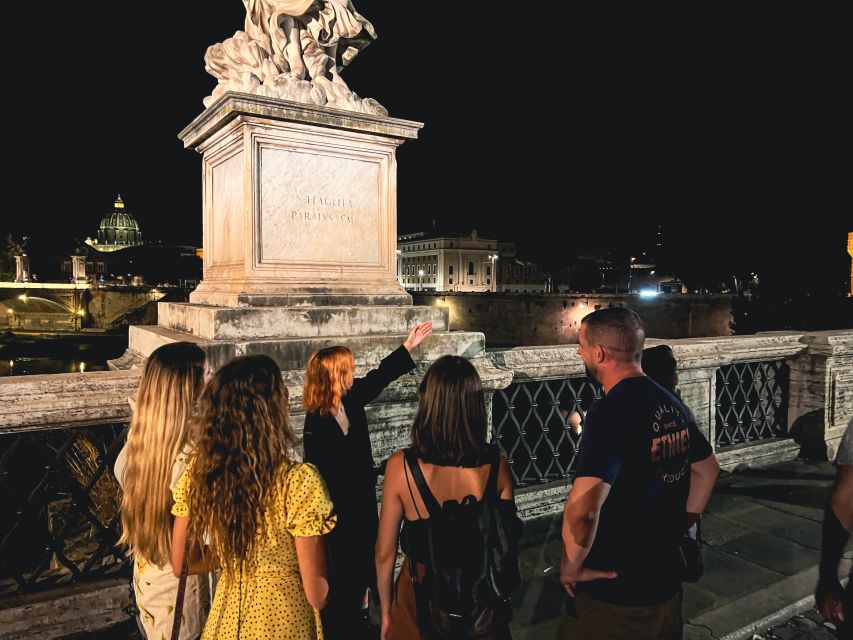
- Meet at Campo de’ Fiori at the Giordano Bruno statue, easy to find and very central
- See major sights after dark while the heat and crowds are lower
- Grim stories with strong context, including popes, emperors, and artists
- Short guided stops (about 15 minutes each) that keep energy up for a 2-hour walk
- Guides with real stage presence, often using props and strong interaction
- End at Castel Sant’Angelo, a fitting final stop for the night’s themes
Rome’s After-Dark Side: A Ghost Walk That Feels Like Street History
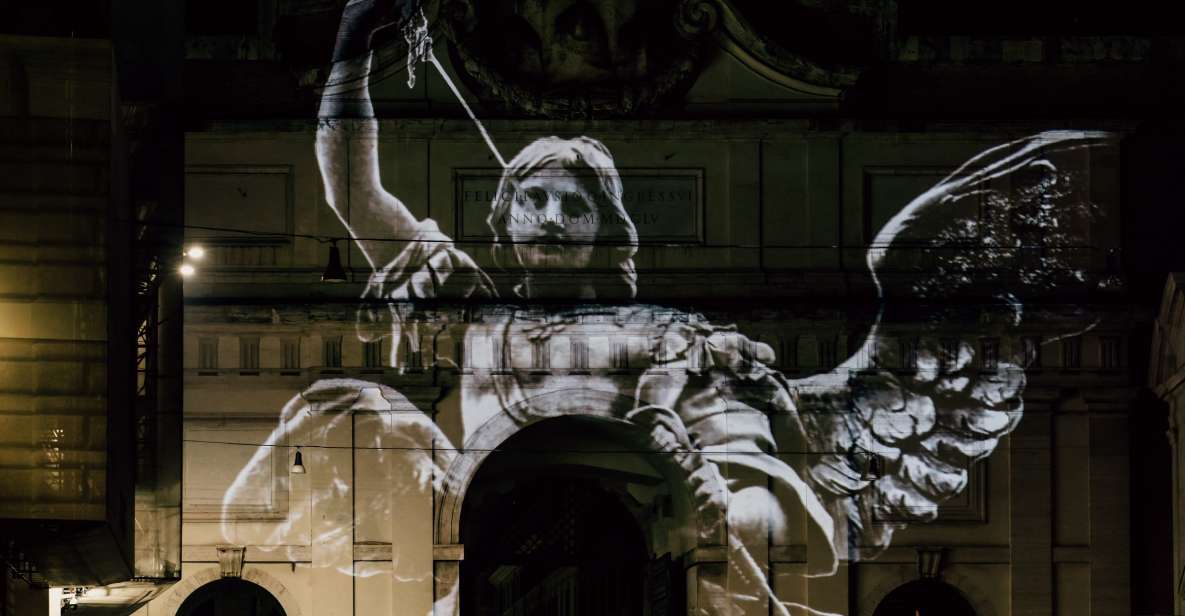
If your idea of Rome is sunny piazzas, this tour gives you a different operating system. You’re walking the same city fabric, but the guide frames it through fear, punishment, and the kind of power games that used to be settled with public spectacle. It’s the perfect contrast for a place that can otherwise feel like nonstop postcard photo ops.
I like that the tour doesn’t pretend it’s something it’s not. The strongest “ghost” parts come from human stories: notorious executions, macabre legends, and the eerie details Rome loves to keep tucked into plain sight. Reviews also emphasize how guides bring the streets to life with clear speaking and engaging storytelling—so you stay oriented even when the route gets darker and quieter.
The value part is what matters most for me. At $28 for about 2 hours with a live local guide, you’re paying for direction, context, and a night experience you can’t easily recreate on your own without a lot of homework.
You can also read our reviews of more walking tours in Rome

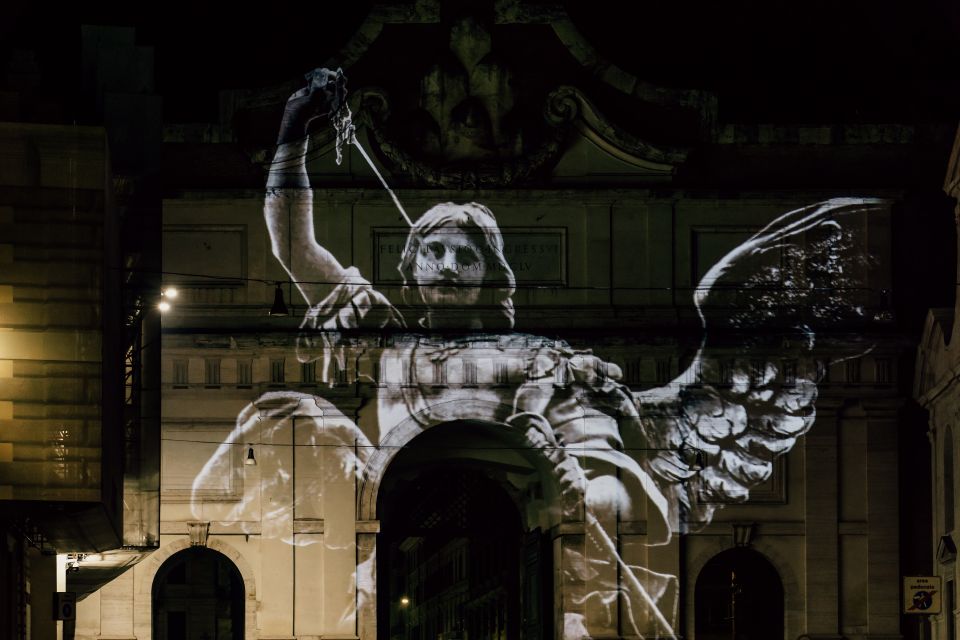
Meeting at Campo de’ Fiori: Where the Night Starts
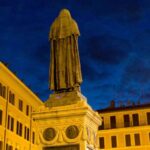
This tour’s start is intentionally simple. You meet your guide directly in front of the statue of Giordano Bruno in the center of Campo de’ Fiori, and they’ll be holding an iPad or a red sign. It’s one of those meeting points that makes you feel confident you didn’t miss a corner.
You should also know the walk is designed to be manageable. With a 2-hour duration and multiple short stops (each around 15 minutes), it’s not a long endurance slog. Still, it’s at night, so wear comfortable shoes and don’t rely on sandals you’d regret by stop three.
Language is English, and a private group option is available if you want a more controlled pace or a smaller circle for questions.
Stop-by-Stop: From Giordano Bruno to Castel Sant’Angelo
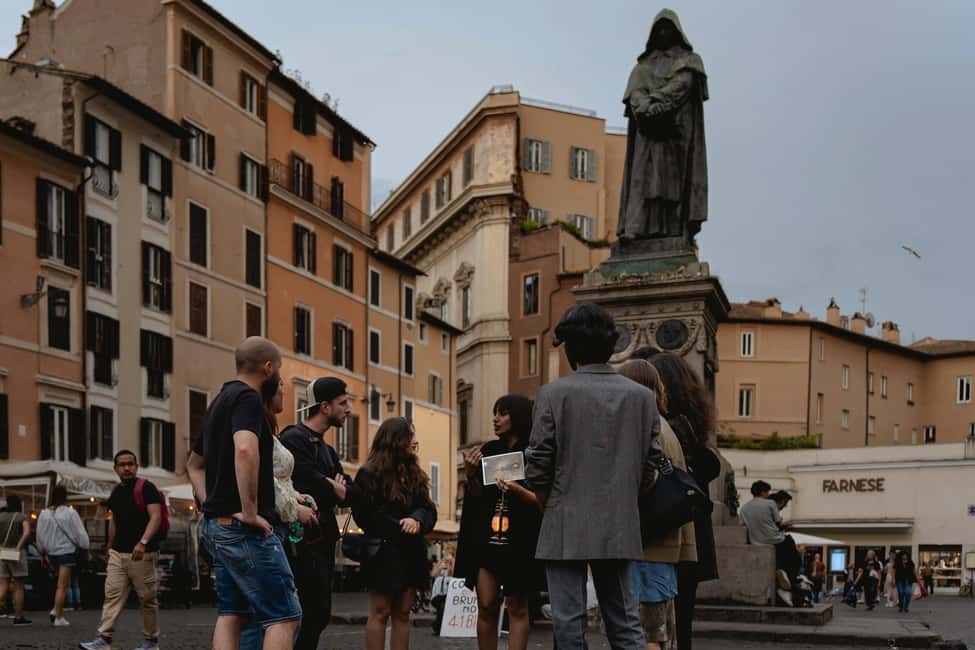
This route is built like a nighttime storybook. Each stop adds a new layer—figure, place, or scene—then moves you onward before the suspense (or your feet) can get too tired.
Stop 1–2: Giordano Bruno Statue and a First Dose of Danger
You begin at the Monumento a Giordano Bruno and then spend time at the Statua di Giordano Bruno for a guided introduction (about 15 minutes). This isn’t random. Bruno’s story signals the tour’s theme right away: Rome’s relationship with belief, punishment, and power was never gentle.
Expect the guide to set the tone—what the city was doing culturally and politically, and why certain people became targets. It’s also a smart warm-up. Before you hit darker bridges and churches, you get the “rules” of the evening’s narrative.
Potential drawback: If you’re hoping for pure chills from the first minute, the tone starts with history and context first. That pays off later, but you might feel it’s a slower start than a purely spooky tour.
Stop 3: Piazza Farnese and the Art of Looking Careful
Next is Piazza Farnese (about 15 minutes). This stop matters because piazzas aren’t just pretty open space in Rome—they’re stages. The guide connects architecture and public space to how people showed status, how power was displayed, and how danger could hide behind elegance.
Even if you’ve walked through Piazza Farnese in daylight, the nighttime framing changes your reading of it. I like that you’re learning how to “see” again, not just where to stand for photos.


Stop 4: Madonna della Pietà (Madonnelle) and Sacred vs. Sinister
You then visit Madonna della Pietà, Madonnelle (about 15 minutes). The name sounds soothing, and that’s the point. Rome’s small sacred markers—these Madonna images—sit alongside harsh realities, and the guide uses that contrast to shape the mood.
This is the part where the tour starts to feel like it’s playing with your expectations. You’ll look at religious imagery with a new question in mind: what did it mean to people living under threat?
Stop 5: Ponte Sisto and the Bridge Stories You Can’t Forget
Stop five is Ponte Sisto (about 15 minutes). Bridges are perfect for ghost stories because they’re transitional spaces—between neighborhoods, between eras, between safety and exposure.
In the tour’s dark narrative, you’ll hear the kind of grim bridge legend Rome is known for—linked to the broader reputation of bridges like Ponte Sant’Angelo. Even if your route uses Ponte Sisto as the physical stop, the guide connects the storytelling to those infamous bridge associations.
What to watch for: keep your phone tucked away if you’re distracted. The ground and lighting are real-world factors at night, and you’ll want to hear the story without tripping over your own curiosity.
Stop 6: Fountain of the Mask for the Quieter Creeps
Then comes the Fountain of the Mask (about 15 minutes). This stop is lighter in feel than some others, but it still fits the theme. Masks can mean identity, performance, secrecy—perfect for a tour about who hid what, who survived, and who didn’t.
This is also where I like the pacing. After heavier stops, the tour gives you a chance to absorb the mood without a nonstop barrage of gruesome details.
Stop 7: Chiesa di Santa Maria dell’Orazione e morte (Where Horror Meets Faith)
At Chiesa di Santa Maria dell’Orazione e morte, you get one of the most talked-about elements of the experience: scenes tied to death and human remains. The tour description specifically points to a chapel decorated with human bones, and this church stop is where that idea lands in a real, visible way.
Expect the guide to explain the symbolism—why something so unsettling existed in a religious context. If you’re the type who likes your scares explained, this is the stop you’ll remember.
Careful note: This part can be emotionally intense if you’re squeamish. You’ll still leave with context, but it’s not a gentle, spooky detour.
Stop 8: Santa Maria in Monserrato degli Spagnoli and the Power of Walls
Next is Santa Maria in Monserrato degli Spagnoli (about 15 minutes). Churches like this often feel like museums until a guide tells you what people did there, and why certain events made the walls “mean” something different.
This is where the stories broaden beyond one single incident. Expect mentions of infamous popes, emperors, and even artists, with the guide tying artistic legacy and political cruelty into the same web.
Stop 9–10: Castel Sant’Angelo and the Night’s Final Act
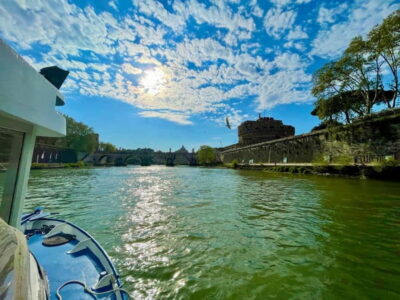
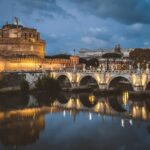
Finally, you reach Castel Sant’Angelo (about 15 minutes), and the tour ends back in the Castel Sant’Angelo area. It’s a strong closer: this is one of Rome’s most dramatic silhouettes, and it matches the tour’s themes of confinement, transformation, and fear.
If your brain is still buzzing after earlier stops, this ending gives it somewhere to land. The guide’s storytelling wraps up the night with the kind of resolution that makes the earlier scenes click into place.
What Makes the Tour Work: Guides, Structure, and the “Good Chills”
The biggest strength here is the human factor. The highest-rated reviews repeatedly praise guides for being engaging, clear, and energetic. Names that show up often include Maham, Dinara, Domenica, Sarah, Diletta, and Sara. Across these guides, the common thread is storytelling that stays understandable even when the subject matter gets dark.
I also like that the tour feels interactive. People talk, ask questions, and get answers in the moment. One reviewer even mentioned a guide bringing a book with pictures to support the stories, which is a smart technique here. If you’re visual, it helps you picture what’s being described instead of just hearing facts.
And yes, the “ghost” vibe is real—but it’s the kind that comes from how Rome remembers. The tour keeps you up late because you’re thinking about the city as a place where executions and power displays were once public entertainment.
Price and Value: Is $28 Worth a Two-Hour Night?
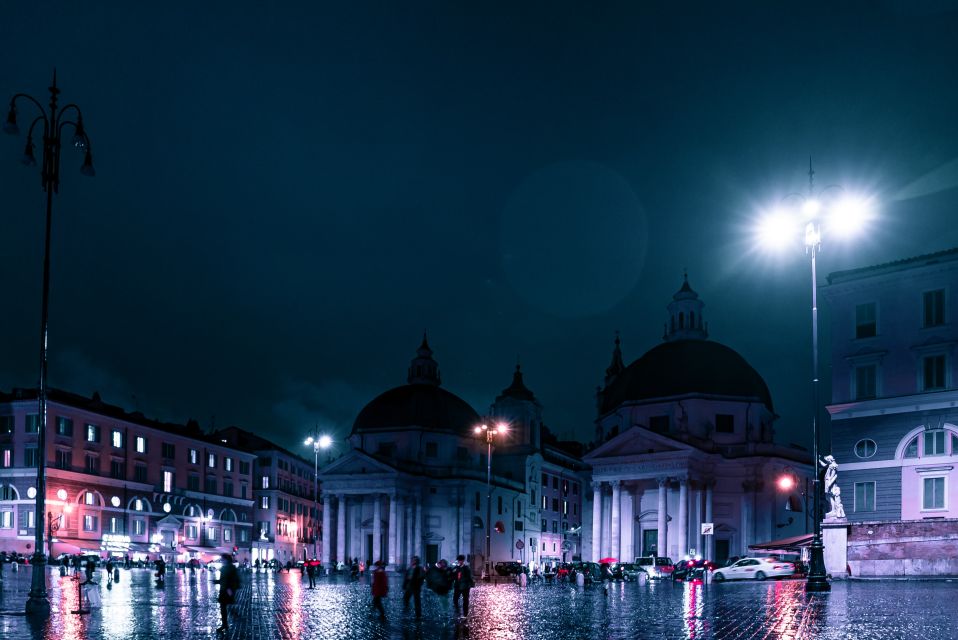
At $28 per person for a 2-hour guided walking tour, the value is solid—especially if it’s your first or second night in Rome. You’re buying three things: a route you might not choose on your own, a guide who explains why certain places matter, and the bonus of seeing Rome when it’s quieter.
If you’re trying to cut costs, walking tours are one of the best value categories in any city. But don’t think of this as a cheap snack tour. You’re paying for narrative structure—short stops, clear pacing, and the emotional payoff of a story told in the right places.
For me, the best “value signal” is the rating: 4.8 across 485 reviews. That’s not a guarantee, but it does suggest the experience is consistently delivered, not random.
Who Should Book This (and Who Might Prefer Something Else)
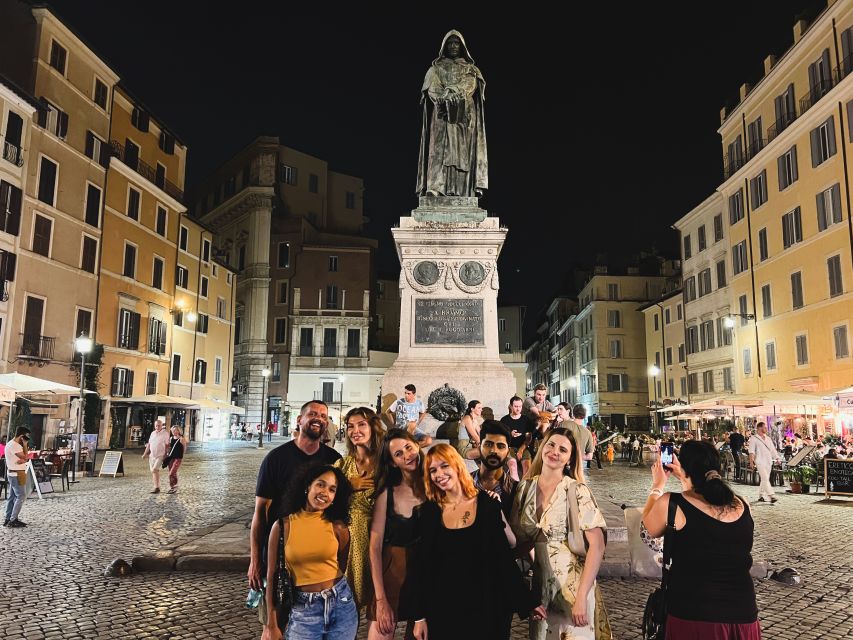
This tour is a great fit if you:
- like history with attitude instead of dry dates and timelines
- enjoy ghosty themes but want them grounded in real places
- want to see Rome at night with less heat and fewer crowds
- get a kick out of asking questions and hearing clear explanations in English
It might not be your best pick if you:
- want a purely paranormal experience with no heavy historical framing
- hate anything to do with death imagery or bones
- can’t handle walking at night on uneven streets
The tour description promises that after it, you won’t see Rome’s famous squares and bridges the same way again. That’s the right mindset here: go expecting a new lens, not a jump-scare show.
Practical Tips for a Comfortable Night Walk
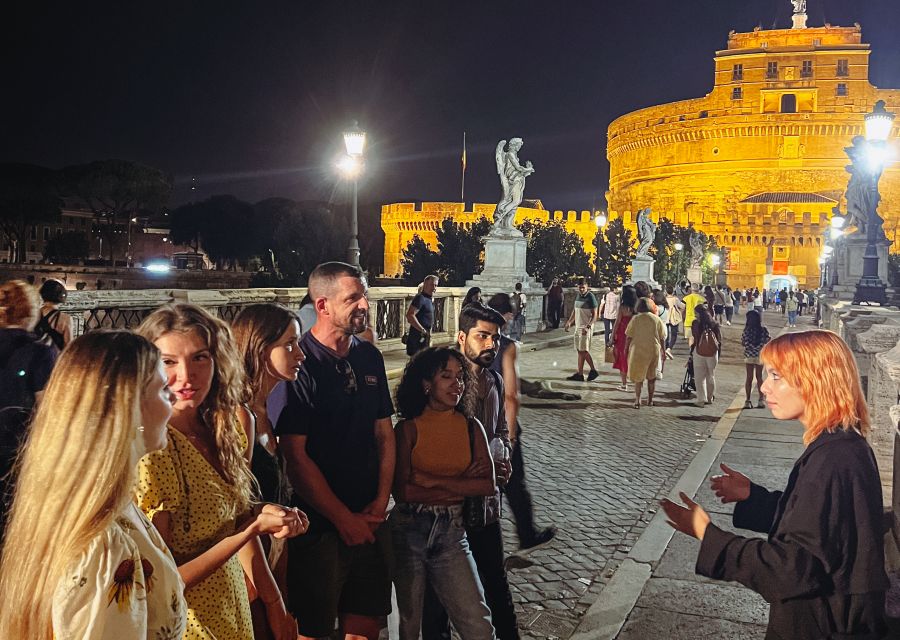
Rome’s sidewalks don’t care about your spooky mood. For this tour, keep it practical.
Wear comfortable shoes. Even if each stop is only around 15 minutes, the total time is still two hours of nighttime walking. If you plan to do dinner afterward, you’ll want your feet ready.
Bring a camera, but be mindful of nighttime lighting. Low light can make photos tricky, so consider focusing more on the moment and listening first, snapping a few key shots when the guide gives you a good view angle.
Finally, if you’re the type who loves recommendations, keep the questions coming. Reviews mention guides sharing tips for the local area and helpful food ideas—so use that energy.
Should You Book This Rome Ghostly Night Walk?
If you want a fun, well-paced, English-guided way to see Rome after dark, I’d book it. The combination of Campo de’ Fiori meeting point, a clear 2-hour structure, and the closing finale at Castel Sant’Angelo makes the night feel organized instead of chaotic.
I’d especially recommend it if you’re tired of only doing daytime highlights and you want your Rome experience to include the darker, stranger chapters. Just go in knowing the tour’s strongest power is storytelling grounded in real places, not theatrical paranormal gimmicks.
FAQ
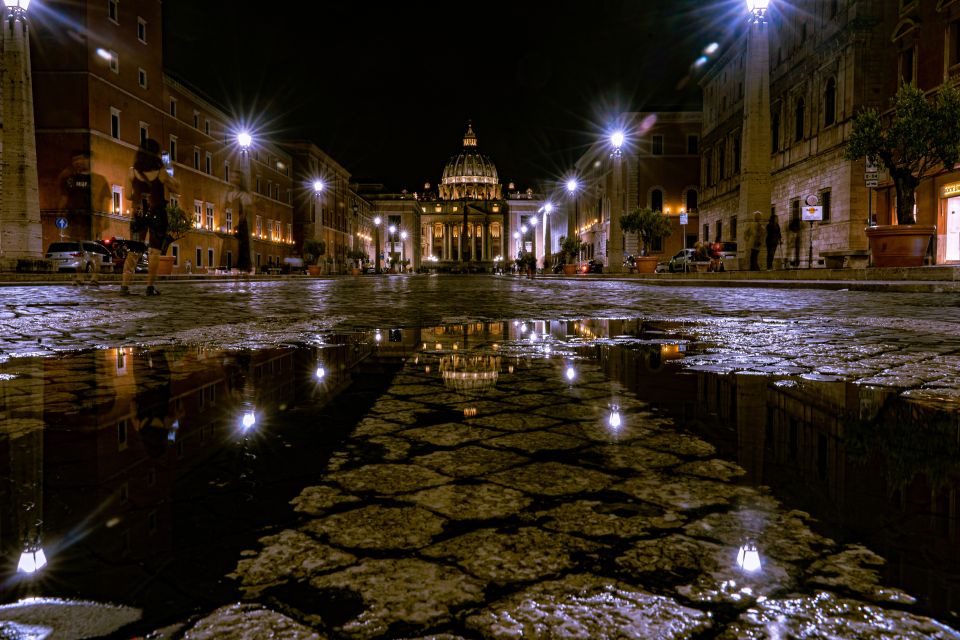
Where does the tour start?
You meet your guide directly in front of the statue of Giordano Bruno in the center of Campo de’ Fiori. The guide will be holding an iPad or a red sign.
How long is the Rome ghostly nighttime walking tour?
The duration is about 2 hours. Starting times vary, so you’ll need to check availability.
What is the price per person?
The price is $28 per person.
Is the tour guided in English?
Yes, it’s a live tour guided in English. Private groups are also available.
What should I bring?
Wear comfortable shoes for walking at night and bring a camera if you want photos.
Is there free cancellation?
Yes. You can cancel up to 24 hours in advance for a full refund.