REVIEW · ROME
Ostia Antica: Archaeological Guided Private Tour
Book on GetYourGuide →Operated by Blue Cat Tours · Bookable on GetYourGuide
Ostia Antica can feel like a real city, not rubble. This archaeological private tour uses an expert guide and professional graphic reconstructions to make Roman life understandable, even if you are not an archaeology person.
I especially like the way the walking route ties big monuments to everyday routines—main streets, homes, shops, and even public toilets. I also like that the tour targets the site’s headline stops, including the Capitolium, the Teatro di Ostia, and the forum area.
One consideration: in winter, mosaic floors are covered for preservation, so you may not see the Bath of Neptune mosaics the way they look in other seasons.
In This Review
- Key Highlights You’ll Actually Care About
- Why Ostia Antica Hits Harder With This Private Format
- Start With The Decumanus Maximus: The Main Street As Your Map
- Bath of Neptune Mosaics: Art You Can Read, Even From Fragments
- Capitolium And Forum Square: Where Romans Performed Civic Power
- Piazzale delle Corporazioni: Trade, Work, And A City That Ran On Commerce
- Teatro di Ostia: Entertainment That Belonged To Civic Life
- Insulae, Domus, And The Small Stuff That Makes Rome Feel Like Rome
- Price And Value: What $155.20 Buys You In Two Hours
- What You Get, What You Don’t (So You Can Plan Like A Pro)
- Timing, Pace, And The Reality Of A 2-Hour Walk
- Who Should Book This Ostia Antica Tour
- Should You Book Ostia Antica With This Private Guide?
- FAQ
- What is the duration of the Ostia Antica archaeological guided private tour?
- How much does the tour cost?
- Is it a private group tour?
- What are the main sights included?
- Is entry included in the price?
- Are food and drinks included?
- Is the tour wheelchair accessible?
- Will I see mosaic floors in winter?
- How do we find the guide at the start?
- Is free cancellation available?
Key Highlights You’ll Actually Care About
- Expert archaeological guide who can explain what you are looking at instead of just pointing
- Skip-the-line entry plus included tickets, so your time on site stays focused
- Capitolium and Forum Square for the religious and political heart of the colony
- Teatro di Ostia to connect Roman entertainment with daily civic life
- Roman daily-life stops like insulae, domus, thermopolium, and latrines
- Seasonal mosaic reality check if you visit in winter
Why Ostia Antica Hits Harder With This Private Format
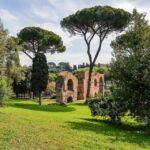
Ostia Antica sits right where the ancient Romans needed it: at the mouth of the River Tiber. It was the first Roman colony, founded in the seventh century BC, and it remains the biggest archaeological site on the planet. That scale is exactly why a private guided tour works so well here. You get someone who can sort the chaos into a story.
This tour is also built for clarity. You are not just shown a list of ruins. You walk a structured route along the Decumanus Maximus (the main street) and stop at places that explain how the city functioned. The guide uses professional graphic reconstructions, which helps you visualize what you are seeing. When the walls look “incomplete,” the reconstructions help bridge the gap.
The other win is the guide quality. Blue Cat Tours runs this experience, and recent groups praised Francesca for being prepared and accommodating—especially for mixed groups that include adults and children. That matters because Ostia Antica can be dry if the explanation is dry. A guide who adjusts their pace and focus makes the site feel alive, not like homework.
The tour lasts about 2 hours, so it is not a long slog. You get a strong snapshot of major areas without spending half the day walking across the entire park.
You can also read our reviews of more guided tours in Rome
Start With The Decumanus Maximus: The Main Street As Your Map
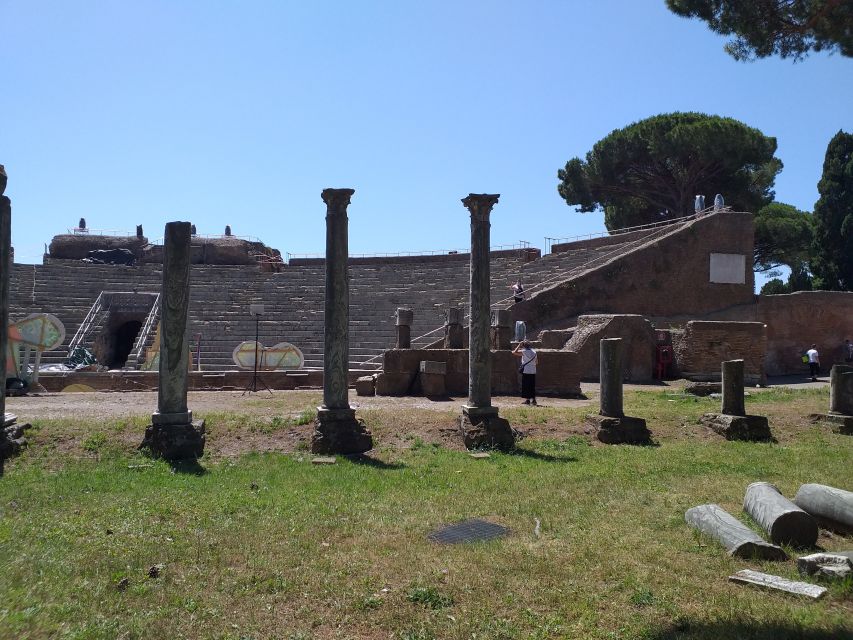
The tour route begins with the logic of a city. You’ll walk along the Decumanus Maximus, the central spine of Ostia Antica. This is a smart move because once you understand the main street, everything else becomes easier to place.
As you move through the route, you are guided to key zones where Roman daily life shows up in different forms. You will see how civic life, religion, entertainment, and shopping all lived close to one another. That is one of the reasons Ostia Antica feels more “real” than many other archaeological stops. It is a working city plan that you can follow with your feet.
A practical tip: wear shoes you trust. The experience is a walking tour, and you will be spending time moving between monuments, not sitting in a museum. Also bring a light layer if you go in shoulder seasons—ruins do not care about your plans.
Bath of Neptune Mosaics: Art You Can Read, Even From Fragments
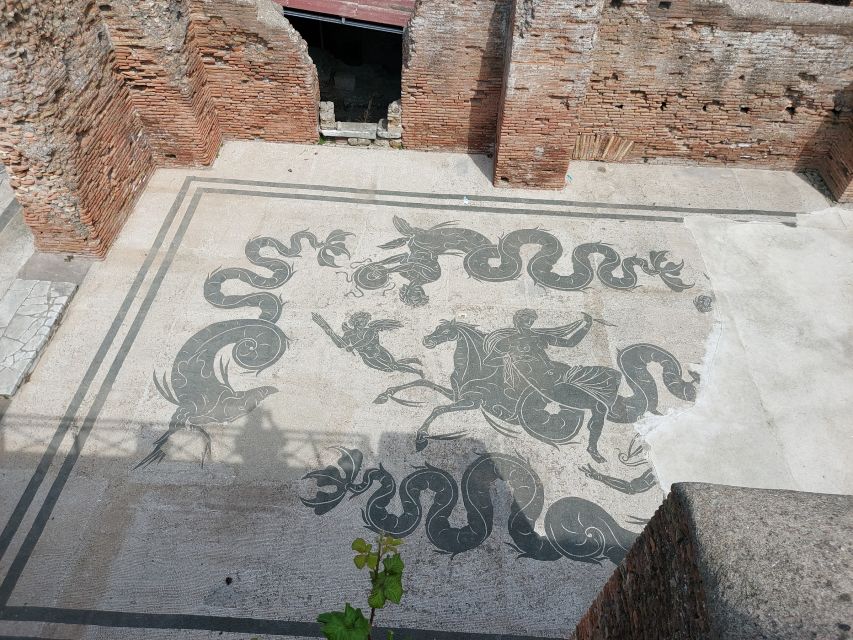
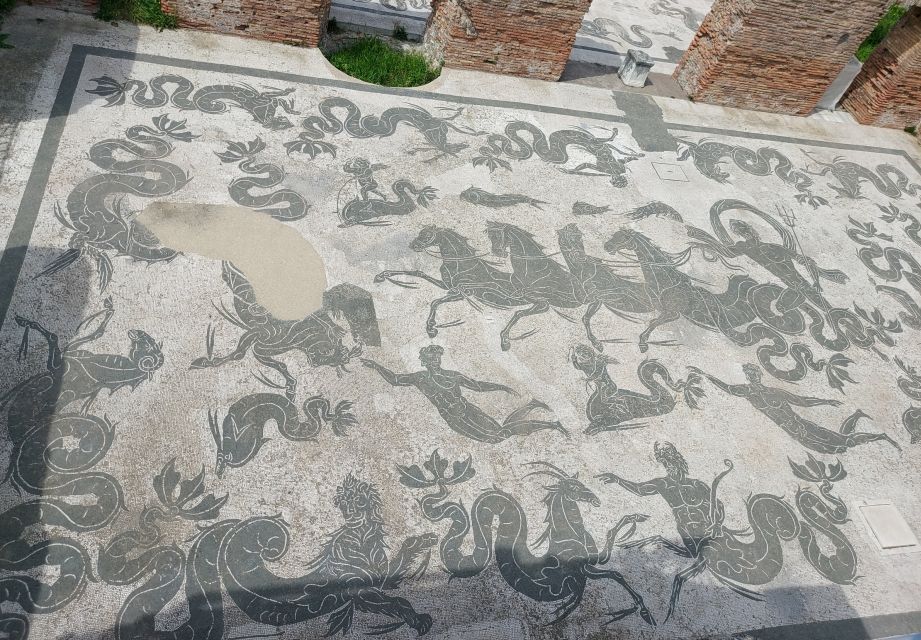
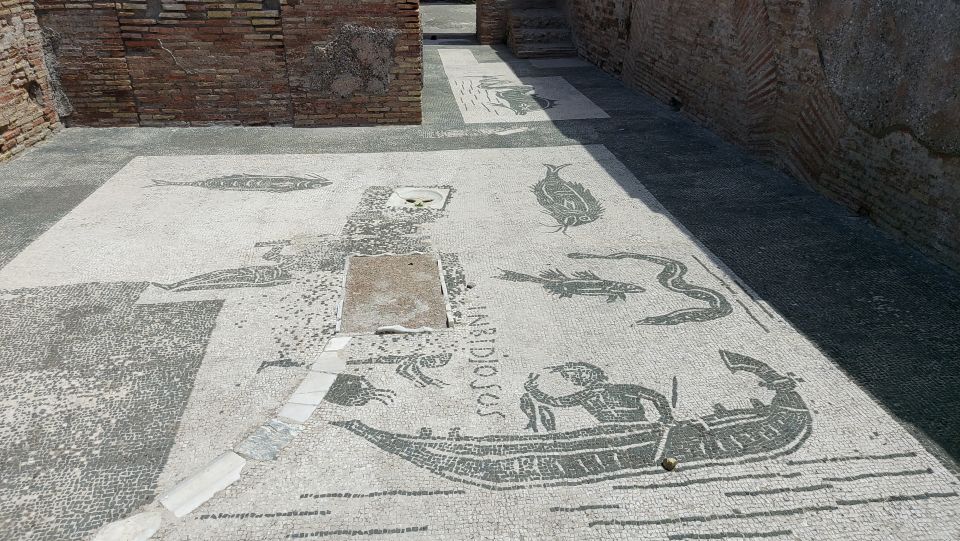
One of the stops along the main route is the Baths of Neptune, known for its mosaics. Even if you are not a mosaic expert, you can usually see what makes them special: the fine decoration and the sense that daily life included real beauty, not just function.
If you visit in winter, here is the big reality check. The mosaic floors are covered for preservation reasons, so they are not visible during winter visits. That means your “mosaic moment” may be more about the explanation than the visuals.
If you are traveling in warmer months, this stop is more visually rewarding because you can actually look for details. Either way, it is a good reminder that this tour is not only about sight-seeing—it is about understanding what you are seeing and why it mattered.
Capitolium And Forum Square: Where Romans Performed Civic Power
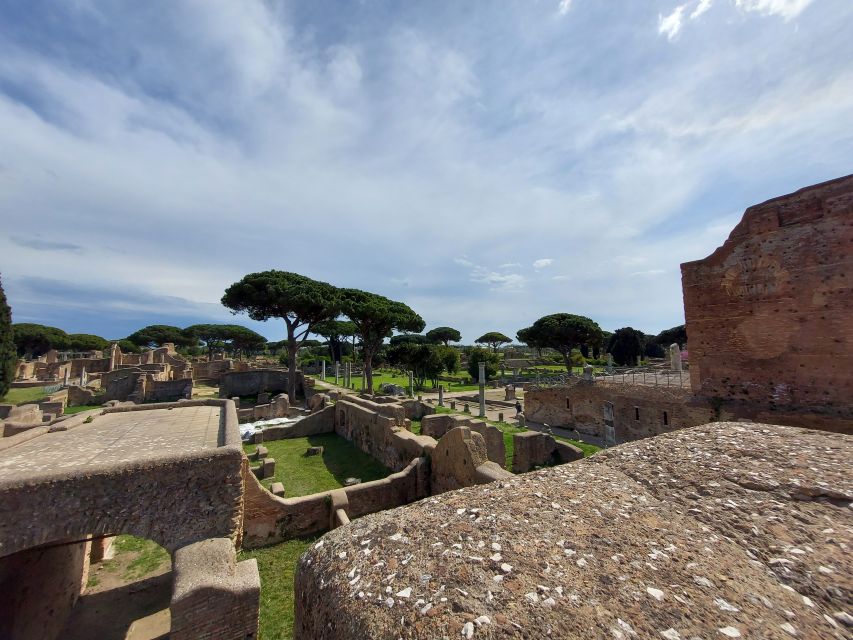
When the tour shifts to the Forum Square and the Capitolium, you get the city’s political and religious core in one area. The Capitolium is a major temple dedicated to three gods: Jupiter, Juno, and Minerva. That triad is a helpful anchor because it ties the architecture to the beliefs that shaped public life.
The Forum Square is where power got displayed. It is easy to think ruins are silent, but a good guide makes them sound. You start connecting the dots: why there were public gathering spaces, why ceremonies mattered, and how religion tied into governance.
Also, this is a stop that helps first-time Ostia visitors avoid the common trap of only seeing “old buildings.” Here, the tour makes the buildings feel like they had jobs. The Capitolium is not just impressive masonry—it signals the city’s identity.
Piazzale delle Corporazioni: Trade, Work, And A City That Ran On Commerce
Next up is the Piazzale delle Corporazioni, which gives you a different side of Roman life. If the Forum is about authority, this kind of space is about business.
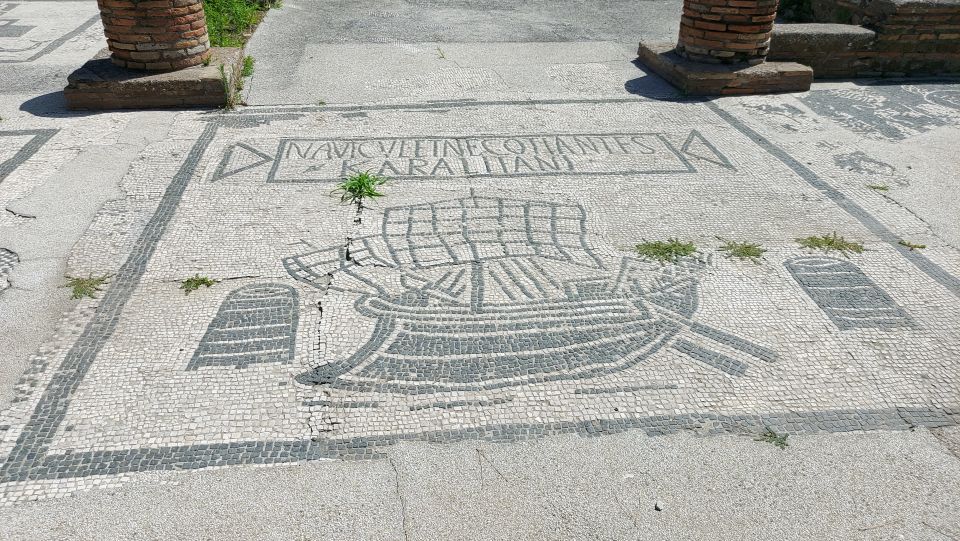
The name itself hints at the role of organized professions and commerce. When you stand there and listen, you start to understand the city as an economy, not just a monument collection. Ostia was a port city, and the tour’s framing helps you imagine the movement of goods and people that would have made daily life busier than a typical inland settlement.
Even if you only remember one theme from this area, remember this: Roman city planning blended worship, entertainment, and work close together. Ostia’s layout makes that practical truth easier to grasp.
You can also read our reviews of more private tours in Rome

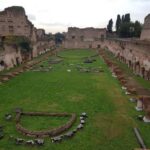


Teatro di Ostia: Entertainment That Belonged To Civic Life
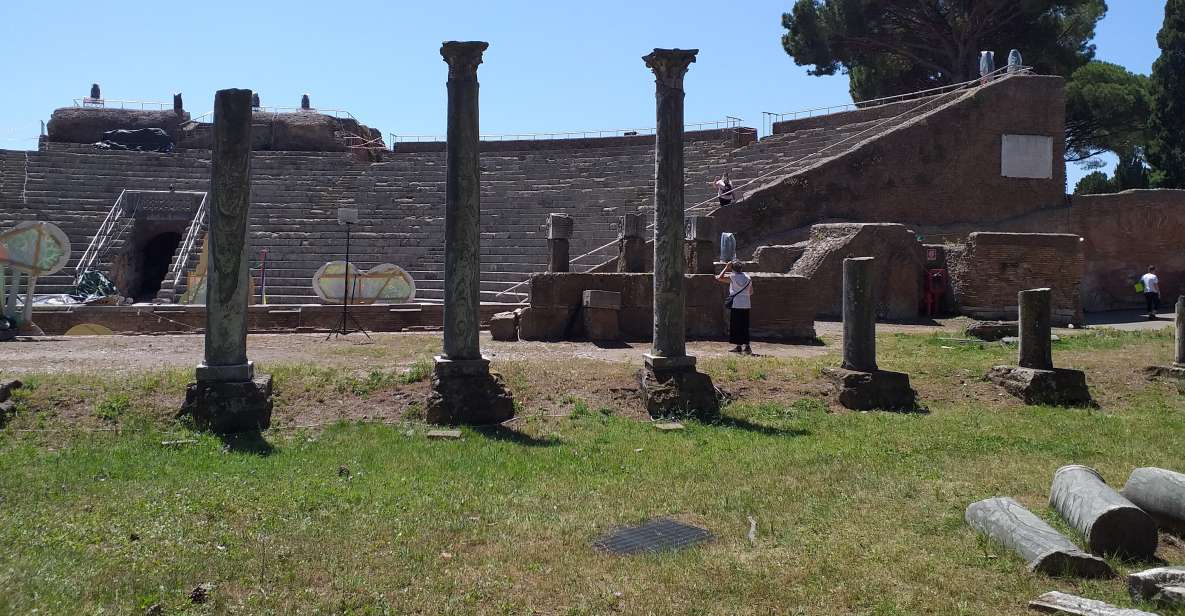
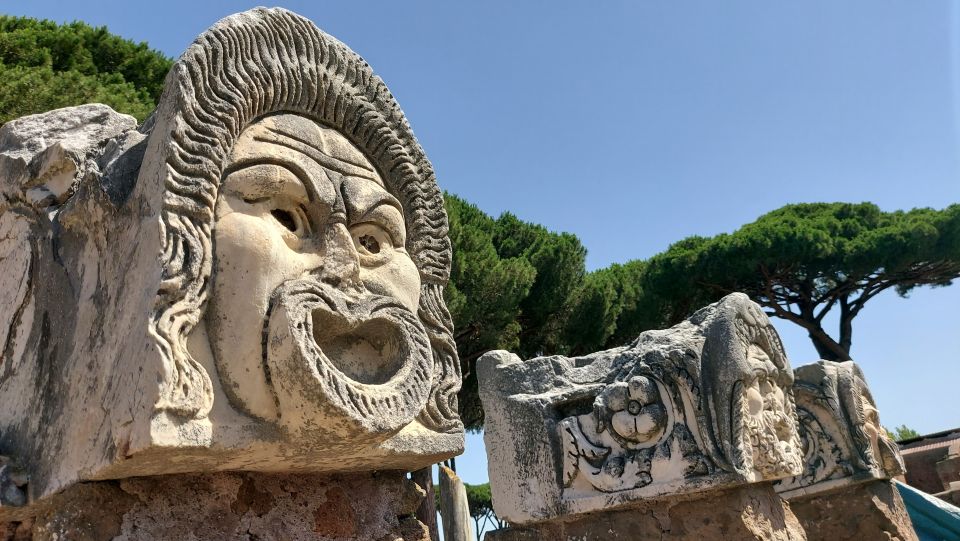
Then you reach the Teatro di Ostia. Roman theaters were not only about shows; they were tied to public identity and community rhythm. The tour points out details in a way that usually helps you “read” the structure, even when parts are missing.
What I like about including the theater is that it prevents the tour from becoming only about religion and daily routines. You get culture and public gathering too. It is also one of those places where the scale hits you faster—standing in the space helps you understand how people would have filled it.
For anyone who likes human-sized storytelling, this stop is a good payoff. You can picture an event because the form is still there. Even with ruins, the theater layout is easy to understand.
Insulae, Domus, And The Small Stuff That Makes Rome Feel Like Rome
This is where the tour earns its keep. You move beyond major monuments to explore insulae and domus—essentially the ancestors of apartment buildings and the homes of wealthier families.
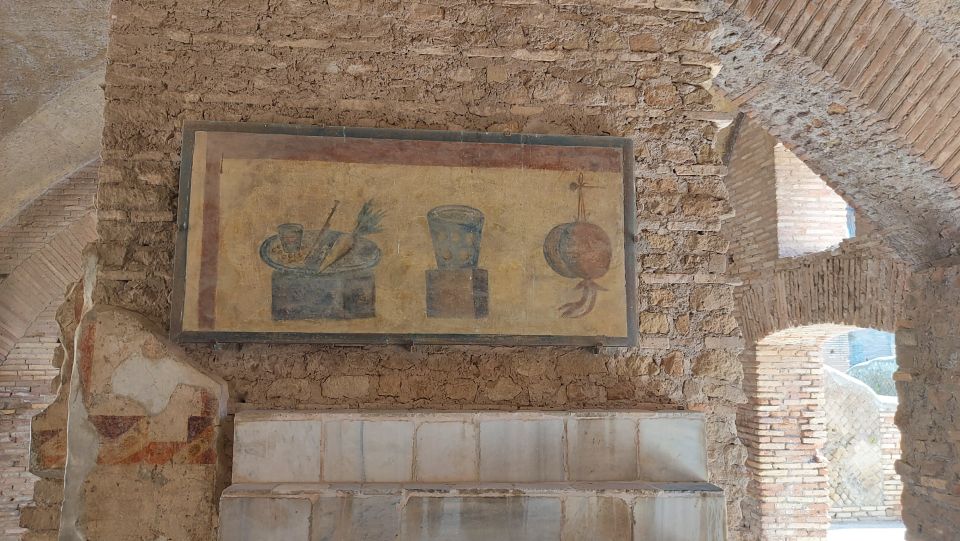
You will also be shown daily-life details through things like ancient shops and restaurants. The thermopolium is called out and compared to something modern: like fast-food service, but in Roman style. That comparison is surprisingly useful because it gives you a quick mental model. You start imagining the speed, the crowding, and the everyday convenience.
And yes—you will even learn about public toilets (the latrinae). This is one of those stops that sounds strange on paper and then becomes instantly memorable in person. It grounds the whole city in lived experience. Ancient people had hygiene routines, privacy rules (or lack of them), and shared infrastructure. When your guide explains how these spaces worked, the city feels less like a timeline and more like a place where real humans dealt with real needs.
The best part is that these stops turn the site into a set of clues. You learn to notice how function shaped architecture.
Price And Value: What $155.20 Buys You In Two Hours
At $155.20 per person for a 2-hour private guided tour, you are paying for a focused visit with included entry tickets and a private guide. That pricing can feel steep if you assume you are just buying access to ruins.
But the value shows up in a few ways:
- Entry tickets are included, so you do not need to add another cost later.
- Skip-the-ticket-line helps protect your time on site.
- The private format means the guide can keep the pace and explanation aligned with your group.
- The guide-driven reconstructions and interpretive stops make ruins easier to understand.
If you are traveling as a couple or small family, the private format often makes more sense. You can ask questions, adjust your walking speed, and keep the tour from turning into a rushed slideshow. If you are solo, the price may be harder to justify—unless you strongly prefer private guiding over group tours.
What You Get, What You Don’t (So You Can Plan Like A Pro)
This experience includes:
- Private guided tour
- Entry tickets
It does not include:
- Food and drinks
That last point matters because Ostia Antica is a walking site and you may want a plan for a snack afterward. If you are pairing this with other stops in Rome, it helps to time meals around your tour window.
You should also know the tour is wheelchair accessible. And it runs with a meet-up system where the guide has a sign with your name on it. It ends back at the meeting point, so you do not have to figure out a separate exit route.
Timing, Pace, And The Reality Of A 2-Hour Walk
The tour runs for about 2 hours, and starting times vary by availability. Two hours is long enough to hit the main monuments and everyday-life areas, but short enough to keep you from feeling lost or exhausted.
Because it is a walking tour, your biggest “logistics risk” is personal energy, not schedule chaos. Bring water when needed (even though drinks are not included), wear comfortable shoes, and keep expectations realistic for a historic archaeological park.
If you are traveling with kids, the private format can help a lot. The guide’s ability to tailor the tour to mixed interests was specifically praised, including by groups with adults and children.
Who Should Book This Ostia Antica Tour
This is a strong choice if you:
- Want expert guidance for a major archaeological site, not just self-guided wandering
- Appreciate Roman civic life details: temples, forums, theaters, and public infrastructure
- Like learning how ordinary life worked (insulae, shops, thermopolium-style eating, latrines)
- Prefer a private group pace you can adjust
It may be less ideal if:
- You only want the most photogenic mosaic views and are visiting in winter (mosaics are covered then)
- You want a longer, slower deep archaeological session with more stops
Should You Book Ostia Antica With This Private Guide?
I think this is a book-worthy tour if you want the site to make sense fast. The combination of a real archaeological guide, professional reconstructions, and a route that moves from main street to forum to theater to everyday life is exactly what helps Ostia Antica click.
Book it if you value interpretation over aimless walking. The guide quality is the standout—groups highlighted preparedness, helpfulness, and a knack for tailoring the experience, including for families. If you are visiting in winter, go with open expectations about mosaics. You can still get the story; just know the floors may be out of sight.
If you are the type who likes to understand how people lived—what they ate, where they met, how they organized space—this tour is one of the more efficient ways to get there in just two hours.
FAQ
What is the duration of the Ostia Antica archaeological guided private tour?
The tour lasts about 2 hours.
How much does the tour cost?
The price is $155.20 per person.
Is it a private group tour?
Yes, it is a private group tour.
What are the main sights included?
The highlights include the Parco Archeologico di Ostia Antica, Capitolium, Piazzale delle Corporazioni, and Teatro di Ostia.
Is entry included in the price?
Yes. Entry tickets are included.
Are food and drinks included?
No. Food and drinks are not included.
Is the tour wheelchair accessible?
Yes, the activity is wheelchair accessible.
Will I see mosaic floors in winter?
In the winter season, mosaic floors are covered for preservation reasons, so they are not visible during winter visits.
How do we find the guide at the start?
The guide will have a sign with your name on it.
Is free cancellation available?
Yes. Free cancellation is available up to 24 hours in advance for a full refund.