REVIEW · ROME
Rome: 1-Day City Highlights & Colosseum Private Guided Tour
Book on GetYourGuide →Operated by Tour in the City - Travel Agency Rome - · Bookable on GetYourGuide
Rome in six hours hits fast. This private day is built around major sights with just enough walking to make it feel personal, not rushed. You also get a skip-the-line style entry plan for the Colosseum area, which matters in a city where lines can be painfully random.
Two things I especially like: the nonstop “big-picture” route through Rome’s most famous squares and viewpoints, and the way the Colosseum time is handled with a dedicated professional guide. One heads-up: you finish at the Colosseum (hotel drop-off is not included), and the day includes a moderate amount of walking, plus strict bag rules inside the amphitheater.
If you want a smooth first visit to Rome with minimal guesswork, this format is a strong fit. Just come prepared for dress rules at places of worship and for packing light—Rome rewards good planning.
In This Review
- Key takeaways before you go
- The 6-hour Rome hit list: what this day is really for
- Pickup, private car, and how the timing works
- Spanish Steps and Trevi Fountain: the fast stops that set the tone
- Piazza Navona and the Pantheon: where art and engineering meet
- Tiber River, Ponte Sant’Angelo, and Janiculum Hill: the views that explain Rome
- Piazza Venezia, Hadrian’s Mausoleum, and the road toward the Colosseum
- Entering the Colosseum: reserved access and what to notice
- Roman Forum and Palatine Hill: emperor-level context without the guessing
- What to pack and wear so the day stays easy
- Price and value: is $621.08 per person worth it?
- Who should book this private Rome day and who shouldn’t
- Should you book this Rome private day tour?
- FAQ
- How long is the Rome highlights and Colosseum tour?
- Is hotel pickup included?
- Do I get a drop-off back at my hotel?
- Is the Colosseum skip-the-line?
- What sites are included besides the Colosseum?
- Is lunch included?
- What language options do you have?
- What ID do I need?
- What should I wear?
- Are selfie sticks and large bags allowed?
Key takeaways before you go
- Private pickup from your central Rome stay means less time figuring out logistics and more time seeing Rome.
- Morning sightseeing is mostly driver-led, while the guided focus (about 3 hours) is concentrated around the Colosseum and Roman Forum.
- Skip-the-line access is reserved, but you should still expect some security checks on certain days.
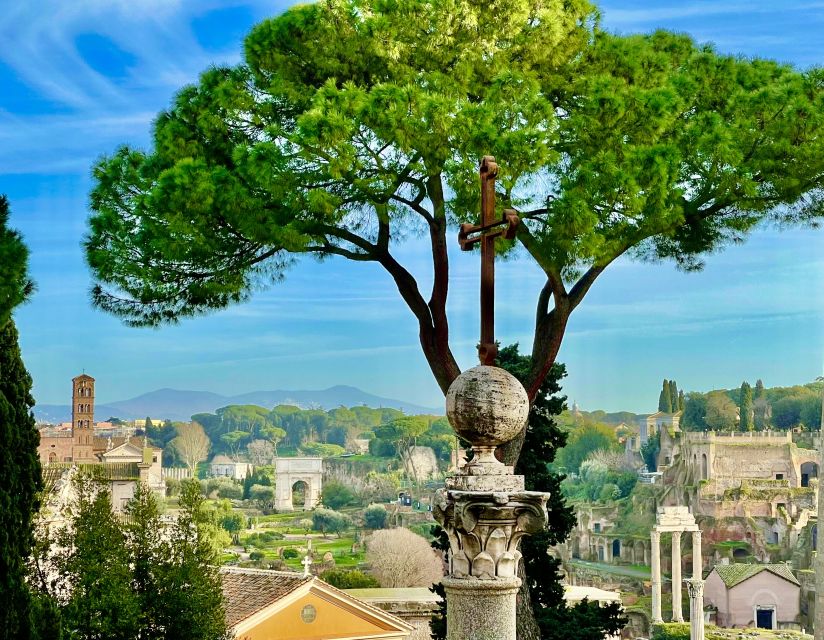
- You’ll get both icon views and ancient ruins: Janiculum Hill viewpoints plus Palatine Hill and Forum ruins.
- No hotel drop-off at the end—build a plan for your return when you’re done.
The 6-hour Rome hit list: what this day is really for
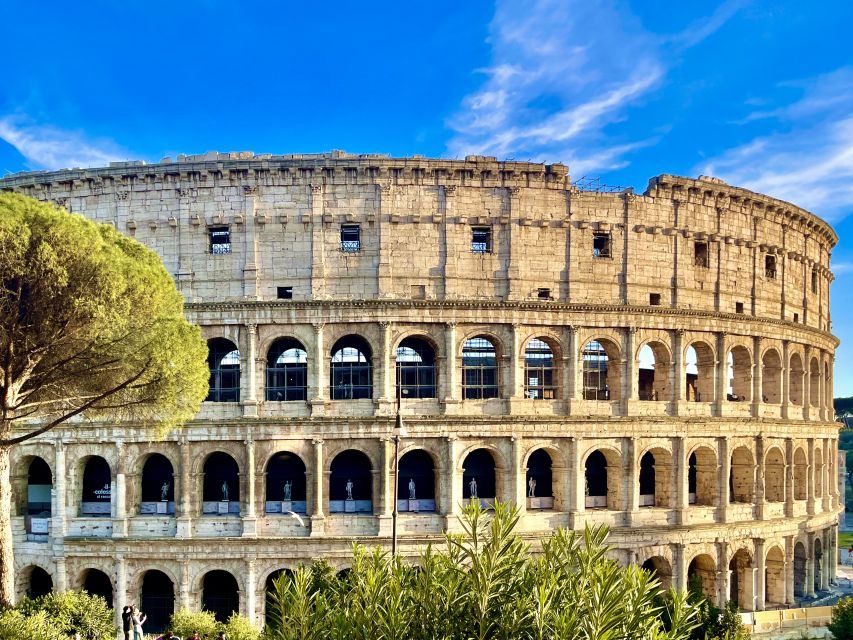
This tour is designed for a first-time Rome visit, especially if you want a “best-of” route without doing the math. The day runs about 6 hours, but the real payoff is the mix: grand landmarks in the morning, then the heavyweights—Colosseum, Roman Forum, Palatine Hill—in the afternoon portion.
You’re not just getting photos. You’re getting orientation. Places like the Pantheon, Piazza Navona, and Ponte Sant’Angelo help you understand Rome as a living city built on layers—ancient structures, Renaissance-era power, and modern neighborhoods all sharing the same streets.
The private format also changes the feel. With a small group (max 7), you’re not trapped at the pace of a busload, and it’s easier to ask your guide for meaning, not just locations. That’s where the day works best.
You can also read our reviews of more guided tours in Rome
Pickup, private car, and how the timing works
Your day starts with pickup from your accommodation in central Rome. The tour includes a private car and driver, plus permission to enter Rome’s city center and parking fees, so you’re less likely to lose time to traffic logistics.
One practical note: the Colosseum meeting point is listed as Via delle Terme di Tito, corner with Via Nicola Salvi. Since hotel drop-off isn’t included at the end, you’ll want to plan how you’ll get back from the finish point.
The schedule is designed for a morning sightseeing loop with stops, then a lunch break, then the Colosseum-focused guided portion. Lunch is not included, so you can choose something convenient near the route rather than forcing the day to match a set meal plan.
Also: the itinerary can adjust due to weather or other events. Rome is not always predictable, and this tour admits that reality. If you’re flexible with timing and willing to wear comfortable shoes, it runs smoothly.
Spanish Steps and Trevi Fountain: the fast stops that set the tone
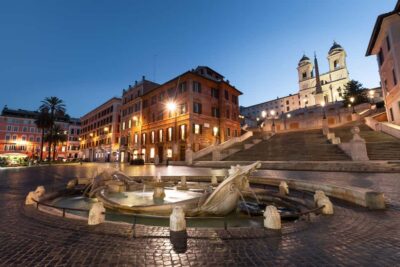
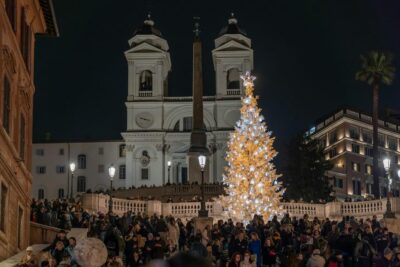
The morning starts with Roman “postcard” classics, but the private format helps you handle them like a local. The Spanish Steps are your first big orientation point—white travertine steps, strong views, and the sense that Rome’s center is all about drama in public spaces.
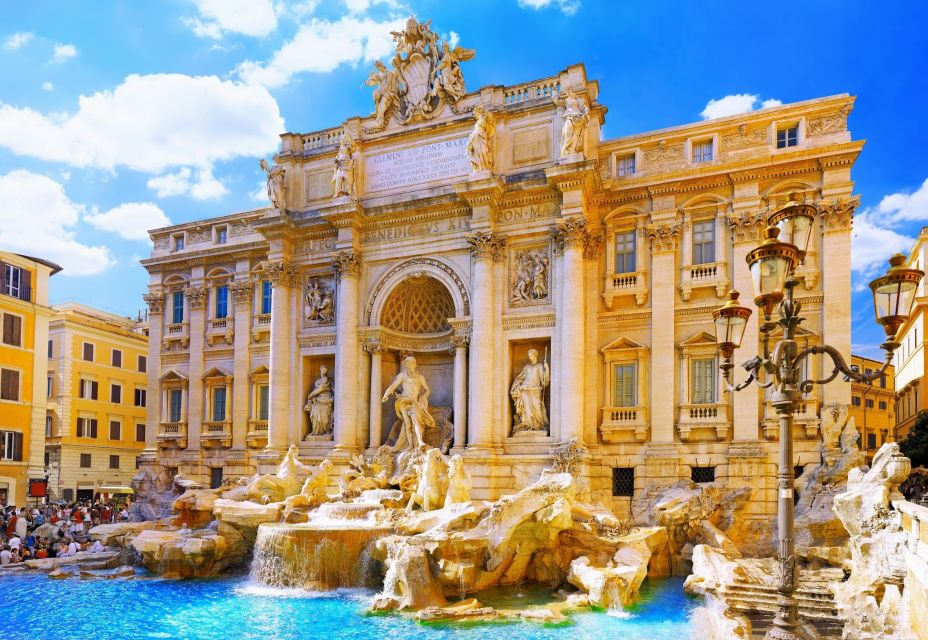
Then you head to Trevi Fountain, where the tradition of tossing a coin is part of the area’s long-running ritual. If you’ve only seen it from the street online, seeing it in person hits differently: the scale feels more intimate than expected, and the street noise makes it feel like a neighborhood landmark, not a museum piece.
Here’s the key value: these stops are short enough to avoid fatigue, but not so rushed that you miss the point. You get to clock the setting and move on, which helps when you later see ancient monuments that require a more focused mindset.
Piazza Navona and the Pantheon: where art and engineering meet
Next up is Piazza Navona, known for its Baroque layout and the Bernini-linked fountain centerpiece (Four Rivers). Even if you’re not a heavy art-history person, you can feel the planning. Rome loves an audience, and this square is shaped like a stage.
Then comes the Pantheon, and this stop carries real weight. It’s one of the best-preserved ancient temples still standing, and in its current use as a church, you experience how Rome keeps repurposing old power into new daily life. The dramatic feature here is the oculus—your eyes go up, even if your feet are tired.
Dress code matters for places of worship, and the tour flags that clearly: no shorts or sleeveless tops, and you’ll want knees and shoulders covered for both men and women. If you forget, you might still enter certain areas, but you could be forced to adjust quickly. Bring a light layer if you’re traveling in warm weather and plan to visit churches.
Tiber River, Ponte Sant’Angelo, and Janiculum Hill: the views that explain Rome
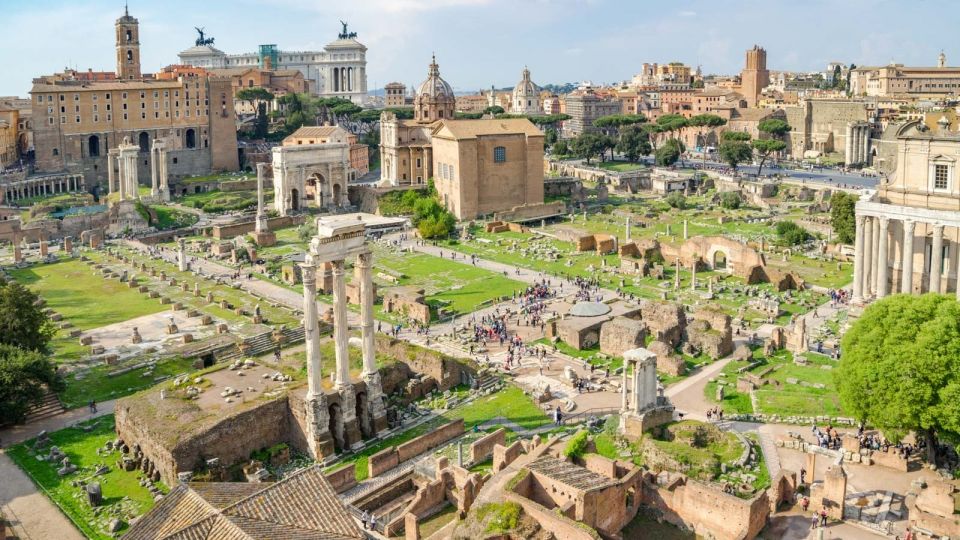
Some cities give you views. Rome gives you history with a view.
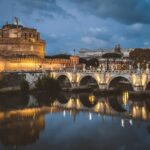
From the Tiber River area, you’ll get to see the city’s river spine and how bridges connect not just neighborhoods, but eras. Then you’ll pass Ponte Sant’Angelo, a famous crossing that frames Castel Sant’Angelo and the river stretch in a way that feels instantly cinematic.
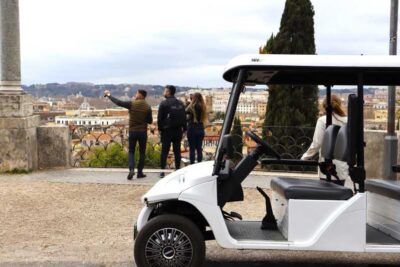
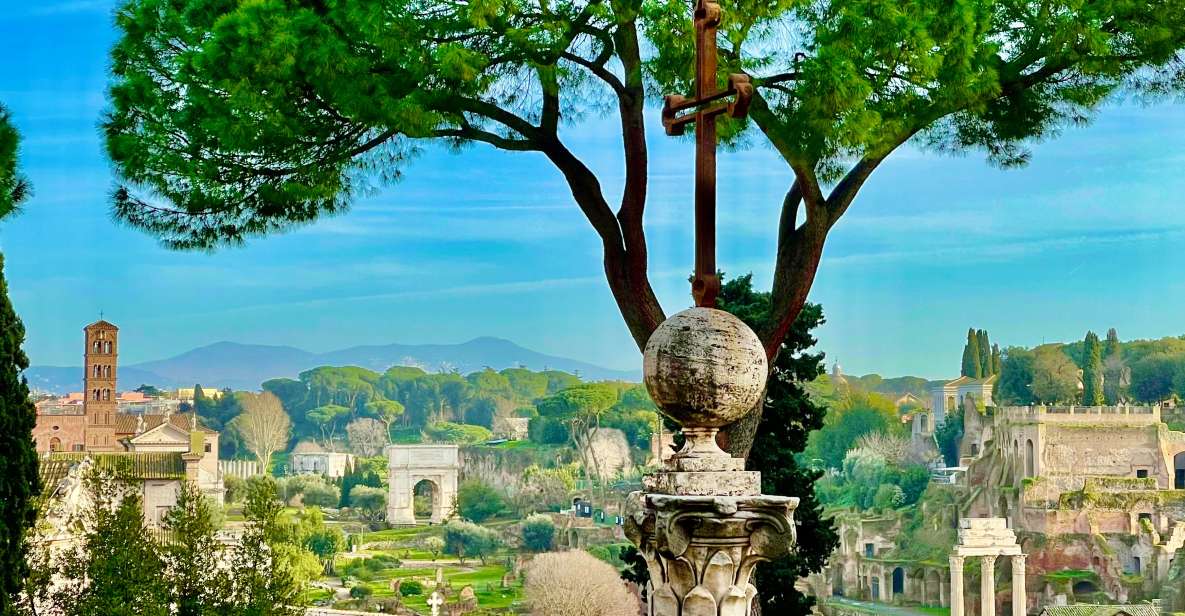
After that, the route climbs to Janiculum Hill. This is where the day makes sense. From up there, Rome reads like a diagram: the sprawl, the hill lines, and the reason ancient Rome could dominate what was once a strategic setting. The route also includes a look toward Circus Maximus from this vantage point. Even if you can’t see the full ancient structure clearly from your angle, you understand the scale of what once hosted chariot racing energy.
If you’re short on time, this viewpoint section is worth it. It’s the part that helps you mentally place the Colosseum and Forum later, instead of treating them like separate stops.
You can also read our reviews of more city tours in Rome


Piazza Venezia, Hadrian’s Mausoleum, and the road toward the Colosseum
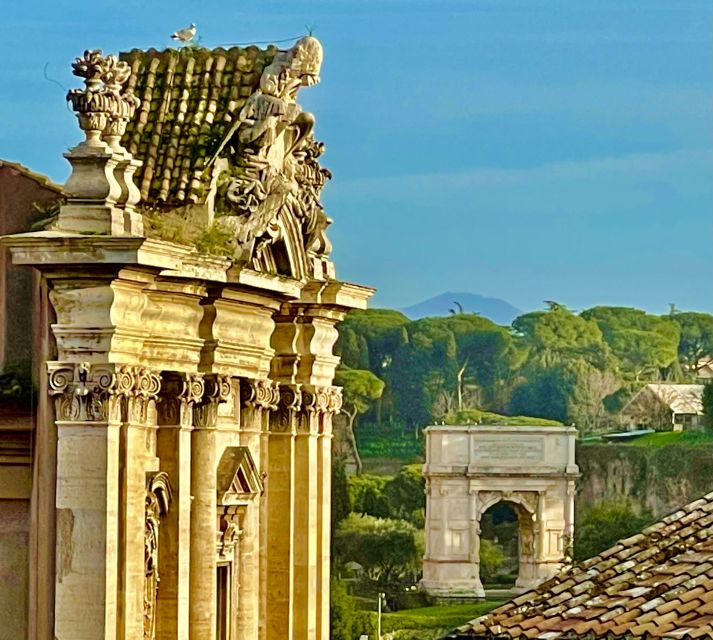
The tour continues toward Piazza Venezia, dominated by the Vittoriano monument often called the Wedding Cake. It’s modern in feel compared to the ancient stones around it, but that’s the point. It marks national identity in a city where every era wants its symbol.
You’ll also head toward Emperor Hadrian’s Mausoleum (Castel Sant’Angelo is closely linked in many itineraries). This area makes a nice transition from the river views into the mindset you need for ancient Rome’s most famous arena.
By the time you’re on your way toward the finish at the Colosseum, the day has already done something important: you’ve moved from squares to bridges to hills, so the Colosseum isn’t just a single attraction. It becomes the center of a wider world.
Entering the Colosseum: reserved access and what to notice
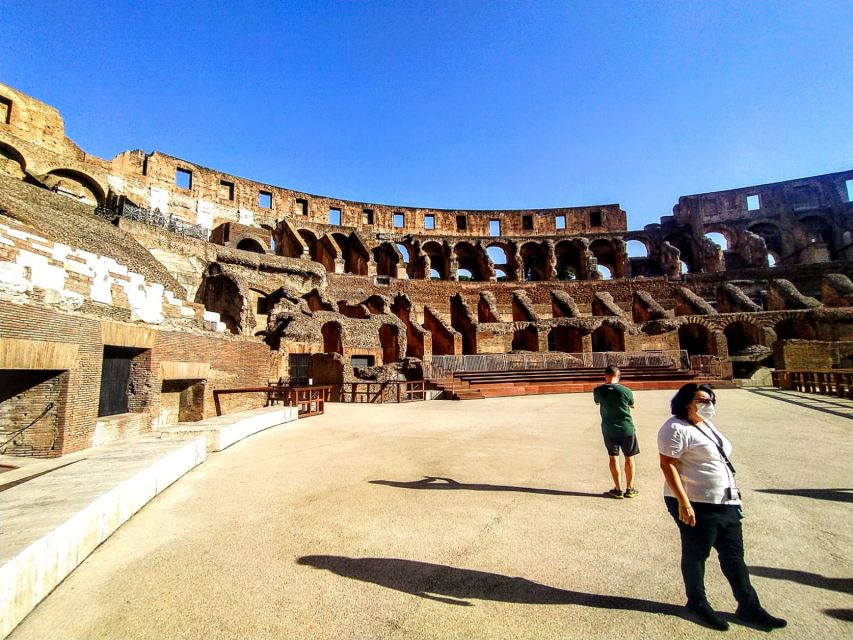
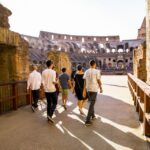
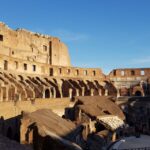
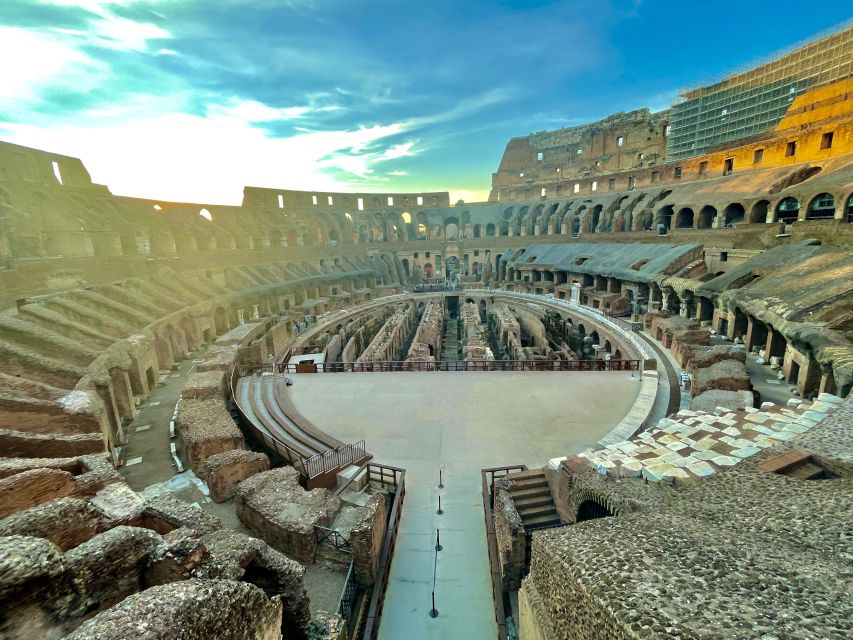
The Colosseum is where time feels different. This tour includes admission fees with privileged entrance and reservation service for skip-the-line access. That means you’re not playing the lottery with ticket windows and slow lines.
Still, plan for reality. The tour notes that on some days you may encounter a line due to security checks. So yes, you’re trying to avoid the worst of the queue, but you’re not guaranteed zero waiting.
Inside, the professional guide focuses on the big things your eyes might miss:
- how the Romans engineered the amphitheater
- what the space was designed to do
- the kind of spectacles gladiators and animals were associated with
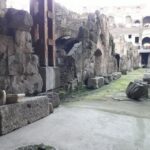
The value isn’t only the facts. It’s the way your guide helps you interpret what you’re standing in front of. When someone explains the layout and purpose, you start seeing the structure as a machine built for crowds—not just ancient stone.
Practical rule you must respect: the Colosseum has strict bag limits. You can’t bring large bags, backpacks, or suitcases. There’s no cloakroom service, so bring only a small bag you can carry easily. Also, selfie sticks are not allowed inside for security reasons, so leave them behind.
Roman Forum and Palatine Hill: emperor-level context without the guessing
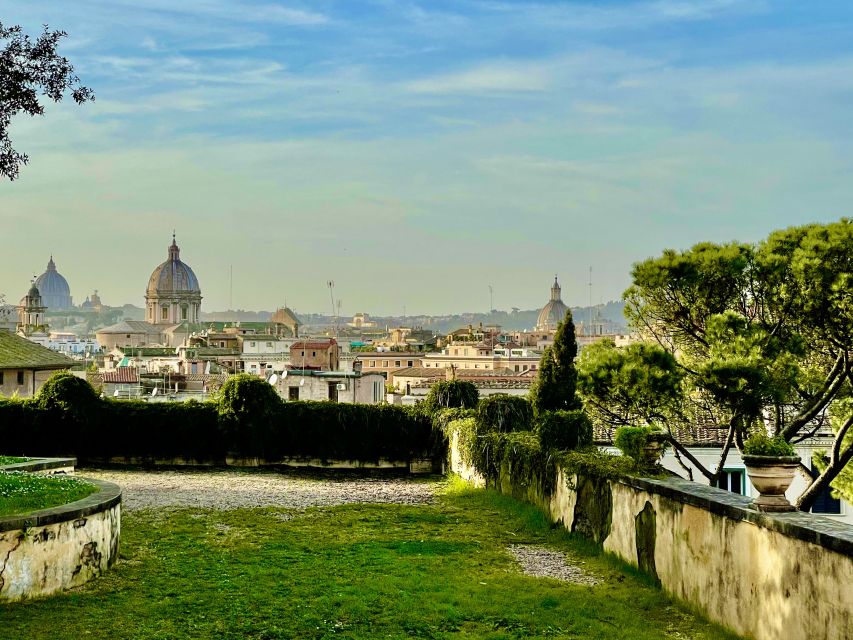
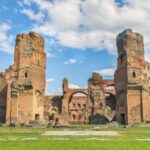
After the Colosseum, the guided portion expands into the Roman Forum and Palatine Hill area. This is where Rome’s “what happened here?” questions get answered with real location context.
Your guide time here is listed as about 3 hours professionally guided service for the Colosseum and Roman Forum, with access tied to the Colosseum reservations. Palatine Hill is included in the route via the archaeological area experience.
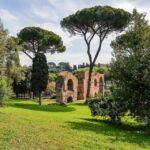
On Palatine Hill, the big payoff is the perspective. From elevated ground, you get commanding views over the Circus Maximus side and toward the Forum, which helps you understand why emperors liked this spot. It’s not just that it’s elevated. It’s that it reveals how power, politics, and public life were visually linked.
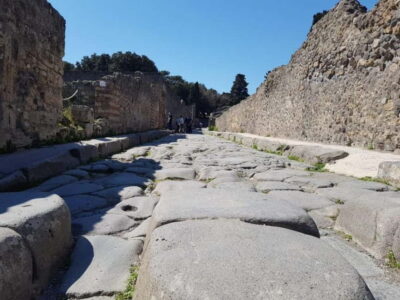
You’ll be walking among some of Rome’s most evocative ruins. The Forum is chaotic if you’re on your own; it’s a story when someone can point out what mattered and why. If you like your ancient sites explained in plain language, this is the part to watch closely.
If you happen to get a guide named Georgio, that’s a strong sign. The experience is better when your guide can translate Roman architecture into clear, human meaning without making it sound like a lecture.
What to pack and wear so the day stays easy
This is a walking-in-Rome day, but it’s not a hike. The tour calls for comfortable shoes and mentions a moderate walking amount. Still, your comfort will depend on your footwear, because you’ll be moving between multiple central stops and then spending real time in the archaeological area.
Pack light. The tour spells out restrictions that matter at the Colosseum:
- no large bags, backpacks, or suitcases
- no weapons or sharp objects
- no smoking
- no pets
- no selfie sticks
- no sprays/aerosols, and no glass objects
On the clothing side: places of worship require coverage, with no shorts or sleeveless tops. If you’re traveling in summer heat, bring a breathable layer that covers knees and shoulders so you can move from street stops to church interiors without panic.
For identification, you’ll want passport or ID card, because security checks require photo ID. Also, it’s smart to have your camera ready—some viewpoints (especially Janiculum Hill) are where photos actually explain what you’re seeing.
Price and value: is $621.08 per person worth it?
At $621.08 per person, this isn’t a bargain-basement sightseeing sprint. The value comes from the private setup and what’s bundled.
You’re paying for:
- hotel pickup by private driver in central Rome
- a private vehicle (air-conditioned by vehicle type)
- parking fees and permission to enter the city center
- a professional guide portion (including skip-the-line style access for Colosseum and Roman Forum)
- admission fees with privileged entrance
- insurance and taxes/fees included in the package
For two reasons, this price can make sense. First, private logistics in Rome can get messy fast if you’re doing it yourself, especially when timing matters for the Colosseum area. Second, Colosseum entry + guided context is the expensive part, and the tour tries to make that portion efficient with reserved access.
Is it worth it if you’re solo and don’t care about interpretation? Maybe not. But if you’re traveling as a pair or small group, want someone to handle the “where next” and explain the “why,” and you hate wasting time in lines, this starts looking like a fair way to buy peace of mind.
Also check the group size rule: there’s a minimum of 2 persons per booking and a maximum of 7, so the cost-per-person generally reflects a small-group private setup.
Who should book this private Rome day and who shouldn’t
This tour fits best if you:
- are seeing Rome for the first time and want a tight best-of route
- value guide interpretation for the Colosseum area
- prefer private pacing over big-group herding
- don’t want to plan logistics across many disconnected sites
It’s not a great fit if you:
- need wheelchair access or have mobility limitations (it’s listed as not suitable for wheelchair users and people with mobility impairments)
- hate rules about bags and security (Colosseum restrictions are strict)
- want the tour to end back at your hotel (drop-off at your hotel is not included)
If you’re the type who loves walking Rome streets but also loves having a plan, you’ll probably enjoy the flow.
Should you book this Rome private day tour?
I’d book it if you want an efficient, private introduction to Rome with the Colosseum handled in a professional, time-saving way. The combination of major squares, river bridges, a hill viewpoint, and then real ancient focus (Colosseum + Forum + Palatine Hill) makes it a practical “first hits” day.
Skip booking if you’re on a very tight budget, have mobility constraints, or can’t handle the bag and dress-code rules. Also skip if you’d rather wander freely without a guided Colosseum/Forum push.
If your goal is: see the landmarks, understand what you’re seeing, and keep the day calm, this private format is a smart choice.
FAQ
How long is the Rome highlights and Colosseum tour?
The total duration is 6 hours, and you’ll need to check availability for starting times.
Is hotel pickup included?
Yes. Pickup is included from your accommodation in central Rome (hotel, B&B, or apartment).
Do I get a drop-off back at my hotel?
No. The tour finishes at the Colosseo, and hotel drop-off is not included.
Is the Colosseum skip-the-line?
The tour includes privileged entrance and reservation service for skip-the-line entrance to the Colosseum, Roman Forum, and Palatine Hill, though security checks may still create a line on some days.
What sites are included besides the Colosseum?
The day includes stops for Spanish Steps, Trevi Fountain, Piazza Navona, Pantheon, Ponte Sant’Angelo, Janiculum Hill, Piazza Venezia, and viewpoints connected to Circus Maximus and Hadrian’s Mausoleum. The Colosseum area is followed by Roman Forum and Palatine Hill.
Is lunch included?
No. There is a lunch break, but food and drinks are not included, so you choose what to eat.
What language options do you have?
The live tour guide is listed in Spanish, English, French, German, Italian, and Russian. The sightseeing driver is English-speaking.
What ID do I need?
You should bring passport or ID card, since all visitors must have photo ID for security checks.
What should I wear?
For places of worship, dress code applies: no shorts or sleeveless tops, and you need to cover knees and shoulders.
Are selfie sticks and large bags allowed?
No selfie sticks inside the Colosseum. Large bags, backpacks, and suitcases aren’t allowed, and there’s no cloakroom—bring only a small bag you can carry.