REVIEW · ROME
Pompeii: Entry Ticket w/ Guide and Transfers or Audio Guide
Book on GetYourGuide →Operated by Show Me Italy · Bookable on GetYourGuide
Pompeii feels like a city frozen in time. With a guide or audio, you get a clear path through ruins that used to be busy streets, homes, and public life right before Vesuvius changed everything.
I especially like how this setup gets you into the Pompeii Archaeological Park with the right context, whether you’re following a person or using an audio track. I also like the option for round-trip transfers from Rome, so your day is less about logistics and more about walking, seeing, and understanding.
One drawback to plan around: this is not suitable for wheelchair users or people with mobility impairments, and the tour won’t wait for latecomers—so you’ll want to arrive on time and move at the pace of the site.
In This Review
- Key Things to Know Before You Go
- Pompeii in a Day: The Vesuvius “Time Capsule” Feeling
- Guided vs Audio: Getting More From the Forum and Villas
- Transfers From Rome: Why the Round-Trip Option Is Worth Considering
- Entering Pompeii Archaeological Park: How the Day Typically Flows
- Forum, Amphitheater, and Streets: Where Roman Life Played Out
- The House of the Vettii and Villa of the Mysteries: Art You Can Actually See
- Baths, Bakeries, and Shops: The Daily Rhythm Behind the Ruins
- Plaster Casts: Why This Stop Hits So Hard
- Timing and Walking Reality: 2 to 12 Hours Means Plan Differently
- Value Check: Entry + Guide/Audio + Transfers (If Selected)
- Who This Pompeii Option Fits Best
- Practical Rules That Can Affect Your Day
- Should You Book This Pompeii Entry Ticket With Guide and Transfers?
- FAQ
- What’s included with the Pompeii ticket option?
- Can I do Pompeii with an audio guide instead of a live guide?
- How long does the tour last?
- Do I have to arrange transportation from Rome?
- Will the tour run in bad weather?
- Is this experience wheelchair accessible?
Key Things to Know Before You Go
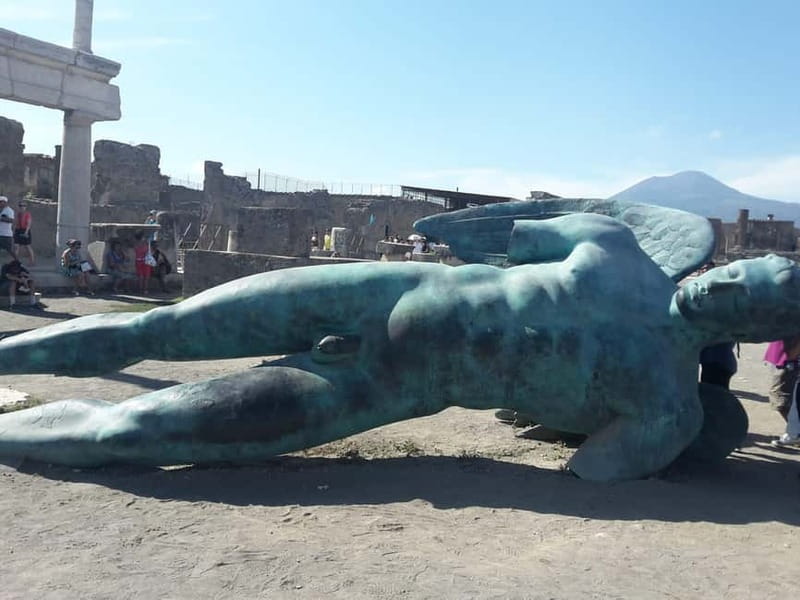
- Guide-style storytelling or self-paced audio for the same core Pompeii highlights
- Forum + amphitheater to understand politics and entertainment in Roman daily life
- House stops and art (like frescoes and mosaics in wealthy homes) that show how people lived
- Plaster casts that make the tragedy feel intensely personal
- Rain or shine operation, unless safety closures happen, so pack for the weather
- No large bags or oversize luggage, which keeps the day moving smoothly
Pompeii in a Day: The Vesuvius “Time Capsule” Feeling
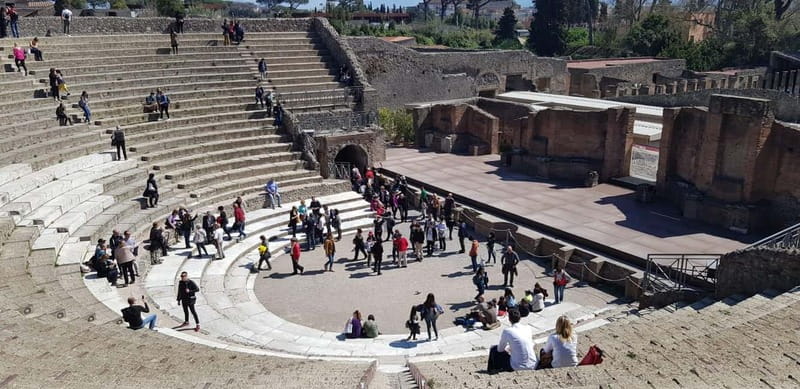
Pompeii is the kind of place where your brain keeps trying to fix the scene. One minute you’re looking at stone walls and street corners, and the next you’re imagining market chatter, dinner smells, and public announcements—then realizing it all ended abruptly. The big appeal here is that you’re not just looking at ruins. You’re walking through a city that was preserved so well it still teaches.
A guide or audio makes that lesson click faster. Instead of randomly spotting columns and arches, you’ll get the context for what you’re seeing: public buildings, home life, and the moments that led up to the eruption in 79 AD.
You can also read our reviews of more tours and experiences in Rome



Guided vs Audio: Getting More From the Forum and Villas
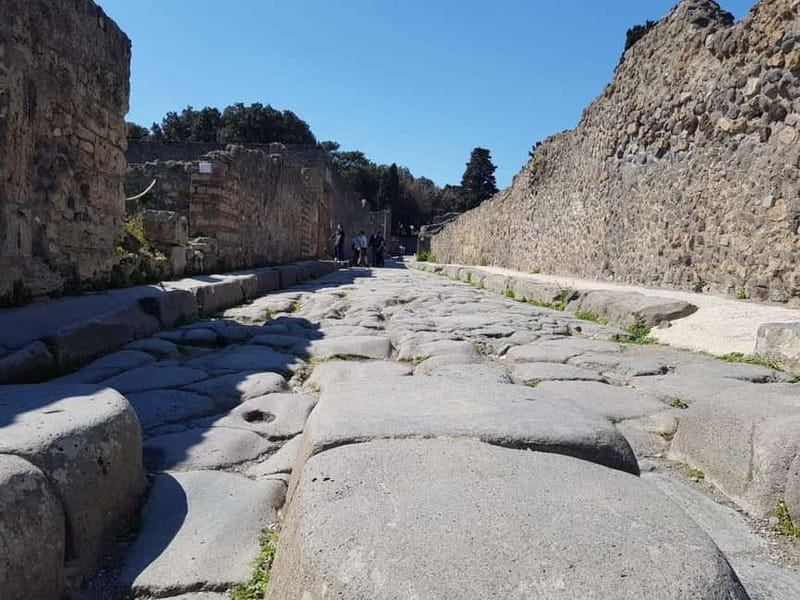
The experience comes in two flavors: a guided tour or an optional audio guide (English). If you like asking questions and getting explanations on the spot, the guide option usually gives you the smoothest path through Pompeii’s most important areas.
With a guide, you’re more likely to connect details you might otherwise miss: why the forum mattered, what the amphitheater was for, and how the homes reflected social class. The guide also adds historical background during the walk, so the site feels less like a checklist and more like a story.
If you’d rather go at your own pace, the audio guide is a solid option. You can linger where you care most—frescoes, mosaics, or the layout of certain streets—without keeping up with a group. The tradeoff is you’ll have fewer chances for live interpretation when you run into something that’s hard to read at ground level.
Transfers From Rome: Why the Round-Trip Option Is Worth Considering
You can tackle Pompeii two ways: make your own way there, or choose round-trip transportation from Rome (bus or train, depending on the option). I like the transfer option for one simple reason: it protects your energy. Pompeii already demands walking and attention. You don’t want to add extra stress at the start.
If you’re coming from Rome, the countryside route can be a pleasant buffer between city life and ancient ruins. Once you arrive, you’re ready to focus on the site instead of figuring out connections, finding platforms, and timing entry around your own pace.
Do note one timing reality: tours won’t wait for latecomers. That means transfers help you arrive, but you still need to be ready when the day’s schedule moves.
Entering Pompeii Archaeological Park: How the Day Typically Flows
After meeting at a location that can vary by booking option, your day runs back to the same meeting point. If you chose the transfer option, you’ll travel out from Rome, then arrive at the Pompeii Archaeological Park for your exploration.
From there, the structure is built around key landmarks and stops. Think: public spaces first (so the city makes sense), then homes and art (so you understand daily life), and finally the plaster casts (so the story lands emotionally). Even if you choose audio instead of a guide, the highlights still anchor your visit.
Languages depend on your booking and staffing. The host or greeter can be English, French, Spanish, or German, and the audio guide is in English.
Forum, Amphitheater, and Streets: Where Roman Life Played Out
The forum is described as the heart of political and social life, and that framing matters when you’re standing there. It’s where you’d expect announcements, civic events, and people gathering for public business. When you understand that function, the space stops looking like random stone blocks and starts looking like the center of a living routine.
Then you move to the amphitheater, where gladiators once fought. Even if you don’t know Roman spectacle details, you’ll recognize the emotional tone of the space: crowd energy, theater-like structure, and a sense of staged intensity. This stop is especially good for couples and families because it’s dramatic and easy to visualize.
Between the big stops, you’ll also see the kind of streets and structures that make Pompeii feel like a whole town, not just a museum floor. The daily-life elements—public buildings, shops, and community spaces—are the connective tissue that helps the place feel real.
You can also read our reviews of more guided tours in Rome





The House of the Vettii and Villa of the Mysteries: Art You Can Actually See
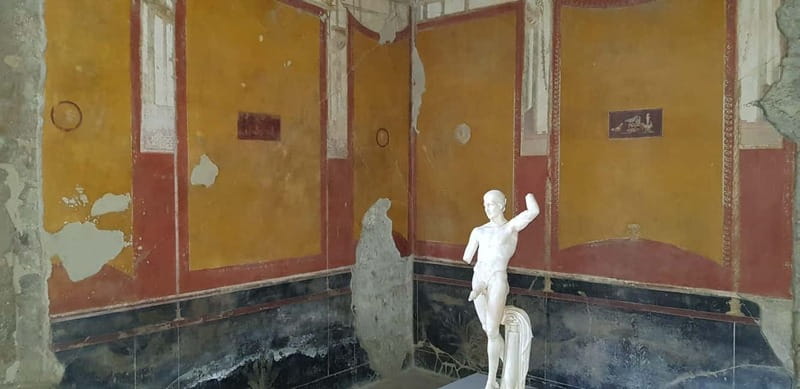
Pompeii’s wealthy homes are where you start to understand how personal Roman life could be. The tour includes stops tied to notable properties, including the House of the Vettii and the Villa of the Mysteries.
In these areas, look for frescoes and mosaics—not just as decoration, but as signals of taste and identity. These homes make it clear that Roman art wasn’t only for temples or elite collections. It was part of everyday living, displayed in rooms people used, walked through, and experienced daily.
If you’re traveling with kids, this is one of the best parts to keep them engaged. It’s easier to point at colorful wall paintings and explain daily life in a way that doesn’t rely on deep archaeology jargon.
Baths, Bakeries, and Shops: The Daily Rhythm Behind the Ruins
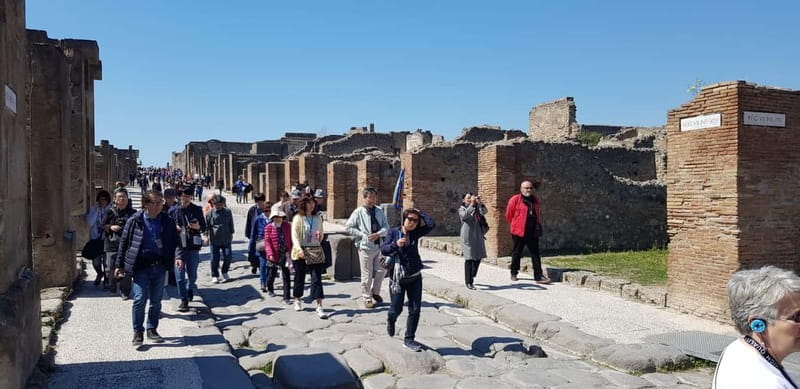
One of the reasons this day trip works well is that it doesn’t treat Pompeii like a pile of monuments. You’ll have time to explore areas connected to ordinary routine, including ancient baths, bakeries, and shops.
This is the part that turns ancient Rome from an abstract concept into a lived experience. Baths tell you about hygiene and social behavior. Bakeries hint at food systems and daily consumption. Shops show how commerce moved through neighborhoods.
And because the sites are preserved, you often get clearer spatial understanding than you would in a less intact ruin. You can picture where people would have queued, walked, and met friends—so the city feels less distant.
Plaster Casts: Why This Stop Hits So Hard
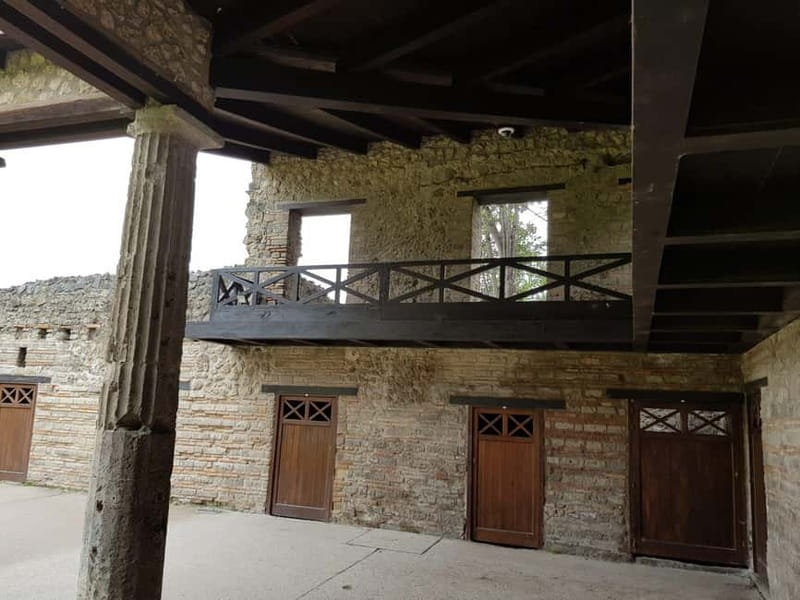
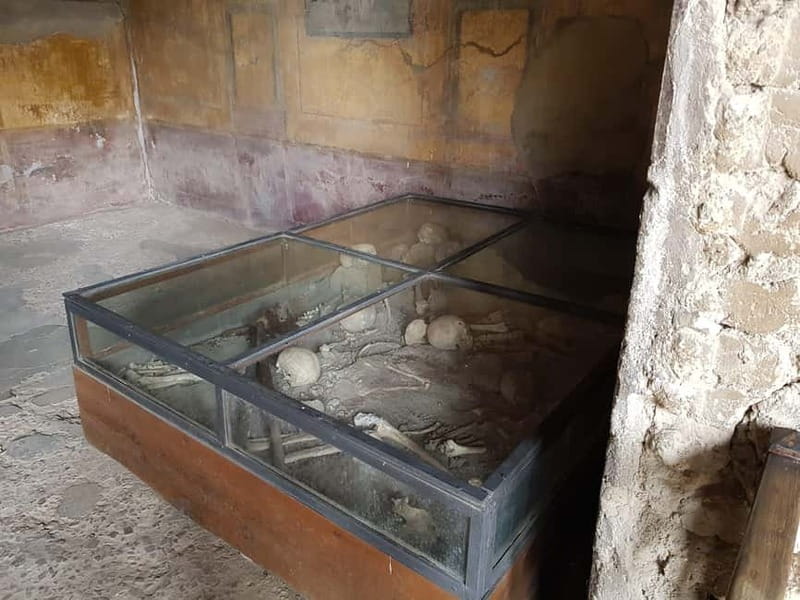
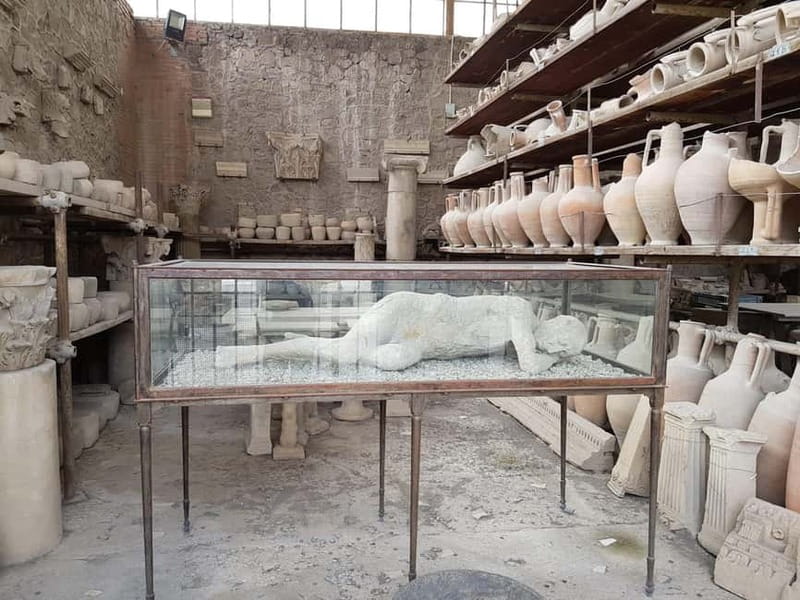
The plaster casts of Pompeii’s victims are included, and they are not a “quick look and move on” moment. This stop is what makes the day feel human, not just educational. The shape of each cast gives you a body-language awareness you won’t get from textbooks.
If you want your day trip to have emotional weight (without being chaotic), the cast area does that job. It’s also a strong reminder of what the eruption meant for real people, right down to their final moments.
Plan for it mentally: if you’re sensitive to tragedy, give yourself a few extra seconds to process. It’s easy to rush here because you’re excited about everything else. Resist that urge.
Timing and Walking Reality: 2 to 12 Hours Means Plan Differently
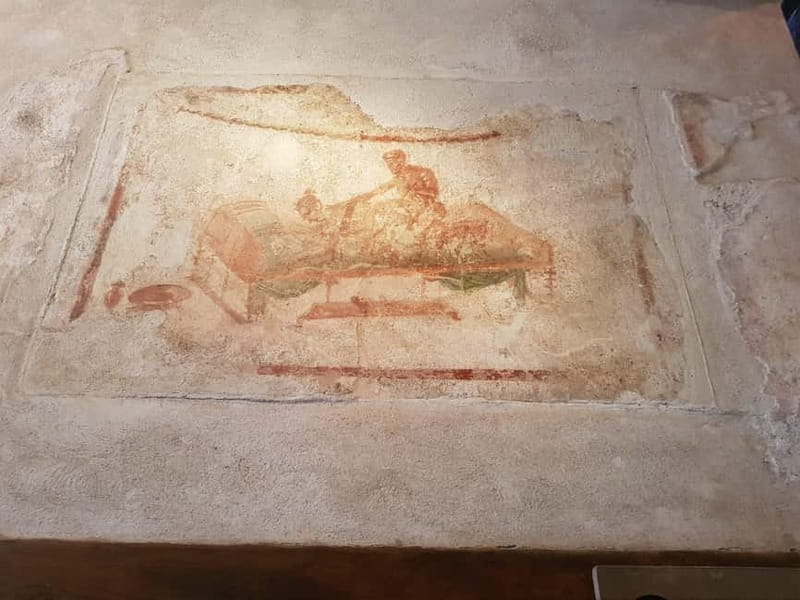
The duration is listed as 2 to 12 hours, depending on your selected option and starting time. That wide range matters because Pompeii can feel “endlessly big” if you don’t control your pace.
If you’re choosing the guided route, expect a structure that keeps you moving between key areas. If you’re choosing audio, you can extend your time in the spots you care about most—just be aware that Pompeii requires steady walking and attention.
If you only have a half-day, focus on the anchors: forum, amphitheater, major villa stops, and the casts. If you have more time, you can slow down and better absorb the smaller details—shop fronts, room layouts, and decorative elements that make the city feel lived-in.
Value Check: Entry + Guide/Audio + Transfers (If Selected)
At the listed price of $5.55 per person (check availability for the exact total based on your option), this is one of those deals that makes sense because it bundles more than a ticket.
Here’s the value logic:
- You get Pompeii Archaeological Park entry, so you’re paying for access to the main site rather than just a generic visit.
- If you select the guided option, you’re also buying guided interpretation, which is the fastest way to understand what you’re looking at.
- If you select the transport option, you get round-trip transportation from Rome, which can easily be the most expensive and complicated part of DIY Pompeii days.
Is it the right value for everyone? If you already know Pompeii well and you travel super independently, you may feel you don’t need a guide. But for most visitors, a guided or audio structure turns your time into something more meaningful than wandering.
Who This Pompeii Option Fits Best
This experience works well for lots of travel styles:
- Couples who want big highlights without spending hours on planning
- Solo travelers who like going in a group but still having time to see things for themselves
- Families (especially with kids who enjoy stories and visual art like frescoes and mosaics)
- History and archaeology lovers who want structure: forum, villas, public life, then the casts
It’s also a good choice if you don’t want the burden of figuring out entry timing and site orientation on your own. The included entry and the organized flow help your day feel guided, even if you choose audio.
One group it’s not for: people who need wheelchair access. The tour isn’t suitable for wheelchair users and people with mobility impairments.
Practical Rules That Can Affect Your Day
Pompeii is an outdoor site, so treat it like one. Tours run rain or shine, unless officials close the monument for safety reasons. Bring a jacket, sturdy shoes, and layers you can adjust.
A few rules can matter more than you’d expect:
- No oversize luggage or large bags
- No food and drinks in the vehicle
- No alcohol and drugs
- The tour won’t wait for latecomers
These are mostly about keeping the day moving and keeping the transport smooth. If you travel light, you’ll feel the benefit fast.
Should You Book This Pompeii Entry Ticket With Guide and Transfers?
I’d book it if you want Pompeii to feel understandable, not overwhelming. The mix of entry, high-impact highlights (forum, amphitheater, key villas), and the plaster casts gives you a complete arc: civic life, home life, and the tragedy behind the preservation.
Choose guided if you like stories in the moment, especially for the way the tour can connect spaces and explain how the city functioned. Choose audio if you’re the type who wants freedom to linger in the art and architecture without following a group.
Skip or change plans if mobility is an issue, or if you need a super flexible schedule that can pause for late arrivals—because the day moves forward and they won’t wait.
If Pompeii is your one big day trip from Rome, this format is a strong match for value and ease.
FAQ
What’s included with the Pompeii ticket option?
Your booking includes Pompeii Archaeological Park entry. If you choose the guided option, you also get a guided tour. If you select the transfers option, you get round-trip transportation from Rome.
Can I do Pompeii with an audio guide instead of a live guide?
Yes. The activity offers an optional audio guide in English as an alternative to a guided tour.
How long does the tour last?
The duration is listed as 2 to 12 hours, and you should check availability for the specific starting times for your selected option.
Do I have to arrange transportation from Rome?
Not necessarily. There’s an option for round-trip transportation from Rome, or you can make your own way directly to Pompeii (depending on the option you book).
Will the tour run in bad weather?
Tours run rain or shine, unless the monument is closed by officials for safety reasons.
Is this experience wheelchair accessible?
No. It is not suitable for wheelchair users and not suitable for people with mobility impairments.