REVIEW · ROME
Rome: Ancient Rome Nighttime Sightseeing Tour
Book on GetYourGuide →Operated by Romes Ultimate · Bookable on GetYourGuide
Night in Rome hits different. This tour strings together the city’s big landmarks by lantern light, with an English- or Spanish-speaking guide and a small-group pace. I especially like how it connects ancient power to Renaissance design without turning it into a lecture. One thing to plan for: it’s a rain-or-shine stroll on streets, so you’ll want solid shoes and a bit of stamina.
The route is built around the piazzas you remember from postcards, but you also get the in-between details that make the city feel lived in. I like the emphasis on iconic stops like Trajan’s Forum and Piazza Campidoglio, and I appreciate that you end with a real-life nightcap at a local pub instead of just walking off into the dark. If you’re expecting an easy, fully accessible experience, note that it’s not suitable for people with mobility impairments.
If you want Rome at night with a guide who keeps you moving and thinking, this is a strong value. At $82 for about 3 hours, you’re paying for the route, live interpretation, and a drink—not just pictures. Just come prepared to enjoy the walk, not to minimize it.
In This Review
- Key points that make this night tour worth your time
- Why Rome Feels Like a Movie After Dark
- Starting in Rione Monti: Rome’s Old Neighborhood Vibe
- Piazza Quirinale: Where the Roman Elite Made Their Mark
- Trajan’s Forum at Night: The Imperial Mall Angle
- Piazza Campidoglio: Michelangelo’s Design and Why It Matters
- Palazzo Venezia and the Unification Monument Near You
- Piazza Colonna: The Government Seat Finale
- Highlander Pub Nightcap: A Real Way to Land the Tour
- Price and Value: Is $82 a Good Deal for Three Hours?
- Group Size and the Guide Factor (Including Dimitri’s Style)
- What to Expect When You Show Up
- Who Should Book This Tour (And Who Might Pass)
- Quick Practical Tips Before Your Night Walk
- Should You Book This Tour?
- FAQ
- How long is the Rome: Ancient Rome Nighttime Sightseeing Tour?
- What’s included in the price?
- What languages are available?
- Does the tour run in bad weather?
- Is this tour suitable for people with mobility impairments?
- What should I bring?
Key points that make this night tour worth your time
- Small-group pace that leaves room for questions instead of rushing past stones
- Rione Monti start gives you an older, more residential Rome right away
- Trajan’s Forum framed as a working concept, often described as the world’s first shopping mall
- Michelangelo’s Campidoglio explained through what he changed in the space
- A focused route of piazzas: Quirinale, Campidoglio, Colonna, plus key nearby landmarks
- Included nightcap at Highlander Pub to cap off the evening
Why Rome Feels Like a Movie After Dark
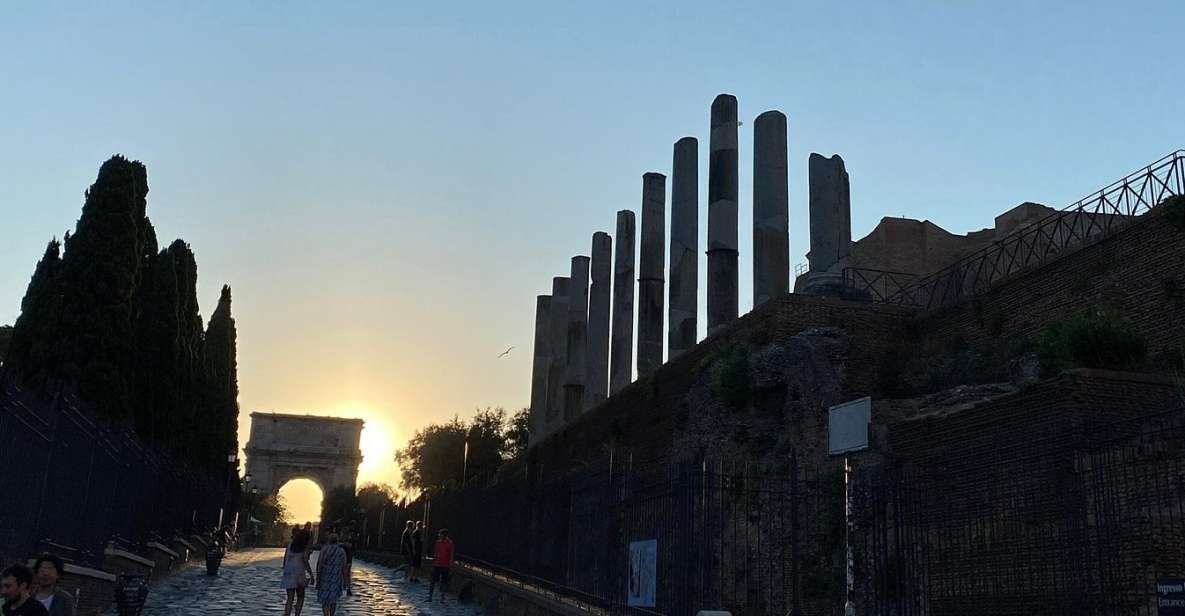
Rome in daylight is impressive. Rome at night can feel theatrical—in a good way. The streets cool down, the crowds thin out, and the big shapes of buildings and squares start to read like design, not just scenery.
This is exactly what a nighttime walk is good at. You’re not sitting in a bus trying to see through glass. You’re out on the ground, moving from one landmark square to the next, with a guide pointing out what to notice and why it mattered. And because you’re in a small group, the guide can slow down when something sparks a question.
You can also read our reviews of more tours and experiences in Rome.
Starting in Rione Monti: Rome’s Old Neighborhood Vibe
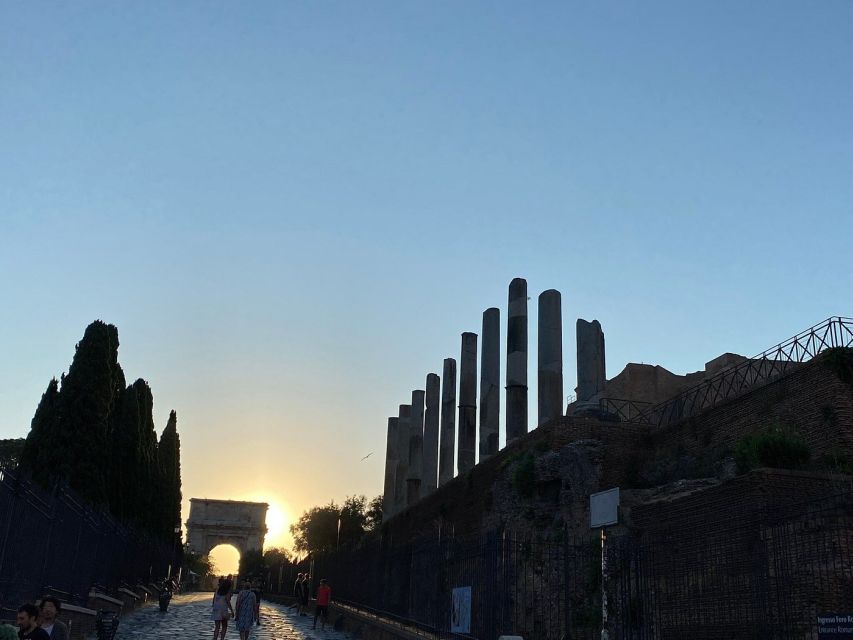
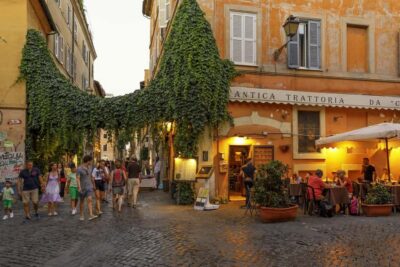
The tour begins in Rione Monti, described as Rome’s oldest residential area. Starting there matters more than it sounds. Instead of launching straight into the most famous ruins, you get a sense of how the city actually lives—older streets, tighter rhythms, and that neighborhood feel that makes Rome more than a theme park.
It’s a smart choice for an evening tour. Before you hit the grand public spaces, you warm up with a part of town that feels more human-scale. Think of it as the mental switch from daytime sightseeing mode to nighttime “walk and watch” mode.
Piazza Quirinale: Where the Roman Elite Made Their Mark
From Monti, the guide leads you to Piazza Quirinale, the seat of the Roman elite through the ages. Even if you’re not a Roman history superfan, the concept is easy to grasp: this is where power gathered, where decisions shaped the city, and where status showed.
What I like about a place like this is that you can connect different eras without needing to memorize dates. Ancient authority. Later layers of architecture. The way the square works as a stage for people—ceremony, movement, and visibility.
Trajan’s Forum at Night: The Imperial Mall Angle
Next up is Trajan’s Forum, often described as the largest and last Imperial Forum built in Rome. The key detail that makes this stop more than a ruin photo-op is the framing: it’s treated as a kind of early shopping district—sometimes explained as the world’s first shopping mall.
That’s useful for your understanding. It helps you imagine the space as functional, not just symbolic. You’re looking at a complex built for movement, commerce, and public life—an urban machine designed to keep people circulating.
At night, that “built environment as a system” feeling can land better. The shadows and lighting make shapes clearer, and you’re more likely to notice the layout logic as you move.
Piazza Campidoglio: Michelangelo’s Design and Why It Matters
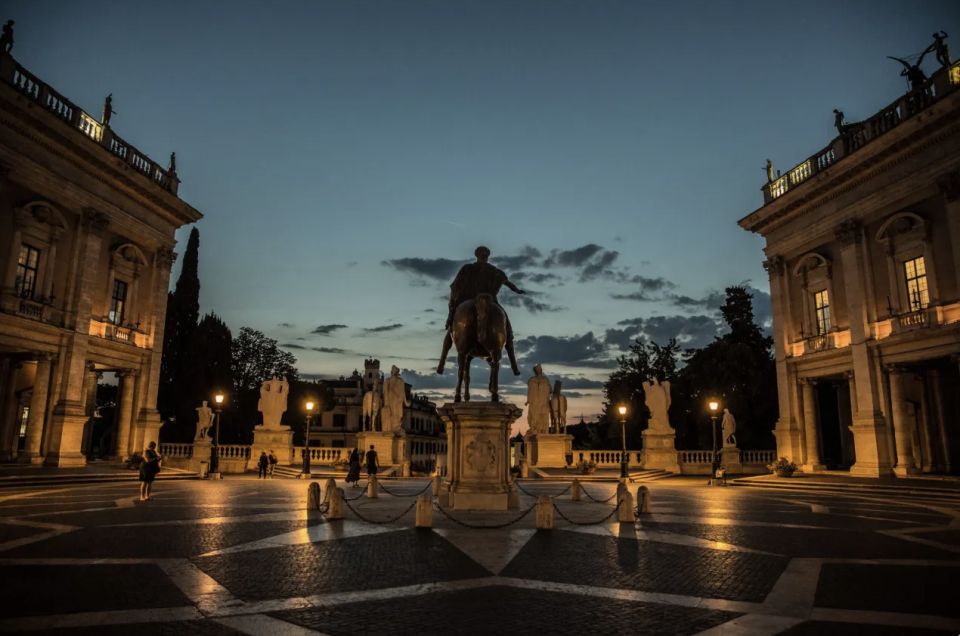
Then comes Piazza Campidoglio, where you’ll see Michelangelo’s famous designs. This is one of the stops where interpretation really pays off. Michelangelo wasn’t just decorating a square—he was organizing perspective, setting up a visual flow, and reasserting cultural authority in a Renaissance way.
If you’ve ever wondered why certain European squares feel intentionally dramatic, this is a great example. The design pushes your eye, coordinates viewpoints, and turns the square into a kind of outdoor composition.
And because you’re visiting it as part of a night route, you get a rare bonus: the square feels less like a stop on a list and more like a place with atmosphere.


Palazzo Venezia and the Unification Monument Near You
Nearby, you’ll find Palazzo Venezia, described as a central hub of Rome. It’s also a great pause point because you’re surrounded by layers—ancient foundations, grand later architecture, and monuments that connect Rome to modern national identity.
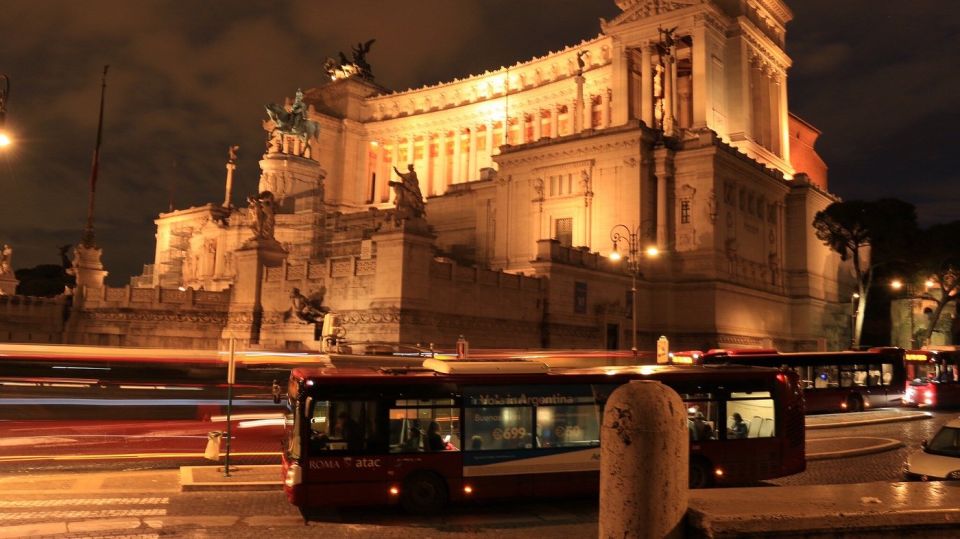
The tour also points out the Unification Monument of Vittorio Emanuele II facing Palazzo Venezia. This is one of those Rome moments where the city talks about itself across centuries. Standing near that kind of monument, you can feel how Rome keeps updating its public story—politics, power, identity—using architecture and scale.
Piazza Colonna: The Government Seat Finale
To wrap up the walk, you end at Piazza Colonna, described as the seat of the government of Italy. Ending here works well because it brings your mental journey full circle. You started with an area tied to everyday living in old Rome, then moved through elite space, imperial space, Renaissance space—then landed in a place tied to modern governance.
It’s also a practical landing pad. Piazza Colonna is the kind of square where it’s easy to orient yourself afterward. You’re not dropped in some random alley. You close the loop in a central, recognizable civic space.
Highlander Pub Nightcap: A Real Way to Land the Tour
After all that walking and looking, you get a complimentary drink at the nearby Highlander Pub. Options are listed as a glass of wine or a cocktail.
This is a small detail that can make the difference between a tour that feels like logistics and one that feels like a night out. It’s time to decompress, compare notes, and ask that last question you didn’t think of during the rush between piazzas.
In at least one past group, the guide took people to the pub, and the drinks and staff were highlighted as a standout. Even if your experience differs, it’s clearly intended as a friendly finish, not an afterthought.
Price and Value: Is $82 a Good Deal for Three Hours?
At $82 per person for 3 hours, you’re paying for three things: a live guide, a planned nighttime route through major landmarks, and an included drink. That combo matters in Rome, because self-guided sightseeing can get scattered fast at night.
Here’s why the value makes sense:
- You get direction: the route is not random. It moves logically from Monti through a chain of key squares and monuments.
- You get interpretation: the tour focuses on how and why these sites mattered, not just what they look like.
- You get included refreshment: that nightcap is part of the package, not an extra cost you’ll feel later.
If you’re the type who likes structure at night—especially when streets and squares can blur together—this price is pretty reasonable for what you’re receiving.
Group Size and the Guide Factor (Including Dimitri’s Style)
The tour is run with small groups and a live tour guide in English or Spanish. That matters because nighttime tours succeed when you can hear the guide and still ask questions.
One guide name that shows up is Dimitri, and the experience described around him is exactly what you hope for on a walking tour: interactive explanations, humor mixed into the facts, and extra time to accommodate questions. If you get a guide with that style, you’ll likely feel like you’re learning while still enjoying the walk.
Even if your guide’s personality is different, the format is built for engagement: you’re moving through iconic spaces, and the guide is there to help you see patterns across eras.
What to Expect When You Show Up
This tour takes place rain or shine, so build your plans around the assumption you’ll be outside. Bring comfortable shoes. Rome nights can mean uneven sidewalks, stone edges, and streets that look calm until you’re walking them in the dark.
The itinerary is a steady pace across some of the most recognizable public squares and monuments in central Rome. You’re not just popping in and out. You’ll be walking enough that the 3-hour mark feels real, but it’s still designed as a nighttime stroll rather than a full-on endurance hike.
Also, note the straightforward boundary: it’s not suitable for people with mobility impairments. If that applies to you, I’d look for an option with a different setup.
Who Should Book This Tour (And Who Might Pass)
I think this works best for:
- First-timers who want a high-impact overview of Rome’s major eras at night
- People who like walking tours but also want facts tied to what they’re seeing
- Small-group travelers who prefer a guided story over app-based wandering
- Travelers who enjoy piazzas as social spaces, not just as backdrops
You might want to skip it if you:
- Need an accessible route (this one isn’t designed for mobility impairments)
- Hate being outside in the rain, even with a guide pushing through as scheduled
- Want long museum-style stops (this is built as a nighttime street-and-square tour)
Quick Practical Tips Before Your Night Walk
- Wear shoes you can handle on stone and uneven ground.
- Dress for rain or cool evening air, since it runs rain or shine.
- If you’re a question person, keep that energy for the guide—this tour’s format is geared for conversation.
- Plan to keep your dinner flexible. You’ll end the tour with a nightcap, so you may not want a heavy meal right at the start.
Should You Book This Tour?
Yes, if you want Rome at night with a guided thread from ancient power to Renaissance design and modern civic identity. It’s not just sightseeing—it’s a guided walk that helps you make sense of how the city layers itself.
Book it if you value small-group attention, enjoy piazzas, and like your history tied to place. I’d also lean toward it if the idea of paying attention in the dark is appealing to you; the payoff is in how the landmarks read when the streets cool off.
One more thing for peace of mind: it offers free cancellation up to 24 hours in advance and a reserve now & pay later option, so you can grab a spot without stress if your schedule is still in flux.
If you’re deciding between a self-guided night walk and this guided route, pick the guided tour when you want more clarity, better pacing, and a built-in ending with a drink.
FAQ
How long is the Rome: Ancient Rome Nighttime Sightseeing Tour?
The tour lasts 3 hours.
What’s included in the price?
The tour includes a live tour guide, small group size, and a nightcap such as a glass of wine or a cocktail.
What languages are available?
The live tour guide is available in English and Spanish.
Does the tour run in bad weather?
Yes. The tour takes place rain or shine.
Is this tour suitable for people with mobility impairments?
No. It is not suitable for people with mobility impairments.
What should I bring?
Wear comfortable shoes, since it’s a nighttime walking tour.