REVIEW · ROME
Rome: Colosseum Arena Floor and Ancient Rome Tour
Book on GetYourGuide →Operated by My city Tours · Bookable on GetYourGuide
You walk into the Colosseum most people miss. This 2.5-hour tour gives arena-floor access and goes into areas typically kept off most visitor routes, including the underground levels. I love how it pairs that awe-inspiring access with smart storytelling that connects the structure to the games that happened here long ago.
I also like the way the tour keeps you oriented across Rome. Between Palatine Hill views, the Roman Forum ruins, and central-city stops like Trevi Fountain, the Pantheon, and Campo de’ Fiori, you get context instead of just photo ops. One possible drawback: it’s a fairly tight time window, so you’ll want to plan for good walking shoes and not linger everywhere.
In This Review
- Key Things That Make This Tour Worth Your Time
- Entering the Colosseum Through Restricted Areas
- Walking the Arena Floor Where the Games Happened
- Underground Colosseum Levels: Dungeons and Holding Areas
- Palatine Hill Panorama and the Romulus-Remus Legend
- Roman Forum Ruins: Temples and Markets in One Walking Lens
- Central Rome Stops: Trevi, Pantheon, and Campo de’ Fiori
- What You’re Really Paying For: Value at $76.46
- Who This Tour Fits Best
- Quick Practical Tips Before You Go
- Should You Book This Colosseum Arena Floor Tour?
- FAQ
- Is the tour offered in English?
- How long is the experience?
- Does this tour include skip-the-line entry and access to the arena floor?
- Where do I meet, and where does the tour end?
- What should I bring?
- What is the cancellation policy?
Key Things That Make This Tour Worth Your Time
- Restricted Colosseum entrance that helps you avoid the worst of the ticket line
- Arena floor time, where the scale of the games suddenly feels real
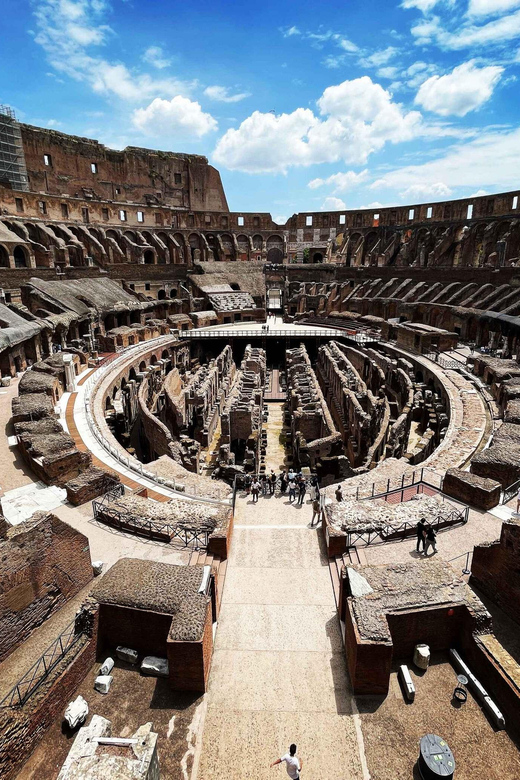
- Underground Colosseum levels (dungeons) showing where people and animals were kept before entering the arena
- Palatine Hill + Roman Forum guidance, with clear sightlines and the Romulus and Remus legend
- Central Rome highlights tied to key monuments and everyday spaces like Campo de’ Fiori
- Headsets and radios, so you can actually hear the guide in busy areas
Entering the Colosseum Through Restricted Areas
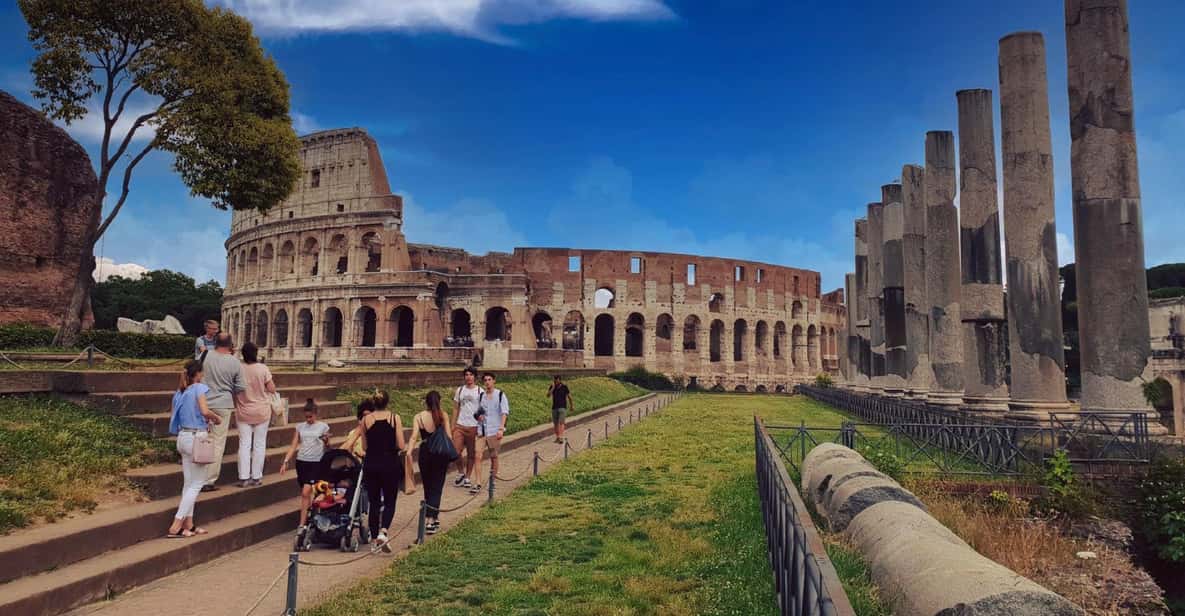
The big reason to book this one is simple: you get direct skip-the-line entry that leads you to parts of the Colosseum most visitors don’t see. You’re not just looking at walls from the outside or staying in the usual crowd paths. You’re guided into the Colosseum experience at a level that feels more like stepping back into the show.
Once you’re inside, your guide sets up what you’re looking at in plain, human terms. The Colosseum isn’t just stone. It’s an engineered stage. When you understand how the arena space worked, the monument stops being a distant landmark and becomes a functioning machine for spectacle.
This is also where the included equipment matters. Headsets and radios help you keep up, even when groups get compressed near stairways or at the most photographed angles. If you’ve ever struggled to hear a guide in Rome’s packed historic sites, you’ll appreciate the setup here.
You can also read our reviews of more tours and experiences in Rome.

Walking the Arena Floor Where the Games Happened
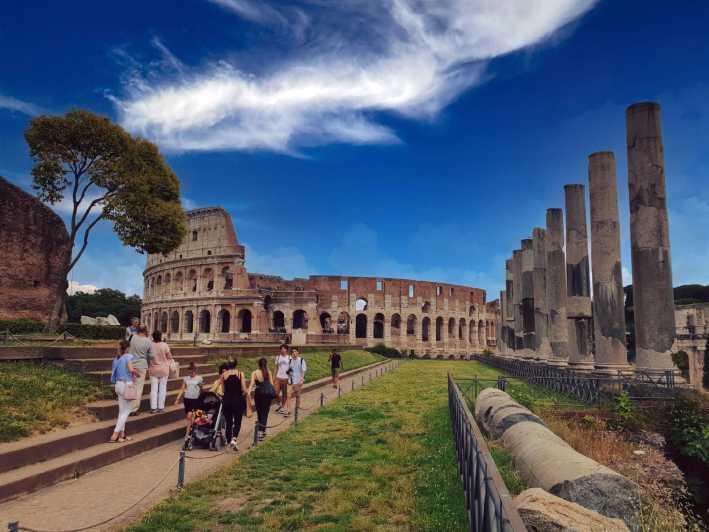
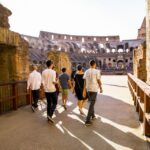
The heart of the tour is time on the Arena floor. This is the spot where gladiators once fought and where the roar of a crowd isn’t hard to imagine. Standing where the games took place changes your sense of scale fast. Rows that looked “big” from above start to feel like a real stadium system—tiers, sightlines, and movement all in the same view.
Your guide helps connect the dramatic mythology and daily mechanics of Roman games. You get the sense of how performers prepared and how the arena space shaped what spectators saw. It’s the difference between reading about ancient Rome and standing where the action played out.
There’s also a practical payoff: the arena-floor perspective helps you understand why certain entrances and routes mattered. Instead of only learning dates and names, you see how people likely moved in and out. That makes the Colosseum feel less like a checklist and more like a lived-in place.
Tip for your body: comfortable shoes are a must. You’ll be standing and walking on historic surfaces, and the tour uses the 2.5 hours efficiently.
Underground Colosseum Levels: Dungeons and Holding Areas
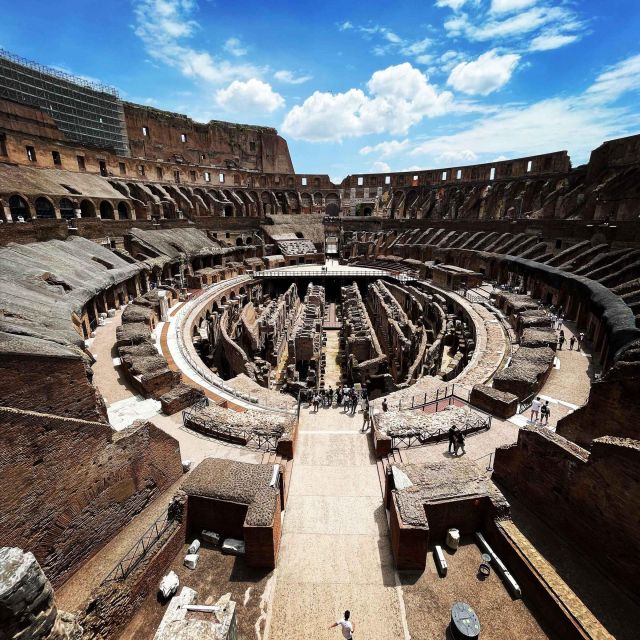
After the arena floor, the tour goes beneath it into the Colosseum underground—often described as the dungeons. This is one of the most powerful sections because it flips the feeling. Above, you’re in the public theater. Below, you’re in the preparation zone.
You’ll see where gladiators prepared for their battles and where caged animals were kept before being lifted to the arena. That detail matters because it explains the showmanship from behind the curtain. The Colosseum wasn’t only about drama in the spotlight; it also ran on logistics and confinement.
This is also where good guiding really shows. The underground spaces can feel dark and tight compared to the open arena. A strong guide turns that into understanding: where people would wait, how the timing worked, and why the layout exists. You don’t need to be a classicist to get it—you just need a guide who keeps the story clear.
And yes, it’s impressive. Just be ready for the fact that the underground portion will likely feel more enclosed than the main areas.
Palatine Hill Panorama and the Romulus-Remus Legend
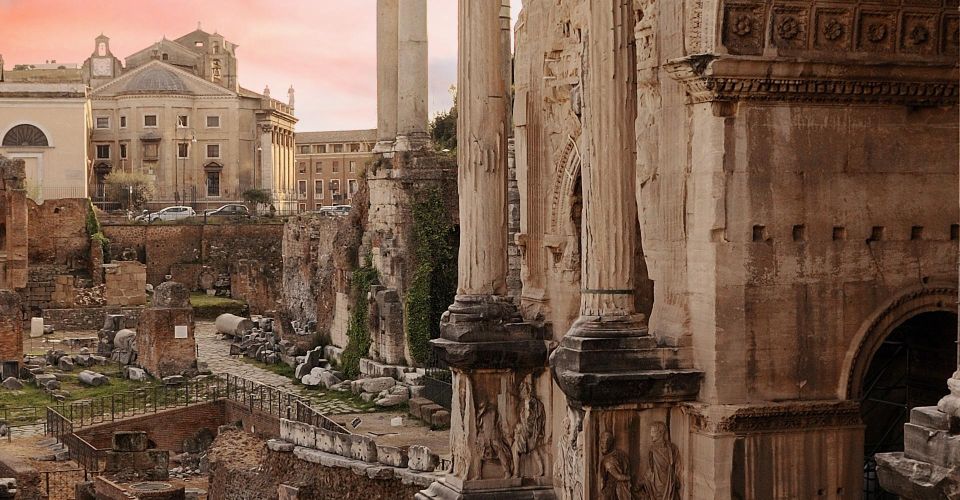
Next up is Palatine Hill and Roman Forum guiding, which gives the tour its Rome-wide backbone. Palatine Hill offers panoramic views that help you see the big picture. When you look out from the hill, you can understand why emperors and elites wanted to live and display power here—Rome’s center isn’t random. It’s built to be seen.
Your guide also brings in the legend of Romulus and Remus. You’ll hear how the story fits into the idea of Rome’s beginnings, with the brothers set against each other leading to the birth of Rome. It’s the kind of tale that can sound like a myth from a textbook—until it’s placed in the landscape you’re standing on.
Why it’s valuable: the Colosseum is just one piece. When the tour connects it to the myth and the civic heart of the empire, you start seeing Rome as a system—religion, politics, spectacle, and power all tangled together.
Keep an eye on the viewpoint moments. Those are the times you’ll want your camera ready, because the best views are usually quick stops on a guided schedule.
Roman Forum Ruins: Temples and Markets in One Walking Lens
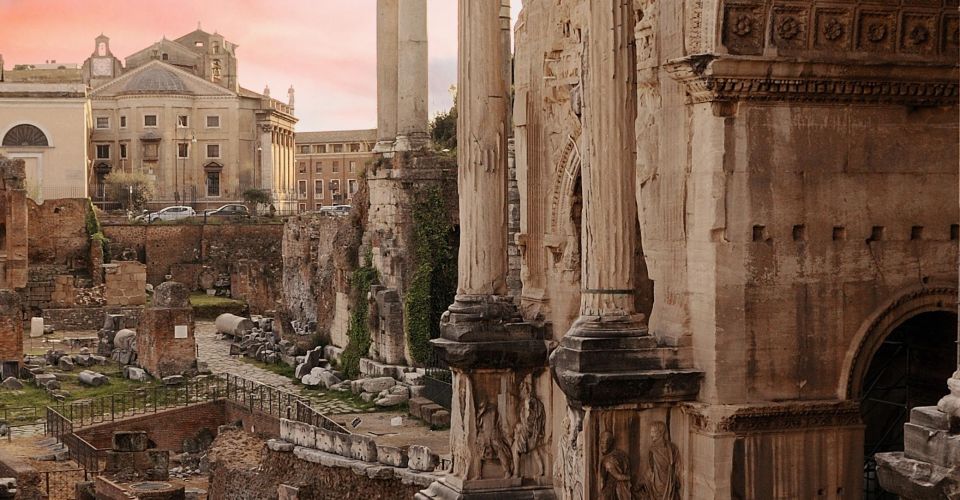
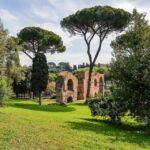
The Roman Forum ruins are included, and that’s where you get a close-up of how Romans used public space. You’ll discover ruins of temples and markets in the Forum, which matters because it’s not only about big monuments. It’s about everyday life mixed with religion and governance.
A good Forum walkthrough gives you a way to read the stones. Your guide points out what you’re actually looking at and why it mattered. If you’ve ever stood in a ruin field and felt like you were guessing, this kind of guided context is what saves your time and makes the visit click.
The Forum is also the place where the tour’s pacing matters. There’s a lot to see, and you’ll want to stay focused on what the guide is pointing out. If you drift into “photo mode” for too long, you may miss the connections that make it meaningful.
When the Colosseum shows spectacle, the Forum shows civic Rome. Together they make a sharper story than either one alone.



Central Rome Stops: Trevi, Pantheon, and Campo de’ Fiori
Even with the Colosseum at the center, the tour’s highlights include major central Rome landmarks and street-level sights. You’ll feast your eyes on baroque fountains, obelisks, and monuments, and you’ll get time connected to the Trevi Fountain—plus history around it. That’s helpful because Trevi can feel like one of those places you only “pass by” in Rome, but it earns a few minutes of real attention.
The Pantheon is also part of the experience, described as one of the best-preserved monuments of ancient Rome. If you’ve seen it only from the outside, you’ll understand why it stays on top of so many lists. The building gives you a direct sense of ancient engineering and design strength.
Then there’s Campo de’ Fiori, an area known for one of the city’s oldest markets. Strolling there gives a more everyday feeling compared to temple-and-stadium Rome. It’s a reminder that the Eternal City isn’t frozen in one century—it keeps moving.
Finally, the tour ties it all together with piazza atmosphere. Rome is a city of outdoor rooms, and guided stops across these spaces help you feel the rhythm of the city instead of treating it like museum-only sightseeing.
What You’re Really Paying For: Value at $76.46
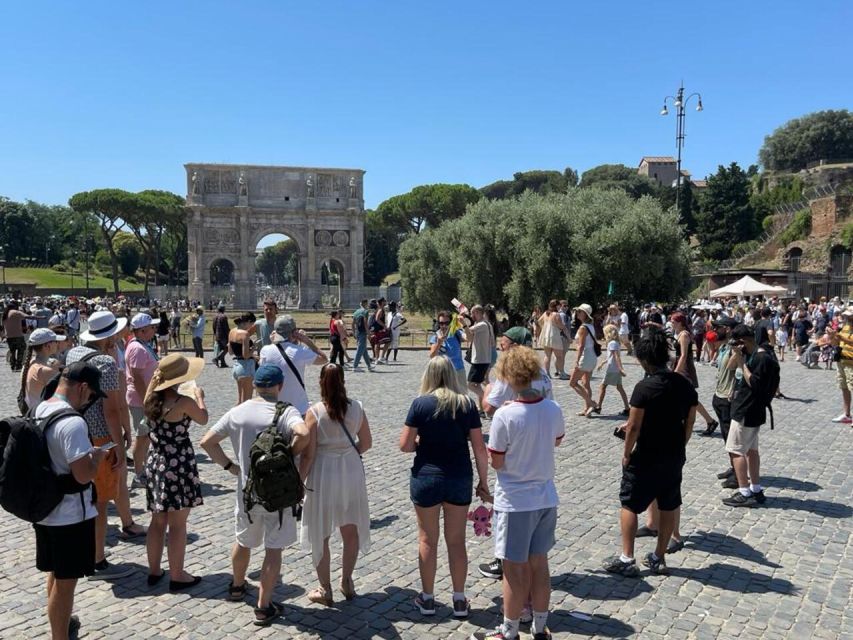
The price is $76.46 per person for about 2.5 hours, and the value comes from the type of access you get. You’re paying for more than a guide and a basic ticket. You’re paying for skip-the-line entry and for access to the arena floor plus the underground dungeons.
That kind of entry is where tours like this justify themselves. Anyone can walk around Rome and point at buildings. Not everyone can step into the restricted Colosseum zones and see how the games worked from both the public and behind-the-scenes sides.
You also get guided Palatine Hill and Roman Forum, plus headsets and radios. Those extras sound small, but they affect your experience. Hearing your guide clearly is a big deal in Rome.
Not included is also worth noting: food and drinks are on you, and there’s no hotel pickup and drop-off. In practical terms, that means you’ll want to either eat before you go or plan a post-tour break nearby.
Who This Tour Fits Best
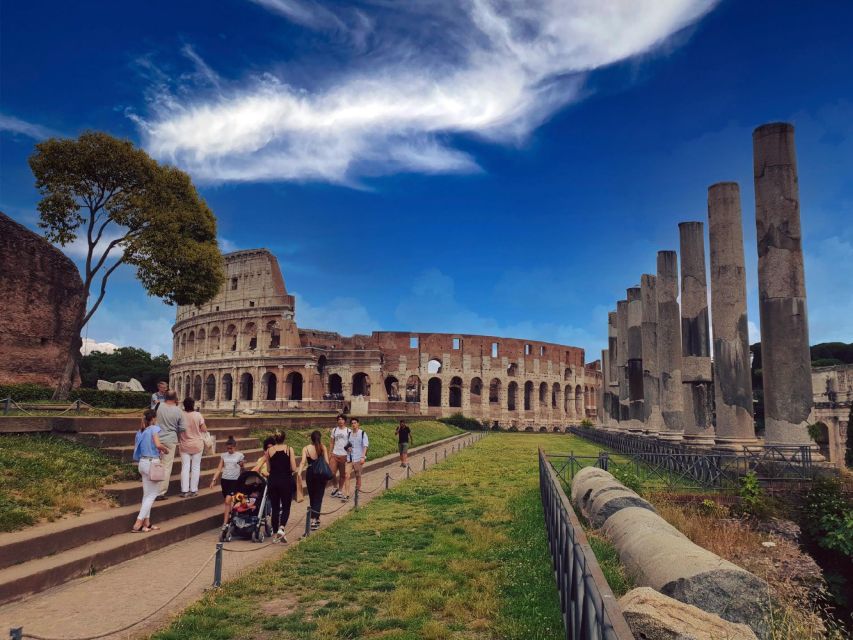
This is a great match if you want your Colosseum visit to feel immersive and factual at the same time. The arena floor and underground levels are ideal for people who like more than surface sightseeing.
It also fits families who want history explained in an energetic, fun way. One guide referenced in the experience is Tania Grigg, and the feedback highlights that her explanations connect people and traditions while keeping it engaging for children as you walk. Even if you’re traveling without kids, that teaching style usually makes the stories clearer for everyone.
If you hate crowds and want a slow, lingering tour where you can drift off anytime, this might feel a bit structured for your taste. The schedule is efficient, so you’ll need to keep moving with the group.
Quick Practical Tips Before You Go
- Wear comfortable shoes. You’ll do real walking and standing.
- Bring a passport or ID card. A copy is accepted.
- Expect to use the included headsets and radios. Treat them carefully so you don’t lose the connection.
- Plan to meet at the start point and return there. The tour ends back at the meeting point, not at your hotel.
For timing, you’ll see starting times when you check availability, since the experience runs for a 2.5-hour window.
Should You Book This Colosseum Arena Floor Tour?
Yes, if your priority is access. If you want the Colosseum experience to include the arena floor and the underground dungeons—without spending your limited Rome time stuck in lines—this tour makes sense. The included Palatine Hill and Roman Forum guiding also means you get more than one stop. You get a connected view of Rome: spectacle plus civic life.
I would skip it only if you’re hoping for a slow sightseeing day with lots of free wandering, because the tour uses its 2.5 hours efficiently. Also, be honest with yourself about your walking stamina. Good shoes will help, but the pace is still purposeful.
If you want the Colosseum to feel like an event rather than a photo background, book it and show up ready to learn.
FAQ
Is the tour offered in English?
Yes. The live tour guide language is English.
How long is the experience?
The duration is 2.5 hours.
Does this tour include skip-the-line entry and access to the arena floor?
Yes. You get skip-the-ticket-line access, guided Colosseum time, and access to the Arena Floor, including restricted areas. The tour also includes the underground levels (dungeons).
Where do I meet, and where does the tour end?
Meet outside the office by looking for the My City tours sign. The tour ends back at the meeting point.
What should I bring?
Bring a passport or ID card. An ID card copy is accepted. Wear comfortable shoes.
What is the cancellation policy?
You can cancel up to 24 hours in advance for a 50% refund.