REVIEW · ROME
Rome: Colosseum, Roman Forum & Palatine Hill Tour
Book on GetYourGuide →Operated by Tours And Tours · Bookable on GetYourGuide
If you want Rome in big, bold pieces, this tour delivers. You start with the Roman Forum and Via Sacra cobblestones, then move to the Colosseum—the postcard symbol of the city—before finishing on Palatine Hill for the famous emperor views. I like that it includes entrance tickets plus headsets, so you can actually hear your guide while you’re walking and pointing. I also like the skip-the-line angle, because Rome’s ticket chaos is real, even when you do everything right.
One thing to plan for: it’s a top site day, so you’ll be in crowds and moving through security and walking paths, all while working around heat and long lines that can’t always be avoided.
In This Review
- Key Things to Know Before You Go
- The meeting point and security flow you should expect
- Skip-the-line tickets and headsets: how they change the tour
- Colosseum: gladiator stories, levels of the arena, and why it feels bigger in person
- Roman Forum and Via Sacra: walking the political heart of ancient Rome
- Triumphal arches (Septimius Severus, Titus, Constantine): the monuments that explain Roman power
- Palatine Hill: emperor palaces and the view that makes the Forum make sense
- Crowd reality: heat, walking, and why your guide’s style matters
- What this tour is best for (and what you might want instead)
- Is it worth $41 for a Colosseum, Forum and Palatine Hill tour?
- Should you book this Colosseum, Roman Forum & Palatine Hill Tour?
- FAQ
- How long is the Rome Colosseum, Roman Forum & Palatine Hill tour?
- What’s included in the price?
- What is the main meeting point?
- What languages are available for the live guide?
- Does the tour skip the ticket line?
- Are food and drinks included?
- Is the tour wheelchair accessible?
Key Things to Know Before You Go
- 2.5 hours is a sprint through three major zones, so you’ll get context fast rather than lingering forever.
- Headsets help when groups get loud near major monuments.
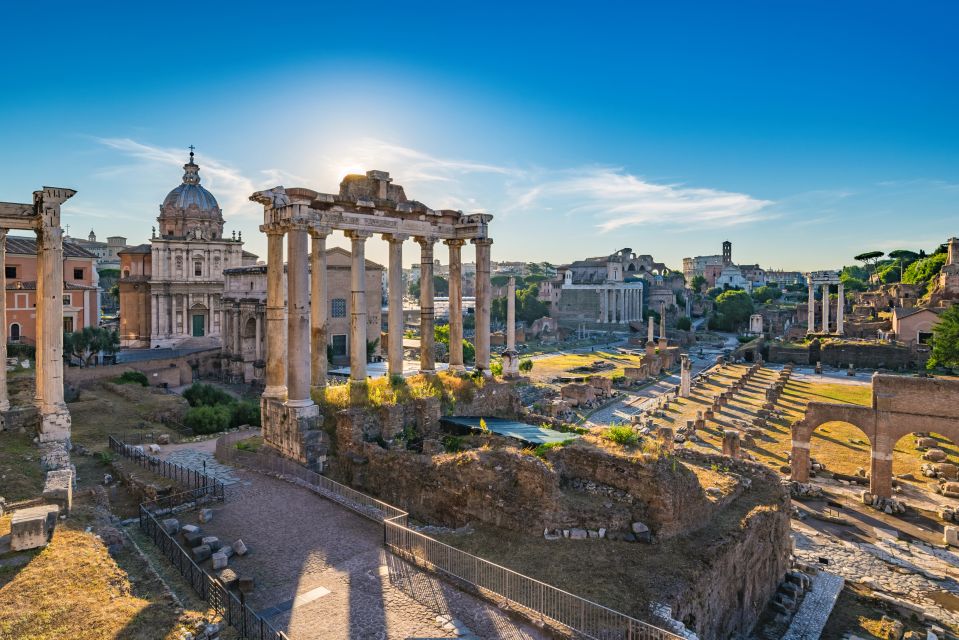
- Via Sacra cobblestones and Caesar’s cremation spot give you specific story points, not just random ruins.
- Triumphal arches time check: you’ll see Septimius Severus plus the Titus and Constantine arches as part of the Forum story line.
- Palatine Hill = emperor-grade viewpoints, with palace sites overlooking the Forum below.
- Security is part of the experience: expect airport-style screening before entry.
The meeting point and security flow you should expect
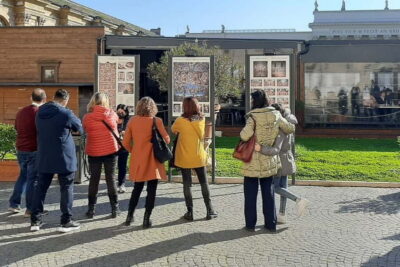
You meet at Via delle Terme di Tito 93. If you arrive by Metro at Colosseo, you’re looking for the terrace above the station, then you walk about 100 meters on Via Nicola Salvi and turn left. That sounds simple—until you’re doing it with a crowd, bags, and phones in your hand. Give yourself extra time.
Plan on airport-style security. This isn’t optional, and it can be the slowest part of the whole morning (or afternoon), especially on busy days. The good news: once you’re past that stage, the tour’s main advantage kicks in—guided movement through the key zones with tickets already handled.
Also note the tour is not suitable for wheelchair users or people with mobility impairments. A lot of the walking is on uneven historic surfaces, and time matters when the schedule is built around peak entry.
You can also read our reviews of more tours and experiences in Rome.
Skip-the-line tickets and headsets: how they change the tour
This tour includes entrance tickets and a skip-the-ticket-line perk, plus headsets. On paper, that’s standard. In practice, it matters because the Colosseum and Forum areas can be loud, crowded, and visually overwhelming. With headsets, you can keep up even when you’re stuck behind someone stopping for a photo.
That said, don’t assume skip-the-line means no waiting at all. Even with the perk, you may still end up in a queue once you arrive at the entry process. The value is more like: you’re less likely to waste your entire session staring at a slow-moving line before you even start learning.
Duration is listed as 2.5 hours, and that’s usually enough to cover the essentials if the group sticks together. Still, be realistic. One hot, packed day can slow everyone down, and your guide is working against the clock while crowds shift every minute.
Colosseum: gladiator stories, levels of the arena, and why it feels bigger in person
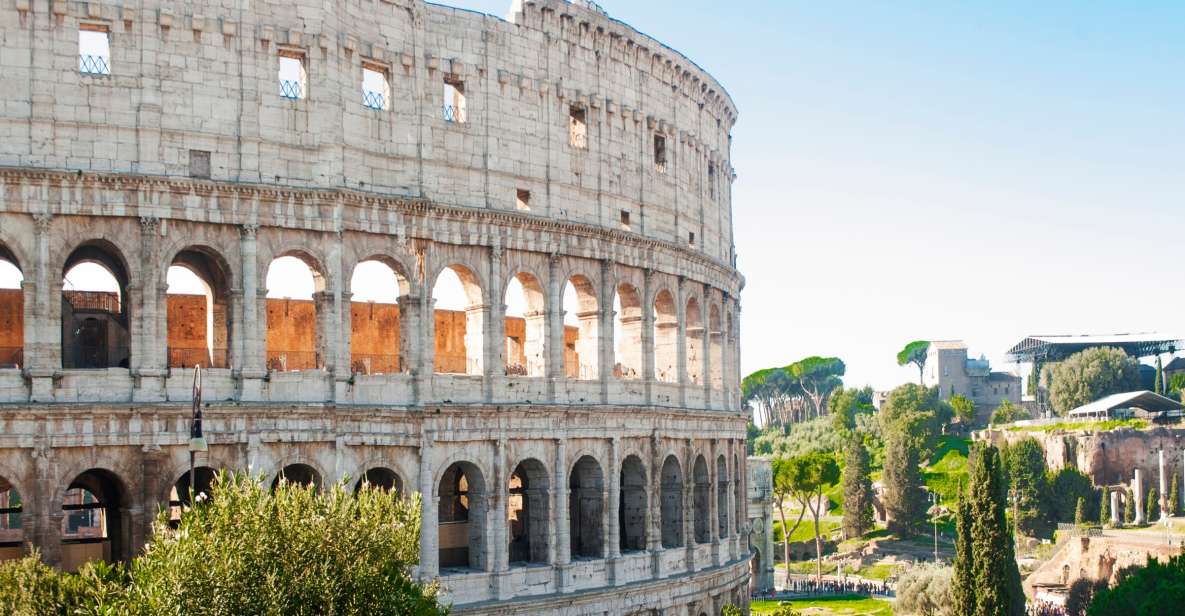
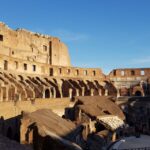
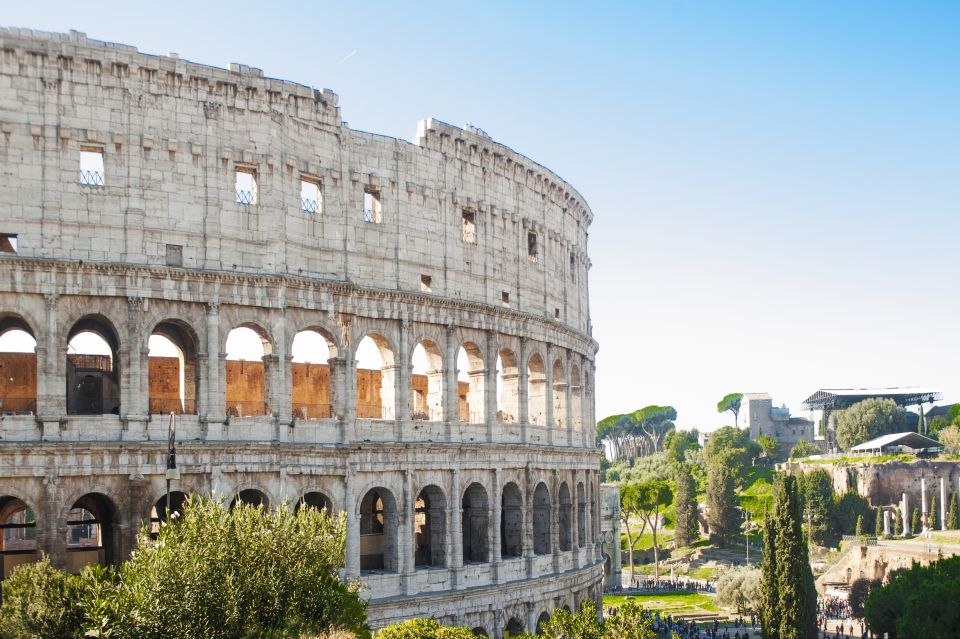
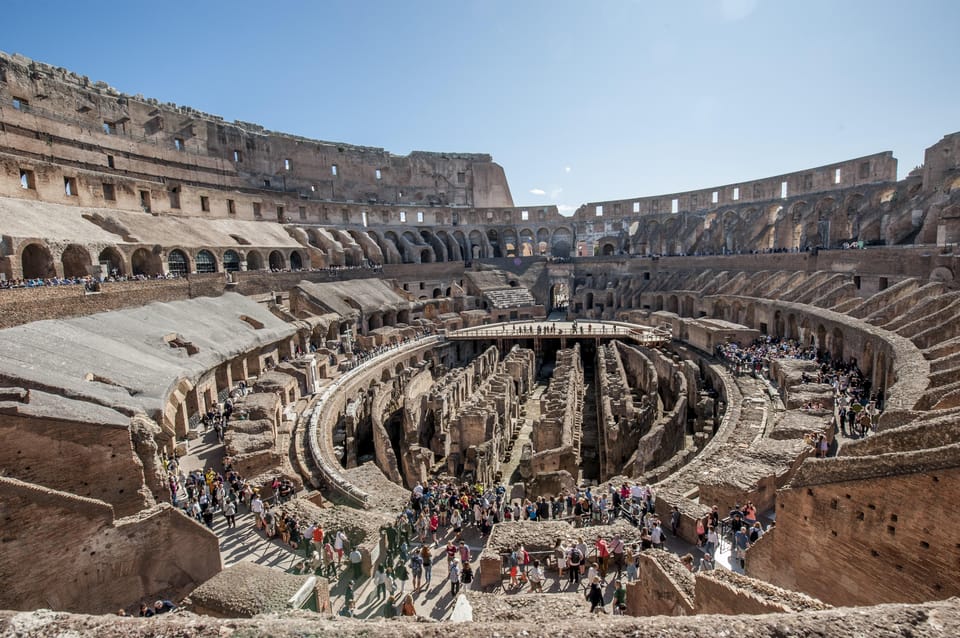
The Colosseum stop is guided for about 1 hour, and it’s where the tour earns its headline. You’re not just seeing the outer shell. The guide focuses on how gladiators lived, trained, and were treated—so the stones start to feel like a system, not random architecture.
Here’s what I think makes this Colosseum portion work: the story anchors you. You’ll hear about gladiators as public stars, not just fighters, and that changes how you look at the spaces you’re standing in. Instead of asking, What am I looking at?, you start asking, How did people move through this world?
One practical consideration: time inside the Colosseum can feel tight if you’re a slow-browsing photographer. Some people end up wishing they had more minutes in their favorite corner. If you’re the type who likes to linger at viewpoints and take lots of angles, keep your expectations aligned with a guided sprint.
Roman Forum and Via Sacra: walking the political heart of ancient Rome
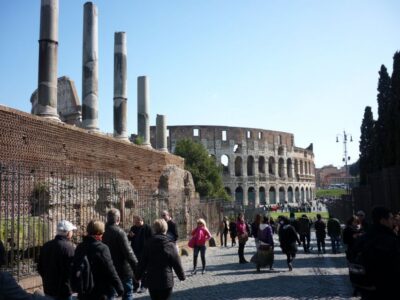
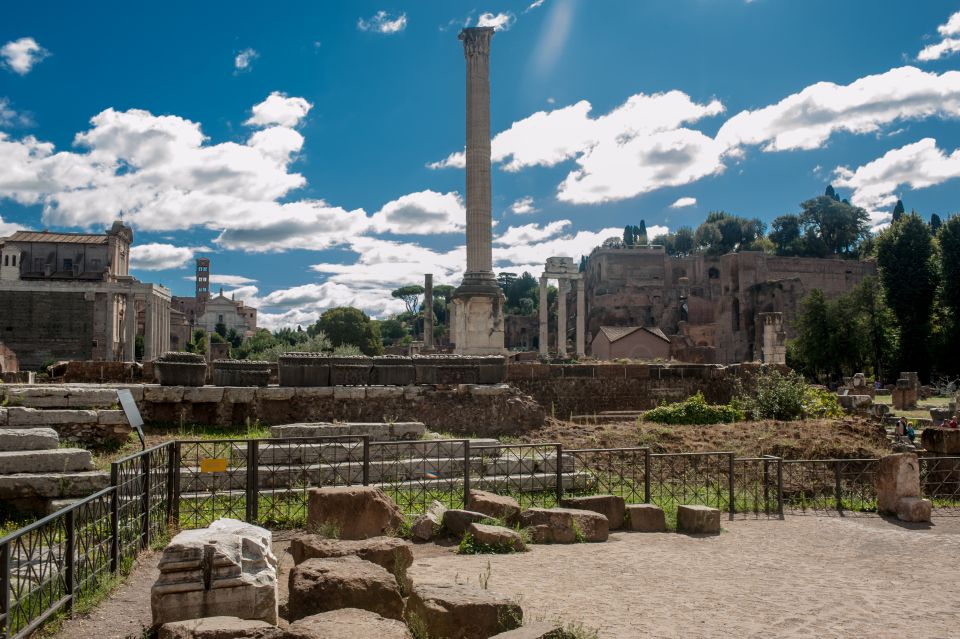
Next you move into the Imperial Roman Forums and get the downtown-center perspective of the ancient world. The guided Forum portion is also about 1 hour, and this is where the tour shifts from dramatic spectacle to political power.
You’ll walk along Via Sacra, described as the same kind of cobblestones used by famous Romans like Julius Caesar, Mark Antony, and Cleopatra. Even if you’re not measuring the exact footprints, the point is the same: you’re standing in the path where big decisions were made and where Rome’s public life played out.
The tour also includes a standout story detail: you’ll visit the very spot where Julius Caesar was cremated. That kind of pinpoint moment is worth gold in a place where the ruins can blur together. It helps you connect the name in a textbook to a physical location in front of you.
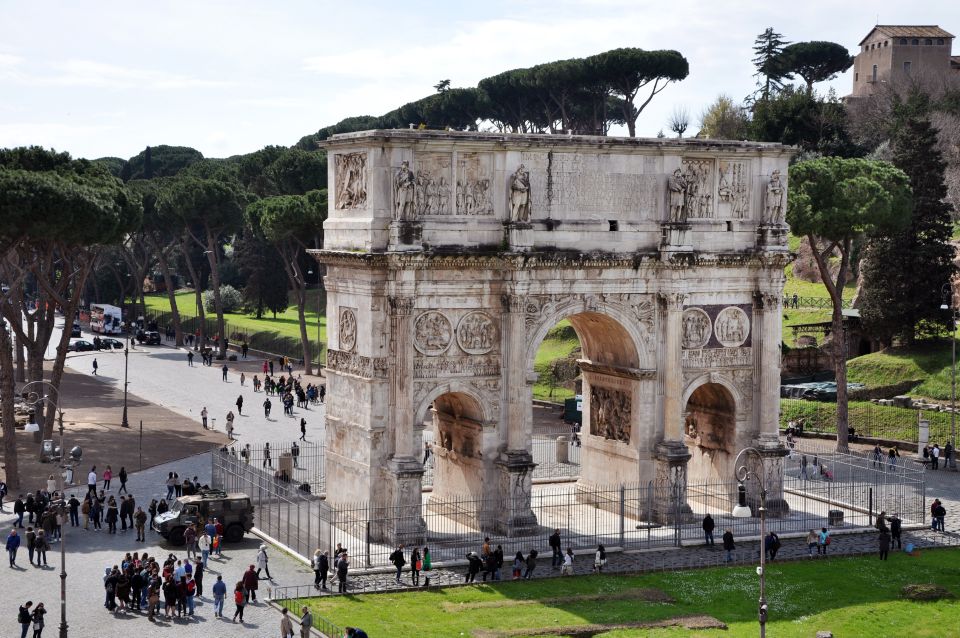
One more thing you’ll see here: the Triumphal Arches, including the Arches of Septimius Severus, plus the Titus and Constantine arches. These monuments can feel similar at first glance, but in a guided format you get the “why” behind them—what they were for, and what they signaled to Romans passing through.
Triumphal arches (Septimius Severus, Titus, Constantine): the monuments that explain Roman power
The Forum is loaded with stones that try to impress you. The arches are the most straightforward way to understand Roman messaging. They’re built to announce victory, authority, and legitimacy—basically propaganda in architecture form.
On this tour, you walk around the Triumphal Arches of Septimius Severus and also see the ancient arches of Titus and Constantine. The value of including all of them in one sequence is that your brain starts to compare and connect. You’re not just spotting a famous arch; you’re building a sense of how Roman leaders used public space to communicate control.
If you’re a photo person, this is also the zone where you’ll get plenty of framed shots—especially if your guide points out positions for better angles. Some guides on this tour have been praised for helping people get photos with their own cameras, which is handy when you don’t want to hand your device to a stranger.


Palatine Hill: emperor palaces and the view that makes the Forum make sense
Palatine Hill is where the tour completes the “power top to power bottom” story. You climb the hill and the guide focuses on Palatine as the place where emperors built opulent palaces. That top-layer context is the missing piece for many first-time visitors.
The payoff is the overlook. Palatine Hill offers views back toward the Forum, so suddenly you understand how these buildings related to each other. From up here, the Forum isn’t a random cluster of ruins—it’s the stage below where rulers wanted to be seen, feared, celebrated, and obeyed.
You’ll also get the sense that the emperors weren’t hiding. They were placing themselves physically above daily Roman life. Even if you’ve read about Roman power before, seeing the layout from the palace height makes it feel real.
One caution: this is more walking on uneven terrain. Combine that with crowd levels and summer heat (the tour runs in all weather), and you’ll want to be ready for a physical day.
Crowd reality: heat, walking, and why your guide’s style matters
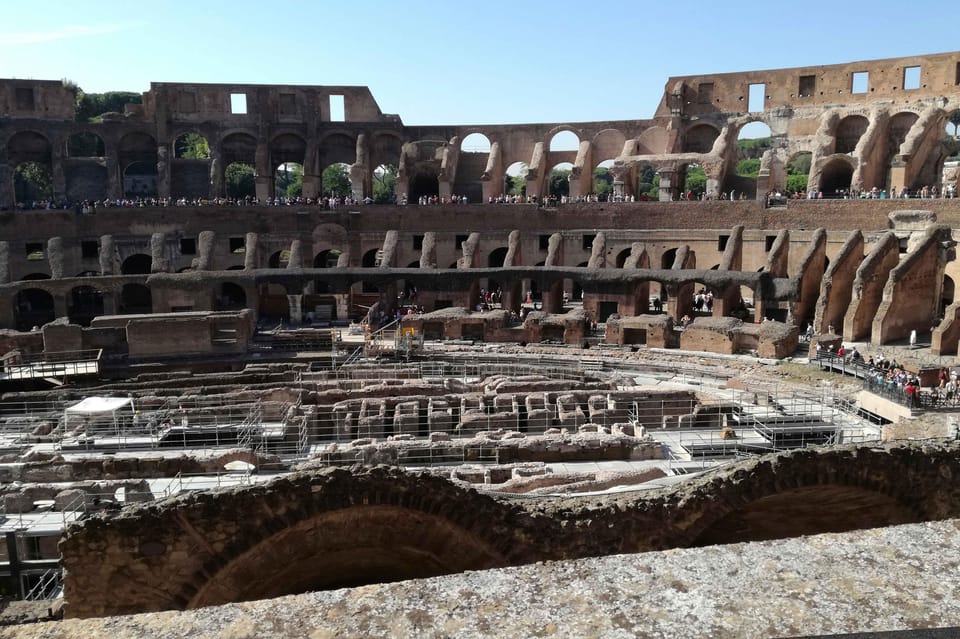
This tour is popular because it hits three major sites without forcing you to plan connections between them. That also means it can be crowded, especially around the Colosseum and inside the Forum. One common theme from people who’ve taken this kind of route: it can feel like a group herding exercise if you’re expecting a quiet, slow visit.
Where the experience improves is the human part. Multiple guide names have been mentioned in connection with this tour—people like Andrei, Mahmood, Ricardo, Nancy, and Ian—and the consistent praise is about clear storytelling and keeping the group moving without losing the big picture.
Some guides also seem to pay attention to comfort. For example, one person specifically noted their guide kept them in the shade when it was hot and helped with photo moments using their own camera. That can change how you experience the same monuments in the same season.
Still, if you’re sensitive to sound and crowd pressure, expect it. And if you’re hard of hearing, headsets help, but you’ll still be in a busy outdoor setting.
What this tour is best for (and what you might want instead)
You’ll probably love this tour if:
- it’s your first trip to Rome and you want the must-sees in a tight time window
- you like guided explanations that turn stones into stories (gladiators, political power, emperor palaces)
- you want entrance tickets + headsets bundled into a single plan
You might want a different approach if:
- you hate crowds and tight timelines
- you need step-free access (this tour isn’t suited for wheelchair users)
- you’re the type who likes to spend long hours inside one site. Here, you’re splitting time across Colosseum, Forum, and Palatine Hill, so no single stop gets unlimited lingering.
Is it worth $41 for a Colosseum, Forum and Palatine Hill tour?
At $41 per person for about 2.5 hours, you’re paying for three things: guided interpretation, pre-arranged entrance tickets, and headsets. In Rome, that’s often where the real value is—not just in getting through ticket gates, but in using your time well once you’re inside.
If you’d otherwise buy tickets yourself and try to stitch together your own route, this tour reduces decision fatigue. It also saves you from the “Where do I go next?” problem in a site maze where one wrong turn wastes precious time.
The main value check is your tolerance for crowds and walking. If you’re okay with a fast, guided run and you want the big Roman hits connected into one storyline, this price point is a fair deal. If you want a slow museum-like pace, you may feel rushed.
Should you book this Colosseum, Roman Forum & Palatine Hill Tour?
Book it if you want a practical, high-impact way to see Rome’s power centers with a guide telling you what matters as you go. I like that it covers the Colosseum plus the Forum’s Via Sacra path and key arches, and then adds Palatine Hill so you get both the stage and the view.
Skip or rethink it if mobility is an issue, or if you know you get overwhelmed by crowds and want long, quiet time in one place. Also, go in with realistic expectations about timing: some departures can run longer than the planned window when crowds and heat slow things down.
If your goal is to see the essentials efficiently—and understand what you’re seeing while you’re there—this is a solid pick.
FAQ
How long is the Rome Colosseum, Roman Forum & Palatine Hill tour?
The tour duration is listed as 2.5 hours.
What’s included in the price?
It includes a professional guide, entrance tickets, and headsets.
What is the main meeting point?
Meet at Via delle Terme di Tito 93.
What languages are available for the live guide?
The live guide is offered in Spanish, French, German, English, and Italian.
Does the tour skip the ticket line?
Yes, it includes the skip-the-ticket-line perk.
Are food and drinks included?
No. Food and drinks are not included.
Is the tour wheelchair accessible?
No. It is not suitable for wheelchair users or people with mobility impairments.