REVIEW · ROME
Rome: Crypts, Catacombs and Skeletons Underground Tour
Book on GetYourGuide →Operated by TICKETSTATION SRL · Bookable on GetYourGuide
Bones, water, and legends, all below Rome. I like how this 3-hour Rome underground tour strings together three very different underground spaces, including the Crypt of the Capuchin Friars’ bone crypt and the Acqua Vergine aqueduct tied to Trevi Fountain. You also get a live English guide plus an English audio guide, so you’re not stuck guessing what you’re looking at.
One possible drawback: the experience is not suitable for claustrophobia or for people who need wheelchair access or step-free routes.
In This Review
- Key highlights worth knowing before you go
- Why Rome Underground Tours Feel Like a Different City
- Meeting at Fontana del Tritone: How to Start Smoothly
- Stop 1: The Crypt of the Capuchin Friars and Its 4,000 Friars
- Stop 2: Acqua Vergine Aqueducts Under the City (Trevi Fountain Link Included)
- Stop 3: A 10th-Century Church, Temple Remains, and a 12th-Century Exorcism Crypt
- The Ending: Ancient Prisons and Saint Nicola’s Legend
- How the 3-Hour Timing Works Underground
- Price and Value: What $147.27 Buys You
- Photography Rules and Other Practical Constraints
- Who Should Book This Underground Rome Tour
- Should You Book This Tour?
- FAQ
- How long is the Rome Crypts, Catacombs and Skeletons Underground Tour?
- Where does the tour start and where does it end?
- What’s included in the ticket price?
- Are food and drinks included?
- Is photography allowed inside the sites?
- Is this tour suitable for people with claustrophobia or mobility needs?
- Can I cancel for a refund, and can I pay later?
Key highlights worth knowing before you go
- Three underground stops, built around a 3,000-year timeline
- Crypt of the Capuchin Friars, with the remains of about 4,000 friars
- Acqua Vergine aqueduct access under a commercial area, tied to Trevi Fountain today
- A 10th-century church sitting above older temple remains and an ancient market zone
- A crypt used for exorcisms in the 12th century, with human bone fragments
- Finish at ancient prisons connected to Saint Nicola by legend
Why Rome Underground Tours Feel Like a Different City
Rome above ground is all sunshine, crowds, and marble photo ops. Rome underground is something else: cooler air, tight passageways, and history layered on history. This tour is built for that feeling. You’re not just seeing one site. You move through three underground worlds that explain how Romans used (and reused) space over centuries.
What I like is the contrast. One stop is skeletal and shocking in a very deliberate way. Another is practical: water infrastructure that helped ancient Rome live and grow. Then you step into religious layers, where older materials and older bones show up again and again. It’s a lesson in how the Eternal City repurposes what’s already there.
You can also read our reviews of more tours and experiences in Rome.

Meeting at Fontana del Tritone: How to Start Smoothly
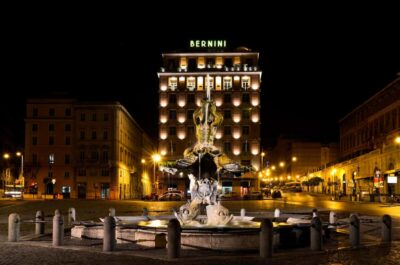
The tour meets in front of the Fontana del Tritone. The staff wears a red and white hat, so spotting your group should be straightforward.
This matters more than you’d think. Underground tours can eat time fast once you’re late, because access and entry points are fixed. Starting on time also helps you get the full three-stop flow without rushing through darker corridors.
You’ll end back at the same meeting point, so you don’t have to figure out a second transport plan at the end of the night.
Stop 1: The Crypt of the Capuchin Friars and Its 4,000 Friars
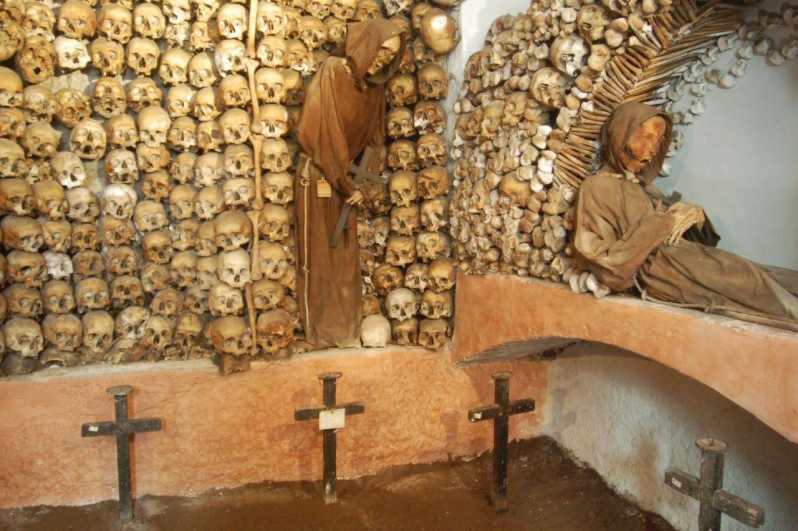
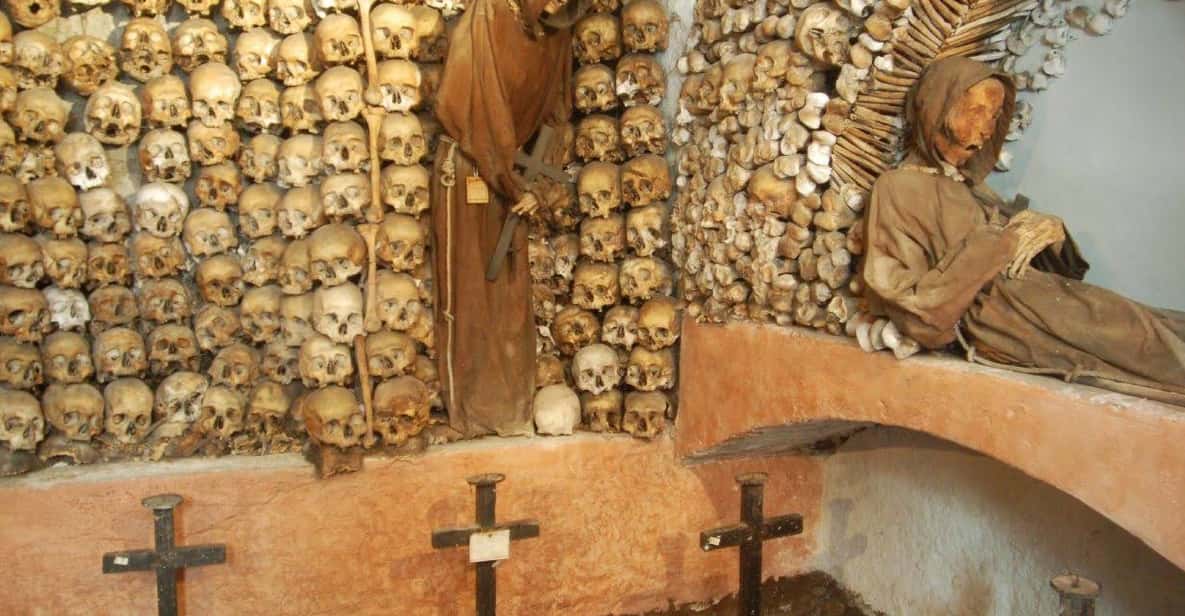
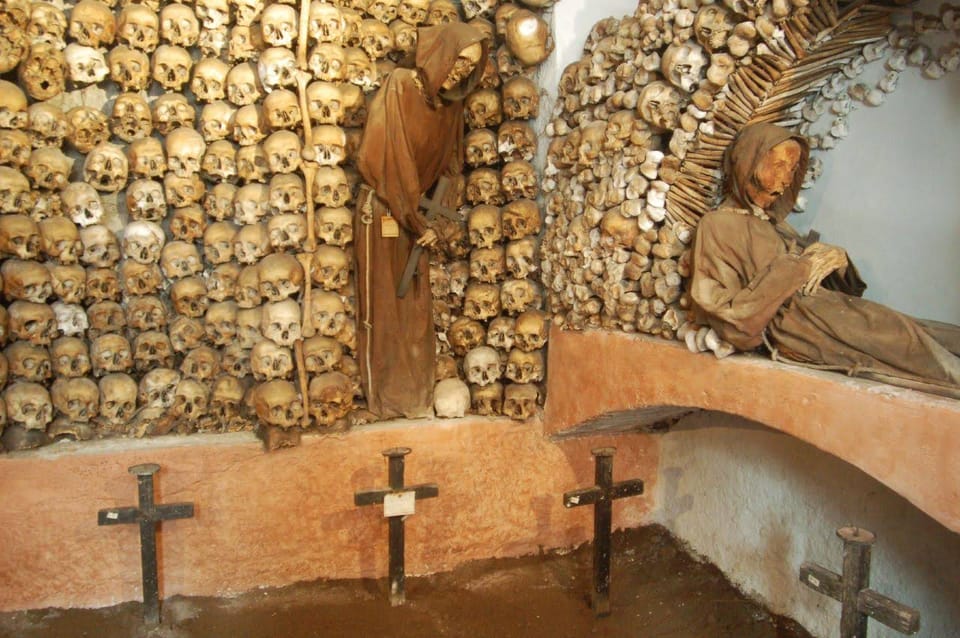
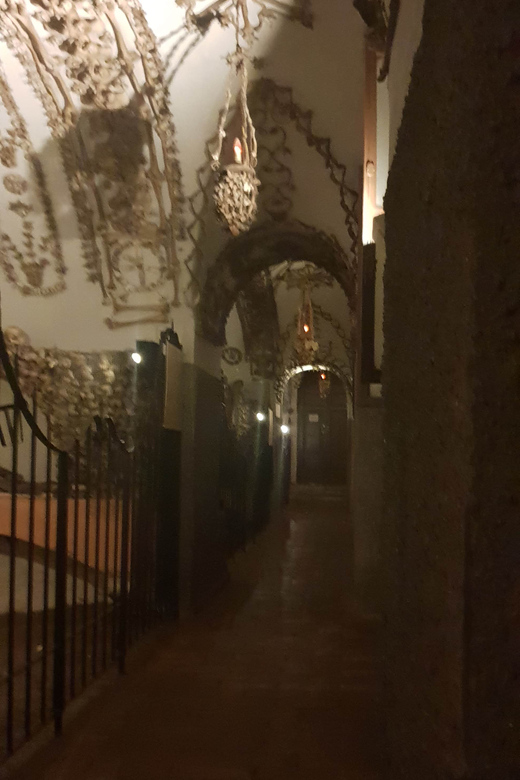
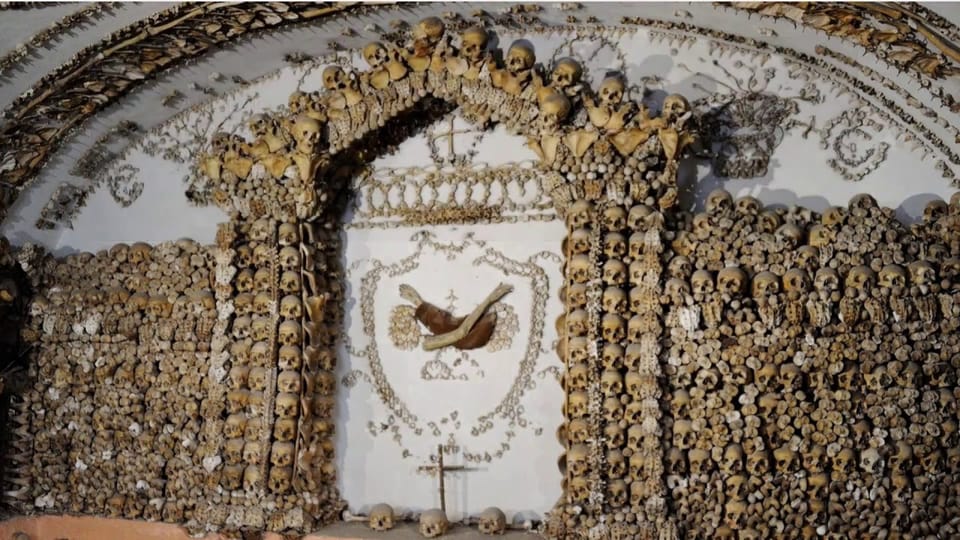
If you’re thinking this tour is called crypts and catacombs for a reason, here it is. Your first major stop is the Crypt of the Capuchin Friars, a cemetery-like space made with bones. The remains are associated with about 4,000 friars, and the structure is part educational, part eerie, and part deeply human.
What to expect during the visit: you’ll walk through the crypt and learn how the bone arrangement became part of the site’s history. The experience is described as intriguing for both adults and children, which tells you it’s not just a grim stop. The guide’s job here is to turn what could be a shock into something that makes sense.
Practical note: photography inside is not allowed. You’ll want your eyes and your guide’s explanations doing the work. Also, this is the kind of site that can feel emotionally intense, so it helps to go in expecting that mood rather than being surprised by it.
Stop 2: Acqua Vergine Aqueducts Under the City (Trevi Fountain Link Included)
After the bone crypt, the tour shifts gears. The second stop is about water and engineering: the aqueduct The Acqua Vergine, which feeds the famous Trevi Fountain to this day.
This is one of the smartest parts of the route. It answers a big question most people have when they visit Rome: how did the city get the water to function at city scale? Here, you’ll see the system that made ancient life possible, and you’ll do it underground.
You’ll also visit an ancient aqueduct that sits beneath a commercial center. That “two Romes at once” contrast is a big part of the value. Above ground you might be shopping or walking past ordinary storefronts. Below ground you’re standing in the bones of a water system that still matters.
Like the crypt, this portion includes guided access, and the tour includes admission and guided coverage in the aqueduct areas. Translation: you’re not wandering through tunnels with a handheld map and hope. Someone is guiding you through what you’re seeing.
Stop 3: A 10th-Century Church, Temple Remains, and a 12th-Century Exorcism Crypt
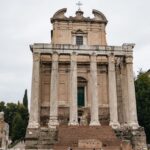
The third stop is a layered time machine. You’ll visit a church constructed in the 10th century, built above the remains of three temples from the 1st century B.C. The area around it used to be the center of a Roman fruit and vegetable market dating back to the 4th century B.C.
That means you’re not only looking at religious space. You’re standing in a location that shifted uses over and over: temples to worship, market life for daily trade, and later church architecture over the top. Rome didn’t wipe the slate clean. It built forward and reused what was available.
Then comes the underground portion: you descend into a crypt that was used for exorcisms during the 12th century A.D. The crypt is described as littered with ancient fragments of human bone. That detail can sound heavy on paper, but the guide’s explanations are what make it understandable as part of a historical religious practice rather than just macabre decoration.
Photography rules change site to site, so pay attention when the guide tells you what’s allowed. You’ll be notified when pictures are or aren’t permitted on each stop.



The Ending: Ancient Prisons and Saint Nicola’s Legend
You finish the tour exploring ancient prisons where, according to legend, Saint Nicola was imprisoned. It’s a fitting close for a tour that mixes infrastructure, religious practice, and funerary memory.
This final stop also helps keep the storyline moving. You’re not only seeing death and ritual. You’re seeing how the city organized punishment and faith stories in the underground space.
As with the rest of the route, the value here is context from a local guide, not just standing in a dark room. The guide links the prison spaces to the legend so it doesn’t feel like a random footnote.
How the 3-Hour Timing Works Underground
This tour lasts 3 hours. Underground tours feel longer than they are because you’re going slower, reading signs, and listening closely in tight areas. The upside is the route is compact. You’re hitting three underground stops in one stretch, which is the best way to make Rome underground work without burning your whole day.
Comfort still matters. You’ll be doing walking plus stairs or uneven underground floors at some points, so bring comfortable shoes and comfortable clothes. Even if you normally love stylish travel footwear, save it for the Colosseum day and wear something you can move in.
Also, plan your expectations: this is not a casual stroll. It’s a guided underground history circuit, and the pacing is built around access to each stop.
Price and Value: What $147.27 Buys You
At $147.27 per person, this isn’t a bargain-basement Rome experience. So I look at what’s included and what that saves you.
You get:
- a local guide
- admission fees
- guided access in the aqueducts, crypt, and church catacombs
- skip the ticket line
- live English tour guide
- English audio guide included
Where the value shows up is in the underground access itself. Many independent visits to crypts and tunnel-like sites involve separate tickets, separate logistics, and extra time coordinating entry. Here, you’re paying for guided underground movement plus admission plus interpretation.
Food and drinks are not included, so you’ll want to plan a meal before or after. And since you’re underground, you may not want to show up with a heavy snack that you’ll struggle with later. Simple plan: eat earlier, carry water if you like (it’s just not listed as included), and focus on the sites.
If you enjoy guided history and want a structured underground route that connects the bones, the water, and the religious layers, this price starts to look reasonable. If you prefer wandering on your own and picking sites one by one, you might feel the cost more.
Photography Rules and Other Practical Constraints
Photography inside is not allowed. That’s the headline rule. The softer rule is that photography isn’t allowed at every site either, and you’ll be told where it is and isn’t permitted as you go.
So bring your curiosity, not a checklist for shots. Use the audio and guide explanations to create your own mental “photo” of what you see.
Comfort and safety matter too. This tour is not suitable for:
- pregnant women
- people with mobility impairments
- people with claustrophobia
- wheelchair users
If any of those apply to you, I’d treat this as a firm no rather than a maybe.
Who Should Book This Underground Rome Tour
This works best if you want a guided Rome underground tour with clear connections between sites. It’s ideal if you like:
- Roman everyday practicality, like water systems through the Acqua Vergine
- darker history explained with context (not just shock value)
- a “three stops, one story” format that moves quickly and keeps your attention
It’s also a decent pick for families with older kids, at least as described for the crypt’s appeal to adults and children. Still, keep in mind the bone-related content and the tight underground spaces.
Skip it if you need step-free access or if enclosed spaces make you uncomfortable. Underground history should feel interesting, not stressful.
Should You Book This Tour?
I’d book this if you want one focused afternoon in Rome dedicated to what most people miss: the city’s underground layers and how they connect through bones, water, religion, and legends.
I’d skip it if you have claustrophobia or mobility/access needs that won’t work with tight underground passageways. I’d also think twice if you’re the type who wants lots of photos, because photography is restricted inside.
If you’re aiming for value through structure—three underground sites, one live English guide, admission included, and a tight three-hour route—this is a strong match.
FAQ
How long is the Rome Crypts, Catacombs and Skeletons Underground Tour?
The tour lasts about 3 hours. Starting times vary, so you’ll need to check availability for the specific schedule.
Where does the tour start and where does it end?
You start at the Fontana del Tritone. The staff will be in front of the fountain wearing a red and white hat. The tour ends back at the same meeting point.
What’s included in the ticket price?
The ticket includes a local guide, admission fees, and guided tour coverage in the aqueducts, crypt, and church catacombs. It also includes a live English guide and an English audio guide, plus skip-the-ticket-line entry.
Are food and drinks included?
No. Food and drinks are not included in the tour.
Is photography allowed inside the sites?
Photography is not allowed inside. Photos are also not permitted at every site, and you’ll be told when photography is or isn’t allowed at each stop.
Is this tour suitable for people with claustrophobia or mobility needs?
No. It’s listed as not suitable for claustrophobia, wheelchair users, people with mobility impairments, and pregnant women.
Can I cancel for a refund, and can I pay later?
Yes. You can cancel up to 24 hours in advance for a full refund. You can also reserve now and pay later.