REVIEW · ROME
Via Roma: A Journey Through Time
Book on GetYourGuide →Operated by REAL BARCELONA TOURS, S.L · Bookable on GetYourGuide
Night Rome feels like a movie set. This guided evening walk weaves through the best-lit sights of Rome after dark, starting in the calm of Piazza di S. Agostino and building toward the Colosseum. If you like your Rome cinematic—lamps, domes, fountains, and stone—all stitched together with clear commentary—this is a strong fit.
I love how the route gets you looking at the big names in better light, not just on a postcard schedule. You’ll get Piazza Navona glowing with Baroque energy, then step into the atmosphere of the Pantheon where the dome and central oculus feel almost weightless at night.
One thing to consider: this is a walking tour and it’s not set up for people with mobility impairments or wheelchair users. Wear shoes you trust, plan for nighttime foot time, and remember flash photography isn’t allowed in certain areas.
In This Review
- Key highlights in plain terms
- Why Piazza di S. Agostino is a smart starting point
- Piazza Navona’s Baroque fountains in evening light
- Pantheon dome and oculus: the night makes it feel bigger
- St. Ignazio di Loyola, the trompe-l’œil ceiling moment
- Galleria Sciarra’s Art Nouveau pause
- Ancient Rome stops: Vicus Caprarius, Trajan’s Column, and forum streets
- Trevi Fountain coin toss and the Piazza Venezia viewpoint
- Palazzo Bonaparte and the Colosseum finale at night
- Price and value: is $32 worth it?
- Tips so you enjoy every stop (not just the last one)
- Should you book Via Roma: A Journey Through Time?
- FAQ
- FAQ
- How long is the Via Roma tour?
- Where does the tour start?
- What sights are included?
- Is hotel pickup included?
- Are entrance fees included?
- What languages is the guide available in?
- What should I bring and what’s not allowed?
- Is the tour suitable for wheelchair users or limited mobility?
- What’s the cancellation policy?
Key highlights in plain terms
- Starts quietly at Piazza di S. Agostino, so the night doesn’t feel rushed from step one
- Piazza Navona fountains after dark, with the kind of lighting that makes the facades look freshly painted
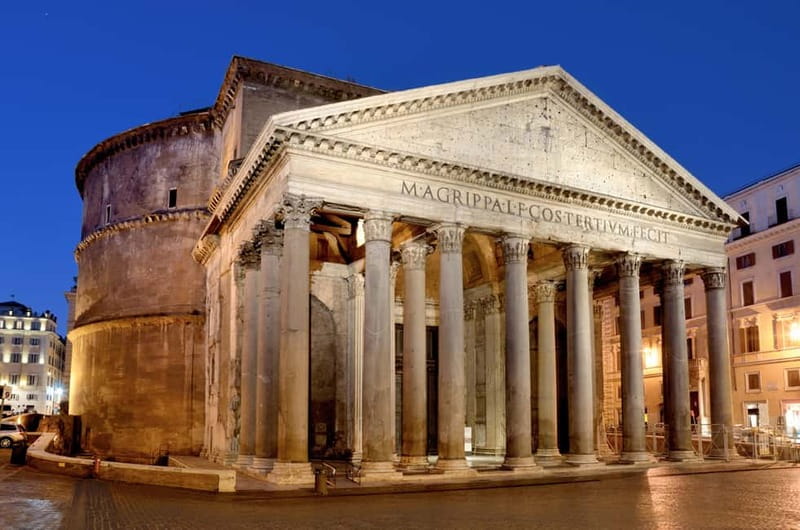
- Pantheon’s dome and oculus, easier to appreciate when you’re not fighting daytime crowds
- St. Ignazio di Loyola’s trompe-l’œil ceiling, the famous optical illusion church moment
- Trevi Fountain coin toss, timed for evening sparkle rather than daylight glare
- Colosseum finale, reached along Via dei Fori Imperiali for an extra “wow” line of sight
Why Piazza di S. Agostino is a smart starting point
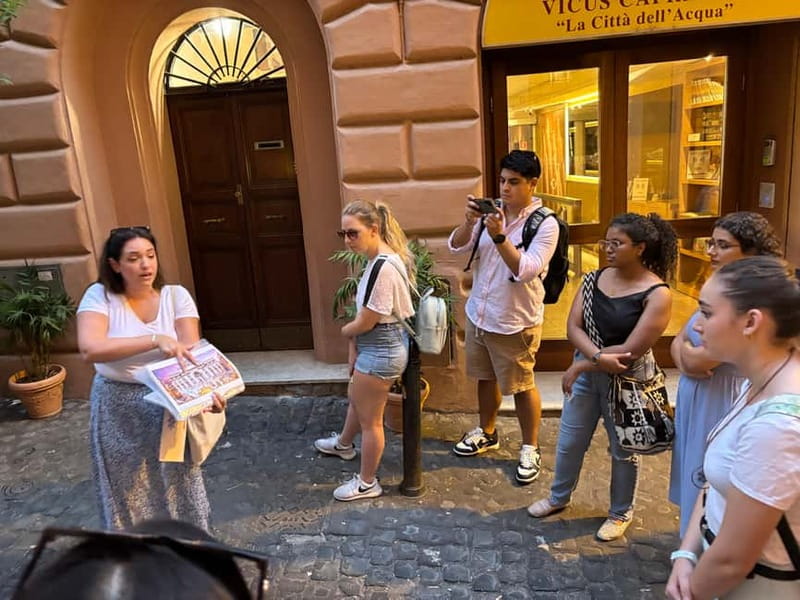
The tour starts at Piazza di S. Agostino, which I like because it sets a gentler tone than starting in the middle of traffic or right beside the most crowded landmarks. You get that first-minute reset—calm square, night air, and time to get oriented—before you begin moving through the historic heart.
From there, the flow is designed like a story. You’re not just stopping for photos; you’re walking a thread through Rome’s layers—Renaissance streets, Baroque showpieces, and ancient traces—so the city feels connected instead of chopped into separate attractions.
The practical side: it’s a 2-hour experience (starting times vary), and it’s built around seeing major sights you’d normally need multiple separate outings to cover. That makes it especially handy if you only have a short window in Rome or you want an evening plan that doesn’t rely on museums with strict opening hours.
You can also read our reviews of more tours and experiences in Rome.
Piazza Navona’s Baroque fountains in evening light
When Piazza Navona turns on its night mood, it stops being just a famous square and starts feeling like stage lighting. The fountains and architecture were meant for spectacle, and at night the contrast does the work for you: bright stone details, darker shadows, and an overall glow that makes the Baroque design read clearly.
This is also a good moment to slow down and watch how the square behaves after dark. You’ll see the way people move around it—where sightlines naturally pull you toward the fountains and facades—so you can take photos without feeling like you’re standing in the wrong place the whole time.
A small tip: bring your camera ready, but keep your settings sensible. Flash isn’t the vibe here anyway, and the night illumination is designed to be photographed naturally.
Pantheon dome and oculus: the night makes it feel bigger
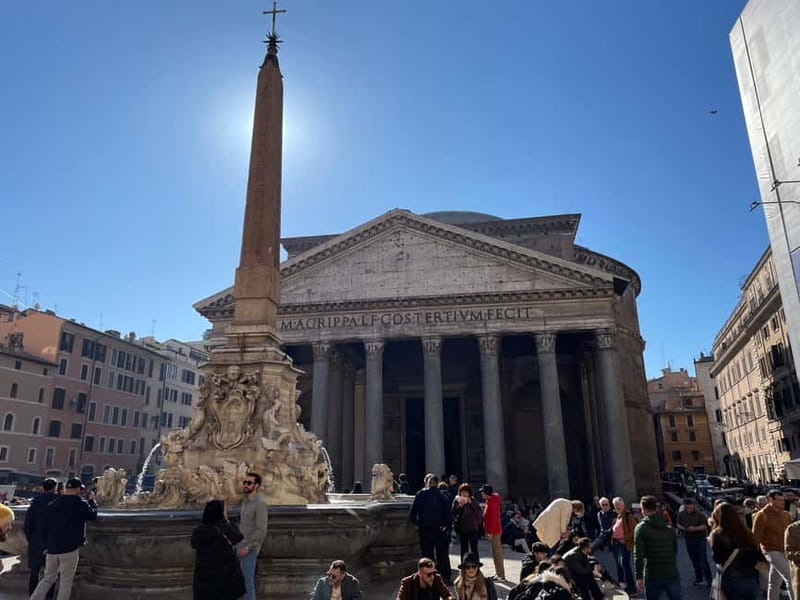
The Pantheon is famous in daylight, but at night it has a different kind of scale. You’re looking at the massive dome and its central oculus with lighting that turns the interior atmosphere into something more ethereal. Even if you’re mainly viewing from the surrounding area, it’s hard not to feel the engineering and the sheer confidence of the building.
What I like about this stop is that it’s not a “quick look and run.” The guide helps you focus on what matters: the dome as the centerpiece, the oculus as the dramatic focal point, and the way the building’s form explains its own importance.
If you’re hoping to go inside: entrance fees are not included, so factor that into your plan. Still, even time spent just appreciating the exterior and layout can be worth it, especially if you’re aiming for an evening route that avoids daylight bottlenecks.
St. Ignazio di Loyola, the trompe-l’œil ceiling moment
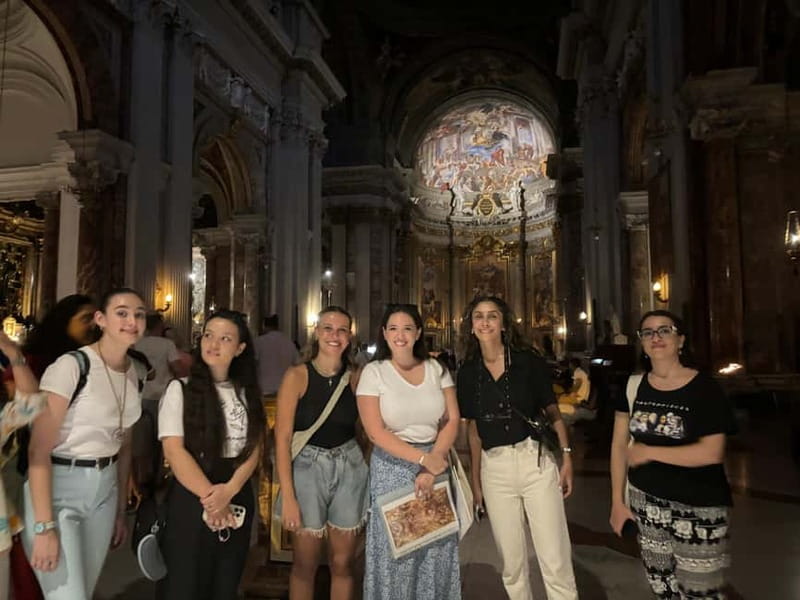
This is the stop that tends to stick in your mind: St. Ignazio di Loyola, often called the Instagram Roman Church because of its famous trompe-l’œil ceiling. Trompe-l’œil is all about tricking your eyes—painted forms that look three-dimensional when the lighting and perspective line up.
At night, the soft illumination helps the effect make sense. You’re not just looking at decorations; you’re noticing how the illusion uses perspective, angles, and color to pull your gaze upward. It’s a rare kind of “wow” because it’s not about scale—it’s about optical design.
I also appreciate that the tour builds in time for this. It’s a real visual payoff after a couple of heavier landmarks, so your brain gets a change of pace. If you’re the type who likes art and architecture but doesn’t want a long museum session, this church stop hits that sweet spot.
Galleria Sciarra’s Art Nouveau pause
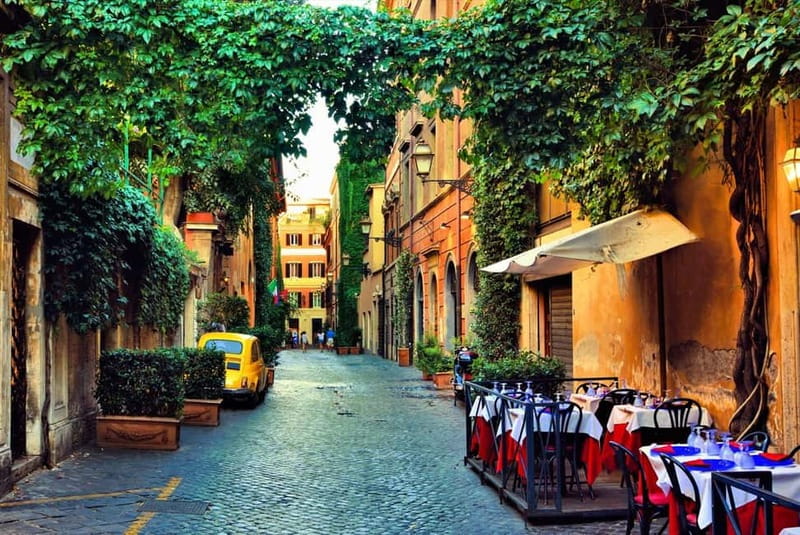
Between the major icons, there’s a moment that feels like a breather: Galleria Sciarra. This spot leans Art Nouveau, and the tour includes it for a reason. In the evening glow, fresco details can look more alive, and the galleria’s shape gives you a different visual rhythm than the open plazas.
If you’ve been in Rome and felt like everything is either a square or a ruin, this kind of covered passage is a nice change. You get a calmer setting, and it gives your feet a short reset without turning the tour into a long stop that drains your momentum.
Practical note: stay aware of where you’re stepping. Night tours mean you’ll often shift between brighter and darker areas, and cobblestones don’t care about your itinerary.


Ancient Rome stops: Vicus Caprarius, Trajan’s Column, and forum streets
What makes this itinerary better than a simple “greatest hits” loop is that it includes a sequence of ancient Rome markers, not just famous façades.
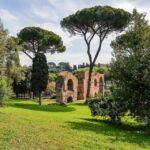
You’ll spend time around the ancient ruins of Vicus Caprarius, nicknamed the City of Water. Even if you don’t know the archaeology terms, the guide’s job is to connect what you’re seeing to the idea of a city organized around life and movement. When you view these remnants at night, they feel less like textbook diagrams and more like fragments of a real, working place.
You also pass by Trajan’s Column and Market, another strong anchor for understanding the imperial era. This is where the tour starts to feel like a walking timeline—Baroque grandeur, then the older story underneath it.
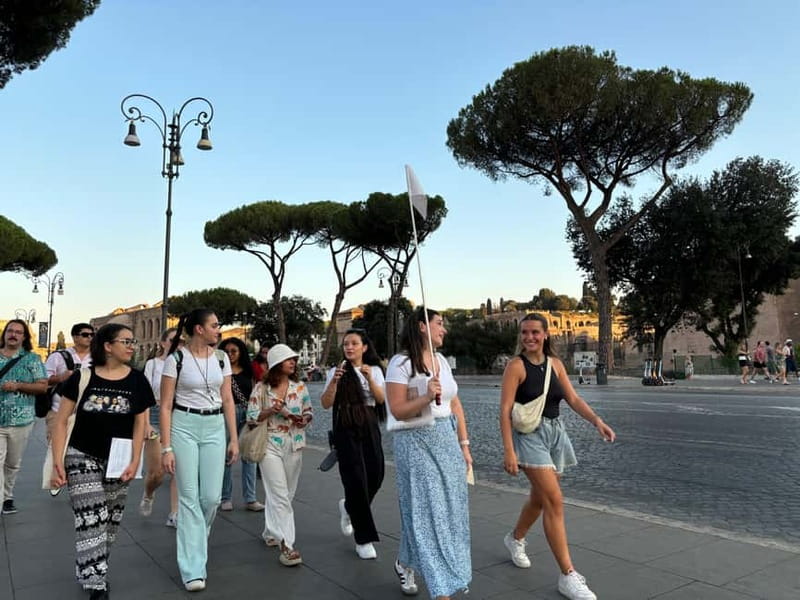
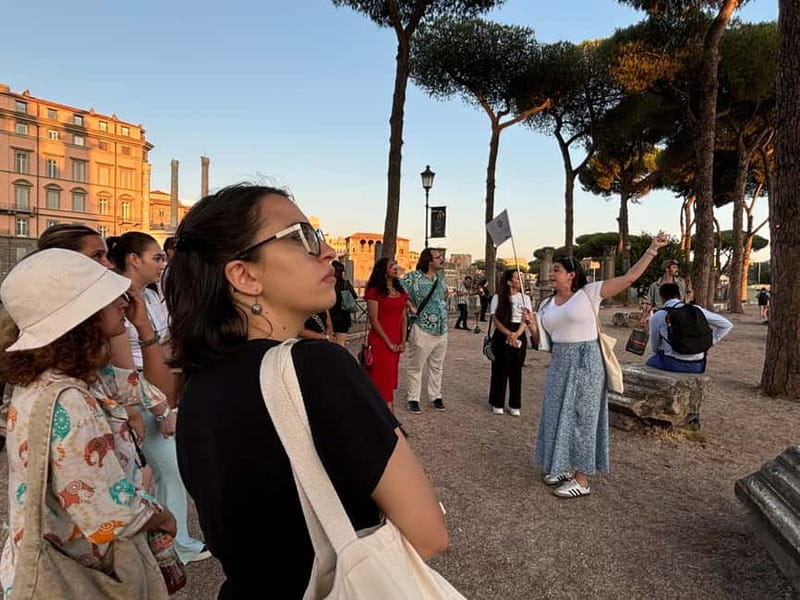
Then there’s the stretch along the area of Via dei Fori Imperiali, where you can look at the remains of ancient Rome under moonlight. It creates a nice sense of scale: you’re not just staring at one landmark; you’re seeing how the city’s layers overlap in the same streets.
Trevi Fountain coin toss and the Piazza Venezia viewpoint
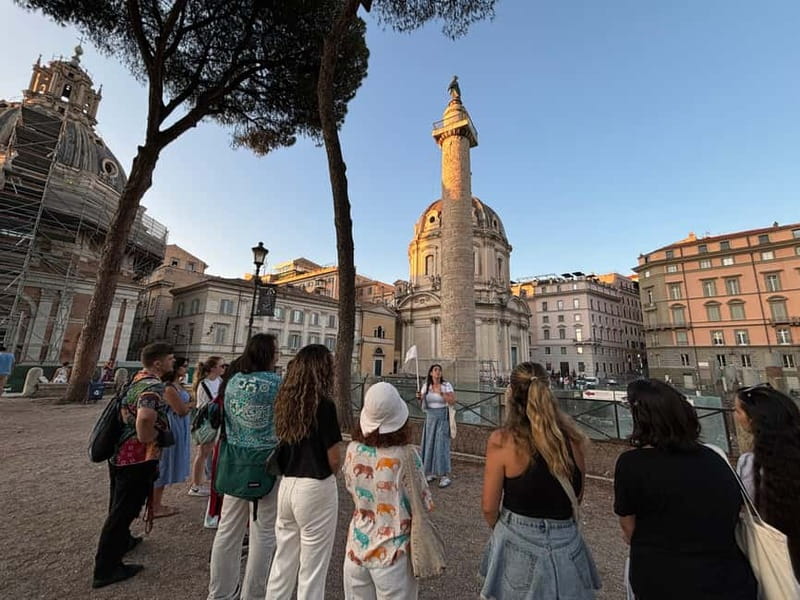
Trevi Fountain is one of those places where timing matters. Evening light makes it feel more magical, and it’s a natural “destination” moment late in the walk. The tour includes the classic coin toss ritual—your sign that you’ll return to Rome (and yes, it’s corny, but it’s also a fun tradition).
A quick reality check: the fountain is always popular, and at night it can still be busy. That’s exactly why a guide helps—you’re not wandering and guessing where to stand, and you can focus on the moment instead of playing traffic cop with your own group.
After Trevi, the route heads toward the viewpoint area around Piazza Venezia and the Vittoriano Monument. This is where you can appreciate Rome’s illuminated skyline. You’ll also see big administrative landmarks tied to Rome’s civic life, including Palazzo Venezia and Palazzo delle Assicurazioni Generali.
I like pairing Trevi’s spectacle with this broader view. The city stops feeling flat. You get a sense of where the landmarks sit relative to each other, which helps your next day explorations feel less random.
Palazzo Bonaparte and the Colosseum finale at night
The tour doesn’t rush straight into the final wow. It adds Palazzo Bonaparte, a Baroque residence with history behind its walls. That stop acts like a transition from the viewpoints and civic buildings into the ancient finale.
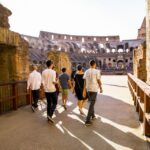
From there, you walk into the closing act: the Colosseum. Reaching it at night changes the mood immediately. The monument looks grander when it isn’t being blasted by midday sun, and the surrounding streets feel like part of the show.
One extra detail I appreciate: the route comes in along Via dei Fori Imperiali, so the approach gives you a long line of sight. Instead of the Colosseum being just a photo background, it becomes the destination you’ve been building toward.
Also, the guide keeps things moving. One practical thing I learned from guides like this is that night stops are about managing attention. You’ll want your camera out for key moments, but you also want to actually look with your eyes—because the best views often last just a little longer than your battery.
Price and value: is $32 worth it?
At $32 per person, this is one of those deals that makes sense if you value time. You’re paying for a professional guide and a structured evening route that covers a lot of major landmarks in a single 2-hour walk.
What makes the value feel real is the mix:
- You get landmark icons like Pantheon, Trevi, and Colosseum.
- You also get the stops that make the walk feel special, like St. Ignazio di Loyola and Galleria Sciarra.
- The guide helps you connect what you’re seeing, which is where DIY “photo hopping” often falls apart.
Entrance fees aren’t included, so if you decide you want to go inside certain sights, you’ll need to plan that extra cost on your own. Also, there’s no hotel pickup, so the meeting point matters. If you’re okay with meeting on your own and walking confidently, the $32 feels like a smart way to buy clarity and coverage.
Pacing note: the planned duration is 2 hours, and in at least one case the experience ran a bit longer (around 2.30). That’s normal for night walks with photo stops, church visits, and the occasional “stop, look, listen” moment.
Tips so you enjoy every stop (not just the last one)
Here’s how you make this tour smoother:
- Wear comfortable shoes. Cobblestones plus evening sight time adds up fast.
- Bring a water bottle. Food and drinks aren’t included, so hydration is on you.
- Bring your camera—just skip flash. Flash photography isn’t allowed in certain areas.
- Expect a true walking pace. This isn’t a sit-and-stare tour, and it isn’t set up for wheelchair users or people with mobility impairments.
Language is another practical plus: the guide works in Spanish and English, so you can choose what best fits you. One highlight from the experience is the guide style—Sara, in particular, has stood out for being engaging and friendly, with explanations that make the stones feel less silent.
Finally: check your start time. Options vary, and starting earlier or later can change the crowd level and the lighting you get at each stop.
Should you book Via Roma: A Journey Through Time?
If you want Rome at night with a plan, I think this is a good booking. You’ll cover major icons plus a few stops that add character—especially St. Ignazio di Loyola and the Art Nouveau break at Galleria Sciarra. It’s also a solid choice when you want your evening to feel intentional without turning into a marathon.
Skip it if walking is hard for you, because it’s not suitable for wheelchair users or people with mobility impairments. And if you hate structured routes, you might feel constrained. But if you’re the type who likes seeing a lot without getting lost, this tour gives you a satisfying flow from peaceful squares to the Colosseum’s night grandeur.
FAQ
FAQ
How long is the Via Roma tour?
The tour duration is 2 hours. Starting times vary, so you’ll want to check availability for the specific slot you want.
Where does the tour start?
The start location is at Piazza di S. Agostino. The exact meeting point may vary depending on the option you book.
What sights are included?
The tour includes visits to major landmarks such as Piazza Venezia, Pantheon, St. Ignazio di Loyola Church, Trevi Fountain, and Piazza Navona, along with other sites on the route including Trajan’s Column and Market.
Is hotel pickup included?
No. Hotel pickup and drop-off are not included.
Are entrance fees included?
No. Entrance fees to any attractions are not included.
What languages is the guide available in?
The live tour guide speaks Spanish and English.
What should I bring and what’s not allowed?
Bring comfortable shoes, a camera, and water. Flash photography is not allowed in certain areas.
Is the tour suitable for wheelchair users or limited mobility?
No. It is not suitable for people with mobility impairments or wheelchair users.
What’s the cancellation policy?
Cancellation is free up to 24 hours in advance for a full refund.