REVIEW · ROME
Colosseum and Ancient Rome Discovery Guided Small-Group Tour
Book on GetYourGuide →Operated by LivTours - We craft tours, you live them · Bookable on GetYourGuide
Priority access makes Rome feel less chaotic. This small-group Colosseum and Roman Forum tour is designed to get you inside fast, then keep you oriented as you move from priority Colosseum entrance to the big viewpoints on Palatine Hill.
I like how the route is guided and story-led, so the ruins feel connected instead of like random stones. I also like that you’re not stuck in lines—there’s express security and a skip-the-line approach built in.
One thing to know up front: this tour does not include access to the Colosseum arena floor, so you’ll be viewing from the permitted areas only.
In This Review
- Key highlights at a glance
- How a semi-private Colosseum and Roman Forum tour keeps you oriented
- Entering the Colosseum: priority access and the view from the first tier
- Palatine Hill right after the Colosseum: viewpoints and imperial stories
- Via Sacra and the Roman Forum: the practical center of ancient Rome
- The guide is the difference: how Dario’s style keeps it lively
- Time and tour flow: what you can expect from a 3-hour visit
- Price and value: what you’re paying for at $151.92 per person
- Should you book this Colosseum and Ancient Rome discovery tour?
- FAQ
- Is arena floor access included?
- What do I need to bring for entry?
- How long is the tour?
- Where does the tour meet?
- What’s included in the visit?
- Is the guide in English?
Key highlights at a glance
- Priority entrance to the Colosseum with an express security check to cut down waiting
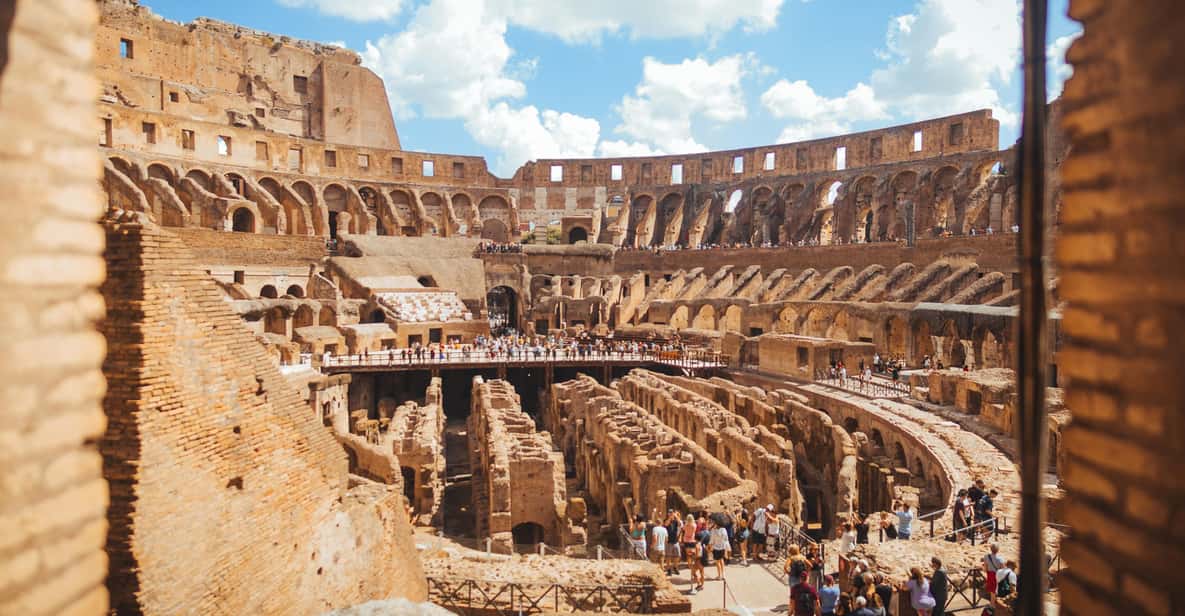
- First-tier views from inside the Colosseum after you enter through its archways
- Palatine Hill walk-up with city-overlook panoramas tied to imperial stories
- Via Sacra and Roman Forum focus, including major landmarks like the Temple of Julius Caesar
- Small-group feel that makes it easier to ask questions and stay engaged
- No arena-floor access on this specific tour format
How a semi-private Colosseum and Roman Forum tour keeps you oriented
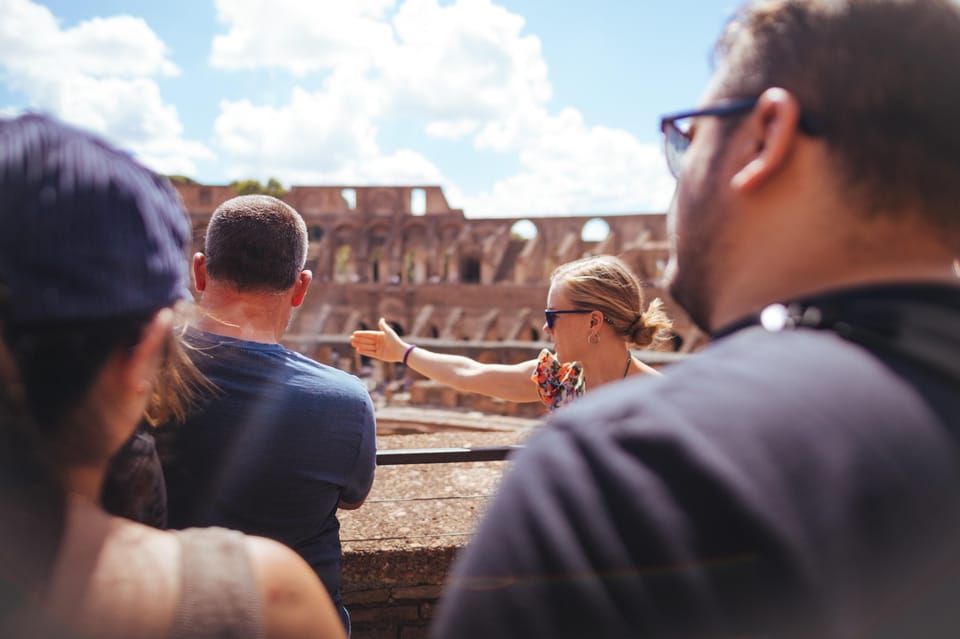
Rome’s top attractions can feel like a blur. You see the Colosseum once, snap a few photos, and suddenly you’re lost in a crowd—especially when you’re trying to connect the Colosseum to the Roman Forum and Palatine Hill. This tour solves that by treating the day like one connected walk through the city’s center, not three separate stops.
You’ll start on the edge of the Colosseum area and move in a guided order that keeps the story straight: Colosseum first, then Palatine Hill, then the Forum via the ceremonial street (Via Sacra). That flow matters because each place explains the next one. The Colosseum gives you the stage and the spectacle. Palatine Hill gives you the power and the people above it. The Roman Forum shows you the politics and commerce that fed the whole machine.
It’s also a semi-private setup with a small group. That’s not just a comfort perk. In a site like this, small groups mean your guide can answer questions without turning everything into a traffic jam. You’ll get more than a route—you’ll get a guided lens for what you’re seeing.
You can also read our reviews of more guided tours in Rome
Entering the Colosseum: priority access and the view from the first tier
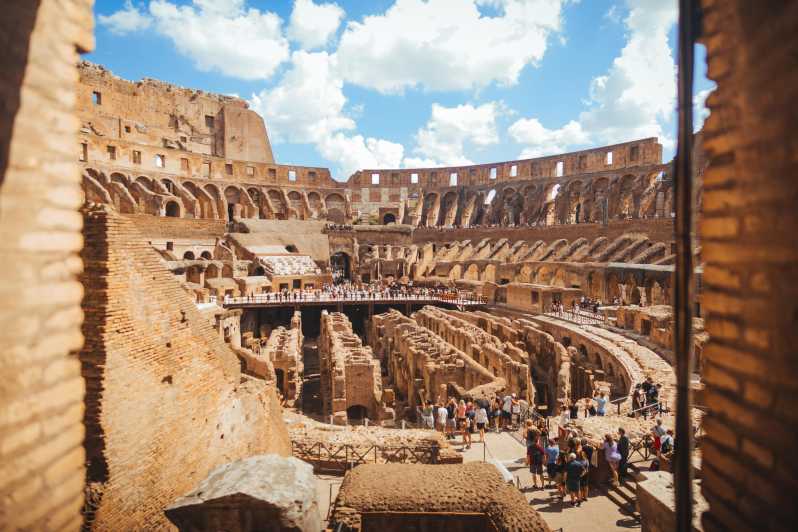
The headline is the exclusive priority access to the Colosseum. You don’t just buy a ticket and hope for the best. You go through an express security check, then get directed through the entry flow so you can spend your limited time actually inside.
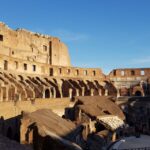
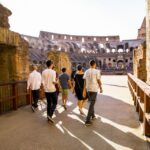
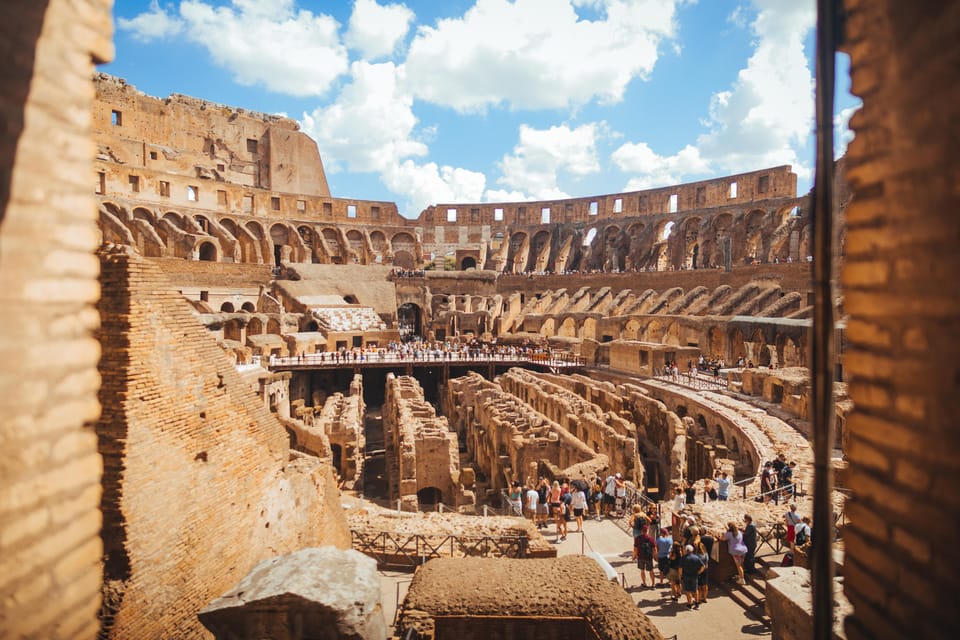
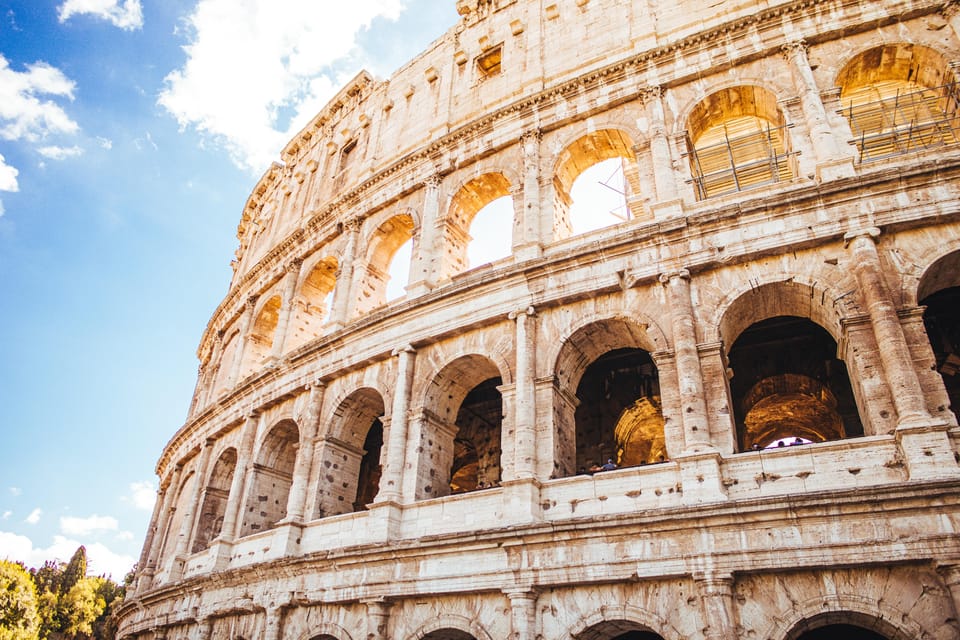
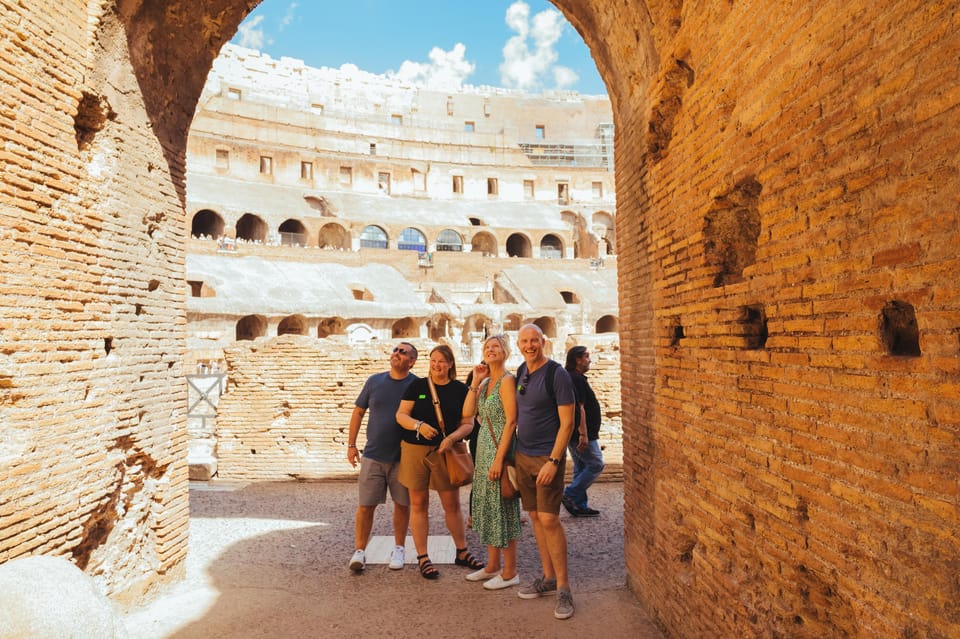
Once you’re in, you’ll walk through the Colosseum’s archways and reach the first tier. That matters because it changes the whole feel of the visit. From that level, you get the arena shape and the monumental scale without needing arena-floor access. You’ll also get a sweeping panorama of the Colosseum itself—exactly the kind of viewpoint that helps you understand how the building was designed to funnel crowds, sound, and attention.
Your guide ties what you’re seeing to the people and events that made the Colosseum famous: emperors, gladiators, exotic animals, and the Roman masses. When your guide connects those roles to the structure around you, the ruins stop being abstract. Even if parts are worn down, the building still reads like a purpose-built machine for spectacle.
The one limitation to keep in mind is that this tour doesn’t take you onto the arena floor. If your dream is standing where events happened, you’ll need a different option. But if your goal is to understand the Colosseum fast—without wasting half the day waiting—this format fits well.
Palatine Hill right after the Colosseum: viewpoints and imperial stories
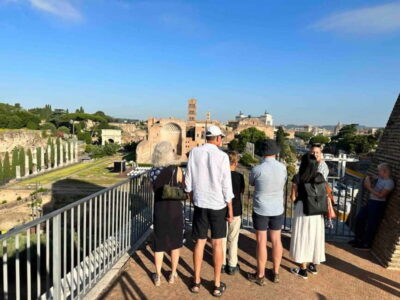
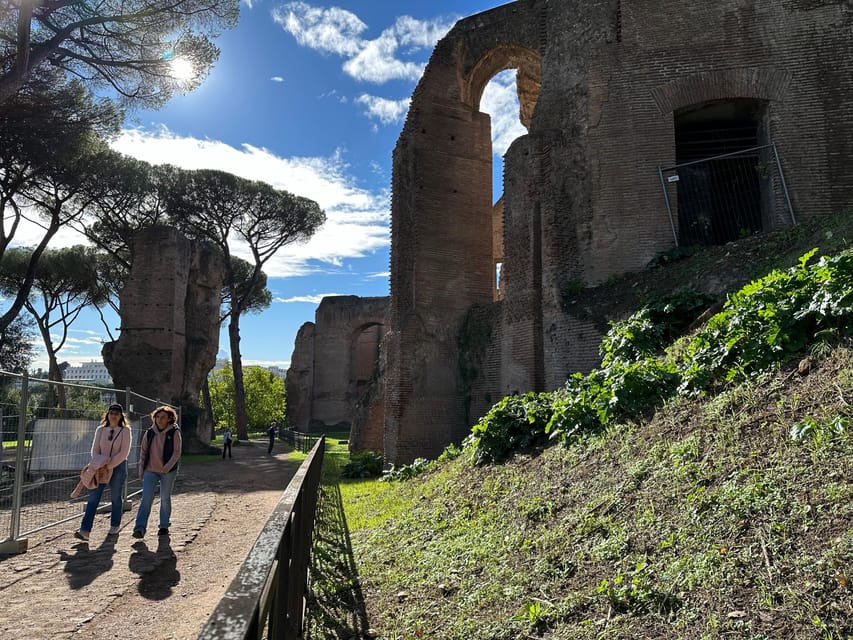
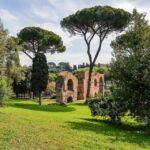
After the Colosseum, you’ll cross over to Palatine Hill and go up with your guide. Palatine Hill is where Rome’s power feels closer, because it’s tied to residence, status, and the view over the city. You’ll get that famous overlooking perspective, but the tour keeps it practical: you learn why this height mattered and how the hill functioned in daily Roman life for the elite.
Your guide shares stories connected to the lavish lifestyles of ancient Roman rulers. That storyline is especially useful here because Palatine Hill is all about ruins scattered across slopes. Without context, it’s easy to miss what each fragment was for. With a guide, those excavations become a map: who lived here, what their status meant, and how power related to the rest of the city.
This stop is also where the day becomes more visual. From Palatine Hill, you can look out and start imagining how Rome spread outward around its center. You may also find that the “big picture” clicks: the Colosseum’s crowds weren’t separate from politics and wealth. They were part of the same world.
Via Sacra and the Roman Forum: the practical center of ancient Rome
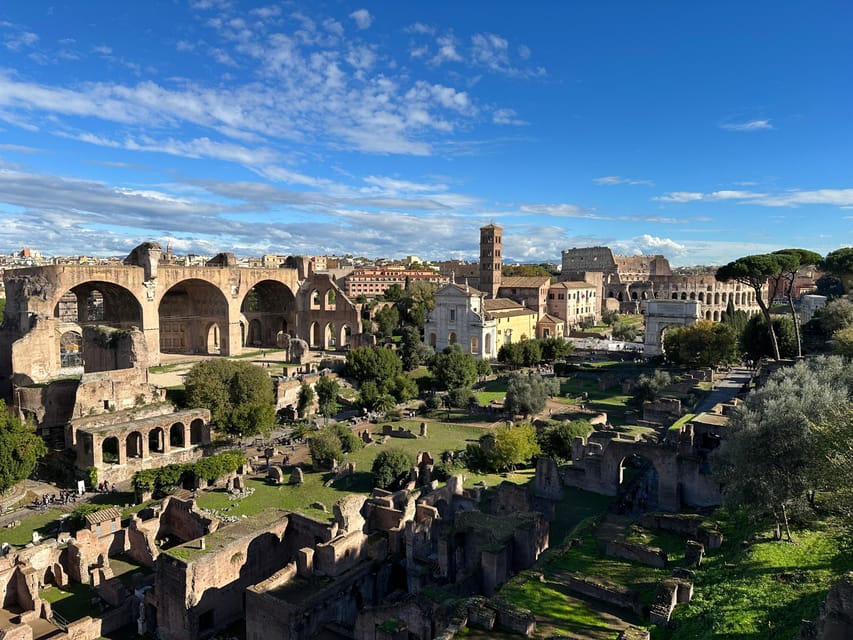
The Roman Forum is often treated like one giant blur of ruins. That’s the problem. It wasn’t a blur back then—it was the heart of Rome’s commercial and political life, packed with temples, theaters, and government buildings.
This tour targets the Forum with a focused route. You’ll walk along Via Sacra, the major ceremonial route through the area, and your guide will point out what you’re looking at in terms of function and importance. Then you’ll spend time in the Roman Forum, where the remains are broken up but still readable when someone helps you connect the dots.
What I like about this approach is that it gives you something to do with your eyes. Instead of just trying to interpret broken stone, you learn what each surviving area represented—so your brain builds a structure: this was for public life, that was for decision-making, and that’s where major civic identity formed.
This stop includes key areas like the Temple of Julius Caesar. Seeing that kind of landmark within the Forum context helps you understand why the Forum mattered beyond being a busy square. It was a stage for authority, law, religion, and public message—so when your guide explains the Roman “why,” the ruins stop feeling random.
The guide is the difference: how Dario’s style keeps it lively
Colosseum tours vary wildly. Some guides recite. Others teach you how to see. The best part of this experience is that your guide aims for understanding, not just narration.
One standout example from a family-focused group was Dario, who was intentional about getting to know people and then linking ancient Roman culture to things that felt familiar. He used sounds and gestures to keep children engaged and used visual aids to explain what’s missing from the ruins. That kind of technique matters for adults too, because it turns long stretches of stone into a clear timeline and story.
I’d watch for that teaching style in any group you book—especially if you’re traveling with kids or you want your visit to feel more like a guided conversation than a lecture. When a guide answers questions and adds helpful tips in real time, you get a better grasp of what you’re looking at and why it mattered.
And because this is a semi-private, small-group format, the guide has room to interact. You’re not just moving forward because the clock says so. You can ask, react, and follow the story at a pace that makes the ruins stick.


Time and tour flow: what you can expect from a 3-hour visit
This is a 3-hour experience, and you should treat it as a fast, high-impact Rome lesson rather than a slow museum stroll. You’ll start at a specific meeting point near the Colosseum—important because you want to be in the right place before the priority entry window opens.
You’ll meet in front of the SOS sign outside the Colosseum Metro station on the upper floor entrance in Largo Gaetana Agnesi. The location is easy to miss if you show up at the lower entrance by mistake, so plan to double-check you’re at the upper level.
From there, the flow is built to minimize downtime: priority entrance into the Colosseum, guided time that includes the first-tier viewpoint, then the walk-up to Palatine Hill, followed by Via Sacra and Roman Forum time. The tour ends back at the meeting point, which simplifies your next step—no confusing mid-route drops.
If you’re trying to pack a Rome day, this timing is a useful anchor. It’s long enough for real explanations and multiple areas, but short enough that you can still plan another neighborhood or meal after the tour without feeling rushed.
One more detail worth noting: the exact order can vary based on starting time and personal requests. That’s normal for these sites, and it’s actually helpful. If you’re arriving at a certain time, your guide can adapt to keep the flow logical.
Price and value: what you’re paying for at $151.92 per person
At $151.92 per person, this isn’t a budget “walk-by” kind of tour. You’re paying for three things that add up fast in Rome: priority access, a live English guide, and a structured route that covers Colosseum, Palatine Hill, and the Roman Forum.
Priority entrance is the big value driver here. The Colosseum is famous for long lines, and time is the one currency Rome doesn’t refund. With priority access and an express security check, you trade waiting for seeing. That means your money buys time inside the sites—where the explanations actually land.
You also get more than just the Colosseum. The inclusion list points to meaningful Forum and Hill highlights, including the Titus Arch, Palatine Hill, and the Temple of Julius Caesar, plus skip the line into Roman Forum. When a tour bundles those areas into a guided timeline, the value gets clearer: you’re not piecing it together with separate entries and disconnected narratives.
Just remember the one major limitation: no arena floor access. That’s not a deal-breaker for everyone, but it is the one reason the price may feel high or low depending on what you want. If you want the arena floor specifically, look for a different ticket type. If you want the bigger story, the priority route and tight 3-hour plan make this feel like a fair spend.
Should you book this Colosseum and Ancient Rome discovery tour?
Book it if you want your first Colosseum day to feel organized, not overwhelming. This is a smart choice when you value priority access, a guided route across the Colosseum-to-Forum story, and a small-group experience where questions make it into the conversation. It’s also a solid fit for families, given how guides like Dario connect ancient culture to real-world understanding.
Skip it (or look for another format) if arena-floor access is the main goal. This tour is built for the views and the story from the permitted areas, not for standing on the event level.
If you only have a few hours and you want to leave with clearer ideas—what the Colosseum was for, what Palatine Hill represented, and why the Roman Forum ran the city—this tour is an efficient way to get there.
FAQ
Is arena floor access included?
No. This tour does not include access to the Colosseum arena floor.
What do I need to bring for entry?
Bring a passport or ID card. All Colosseum tours require photo ID for all participants, and you’ll need to show it to enter.
How long is the tour?
The tour runs for 3 hours. Starting times vary, so you’ll want to check availability.
Where does the tour meet?
Meet in front of the SOS sign outside the Colosseum Metro station, on the upper floor entrance, located in Largo Gaetana Agnesi. Make sure you’re at the upper level.
What’s included in the visit?
Priority Colosseum entrance, skip the line into the Roman Forum, plus guided stops that include the Titus Arch, Palatine Hill, and the Temple of Julius Caesar.
Is the guide in English?
Yes. The live tour guide is English.