REVIEW · ROME
Jewish Ghetto Walking Tour with gelato
Book on GetYourGuide →Operated by Vitus · Bookable on GetYourGuide
Old Rome still talks when you walk. This Jewish Ghetto walking tour connects Roman ruins to Jewish life across centuries, with stops like the Portico d’Ottavia and the Theater of Marcellus. I like that the guide keeps the story human—what changed, what endured, and how daily life persisted even through harsh periods—then caps it with something you can actually taste.
Two standouts for me: the way you get oriented through key landmarks in the area, and the homemade kosher gelato that breaks up the walking in a satisfying, real-world way. One thing to plan around is that this is a steady foot route: you’ll want real walking shoes, sun protection, and a head covering for sacred places along the way.
In This Review
- Key highlights to watch for
- Jewish Ghetto on foot: why this walk hits differently
- Where the tour starts and how to get oriented fast
- Theater of Marcellus and Portico d’Ottavia: Roman bones under later history
- The gelato break that’s part of the story
- Piazza Mattei and the Turtle Fountain: a quick stop with meaning
- The last wall section, the Great Synagogue, and the shift to deeper stories
- Oldest functioning bridge to Tiber Island: stories you’ll remember
- A 3-hour walk plan: what you’ll be doing and how to handle it
- Value check: is $46 a fair deal for Rome?
- Who should book this Jewish Ghetto walking tour with gelato
- Should you book it
- FAQ
- How long is the Jewish Ghetto walking tour?
- What is included in the price?
- Where does the tour start?
- What stops are included on the walk?
- What should I bring?
- Is flash photography allowed?
Key highlights to watch for

- Roman landmarks with Jewish-era context, including the Theater of Marcellus and Portico d’Ottavia
- Piazza Mattei’s Turtle Fountain, tied into the neighborhood’s layered history
- A practical change of perspective as you move from ghetto streets to Tiber Island
- Crossing the oldest functioning bridge in Rome, with guided historical stories
- Homemade kosher gelato at a local gelateria, plus tips on finding the best flavors
Jewish Ghetto on foot: why this walk hits differently
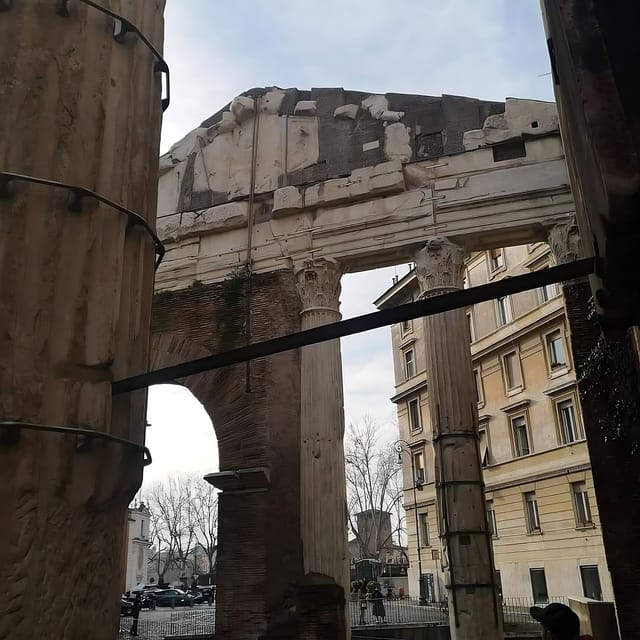
Rome’s Jewish Ghetto is one of those places where the street view can feel quiet, even when the history isn’t. What makes this tour work is the pacing: you walk through the neighborhood in a way that helps you see the timeline, not just collect facts.
You’ll cover a compact area over about 3 hours, so it’s not rushed sightseeing. The route also stitches together Roman structures you can still recognize today with the later Jewish community that shaped the area’s identity. That contrast is the point.
The other reason I like this format is that a guide can point out what you’d otherwise miss. For example, you’ll be taken to spots that connect architecture to lived experience—where people gathered, where restrictions were enforced, and where resilience shows up in very specific locations.
You can also read our reviews of more walking tours in Rome



Where the tour starts and how to get oriented fast
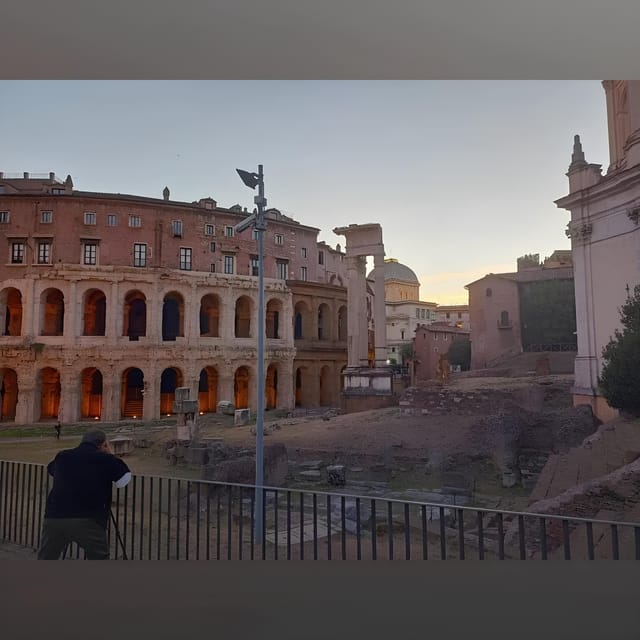
You meet your guide at the church area indicated for the experience, listed as Piazza S. Bartolomeo All’Isola, 22. The tour overview also states that the journey begins with a meet-up anchored near Trajan’s Column in central Rome.
Either way, the goal is the same: you get an orientation before you start walking into the older streets. I’d treat the first few minutes as your setup time. Listen closely, because the guide will explain what you’re about to see—especially the transition from major Roman sights into the Jewish Ghetto area.
Practical note: wear a hat and bring water. This route makes you stop for photos and short looks, but it also involves enough walking that cooling down later may be harder than you think.
Theater of Marcellus and Portico d’Ottavia: Roman bones under later history
The tour includes time near the Theater of Marcellus, a name that signals you’re entering Rome’s older layers right away. Even if you’ve seen big ruins before, these stops feel more connected when a guide explains how the neighborhood developed around them.
Then you head to the Portico d’Ottavia. The key detail here is not just that it’s ancient. It’s that it’s part of the same urban fabric you’re walking through now. You can still experience the idea of continuity: structures from long ago still shape how the area reads in modern Rome.
Why this matters for your enjoyment: if you’re visiting Rome for the first time, Roman history can blur together. A guided route that ties these structures to later Jewish life helps your brain file things in a cleaner way.
The gelato break that’s part of the story
You’ll stop at a gelateria for homemade kosher gelato. This isn’t just a snack stop to keep you happy. It’s included in the experience because food traditions are part of how communities endure.
There’s a small practical tip from an actual booking: focus on the real flavors by looking out for raw gelato, which a guide emphasizes as a way to get the authentic taste. So if you’re the type who wants the best spoonful, don’t just pick based on the color. Ask what they recommend for that raw style and flavors.
What I’d do: use this stop to reset. Sit for a moment, hydrate, and enjoy the fact that you’re eating something local that fits the tour’s theme. It makes the rest of the walking feel less like homework and more like a guided stroll with a payoff.
Piazza Mattei and the Turtle Fountain: a quick stop with meaning
After the gelato stop, the tour goes to Piazza Mattei to see the Turtle Fountain (Fontana delle Tartarughe). The guide uses it as a visual anchor, a place you can mentally mark as the walk continues.
Even if you know fountains exist all over Rome, this one stands out because it’s specific to the neighborhood story around it. You’ll get a guided explanation of how the route connects from earlier Roman context into the ghetto area’s distinct identity.
For you, this is also a useful pause point. A short stop like this helps break the route into “chapters.” You remember what came before and what you’re heading toward next.




The last wall section, the Great Synagogue, and the shift to deeper stories
As you keep walking, you’ll pass the last remaining piece of the wall that kept the Jewish community in this area for centuries. That’s a heavy moment in the best way: it turns history into something physical, something you can point at while a guide explains what it meant.
Next up is the Great Synagogue. The tour includes discussion of the community’s tumultuous past and resilience in Rome. Even without getting graphic, this is the part of the walk where the story becomes more personal and grounded.
Why I think this stop structure works: the tour doesn’t treat history like a museum label. It connects places to consequences—what boundaries looked like, how public life changed, and how community identity persisted anyway.
You should also plan for a respectful visit mindset. The tour data notes you should bring a head cover or kippah for sacred places, so use that as your cue to slow down mentally, not just physically.
Oldest functioning bridge to Tiber Island: stories you’ll remember
One of the most memorable parts is the crossing onto Tiber Island via the oldest functioning bridge in Rome. The bridge crossing does two things at once: it gives you a physical transition and it signals a change in the stories the guide tells.
On Tiber Island, the tour includes WWII-related context: the story of a hospital that saved people during the war. The guide also ties in Asclepius, connected to a temple story that’s now associated with a church. These details make the island feel less like a postcard location and more like a place where different eras left their marks.
When you reach the end point on the island, you’ll realize the tour arc did more than cover sights. It gave you movement through time. You start with recognizable Roman landmarks, you follow the ghetto neighborhood to places that still carry weight, and you end at a site where history and survival stories sit side by side.
A 3-hour walk plan: what you’ll be doing and how to handle it
The tour is listed at 3 hours, and the route includes guided time and walking time. You’ll spend around an hour at the start area and get walking blocks through the neighborhood, plus a guide-led stop at key points like the Turtle Fountain.
Here’s what that means for your day: you can fit it between other major Rome stops without it swallowing your entire afternoon. It’s also short enough that you can take breaks when you need to, without feeling like you’re abandoning the group.
That said, this is still a walking tour. You’ll want:
- Comfortable shoes you trust on uneven pavement
- Water, especially in warmer months
- A hat and sunscreen
- A head cover or kippah if you’ll be visiting sacred sites on the route
A small rule to keep in mind: the experience notes that flash photography isn’t allowed in certain areas. So if you rely on flash for low light shots, adjust your camera settings before you go.
Also, entrance fees to sites aren’t included. The tour is designed around guided walking and viewing key locations, so you won’t assume tickets are part of the price unless the tour specifies them for a given stop.
Value check: is $46 a fair deal for Rome?
$46 per person for a 3-hour guided walk in central Rome includes a few big pieces that matter.
First, you’re paying for a professional guide. In the Jewish Ghetto area, where streets and buildings can look similar to an untrained eye, that guidance can turn a plain walk into a story you actually retain.
Second, you’re getting homemade kosher gelato included. That’s not a token cookie. It’s a planned stop, and it’s part of the cultural flavor of the experience.
Third, the route includes a sweep of high-interest locations: Theater of Marcellus, Portico d’Ottavia, Turtle Fountain, the Great Synagogue area, and Tiber Island. Not every walking tour strings together Roman classics and the Jewish Ghetto story in one compact outing.
The main value tradeoff is that there may be limitations around site entry because entrance fees aren’t included. If your goal is to go inside many buildings, you might still want a separate ticketed plan for those interiors. But if you want a coherent guided walk with meaningful stops, the package makes sense.
Who should book this Jewish Ghetto walking tour with gelato
This tour fits best if you:
- Want Rome history with a human focus, not just stones and dates
- Like guided explanations that connect architecture to community life
- Enjoy a food payoff that matches the theme—kosher gelato rather than a random snack
- Prefer a structured walking route you can finish in one afternoon
It’s also a good choice for first-timers who want to understand how Rome’s Roman layers and Jewish history overlap without creating a map-juggling headache.
One consideration: the experience is marked as wheelchair accessible, but it’s also listed as not suitable for people with mobility impairments and wheelchair users. If mobility is a factor for you, you should treat this as a red flag and verify suitability directly with the operator before you go.
Should you book it
Book it if you want a guided, story-driven walk through the Jewish Ghetto area, with major Roman landmarks, a meaningful transition to Tiber Island, and homemade kosher gelato built in. The $46 price becomes easier to justify when you factor in both the guide and the planned gelato stop.
Skip or rethink it if you need something mostly seated or low-walking. Also consider the sacred-place etiquette: bring a head covering, and plan for warm weather comfort.
If you’re comfortable walking and you like history told through specific places you can see, this is the kind of tour that leaves you with real mental images, not just a list of stops.
FAQ
How long is the Jewish Ghetto walking tour?
The tour duration is 3 hours.
What is included in the price?
Included are a professional guide, a walking tour of Rome’s Jewish Ghetto, and homemade kosher gelato.
Where does the tour start?
The meeting point is listed as in front of the Church at Piazza S. Bartolomeo All’Isola, 22. The overview also mentions meeting near Trajan’s Column, so check your booking details for the exact meetup spot.
What stops are included on the walk?
You’ll see the Theater of Marcellus, the Portico d’Ottavia, the Turtle Fountain in Piazza Mattei, the area around the Great Synagogue, and you’ll cross to Tiber Island, finishing at Piazza Venezia.
What should I bring?
Bring comfortable shoes, water, sunscreen, and a hat. For sacred places, you should also bring a head covering or kippah.
Is flash photography allowed?
No. Flash photography is not allowed in certain areas during the tour.