REVIEW · ROME
Rome: Wonders of Ancient Rome at Dusk
Book on GetYourGuide →Operated by Touriks · Bookable on GetYourGuide
Night makes Rome click into place. This Wonders of Ancient Rome at Dusk tour turns the big monuments into a story you can follow, right as the day-trips start to thin out. I like that it hits the most famous names (Colosseum, Roman Forum, Trajan’s Forum) without wasting time, and it does it with the calmer evening energy.
My favorite part is the street-level pacing: you get time to look, hear context, and connect what you’re seeing to who ruled and who fought. The guide work matters here, too—clear narration through sterilised headsets helps you catch every detail without craning your neck.
One drawback to factor in: this is an outside tour. You won’t go inside the Colosseum, Roman Forum, or Trajan’s Forum, so if your heart is set on stepping into the monuments, you’ll want a different ticket.
In This Review
- Key highlights
- Why Dusk Changes the Colosseum and Roman Forum Story
- Meeting at Colosseo Metro: Start Point That Keeps You Moving
- Outside the Colosseum: Construction, Gladiators, and What You Can Actually See
- The Arch of Constantine: Fast Stop, Good Context
- Roman Forum at Night: Temple of Castor and Pollux, Arch of Titus, and the Senate House
- Trajan’s Forum and the Column of Trajan: Photo Moment With Meaning
- Capitoline Hill Finale: Panoramic View That Resets Your Perspective
- The Guide and Headsets: Small Details That Improve Everything
- Choosing Between Private and Small Groups
- Price and Value: Is $81 Worth It for a 2-Hour Outside Tour?
- Who This Tour Fits Best (and Who Should Skip It)
- Should You Book This Dusk Walk of Ancient Rome?
- FAQ
- Where does the Rome: Wonders of Ancient Rome at Dusk tour start?
- What time should I arrive?
- How long is the tour?
- Does the tour include entrance into the Colosseum, Roman Forum, or Trajan’s Forum?
- What sights do we see during the walk?
- Is it available in languages besides English?
- Is the tour a private experience?
- Are there headsets during the tour?
- What should I bring?
- Will the tour run if it rains?
Key highlights
- Two hours at dusk that feel fast, with the day’s crowds fading
- Colosseum and Roman Forum from the outside, explained so the stone makes sense
- Emperor and gladiator stories tied to what you’re actually looking at
- Trajan’s Forum photo stop at the Column of Trajan and a photo you’ll remember
- Capitoline Hill panoramic view that gives you Rome’s bigger picture
Why Dusk Changes the Colosseum and Roman Forum Story
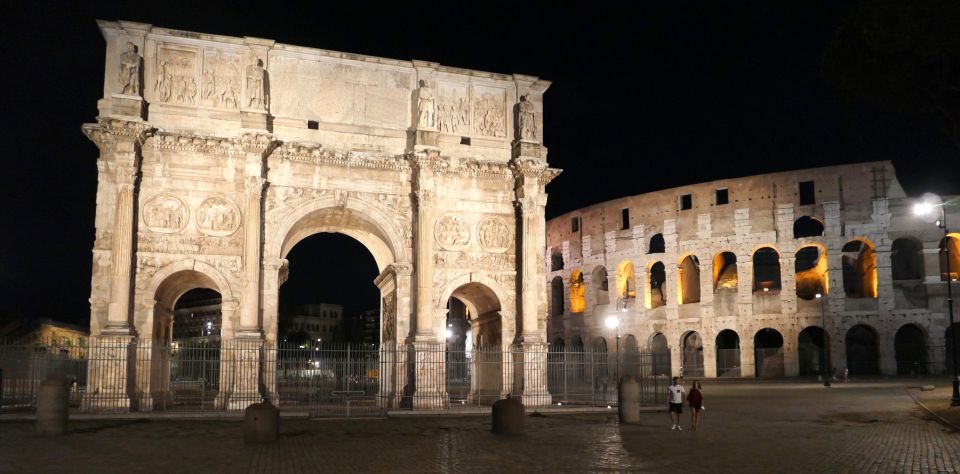
Rome looks good in daylight, sure. But at dusk, the city’s scale starts to feel human—like the monuments are part of a live neighborhood, not a museum display. That’s where this tour has an advantage: it’s built for evening light and evening mood.
You’ll spend your time at major landmarks most people only rush past. Since you’re not waiting in long daytime queues to enter buildings, you can focus on the “why” behind the “what.” And the night setting makes the political drama and brutal entertainment of Ancient Rome easier to imagine.
You can also read our reviews of more tours and experiences in Rome.
Meeting at Colosseo Metro: Start Point That Keeps You Moving
The tour starts at Piazza del Colosseo, 21, right by the green kiosk at street level outside Colosseo metro station (Line B). There’s staff holding a yellow Touriks sign, and you’ll want to meet downstairs rather than using the upper metro exit.
This matters because the whole experience is only 2 hours. If you show up late, you’ll feel it. If you arrive early (you’re advised to come 30 minutes before), you can get oriented, get settled with the headsets, and start listening without that pre-tour stress.
Outside the Colosseum: Construction, Gladiators, and What You Can Actually See
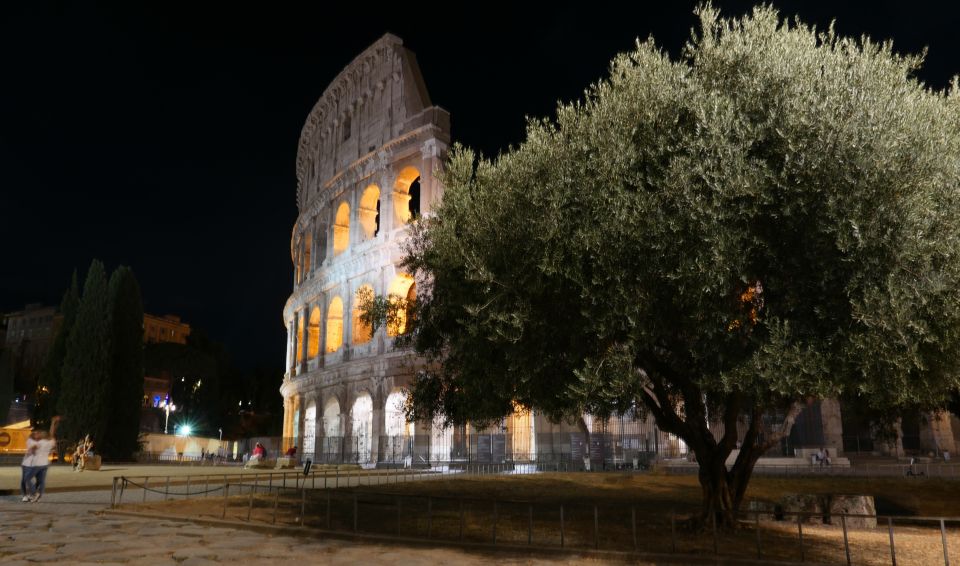
The first big stop is the Colosseum area, beginning right where you can approach it best from street level. You’ll get a guided explanation (about 40 minutes) of how the arena was built and how it was used.
Even though you don’t enter, you’re not just standing around. The guide connects what you see—arches, scale, and layout—to what happened here: the games, the gladiator battles, and the kind of attention Roman emperors demanded. This is the core of the tour’s value: you turn an icon into a place with rules, schedules, and consequences.
The evening timing also helps. Daytime sun makes stone feel flat; dusk adds contrast, so details pop more. And when you’re hearing the story, you start noticing how the architecture supports the spectacle.
The Arch of Constantine: Fast Stop, Good Context
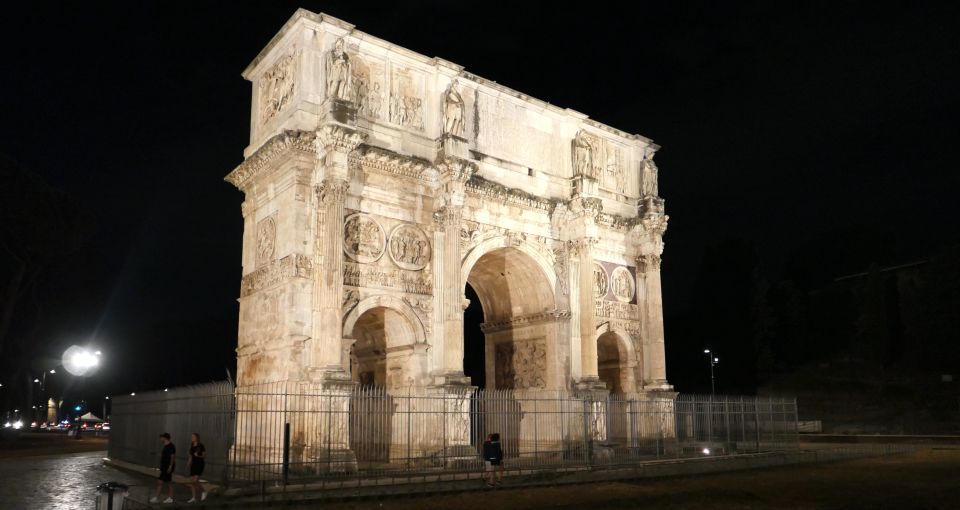
After the Colosseum, you’ll move to the Arch of Constantine. It’s a shorter segment (about 10 minutes), but it’s placed for a reason: arcs like this weren’t just decoration. They were political statements, meant to link a ruler’s image to Rome’s power machinery.
This is one of those stops that can feel optional if you’ve never learned how Roman monuments worked. With the guide’s framing, it becomes a quick lesson in messaging—how leaders used stone to rewrite history in public.
Roman Forum at Night: Temple of Castor and Pollux, Arch of Titus, and the Senate House
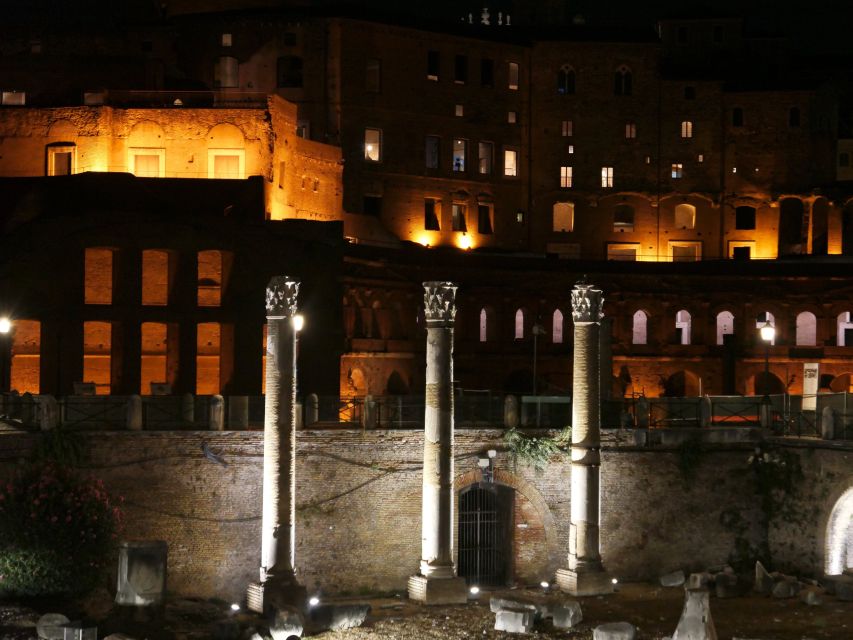
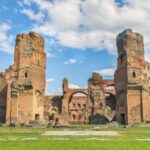
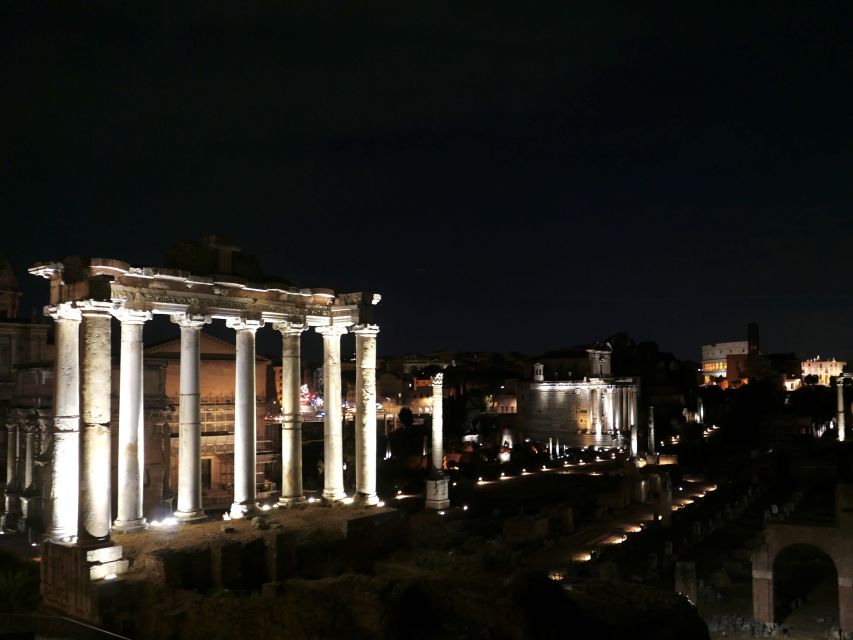
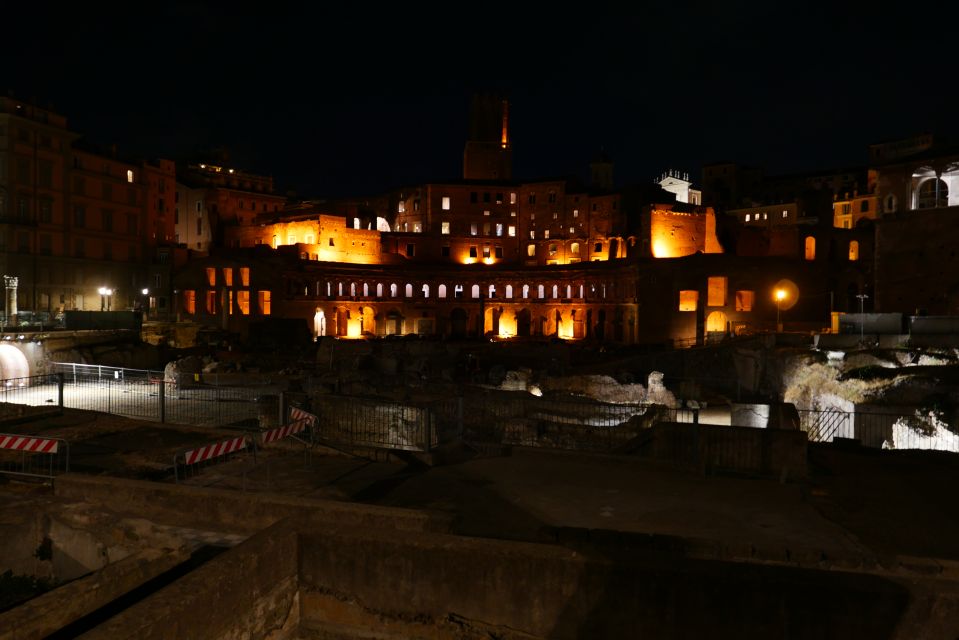
Next comes the Roman Forum area, and this is where the tour gets especially cinematic. You’ll follow a route through the Forum spaces (about 40 minutes) designed so you see the key landmark shapes clearly while still staying outside.
You’ll focus on:
- Temple of Castor and Pollux
- Arch of Titus
- Senate House
The big win here isn’t that you can enter every room. It’s that you can understand the layout in one sweep. Without getting trapped inside ticketed areas, you’re free to keep your bearings as the guide explains how the Forum functioned as the stage for authority, law, and public life.
At night, you can also slow down for photos without feeling like you’re in a daytime stampede. The Forum’s scale can be intimidating. A good guide makes it measurable—what to look at first, what to connect, and what story each landmark is telling.


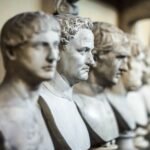
Trajan’s Forum and the Column of Trajan: Photo Moment With Meaning
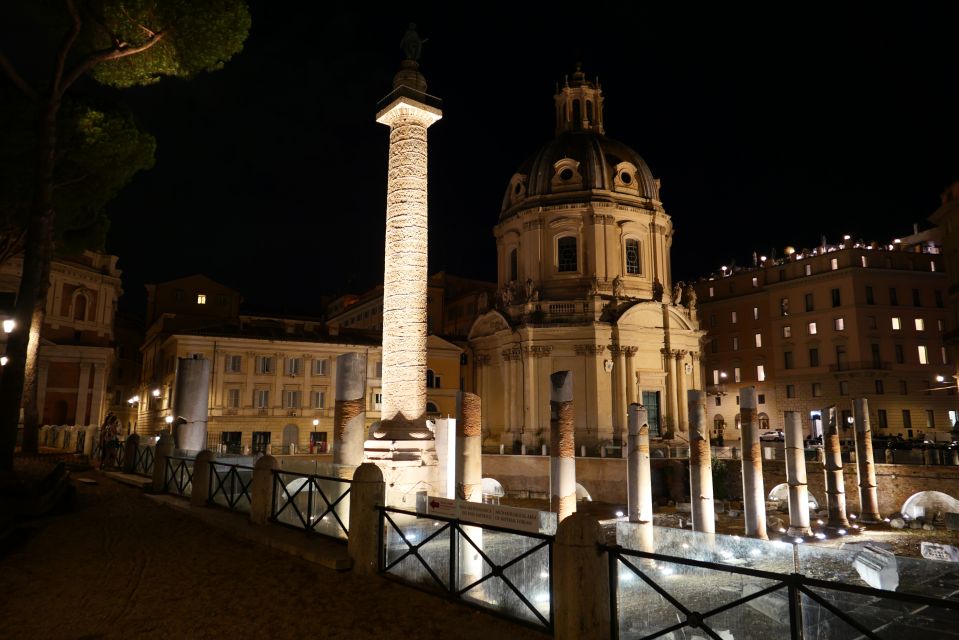
You’ll continue on to Trajan’s Forum and spend about 15 minutes here, including a stop at the Column of Trajan for photos. This is the moment where the tour shifts from “What happened?” to “How did Rome remember it?”
The Column of Trajan is famous as a visual record. Even if you’re only stopping briefly, the guide helps you read it as a message: a ruler using narrative art to frame military success and legitimacy. That makes your photo more than a souvenir. You’re capturing a monument that was built to be studied and interpreted.
And yes, you’ll still be outdoors. Still, you get the main visual cues you need to make sense of the place, especially if you’ve felt lost at Roman sites before.
Capitoline Hill Finale: Panoramic View That Resets Your Perspective
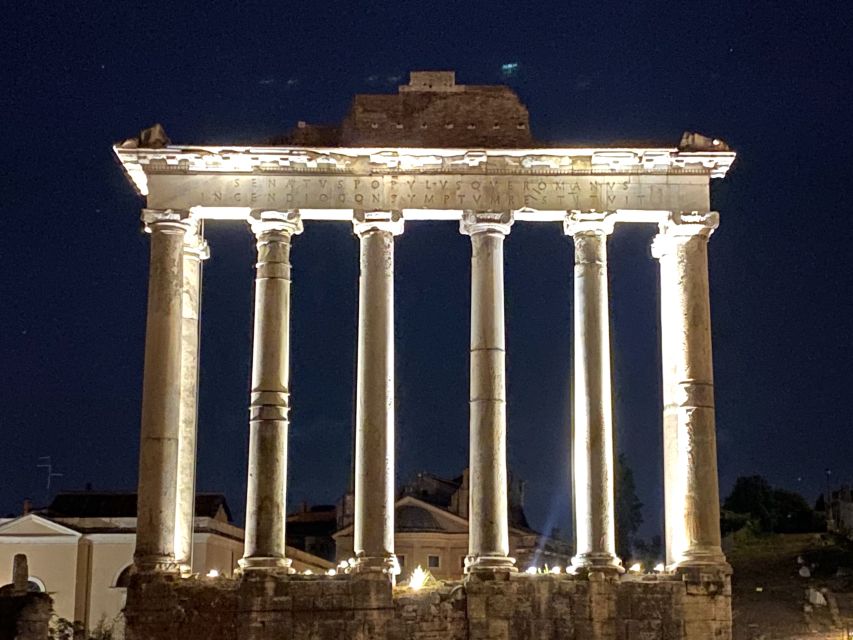
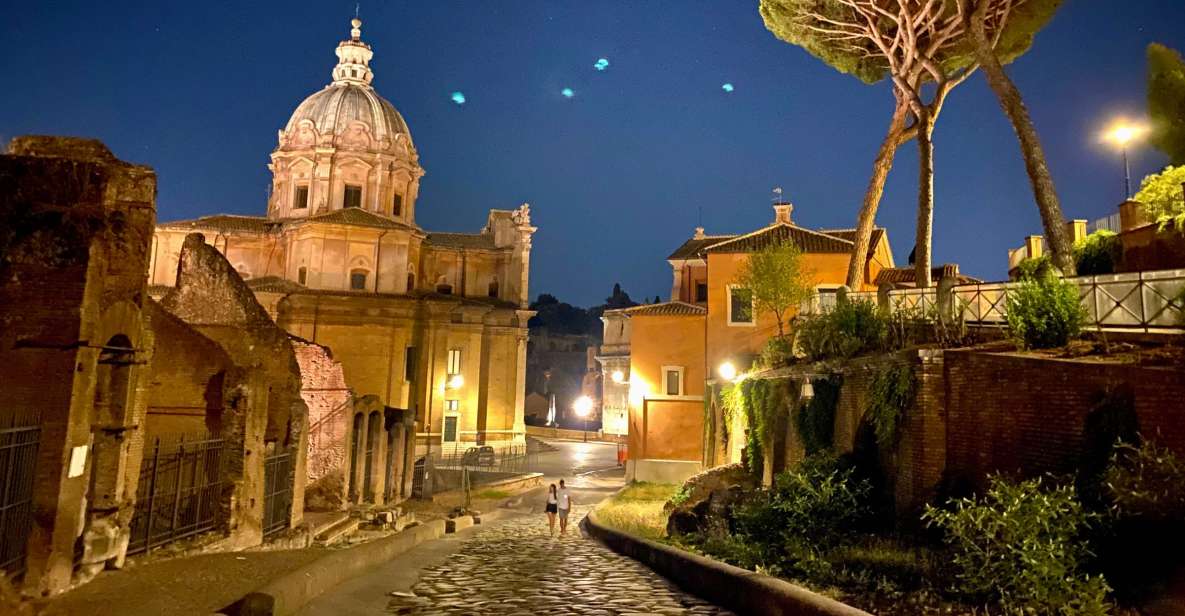
The tour ends at Piazza del Campidoglio after a final climb to Capitoline Hill for the panoramic view (about 15 minutes). This last segment is short, but it changes how you feel about the whole walk.
From up here, Rome stops looking like separate landmarks and starts looking like one connected city. That is exactly what you want after two hours of monument stories. You’ve heard the names, you’ve seen the silhouettes, and now you can connect the dots.
If you like structure in your sightseeing, this finale works. It gives you a “mental map” you can carry into the rest of your trip.
The Guide and Headsets: Small Details That Improve Everything
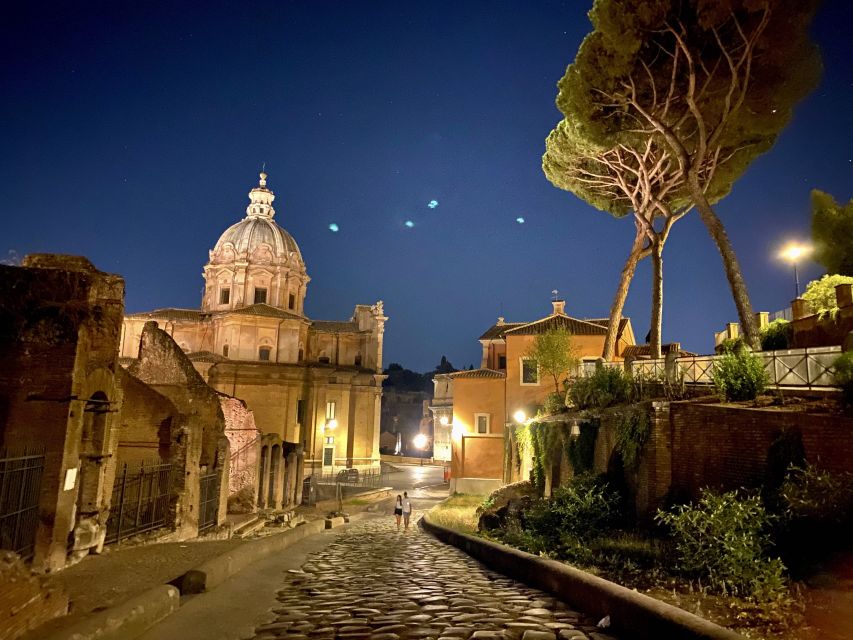
This tour leans on communication. You get a professional guide, and you’ll use sterilised headsets so you can hear clearly even when you’re moving and the street noise picks up.
That headset detail matters more than it sounds. If you’ve ever tried to listen at a busy site without audio, you know how quickly the story falls apart. With the audio support, you can keep your attention on the narrative.
You also get language options: guides are available in English, Italian, Spanish, Portuguese, French, and German. In practice, that means you should be able to match your comfort level, which keeps the tour smooth and reduces the “I missed that” feeling.
If you get a guide like José, the pace can feel effortless—fast enough that two hours don’t drag, but not so fast that the details vanish. And if you happen to get Matilde, you’ll likely appreciate how she turns the big names into a story with momentum.
Choosing Between Private and Small Groups
You can select a private option or a small group. The small group caps at 10 participants, which is a sweet spot for a short tour like this.
Small groups help with flow. You can ask a question, hear answers, and still keep moving. Large crowds can flatten a tour into a survival exercise. Here, the format is designed to keep the focus on the guide’s explanations rather than shoulder-to-shoulder logistics.
Price and Value: Is $81 Worth It for a 2-Hour Outside Tour?
At $81 per person for 2 hours, this tour isn’t a budget impulse buy. But it’s also not overpriced when you look at what’s included.
What you’re getting for the price:
- a professional guide for the full 2 hours
- sterilised headsets for clearer listening
- full on-site assistance
- all fees and taxes
What you’re not getting:
- entrance tickets into the Colosseum, Roman Forum, or Trajan’s Forum
- food and drinks
- hotel pickup and drop-off
So the value equation depends on your priorities. If you want a guided storyline with audio support and you’re okay with outside viewing, the cost makes sense. If you want to enter and explore interiors, you’ll likely spend extra elsewhere—because this tour is intentionally designed around street-level viewing.
Who This Tour Fits Best (and Who Should Skip It)
This is a great fit if:
- you’re short on time and want a structured Rome highlight walk
- you care about history as a story, not just a list of facts
- you want the big sites without daytime crowds
- you prefer hearing narratives through headsets while you move
It’s not the best match if:
- your must-do is entering the Colosseum and walking inside the Roman Forum spaces
- you dislike walking on uneven stone paths and prefer fully indoor attractions
- you want a longer, more immersive exploration of ruins beyond quick landmark stops
A practical note: you’ll be on your feet. Bring comfortable shoes, because this is a walking tour and the terrain around the monuments isn’t always smooth.
Should You Book This Dusk Walk of Ancient Rome?
Book it if you want Rome’s biggest names explained in a tight, evening-friendly timeline. I especially think it’s worth it for first-timers who feel overwhelmed by how much there is to see, or for repeat visitors who want a clearer narrative without hunting for context on your own.
Skip it if your dream day includes going inside the Colosseum and Roman Forum. This tour gives you the outside views plus the stories that connect the stone to the people—but it’s not built as an entrance-ticket experience.
If you’re deciding based on value, remember this: for $81, you’re paying for a guide, audio help, and a focused 2-hour route. That’s a solid deal if you’re here to understand Rome, not just photograph it.
FAQ
Where does the Rome: Wonders of Ancient Rome at Dusk tour start?
You meet at the green kiosk at street level right outside Colosseo metro station (Line B, blue line), at Piazza del Colosseo, 21.
What time should I arrive?
You should arrive 30 minutes before the starting time of your tour.
How long is the tour?
The tour lasts 2 hours.
Does the tour include entrance into the Colosseum, Roman Forum, or Trajan’s Forum?
No. Entrance into the Colosseum, Roman Forum, and Trajan’s Forum is not included, and the tour does not go inside them.
What sights do we see during the walk?
You’ll see the Colosseum from the outside, then the Arch of Constantine, the Roman Forum area landmarks (including Temple of Castor and Pollux, Arch of Titus, and the Senate House), Trajan’s Forum with a photo stop at the Column of Trajan, and you’ll climb Capitoline Hill for the panoramic view.
Is it available in languages besides English?
Yes. Live guides are available in Spanish, German, Italian, French, Portuguese, and English.
Is the tour a private experience?
You can choose a private tour or a small group. The small group has a maximum of 10 participants.
Are there headsets during the tour?
Yes. The tour includes sterilised headsets so you can hear the guide better.
What should I bring?
Wear comfortable shoes for the walk.
Will the tour run if it rains?
The tour runs rain or shine unless there is very unsuitable weather. If canceled, you’ll be offered an alternative date or a full refund.