REVIEW · ROME
Colosseum, Roman Forum & Palatine Experience
Book on GetYourGuide →Operated by Estaalia · Bookable on GetYourGuide
Three sites. One tight walk.
This experience strings together the Colosseum and Palatine Hill with included entry tickets, so you get straight into the good stuff without hunting for separate visits. I like the clear payoff: panoramic viewpoints up on Palatine Hill and real context in the Roman Forum, all in a compact 2.5–3 hour window. The main drawback to consider is that the Colosseum requires mandatory security checks, and the audio option has had app trouble that can slow you down.
I also like that you can choose your style: an English live guide if you want the stories in real time, or an English audio guide if you prefer going at your own pace. The group setup is designed for a smaller experience, which helps when you are trying to keep moving.
Still, this isn’t a casual stroll, and it is not suitable for people with mobility impairments or wheelchair users. If you need a fully accessible route, you should look for a different option.
In This Review
- Key things to know before you go
- Why this Colosseum, Forum, and Palatine combo works
- Security checks at the Colosseum: the part you can’t skip
- Colosseum: what you should actually focus on
- Palatine Hill: panoramic views plus the Rome-origin angle
- Roman Forum: where politics and commerce lived
- Live English guide vs English audio: choose wisely
- Duration and pacing: what 2.5 to 3 hours really means
- Included tickets and what that means for your day
- What to bring, and what to leave at home
- Who should book this (and who should skip it)
- Should you book this Colosseum, Roman Forum & Palatine tour?
- FAQ
- What’s included with this experience?
- How long does the Colosseum, Forum, and Palatine experience take?
- Do I need to go through security checks?
- Is there a live guide or only an audio guide?
- What language is the tour in?
- What ID do I need to bring?
- Can I cancel and get a refund?
- Is it suitable for wheelchair users?
Key things to know before you go
- Entry tickets to all three sites: Colosseum, Roman Forum, and Palatine Hill are included.
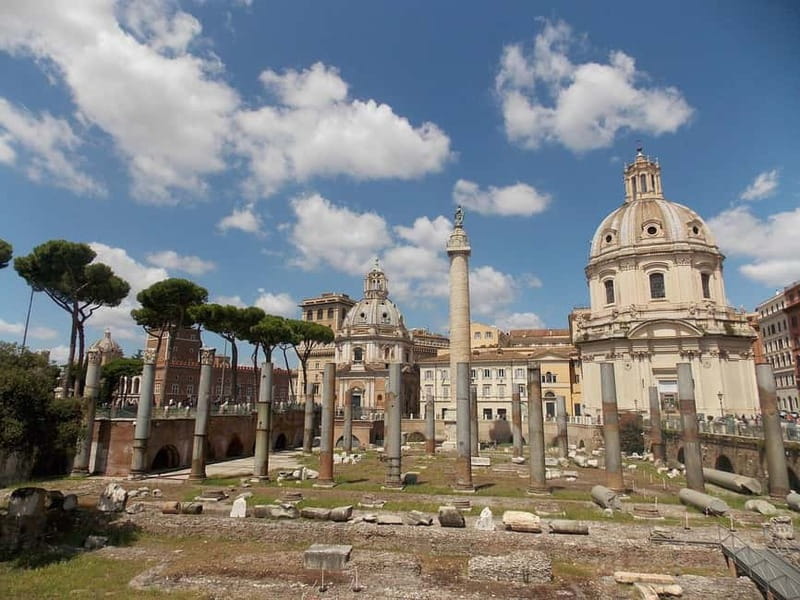
- Palatine Hill viewpoints: you get panoramic views tied to the birthplace story of Rome.
- Roman Forum focus: the Forum is treated as the heart of ancient politics and commerce.
- English guide option: choose live guidance or an audio guide in English.
- Audio mode can be flaky: if the audio app or ticket access fails, your timing can slip badly.
- Not for wheelchair users or mobility impairments: the route is not designed for those needs.
Why this Colosseum, Forum, and Palatine combo works
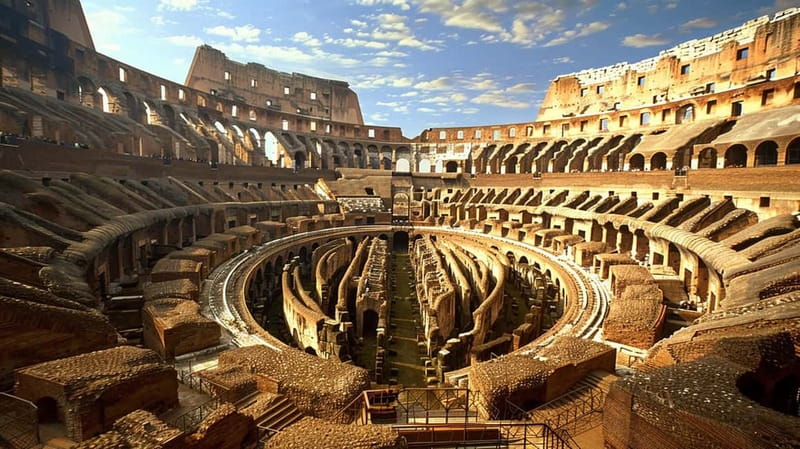
Ancient Rome can feel like a blur if you bounce between sights without structure. This experience gives you a focused route through the big three: Colosseum, Palatine Hill, and the Roman Forum. You spend your limited time where the action is, and each stop feeds the next one.
I like how the themes stay clear. The Colosseum is your starting hit of sheer stone power, tied to gladiators and the spectacle people came to see. Palatine Hill then shifts you to the perspective side of the story—views plus the idea that this is connected to the birthplace of Rome. Finally, the Roman Forum brings you back down to earth with the places tied to politics and commerce. It’s a tidy triangle of Rome’s imagination: spectacle, origin, and daily power.
The price makes sense if you like everything in one bundle. At $39.74 per person, you are not just paying for a guide; you are also getting entry tickets to three major sites. That is the main value lever here. If you were to buy and coordinate everything separately, you would likely spend more effort, and potentially more money, just to recreate the same plan.
You can also read our reviews of more tours and experiences in Rome.

Security checks at the Colosseum: the part you can’t skip
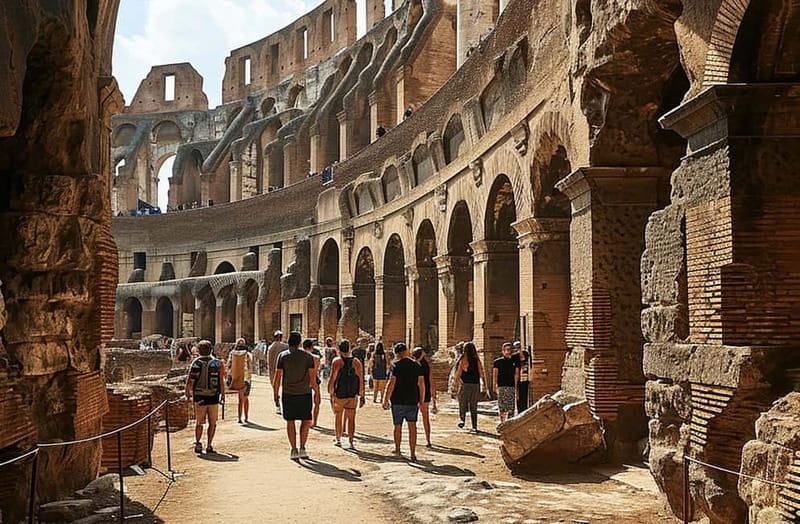
Here’s the practical truth: you must go through mandatory, airport-style security checks before entering the Colosseum. That means the clock starts ticking the moment you arrive.
A simple strategy: treat this as part of your tour time, not something you can rush through at the last second. Wear comfortable shoes and plan to stand. Also, don’t count on carrying anything that triggers extra inspection. The activity rules are strict: no weapons or sharp objects, no drones, no luggage or large bags, and no glass objects.
Why I think this matters: when time is tight, missed minutes turn into missed sights. With a 2.5–3 hour experience, you want your energy for actual looking and listening, not waiting.
Colosseum: what you should actually focus on

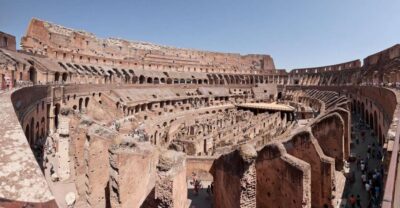
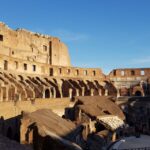
The Colosseum is the headline for a reason. Even if you have seen photos, nothing replaces being up close to the scale and layout. This visit highlights ancient architecture and uses a guide or audio to connect what you are seeing to how the place worked.
When you are inside, I recommend shifting your attention away from trying to memorize facts and toward noticing patterns. Look at the structure’s repetition and the way the space is designed to hold a crowd. If you get a live English guide, ask them to point out the most important sections they want you to see. That alone can turn a big empty-looking arena into a legible story.
If you choose the audio option, keep in mind the Colosseum is one of those places where you benefit from timing. Stopping to troubleshoot an app in a crowded site is frustrating. I’d treat audio as a backup mode, not a risk-free plan.
The Colosseum part usually feels like a fast sprint, which is exactly why pairing it with Palatine and the Forum works. You get the wow-factor first, then you move to context instead of just standing and staring.
Palatine Hill: panoramic views plus the Rome-origin angle
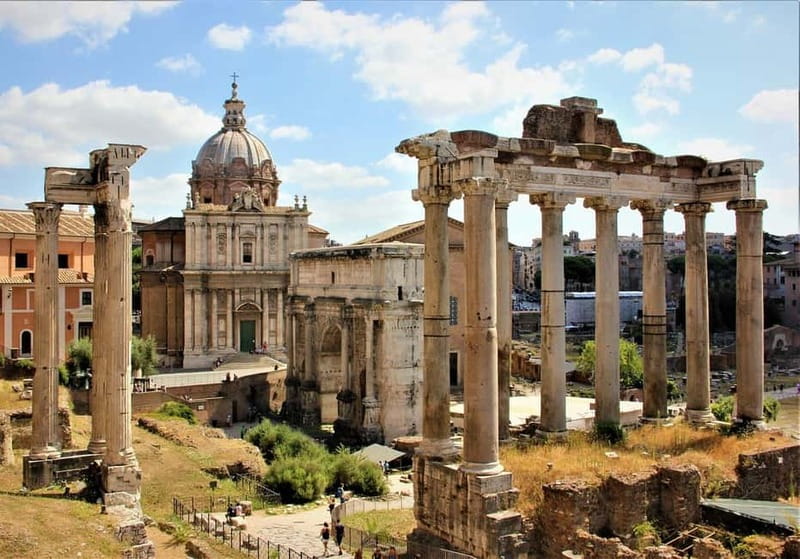
Palatine Hill is where the experience gets less “arena” and more “where Rome begins.” The big payoff is the panoramic views, and the visit is framed around the idea of Palatine as the birthplace of Rome.
This is the stop where you slow down just a bit. Views are not just pretty; they help you understand why the site mattered. Even without going deep into technical details, looking out over the city gives your imagination room. You start to connect the Forum and the Colosseum as part of one lived landscape rather than separate postcards.
If you are booking this for the first time, Palatine is also a confidence booster. You leave feeling oriented. You can point to directions and connect the sites you just walked through.
Practical note: Palatine Hill can mean uneven ground and lots of moving around. This experience is not marked as suitable for people with mobility impairments or wheelchair users, so if that’s you, it’s worth taking that warning seriously.
Roman Forum: where politics and commerce lived
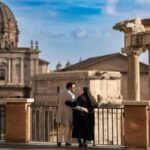
After the sights and views, the Roman Forum is the “why it mattered” stop. This part is positioned as the heart of ancient politics and commerce, and that framing is useful. It steers you away from treating the Forum as just more ruins and toward seeing it as the functional center of everyday power.
I like the way this helps your brain build the story. The Colosseum gives you spectacle and crowd energy. Palatine Hill gives you origins and elevation. Then the Forum explains how the authority behind all that spectacle was exercised in real life—through politics and trade.
Even if you are not a hardcore history person, you’ll likely find the Forum easier to process when a guide is translating the scene into language you can use. If you are using an audio guide, you’ll want to keep your place and press play on time, because you are surrounded by distractions and it is easy to drift and lose the thread.



Live English guide vs English audio: choose wisely
You can do this with a live tour guide in English or an optional audio guide in English. In many cities, audio can be a fine way to save money. Here, the risk is timing.
The audio option has a weak point: app and ticket access problems. There have been situations where the audio app failed to work even with a good internet connection, and another where audio didn’t function and ticket handling was difficult, leading to a major delay. That’s not just annoying; for a 2.5–3 hour experience, delays can mean you miss part of what you paid for.
So my rule of thumb is simple:
- If you want the smoothest experience, pick the live guide.
- If you pick audio, plan like you are depending on your phone and the app working correctly on the day.
If you go audio, I strongly suggest you test your setup ahead of time, and bring a fully charged device. And once you are at the Colosseum area, keep your attention on navigation and timing, not on troubleshooting.
Duration and pacing: what 2.5 to 3 hours really means
This experience runs about 2.5 to 3 hours. That is a good length for people who want the big hits without turning it into a whole day.
But it also means the pacing is purposeful. You’ll spend time inside each site, and you’ll likely spend additional time moving between stops. The Colosseum security check adds another time variable.
To get the most out of the visit:
- Wear comfortable shoes and expect standing.
- Keep your plans around it light. Don’t schedule back-to-back activities that require you to be perfectly on time right after the tour.
- Bring your patience for crowds, because all three stops are famous and close enough to pack in attention fast.
If you come in expecting a slow museum tour, you might feel rushed. If you come in ready for a guided sprint with context, you will likely love it.
Included tickets and what that means for your day
One of the cleanest parts of this experience is that entry tickets to the Colosseum, Roman Forum, and Palatine Hill are included. That matters because these are not casual attractions where you can just walk in whenever you feel like it.
When tickets are part of the package, you spend less time coordinating and more time seeing. It also helps you avoid the classic first-timer trap: planning too ambitiously, underestimating lines, then spending the best hour of your day at ticket counters.
This is also why a guide or audio guide is more than an add-on. It acts like a map for your eyes. At these sites, without guidance, you can end up looking at random stones and wondering what you are supposed to notice.
What to bring, and what to leave at home
To keep things simple, pack for comfort and ID compliance.
Bring:
- Comfortable shoes
- A passport or ID card (a copy may be accepted, and the info notes that copies are accepted)
The entry rules are strict about items. Leave at home:
- Pets
- Weapons or sharp objects
- Baby strollers and luggage or large bags
- Drones
- Mobility scooters
- Non-folding wheelchairs and non-folding strollers
- Alcohol and drugs
- Sprays or aerosols
- Glass objects
And also plan around what the experience does not accept:
- Unaccompanied minors
- Electric wheelchairs
This list is not just red tape. It’s there because entry is controlled and security is mandatory.
Who should book this (and who should skip it)
This experience fits best if you want:
- The big three ancient Rome sites in about half a day
- A guided narrative (English live guide) or a paced alternative (English audio)
- Included entry tickets, so your day stays simple
It may not be the best choice if:
- You need wheelchair access or have mobility limitations. The experience is explicitly not suitable for people with mobility impairments and not suitable for wheelchair users.
- You want a stress-free audio experience. Audio depends on your device and the app functioning smoothly, and that has caused major problems for some people.
If you are traveling with teens who can handle walking and listening, this kind of structured route usually works well because it gives context quickly instead of asking them to invent meaning from ruins.
Should you book this Colosseum, Roman Forum & Palatine tour?
I’d book it if you want an efficient, high-impact Rome outing where tickets are included and you get the Colosseum, Palatine Hill, and Roman Forum in one go. The value is strongest for first-timers or anyone who wants to avoid the planning puzzle.
I would book the live English guide rather than rely on audio, unless you are confident your device and app will behave on the day. With mandatory security checks and a tight 2.5–3 hour window, you don’t want a tech glitch stealing time from the sites you came for.
FAQ
What’s included with this experience?
You get entry tickets to the Colosseum, the Roman Forum, and Palatine Hill. You also get either a guide or an audio guide, depending on the option you choose.
How long does the Colosseum, Forum, and Palatine experience take?
It runs about 2.5 to 3 hours, with exact start times varying by availability.
Do I need to go through security checks?
Yes. All visitors must go through mandatory airport-style security checks before entering the Colosseum.
Is there a live guide or only an audio guide?
You can choose an option with a live tour guide in English, or an optional audio guide in English.
What language is the tour in?
The live guide and audio guide options are offered in English.
What ID do I need to bring?
You should bring an internationally accepted photo ID. A passport or ID card is required, and copies are accepted according to the information provided.
Can I cancel and get a refund?
Yes. Free cancellation is offered up to 3 days in advance for a full refund.
Is it suitable for wheelchair users?
No. It is not suitable for people with mobility impairments and it is not suitable for wheelchair users.