REVIEW · ROME
Exclusive tour of Ancient Rome and Domus Tiberiana
Book on GetYourGuide →Operated by ontario srls · Bookable on GetYourGuide
Rome’s power center is still visible.
This exclusive Ancient Rome and Domus Tiberiana tour focuses on one of the city’s most important areas: Palatine Hill and the Roman Forum, with standout views over the Circus Maximus. I like that it’s led by an expert archaeologist guide and built around what you’re actually looking at, not vague slogans.
What I especially like is the extra level of interpretation you get for tricky places: the guide work is strong and you may hear careful context from names like Dino and Donnatella, including how recently explored portions change what we understand. The one real drawback to consider is that it isn’t suitable for wheelchair users or people with recent surgeries.
In This Review
- Key highlights at a glance
- Palatine Hill and the Roman Forum: Rome at full volume
- Security and “show up ready” rules that matter
- The Roman Forum walk: politics, crowds, and power you can read
- Palatine Hill: emperors’ turf, restricted areas, and big-sky views
- Domus Tiberiana: the imperial residence that returned after decades
- Why skip-the-line and priority access changes the whole trip
- Value check: $99.92 for Rome’s best power-zone access
- Who should book this tour (and who should reconsider)
- The bottom line: should you book?
- FAQ
- How long is the exclusive Rome and Domus Tiberiana tour?
- What’s included in the ticket price?
- Is the tour available in English?
- Do I need to bring identification?
- Are food and drinks included?
- Is the tour wheelchair accessible?
Key highlights at a glance
- Expert archaeologist guide who explains what you’re seeing in clear, on-the-ground context
- Roman Forum + Palatine Hill entry included, with skip-the-ticket-line convenience
- Priority viewing for the Forum and Circus Maximus viewpoints
- Restricted imperial palace areas on Palatine Hill (where emperors lived)
- Domus Tiberiana restoration story, including a site closed for nearly 50 years and reopened after structural work
Palatine Hill and the Roman Forum: Rome at full volume
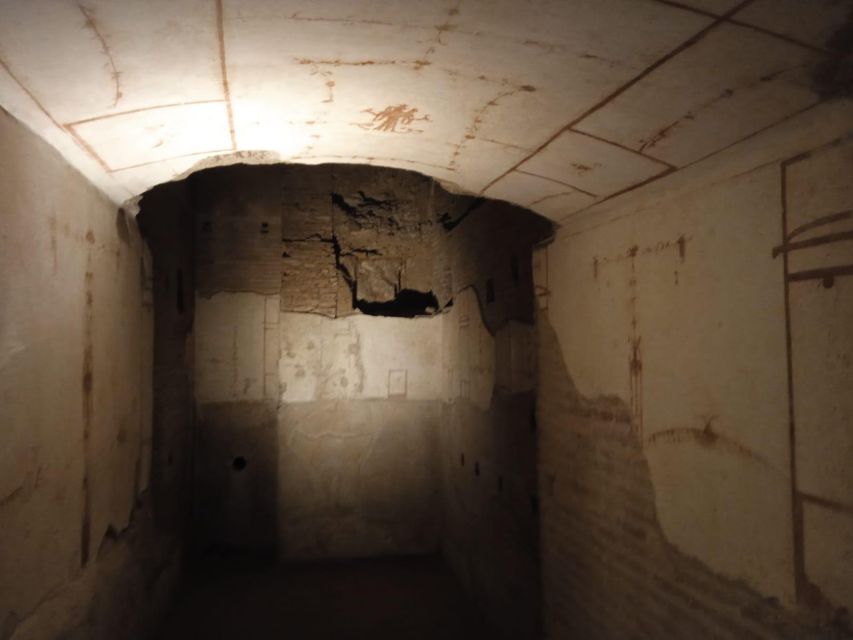
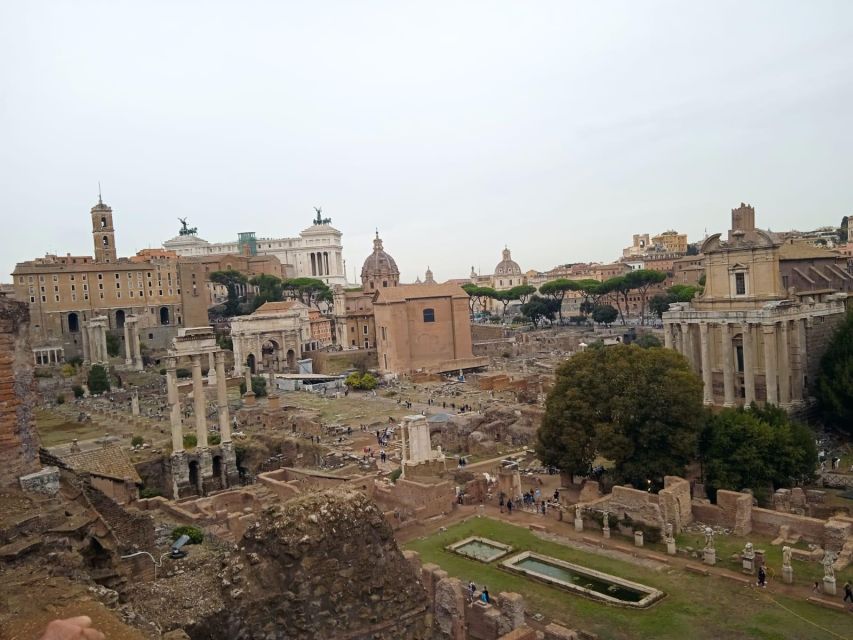
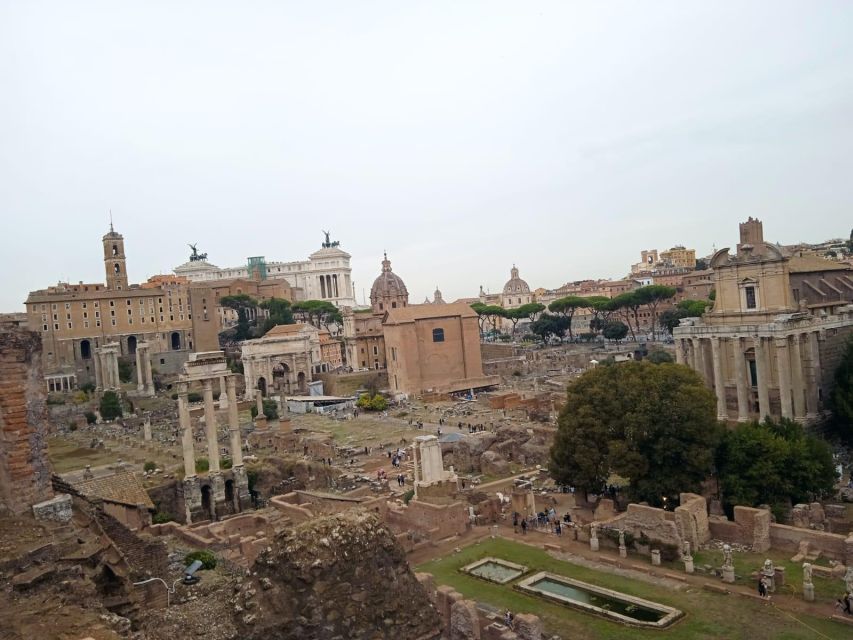
If you want the Rome that actually mattered, you start here. The Roman Forum was where politics played out in public, and Palatine Hill was where elite life clustered, later becoming the home base for emperors. Put the two together and you get a rare one-two punch: daily decision-making in the streets below, and power concentrated above, with the city’s skyline and routes still shaping what you see today.
This tour is built for people who like reading the ruins with their feet. You’re not just walking through a museum corridor; you’re moving across the kind of space where you can look, stop, and make sense of why certain buildings were placed where they were. Even in a short outing, the aim is to help you connect the physical setting to the human story: authority, public life, and how Rome organized itself.
And the views help. You’ll get impressive sightlines that stretch beyond the Forum, including a look toward the Circus Maximus, the massive arena that once held crowds on an industrial scale.
You can also read our reviews of more tours and experiences in Rome.

Security and “show up ready” rules that matter
Rome’s big sites come with airport-style security, and this experience follows that standard. Expect to pass through screening before entry, so plan to arrive a bit ahead of time rather than at the edge of the start.
Bring an ID card or passport—that’s required. Also keep your pack lean. Luggage or large bags aren’t allowed, and drones are off-limits. That may sound strict, but it’s also part of why the tour keeps its pace: fewer delays, fewer tangles, smoother group flow through the entry points.
One more practical note: this tour isn’t listed as suitable for wheelchair users and may not be a fit after recent surgery. If you’re recovering, it’s worth thinking carefully about uneven stone, stairs, and your comfort with longer indoor-outdoor movement.
The Roman Forum walk: politics, crowds, and power you can read
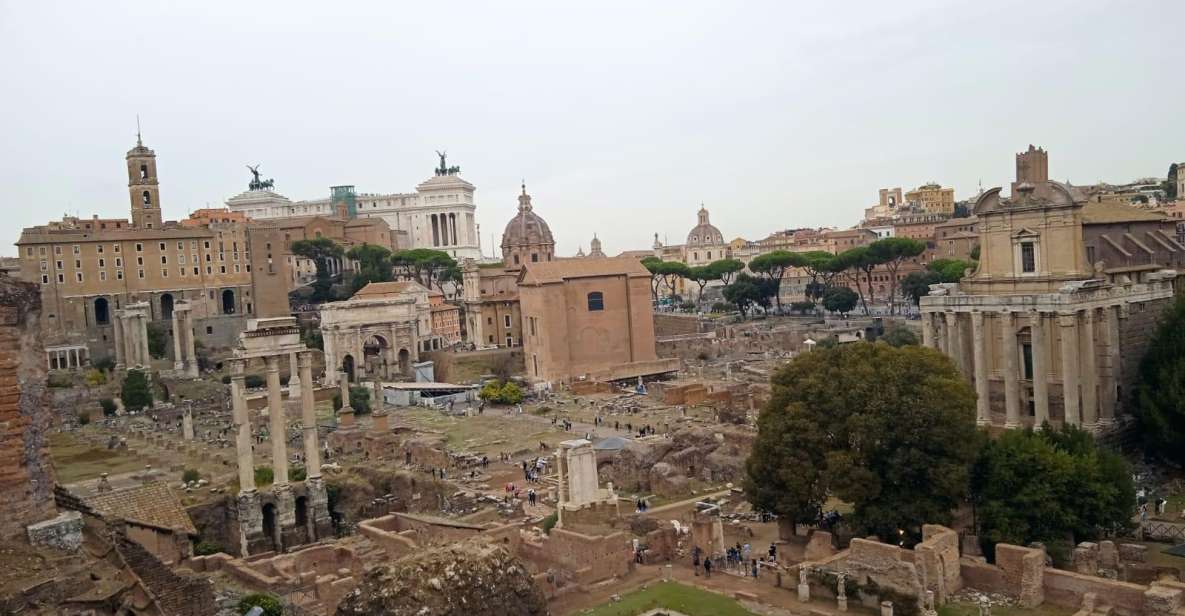
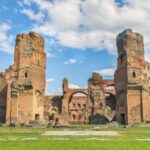
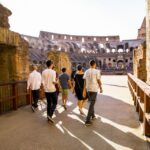
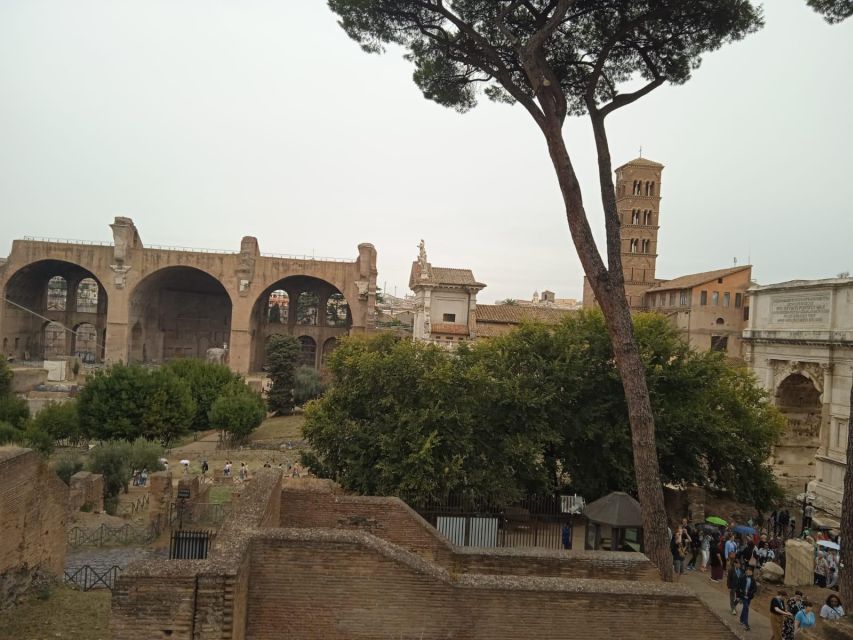
The Roman Forum is the part many people picture first: columns, arches, fragments of temple fronts, and the feeling that someone important is about to step out of frame. The difference here is the guide’s role. This isn’t a rapid highlight tour; it’s an archaeologist-led tour that aims to explain how the area functioned.
You’ll move through space tied to how Rome governed itself. Even when buildings are reduced to outlines, the layout tells you a lot. I like that the approach emphasizes context: what a structure was for, how people used the space, and how politics and public life were intertwined. That focus makes the ruins feel less like a photo backdrop and more like a system.
You’ll also enjoy the convenience of priority access to views connected to the Forum area. That matters, because the best angles can be crowded, and when you’re only out for about 2 to 2.5 hours, you want your time spent where it counts. The goal is to help you see key sightlines without losing most of your energy waiting.
Palatine Hill: emperors’ turf, restricted areas, and big-sky views
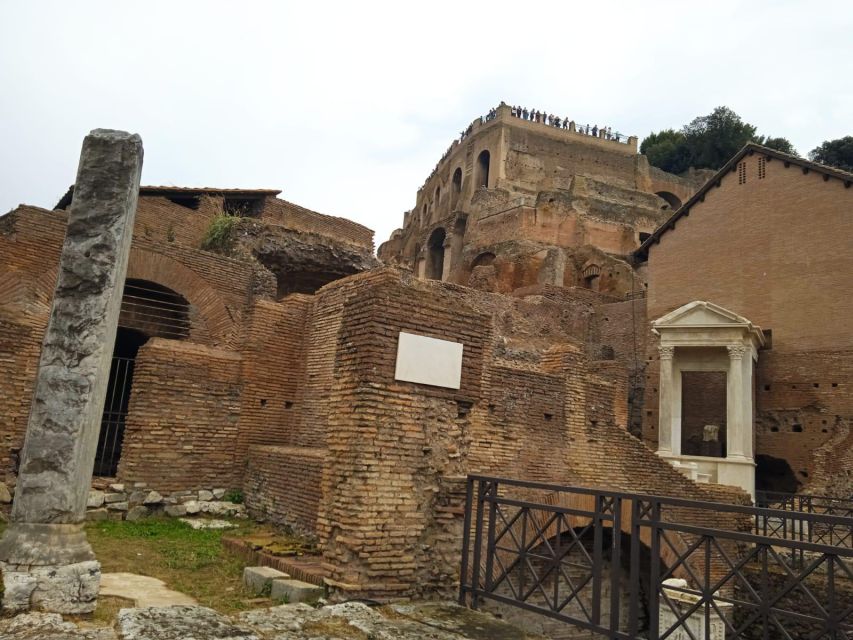
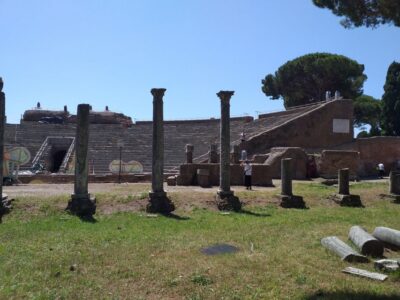
On Palatine Hill, you’re stepping into the part of Rome that belonged to elites. Historically, emperors lived here, and the physical setting supports that idea: height, closeness to the Forum, and a sense of control over the city below.
One of the most appealing aspects is the chance to explore restricted areas of the imperial palaces. You’re not only seeing what’s open for everyone; you’re getting a more specific lens on how these residence spaces worked. That extra access can change your understanding fast, because you can compare the high-status areas with the public world in the Forum.
And then there are the views. You’ll get standout sightlines over the urban core, including Circus Maximus views. In practical terms, that’s important for comprehension. When you can see where a venue sits relative to the political and residential zones, you start to grasp how Rome’s power and entertainment were geographically linked.
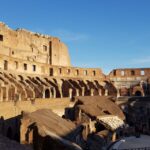
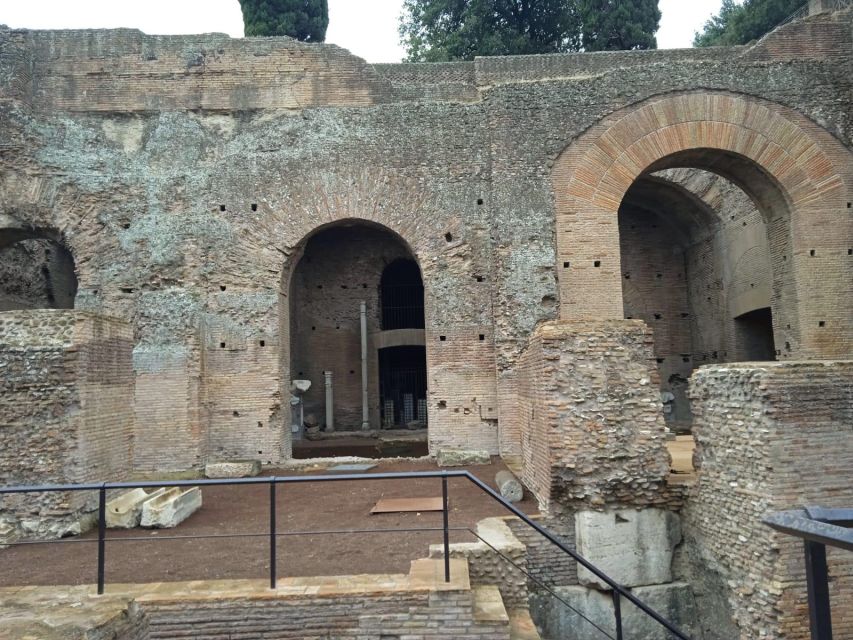
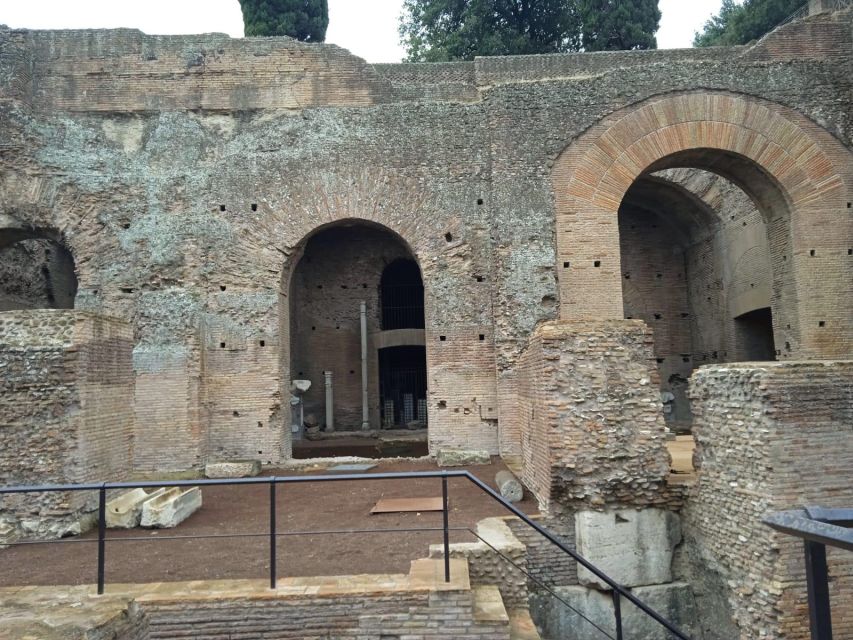
The tour also leans into “architectural reading.” Arches and multi-level structures are a signature here, and the guide’s job is to help you notice how those elements create movement, scale, and visibility. You end up understanding why the Romans chose certain layouts instead of treating everything as a pile of stones.
Domus Tiberiana: the imperial residence that returned after decades
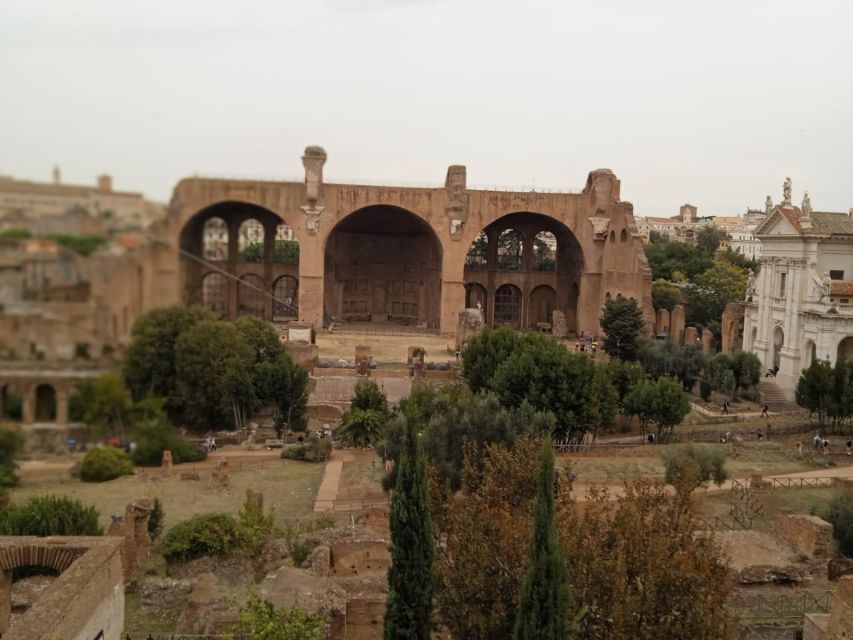
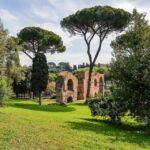
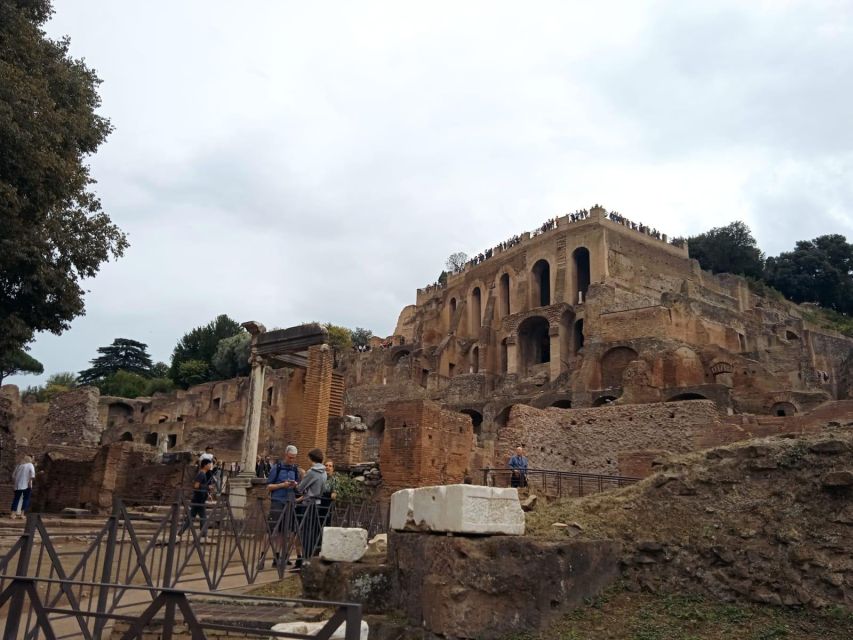
The star turn is Domus Tiberiana, an imperial residence complex overlooking the Roman Forum. What makes it especially interesting is the story of its modern recovery. The Domus had been closed for nearly 50 years due to structural issues, and it’s recently undergone significant restorations.
When you’re standing where emperors lived, that restoration context matters. It means you’re seeing a space that hasn’t been treated like an artifact locked behind glass; it’s being actively stabilized and reinterpreted. You can feel the difference between a site that’s only partially reachable versus one that’s being prepared for real visitor viewing.
The scale also helps your imagination. The residence spans about 4 hectares, so it isn’t a small villa you can comprehend in a minute. The setting is described as having impressive multi-level arches, and you’ll get help interpreting the architecture as you move through the accessible areas.
What I think you’ll appreciate most is the way the tour frames “why it’s here.” Domus Tiberiana isn’t just another stop. It links Palatine’s private power world to the Forum’s public theater. From the vantage point of the imperial residence, you’re closer to understanding how rulers could visually and socially control the capital’s daily rhythm.


Why skip-the-line and priority access changes the whole trip
Rome’s major sites can eat time fast. Even if you’re a confident planner, lines and congestion can steal your best energy. This tour helps with that using skip-the-ticket-line, plus priority access for certain viewpoint moments tied to the Forum and Circus Maximus.
In a tour that runs about 2 to 2.5 hours, time is the currency. Priority access doesn’t just save minutes; it protects your ability to stay focused. You spend your limited time looking at the right angles and getting context while the structures are still fresh in your head.
This is also where the “exclusive” promise feels real. When an experience is packed into a short window, the pacing has to be smart. Instead of drifting through crowds, you’re moving with purpose and explanation, which makes it easier to remember what you saw and why it mattered.
Value check: $99.92 for Rome’s best power-zone access
At $99.92 per person for 2 to 2.5 hours, it’s not a bargain-basement price. But for Rome, it’s also not outrageous when you look at what’s included and what’s specialized.
Here’s what you’re paying for in practical terms:
- Entry/admission included for both the Roman Forum and Palatine Hill
- Skip-the-ticket-line convenience
- Guided visit with a professional local expert guide (Italian or English)
- Access to high-interest viewing moments plus priority viewing
- The added appeal of Domus Tiberiana, a site with a reopening story tied to major restoration
If you’re traveling with limited time, the value is strongest. You get a targeted hit: Forum + Palatine + the restored imperial residence complex that people often can’t visit. If you’re staying longer and can afford to go slowly on your own, you might not need the guided structure. But if your goal is to understand Rome’s power geography quickly and cleanly, this is priced like a focused, specialist experience rather than a generic walk.
For me, the biggest value isn’t the price tag. It’s the way the guide work helps you stop guessing. When the ruins feel confusing, a good archaeologist guide turns confusion into understanding fast.
Who should book this tour (and who should reconsider)
This tour fits best if you:
- Want major Rome sites tied to politics and imperial power, all in a short window
- Like architecture and city layout clues, not just big-ticket “look and go” stops
- Appreciate interpretation around restoration and how archaeology evolves
It’s less ideal if you:
- Need wheelchair access (it’s not suitable for wheelchair users)
- Have recent surgeries or mobility constraints that could be affected by walking on historic surfaces
Also note the “rules that keep things moving.” No large luggage, plus security screening. If you’re traveling with bulky bags, it’s worth planning ahead so you don’t arrive stressed.
The bottom line: should you book?
I’d book this if your priority is understanding the Roman Forum and Palatine Hill in a guided, structured way, with the added draw of Domus Tiberiana’s restored access and priority views. The price makes sense when you treat this as a specialist archaeology experience in one of Rome’s most important power zones.
But if you need maximum accessibility, or you’re healing and can’t handle uneven historic terrain, you should look for an alternative format that better matches your needs.
If you’re ready to read the ruins like a story—Forum politics below, imperial life above—this tour is one of the cleanest ways to do it in a short time.
FAQ
How long is the exclusive Rome and Domus Tiberiana tour?
It runs about 2 to 2.5 hours. Starting times vary, so it’s best to check availability for the schedule.
What’s included in the ticket price?
Entry/admission is included for the Roman Forum and Palatine Hill, along with a professional, local expert guide.
Is the tour available in English?
Yes. The live tour guide speaks Italian and English.
Do I need to bring identification?
Yes. You need a passport or ID card, and you’ll also pass through airport-style security.
Are food and drinks included?
No. Food and drinks are not included.
Is the tour wheelchair accessible?
No. It’s listed as not suitable for wheelchair users.