REVIEW · ROME
Exploring Rome’s Rich Heritage: Pantheon and Jewish Ghetto
Book on GetYourGuide →Operated by CheckandGo Tours · Bookable on GetYourGuide
The Pantheon still steals your breath. This 2-hour guided route strings together ancient Rome, art, and daily religion by pairing the domed Pantheon with a walk through the Jewish Ghetto, including Piazza Mattei and Portico d’Ottavia. I especially like the skip-the-line entry setup and the way the guide connects what you see to why it mattered to power and belief. One thing to plan for: strict dress rules at the Pantheon can limit what you wear, and the site can have schedule changes due to events.
I also like that you get headsets, so the guide stays clear even as you move between piazzas and lanes. And if your guide is strong with storytelling (Maria is one name that comes up for clear explanations), you’ll get more out of each stop than a quick photo-and-go.
Key Points to Know Before You Go
- Skip-the-line Pantheon entry via a separate entrance helps you get inside faster.
- Headsets included so you can hear the guide clearly at every stop.
- Bernini’s Elephant and Obelisk at Piazza della Minerva is a quick, memorable visual pause.
- Largo di Torre Argentina puts Julius Caesar’s assassination location into real street-level context.
- Piazza Mattei and Via del Portico d’Ottavia show you how the Jewish Ghetto feels on foot, not just in books.
- Pantheon details matter: the massive dome, oculus light, and notable burials like Raphael and Italian kings.
In This Review
- Why Pair the Pantheon with the Jewish Ghetto?
- Pantheon Skip-the-Line: The Moment You Step Inside
- The Pantheon Isn’t Only Roman: It’s Also an Art Landmark
- Piazza della Minerva: A Quick Detour to Bernini’s Elephant and Obelisk
- Largo di Torre Argentina: Where Julius Caesar Was Assassinated
- Piazza Mattei and the Jewish Ghetto Streets: Seeing the City’s Everyday Texture
- Portico d’Ottavia: A Landmark That Shows Continuity
- Timing, What to Bring, and How to Dress for Entry
- Price and Value: Is $42.59 Worth It?
- Who This Tour Fits Best
- Should You Book This Pantheon + Jewish Ghetto Tour?
- FAQ
- How long is the tour?
- What does the ticket include?
- Where does the tour start and end?
- What languages are available for the guide?
- What dress rules do I need to follow for the Pantheon?
- What is the cancellation and booking policy?
Why Pair the Pantheon with the Jewish Ghetto?
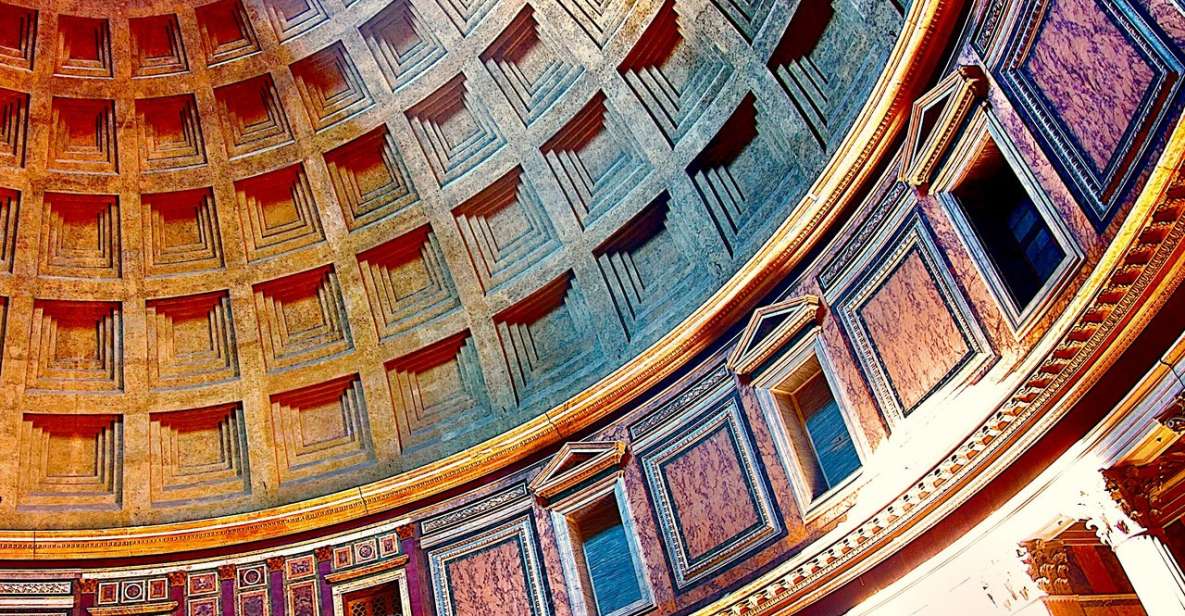
This tour works because it doesn’t treat Rome like a museum with separate rooms. You start with the Pantheon, a former temple for all gods that later became a place associated with famous burials, including Renaissance artist Raphael and the kings of Italy. Then you shift into the Jewish Ghetto, where you can see how religion, community life, and politics played out in streets and buildings.
The best part for me is the cause-and-effect feeling. You’re not only learning dates and names. You’re watching how Rome’s big ideas—what people worshipped, who had power, and how communities survived—show up in stone and layout. If you like history that connects to real places, this pairing makes sense.
There’s also a practical advantage: you cover two major zones without spending your whole time figuring out logistics or guessing what to look for. In two hours, you get a focused “read” of Rome instead of scattered wandering.
Pantheon Skip-the-Line: The Moment You Step Inside
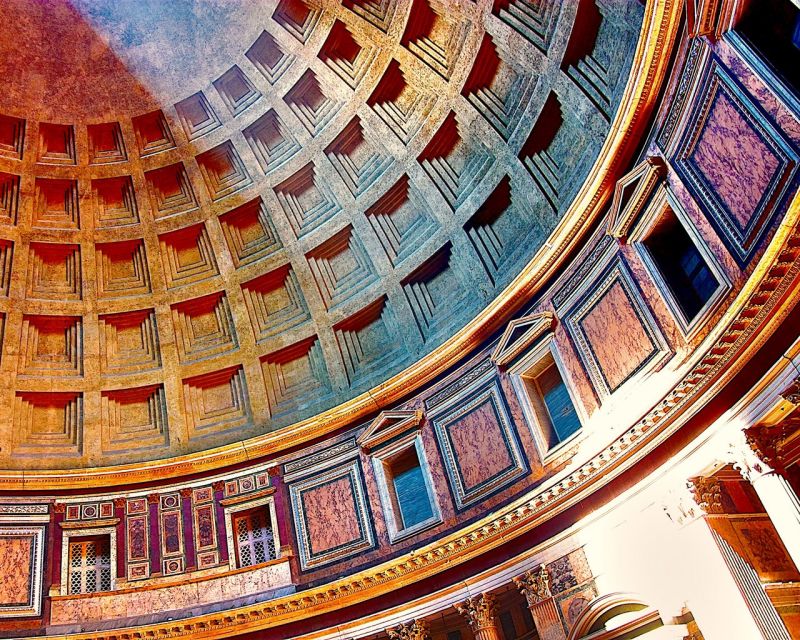
You begin at Piazza della Rotonda, 2 and then head into the Pantheon with skip-the-line tickets through a separate entrance. That matters because the Pantheon can have long lines, and time inside is what you’re paying for.
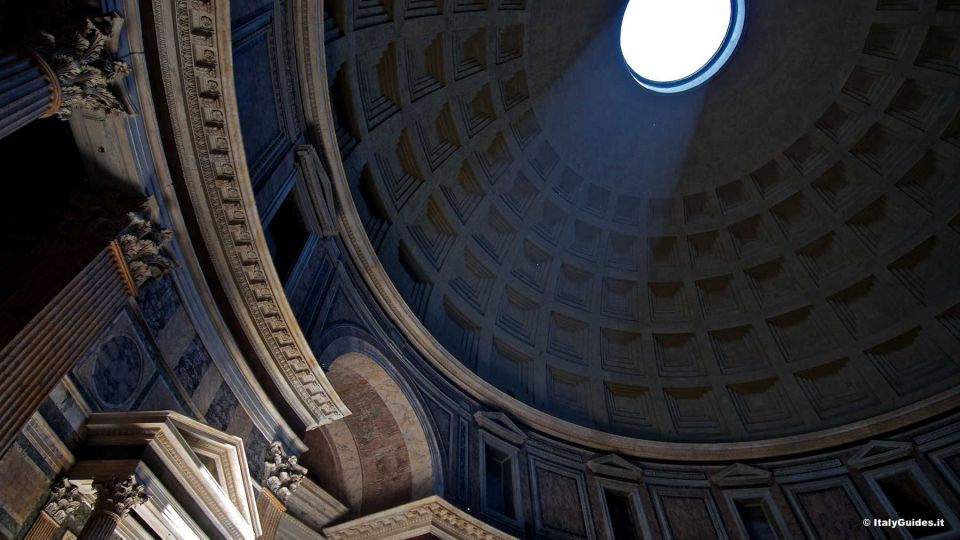
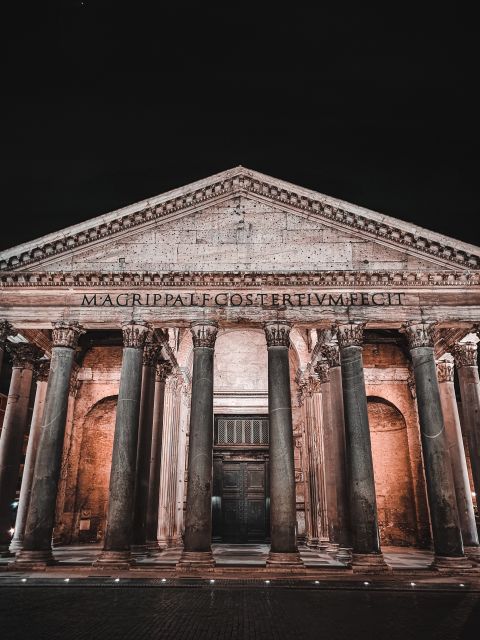
Once you’re in, the Pantheon’s dome grabs your eyes fast. It’s massive, and the oculus at the top does something quietly dramatic: daylight pours in straight from above, making the interior feel both simple and engineered. This isn’t just a pretty ceiling. It’s the heart of how the Pantheon feels as a space.
What I love about a guided format here is that you don’t just stare. You learn what the building represented and how its identity changed over time. Originally built as a temple for all gods, it later became the final resting place for notable figures. The guide also helps you understand why that shift from temple to burial site says a lot about Rome’s later priorities.
Do note one planning wrinkle: the Pantheon can have anticipated closures, postponed openings, or changes due to masses, concerts, or other events. That doesn’t mean it won’t run. It means you should expect the timing to be flexible if Rome decides to schedule something.
You can also read our reviews of more historical tours in Rome


The Pantheon Isn’t Only Roman: It’s Also an Art Landmark
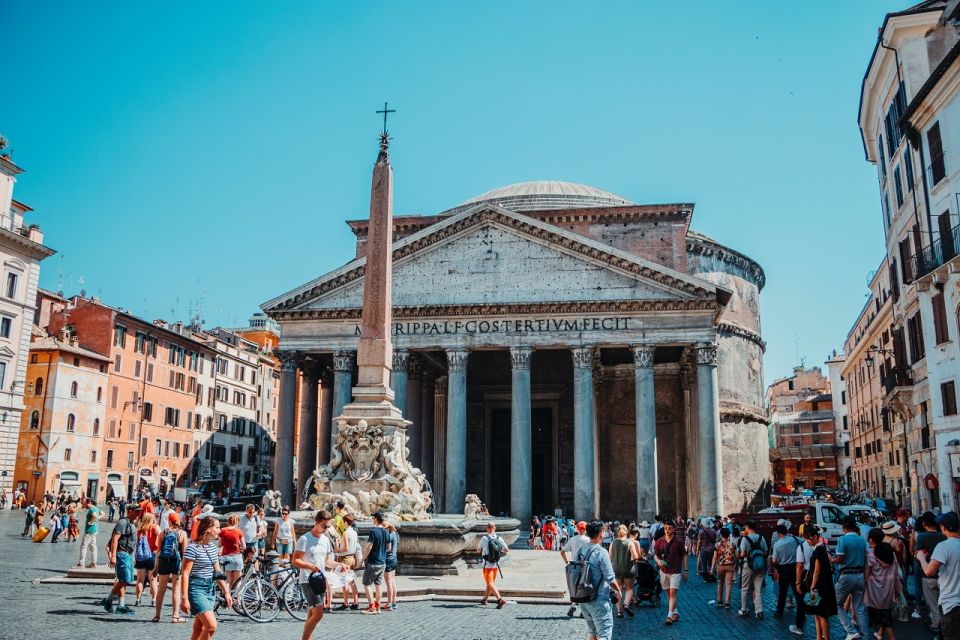
Even if you’re not a sculpture or painting person, the Pantheon has an art connection that you’ll hear right away. It’s tied to Renaissance artist Raphael, and it’s also linked with the kings of Italy. That combination gives you a useful anchor: Rome’s ancient monument didn’t stop being important just because the centuries changed.
I like this approach because it prevents a common mistake. Without context, it’s easy to treat the Pantheon as a standalone relic. With the right explanation, you see it as a long-lived site that kept getting reinterpreted—by rulers, by artists, and by later generations who came to claim meaning inside it.
Also, since you get a dedicated Pantheon guided segment (about 45 minutes), you’re not rushed through the main attraction. It’s enough time to notice the dome and oculus and still cover the story points that make those details click.
Piazza della Minerva: A Quick Detour to Bernini’s Elephant and Obelisk
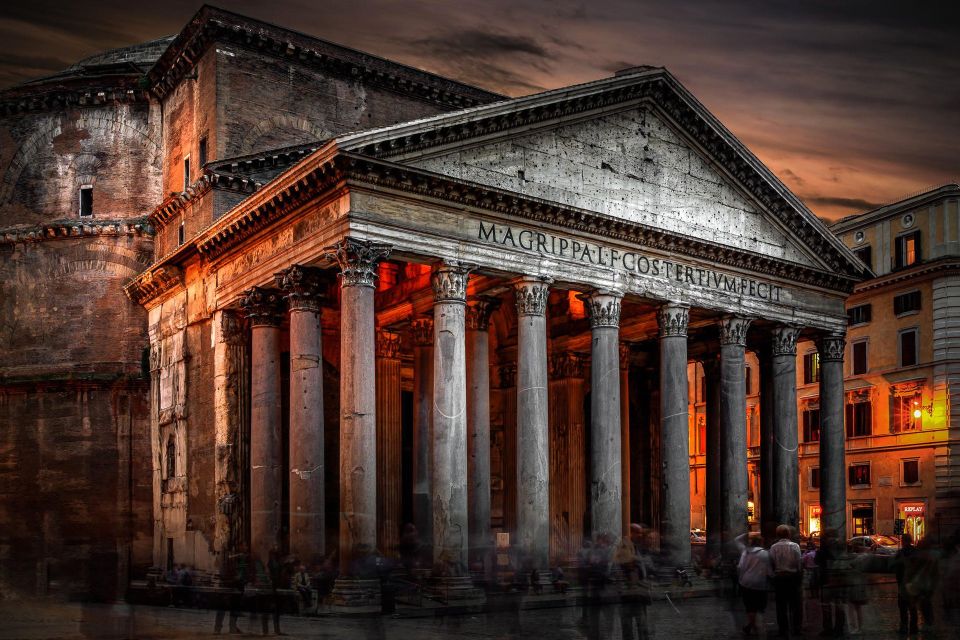
After the Pantheon, the tour moves toward Piazza della Minerva. This is where you get one of those Rome moments that feels like a secret handshake between centuries. You’ll see Bernini’s iconic Elephant and Obelisk sculpture, a surreal-looking pairing that’s instantly memorable once you spot it.
What makes this stop valuable is how it breaks the rhythm. You just came from a large, ancient interior space. Now you’re outside, looking at a mix of sculpture and monument that shows how later artists kept talking to ancient Rome’s visual language.
If you want something photo-worthy that doesn’t take forever, this fits the bill. It’s short, but it gives you a strong visual anchor before you continue to deeper historical ground.
Largo di Torre Argentina: Where Julius Caesar Was Assassinated
Next comes Largo di Torre Argentina, and it’s one of those stops where the street level becomes a history lesson. This is the archaeological site tied to Julius Caesar’s assassination.
Standing in this area changes how you think about ancient Rome’s political drama. It’s easy to treat Caesar’s death like an entry in a textbook. In this place, it feels like an event that happened in a real neighborhood, with real people moving through real streets.
The guided portion helps you connect the site to the bigger political storyline. And because the stop is part of a walking route rather than a single photo stop, you don’t feel like you’re just ticking a box. You get time to understand what the location represents.
Piazza Mattei and the Jewish Ghetto Streets: Seeing the City’s Everyday Texture
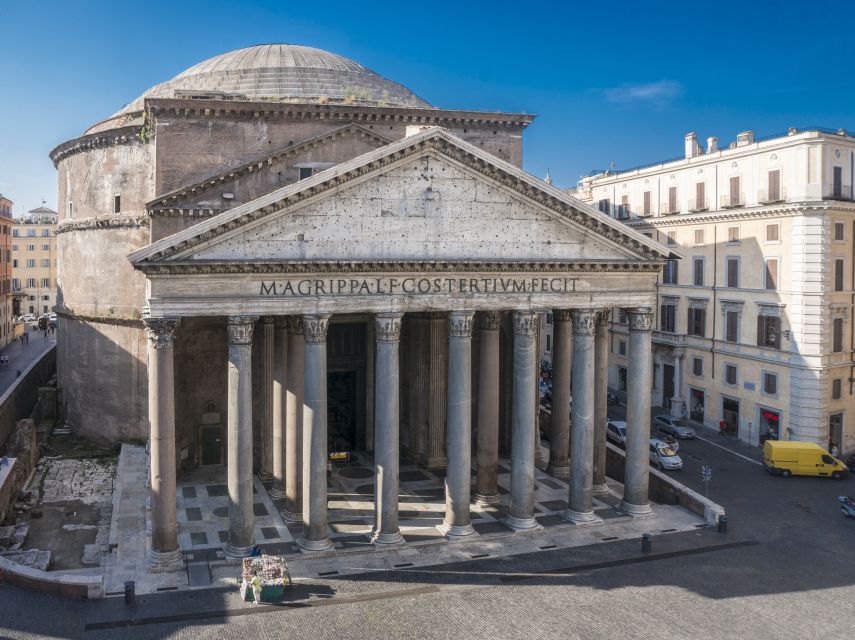
Then you shift into the heart of the Jewish Ghetto with stops around Piazza Mattei and along Via del Portico d’Ottavia. This is where the tour becomes more than monuments. It becomes a place you can feel.
Piazza Mattei is a good transition point. It’s open, walkable, and it gives you a moment to re-orient before you go deeper into the lanes. From there, walking through Via del Portico d’Ottavia puts you closer to the actual texture of the area.
What I like about having a guide here is that they help you read the streets without turning it into a lecture. The tour frames the ghetto not only as a historical label, but as a space shaped by culture, religion, and politics over time.
In the reviews, guides like Maria are praised for explaining the Pantheon in a clear, thorough way and then keeping the Jewish Ghetto walk interesting and understandable. That combination matters. If your guide is good at translating Rome into plain language, the whole experience feels less intimidating and more personal.





Portico d’Ottavia: A Landmark That Shows Continuity
The tour concludes in front of Portico d’Ottavia. This is an important symbol tied to the past and cultural heritage of the community connected to the area.
I like ending here because it gives a sense of closure that’s still grounded. You started with one of Rome’s most famous ancient spaces. You end with a location that ties daily life and community memory to the long arc of Roman history. It makes the route feel intentional, not random.
And since the tour ends back at the meeting point area, you’re not left trying to navigate your way out after the last stop. You walk back in a straightforward loop.
Timing, What to Bring, and How to Dress for Entry
The experience runs about 2 hours total, with Pantheon covering roughly 45 minutes and guided segments for the other major stops. Starting times vary, so you’ll want to check availability before you lock in the rest of your day.
Here’s what you should bring:
- A passport or ID card (including for children).
Dress code is not a minor detail here. Access is only permitted if you follow the rules, including:
- No shorts.
- No short skirts.
- No sleeveless shirts.
- Hemline must not be above the knees.
- Vests are not allowed.
There are also restrictions on behavior and items:
- Pets aren’t allowed.
- Weapons or sharp objects aren’t allowed.
Accessibility is a bit tricky to interpret from the info provided. The description mentions wheelchair accessibility, but it also says it is not suitable for wheelchair users and people with mobility impairments. If mobility is a concern, I strongly suggest you check directly with the provider before booking so you don’t get surprised by uneven walking routes or site constraints.
Price and Value: Is $42.59 Worth It?
At $42.59 per person, this tour sits in the “you’re paying for time savings and interpretation” category, not the “cheap and casual” lane.
You’re getting:
- Skip-the-line tickets for the Pantheon through a separate entrance.
- Headsets to hear the guide clearly.
- A guided Pantheon segment.
- A guided walk through the Jewish Ghetto.
For me, the value is strongest if you’re a first-timer or you want structure. The Pantheon is the kind of place where a guide can add meaning quickly: why it was built, what changed, and which names matter inside. The same goes for the ghetto walk. Without context, you might see streets and plazas but miss the connections to religion and politics that the tour is explicitly designed to explain.
If you already know Roman history very well and prefer total freedom, you might find cheaper options. But if you want a guided route that links two huge parts of Rome in a tight 2-hour window, the price starts to look reasonable.
Who This Tour Fits Best

You’ll likely enjoy this tour if:
- You want the Pantheon experience with more context than you’d get alone.
- You like history that connects art, religion, and politics.
- You prefer a guided walking route through the Jewish Ghetto rather than piecing it together yourself.
- You want headsets so you can focus on sights, not shouting across crowds.
It might be less ideal if:
- You can’t follow the Pantheon dress rules.
- You have mobility limitations, given the walking involved and the mixed accessibility notes.
- You’re the type who dislikes guided pacing and wants to linger only where you choose.
Should You Book This Pantheon + Jewish Ghetto Tour?
Book it if you want a guided, well-signposted way to experience two of Rome’s biggest stories: the Pantheon’s long identity shift and the Jewish Ghetto’s place in Rome’s cultural and political landscape. The skip-the-line entry plus headsets are practical upgrades, and the guide format helps you understand what you’re seeing at each stop.
Skip it or double-check first if your schedule is tight around potential Pantheon changes or if your plans can’t accommodate the strict dress code. Also, if you need mobility support, confirm the route details with the operator before paying.
For most visitors planning a first or second trip, this is the kind of tour that leaves you with more than photos. You walk away with a clearer mental map of how Rome’s power and belief systems left fingerprints on real places.
FAQ
How long is the tour?
The duration is 2 hours, and the Pantheon guided portion is about 45 minutes.
What does the ticket include?
It includes skip-the-line tickets to the Pantheon, headsets, a guided tour of the Pantheon, and a guided tour of the Jewish Ghetto.
Where does the tour start and end?
It starts at Piazza della Rotonda, 2 and ends back at the meeting point.
What languages are available for the guide?
The live guide is available in Spanish and English.
What dress rules do I need to follow for the Pantheon?
You must wear suitable attire, with no hemline above the knees, no vests, and no sleeveless tops for both men and women.
What is the cancellation and booking policy?
You can cancel up to 24 hours in advance for a full refund, and you can reserve and pay later (no payment today).