REVIEW · ROME
From Rome: Pompeii and Herculaneum by High-Speed Train
Book on GetYourGuide →Operated by Askos Tours · Bookable on GetYourGuide
Pompeii and Herculaneum in one day hits hard. You start with a fast train out of Rome, then spend the daylight with an English-speaking archaeologist guide who turns the ruins into lived-in places. The value here is simple: you’re not just touring buildings, you’re getting explanations for how the city worked and what people endured.
My two favorite parts are the guided focus at Pompeii’s big highlights (including plaster casts) and the way Herculaneum feels smaller and more personal, especially around the preserved shoreline and houses. The main drawback to plan for is the pacing: it’s a full 8.5-hour day with limited free time, so you’ll want good footwear and realistic expectations about photos and lunch.
In This Review
- Key things to know before you go
- Rome to Naples, then straight into Vesuvius country
- High-speed train matters more than you think
- Pompeii: the city plan, the shock, and the casts
- What could feel tight at Pompeii
- Lunch and shopping: keep it simple
- Van time and transfers: comfort, but you’ll still feel the long day
- Herculaneum: smaller scale, sharper details
- Walking in Herculaneum
- Naples station return: the day ends where it began
- Guides make or break this kind of day
- Price and value: what $222.77 buys you
- Who this tour is best for
- Should you book this Pompeii and Herculaneum day trip?
- FAQ
- How long is the Pompeii and Herculaneum tour from Rome?
- Do I need to arrange train tickets to Naples?
- Where do I meet the guide in Naples?
- Is lunch included?
- How much walking should I expect?
- What should I avoid bringing or wearing?
Key things to know before you go
- Two guided sites, one experienced archaeologist: you’ll get context at both Pompeii and Herculaneum, not just entry tickets.
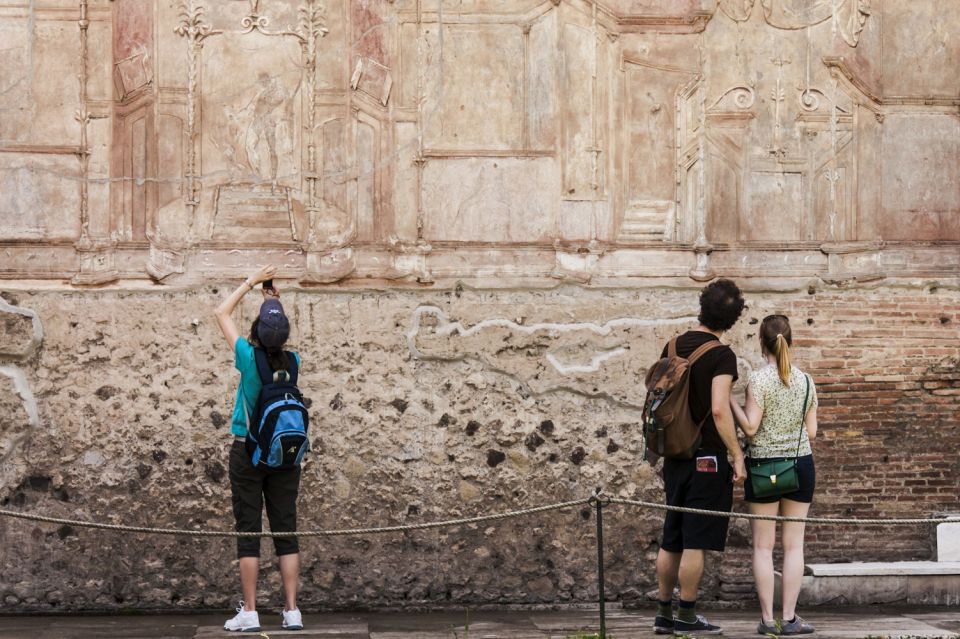
- Plaster casts tell the tragedy: Pompeii includes casts of victims and even animal remains you can actually look at.
- Herculaneum preserves everyday details: you’ll stop at the House of Neptune and Amphitrite and see the beach area where many skeletons were preserved.
- Skip-the-line for Pompeii: included access is meant to cut waiting time at the main site.
- Headsets included: helpful in open-air ruins with wind, crowds, and guide movement.
- You’ll walk uneven stone: about one mile in Pompeii and half a mile in Herculaneum, plus stairs and pavement changes.
Rome to Naples, then straight into Vesuvius country
This is built for people who want maximum ancient impact without spending your whole day planning connections. You leave from Roma Termini and use pre-booked high-speed train tickets to Naples in about 70 minutes. When you arrive, you meet your team just outside the station area, in front of the STARHOTEL TERMINUS entrance (opposite the station), looking for a guide holding an ASKOS TOURS sign.
Why I like this approach: it keeps the logistics from eating your energy. Rome can be confusing at peak hours, and getting out to Campania efficiently matters because Pompeii and Herculaneum are both large sites. Once you’re on the ground, a comfortable minibus takes you between places.
Practical note: you’re not getting picked up at your hotel. You’re going independently to the meeting point at Termini, so I’d plan to arrive early enough to find the meeting spot without rushing.
You can also read our reviews of more tours and experiences in Rome.

High-speed train matters more than you think
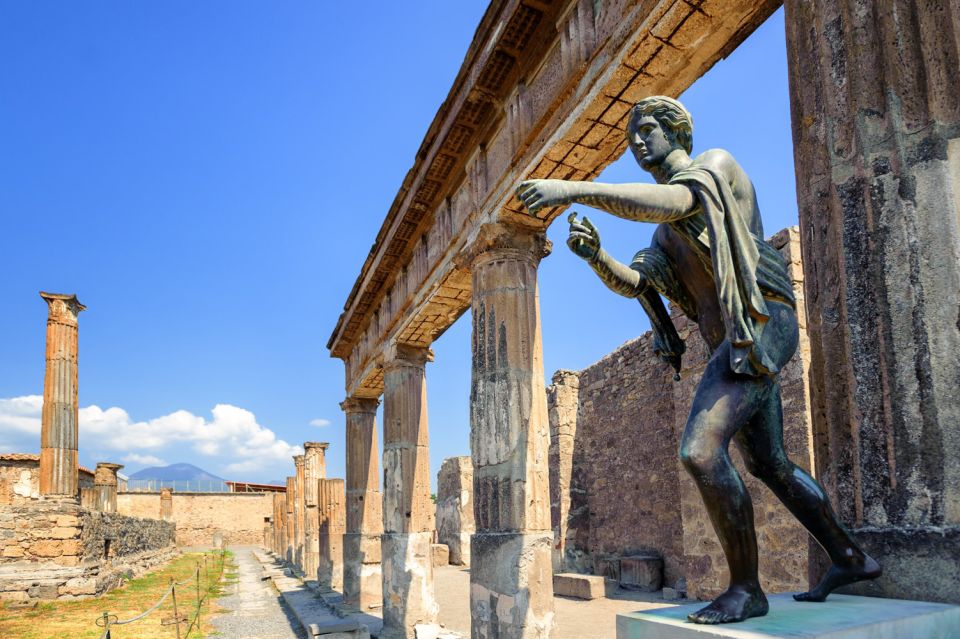
Trains are fast here for a reason: it turns a day trip into a real day out. With this itinerary, you’re spending daylight in the ruins instead of stuck on slower roads.
Also, you’re not “on your own” once you land. The schedule is paced around guided tours and transfers by van/minibus, so you’re not trying to navigate buses or taxis in Naples traffic while thinking about timelines.
Bring ID or your passport, since you need it for entry.
Pompeii: the city plan, the shock, and the casts
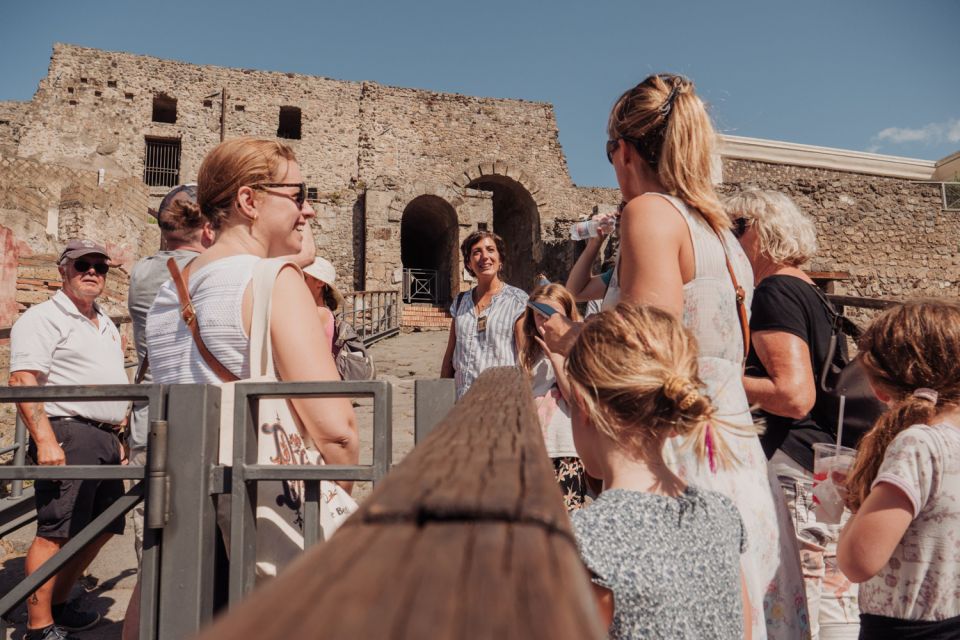
Pompeii is the star, but it’s also the place where timing and expectations can make or break your day. You’ll get around two hours guided at the archaeological site, plus about 30 minutes of free time.
The guide-led portion is the whole point. Pompeii becomes far easier to understand when someone walks you through what you’re seeing. Expect stops that cover the big themes: everyday urban life, how neighborhoods were organized, and the reality of what the eruption and earthquakes did to people and structures.
A few specific highlights you’ll encounter:
- Newer or newly opened houses (so it doesn’t feel like you’re only seeing the most crowded, most famous corners).
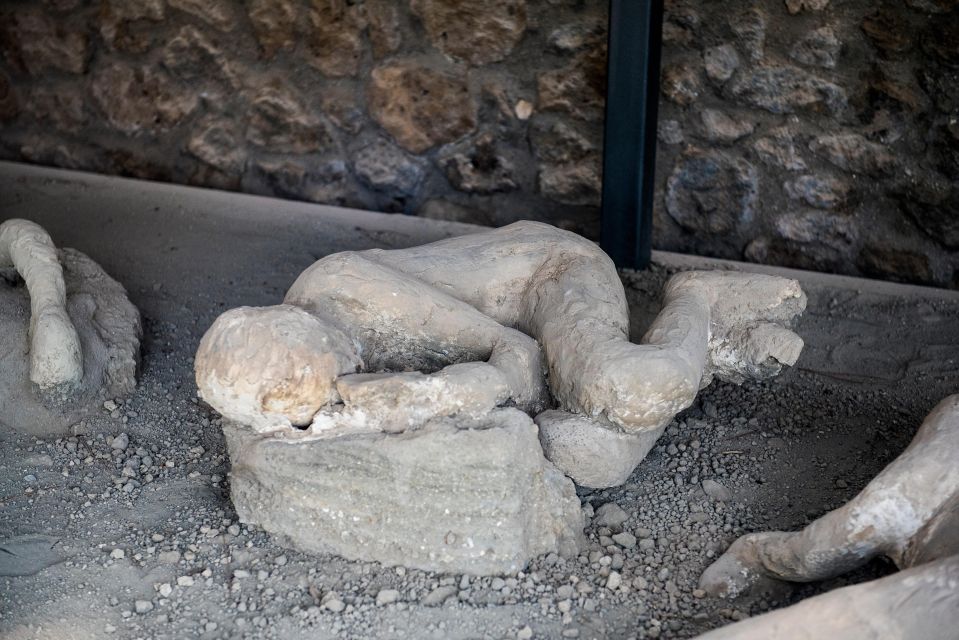
- The famous plaster casts of victims—the casts are striking because they preserve the shape of people who died.
- Pompeii’s brothel, which helps show how public life and private transactions intersected in a Roman city.
You’ll also have time to switch gears mentally. Pompeii is intense. Even if you know the basics, seeing the scale of the streets and buildings makes the disaster feel immediate rather than textbook-like.
What could feel tight at Pompeii
This is where I’d be honest with you: the free time is short. If your priority is shopping, browsing smaller museum rooms, or lingering for photos at every major landmark, you’ll have to choose. You can still have a great day, but you’ll get the best results if you treat the guided part as your “must-do” and use free time for lunch and quick wandering rather than deep extra exploration.
Lunch and shopping: keep it simple
Meals aren’t included, and the schedule gives you that short free window after the guided portion. So I’d approach lunch with the mindset of a quick break, not a long sit-down.
If you want a smoother day, bring a light snack for the earlier part of the day (if allowed by your comfort), and then use the Pompeii free time to get something you can eat without losing the afternoon momentum. You’ll thank yourself when you’re walking again toward Herculaneum.



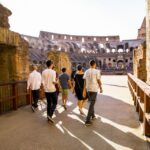
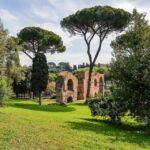

Van time and transfers: comfort, but you’ll still feel the long day
Between Naples and Pompeii, you’ll do a short minibus transfer. After Pompeii, there’s another transfer by van/minibus to Herculaneum, and then you return to Naples for the fast train back.
Here’s the practical takeaway: you’re not spending your day commuting for hours, but you do need to stay flexible. Naples traffic and road conditions aren’t something a tour can fully control, so the tour’s value is in grouping the day’s blocks tightly around your guided tours and train rides.
Headsets help during walking portions. And since you’re in a group, you’ll benefit from staying close to the guide—every minute counts when the itinerary is structured.
Herculaneum: smaller scale, sharper details
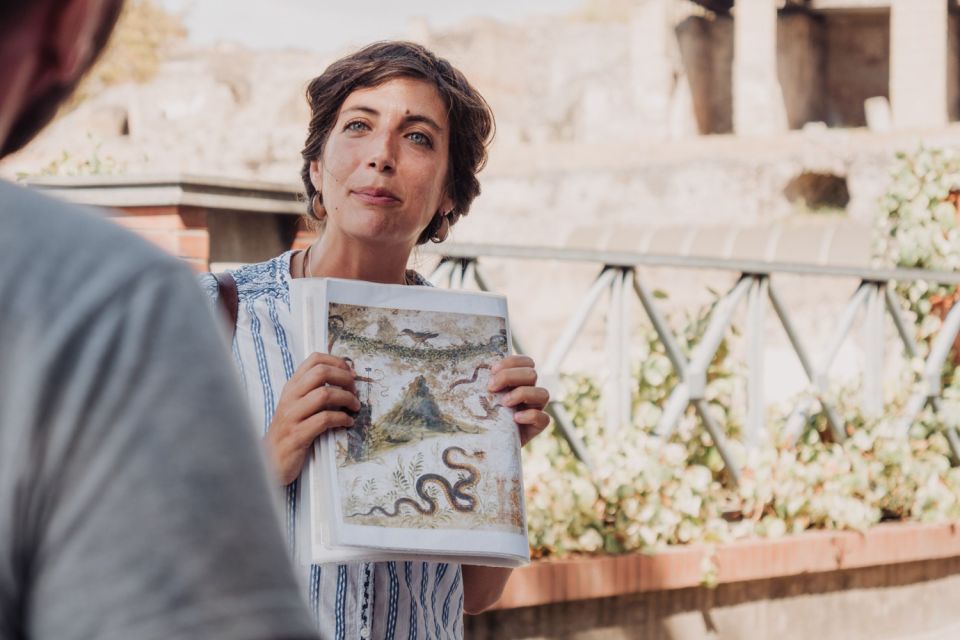
Herculaneum is often less chaotic than Pompeii, and this tour leans into that by giving you about two hours guided at the site.
You’ll see key stops that explain why Herculaneum can feel so different:
- The House of Neptune and Amphitrite, a highlight for understanding how wealth and domestic design showed up in daily life.
- The beach area where many skeletons are preserved, which changes the tone of the visit. It’s not only architecture; it’s the human cost shown directly by remains.
Why this matters: Pompeii can feel like a huge stage set. Herculaneum often feels like you’re walking through a place that still has a “room to breathe”—more intimate, more direct, and easier to process because of the smaller, better-preserved fabric of streets and houses.
Walking in Herculaneum
Expect about half a mile of walking here, but don’t assume it’s effortless. The ground can be uneven, and you’ll be stopping and starting with the guide. Good shoes are key.
Also, this tour is marked as not recommended for people with limited mobility, and it’s not suitable for wheelchair users, so if walking distances are an issue for you, I’d look at other options.
Naples station return: the day ends where it began
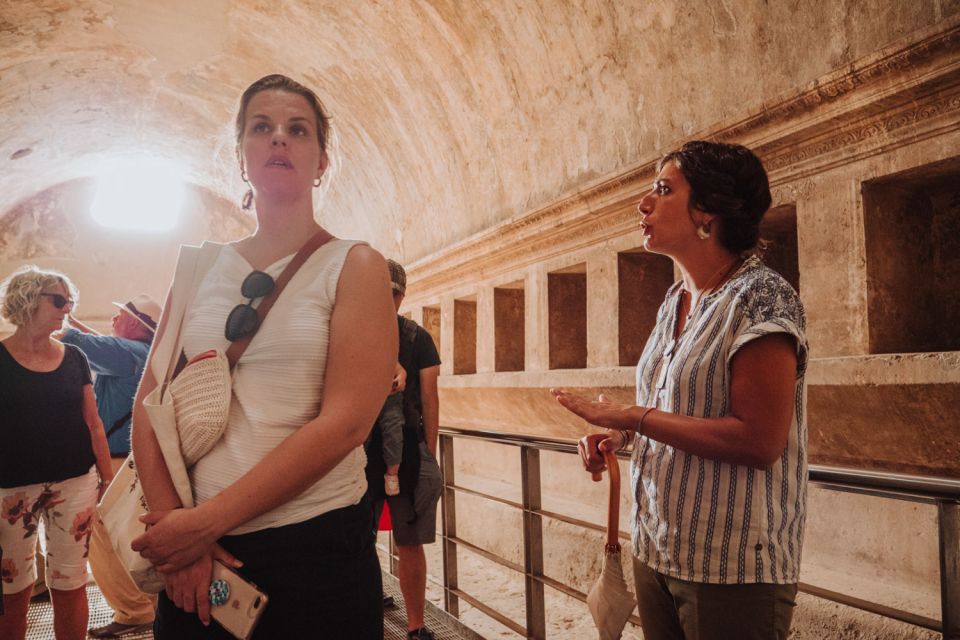
After Herculaneum, you transfer back to Naples central station and take the fast train back to Roma Termini. The endpoint is again the same meeting point area—so you’re not hunting around Rome at the end of a long day.
The best way to manage day-trip fatigue is simple: keep your phone charged, stay hydrated, and don’t plan anything stressful the evening after. This is a full 8.5-hour outing even when the train portion feels quick.
Guides make or break this kind of day
A big reason this tour earns such strong marks is that the guides aren’t just reading scripts. Many of the guides associated with this tour are archaeologists and bring real structure to what you’re seeing.
You’ll see names like Michele, Raphael, Jasmi/Jasmine, Sergio, Gennaio, Diego, Giulia, Paolo, and Alfredo showing up in the guide line-up. That variety matters because it gives you a better chance of finding a teaching style that clicks with you—some guides focus more on city mechanics, others emphasize human stories and disaster explanations, and most balance both.
No matter who you get, the tour includes live English guidance and headsets, which makes a difference in large ruins where audio without assistance is hard.
Price and value: what $222.77 buys you
At $222.77 per person, this isn’t a bargain-basement option. But it can be good value compared to piecing the day together yourself, because you’re getting:
- Round-trip high-speed train tickets between Rome and Naples
- Transportation by van/minibus between Naples, Pompeii, and Herculaneum
- Pompeii Express entry tickets (the included entry approach is designed to help with lines)
- Herculaneum entry tickets listed at €16.00
- Guided tours with an archaeologist at both sites
- Headsets for everyone
If you tried to replicate this on your own, you’d likely spend money on transit plus time on coordination, and you’d still be responsible for finding an archaeologist-led structure to connect Pompeii and Herculaneum into one coherent story. Paying for that guidance is the main reason the price can make sense.
Who this tour is best for
You’ll enjoy this most if you:
- Want one day that covers both sites, not just Pompeii.
- Like learning how ancient cities worked, not only taking photos.
- Prefer a structured day with transfers and entry handled for you.
- Are comfortable walking on uneven stone for about one mile at Pompeii and half a mile at Herculaneum.
You might want to choose something else if you:
- Need longer breaks, more time at the sites, or a slower pace.
- Have trouble with walking or uneven surfaces.
- Expect lunch to be a major part of your schedule.
Should you book this Pompeii and Herculaneum day trip?
I’d book it if your priority is learning plus efficiency. This is a solid way to see both sites with an archaeologist guide, keep transit simple via fast train, and avoid turning your day into a logistics puzzle.
Before you go, set yourself up for success:
- Wear closed-toe shoes. Sandals or flip-flops aren’t allowed, and high heels are too risky on uneven stone.
- Plan for a full day of walking and standing. You’ll need stamina more than athleticism.
- Treat Pompeii free time as a quick window, not a second guided tour.
If you want Pompeii-and-Herculaneum as a single, well-guided storyline—with the tragedy of the eruption explained right alongside what you’re seeing—this is an easy yes.
FAQ
How long is the Pompeii and Herculaneum tour from Rome?
The total duration is about 8.5 hours.
Do I need to arrange train tickets to Naples?
No. Round-trip high-speed train tickets from Rome to Naples are included, and you use pre-booked tickets.
Where do I meet the guide in Naples?
After you arrive at Naples Central Station, meet in front of the STARHOTEL TERMINUS entrance located opposite the station. Look for the guide holding an ASKOS TOURS sign.
Is lunch included?
Meals aren’t included. You’ll have free time for lunch and shopping while at Pompeii.
How much walking should I expect?
You’ll walk about one mile in Pompeii and about half a mile in Herculaneum.
What should I avoid bringing or wearing?
You can’t wear sandals or flip-flops, and luggage or large bags aren’t allowed. High-heeled shoes aren’t allowed either. Bring a passport or ID card. Rain or shine, bring a raincoat if needed.