REVIEW · ROME
Ostia Antica Small Group Tour
Book on GetYourGuide →Operated by Rome - Tour · Bookable on GetYourGuide
Roman ruins with room to breathe. Ostia Antica is what Rome looks like when you peel away the crowds and get the real day-to-day story of a working port—temples, apartments, baths, and a theater that still feels loud in your imagination.
I like the small group size (10 people max). I also love that the tour gives you guided context—so you’re not just staring at stones, you’re understanding what life was like when ships, merchants, and everyday Romans shared this space.
One heads-up: this is a 4-hour walking experience on uneven ground, and it’s not set up for wheelchair users or people with mobility impairments.
In This Review
- Key things I’d prioritize on this Ostia Antica tour
- Ostia Antica: Rome’s Port City Without the Big-City Stress
- Meeting at Roma Ostia Lido and Riding the Local Train Like a Roman
- 4 Hours on Foot: How the Route Fits the Best Highlights
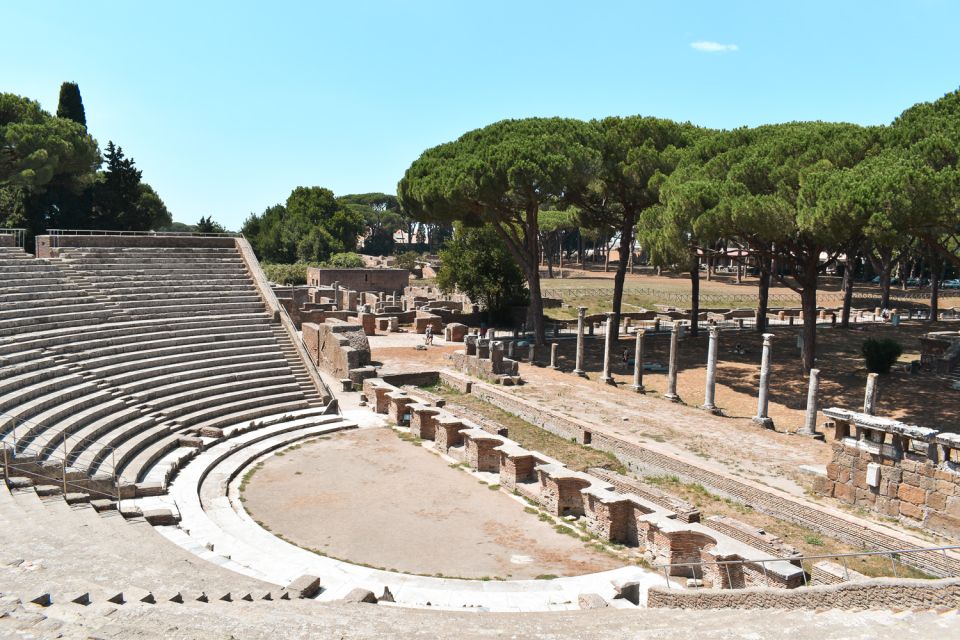
- The Grand Outdoor Theater: Where Plays—and Gladiator Fights—Happened
- Square of the Guilds: Merchants Built Careers Here
- Baths of Neptune: Roman-Style Hygiene and Social Time
- House of Diana: A Home That Surprises You
- Small Group Touring: Why 10 People Makes a Real Difference
- Skip-the-Line Tickets: The Quiet Win Before You Even Start
- Price and Value: What You Get for About $94
- Practical Tips That Actually Help (Shoes, Sun, and Bags)
- Should You Book This Ostia Antica Small Group Tour?
- FAQ
- Where is the meeting point for the Ostia Antica tour?
- How long is the tour?
- What is included in the price?
- Is food and drink included?
- Can I bring luggage or large bags?
- Is this tour wheelchair accessible?
Key things I’d prioritize on this Ostia Antica tour
- Small group pace with time for questions and a not-rushed feel
- Skip-the-line entry using a separate entrance into the archaeological park
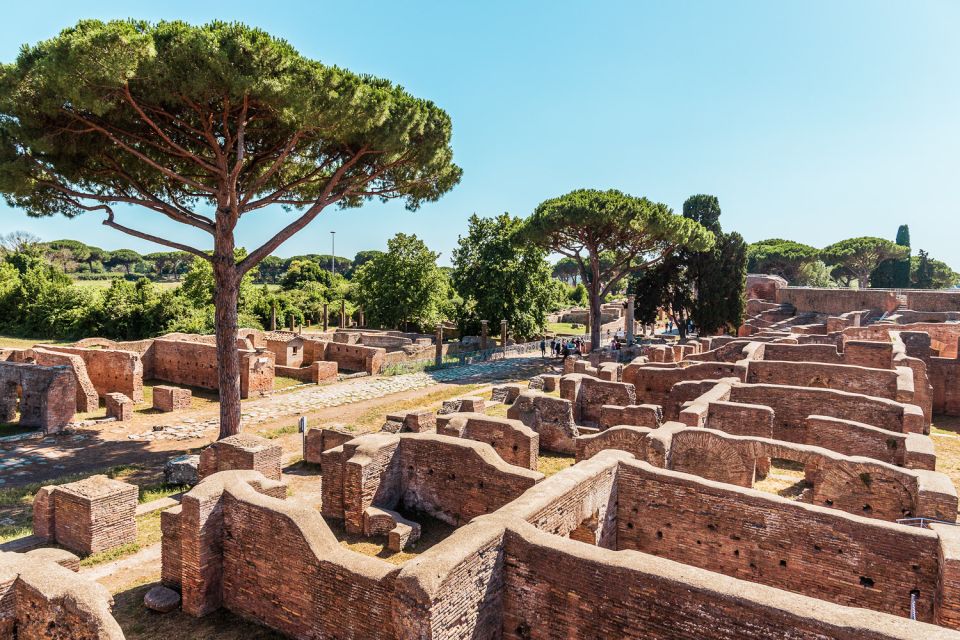
- Theater-to-homes route that shows entertainment, business, baths, and daily life
- Port-city details like the Square of the Guilds and the Bath of Neptune area
- Flexible add-on exploring after the tour thanks to the included return train ticket
Ostia Antica: Rome’s Port City Without the Big-City Stress
Ostia Antica used to be Rome’s busy port town—people, goods, and money moved through here. After the Roman Empire weakened, the city was eventually abandoned, and as the river changed course it got covered in silt and mud. That slow burial is part of why so much survives today.
I like that this tour doesn’t treat Ostia Antica like a generic ruin stop. You get a sense of function: where people went for shows, where merchants chased deals, and how daily routines played out in baths and homes.
And there’s another plus: compared with central Rome, you can often feel the site is calmer. One tour experience described virtually no tourists beyond local school groups, which is the kind of day that makes ruins feel personal instead of rushed.
You can also read our reviews of more tours and experiences in Rome.

Meeting at Roma Ostia Lido and Riding the Local Train Like a Roman
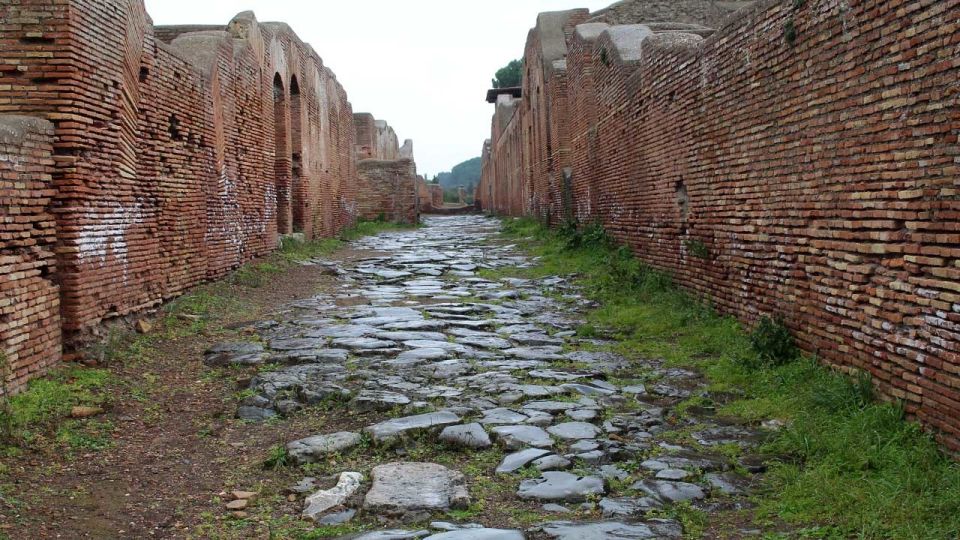
You meet in front of the Roma Ostia Lido Train Station at Piazzale Ostiense, 9 (00154 Roma RM). From there, you take the local train to the archaeological park area with your guide. Roundtrip train tickets are included, so you’re not doing math on the metro app while trying to decode Roman street signs.
This is where the experience is smart for first-timers. The guide handles the “what platform, when, and how” part, and you just focus on getting to the site.
Also, since luggage or large bags aren’t allowed, travel light. Comfortable daypack only is the way to go. If you show up with a big suitcase, you’re creating your own stress when the tour is designed for easy movement.
4 Hours on Foot: How the Route Fits the Best Highlights
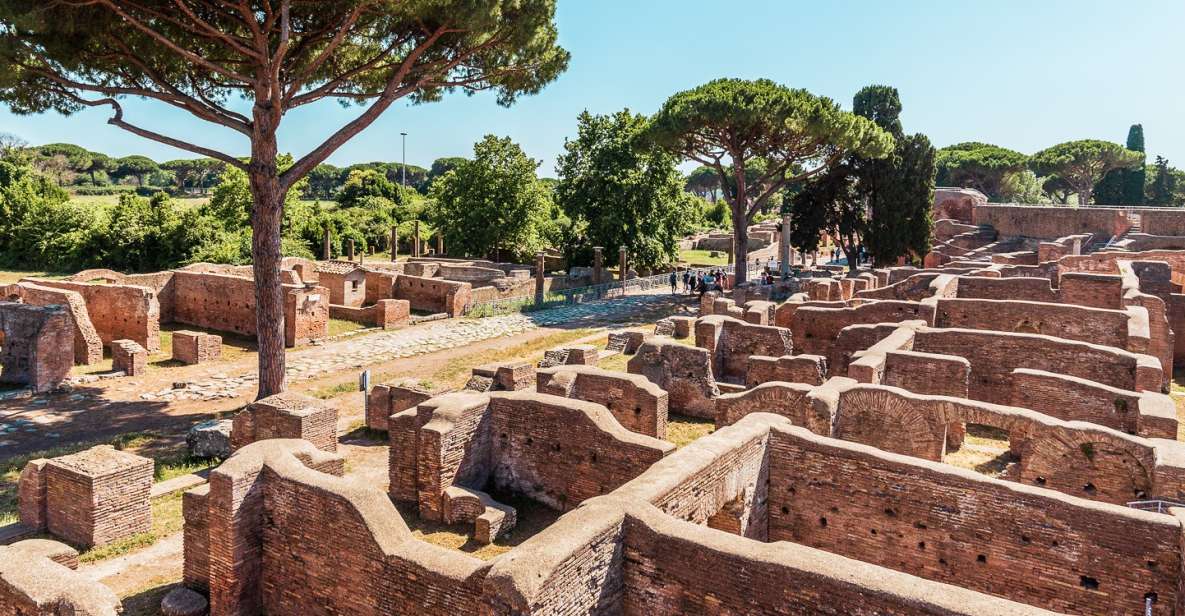
This is a 4-hour tour, and it’s built as a walk-through of key areas rather than a long bus circuit. The benefit is that you can actually connect the dots between neighborhoods—entertainment, commerce, sanitation, and private life.
Ostia Antica can feel like a bit of a maze once you’re on your own. Even with decent signage and an audiobook option in the park, context helps you decide what to prioritize. A good guide keeps the route logical and points out the spots that tell the strongest stories.
Most groups keep an easygoing pace—think: time to stop, look closely, and ask questions. That matters here, because small architectural details are the difference between a “wow, ruins” photo and a “now I get it” moment.
The Grand Outdoor Theater: Where Plays—and Gladiator Fights—Happened
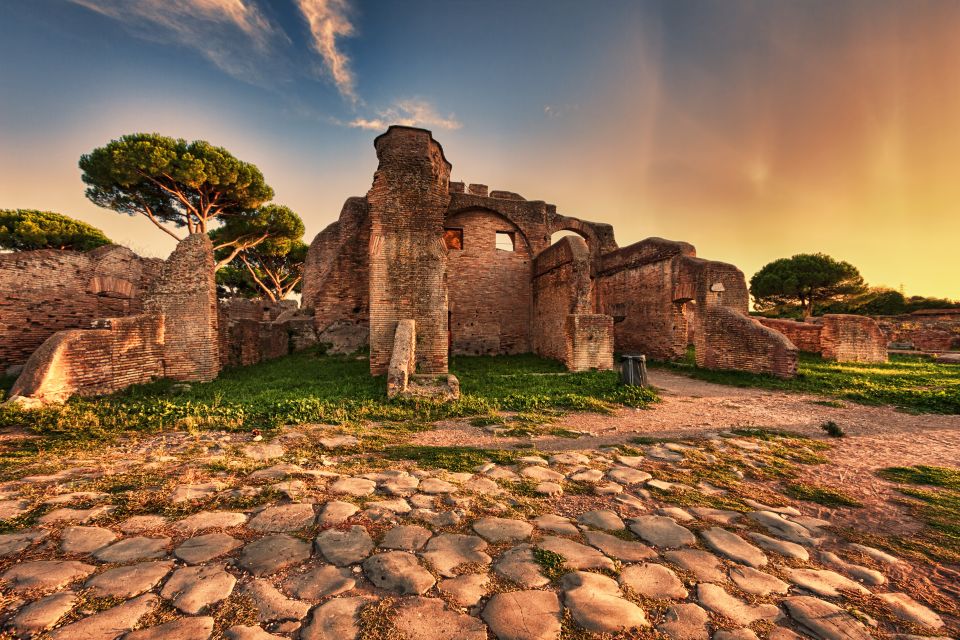
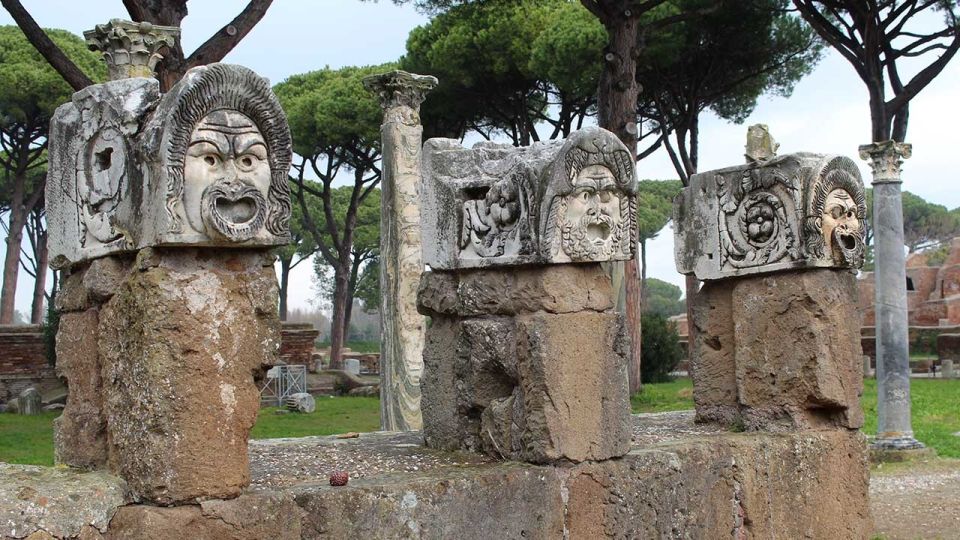
One of the headline stops is the grand outdoor theater. It hosted plays, but also events that could include gladiator fights, which gives you a window into Roman entertainment. Standing in the space, you start to understand why these shows were social events—public, loud, and meant for crowds.
I like this stop because it resets your brain. After you’ve seen modern Rome, the theater helps you picture how people gathered for spectacle in the ancient world. And because it’s outdoors, the feel of the site stays immediate, even with centuries in between.
A small-group guide also tends to add human detail: how crowds behaved, what kind of energy a venue like this produced, and why entertainment mattered in a working port city—not just in Rome proper.
Square of the Guilds: Merchants Built Careers Here
Next up is the Square of the Guilds, the commercial heart where ship owners and merchants tried to make their fortune. This part of Ostia Antica is powerful because it shows that the city wasn’t just temples and houses—it was a business machine.
You’ll walk past structures tied to trade and learn how the port economy shaped everyday life. Even if you’re not a “markets and shipping” person, the stories make it click. You start to recognize why merchants cared about locations, foot traffic, and reputation.
If you love practical history—how people actually lived, worked, and planned—this stop will feel like the core of the tour rather than a side attraction.


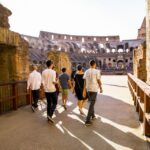
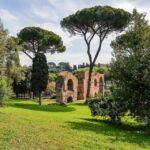

Baths of Neptune: Roman-Style Hygiene and Social Time
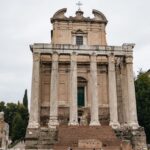
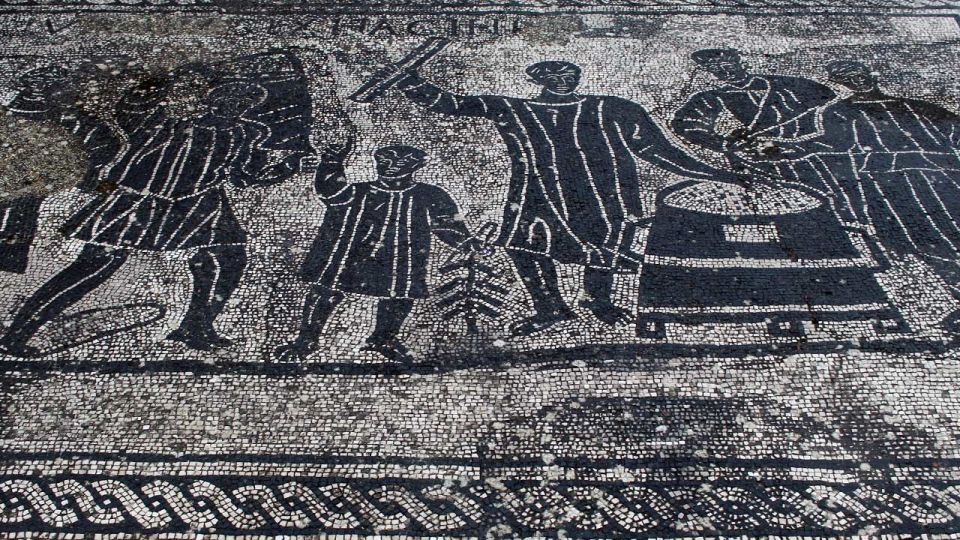
Then comes the Bath area, including the Roman-style from the Baths of Neptune. These weren’t just functional facilities. People would lounge in pools, work out, and clean themselves, and olive oil played a role in that routine.
I like baths because they’re a rare window where ancient life feels familiar. You get the sense of routine plus social energy: exercising, talking, and doing the everyday self-care that kept life running.
One nice thing about a guided route is that it prevents “random ruins” syndrome. The guide connects the architectural pieces to the behavior—where someone might sit, how people moved through the space, and why the design supported the day’s rhythm.
House of Diana: A Home That Surprises You
Down the street is the House of Diana, a place to see how residents lived behind the public-facing city. Reviews highlight it as a surprisingly sophisticated abode, which is important: Ostia Antica isn’t only about jobs and public buildings.
This stop helps you understand the contrast between commerce and domestic life. You’re seeing where someone laid their head at night, and that makes the whole place feel less like “ancient history” and more like “people with daily needs.”
If you tend to learn best by switching settings—public space, then private space—this portion is a great balance point in the tour.
Small Group Touring: Why 10 People Makes a Real Difference
The tour is limited to 10 participants, and that constraint shows. With fewer people, guides can slow down at the best points and actually answer questions. You don’t have to shout over the herd or memorize the next stop like a factory line.
Several experiences emphasize guides who keep the pace relaxed and don’t rush. If your guide is Sonia, Sarah, Antonio, Claudia, or Kathleen, you’re likely to notice a shared style: they connect the ruins to how Romans talked, worked, and spent time.
My advice: use those small moments. Ask what a feature is, who might have used it, or why it was built here. A small group setting is made for that, and you’ll get more out of the walk.
Skip-the-Line Tickets: The Quiet Win Before You Even Start
Skip-the-line access is included via a separate entrance, which helps you spend more of your time on-site and less time waiting. At Ostia Antica, that can matter because you don’t just want entry—you want momentum once you’re inside.
In practice, it also sets the tone for the day: your guide can start promptly, and you get a steady flow through the best areas instead of losing time early.
This is one reason the tour feels like value, not just “a guide with tickets.”
Price and Value: What You Get for About $94
At $94 per person for a 4-hour experience, the value is tied to what’s included. You’re getting roundtrip train tickets, skip-the-line entry, and a licensed English tour guide (with live guide languages also available in Spanish and French).
You’re also paying for interpretation. Ostia Antica is big, and even with park signs and an audiobook, it can be hard to spot what matters most without context. A guide turns “I walked around” into “I understood the place.”
What’s not included is food and drinks, so plan accordingly. Bring water if it’s warm, and consider a simple snack after the tour if you extend your visit on your own.
Also, because the tour ends within a fixed time window, it’s a good way to fit Ostia Antica into a Rome trip without sacrificing your whole day.
Practical Tips That Actually Help (Shoes, Sun, and Bags)
Bring comfortable shoes. The site involves walking, and some areas can be uneven. A hat and sunscreen are smart on sunny days, and you should carry water since food isn’t included.
Remember: luggage or large bags aren’t allowed. If you’re coming from a hotel with a day bag, keep it compact.
If you’re a first-time public-transit rider, you’ll likely feel more confident here because the guide takes care of the train aspect. One tour experience even highlighted how helpful that part was for someone learning Italian transit for the first time.
Should You Book This Ostia Antica Small Group Tour?
Yes—if you want a high-impact, half-day look at Roman life beyond the famous city sights. This tour is especially worth it when you care about meaning, not just photos: theater, baths, merchant squares, and homes all in one route.
Book it if you prefer a small group and a relaxed pace, and if you’re okay with walking for about four hours. You’ll get the most out of it by asking questions and using the route to learn how the city functioned as a port community.
Skip it only if mobility is an issue. It’s not recommended for people with reduced mobility or wheelchair users, and the “no large bags” rule also makes it less convenient if you travel with bulky luggage.
If your goal is to see Ostia Antica with context—without getting lost in the ruins—this is a straightforward, good-value way to do it.
FAQ
Where is the meeting point for the Ostia Antica tour?
You meet in front of the Roma Ostia Lido Train Station, Piazzale Ostiense, 9, 00154 Roma RM, Italia.
How long is the tour?
The tour lasts 4 hours.
What is included in the price?
The price includes a roundtrip train ticket, skip-the-line tickets to the Ostia archaeological park, a licensed English tour guide, and a small group tour.
Is food and drink included?
No. Food and drinks are not included.
Can I bring luggage or large bags?
No. Luggage or large bags are not allowed.
Is this tour wheelchair accessible?
It is not recommended for people with reduced mobility, and it is not suitable for wheelchair users.