REVIEW · ROME
Rome: Colosseum, Circus Maximus, Forum & Ancient Rome Tour
Book on GetYourGuide →Operated by Pink Umbrella Tours · Bookable on GetYourGuide
Ancient Rome makes more sense when you walk it. This tour strings together the main outdoor landmarks—from the Colosseum area to the Roman Forums—plus quieter stops like the Theatre of Marcellus and the Jewish Ghetto beginnings at Piazza Cinque Scole. I especially like how the route gives you clear story lines as you move between places, and how guides such as Bruno, Gabriel, and Francesco are praised for turning tough topics into plain, friendly explanations. One thing to consider: it’s fully outdoors and there’s a real hill climb on Capitoline Hill, so it’s not ideal if you need lots of step-free options.
The payoff is that you see the city center like a timeline you can walk through. You’ll start at the Basilica of Sant’Anastasia al Palatino, then head through the Portico d’Ottavia area, cross Ponte Fabricius toward Tiber Island, and work your way along Via dei Fori Imperiali for big Forum views. I also like that the Colosseum stop is outside only, which keeps the pacing smooth and lets you spend your time on the street-level context you’d miss if you only queue for entrances. The possible drawback is also the key limitation: Colosseum interior tickets are not included, so you’ll want to plan a separate visit if that’s a must for you.
In This Review
- Key Things to Know Before You Go
- The Real Value: Seeing Ancient Rome as a Connected Walk
- Starting at Basilica Sant’Anastasia al Palatino: Get Oriented Fast
- Piazza Cinque Scole: Where the Jewish Ghetto Sets the Scene
- Portico d’Ottavia: An Ancient Market Entrance in Real Space
- Ponte Fabricius and Tiber Island: A Roman Bridge Still Doing Its Job
- Theatre of Marcellus: The “Looks Like the Colosseum” Moment
- Temple of Apollo: Ruins That Still Feel Intentional
- Capitoline Hill and Michelangelo’s Square: A View Worth the Steps
- Via dei Fori Imperiali: Forum Views with Real Street Meaning
- Circus Maximus and the Colosseum Exterior: Big-Arena Impressions Without the Queue
- The Guide Makes or Breaks It: What You’ll Want to Get from Them
- Practical Value: Price, Duration, and What’s Actually Included
- Pace, Group Size Feel, and Who This Tour Fits Best
- Should You Book This Rome Colosseum, Circus Maximus, Forum & Ancient Rome Tour?
- FAQ
- What’s included in this tour?
- Is the Colosseum visit included?
- How long is the tour?
- Where does the tour start and end?
- What should I bring?
- Is the tour offered in English?
- Is this tour suitable for wheelchair users or mobility impairments?
Key Things to Know Before You Go
- Outside Colosseum views, not an interior visit: you get the monument’s scale and setting without ticket lines eating your time
- Capitoline Hill climb: plan for steps and a workout, plus Michelangelo’s square viewpoint once you’re up there
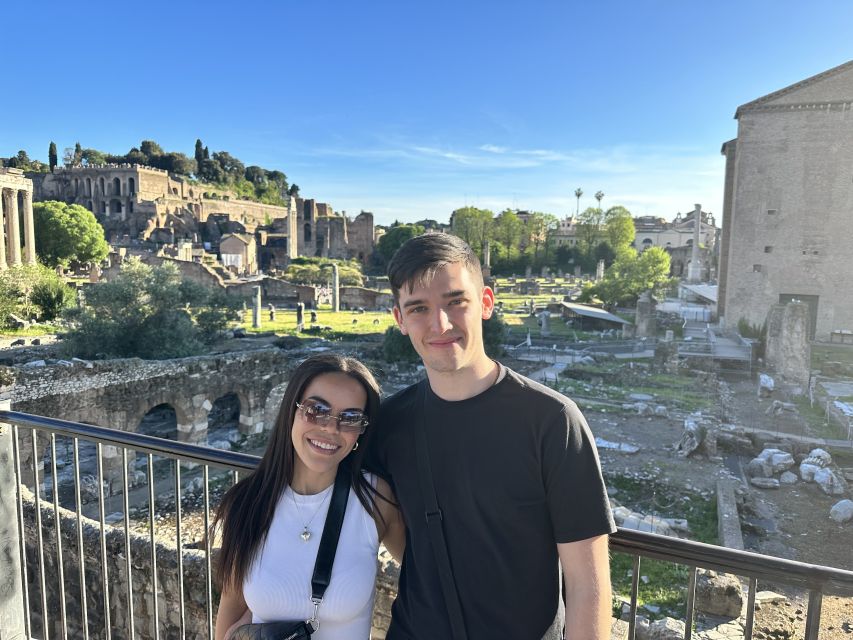
- Forum streets and multiple forums: you’ll look toward the Roman Forum, Forum of Augustus, Forum of Caesar, and Forum of Nerva from Via dei Fori Imperiali
- A few landmarks people skip: Theatre of Marcellus and the Piazza Cinque Scole area add variety beyond the usual checklist
- Guides who answer questions well: praised for warm, humorous, and clear explanations (names you may hear include Bruno, Gabriel, Francesco, and Sam)
- Rain or shine walking: bring comfortable shoes and expect an outdoor, steady pace
The Real Value: Seeing Ancient Rome as a Connected Walk
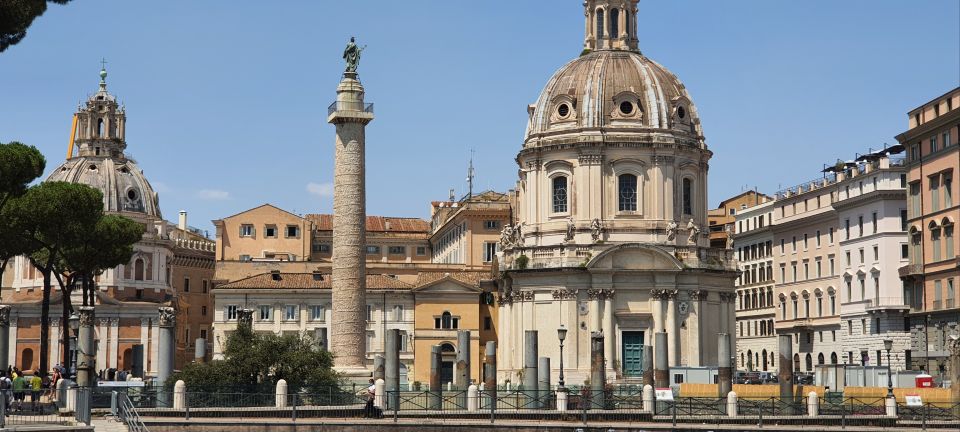
Rome’s ancient sights are famous, but fame can hide the logic. This tour helps you connect the dots—how public power, entertainment, and religion fit into the same city fabric—because you’re moving on foot from one landmark cluster to the next. You’re not just looking at ruins; you’re getting oriented in the center of Rome, so later when you walk on your own, you’ll recognize what you’re seeing.
The route is built around outdoor monuments and street-scale perspective. That matters because the best impressions in Rome often come from angles and context: where a bridge leads, how a theater sits in the urban plan, and how the Forums line up along Via dei Fori Imperiali. Even without entering the Colosseum, you still get the sense of why these places were designed where they were.
You can also read our reviews of more tours and experiences in Rome.
Starting at Basilica Sant’Anastasia al Palatino: Get Oriented Fast
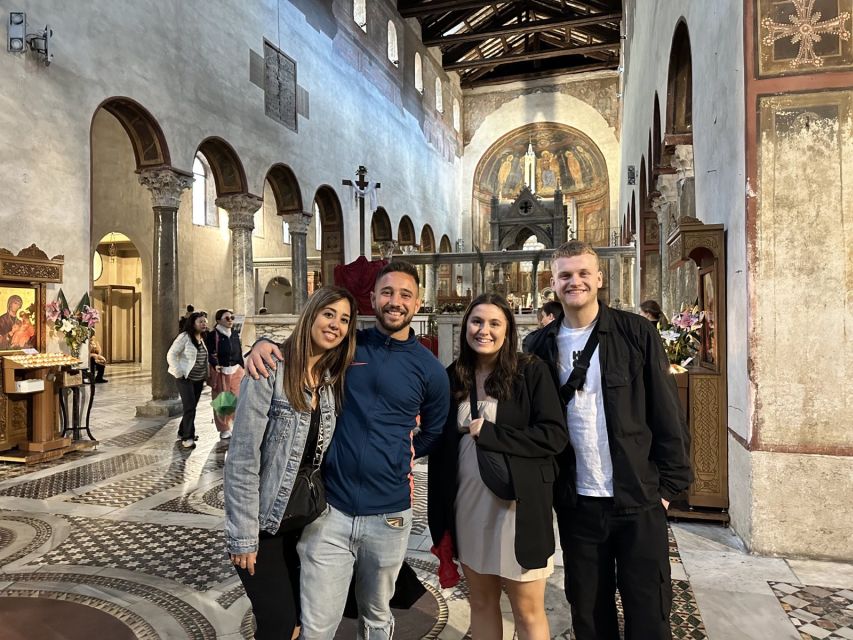
Your meeting point is in front of the Basilica of Sant’Anastasia al Palatino. That’s a smart starting spot because you’re already near the Palatine area—one of the classic “layers” of Rome—so you’re setting your brain up for ancient geography right away.
Plan to arrive 15 minutes early. The guide won’t wait more than 10 minutes after the start time, and there’s no joining once the tour has begun. If you’re late, you’ll miss the flow of the route, and you won’t get the same pacing benefit.
Piazza Cinque Scole: Where the Jewish Ghetto Sets the Scene
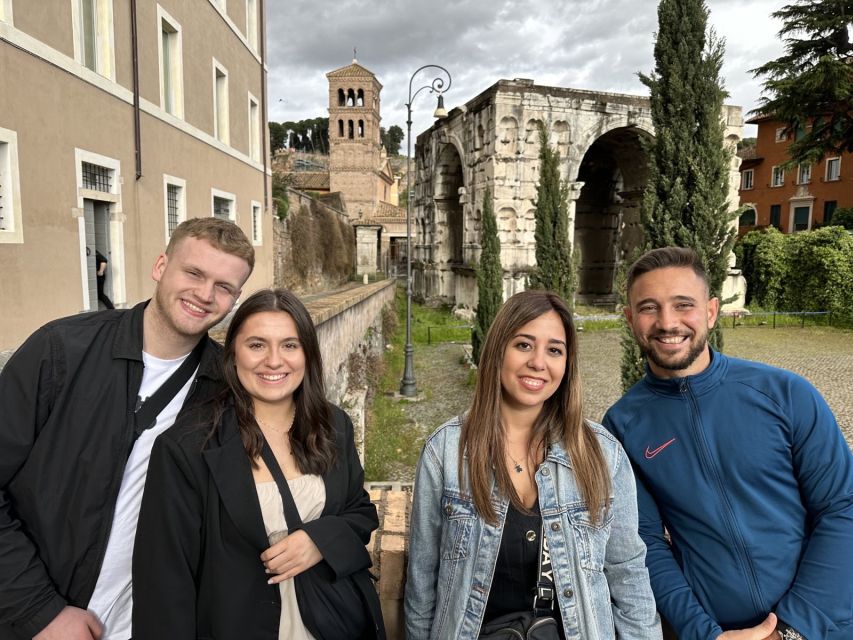
You begin your walk at Piazza Cinque Scole, and this is more than a quick photo stop. It’s where you can absorb the living atmosphere of the Jewish Ghetto area before you hop back into the deeper ancient layers around it. That blend is useful: Rome isn’t a museum you walk through and leave behind. It’s a city where different eras overlap in the same blocks.
What I like here is the tone-setting. Instead of starting with ruins only, you start with a neighborhood that still feels like Rome. From there, the tour can shift into ancient structures with less of that “blank” feeling you get when you only see isolated monuments.
Portico d’Ottavia: An Ancient Market Entrance in Real Space
Next comes the Portico d’Ottavia, described as a majestic ancient structure that once marked an entrance to a bustling market area. This stop matters because it shows a different kind of Roman power than the Colosseum. The Romans weren’t only building arenas; they were organizing commerce, crowds, and daily movement.
Even if you don’t remember every architectural term, you’ll start noticing something important: Roman public spaces were designed to funnel people. A portico wasn’t just decorative—it guided movement and protected trade life from the weather. On the ground, it’s easier to understand when you can see where pedestrians would have flowed.
Ponte Fabricius and Tiber Island: A Roman Bridge Still Doing Its Job
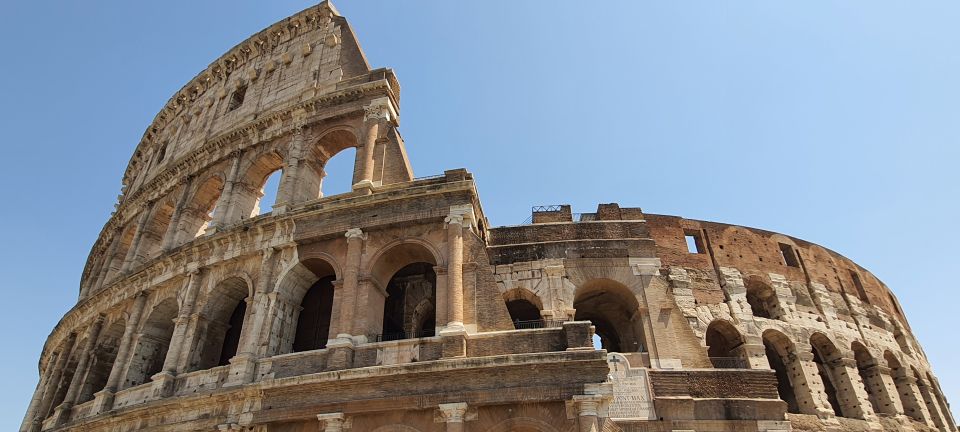
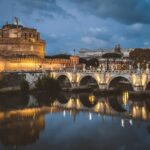
You cross Ponte Fabricius, which is known as the oldest bridge in Rome. This is a great pacing break because walking onto a bridge naturally slows you down just enough to take in how the river shapes the city.
And there’s a bonus visual here: the path leads you toward Tiber Island. Seeing the island from the bridge helps you understand why Romans would care about crossing points. Bridges were practical infrastructure, but in a city like Rome, practicality also becomes identity.


Theatre of Marcellus: The “Looks Like the Colosseum” Moment
Then you reach the Theatre of Marcellus, an ancient theater that many people confuse with the Colosseum. That’s actually a helpful clue for your brain. When a theater and an amphitheater share visual similarities, the tour can teach you the differences without making you memorize a textbook.
This is one of those stops that works best when you let the guide do the sorting. You’ll move from “big impressive structure” to “oh, this is entertainment with a different design goal.” If you’re planning to visit the Colosseum later (or even just looking at it from outside here), understanding the theater helps you see how Romans scaled performances for different crowd types.
Temple of Apollo: Ruins That Still Feel Intentional
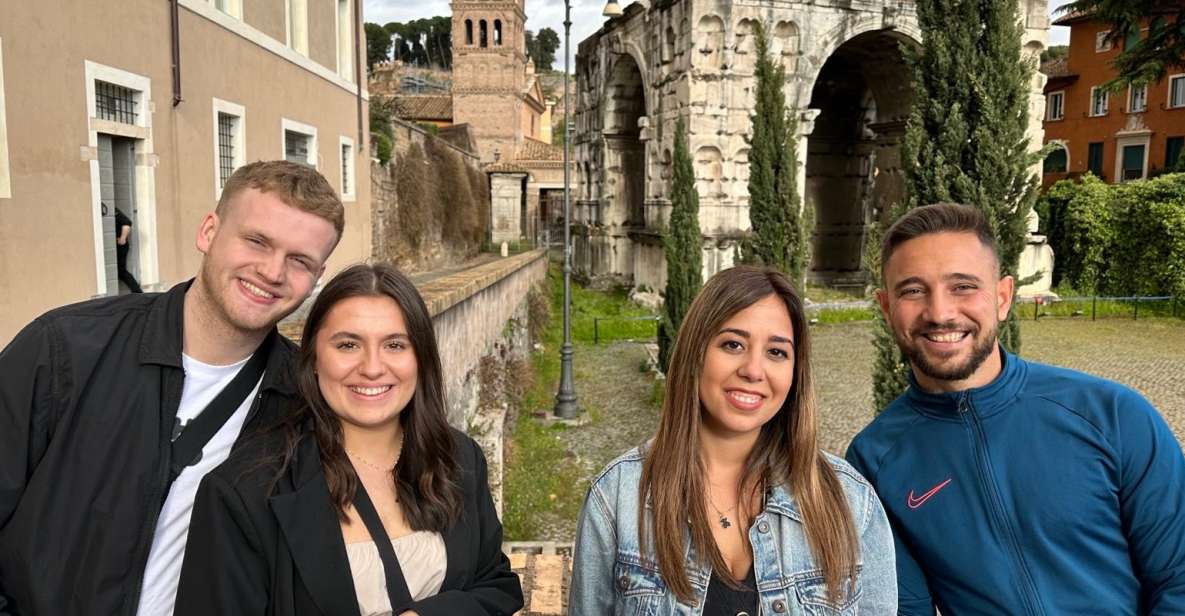
Nearby is the Temple of Apollo. Even as ruins, it helps explain how Rome blended civic life with religious symbolism. The ruins echo the glory of Rome’s past—mostly because they show deliberate placement and formal scale rather than random leftovers.
I like that you get this stop while you’re still in a walking rhythm. It’s not stuck at the end of the tour when your feet are tired and your attention is low. You’re still ready to absorb how temples and theaters both fit into the civic calendar of public life.
Capitoline Hill and Michelangelo’s Square: A View Worth the Steps
Now comes the climb to Capitoline Hill. This is the tour’s physical highlight, and it’s not subtle. If you’re thinking, I can handle it, but I’ll be okay—good. Just don’t treat it like a casual stroll.
Once you’re up there, you reach the beautiful square designed by Michelangelo. That moment is valuable even if you’re not a major architecture person. It gives you a clean “lookout” feeling. From this higher viewpoint area, the city’s layout clicks better, and the ancient structures you’ve been walking toward start to feel like they belong to a plan, not scattered landmarks.
Via dei Fori Imperiali: Forum Views with Real Street Meaning
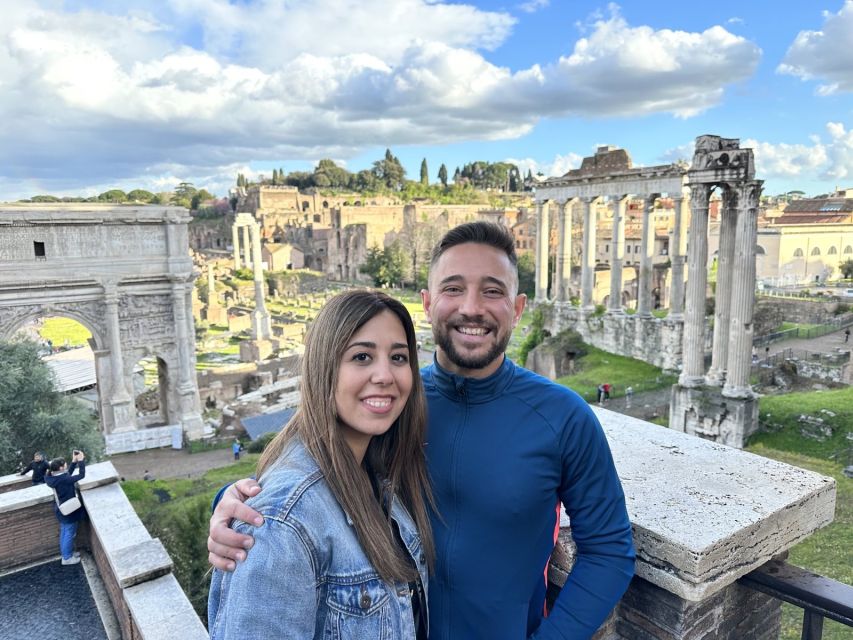
From Capitoline Hill, the route leads you to Via dei Fori Imperiali. This is where you get a chance to understand social and political life in the past citizens while looking at multiple forum zones.
You’ll have the opportunity to see the Roman Forum and also the Forum of Augustus, the Forum of Caesar, and the Forum of Nerva. Even without entering the archaeological areas, standing along this corridor helps you connect what the Romans did in these spaces. Forums weren’t only about politics and speeches; they were where people encountered authority every day—through monuments, official buildings, and the sheer fact of public gathering.
This stop is also a good place to reset your mental map. If you’re going to explore more Rome later on your own, you’ll have a better sense of where the major clusters are and how they relate to each other.
Circus Maximus and the Colosseum Exterior: Big-Arena Impressions Without the Queue
No Rome visit feels complete without Circus Maximus, the famous chariot-racing stadium. This is a key contrast point. The Colosseum is associated with gladiatorial spectacle, but Circus Maximus speaks to another kind of Roman excitement: speed, endurance, crowd energy, and spectacle on an elongated track.
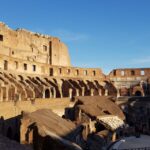
After that, you see the Colosseum from the outside. The world-famous amphitheater is right there, but the tour keeps it practical by not including Colosseum entrance. That means you still get the monument’s dramatic scale while avoiding the stop-and-start rhythm that can come with timed ticket entry.
If you’re the type who wants inside-the-building views, you’ll likely want to plan that separately. But for many people, an outside-focused approach is exactly what makes this tour good value: you learn the story behind the setting, then decide later if you want the inside experience.
The Guide Makes or Breaks It: What You’ll Want to Get from Them
This tour’s success often comes down to the guide’s teaching style. The most praised elements—again and again—are friendly delivery, clear explanations, and the ability to answer lots of questions without turning it into a lecture.
You may encounter guides described as warm and humorous (like Bruno), clearly informative (like Gabriel), and confident with Q&A (like Francesco). Another credited guide, Sam, is described as personable and able to connect the dots without making things feel forced. What that tells me as a practical traveler: you’re not just paying for movement between stops. You’re paying for someone to translate what you’re seeing into something you can actually remember.
Practical Value: Price, Duration, and What’s Actually Included
The price is listed at $243.56 per person for a 2-hour guided walking tour. That’s not cheap, but it’s also not trying to pretend it includes major-ticket costs. What you get included is the guide and the walking tour itself.
Not included: entrance tickets and fees, and the tour does not include visiting the Colosseum. So the value equation depends on your goals:
- If you want context and orientation fast, this can be a strong use of time.
- If your main goal is the Colosseum interior, you’ll likely need to add a separate ticket visit and budget for that.
Also note the tour takes place rain or shine. In Rome, that matters because weather can turn “light walking” into “long, tiring walking.” Comfortable shoes aren’t optional here.
Pace, Group Size Feel, and Who This Tour Fits Best
You’re covering a dense cluster of sights in 2 hours. That usually means you’ll get short walks between stops and time to listen at each landmark rather than long lingering. If you like guided structure—where you learn why something matters and where you should look—that’s a good fit.
This is also the kind of tour that works well for first-time Rome visitors who want a map in their head after day one. And it’s helpful for people who don’t want to spend half a day in lines.
One limitation you should take seriously: it is not suitable for people with mobility impairments and not suitable for wheelchair users. The route includes walking and includes a hill climb to Capitoline Hill.
Should You Book This Rome Colosseum, Circus Maximus, Forum & Ancient Rome Tour?
Book it if:
- You want a tight, guided orientation around the biggest ancient clusters in central Rome.
- You’re okay seeing the Colosseum from outside and you value explanation over ticket time.
- You like question-friendly guides and want someone to connect the locations into a story.
Skip or consider alternatives if:
- The Colosseum interior is your non-negotiable goal.
- You need step-free routing or a more mobility-friendly pace.
If you’re unsure, here’s my simple rule: if you’re trying to “get it” in Rome—what’s where and why it mattered—this tour is a smart first step. And because it ends back at the starting meeting point, you’ll likely feel grounded enough to continue exploring on your own right after.
FAQ
What’s included in this tour?
The tour includes a live English-speaking guide and the guided walking tour. Entrance tickets and fees are not included, and there is no Colosseum interior visit.
Is the Colosseum visit included?
No. You’ll see the Colosseum from the outside only.
How long is the tour?
The tour duration is 2 hours.
Where does the tour start and end?
It starts in front of the Basilica of Sant’Anastasia al Palatino and ends back at the meeting point.
What should I bring?
Wear comfortable shoes, since it’s an outdoor walking tour.
Is the tour offered in English?
Yes, the live tour guide is English.
Is this tour suitable for wheelchair users or mobility impairments?
No, it’s not suitable for people with mobility impairments and it’s not suitable for wheelchair users.