REVIEW · ROME
Rome: Colosseum Experience with Host and Audio Guide
Book on GetYourGuide →Operated by Tours About · Bookable on GetYourGuide
Few places hit this hard.
This Colosseum experience bundles three iconic Ancient Rome sites—Colosseum, Roman Forum, and Palatine Hill—with skip-the-ticket-line access and a digital audio guide you can follow at your own speed.
I especially like two things. First, the start is simple: you meet the English-speaking host near Via delle Terme di Tito 93, they hand over your audio login details, and they walk you to the entrance queue so you’re not figuring things out alone. Second, the audio guide is built to keep you moving: it explains what you’re seeing (including the Colosseum’s engineering) while you’re there, without forcing you into a rigid group rhythm.
One drawback to plan for: this is mostly self-guided after entry—there’s no live guide inside. Also, the audio guide needs your phone and correct app access, and headphones are not included, so it’s smart to come prepared.
In This Review
- Key highlights I’d prioritize
- How the experience runs: host meets you, then you go on your own
- Entering the Colosseum: skip-the-line help, but security still happens
- The digital audio guide: great if your app is ready, annoying if it isn’t
- Inside the Colosseum: what to notice when you’re on your own
- Roman Forum ruins: walk the political heartbeat at your pace
- Palatine Hill: the climb is worth it for the view
- Time budgeting for a 2.5-hour plan
- Price and value: why about $26 can work (and when it won’t)
- Meeting point: Via delle Terme di Tito 93 (and the Metro shortcut)
- Who this is for, and who should choose differently
- Should you book this Colosseum experience?
- FAQ
- How long is the Colosseum experience?
- What’s included with the ticket?
- Is a live guide included?
- Are headphones included for the audio guide?
- What languages is the audio guide available in?
- Where do I meet the host?
- Can I skip the ticket line?
- Is it suitable for wheelchair users or mobility impairments?
- What do I need to bring?
- Is there free cancellation?
Key highlights I’d prioritize
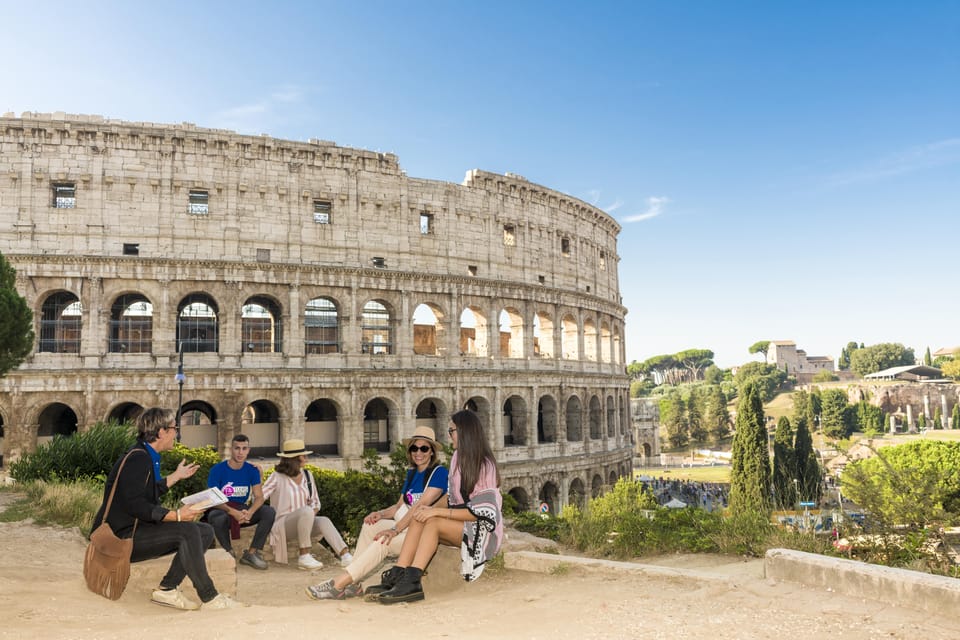
- Host-led ticket pickup near the Colosseum so you can get inside with less hassle
- Skip-the-ticket-line entry to reduce time in the busiest part of the process
- Digital audio guide (English/German/Italian) tied to what you’re looking at
- Roman Forum ruins on foot where key political names are part of the story
- Palatine Hill climb for city panoramas and the feeling of elite Rome
- Small group option (when available) for a less chaotic start
How the experience runs: host meets you, then you go on your own
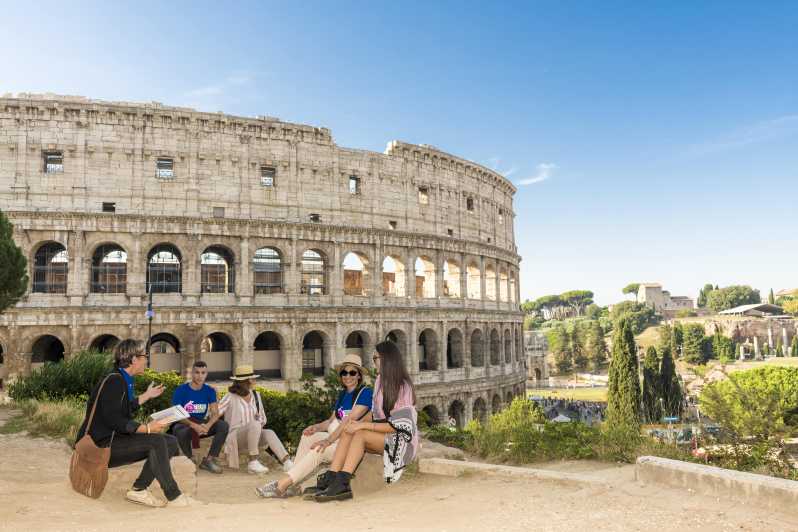
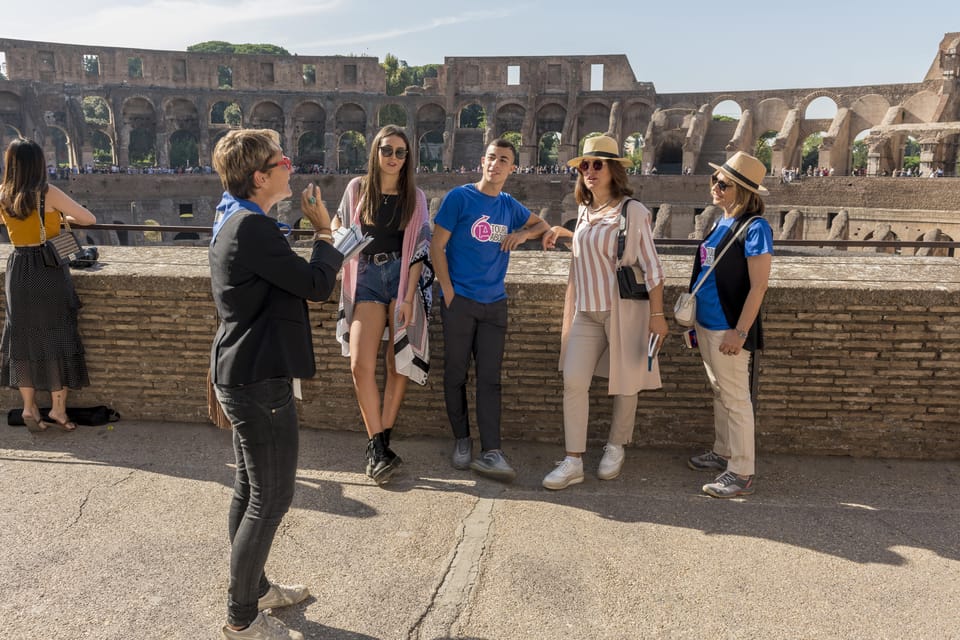
This isn’t a full “follow the guide like a parade” tour. Your host (English) meets you at Via delle Terme di Tito 93 and gives you the login details for the audio guide. Then they accompany you to the Colosseum entrance area so you’re positioned correctly for the flow of entry.
After that, you continue independently. That matters because you’ll be shaping your own pacing across three major sites: the Colosseum first, then the Roman Forum, and finally Palatine Hill. If you like to linger on details, you can. If you prefer steady progress, you can also keep moving—just remember these sites are big and crowded, so “independent” means you’ll have to manage your time and attention.
The ticket is tied to your entrance time for the Colosseum. So even though you’ll walk through all three stops during your visit, your Colosseum entry isn’t “sometime today.” Pick a time you can actually keep.
You can also read our reviews of more guided tours in Rome
Entering the Colosseum: skip-the-line help, but security still happens
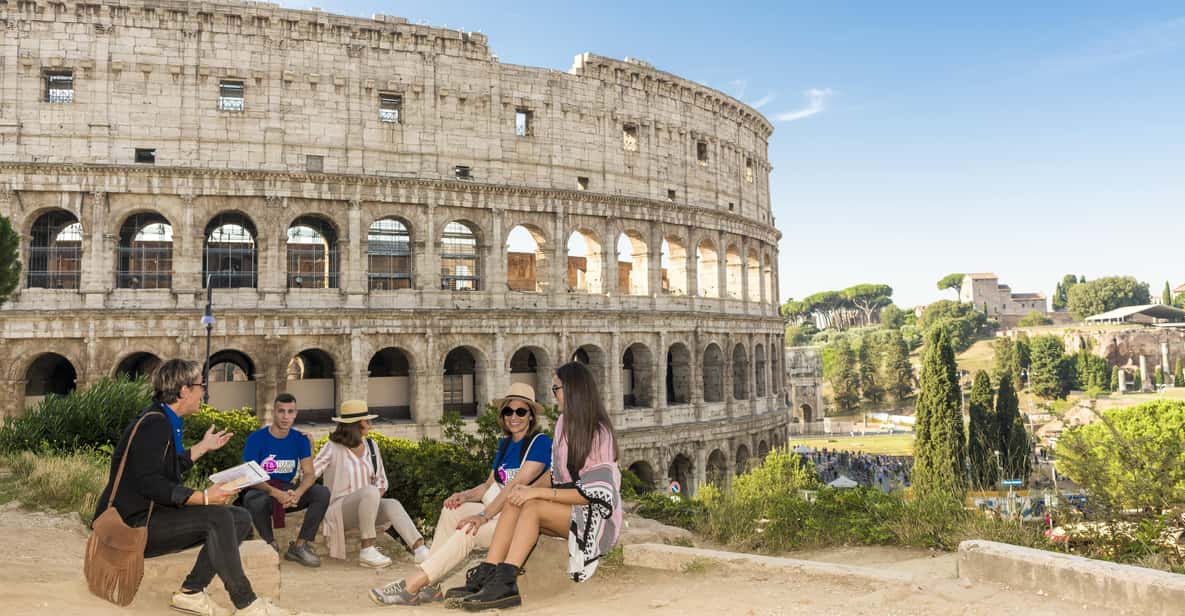
The big promise here is skip the ticket line, and it’s meaningful. At the Colosseum, the process can be slow: security checks and controlled entry. A skip-the-line ticket can still save you time in the most unpredictable part of the day.
That said, be realistic. There may still be a queue due to security checks, and the entrance is strict about timing. The smoother entry comes from arriving with your ticket already handled by the host and your time slot already set.
Practical move: wear comfortable shoes. Even if the “walk” sounds small on paper, you’re dealing with crowd flow, short transfers between areas, and lots of standing to look around.
The digital audio guide: great if your app is ready, annoying if it isn’t
The audio guide is included, but the way you use it is the make-or-break detail. You’re told to download the app in advance, and you’re also given login details when you meet the host. Not included: headphones.
Here’s what I’d do to avoid the most common headaches:
- Bring your own headphones (wired or Bluetooth).
- Make sure your phone is charged before you arrive.
- Download the app before you go, even if you don’t start it yet.
- Bring your passport or ID, since you’ll need ID for checks and for children as well.
A small but important “real life” note: some people experience issues getting the audio code until after they’ve retrieved tickets. Also, phone service in Rome’s thick crowds can be spotty. So if you’re relying on data, plan for offline audio where possible, or at least make sure your app login process works without depending on perfect connectivity.
On the plus side, the audio guide is designed around what you’re seeing. You learn about the Colosseum’s engineering and get historical context while you’re walking the interior. That’s especially helpful because once you’re inside, it’s easy to feel like you’re just surrounded by stone and arches. The guide keeps your focus moving forward.
Inside the Colosseum: what to notice when you’re on your own
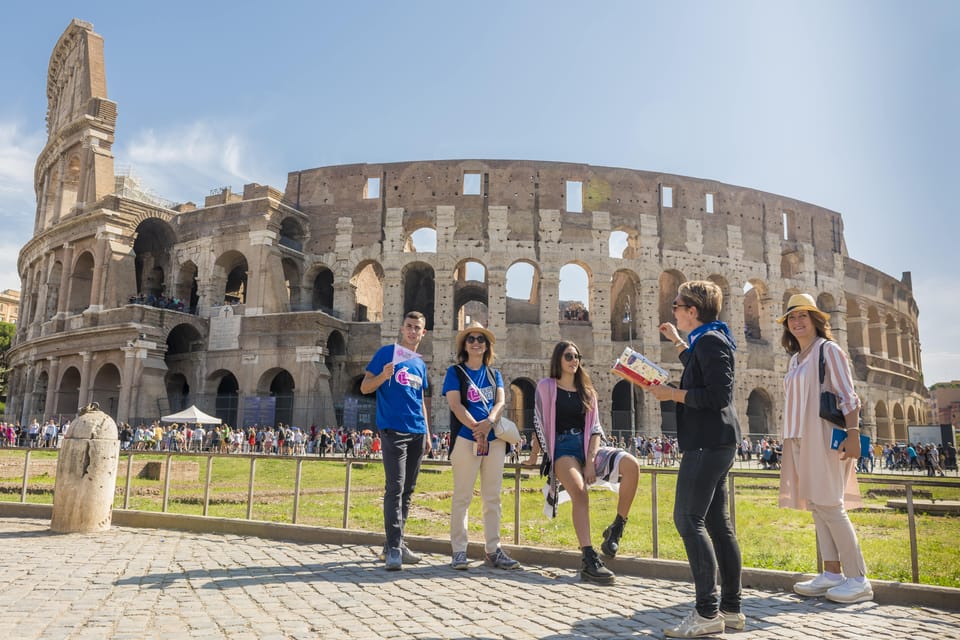
At the Colosseum, the self-guided part can be either freeing or confusing. The trick is to use the audio guide as your compass. Let it tell you what section you’re looking at, then pause long enough to match the story to the structure.
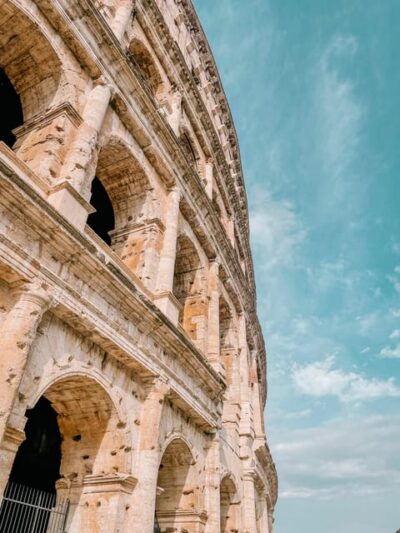
This is the “everyone comes here” stop, but it’s still worth treating like a learning moment rather than a photo checkpoint. When the audio talks about how it was built and how it functioned, look for the architectural clues: levels, openings, and the way the space is shaped to control crowd movement.
And yes, the history tied to the Colosseum is violent. The audio frames it as a real part of how Rome worked, not as a clean museum story. That’s part of why this visit hits: it connects engineering to human behavior, power, and spectacle.
Roman Forum ruins: walk the political heartbeat at your pace
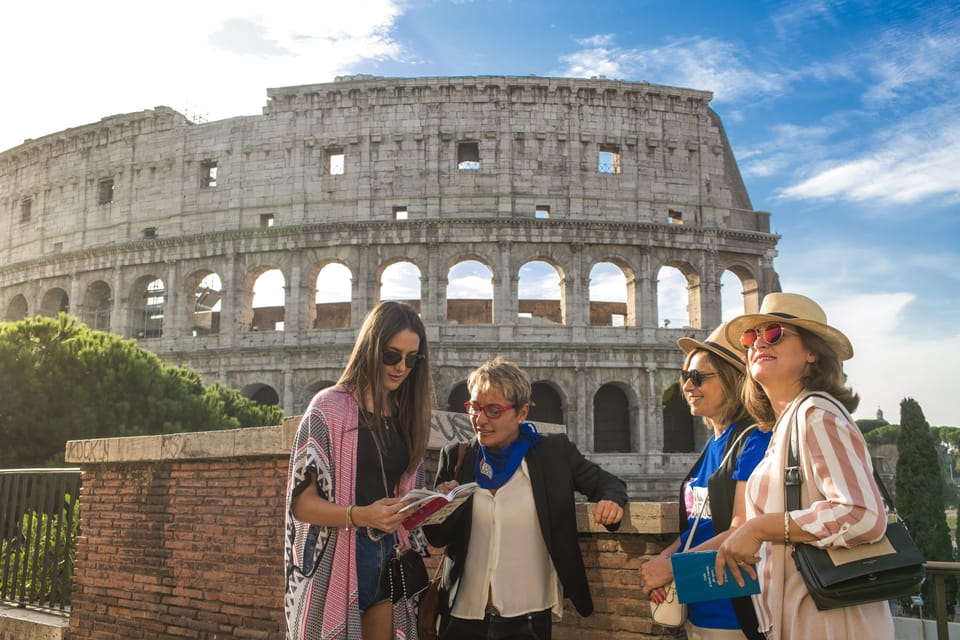
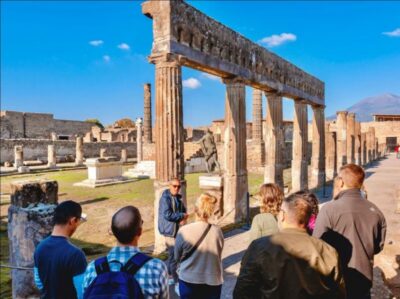
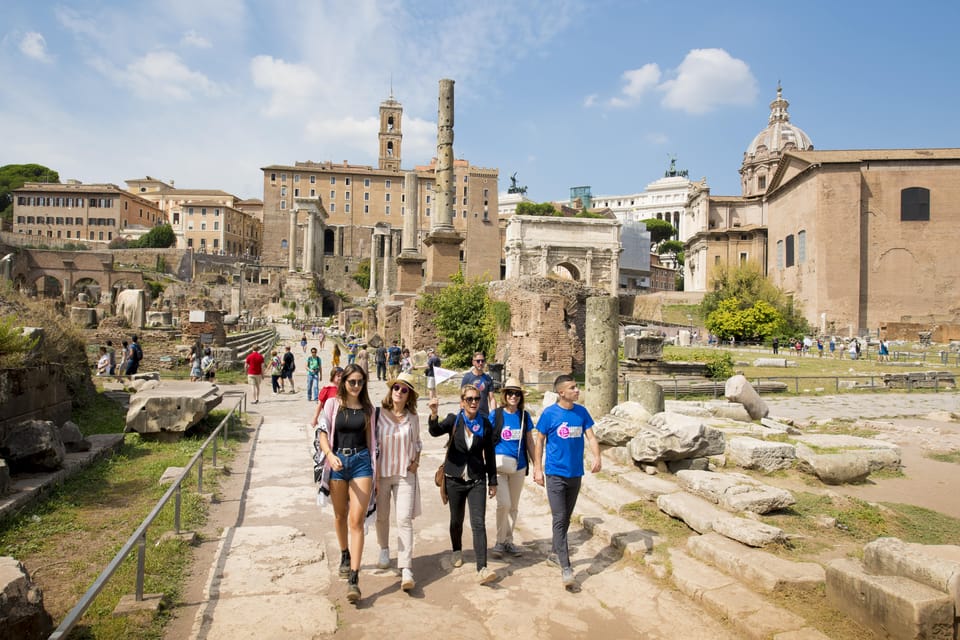
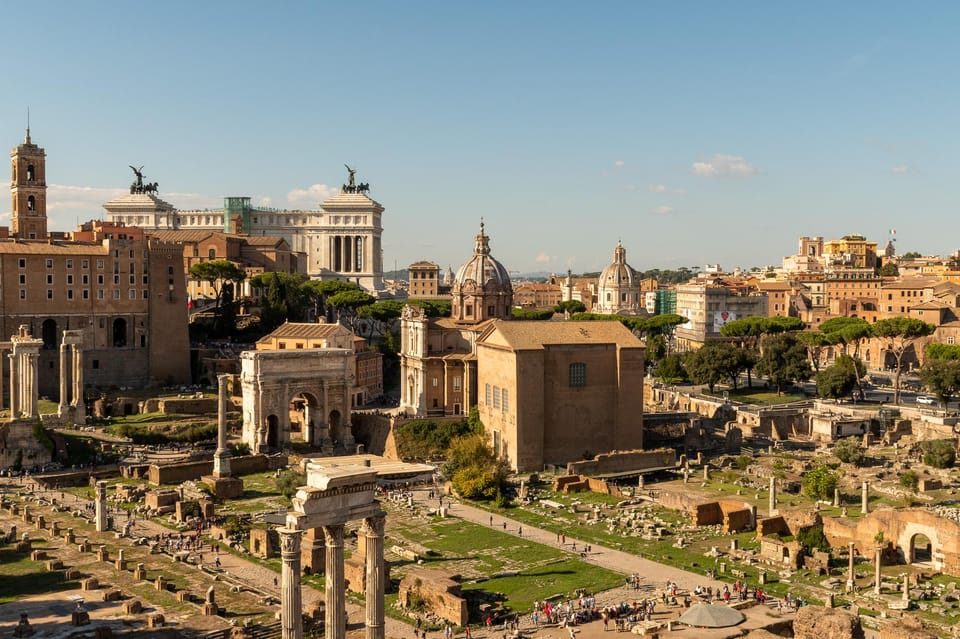
After the Colosseum, you move to the Roman Forum, once the city’s central hub for public life. The ruins can look confusing if you don’t have a mental map, but the audio guide and your own slow walk help you connect spots to the people and events tied to them.
Two names you’ll hear in this story line are Caesar and Cicero. The feeling you’re going for here is presence: Rome wasn’t just monuments; it was decision-making, speeches, politics, and competition for influence. The Forum’s walkways make it easy to keep moving while still soaking in the scale of what remains.
One caution: keep an eye on how you enter the Forum areas. A ticket entry can be strict about which entrances you can use, and you typically don’t want to gamble with re-entry rules during a timed visit. In plain terms: once you’re inside, commit to the route you’re on.
You can also read our reviews of more tours and experiences in Rome



Palatine Hill: the climb is worth it for the view
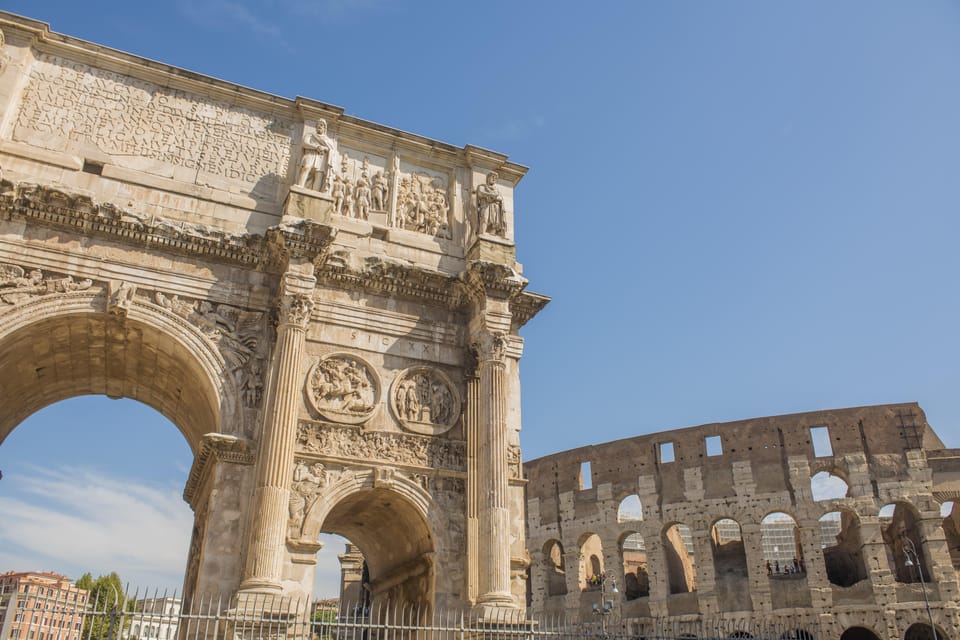
The final stop is Palatine Hill, and it’s here that you earn your best “Rome spreads out forever” perspective. You’ll walk up to reach the top areas, then spend time moving around the viewpoints.
Palatine Hill is described as the home of Rome’s elite—dwellings and gardens shaped by emperors’ reigns. That “elite Rome” theme changes how you interpret the hill. Instead of just seeing ruins, you’re thinking about where power lived and how the view and access mattered.
This is also the part that can be physically tougher. You’re on foot and likely doing stairs and uneven ground. If you’re comfortable with a short uphill hike, you’ll enjoy it. If not, you may feel that the “2.5 hours” turns into a slower, heavier day.
Time budgeting for a 2.5-hour plan
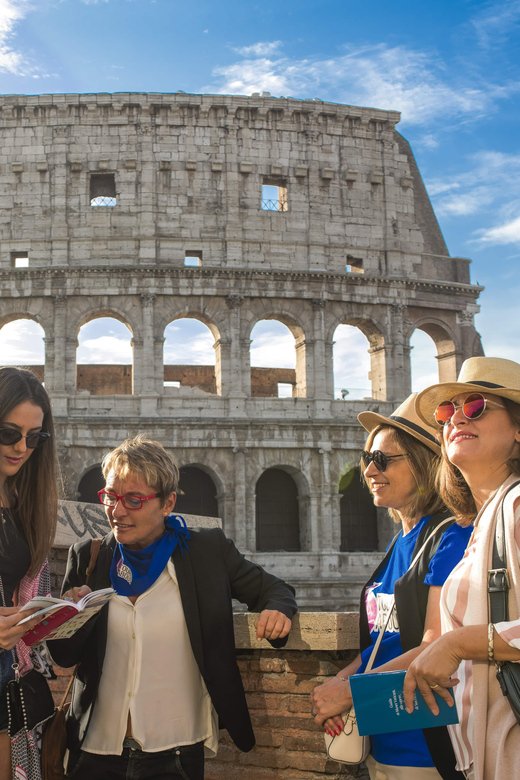
The experience is sold as about 2.5 hours, but in practice, your time can stretch depending on crowd levels and how much you pause for the audio. Because it covers three sites, I recommend treating it like this:
- Use the Colosseum to get your bearings first.
- Let the Forum be your walking “story chapter.”
- Make Palatine Hill the slower finish for views and wandering.
Crowds can change everything. If you hit peak-hour density, you may spend extra minutes detouring around bottlenecks or waiting for a clear moment to step into a viewpoint. The audio guide helps fill that time intelligently, but it won’t stop the clock of real-world crowd flow.
Price and value: why about $26 can work (and when it won’t)
At $26 per person, this is good value if you fit the format: you want entry to three sites plus an audio guide, and you’re fine with minimal live directing. You’re paying for:
- entrance to the Colosseum, Roman Forum, and Palatine Hill
- a digital audio guide
- help with setup through an English-speaking host
- and skip-the-ticket-line access at the busiest entry point
What you’re not paying for is a full live guide. There’s no live guide included, and you’ll be responsible for your own navigation after the host gets you started. So if you want someone to explain every choice of where to stand and what to look at, this may feel a bit hands-off.
The headphone omission also nudges the real cost slightly upward—because you’ll need them to listen comfortably. If you already travel with your own, it’s no problem. If you don’t, budget a quick purchase or plan to borrow.
Meeting point: Via delle Terme di Tito 93 (and the Metro shortcut)
Meet your host at Via delle Terme di Tito 93.
If you arrive by Metro and you’re using the Colosseo metro station, walk up to the terrace above the station. Then:
- walk on Via Nicola Salvi about 100 meters
- turn left
That route is designed to get you to the meeting point without aimless circling. Still, Rome is Rome: if you’re in doubt, give yourself a few extra minutes so you don’t arrive sweaty and late.
Who this is for, and who should choose differently
This experience fits best if:
- you want big highlights in limited time
- you’re comfortable using an app-based audio guide
- you like moving at your own pace once inside
- you want host support at the start, not a constant guided lecture
It’s not a great match if you:
- need step-free access (it isn’t suitable for mobility impairments or wheelchair users)
- can’t manage stairs and uneven ground (Palatine Hill is part of the deal here)
- strongly prefer a live guide explaining everything as you go
Also note what’s not allowed: pets, weapons or sharp objects, luggage or large bags, alcohol and drugs, and glass objects. If you’re traveling with a big bag, plan ahead so you don’t get stuck at security.
Should you book this Colosseum experience?
I’d book it if your goal is simple and efficient: Colosseum plus Forum plus Palatine Hill, with help getting started and an audio guide doing the explaining while you walk. At around $26, it’s a practical way to see three major sites without committing to a long, full-day guided format.
I wouldn’t book it if you know you’ll be frustrated by self-guided touring, or if you don’t want to handle app logins and bring your own headphones. In that case, you may want a format with a live guide who stays with you the whole time.
If you do book it, show up prepared: ID in hand, headphones ready, phone charged, and comfortable shoes on. Then you’ll get the best of Rome’s power rooms—the Colosseum, the Forum, and that hilltop view—without turning your day into a logistics puzzle.
FAQ
How long is the Colosseum experience?
The duration is listed as about 2.5 hours.
What’s included with the ticket?
It includes entrance to the Colosseum, a digital audio guide, entry to the Roman Forum, and entry to Palatine Hill.
Is a live guide included?
No. There is a host/greeter for meeting and entry support, and the audio guide is included. A live guide is not listed as included.
Are headphones included for the audio guide?
No. Headphones are not included.
What languages is the audio guide available in?
The audio guide is available in English, German, and Italian.
Where do I meet the host?
Meet at Via delle Terme di Tito 93. If arriving by Metro at Colosseo station, you’ll reach the terrace above the station, then walk on Via Nicola Salvi about 100m and turn left.
Can I skip the ticket line?
Yes, it includes skip the ticket line.
Is it suitable for wheelchair users or mobility impairments?
No. It is not suitable for people with mobility impairments and wheelchair users.
What do I need to bring?
Bring a passport or ID card, comfortable clothes, and a downloaded app.
Is there free cancellation?
Yes, free cancellation is available up to 3 days in advance for a full refund.