REVIEW · ROME
Rome: Colosseum, Roman Forum & Palatine Hill Guided Tour
Book on GetYourGuide →Operated by Carpe Diem Tours · Bookable on GetYourGuide
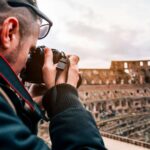
Three ancient sights in one tight loop. That is what makes this Colosseum and Forum experience so practical: timed entry plus the chance to walk the arena floor, then finish with two big “Rome must-sees.” You get an expert guide and headsets, so you can actually hear the stories while you’re moving.
I like that the tour keeps the pacing tight but not rushed. You’ll get hands-on highlights—especially the arena floor access—and you’ll connect what you see to how Rome actually worked day to day, not just as scenery for photos.
One thing to consider: it’s a busy, very popular area, and finding the guide can take a minute if you arrive late. The meeting point is the Arch of Constantine, and late arrivals can’t be refunded, so build in extra time.
In This Review
- Key highlights that matter on the ground
- Why this tour is worth your time: arena floor + Forum context
- Meeting point at the Arch of Constantine (and how not to miss your guide)
- Entering the Colosseum with timed access (and what to do first)
- Walking the arena floor: the closest you’ll get to gladiator scale
- Palatine Hill: imperial roots with the kind of views photos can’t explain
- The Roman Forum: where politics and daily life meet
- Guides and group tone: small-group comfort makes questions easier
- Price and value: $93 makes sense if you care about access
- Who this tour suits best (and who should think twice)
- What to bring for an easy day
- Should you book this Rome Colosseum + Forum + Palatine Hill tour?
- FAQ
- How long is the Colosseum, Roman Forum & Palatine Hill guided tour?
- Where do I meet the guide?
- What’s included in the ticket for this tour?
- Which languages are available for the guided tour?
- Will the tour always start at the Colosseum?
- What do I need to bring?
- What happens if I arrive late?
Key highlights that matter on the ground

- Timed entry to the Colosseum helps you avoid the worst queue chaos
- Arena floor access gives you that rare up-close gladiator perspective
- Expert guiding with headsets keeps the story clear even when crowds surge
- Palatine Hill views help you understand why Rome’s elite picked this spot
- Roman Forum walk-through ties together politics, daily life, and imperial power
- Small-group feel helps you stay together and actually ask questions
Why this tour is worth your time: arena floor + Forum context
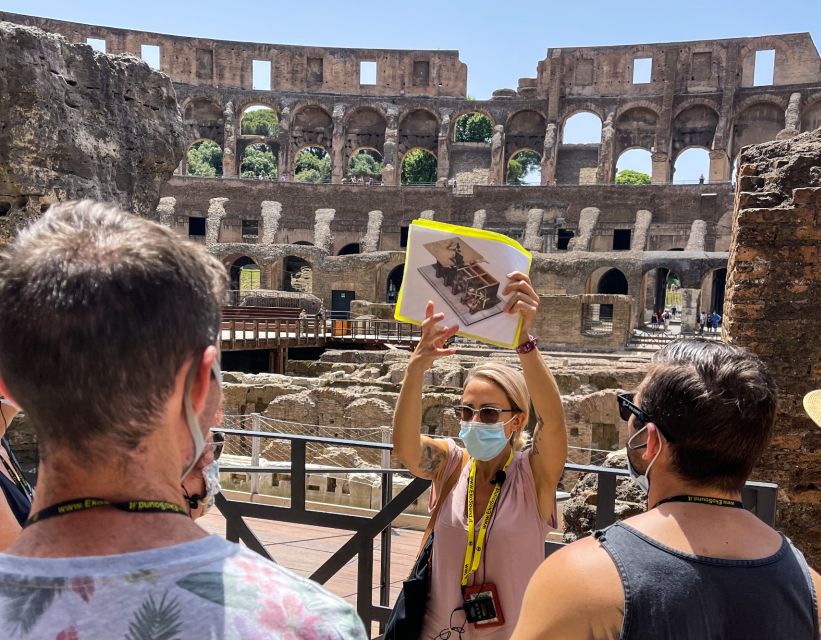
The Colosseum is huge, loud with crowds, and easy to experience as a blur. This tour is built to fix that. Instead of treating the Colosseum like a standalone monument, you’re also given the two other halves of the Roman story: the Palatine Hill power base and the Roman Forum where politics and everyday life collided.
What I like most is the order and the flow. You start inside the Colosseum experience first, where it makes sense to talk gladiators and engineering. Then you shift to Palatine Hill, the “why” behind imperial Rome—your view starts to explain the architecture and the status. Finally, you end in the Forum, which is where the pieces feel like they click into place.
You’re also not stuck playing the “find the best angle” game alone. A guide keeps you oriented, and the included headsets help when you’re close to other groups or the wind is doing its best impression of static.
You can also read our reviews of more guided tours in Rome
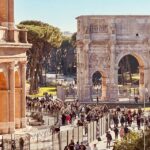
Meeting point at the Arch of Constantine (and how not to miss your guide)
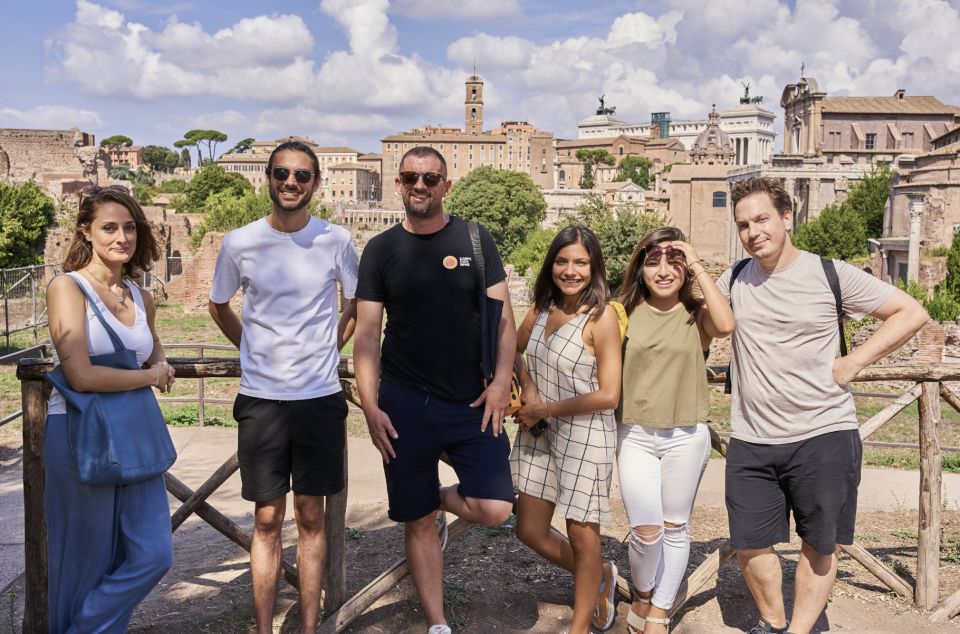
Your tour guide meets you in front of the Arch of Constantine holding a yellow Carpe Diem Tours flag or sign. Arrive at least 10 minutes early.
This matters more than most people think. The area gets crowded fast, and if you’re even a bit late, you can lose time trying to locate the group. And since late arrivals can’t be refunded, it’s simply not a “wing it” situation.
Tip: give yourself a buffer for the walk from the Colosseum side streets, not just from the nearest transit stop. Even if you know Rome well, this is one of those places where the crowd flow can slow you down.
Entering the Colosseum with timed access (and what to do first)

The tour starts with timed-entry tickets to the Colosseum. Timed access isn’t just about comfort; it changes what you can actually do with your visit. Without it, you often waste your energy in line and show up to the main sights already tired.
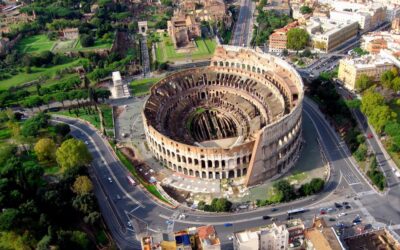
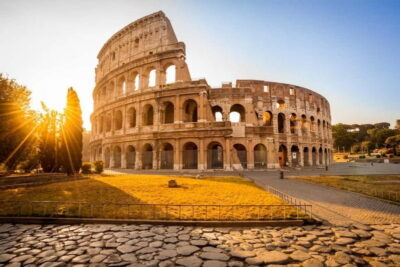
Once inside, you get a guided walk designed to hit the big ideas quickly: gladiators, emperors, and what daily life was like around an arena that wasn’t just for entertainment—it was political theatre. The Colosseum can feel like random stone and arches until someone explains the purpose of each section, and you’ll notice the difference the moment a guide frames what you’re looking at.
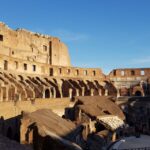
You’ll also get a chance to get up higher for views over the arena area. That part is easy to miss on a self-guided visit because people focus on the floor level. Here, you get both.
Walking the arena floor: the closest you’ll get to gladiator scale
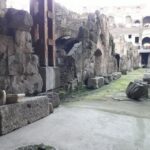
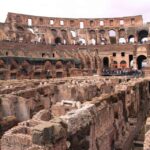
This is the headline: access to the Colosseum Arena floor. It is one of those experiences that changes your mental image instantly. Photos are great, but they compress distance. On the arena floor, you feel the scale and you understand how dramatic the sightlines were.
Your guide uses that moment to bring the setting to life—stories of spectacle, power, and the engineering that made crowds feel like they were part of the show. You’re not just standing there; you’re placed in the right context for why that floor mattered.
A practical note: arena-floor access can be cooler than you expect because of shade patterns, but you’re still in a busy stone structure. If you tend to overheat, bring light layers so you’re comfortable when the crowd presses in and the open air exposure changes.
Palatine Hill: imperial roots with the kind of views photos can’t explain
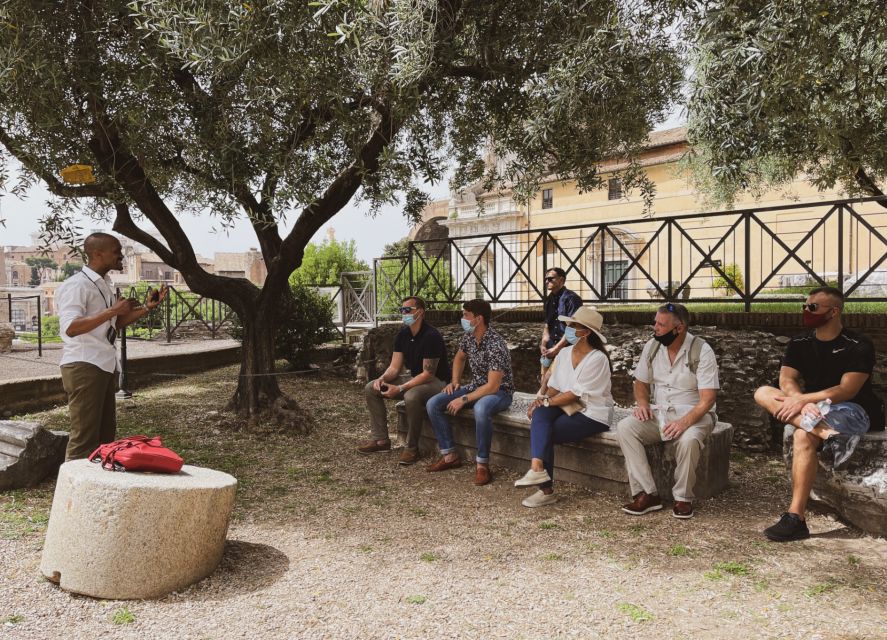
Next comes Palatine Hill for a guided visit. Palatine Hill is where you shift from “What happened here?” to “Who chose this place, and why?”
The tour frames it as the legendary birthplace of Rome and also as the home of major imperial palaces. That pairing helps you understand the difference between myth and power. Palatine Hill isn’t just an overlook—it’s a site that explains how rulers built their world view into the landscape.
What you’ll like here is the vantage points. From Palatine Hill, Rome’s scale becomes visible, and the hills and ruins stop feeling like random stops. Even if you’ve seen photos before, the views make it easier to connect what you saw in the Colosseum to where elite families wanted to live.
Time-wise, it’s about an hour on this section, so don’t expect a long, slow wander. Instead, think of it as a guided “you’ll get the meaning fast” stop.


The Roman Forum: where politics and daily life meet
Finally, you move to the Roman Forum—the center of Roman politics and daily life. This is the part where the tour feels most valuable if you care about how a civilization actually functioned.
The Forum can be overwhelming without context because it’s full of fragments. A guide helps you understand how the space worked: where people would gather, how power showed itself in public, and why the Forum mattered even when the city expanded.
If you love history, this is where you’ll get the best payoff from the storytelling style. Guides often link buildings and ruins to the people who shaped Rome’s public life—emperors, lawmakers, and regular Romans moving through the space. And because this is guided, you aren’t stuck reading plaques at random while other groups pass you.
One potential downside: the Forum is big, and the tour time is limited. So if your top priority is slow exploration and lingering over details, this may feel a bit fast. If your priority is seeing the main ideas clearly, it’s a good fit.
Guides and group tone: small-group comfort makes questions easier
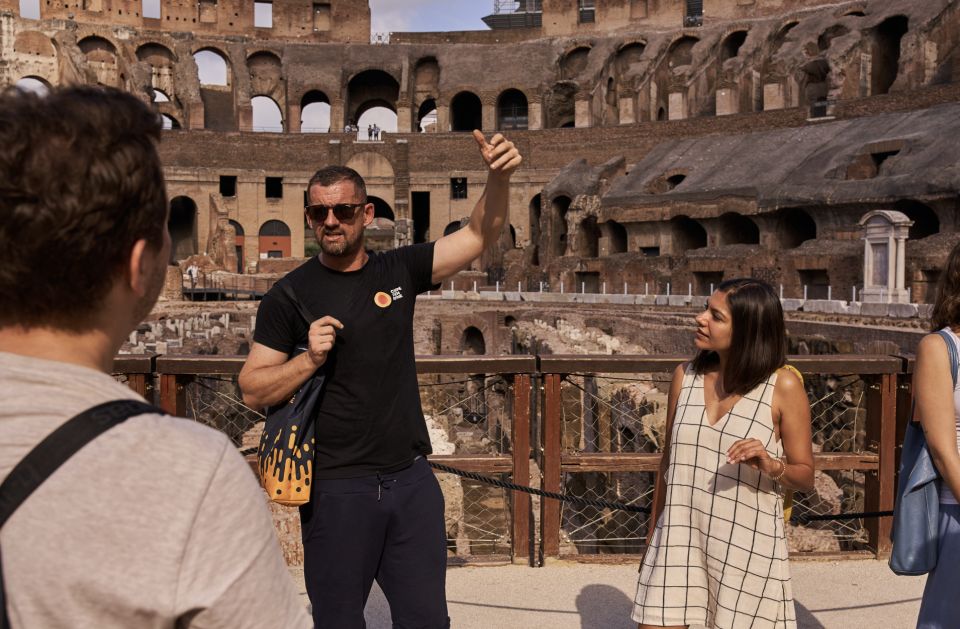
This is a group tour, but it’s not the kind where you feel like a number. Multiple guides are mentioned across bookings, and what they have in common is that they keep the group together and stay interactive.
For example:
- Tsion is described as kind and open to questions.
- Ragu is praised for strong humor and delivery, not just facts.
- Ivana is highlighted for an upbeat, caring style and for explaining the Colosseum as part of life in Rome.
- Fe is noted for energy and keeping the group engaged.
That matters because Colosseum/Forum days can go one of two ways: either people treat it like a museum checklist, or they ask questions and stay curious. This tour setup makes curiosity easier.
Also, headsets help you stay part of the group’s pace, especially when crowds thicken.
Price and value: $93 makes sense if you care about access
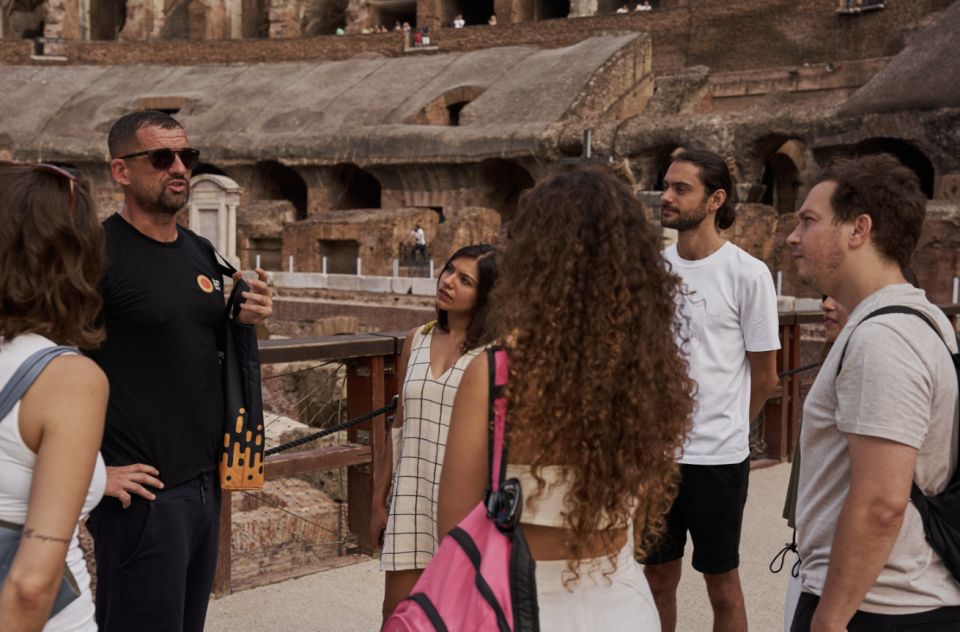
At $93 per person for roughly 1.5 to 3 hours (depending on start timing), you’re paying for more than a walking tour. You’re paying for:
- Timed-entry tickets
- Arena floor access
- Guided time across the Colosseum + Palatine Hill + Roman Forum
- Priority-style access across the three major stops
- Headsets to keep the experience usable in a crowded environment
If you’re planning to do these sites independently, you’d still spend time figuring out entry timing, managing routes between sites, and dealing with lines. That’s the hidden cost of self-guided Rome: not money, time and mental bandwidth.
So the value question becomes simple: do you want your time spent outside lines, and do you want arena-floor access? If yes, this price is easier to justify.
Who this tour suits best (and who should think twice)
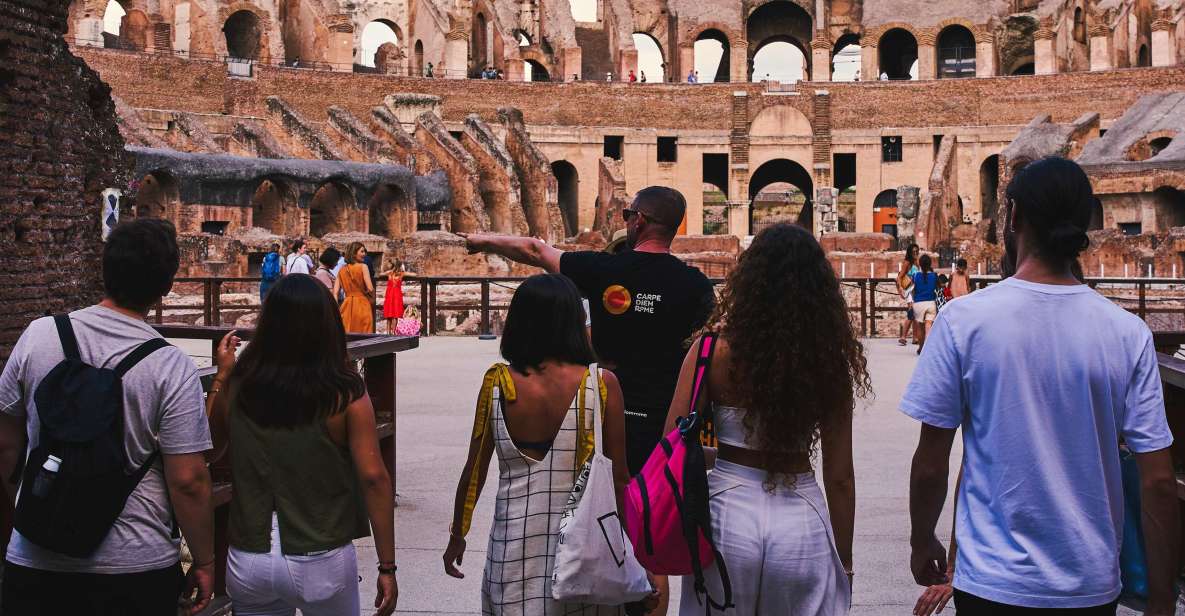
This tour is a strong match if you:
- want skip-the-worst-queues convenience
- care about understanding what you’re seeing, not just taking photos
- like the big three sites—Colosseum, Palatine Hill, Forum—in one guided arc
- appreciate a group that moves with purpose but still supports questions
It’s less ideal if you:
- prefer long, unscheduled wandering and quiet reading time
- plan to spend extra time at every ruin detail and museum-like stop
- struggle with walking in crowds and need lots of personal space
What to bring for an easy day
Bring a passport or ID card. That’s especially important if minors are traveling with you.
Comfort-wise, wear shoes you trust. This is a lot of stone steps, uneven ground, and crowd navigation. The sites are outdoors in most parts, so bring a light layer if you’re visiting when weather can shift.
Should you book this Rome Colosseum + Forum + Palatine Hill tour?
If your goal is to see the big three with arena-floor access and to leave with a clearer understanding of how imperial Rome and public life worked, I think you should book it.
I’d hesitate only if you hate structured timelines or you know you want to linger much longer than a guided route typically allows. For most people, the payoff-to-effort ratio is strong because this tour protects the most time-sensitive parts: entry timing and the rare arena-floor experience.
FAQ
How long is the Colosseum, Roman Forum & Palatine Hill guided tour?
The duration is listed as 1.5 to 3 hours, depending on the available starting times.
Where do I meet the guide?
Meet your guide in front of the Arch of Constantine, and look for a yellow Carpe Diem Tours flag or sign. Arrive at least 10 minutes early.
What’s included in the ticket for this tour?
You get timed-entry tickets to the Colosseum, access to the Arena floor, priority access to three major sites, a guide, and headsets for clear audio.
Which languages are available for the guided tour?
The tour guide is available in English and Spanish.
Will the tour always start at the Colosseum?
Not necessarily. The tour may begin at either the Colosseum or the Roman Forum/Palatine Hill, depending on ticket timing purchased by your guide.
What do I need to bring?
Bring a passport or ID card.
What happens if I arrive late?
Late arrivals cannot be refunded, so it’s best to arrive early at the Arch of Constantine meeting point.