REVIEW · ROME
Rome: Colosseum with Access to Arena Floor and Ancient Rome
Book on GetYourGuide →Operated by C.I.S. Tours. · Bookable on GetYourGuide
A walk onto the Arena floor is a time machine. I love the arena-level entrance that lets you step into the Colosseum the way gladiators did, and I also love how the visit continues into the Roman Forum and Via Sacra, so you get the story behind the stones, not just a quick photo stop. One watch-out: this experience is mostly self-guided with an app audio guide, and it can take a bit of effort to keep everything straight once you’re on-site.
The price feels fair for what you actually get. You’re buying direct access to the Colosseum (including the arena floor), plus entry to the Forum, Via Sacra highlights, and Palatine Hill, with taxes/fees covered in the ticket price. The only real downside is that the on-the-ground help is limited, so if you want a full live narration through every turn, you may feel like you’re doing more navigating than touring.
In This Review
- Key Things That Make This Experience Worth It
- Entering the Colosseum Through the Arena Floor Like a Gladiator
- Seeing the Colosseum From Below, Then Moving Up to the First Level
- Roman Forum and Via Sacra: Where Rome’s Daily Life Was Performed
- Palatine Hill: The Emperor Neighborhood After the Forum
- Audio Guide on Your Phone: Easy When It Works
- Price and Value: What You’re Paying For at $28
- Meeting Point and Timing at the Colosseo Metro Area
- Who This Tour Suits Best (and Who Might Want Another Option)
- Should You Book This Colosseum With Arena Floor Access?
Key Things That Make This Experience Worth It
- Gladiator-style access: you enter the Colosseum from the Arena route, which changes how the building feels
- Lower-views of the Colosseum: you see the stands from below, not just from the walkway
- Forum + Via Sacra + Julius Caesar area: you connect the Colosseum to Roman government and everyday public life
- Roman seating logic: you can study how rigid and organized the seating layout was
- Small group, English-speaking greeter: you get a handoff plus help finding the right entrances
- App audio guide depends on your phone setup: bring/plan for headphones and expect to use audio on your device
Entering the Colosseum Through the Arena Floor Like a Gladiator
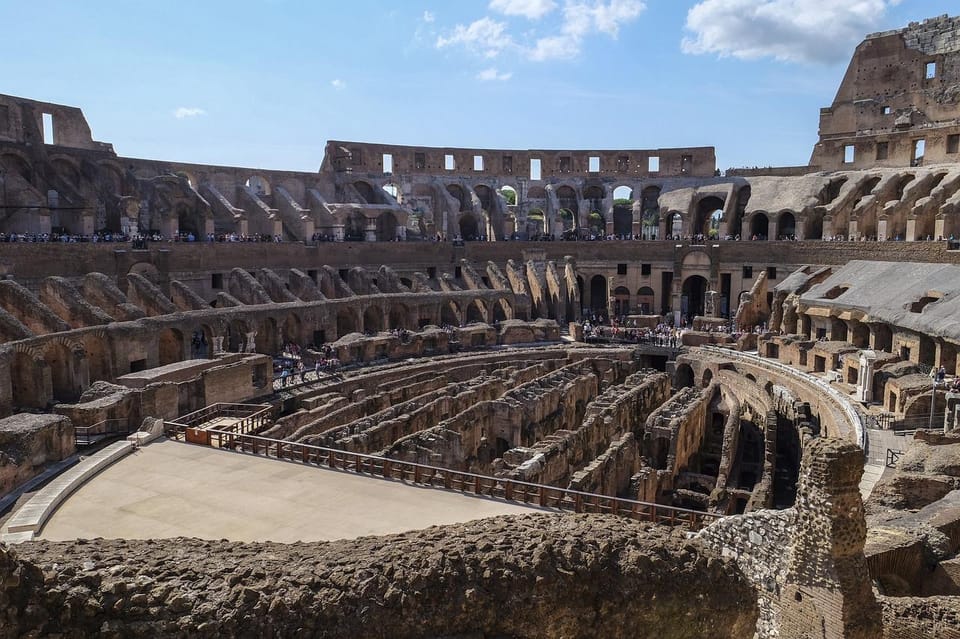
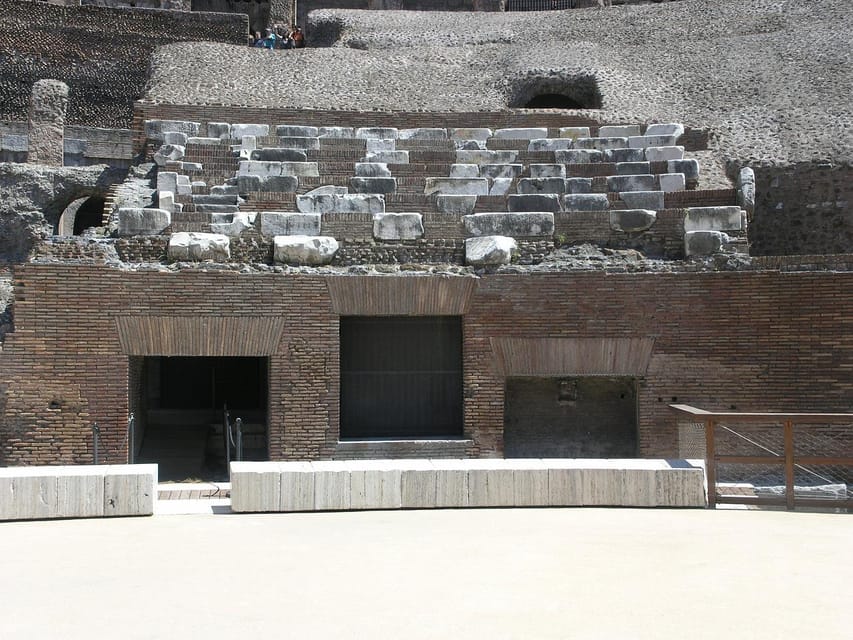
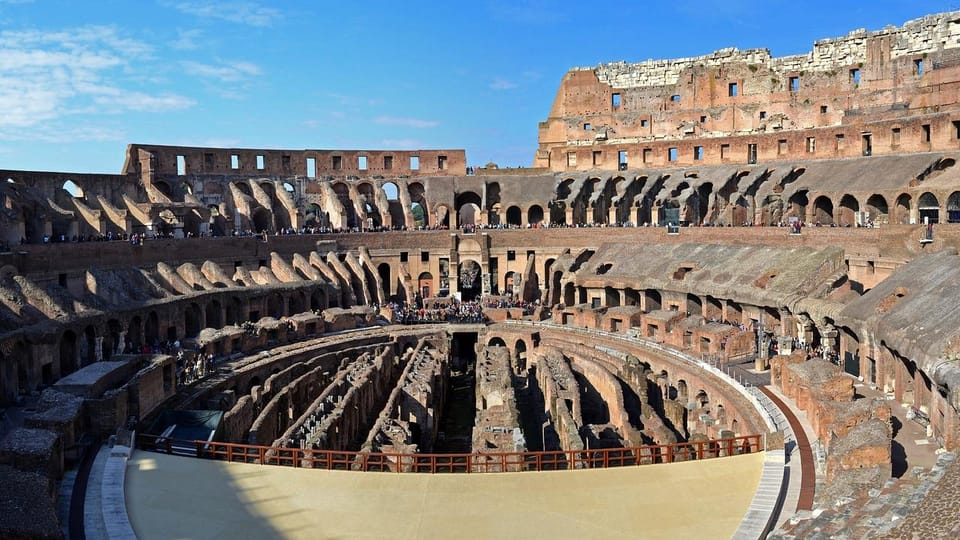
If you’ve only seen the Colosseum from ground level or from the ticket-office crowds, you’re missing the main emotional trick. The big payoff here is the step into the Arena floor, because it flips your perspective. From inside the sand-colored space, the stands don’t look like a landmark. They look like a machine built to control noise, views, and movement.
What makes this feel special is the way the access is described: you go in through the route gladiators used. Even if you know the basics of Roman spectacle, walking into that space changes your imagination. You can almost map where the fighters would appear, where the crowd lines would focus, and how the building could force attention toward the center.
I also like that this visit is not just about one famous spot. The ticket keeps you moving after the Colosseum, so you can keep your momentum going into the Roman heart of the city.
You can also read our reviews of more tours and experiences in Rome.

Seeing the Colosseum From Below, Then Moving Up to the First Level
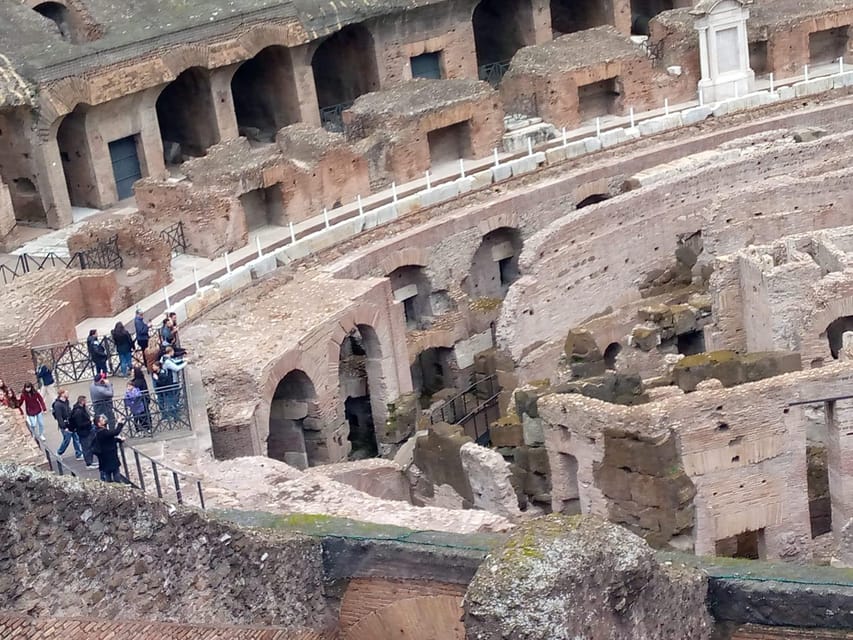
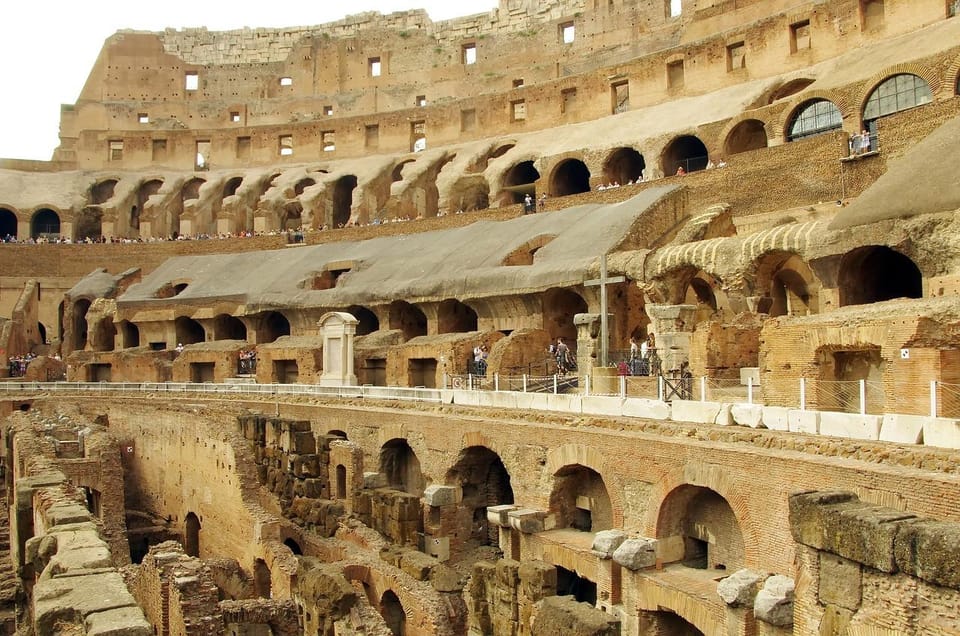
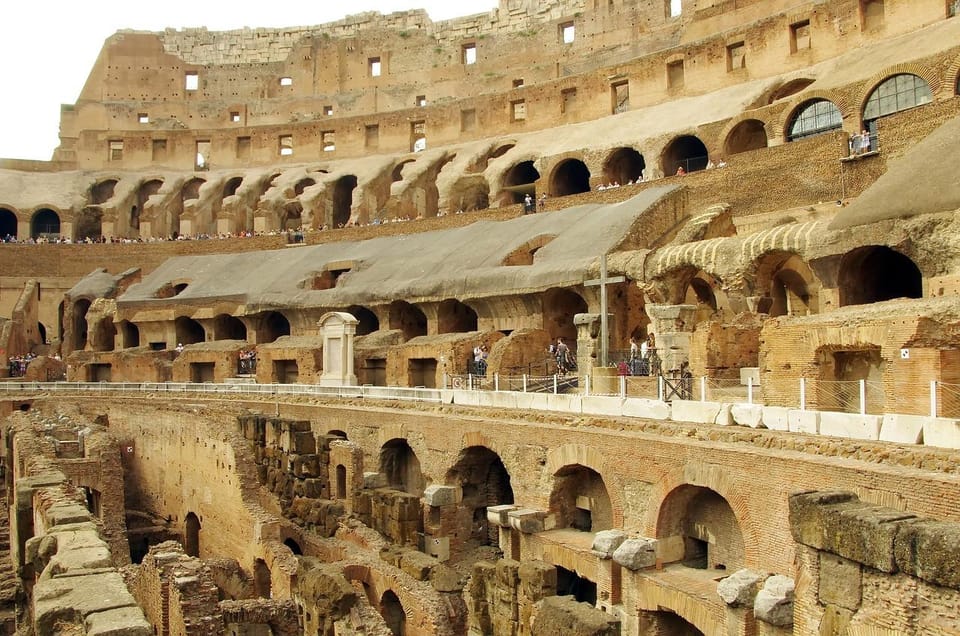
The flow once you’re inside matters. You start in the Arena, then you shift your viewpoint upward, so you’re not stuck with one flat angle for every photo. From the Arena you get a sense of scale that pictures never capture. You feel the depth. You also notice how the structure traps sightlines, pulling your attention toward the action zone.
Next, you’ll spend time at the 1st level. This is where the “how Rome worked” factor kicks in. The seating arrangement is unusually strict, and you can actually look at it like a system. Think about rank, visibility, and control. That’s what helps the Colosseum feel different from other ancient ruins in Rome. It isn’t just walls and arches. It’s a designed experience meant for order and hierarchy.
A practical note: this is not a slow, sit-and-listen museum tour. It’s timed access to multiple sites. If you’re the kind of person who likes to linger, plan your pace. The Colosseum can feel crowded fast, especially if you arrive at a peak hour.
Roman Forum and Via Sacra: Where Rome’s Daily Life Was Performed
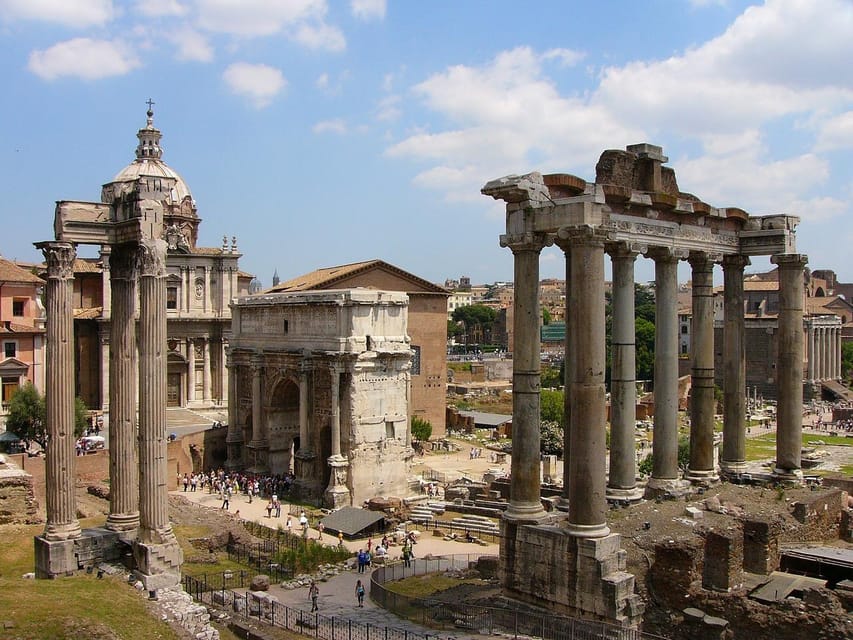
After the Colosseum, the experience shifts from spectacle to government and public life. You head to the Roman Forum, then stop on the Via Sacra, the famous processional street that mattered in both myth and politics. Walking the Via Sacra helps you understand why Romans built their civic identity in public spaces.
This is also where “ruins” become useful. The Forum isn’t a single monument with one view. It’s a network of meaningful spots. The more you connect them, the more the place makes sense: where people gathered, where announcements mattered, and how status played out in stone.
A highlight included here is the Temple of Julius Caesar area. The ruins left behind give you that clean, sobering feeling that history is not staged forever. You’re looking at remnants of a world that already shifted once, and the Forum is the kind of site that rewards attention to detail. Even if you don’t catch every label, you can still read the overall story: power, religion, and politics all rubbing shoulders.
Palatine Hill: The Emperor Neighborhood After the Forum
Palatine Hill is included, and it’s a smart pairing with the Forum. If the Forum is the stage for public life, Palatine is where the city’s most central power lived. The site is known as one of Rome’s seven hills, and it’s connected to the earliest roots of the city, plus the homes of emperors.
In practical terms, Palatine can be a bit of a maze. Signage isn’t always as intuitive as you’d hope, and the review-style feedback you’ll find from other visitors lines up with a common reality: this area can feel confusing if you’re trying to match your phone map to what’s on the ground.
So here’s how to keep it simple. Use the order you have in your head:
- Forum first for civic context
- Via Sacra as the “main thread”
- Palatine Hill last, when you’re ready to explore wider and slow down
If you feel lost, don’t panic. Pause, orient yourself, then move again. Palatine is one of those places where even your detours teach you something.
Audio Guide on Your Phone: Easy When It Works
This ticket includes an app audio guide, and it’s the backbone of the experience. That’s a good thing, because the Colosseum and Forum are too big for a couple of vague pointers. The audio is meant to help you understand what you’re looking at as you move.
But the main thing to know is technical. Some people found that the app’s map features need wifi to function properly in the Colosseum and Roman Forum. You don’t want to reach a key spot, press play, and discover the map isn’t cooperating. To avoid that, I’d plan to keep your phone connected to the site network if one is available and to confirm the audio is loading before you walk too far.
Also, bring your own headphones. Headphones are not included, but you’re told the customer must bring headphones for the telephone. That sounds small, but it’s exactly the kind of issue that can ruin a smooth experience. If your phone relies on wired headphones and you only have an adapter, sort that before you go.
Finally, about the “guide” role. Even though there is an English-speaking greeter and staff meet you at the start, the experience is not positioned as a full guided walking tour. Some people describe the help as ticket handoff and directions, while others felt more direct guidance. Your best strategy is to treat the experience as self-guided with support, not as a constant narration.




Price and Value: What You’re Paying For at $28
At $28 per person for about 3 hours, you’re not just buying entry somewhere. You’re buying a specific set of access points that matter:
- Colosseum access
- Arena floor access
- Roman Forum access
- Palatine Hill access
- App audio guide
- Taxes and fees included
That combination is where the value comes in. A lot of Rome tickets are priced like “one site, one entry.” Here, you’re stacking the Colosseum with the Forum and Palatine Hill in one go. That saves time, and time is money in Rome.
The main value trade-off is that you’re not getting a private, fully guided lecture. You’re getting access plus audio and on-site coordination. If you want someone walking you shoulder-to-shoulder with detailed commentary, you might feel shorted. If you like exploring at your own pace while using audio to fill in the blanks, this is a solid fit.
Meeting Point and Timing at the Colosseo Metro Area
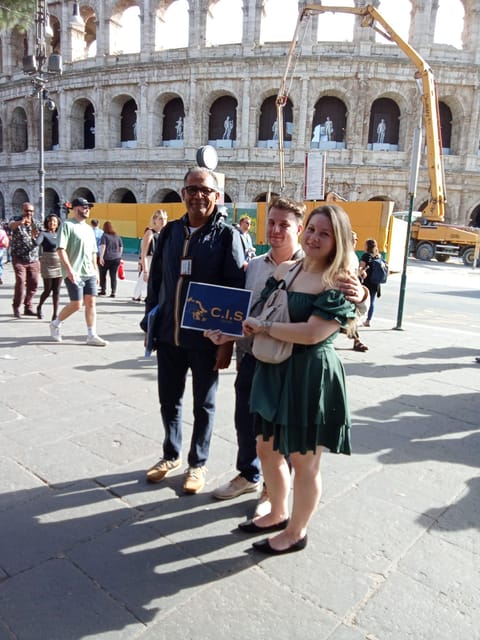
The meeting point is specific: in front of the Colosseo metro station, on the lower floor/ground level, near the green kiosk. Look for staff with the c.i.s tours sign.
This matters because the Colosseum area is crowded and full of look-alike booths. One tip I strongly recommend: arrive a little early and identify the sign right away. If you wait until the last minute, you’ll spend precious time searching instead of preparing your phone and heading in.
Security is another timing reality. You must pass a metal detector security check for the Colosseum. When the venue is busy, there may be a waiting period. That means your 3-hour window should feel realistic only if you’re efficient with your movement.
Also check opening hours if you’re aiming to hit the Forum and Palatine at the same time. Roman Forum and Palatine opening hours vary by season, and the included access only makes sense if the public areas are open when you arrive.
Who This Tour Suits Best (and Who Might Want Another Option)
I’d point you toward this experience if you want three things:
- You care about seeing the Colosseum from the Arena, not just from the perimeter
- You like a structured experience that still leaves room to wander
- You’re comfortable using an audio guide on your phone
It’s also a good choice for first-timers who want the “Roman power center” in one sweep. Colosseum is one story, but Forum plus Via Sacra plus Palatine turns it into something bigger.
On the other hand, this isn’t ideal if you want a fully guided tour inside every area, or if you dislike app-based navigation. People also note it’s not suitable for wheelchair users, so if mobility needs are a factor, you’ll want to look for an accessible alternative.
Should You Book This Colosseum With Arena Floor Access?
Yes, if the Arena floor access is the reason you’re in Rome. This is the kind of ticket that changes how the Colosseum feels. The Forum and Palatine Hill additions are not filler; they help you connect spectacle to civic life and then to the power behind it.
Book it if:
- You want a high-impact experience without paying for a long live guided tour
- You’re okay being mostly self-directed with an audio app
- You’ll show up prepared with headphones and a phone that can handle audio (and potentially wifi for the map)
Skip it if:
- You want constant live guidance inside each site
- You hate phone-based audio and maps
- You need wheelchair accessibility
If you’re reading this and thinking Arena floor access is your priority, you’re exactly the kind of traveler who will get your money’s worth. Just plan your tech, arrive early for security, and go in ready to look up, not just snap photos.