REVIEW · ROME
Rome: Crypts and Catacombs Underground Tour with Transfers
Book on GetYourGuide →Operated by City Wonders Ltd. · Bookable on GetYourGuide
Rome’s underworld has a way of changing your mood fast. This short tour threads three very different subterranean stops, from the Bone Chapel at the Capuchin Crypt to early Christian burial tunnels below the city.
I especially liked two parts: the Capuchin Crypt experience, with its bone-decorated rooms and an audio-guided visit that keeps you moving at a workable pace, and the Roman Catacombs guided section, where your guide explains how these secret spaces worked for worship and burial. Seeing the Basilica of San Martino ai Monti is the satisfying “aboveground” counterpoint, with its layered roots going back to the 4th century.
One heads-up: it’s a physically active tour underground, and some parts can feel tight and very cold/damp. If you’re sensitive to claustrophobic spaces or you need lots of bathroom time, you’ll want to plan for that.
In This Review
- Key points before you go
- Rome’s underground feels like a different city
- Meeting at Piazza Barberini and the coach ride that saves your legs
- Capuchin Crypt Bone Chapel: what the audio guide does best
- Roman Catacombs: guided early Christian burial tunnels under your feet
- San Martino ai Monti: the church you didn’t know you needed
- Skip-the-line entry and transfers: how this tour saves time
- Price and value: is $74-ish a fair trade?
- Who should book this tour (and who might want to skip it)
- What to pack for a smooth day underground
- Day tour vs After Hours: pick based on what you want most
- Should you book this Rome crypts and catacombs tour?
- FAQ
- How long is the Rome crypts and catacombs tour?
- Where do I meet the guide?
- What sites are included on the standard day tour?
- What’s different about the After Hours tour?
- Are tickets included, and do I skip the ticket line?
- Is the tour wheelchair-friendly or suitable for mobility impairments?
- Can I take photos inside the catacombs?
Key points before you go

- Bone Chapel at the Capuchin Crypt: decorated with the remains of around 4,000 Capuchin monks, plus connections to St. Francis and a Caravaggio painting.
- Skip-the-line entry at three sites: you spend less time stuck outside and more time inside the good stuff.
- Roman Catacombs guided walk: you get context for burial practices and early Christian history while you’re down in the tunnels.
- San Martino ai Monti feels like a secret: a 4th-century church built over ancient Roman foundations, with mosaics, Baroque frescoes, and underground chambers.
- Audio at the Capuchins, guide at the catacombs: you get both self-guided focus and live interpretation.
- Cold, uneven, and rule-heavy: comfortable shoes and dress rules matter more than you’d think.
Rome’s underground feels like a different city
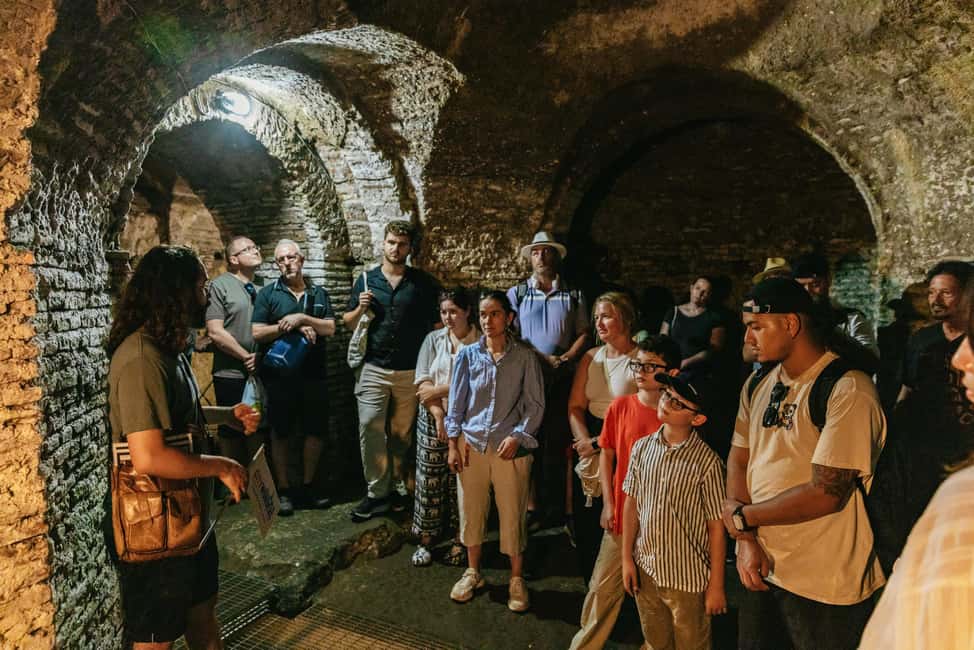
There’s Rome above street level, and then there’s Rome underneath, where the air gets cooler and the stories get heavier. This tour is built for that shift. In a few hours, you go from striking religious art and chapel displays to solid-rock tombs and underground chambers that were used for real people, real grief, and real faith.
I also like the balance here. The itinerary isn’t only about shock value. Yes, the Capuchin Crypt is macabre, but you also spend time learning why these spaces existed. And the catacombs aren’t just spooky hallways; you’re walking through an early Christian world with a living narrative.
You can also read our reviews of more tours and experiences in Rome.

Meeting at Piazza Barberini and the coach ride that saves your legs
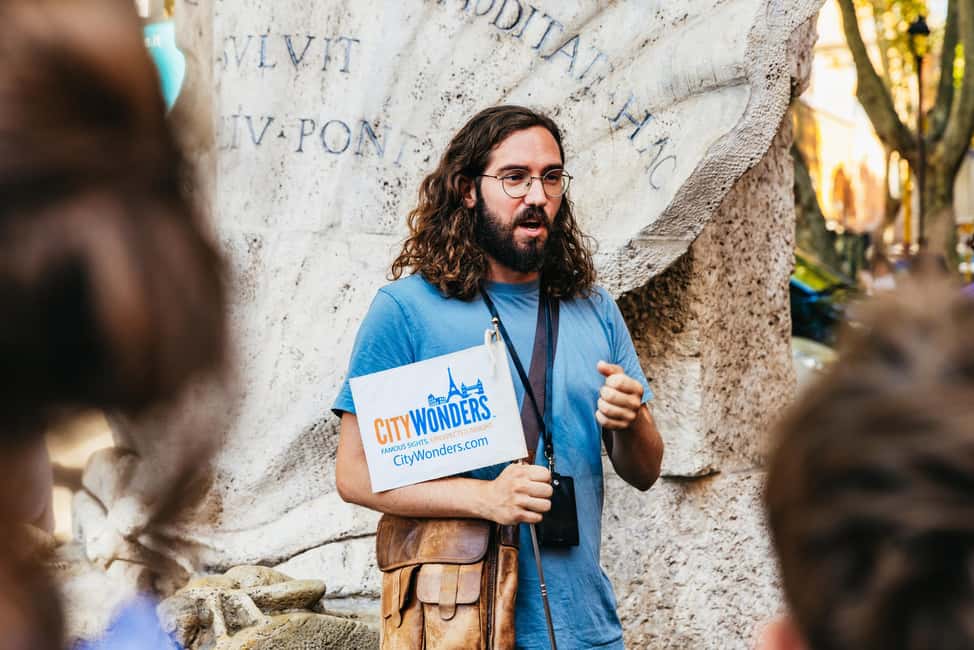
You start at Piazza Barberini, at the Triton fountain area. The meeting point is easy to find if you’re using Metro Line A (red line) to Barberini. That matters on a tour like this, because you’re moving through multiple sites without the option to wander back and forth on your own.
The other practical win is the air-conditioned coach. Transfers are part of the deal, so you’re not stuck timing trains or walking long stretches between stops. A few people in the feedback also praised how the bus rides felt comfortable, and that’s exactly what you want when you’re about to get cold and damp underground.
Capuchin Crypt Bone Chapel: what the audio guide does best
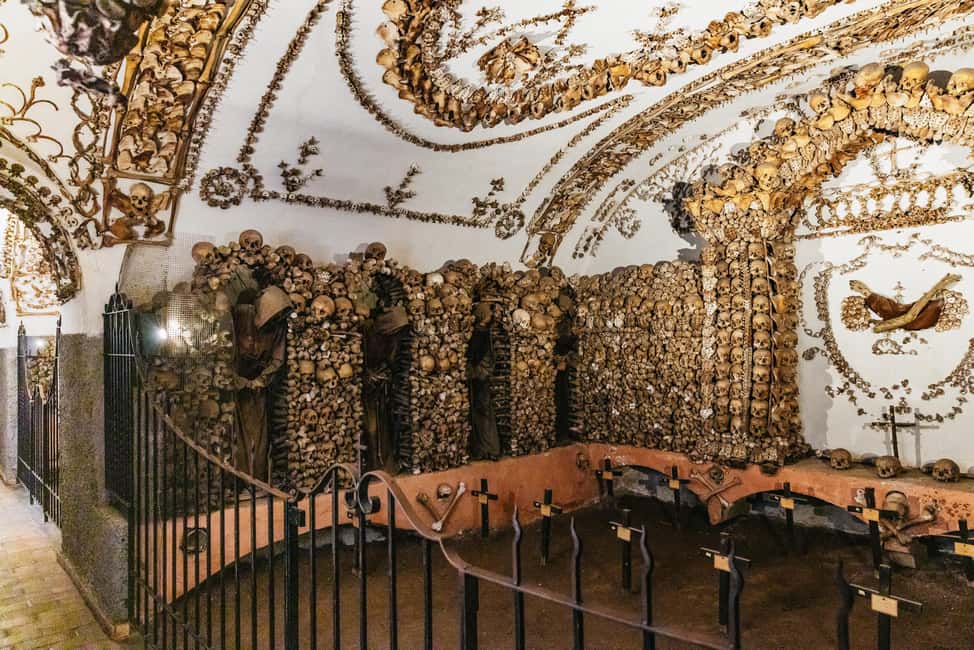
The Capuchin Crypt is the first “wow” moment, and it’s the kind that grows on you as you slow down. You get about 45 minutes for this stop, and it’s self-guided with an audio guide. That setup works well here. If a live guide is talking fast, you can lose the details. With audio, you can pause mentally when something feels strange and then move on when you’re ready.
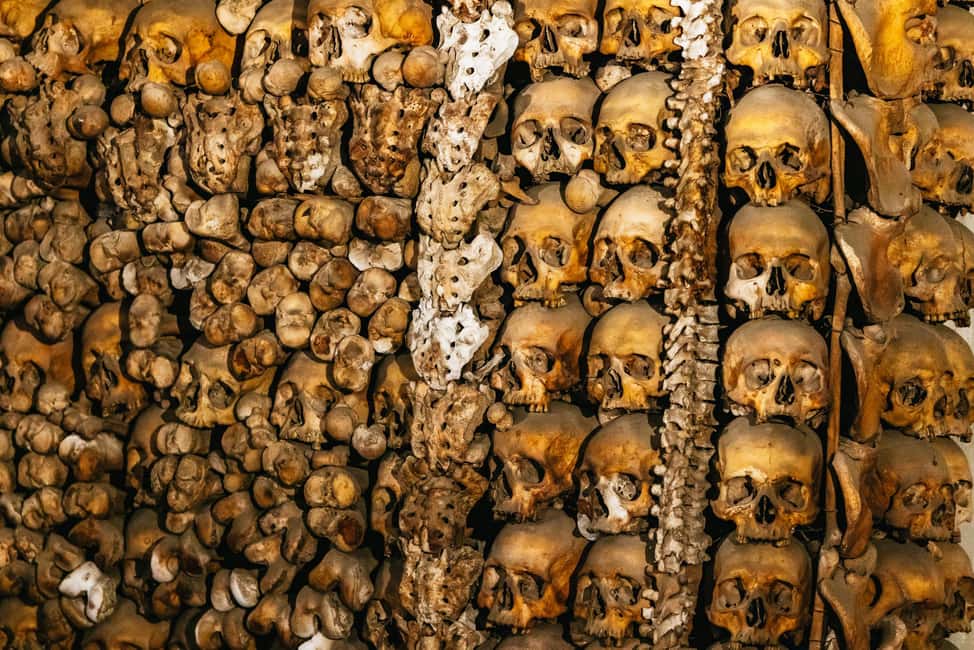
What you’ll see is the famous Bone Chapel look: floors-to-ceilings decorated with the bones of about 4,000 Capuchin monks. The result is eerie, but it’s also structured—patterns and arrangements that turn remains into a design language. The tour info also notes connections to relics from the life of St. Francis and includes mention of a Caravaggio painting, which gives you more than just an anatomy lesson.
A few practical tips from the experience style and common notes:
- Wear comfortable shoes with grip. You’re moving on uneven indoor flooring and then heading back into the coach.
- Dress appropriately. Short skirts, sleeveless shirts, and shorts are not allowed, and it’s not the moment to argue.
- Don’t plan on lingering too long if you need restrooms urgently. People have said the first stop can feel on the rushed side, so go in ready.
Also, temperatures matter. Even in warm Rome, the crypt atmosphere can feel cold and damp. Bring that mindset, and you’ll enjoy it more.
Roman Catacombs: guided early Christian burial tunnels under your feet
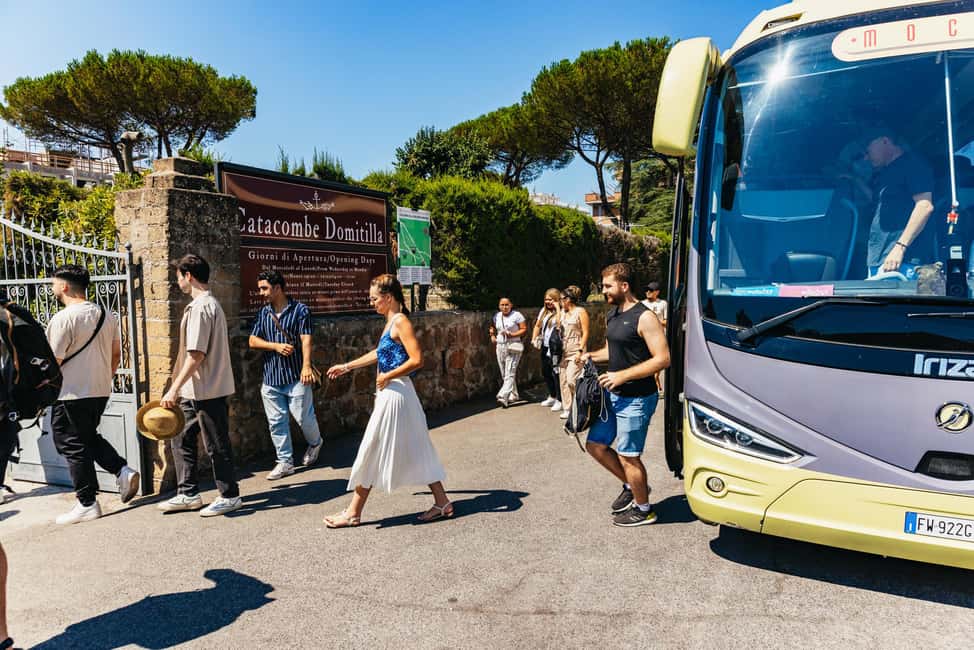
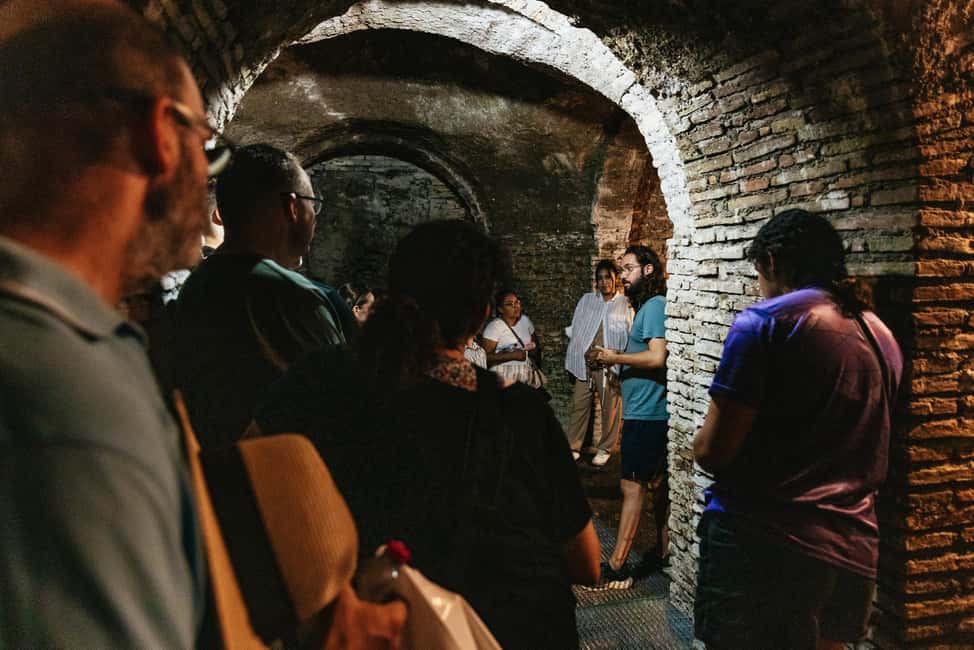
After Capuchins, you ride to the Roman Catacombs. This is where the tone shifts from curated chapel display to raw, utilitarian underground history. You get a guided tour here (about 45 minutes), which is a smart choice. Catacombs can feel confusing if you’re just looking at walls and openings. A guide helps you connect what you’re seeing to how early Christians organized burial and worship when public life was hostile.
The tour framing is clear: these tunnels functioned as hidden spaces for worship and burial nearly 2,000 years ago. Your guide explains the why behind the catacombs, not just the what. You’ll walk past tombs made of solid rock, and the story includes the harsh context of persecution—how burial and faith continued beneath the world that wasn’t safe for them.
This section is also a strong emotional experience for a lot of people. Some comments highlight how powerful it felt, and that’s believable. You’re looking at places designed for remembrance when options were limited and danger was real.
One more practical point: photography isn’t allowed in the underground portion on this type of experience. Plan to rely on memory and the guide’s explanations rather than phone shots.
If you like a guide who keeps energy up, there are mentions of standout guides in the feedback, including people like Chris, Alain, and Inti, with guides using stories and added elements to keep the group engaged. The name changes by departure, but the style—clear explanation and keeping pace—seems to be a consistent theme.
San Martino ai Monti: the church you didn’t know you needed
The final stop is the Basilica of San Martino ai Monti, a 4th-century church built over ancient Roman foundations. If Rome above ground feels famous and crowded, this is the quieter satisfaction at the end: a site that reveals layers without needing a spotlight.
You’ll get about 30 minutes for this guided visit. The church is known for Baroque frescoes, ancient mosaics, and remnants of an early Christian worship element called a titulus. That’s a detail I love because it connects the city’s earliest Christian presence with later church life.
What seals the deal is the underground side of the basilica. The tour description says you can explore underground chambers, where centuries of faith and history feel physical instead of abstract. It’s not the same as the catacombs, but it gives you a sense of continuity—religion and memory layered in different architectural forms.
One note for planning: on Sundays, the church visit isn’t guaranteed due to liturgical activities. If your trip lands on a Sunday, be ready for the possibility that part of the experience could be adjusted.



Skip-the-line entry and transfers: how this tour saves time
This tour is short, and that means every minute counts. The big time-saver is skip-the-line access at all three sites, plus transfers by air-conditioned coach. In practice, that combination helps you avoid the worst Rome bottlenecks and keeps the day from turning into a queue marathon.
You’re also not stuck between locations. The schedule builds in coach time between the Capuchin Crypt and the catacombs, and then again before San Martino ai Monti. That structure is helpful if you’re visiting only a few things in Rome and want them to actually happen on time.
The only real drawback tied to the flow is pacing at the Capuchins. Some people note that the first stop can feel a bit rushed, especially if you want extra time with the audio guide or you’re dealing with bathroom timing. The workaround is simple: don’t treat Capuchins like a museum you’ll study for an hour. Go for impact, then trust the catacombs and basilica for deeper context.
Price and value: is $74-ish a fair trade?

At about $74.02 per person, you’re paying for three things at once: guided interpretation (at least at the catacombs and basilica), transport by coach, and skip-the-line entry plus required site tickets. In Rome terms, that bundling can be good value when you’re trying to cover underground sites efficiently without spending extra time hunting tickets and routes.
Is it cheap? Not exactly. But underground sites cost time and logistics, and you’re getting a package built for that reality:
- You’re not arranging multiple separate visits.
- You’re not piecing together timed entries.
- You’re not trying to walk everywhere in heat/cold across several layers of the city.
If your top priority is maximum time at the catacombs (the emotional and guided part), the tour delivers. If your priority is unlimited time in every room, you might feel slightly constrained by the short stop lengths.
Who should book this tour (and who might want to skip it)
This works best for you if:
- You want an organized way to see Capuchin Crypt + Roman Catacombs + San Martino ai Monti without planning a day from scratch.
- You like guided storytelling, especially for early Christian context down in the tunnels.
- You’re okay with cold, damp air and uneven underground walking.
You might reconsider if:
- You’re not comfortable with underground spaces or tight corridors.
- You need mobility support. The tour states it’s not suitable for wheelchair users and can’t accommodate guests with impairments requiring special assistance.
- You’re traveling with items that violate the dress/rules list (shorts, sleeveless shirts, short skirts), or with baby strollers/carriages.
Also, if you’re the type who wants the day to be mostly quiet and slow, you may find the schedule a bit brisk. But for a focused underground hits-and-context tour, it’s a solid fit.
What to pack for a smooth day underground
Keep it simple. The tour asks for comfortable shoes, and that’s the big one. Add a layer if you run cold easily; crypt temperatures can be surprising even when Rome feels warm aboveground.
For clothing, you’ll want to follow the site rules:
- No shorts
- No short skirts
- No sleeveless shirts
- No baby strollers or baby carriages
If you’re traveling with kids, note that strollers/carriages aren’t allowed. For most adults, the dress code just means plan ahead rather than do a last-minute outfit scramble.
Day tour vs After Hours: pick based on what you want most
If you’re choosing the exclusive After Hours option, you’ll get a shorter format—about 2.5 hours—and it changes one key thing: it does not include the Basilica of San Martino ai Monti. The after-hours style focuses on the Capuchin Crypt and the Rome Catacombs.
That can be a smart choice if:
- You care most about the underground sites themselves.
- You’re trying to free up your evening for dinner or another Rome stop.
If you want the full three-part arc, including the basilica’s mosaics and underground chambers, stick with the standard day tour.
Should you book this Rome crypts and catacombs tour?
I think you should book this if you want one efficient, structured way to see Rome’s underground world with skip-the-line convenience and strong interpretation down in the catacombs. The combo of Capuchin Crypt’s bone chapel (with audio), guided catacombs, and San Martino ai Monti gives you variety in themes and in setting, without turning the day into chaos.
Just go in with realistic expectations: it’s short, it’s rule-based, and the underground parts can feel cold and a little intense. If that sounds like your kind of Rome, this tour earns its spot on your list.
FAQ
How long is the Rome crypts and catacombs tour?
The tour runs about 2.5 to 3.5 hours, depending on the departure time you select.
Where do I meet the guide?
Meet at the center of Piazza Barberini, near the Triton fountain. Piazza Barberini connects to Metro Line A (red line) at the Barberini stop.
What sites are included on the standard day tour?
The standard tour includes the Capuchin Crypt, the Roman Catacombs, and the Basilica of San Martino ai Monti (with an entry ticket included).
What’s different about the After Hours tour?
The After Hours option lasts about 2.5 hours and it does not include the Basilica of San Martino ai Monti. It focuses on the Capuchin Crypt and the Roman Catacombs.
Are tickets included, and do I skip the ticket line?
Yes. You get skip-the-line entry plus the entry ticket coverage for the Capuchin Crypt, Roman Catacombs, and (on the day tour) the Basilica of San Martino ai Monti. The Capuchin Crypt also includes an audio guide.
Is the tour wheelchair-friendly or suitable for mobility impairments?
No. The tour is stated as not suitable for wheelchair users and cannot accommodate guests who need special assistance due to impairments.
Can I take photos inside the catacombs?
Photography isn’t allowed during the underground portion of the tour. Plan to rely on the guide’s storytelling and your memory.