REVIEW · ROME
Rome: Hop-on Hop-off Sightseeing Bus Tour with Audioguide
Book on GetYourGuide →Operated by Gray Line I Love Rome · Bookable on GetYourGuide
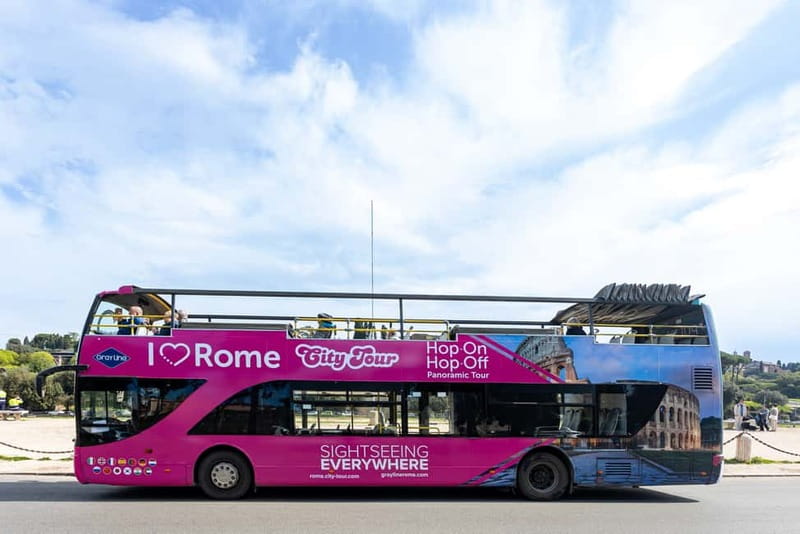
Rome makes more sense from a moving bus. This hop-on hop-off route lets you pace your day, while the audio headset in 12 languages explains what you’re seeing from the top deck. I also like the pink open-top buses with the detachable roof, because you still get big-city views even when the weather shifts.
One heads-up: meeting points and stop finding can be slightly confusing at first, especially if you hop off and then need to get to the next stop on foot. It’s not a dealbreaker, but plan on comfy shoes and a little patience.
In This Review
- Key Things to Know Before You Board
- Getting Your Bearings Fast from Termini (Stop 1)
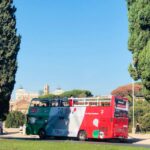
- The Pink Open-Top Ride: Detachable Roof, Real Views
- How the Audioguide Makes Stops Click (12 Languages)
- Route Logic: Why the Stops Are Grouped Like This
- Stop-by-Stop: Termini to St. Mary Major (and the early Roman vibe)
- Stop 1: Termini Railway Station (boarding hub)
- Stop 2: Basilica Papale di Santa Maria Maggiore
- Colosseum & Roman Forum Area: Great for a first-time “Wow” moment
- Stop 3: Colosseum Archaeological Area
- Circus Maximus, Mouth of Truth, and Piazza Venezia in one sweep
- Stop 4: Circus Maximus (Mouth of Truth area)
- Stop 5: Piazza Venezia and the Foro Romano zone
- Vatican City Stop: Plan your walking time before you hop off
- Stop 6: Vatican City / Sistine Chapel / St. Angelo Bridge area
- Spanish Steps & the shopping streets: hop off, then climb if you feel like it
- Stop 7: Spanish Steps Shopping Area
- Barberini & Trevi Fountain stop: central convenience for food and photos
- Stop 8: Barberini & Trevi Fountain
- Price and Value: Is $22 a good deal?
- Timing Tips: When the Last Bus Cuts You Off
- Who This Tour Fits Best (and who should skip it)
- Should You Book the Rome Hop-on Hop-off Bus Tour?
- FAQ
- What is included in the bus ticket?
- Do I get an audioguide and in what languages?
- Is admission to the attractions included?
- Can I hop on and off at all stops?
- Where does the tour start?
- What are the operating hours?
- Is the bus open-top?
Key Things to Know Before You Board
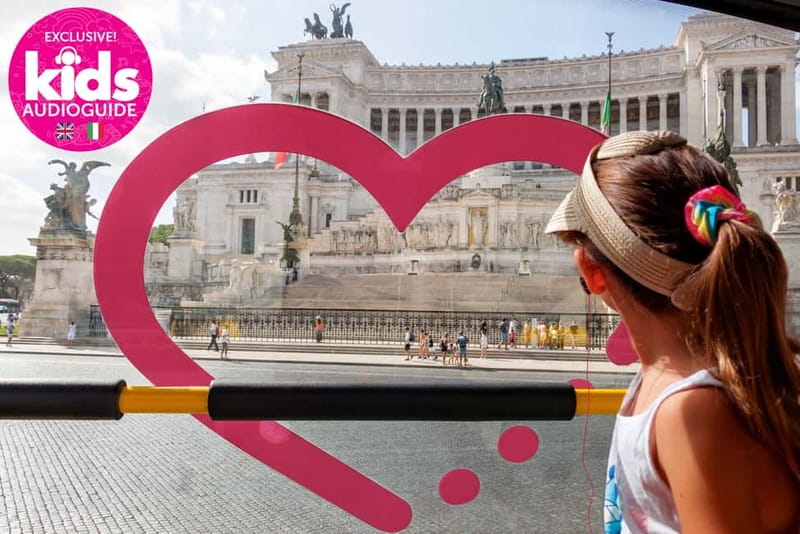
- Pink double-decker bus with detachable roof means you’re not stuck indoors when Rome gets breezy or rainy
- Stop-and-start freedom at major sights helps you build your own sightseeing order
- 12-language audioguide + headphones gives context as you pass landmarks, not just a map
- Central route coverage ties together Termini, the Colosseum area, the Vatican area, and the Spanish Steps
- Wi‑Fi on board is included (handy for saving tickets, maps, or your next walking plan)
- Hours vary by season and the last bus leaves early in winter, so you’ll want a plan
Getting Your Bearings Fast from Termini (Stop 1)
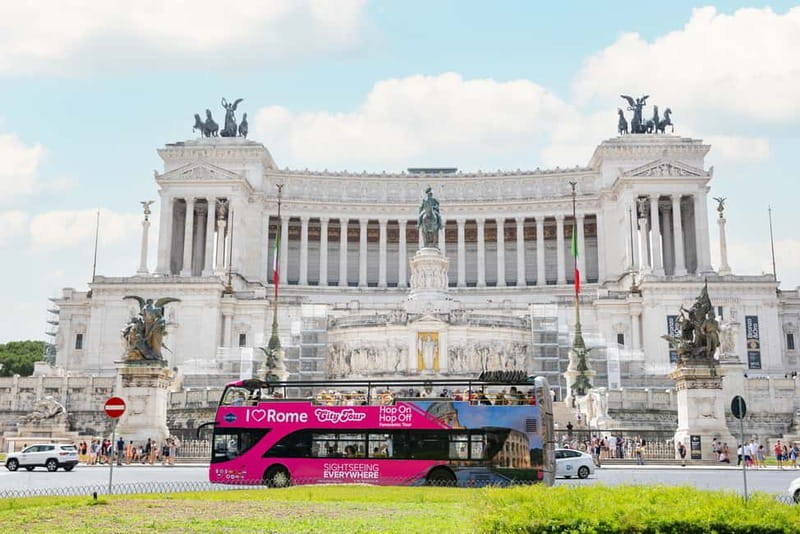
I love starting Rome trips at Termini, because it’s where most first-time visitors naturally end up. This tour is built around that idea: you board at Stop 1 on Via Giovanni Giolitti n. 32, and from there you’re set up to work outward to the big icons.
The practical win is simple. Rome is spread out, and walking everywhere can crush your time. A hop-on hop-off bus is basically a moving base camp. You can do one loop to understand where everything sits, then hop off where you actually want to linger.
Two real details to use:
- The Termini-area pickup is tied to a very specific reference point (near Piazza dei Cinquecento and the public line 910 yellow bus stop). That makes it easier to verify you’re at the right place.
- The tour is designed for “ride, listen, decide.” If you want a smooth start, get on the first bus at Stop 1 and treat the early part like orientation.
You can also read our reviews of more tours and experiences in Rome.
The Pink Open-Top Ride: Detachable Roof, Real Views
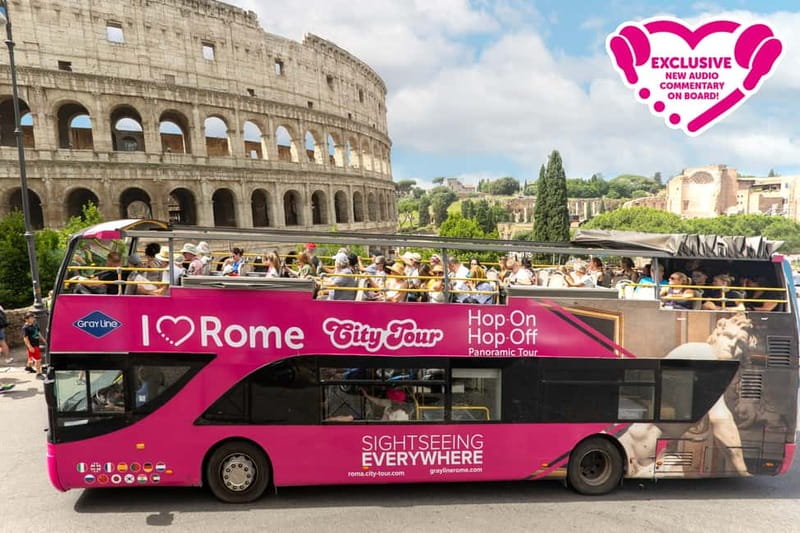
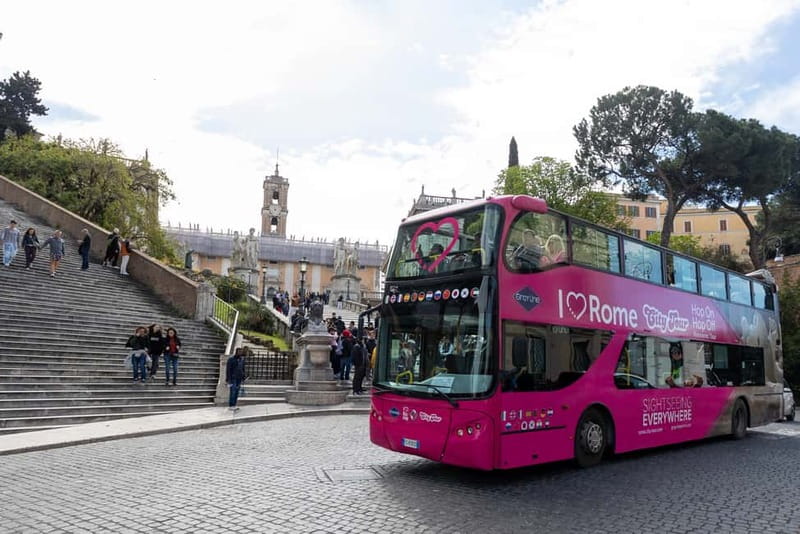
The bus on this route is an open-top double-decker with a detachable roof, so it can run in all weather. That matters in Rome, where sun can turn into sudden rain and wind without much warning. You’ll still get the classic top-deck angles at sights, but you’re not trapped if conditions change.
Another comfort plus: it’s a double-decker layout, so you can pick what fits your mood. If you want the best views, aim for the top. If you want a calmer ride during busy traffic stretches, the lower floor can be easier.
If you’re traveling with mobility needs, the good news is that wheelchairs may be accommodated on the lower floor. That’s the kind of detail that can quietly change a trip from stressful to doable.
How the Audioguide Makes Stops Click (12 Languages)
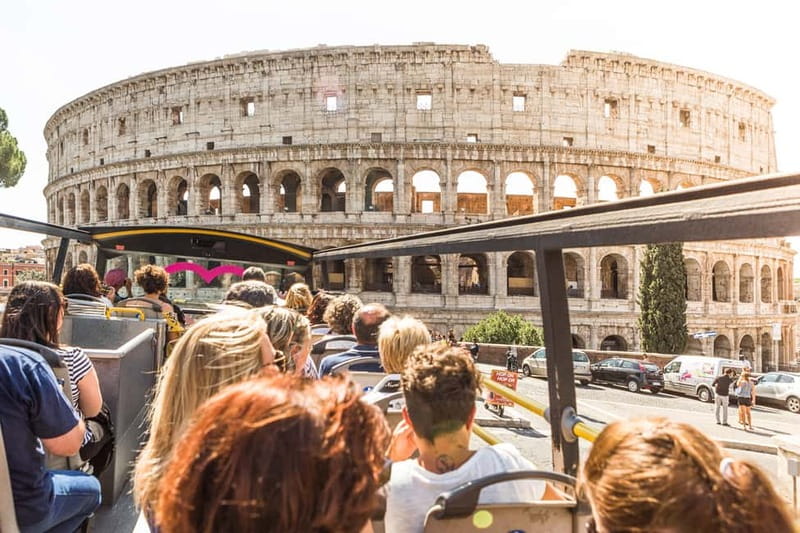
This isn’t just sightseeing-by-window. The bus includes an audioguide headset (you get multilingual narration on the Panoramic tour) and you can choose from 12 languages: Arabic, Chinese, Dutch, English, French, German, Italian, Japanese, Korean, Portuguese, Russian, Spanish.
The value here is timing. When you’re driving past something like the Colosseum area or Piazza Venezia, you’re seeing Rome in motion. The narration helps you connect the building you recognize to the place name you’ll later use when you’re walking around.
I also like that the experience is designed for flexibility. You can listen for context while riding, then hop off and spend your time on what grabs you most.
A small practical note: audio quality is generally praised, and one review even notes the guide pace as easy to understand. If you’re sensitive to loudness or background noise, just keep an ear on your volume and tune it as the bus slows at stops.
Route Logic: Why the Stops Are Grouped Like This

This route doesn’t feel random. It stitches together Rome’s major clusters:
- Colosseum / Forum / Roman street history zone
- Vatican / St. Peter’s area zone
- Spanish Steps / shopping streets zone
- Trevi and central shopping / gallery areas
That matters because Rome sightseeing isn’t just about seeing famous buildings. It’s also about reducing friction—less backtracking, fewer long walks, and fewer “oops, we’re on the wrong side of town” moments.
Also, the operator describes the route as authorized and approved by the Municipality of Rome, which is a sign it’s set up for orderly tourist movement along the main arteries.
Stop-by-Stop: Termini to St. Mary Major (and the early Roman vibe)



Stop 1: Termini Railway Station (boarding hub)
Your starting point is near Termini, at Via Giovanni Giolitti n. 32 (Stop 1). This is where you establish your rhythm: ride first, plan second.
If you’re doing Rome for the first time, this is your best moment to:
- pick which sights you want to prioritize
- notice how long the bus segments take during traffic
- learn which stops align with your walking comfort
Stop 2: Basilica Papale di Santa Maria Maggiore
Stop 2 is at Piazza dell’Esquilino, 12 for St. Mary Major. This is one of those places where a bus stop is useful not because you need the bus to get there, but because it helps you schedule what’s next.
What I like about this early stop: it’s a calm way to shift from transit-land to real landmark-land. It’s a strong “starter church” before you go bigger toward the Colosseum and Vatican areas.
Possible downside: if you’re expecting the bus to drop you right at the exact entrance of a site, keep in mind that you may still have a short walk. The route is about being close enough to get there easily.
Colosseum & Roman Forum Area: Great for a first-time “Wow” moment
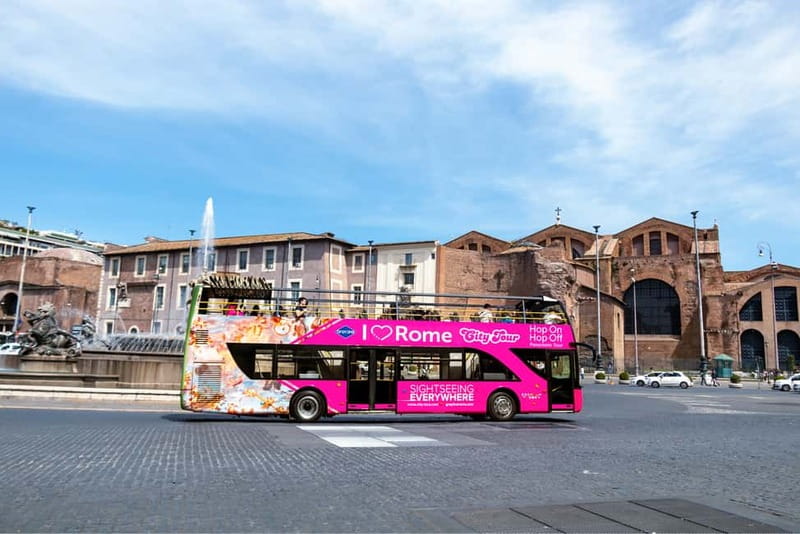
Stop 3: Colosseum Archaeological Area
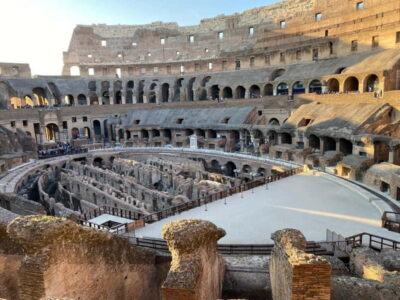
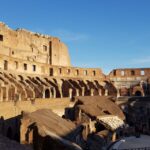
The Colosseum stop is listed at Via di S. Gregorio, 30 (Stop 3). If you only have one day, this is typically the sight that makes Rome feel like Rome.
Here’s the strategy I’d use:
- hop off briefly to confirm the location and orientation
- then decide if you want to return later on foot
Why? The bus gives you the wide-angle “I’m really here” view. But the Colosseum zone is also busy, and the walking paths around it are where your visit becomes personal.
Don’t expect admission included. Your ticket covers the bus ride and narration, not entry to monuments and museums.
Circus Maximus, Mouth of Truth, and Piazza Venezia in one sweep
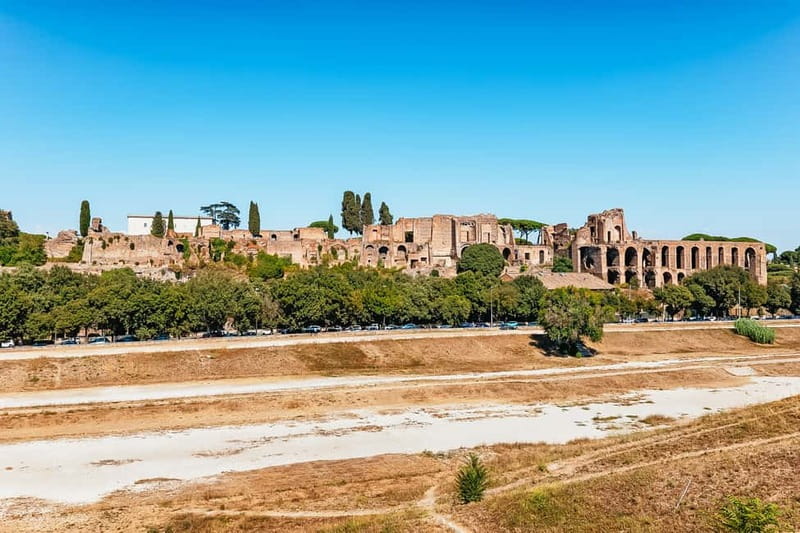
Stop 4: Circus Maximus (Mouth of Truth area)
Stop 4 is Via del Circo Massimo, 4189, and it’s positioned as the Circus Maximus – Mouth Of Truth area. Even if you don’t plan a full Mouth of Truth visit, the drop-off is useful for understanding the broader layout of ancient Rome.
A practical tip: if you want photos without feeling rushed, this is a good moment to step off, orient yourself, and then return later if you still want more time.
Stop 5: Piazza Venezia and the Foro Romano zone
Stop 5 is Via del Teatro di Marcello, 34, with a note that it’s behind the terminus of public buses, and it’s tied to Piazza Venezia – Foro Romano. This is where you can connect the dots between the big modern views and the ancient footprint beneath them.
Why this stop works well: Piazza Venezia is a natural “transfer point.” It helps you transition from the Colosseum-side energy to the Vatican-side sightseeing without you spending your whole day trapped in transit.
One watch-out: these central zones can be crowded. You’ll spend more time crossing streets and navigating foot traffic than you might expect.
Vatican City Stop: Plan your walking time before you hop off
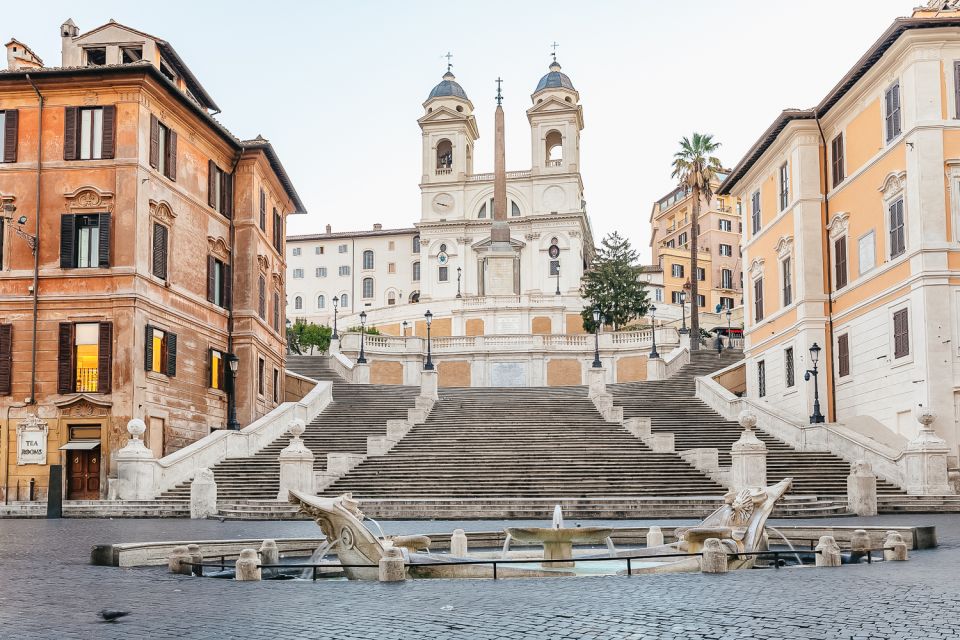
Stop 6: Vatican City / Sistine Chapel / St. Angelo Bridge area
Stop 6 is described as Vatican city – Sistine Chapel – St. Angelo Bridge, with a route note: from 23rd December 2024, it will be at LUNGOTEVERE TOR DI NONA 7, between via Panico and Via Mastro.
That’s a key detail. If your mental picture of the Vatican stop is from older maps or other tours, you might miss the pickup point. So do yourself a favor and verify the stop location for your date.
What to do at the Vatican-side drop:
- use the bus to get the big landmarks lined up in your head
- then choose your walking priorities (and remember admission is not included)
This is also where timing matters most. If you’re trying to fit a lot into one day, start early, and don’t make every stop a full stop. The bus works best as a planner’s tool, not as a substitute for actually exploring on foot.
Spanish Steps & the shopping streets: hop off, then climb if you feel like it
Stop 7: Spanish Steps Shopping Area
Stop 7 is Spanish Steps – Shopping Area, at Via Ludovisi, 35. This is the area that turns Rome into a postcard: terraces, street life, and the famous stairs that people talk about before they ever arrive.
The best approach is flexible:
- hop off to get the view and walk the base
- decide whether you want to climb the Spanish Steps when you can feel the energy level
One practical reason this works on a hop-on hop-off: if you hop off and it’s too crowded, you’re not stuck. Wait for the next bus and reposition.
Barberini & Trevi Fountain stop: central convenience for food and photos
Stop 8: Barberini & Trevi Fountain
Stop 8 is Via Barberini 12 for Barberini & Trevi Fountain. This is a smart ending zone because it’s central and easy to combine with coffee breaks and wandering.
If Trevi is on your list, this is your “closest convenient drop” type of stop. You still may want to arrive on foot at the time of day you like best, but the bus puts you in the right area without a long transit puzzle.
Also, one review notes that the pink bus runs longer in the evening compared with some other similar tours. That means this stop can help if you want to finish with Trevi-area sightseeing when the city looks good and your legs are tired but still willing.
Price and Value: Is $22 a good deal?
At $22 per person, this is a budget-friendly way to see a large chunk of Rome without buying multiple tickets for transport. The real value comes from what’s included versus what isn’t:
Included:
- hop-on hop-off bus ticket (varies by selected option)
- multilingual audio headset on the Panoramic tour
- Wi‑Fi
Not included:
- admission to monuments and museums
So the question isn’t just whether $22 is cheap. It’s whether you’ll actually use the hop-on/off flexibility. If you get on, do one loop, and then hop off at just a couple of places, it’s still useful. But if you want to spread sightseeing across a full day or multiple days, it becomes more like an all-day planning tool.
If you’re doing 2–3 days in Rome, the multi-day mindset is where the value tends to show. Reviews also highlight that a multi-day ticket can be worth it because buses run regularly, and you can repeat routes as your preferences change.
Timing Tips: When the Last Bus Cuts You Off
The route hours vary by season, and this can affect your last hop-off:
- From March 15 to October: 8:30 AM to 6:40 PM (last bus 6:40 PM from Termini / Stop 1)
- From November 4 to March 14: 8:30 AM to 5:40 PM (last bus 5:40 PM from Termini / Stop 1)
Because of that, I suggest two habits:
1) do your big walking sights earlier in the day
2) treat the later bus as your “nice bonus,” not your safety net
And yes, traffic and road closures can cause delays or route changes. Build margin into your schedule.
Who This Tour Fits Best (and who should skip it)
This tour fits you if:
- you want a fast way to get oriented in Rome
- you want to see major highlights like the Colosseum, Vatican area, and Spanish Steps without chaining buses and trains
- you like having structure but still want freedom to choose what you revisit
It’s less ideal if:
- you already know exactly which sites you’ll do and don’t need a bus to connect them
- you want fully timed, guided museum entrances (this bus doesn’t include admission)
- you prefer quiet, slow walking days with minimal transit
Should You Book the Rome Hop-on Hop-off Bus Tour?
If it’s your first trip to Rome or you’re short on time, I’d lean yes. The combination of major sight coverage, 12-language audio, and hop-on/off flexibility is a strong match for how most people actually travel: ride first, decide second.
Book it if you want to:
- reduce planning stress
- compare neighborhoods on the fly
- use the bus as a connector between the Colosseum, Vatican, and Spanish Steps areas
Skip or rethink if you’re confident you’ll use the included bus ride only minimally. Since admission isn’t included, you’ll still pay for entry tickets elsewhere, so the bus makes the most sense as your transport + context layer.
FAQ
What is included in the bus ticket?
The ticket includes the bus ride (based on the option you choose), a multilingual audio headset on the Panoramic tour, and Wi‑Fi.
Do I get an audioguide and in what languages?
Yes. Audioguide languages listed are Arabic, Chinese, Dutch, English, French, German, Italian, Japanese, Korean, Portuguese, Russian, and Spanish.
Is admission to the attractions included?
No. Admission to monuments, museums, and attractions is not included.
Can I hop on and off at all stops?
It’s a hop-on hop-off service only for specified routes. You cannot hop on and off with the one-run ticket. Use the ticket option description to confirm which one you have.
Where does the tour start?
It starts at Stop 1 at Via Giovanni Giolitti n. 32 (Termini area). The meeting point can vary depending on the option booked.
What are the operating hours?
From March 15 to October, buses run 8:30 AM to 6:40 PM. From November 4 to March 14, buses run 8:30 AM to 5:40 PM. The last bus departs from Termini/Stop 1.
Is the bus open-top?
Yes. It’s an open-top double-decker with a detachable roof, and it operates in all weather.
If you tell me your travel month and whether you’re doing a 1-day or 2–3 day Rome plan, I can suggest an easy hop-off order to match the hours and your walking stamina.