REVIEW · ROME
Rome: E-Bike Tour of Appia Antica, Aqueducts, and Caffarella
Book on GetYourGuide →Operated by Rome in a Day Tours · Bookable on GetYourGuide
Rome feels smaller on this e-bike ride. I love the e-bike ease and the way the tour links Appia Antica history with real countryside time. The main drawback: you still need to be comfortable riding a bike, and parts of the route can feel bumpy, especially on older stone.
This half-day tour starts right by the Circus Maximus, then you roll into quieter roads where Roman ruins are close enough to study, not just pose for. Guides like Monika and Adriana keep things calm and practical, often steering you away from heavy traffic and using safe crossings when you have to go over busy bits.
At $88 for 4 hours, it is not the cheapest way to see Rome’s ancient side, but it is strong value for what you get: a guide, an electric bike, and a route that stitches together major stops without the city’s endless waiting. One more thing to plan for: the bikes are great, but if you are on the smaller side, ask for the best fit before rolling out.
In This Review
- Key highlights to know before you go
- Why Appia Antica and aqueducts feel different on an e-bike
- Meeting at the Circus Maximus and getting sorted fast
- Caracalla Baths: your Roman water-system starter lesson
- Porta San Sebastiano and the Aurelian Walls: fortifications by bike
- Quo Vadis church stop: a calmer pause from the ride
- Catacombs of Rome: seeing the area, not the whole labyrinth
- Villa di Massenzio and the Tomb of Cecilia Metella: early Appia vibes
- A local bar break: the small pause that makes the day work
- Parco degli Acquedotti: where Rome’s water system becomes real
- Caffarella Valley: animals and quiet countryside near the city
- Safety and comfort: what to expect on real roads
- Price and value: is $88 for 4 hours worth it?
- Should you book this Rome e-bike tour?
- FAQ
- How long is the Rome E-Bike Tour of Appia Antica, Aqueducts, and Caffarella?
- Where does the tour start?
- What’s included in the price?
- How many people are in the group?
- What languages are the tours offered in?
- Does the tour run rain or shine?
- Do I need previous bike experience?
- What stops are included during the ride?
- Are children allowed?
Key highlights to know before you go
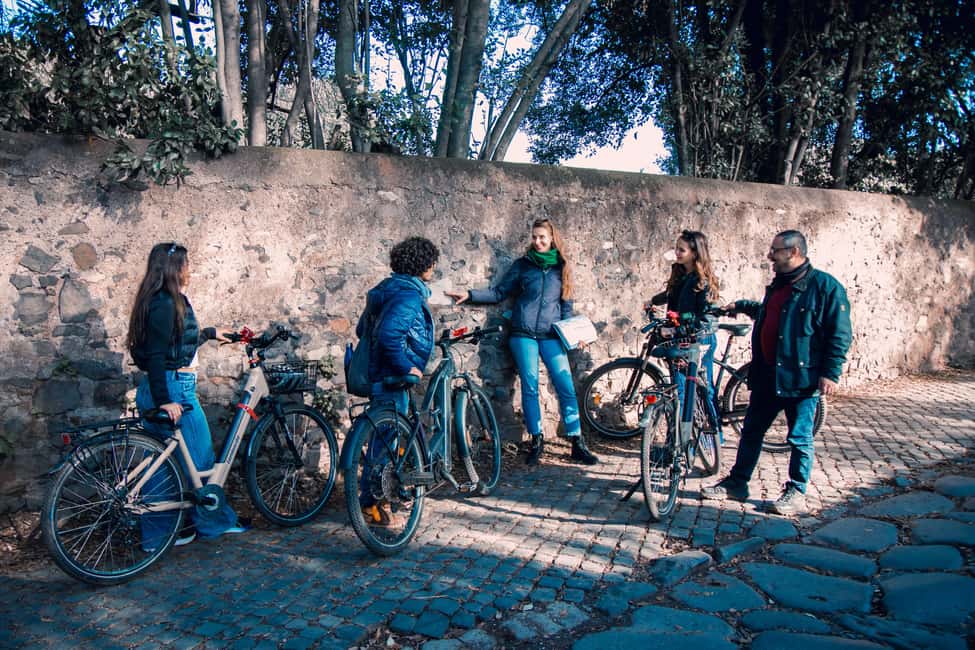
- Appia Antica by e-bike: the old road plus ruins you can actually reach without tiring out
- Aqueducts Park time: you get a proper look at Rome’s water system, not just a drive-by
- Caffarella Valley countryside feel: animals grazing close to the city and walking paths nearby
- Small group up to 8: easier pacing, more guide attention, fewer bottlenecks
- Safety-focused guiding: guides like Monika and Adriana are careful about crossings and cars
Why Appia Antica and aqueducts feel different on an e-bike
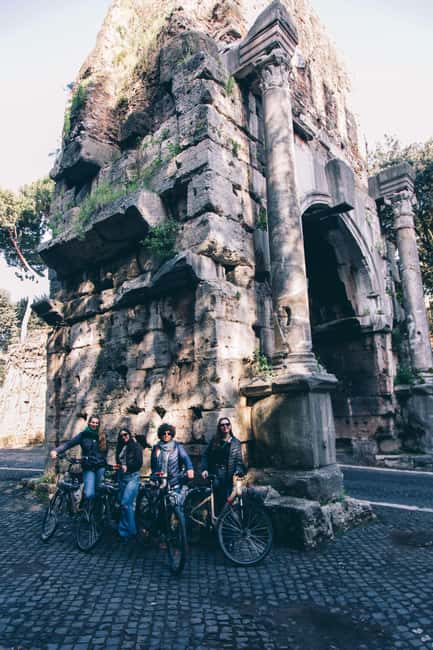
Appia Antica is not just another Roman street. It is Europe’s first major highway, launched in 312 BC under Appius Claudius Caecus, and it still shapes how you experience the area. When you ride it instead of walking it in short chunks, you feel the scale, the straightness of the route, and how Rome stretched outward like a spider web.
I also like the behind-the-scenes story of why the park still exists. Preservation here isn’t accidental. Antonio Cederna helped fight uncontrolled building, and his effort is tied to the modern Appia Antica Archaeological Park. On this tour, that preservation matters because you get to see what survived—roads, tombs, and landscape—before development swallows the edges.
Then there’s the water theme. You start with Caracalla Baths as a quick intro, and later the route connects you to the Aqueducts Park, where you can better understand how Rome moved water over long distances. An e-bike is the secret sauce for that “water-to-walls-to-country” flow, because you can keep a steady pace without turning the day into a workout.
You can also read our reviews of more cycling tours in Rome

Meeting at the Circus Maximus and getting sorted fast
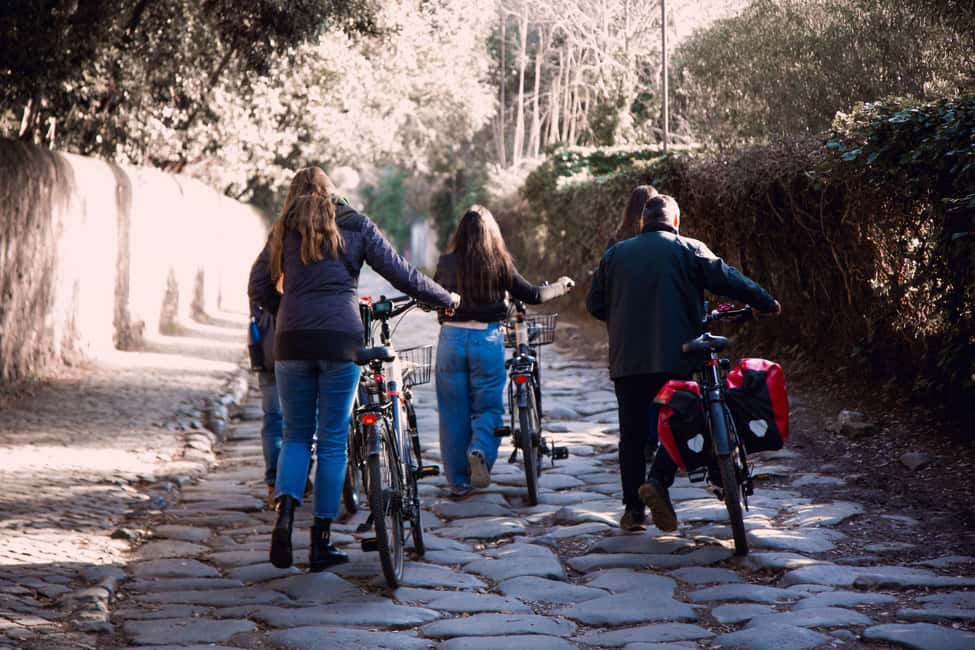
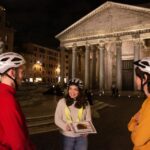
You begin at the meeting point of Rome in a Day Tours – Electric Bike and Vespa Excursions, located in front of the Circus Maximus. It is a smart start: you’re already on the edge of the old core, but you can head out without spending the whole afternoon stuck in traffic and crowds.
Plan to arrive 15 minutes early. That time is for bike setup and paperwork, and it also helps you make sure the bike fits you. One review pointed out that a smaller rider didn’t get the perfect fit on their e-bike, so take the setup seriously, especially if you are short or in-between sizes. It’s better to adjust or swap than to suffer for 4 hours.
This tour runs with a small group (up to 8) and a live guide in English or Dutch. Guides mentioned by name in the reviews include Monika, Adriana, Alannah, Frederik/Frederico, and Martin, and that variety usually means you’ll get a human voice, not a scripted audio tour. Expect clear safety talk, pacing, and explanations tied to what you’re seeing, not random facts dropped on a moving bike.
Caracalla Baths: your Roman water-system starter lesson
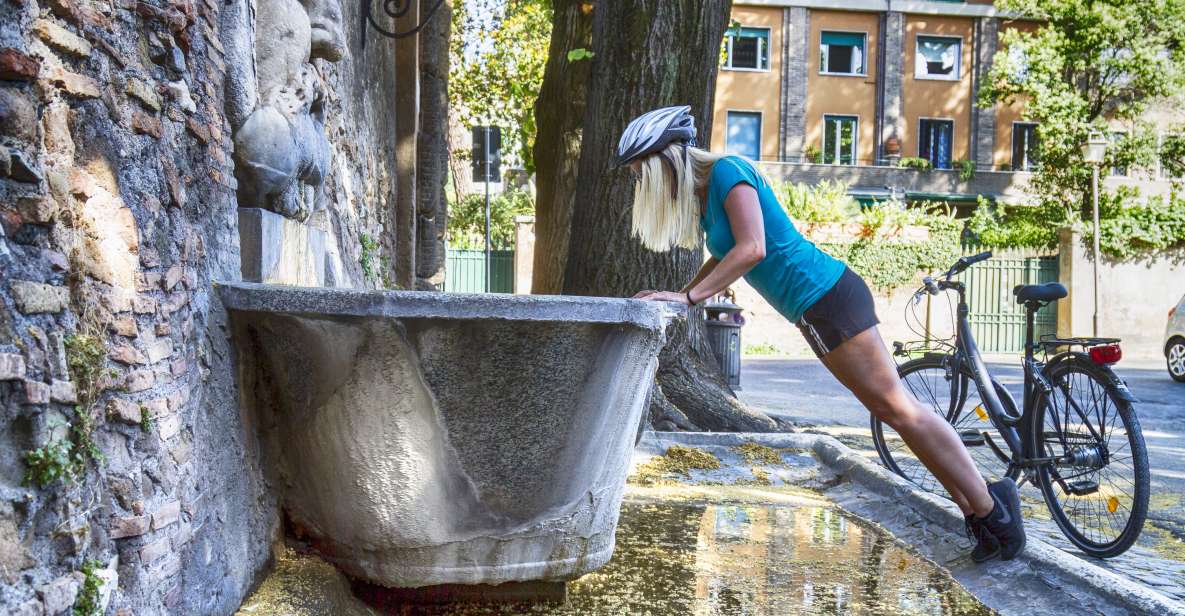
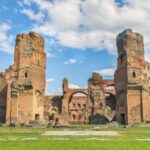
The first bigger “wow” stop is the Baths of Caracalla, with a photo stop that gives you breathing space. Even if you have seen Roman ruins before, baths are a special category because they were built around water, circulation, and engineering. They can look like stone shells until a guide reframes them as machines for daily life.
This stop also helps you connect later dots. The tour’s water story does not feel random because you start with Caracalla and then move toward the aqueducts. If you like understanding systems—how something worked, why it was built—this is the tour version of that, without drowning you in technical lectures.
One practical note: photo stops are short, so come ready with your “must capture” angles. Wear shoes that can handle uneven pavement near ancient sites, because even outside the big ruins, the ground can be less even than the modern streets.
Porta San Sebastiano and the Aurelian Walls: fortifications by bike
Next you reach Porta San Sebastiano, again with a photo stop. This area is tied to the Aurelian Walls, Rome’s fortification system that shaped the city’s borders. On foot, walls can blur into scenery. By bike, you get a better sense of their role because you’re still moving along the edges of what the city guarded.
Porta San Sebastiano is also a good “tone shift” moment. You are not only looking at tombs and temples; you’re also seeing how Rome protected itself. If you lean toward military history, you will probably enjoy this part because it turns ruins into a functional map.
Quo Vadis church stop: a calmer pause from the ride
The itinerary includes a visit to the Church of Domine Quo Vadis (often called Quo Vadis). You get about 20 minutes here, which is just enough time to slow down, step inside, and reset your brain before continuing.
This is one of those stops that works well on an e-bike tour because it breaks the rhythm. Riding is great, but sometimes you need a grounded moment to feel where you are. A church stop also gives you a different kind of Roman story—less engineering and more legend, devotion, and local tradition—so the day doesn’t stay in one gear.
You can also read our reviews of more tours and experiences in Rome

Catacombs of Rome: seeing the area, not the whole labyrinth
You also pass by the Catacombs of Saint Callistus area. The tour description says you will pass by catacombs rather than do a full guided underground visit as part of this 4-hour window. That still counts as value because it places you near one of Rome’s most important early Christian sites without turning the tour into a long queue-and-wait experience.
By positioning the catacombs near the start of your Appian and aqueduct stretch, the guide keeps the route coherent: road, water, early Christian Rome, then into the countryside. If you already plan to do a dedicated catacombs tour later, this “by-bike orientation” can help you choose which one to prioritize.
Villa di Massenzio and the Tomb of Cecilia Metella: early Appia vibes
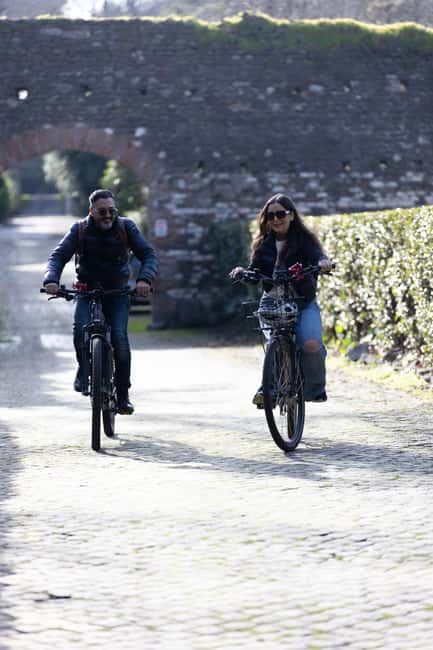
One of the most “stop-and-look” parts of the ride is the early miles of Via Appia Antica. Along the way you pass major sights and, at key points, you get photo stops for the heavy hitters:
- Villa di Massenzio (Residence of Maxentius)
- Tomb of Cecilia Metella
These are spaced like bookends—imperial power on one side, a grand funerary monument on the other. On an e-bike, you can glance up, really see how these structures sit in relation to the road, and then move on while the rest of the group stays together.
Here’s the thing I think you’ll appreciate: Appia Antica is famous, but many people only see it as a name. This tour gives it texture. You ride through the kind of area where time feels paused because you’re not just observing from a car window.
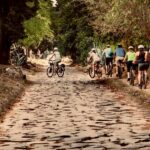
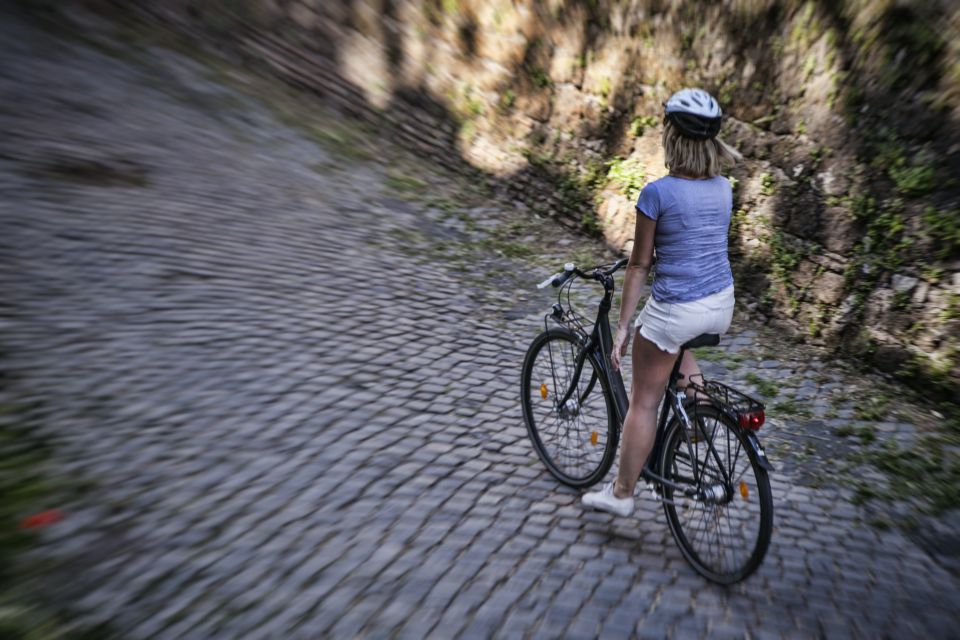
There is also a practical comfort angle. One review specifically called out that parts of the old Appian Way stones can be bumpy. E-bikes help a lot, but they do not erase uneven surfaces. That’s why closed-toe shoes and a careful riding style matter.
A local bar break: the small pause that makes the day work
Halfway through the itinerary you get a local bar break (about 20 minutes). This is not a random stop. It is a pacing tool.
When you’re on electric assistance, it is easy to go into autopilot. A scheduled break stops that. It helps you reset posture, rehydrate, and refocus on what the guide is about to show next—especially before the aqueduct and valley sections.
If you tend to get cold feet or stiff shoulders on rides, this is where you loosen up. Even with e-bike support, the day includes enough movement and vibration that a break can feel like a mini vacation inside your vacation.
Parco degli Acquedotti: where Rome’s water system becomes real
You spend about 30 minutes in Parco degli Acquedotti. This is one of the tour’s core wins because aqueducts can be visually impressive and still feel oddly distant when you only see them from far away.
In the park, you’re close enough to notice structure and scale. The tour framing matters too: Caracalla Baths prepared you to see aqueducts as parts of a living system. Instead of “big stone things,” it becomes “the infrastructure that fed a city.”
If you like walking a little within a park setting, this portion fits that urge without asking you to do a long hike. It’s a time-boxed visit that keeps you from feeling rushed while still respecting the 4-hour format.
Caffarella Valley: animals and quiet countryside near the city
After the aqueducts, you follow the Almone River down into Caffarella Valley. The scenery shift is dramatic in a good way. You go from ancient engineering to a more open-air, park-and-meadow feeling.
This is where the tour earns its “it’s like countryside near Rome” reputation. The description points out that you may encounter horses, sheep, goats, and pigs close to the city center. That sounds like a postcard until you realize how close it is to where you started.
You also get a stop near the Nymphaeum of Egeria, linked in tradition to Herodes Atticus’s villa vicinity. That matters because Egeria is one of those names that feels like Rome whispering its own myths. In a short tour window, this kind of spot gives you a payoff beyond the big monuments.
Safety and comfort: what to expect on real roads
This is an e-bike tour, not a car-free fantasy. You will use quiet roads, and the guide’s job is to keep things safe when you hit busier sections. Reviews mention that guides often kept the group away from cars and used crossings, with some guides even stopping traffic when needed.
That said, you should still think of this as a moving street experience. A good rule: wear comfortable clothes, bring items that can get dirty, and wear closed-toe shoes. Rain-or-shine matters here too, since you’ll be outside for the whole ride.
You must also know how to ride a bicycle. It is not beginner-only in the sense of teaching you balance and steering mid-tour. One review even mentioned that having e-bikes made bumpy stretches more manageable, which fits the reality: the bike handles hills and keeps the group together, but the road still feels like the road.
Finally, if you are traveling with family or teens: reviews include ages like 14 and 16 with proficient cyclists. It can work well for capable riders, but the tour is still not for kids under 12, and it is not suitable for people who can’t ride a bike, or for pregnant women and people with mobility impairments as stated.
Price and value: is $88 for 4 hours worth it?
At $88 per person for 4 hours, you’re paying for three things that usually cost money and time separately in Rome: a guide, a quality e-bike, and a route that strings together major sites efficiently.
The e-bike part matters more than you might think. Walking Appia Antica for long stretches can eat your day, and taking public transit won’t give you the same direct access to aqueduct parks and Caffarella. This tour’s format compresses time so you can see more without feeling like you’re racing.
The guide component also adds value. Named guides like Monika and Adriana were praised for explaining what you’re looking at and keeping the ride comfortable. Another review said the bikes were fully charged and in excellent condition, and that the guides were careful about pacing and safety, which is exactly what you want when you’re leaving the city center and moving onto older terrain.
So yes, it is a real spend. But it is also one of the few ways to get countryside-level experiences plus high Roman relevance in half a day, without spending your vacation standing in line.
Should you book this Rome e-bike tour?
Book it if you want Appia Antica plus aqueducts plus Caffarella Valley in one organized run, and you enjoy seeing Roman history through the shape of the place. This tour is best for adults and older teens who can ride comfortably and want a smarter pace than walking.
Skip it (or pick a different format) if you don’t feel confident on a bike, if uneven stone makes you nervous, or if you need mobility support beyond what a bike can offer. Also, if you are especially sensitive to fit issues, arrive early and double-check that the bike fits your height and comfort.
If you do book, here’s my advice: treat the bike briefing as important, not “just paperwork.” Bring closed-toe shoes, expect rain or shine, and plan to savor the quiet moments in the parks. The best part of this ride is that it turns Rome’s ruins into something you can move through.
FAQ
How long is the Rome E-Bike Tour of Appia Antica, Aqueducts, and Caffarella?
It lasts about 4 hours.
Where does the tour start?
The meeting point is at Rome in a Day Tours – Electric Bike and Vespa Excursions, in front of the Circus Maximus.
What’s included in the price?
You get an experienced live guide and an e-bike.
How many people are in the group?
It’s a small group limited to 8 participants.
What languages are the tours offered in?
The tour guide speaks English and Dutch.
Does the tour run rain or shine?
Yes, it takes place rain or shine.
Do I need previous bike experience?
Yes. To join, you need to know how to drive a bicycle.
What stops are included during the ride?
You’ll photo stop at the Circus Maximus, Baths of Caracalla, and Porta San Sebastiano, visit the Church of Domine Quo Vadis, pass by the Catacombs of Saint Callistus area, stop for photos at Villa di Massenzio and the Tomb of Cecilia Metella, visit Parco degli Acquedotti, and visit Caffarella Park.
Are children allowed?
No, it is not suitable for children under 12.