REVIEW · ROME
Rome: Gladiator Show and Museum Tickets
Book on GetYourGuide →Operated by Gruppo Storico Romano · Bookable on GetYourGuide
Swordplay, incense, and a real Roman arena. This Rome Gladiator School experience is built like a night out in ancient Rome, with an hour-and-a-half program that blends a legionario museum visit and a live gladiator spectacle just 3.5 km from the Colosseum.
What I like most is the way the performers keep it feeling physical and convincing: historical reenactors use real weapons and armour, and the pacing makes you feel part of the action without turning it into a lecture. The second big win is the structure. You don’t just watch fighting—you also get ritual scenes and Roman-style entertainment (dances, pantomime, Vestals rites).
One consideration: the venue can feel a bit out of the way, and after the show you may need to plan your ride carefully if you’re hoping for dinner nearby or easy public transport right after.
In This Review
- Key Highlights Before You Go
- Entering the Roman Scene: Arena Night 3.5 km From the Colosseum
- The Pre-Show Plan: Museum + Armory Cocktail (Don’t Skip This Part)
- The Performance: Fights, Dances, Vestals Rites, and Pantomime
- Audience Participation: How the Cast Pulls You Into the Night
- Weapons, Armour, and the Safety Vibe
- Food and Drink: A Cocktail in the Armory, Not a Full Dinner
- Getting There and Back: The Real Logistics in Rome
- Who This Is Best For (And Who Might Want a Different Night)
- Price and Value: Is $29 Worth It?
- Should You Book This Rome Gladiator Show?
- FAQ
- FAQ
- How long is the Rome Gladiator Show and Museum ticket?
- Where do I meet for the activity?
- How far is the venue from the Colosseum?
- What’s included with the ticket?
- Are photos allowed during the show?
- When does the show run?
- Is the event wheelchair accessible?
- Can I cancel and get a full refund?
- Is payment flexible?
Key Highlights Before You Go
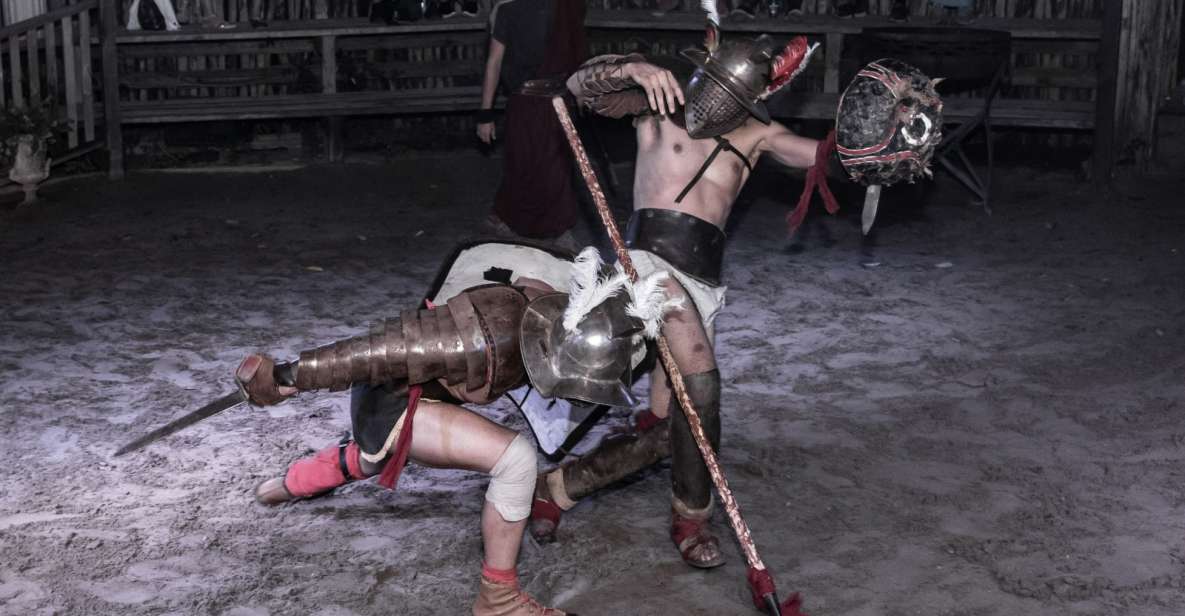
- Real reenactors, real armour, and photo time so you get more than a “stage show” vibe
- Museo storico–didattico del legionario romano before the fighting so you’re watching with context
- Multiple performance beats including gladiator combat, ancient dances, Vestals rites, and pantomime
- Audience participation that keeps kids and adults engaged
- An armory cocktail that turns the pre-show into part of the story
- Location planning matters since the area can be quiet once the program ends
Entering the Roman Scene: Arena Night 3.5 km From the Colosseum
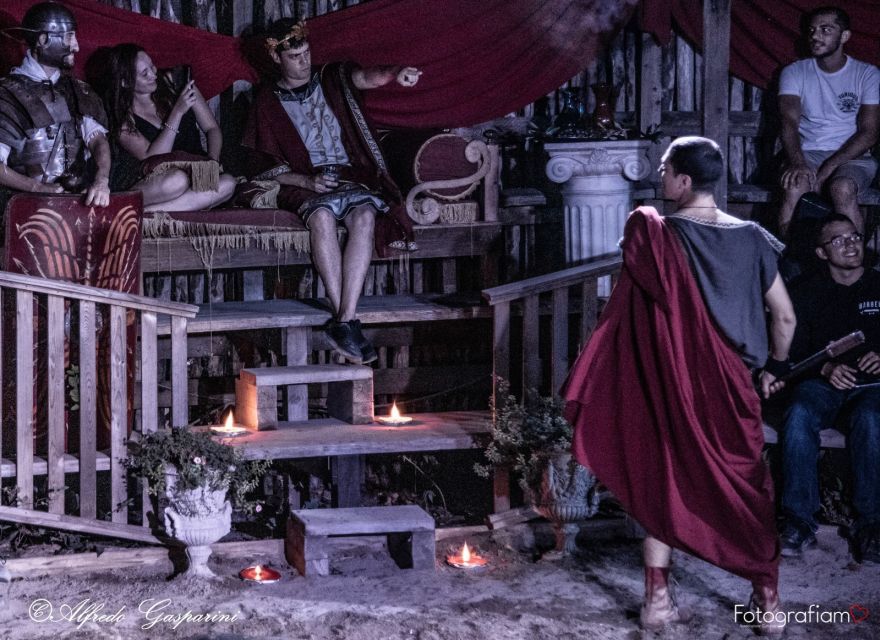
If you’re coming to Rome for the big-ticket sights, this is a different kind of payoff. It’s not another photo stop. It’s an evening performance that recreates Roman public life and training culture in a controlled setting.
The venue is at the headquarters of Rome Gladiator School (Gruppo Storico Romano), about 3.5 km from the Colosseum. That distance matters. You get out of the noisiest tourist crush, but you’re still close enough to feel like you’re spending your Rome day on the same theme as the classics. It also means the neighborhood vibe can be very local—and very quiet—before the show starts.
Timing is built around a night slot. The event entrance is listed for 20:45, and it runs until around 22:00. The show itself is about one hour and a half total for the full experience, including the museum and the performance.
You can also read our reviews of more tours and experiences in Rome


The Pre-Show Plan: Museum + Armory Cocktail (Don’t Skip This Part)
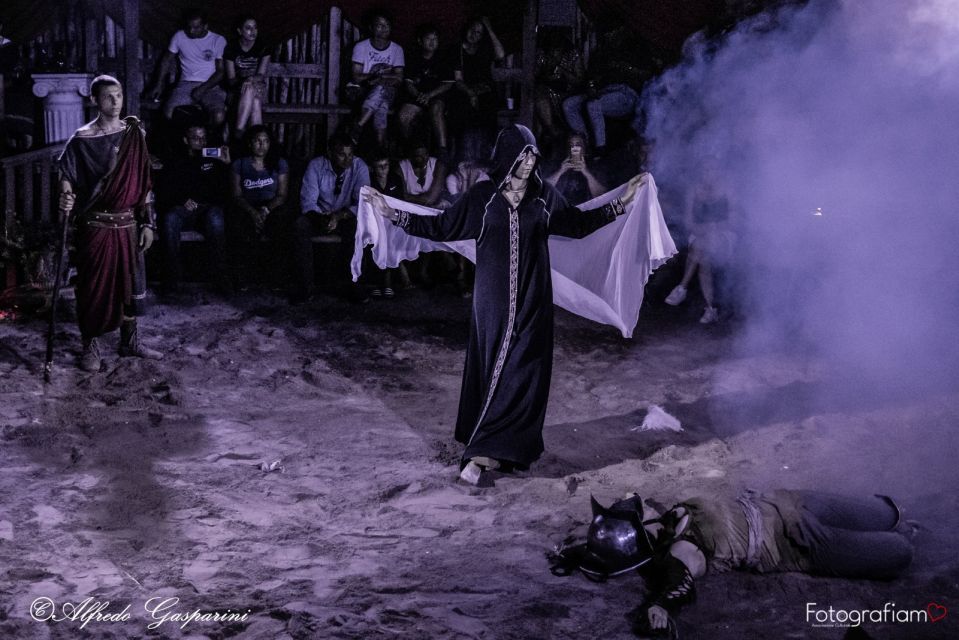
The start is where this event earns its value. You begin with a visit to Museo storico–didattico del legionario romano. It’s not positioned as a grand museum day. Think of it as a compact, story-driven primer that helps you understand what you’re about to watch.
From the way the night is staged, you can expect the pre-show to feel like Roman “arrival” and setup:
- Roman music and atmosphere that shifts you from street-time to story-time
- A guided feel as you move through the legionario-themed museum portion
- A small food and drink moment in the Armory of the Legion (a cocktail is included, and there are complimentary bites mentioned in feedback)
This matters because gladiator entertainment can be pure spectacle. Here, it’s tied to rituals and daily military life concepts—so the fighting lands harder, and the other scenes (like dances and pantomime) feel less random.
One realistic caution: if your group overlaps with many others, the museum portion can feel crowded. You won’t be wandering at your own pace in a quiet gallery. It’s designed to flow like a show start, not like a slow museum afternoon.
The Performance: Fights, Dances, Vestals Rites, and Pantomime
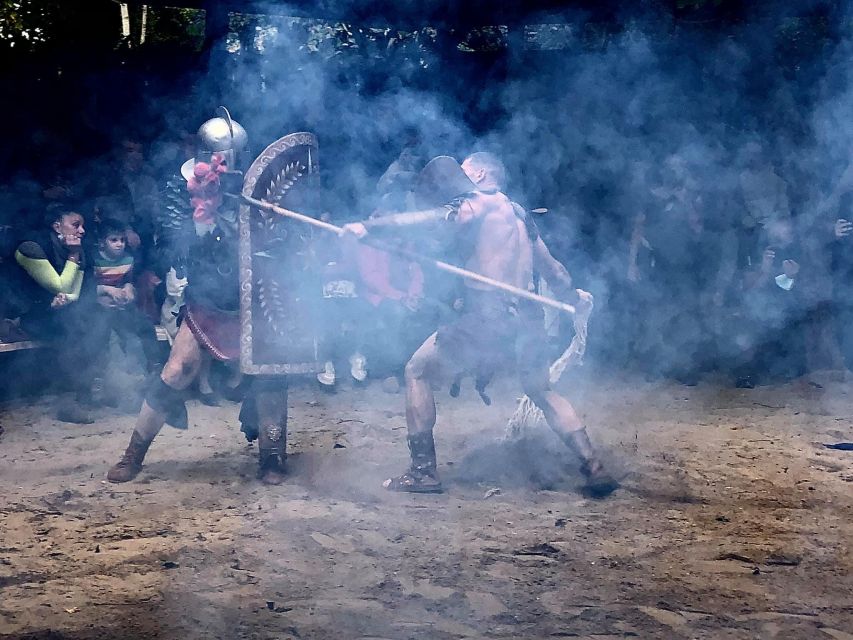
Once the evening shifts into performance mode, the program runs like a series of short, escalating scenes. The event includes:
- A gladiator fight in an equipped arena setting
- Ancient dances and Roman entertainment moments
- Vestals rites and pantomime
- A comic warm-up segment (noted in feedback), plus the main combat sequences
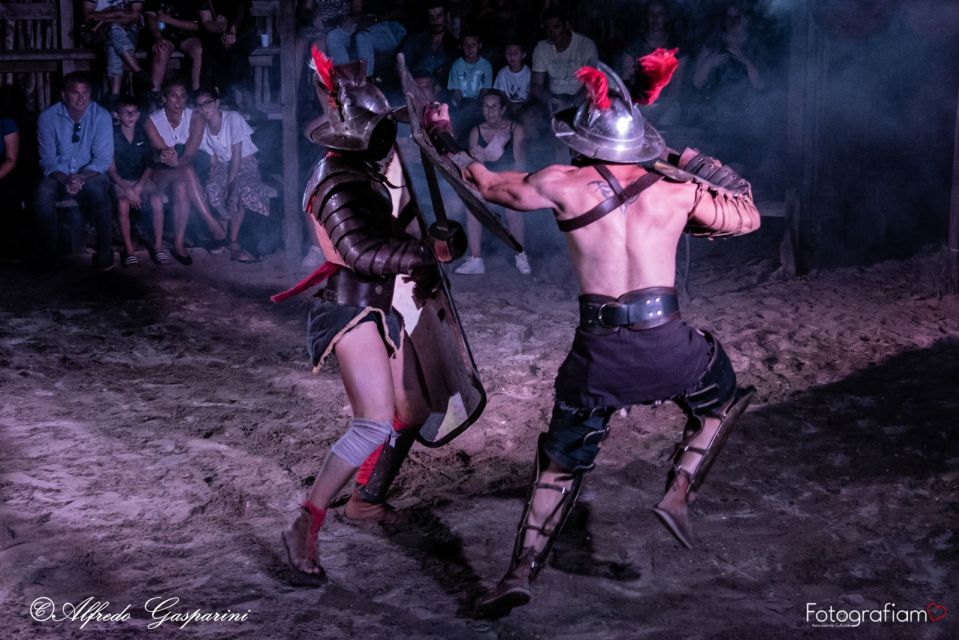
The show is executed by historical reenactors. And this is where the “feel” changes. Reviews highlight that it can seem almost too real at moments—quick weapon work, choreographed impacts, and moments where performers are down in a way that reads as intense. That’s part of the attraction. It’s staged, but it also uses the body language and timing you’d expect from trained combatants.
You’ll also get the sense that this isn’t a single “fistfight” moment. It’s a variety program. One minute you’re watching fighting and training flavor; the next you’re catching the theatrical pieces that explain Roman culture through performance.
Audience Participation: How the Cast Pulls You Into the Night
This is one of the highest-praised parts of the show. The performers actively involve the crowd in different ways, not just with a single photo opportunity. That keeps the energy up and makes the evening feel social, even if you’re solo.
The format is part story, part stage combat, part audience call-and-response. Feedback also points to a presenter or ringleader style of hosting—one guide name that stands out in the responses is Dafydd, noted for being outstanding. In general, expect a host who talks you through what you’re seeing and cues moments for the crowd to react.
If you’re with kids, this matters a lot. A long, serious history lecture doesn’t usually land. But participation and variety does. If you’re visiting as a couple or a group of friends, it also reduces the chance that you’ll feel like a passive spectator.
Weapons, Armour, and the Safety Vibe
The activity specifies that reenactors use real weapons and armour. That sounds intense, and it is. But the event is clearly designed to feel theatrical rather than chaotic. It’s an arena setting with staged choreography and direction.
Here’s how to keep your expectations grounded:
- You should treat the action like a live performance with real-looking gear.
- You’ll feel the intensity in the timing and staging, even if it’s not meant to be a literal injury scenario.
- Follow the cast’s cues. If there are boundaries, stay behind them.
One thing I like about this style is that it doesn’t try to pretend gladiator life was harmless. Roman spectacle was serious business. The show channels that feeling without making it a grim history lesson.
You can also read our reviews of more museum experiences in Rome



Food and Drink: A Cocktail in the Armory, Not a Full Dinner
Food is included in a limited, “Roman evening appetizer” way. The program includes a cocktail in the Armory of the Legion, and feedback mentions complimentary nibbles in the pre-show window.
Important for planning: this is not positioned as a full dinner. Several mentions say it’s more like snacks and wine/cocktail moments. So if you arrive hungry, you’ll want to eat earlier in the evening or plan dinner after the show.
Also think about the end time. With the finish around 22:00, it’s not always convenient to hunt for a restaurant nearby if the area has limited services. More on that next.
Getting There and Back: The Real Logistics in Rome
Location is the one topic that shows up repeatedly: it can be isolated.
On the plus side, it’s reachable. Feedback includes bus routes such as 118 and 218, plus a short walk (around five minutes) after getting off. Taxis are also workable.
On the minus side, after the performance ends, public transport can get tricky. One key tip: if you think you’ll need a ride at the end, handle it before you’re stuck outside waiting. There are mentions that the staff can help arrange a return taxi and even help with getting an Uber safely afterward.
Here’s what I’d do if I were planning your evening:
- Plan your ride back as part of the booking decision, not an afterthought
- Eat dinner before you come if you want zero stress
- If you go by bus, note your last bus timing and build in buffer time after 22:00
- If you walk from central Rome, remember that sidewalks can be uneven and you’ll be dealing with real road traffic conditions
The venue may not give you lots of pre-show café options nearby, so your “Roman night” should be treated like a single ticket event.
Who This Is Best For (And Who Might Want a Different Night)
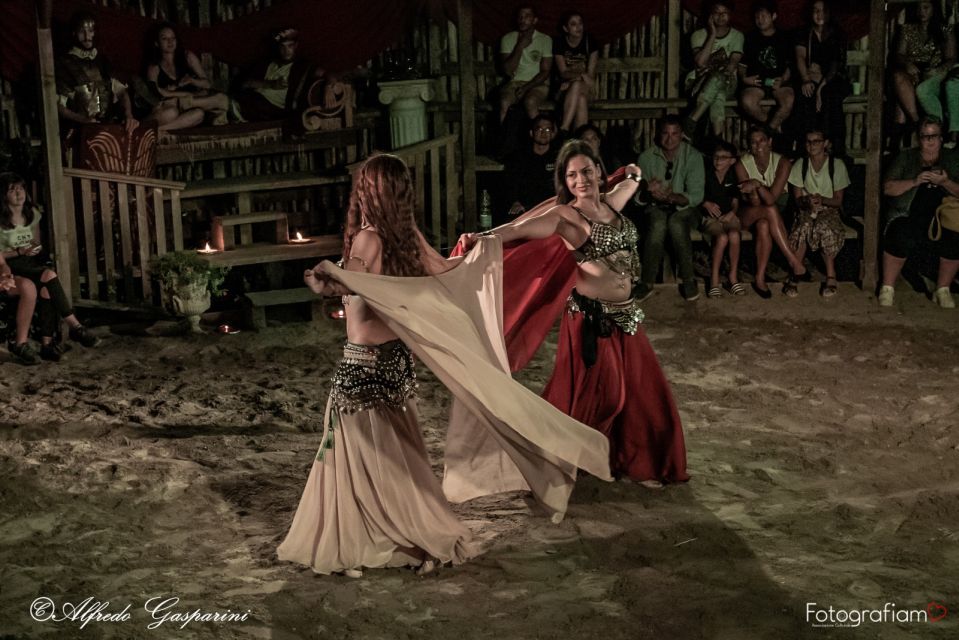
This is a strong match for families, since the show is interactive and structured with variety. Feedback repeatedly mentions it works for kids and adults alike, and the cast energy keeps the pacing moving.
It also fits:
- Solo travelers who want a social evening with audience participation
- Couples who want a fun activity that’s more than a museum stamp
- History lovers who want to see Roman spectacle brought to life without committing an entire day
Where it might not fit:
- If you only want quiet, serious museum time and you dislike staged entertainment
- If you strongly prefer staying within the most central areas of Rome and don’t want to deal with transportation planning
Price and Value: Is $29 Worth It?
At $29 per person, the value comes from how many moving parts you get in about 90 minutes:
- A guided museum-style visit (Museo storico–didattico del legionario romano)
- A live arena show with multiple segments (fighting, dances, ritual scenes, pantomime)
- An included cocktail (and complimentary bites in the pre-show window)
- The “live” factor: real armour, real weapons, and active crowd involvement
Could you see gladiator-style entertainment in Rome for more or less? Sure. But at this price point, you’re paying for a full evening experience: story setup first, spectacle next, and a social atmosphere throughout.
The biggest value trade-off is time and logistics. You’re spending an evening slot and planning a ride back. If you already have a smooth plan for transportation and dinner, the cost feels easier to justify. If you’re hoping for something purely walk-in and casual in the exact center of Rome, it might feel like too much effort.
Should You Book This Rome Gladiator Show?
I’d book it if you want an evening that feels like Roman life and entertainment, not just Roman stone monuments. The combination of museum context plus a live, interactive arena show is what makes this one different.
Book it now if:
- You’re traveling with kids or a mixed group
- You want an “action + story” evening in one ticket
- You don’t mind planning transport around an out-of-the-way venue
- You’re excited by atmosphere: music, incense, ritual scenes, and real-looking costumes
Skip it (or look for a different format) if:
- You want a self-paced museum only
- You dislike interactive crowd participation
- You’re counting on reliable buses right after 22:00 without arranging a backup ride
FAQ
FAQ
How long is the Rome Gladiator Show and Museum ticket?
The total experience lasts about 1.5 hours, with the event entrance listed for 20:45 and the end around 22:00.
Where do I meet for the activity?
Meet at Rome Gladiator School, also associated with Gruppo Storico Romano.
How far is the venue from the Colosseum?
The arena is described as about 3.5 km from the Colosseum.
What’s included with the ticket?
It includes the museum visit and the gladiator show. A cocktail in the Armory of the Legion is also part of the experience.
Are photos allowed during the show?
Yes. The reenactors use real weapons and armour and you can take pictures.
When does the show run?
The show runs from May through September (dates listed for 2026).
Is the event wheelchair accessible?
Yes, it is wheelchair accessible.
Can I cancel and get a full refund?
You can cancel up to 24 hours in advance for a full refund.
Is payment flexible?
Yes. It offers a reserve now & pay later option so you can hold your spot without paying immediately.