REVIEW · ROME
10 Wonders of Rome in 3 hours
Book on GetYourGuide →Operated by Lock Your Tour · Bookable on GetYourGuide
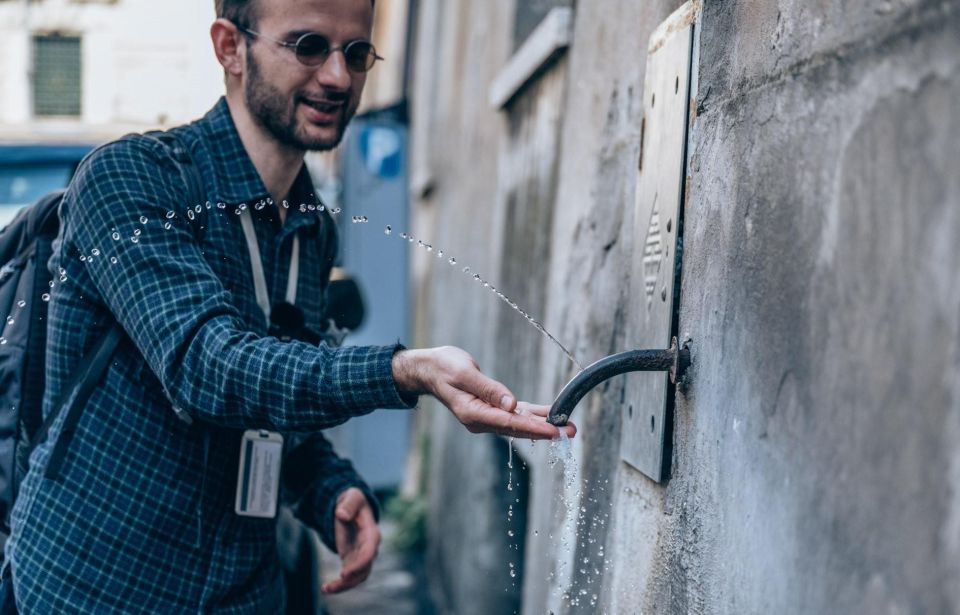
Rome hits different at walking speed. This 3-hour tour strings together ten of Rome’s most famous sights with an official English guide and lots of photo stops, so you get the big picture fast. I love how you start right at the Colosseum area and move through key squares and streets without getting bogged down. Colosseum and Pantheon highlights are the kind you can savor from outside, even if you skip museum lines.
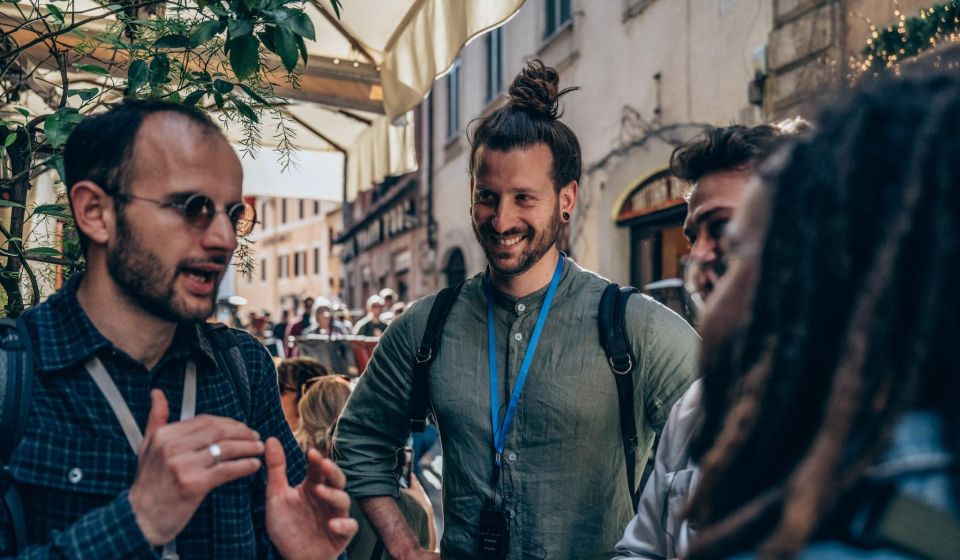
I also love the way the guides keep you engaged. People like Joseph, Drita, and Isuf are praised for storytelling that feels fun and interactive—so the facts stick instead of floating away.
One thing to weigh: you’ll cover about 5.46 km (3.4 miles) and climb 136 steps, and monument entries aren’t included—so think outside views, not inside ticket time.
In This Review
- Key reasons this tour works well
- Ten wonders in three hours: a Rome sampler that feels focused
- Starting point at Via del Monte Oppio: find the red house
- Colosseum to Via dei Fori Imperiali: the power corridor of ancient Rome
- Piazza Venezia and the Vittoriano: political Rome in white stone
- Trevi Fountain and Piazza di Pietra: iconic water, then quiet ancient edges
- The Pantheon and Marcus Aurelius Column: religion and imperial memory
- Spanish Steps and espresso: the climb, then the reset
- Villa Borghese Park viewpoint: the secret-style panoramic finish
- Price and value: is $47 for 3 hours worth it?
- Who should book this walking tour (and who should skip)
- Should you book 10 Wonders of Rome in 3 hours?
- FAQ
- How long is the tour?
- Where does the tour meet?
- What’s the walking distance and step count?
- Are monument and museum entry tickets included?
- Is the tour guide English-speaking?
- Is Wi-Fi included?
- Do I get espresso or food included?
- Who can’t join this tour?
- Is there a cancellation window?
Key reasons this tour works well
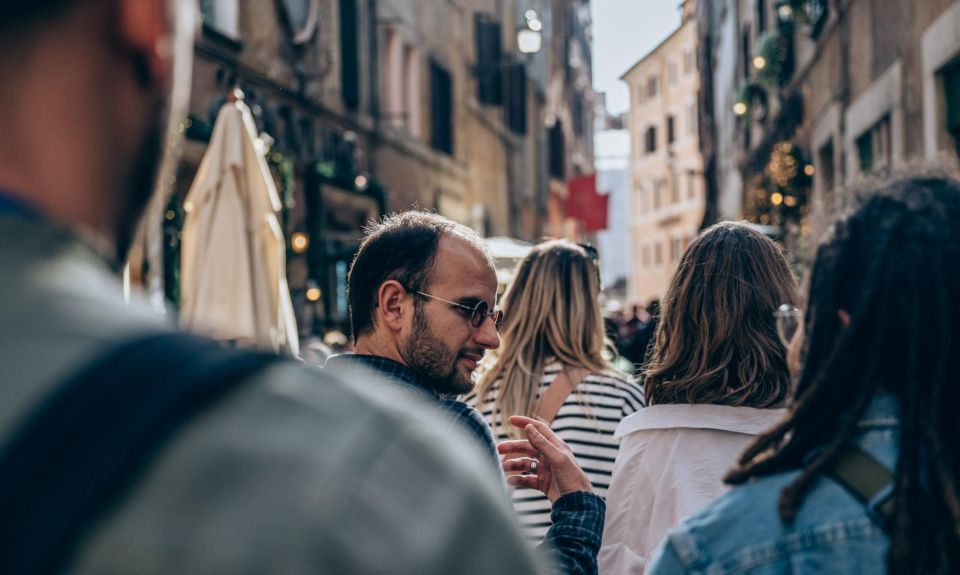
- 10 wonders in 3 hours: a tight route that helps you pick what to revisit later
- Great guide energy: interactive questions and keeping the group moving at a steady pace
- Photo planning built in: multiple stops timed for easy pictures at major landmarks
- Big-city realism: you’ll see how Rome looks at street level, not from a museum bubble
- A real coffee moment: a chance to try espresso at a popular local café
- Panoramic payoff: a secret viewpoint near Villa Borghese Park to wrap it up
Ten wonders in three hours: a Rome sampler that feels focused
This isn’t a slow “tour bus with walking breaks.” It’s a concentrated Rome walk. You start near the Colosseum and finish with a panoramic view near Villa Borghese Park, with the major highlights stitched together like a best-of playlist.
The value is in the flow. You don’t just see famous buildings—you learn how the places connect: ancient Rome, then political Rome, then the religious Rome, then the Rome of today walking over the same ground. In three hours, you get enough context to stop feeling like you’re just looking at postcards.
You’ll also notice something practical: the route is built for pictures. The stops include photo moments at key locations, and your guide keeps you from wandering off course when the streets get crowded.
You can also read our reviews of more tours and experiences in Rome
Starting point at Via del Monte Oppio: find the red house
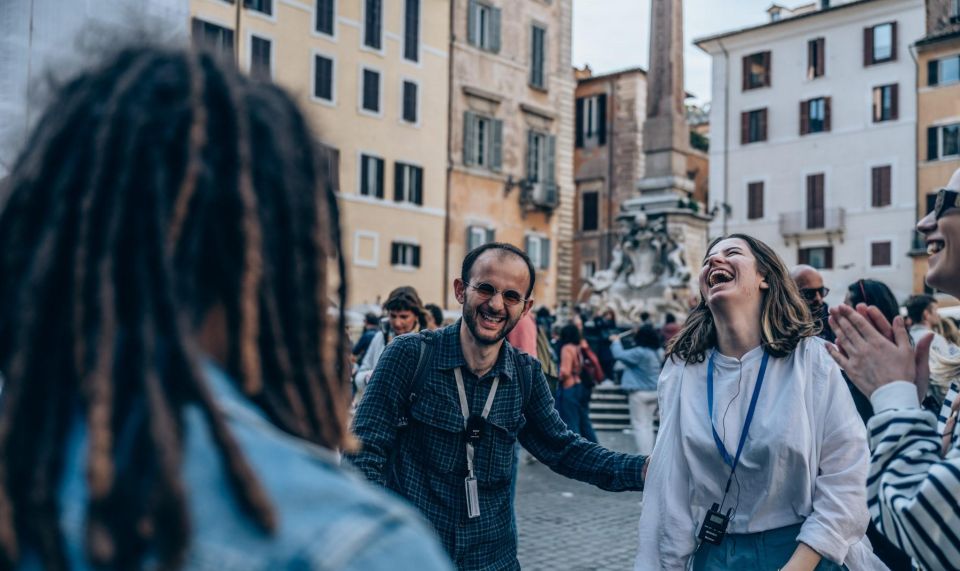
Your tour meets at Via del Monte Oppio 3, 00184 Roma RM. The guide arrives at least 10 minutes early, and you’re looking for the guide out front of a red house, marked with a Lock Your Tour flag or umbrella.
This small detail matters. Rome can feel like a maze when you’re tired, and early arrival means you spend less time searching and more time sightseeing. If you’re even a little late, you’ll feel it—so I’d treat the meeting point like an appointment, not a suggestion.
Also bring what you’ll need for the pace: comfortable shoes. This is the kind of walk where your feet decide how much you enjoy the day.
Colosseum to Via dei Fori Imperiali: the power corridor of ancient Rome
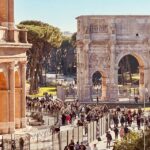
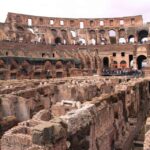
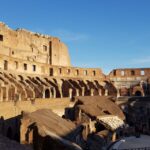
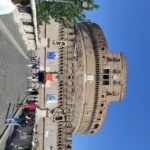
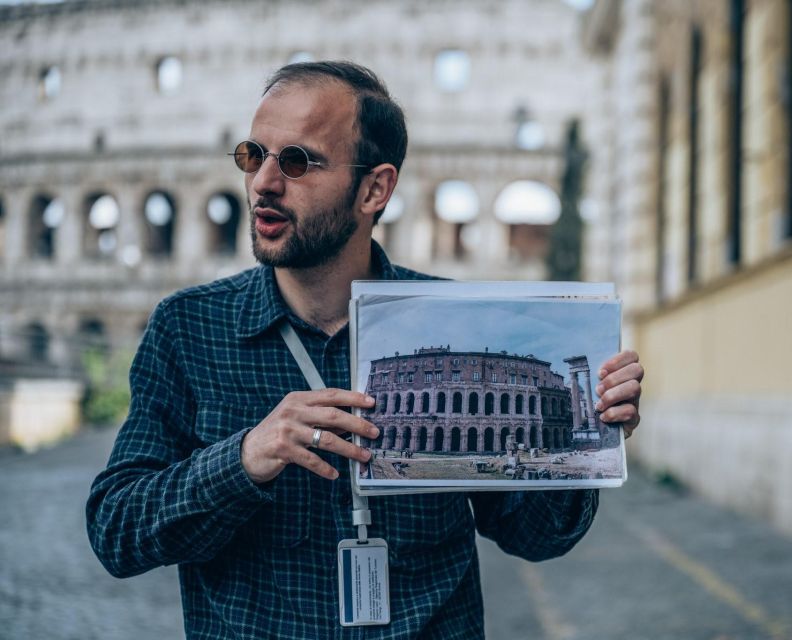
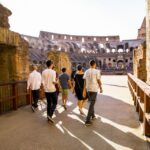
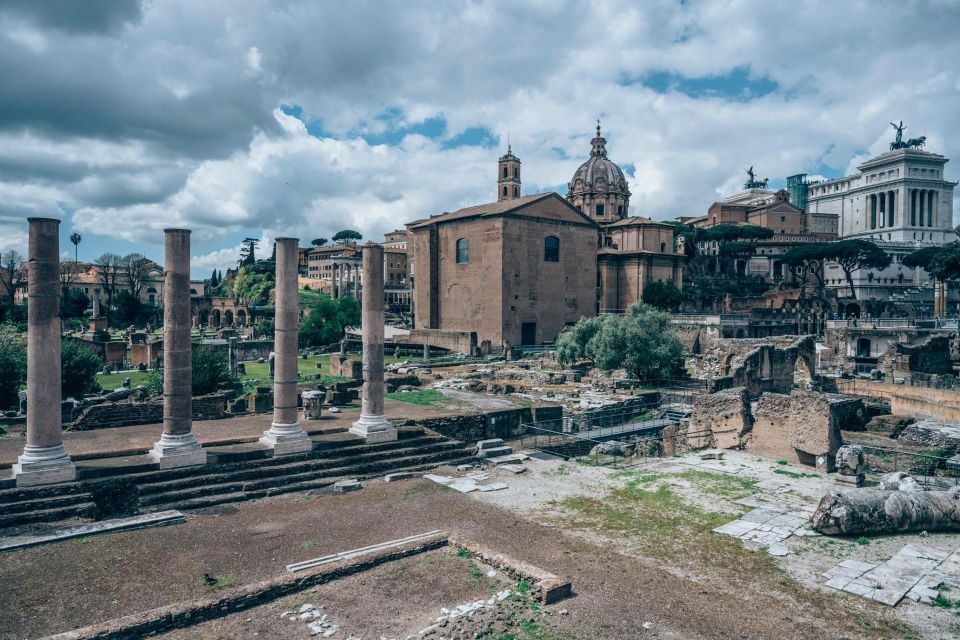
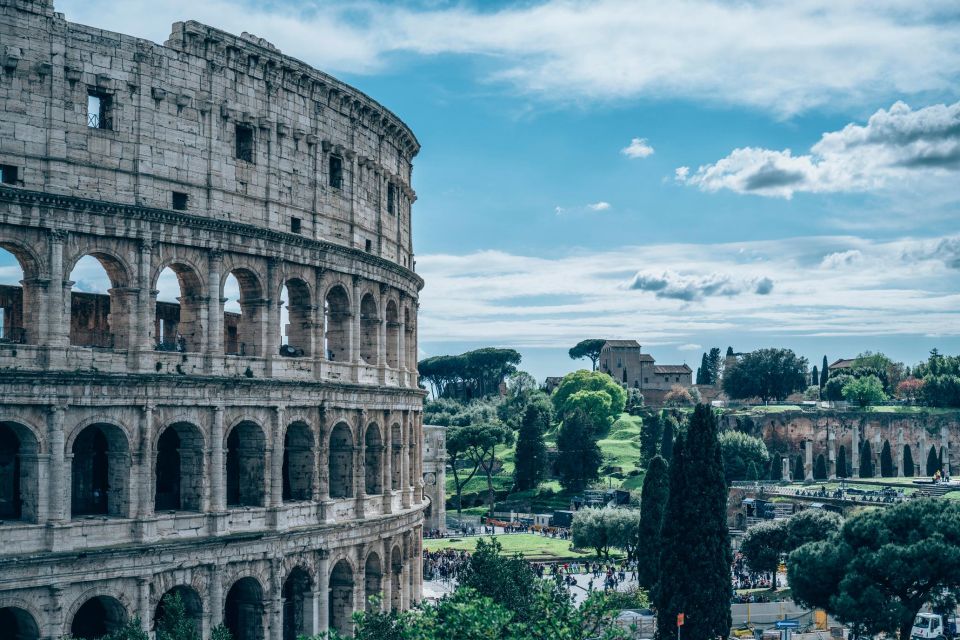
You begin with the Colosseum photo stop and a guided look. Even from the outside, it’s hard not to stare. The key is that your guide doesn’t treat it like a standalone monument. They frame it as the centerpiece of public spectacle—Rome showing off power to the public.
From there, you walk toward Via dei Fori Imperiali, Mussolini’s grand straight approach through the ancient forum area. This section is special because it shows two layers at once: the ancient remains on one side of your attention and the bold 20th-century planning on the other.
Why I like this part of the route: it gives you a “how Rome was redesigned” perspective. You see that Rome isn’t frozen in time. It’s been shaped, rebuilt, and reinterpreted—sometimes with serious intent.
Quick consideration: this stretch runs through busy zones. Keep your pace steady and follow your guide’s instructions for where to stand for photos without blocking others.
Piazza Venezia and the Vittoriano: political Rome in white stone
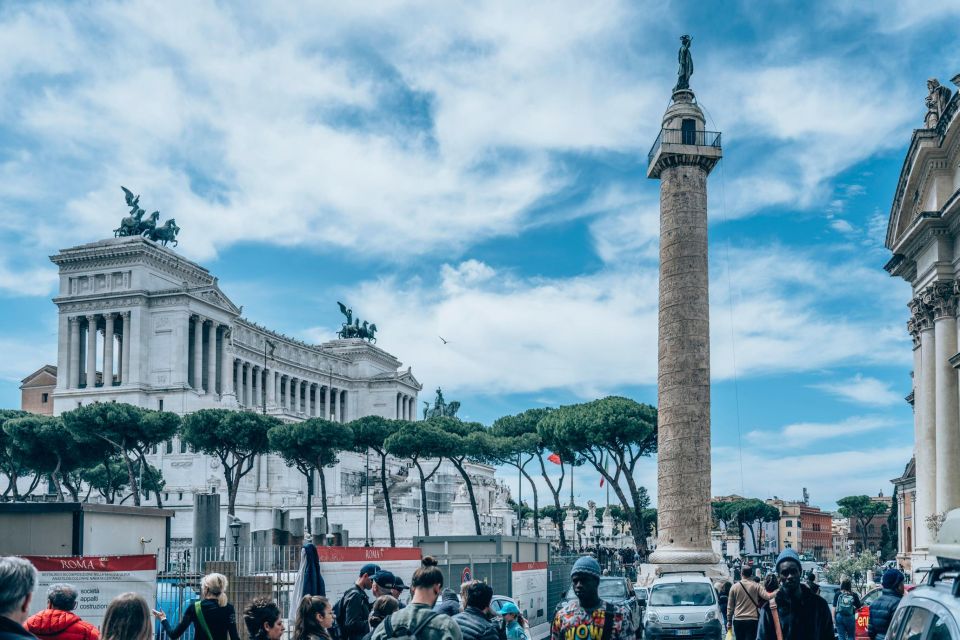
Next comes Piazza Venezia, where you’ll get guided orientation and a photo opportunity in front of the Altar of the Fatherland—also called the Vittoriano.
This monument is a big visual moment. The mass of white stone and the dramatic setting make it impossible to miss. But the real usefulness is the context you get while standing there: it’s not just “a big building.” It represents symbolic ideas tied to Italian identity and the country’s public storytelling.
You’ll also pass by the Pontifical Gregorian University, known for being the first Jesuit-founded university. That stop is one of those Rome surprises: education and faith living side-by-side with the tourist magnets.
I find Piazza Venezia helpful because it anchors you. After the ancient energy of the Colosseum and the forum streets, you get a clear sense of how Italy presented itself in more recent history.
Trevi Fountain and Piazza di Pietra: iconic water, then quiet ancient edges
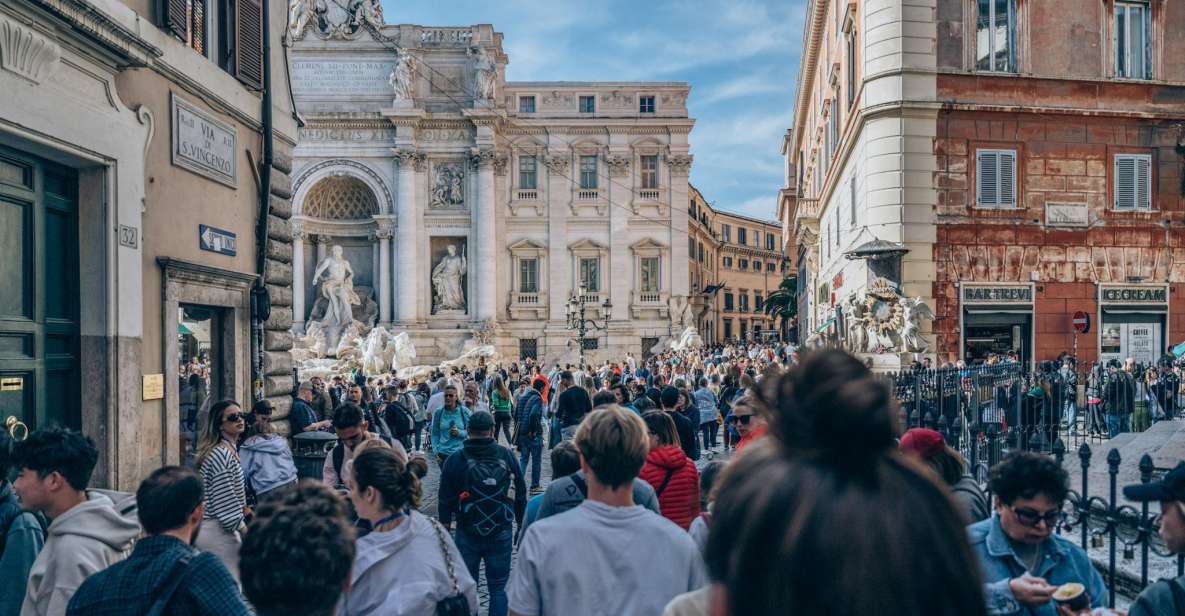
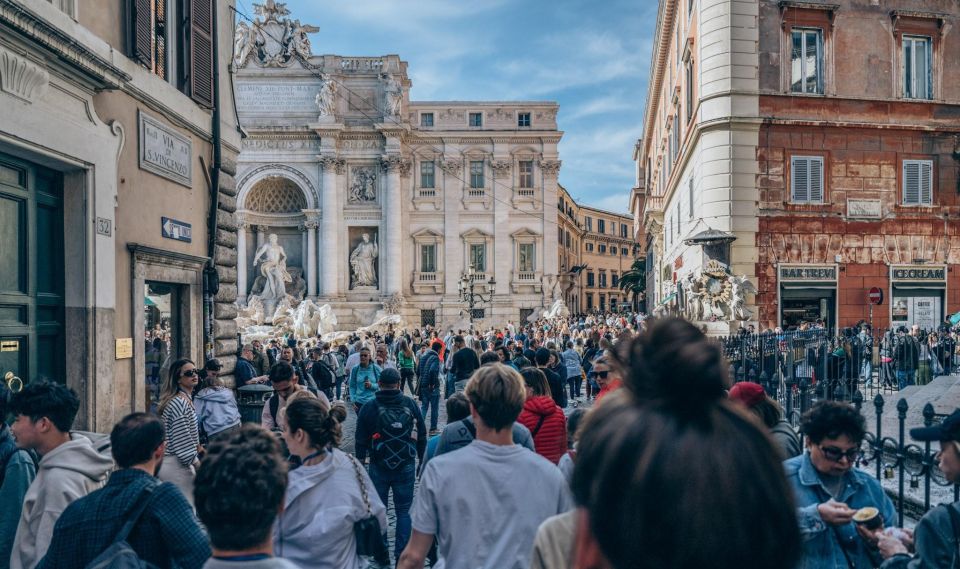
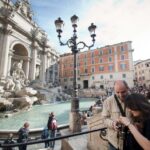
Then you hit the Trevi Fountain with another photo stop. Even if you’ve seen it before, seeing it up close has a different effect. The guide helps you understand what you’re looking at—how the fountain works visually as a jewel of water and stone in Rome.
After Trevi, you’ll walk through Piazza di Pietra and visit Hadrian’s Temple area. This part can feel calmer than the Trevi zone, because you’re not surrounded by a wall of people demanding the same picture angle.
The Temple of Hadrian stop is also a nice shift: you’re going from grand baroque drama (Trevi) back toward Roman imperial architecture. And because the tour is designed around exterior viewing, you get a chance to appreciate the shape, setting, and placement without needing tickets.
Practical tip: at Trevi and the surrounding streets, crowd flow changes constantly. Stay close to your group and use the guide’s timing for photos. Trying to improvise usually leads to standing in the wrong spot—again.


The Pantheon and Marcus Aurelius Column: religion and imperial memory
One of the best “wow” moments on the tour is the Pantheon. Your guide brings you through the area with a guided walk and sightseeing time, and you’ll see it as it functions today as a church.
From the outside, the Pantheon still hits hard. It’s clean, monumental, and oddly easy to keep looking at from different angles. The value here is your guide’s explanation of why it was built and why it still matters now—Rome reusing and preserving meaning instead of starting over.
Along the way you’ll also pass the Marcus Aurelius Column. It’s one of those classics that lots of people speed past. The tour gives it enough attention to feel like part of the story, not just a background prop.
This is a good moment to slow down mentally. You’ve gone from ancient spectacle to political symbolism to architectural beauty. The Pantheon helps you tie those threads together.
Spanish Steps and espresso: the climb, then the reset
If there’s a physical moment on the route, it’s the Spanish Steps. You’ll climb them (the total climb on the tour is listed as 136 steps), and you’ll walk through the area with guided sightseeing.
The Spanish Steps work for two reasons:
1) the design feels elegant in a way that’s obvious the moment you’re actually there, and
2) the atmosphere around it is very “Rome evening”—even in the middle of the day.
Then you get a local café stop for espresso or tea. This is one of those smart tour choices. After a few hours of pavement and stone, caffeine is not a luxury—it’s a practical survival tool.
Important reality check: the tour info says meals and beverages aren’t included. So consider this a chance to buy and enjoy a break, not a fully included food package.
Villa Borghese Park viewpoint: the secret-style panoramic finish
Near the end, you’ll pass Villa Borghese Park and head to a secret spot viewpoint for panoramic views of Rome.
This final stretch is the pay-off. You go from dense historic landmarks to a higher perspective where the city stops feeling like a list and starts feeling like a place. A viewpoint is where your brain finally organizes everything you saw earlier: ancient ruins, grand monuments, and the city’s everyday movement all in one frame.
The tour mentions this finish with options tied to viewing time (sunset/rise-style phrasing). Practically, that means you’ll get a scenic moment that isn’t just more walking.
If you’re the type who likes to end a day with one strong photo, this is it. Let your phone camera do its thing—but also take 20 seconds to look without screens.
Price and value: is $47 for 3 hours worth it?
At $47 per person for a 3-hour guided walk, this sits in the category of “pay for guidance, save time on planning.”
Here’s what you’re really buying:
- An official guide leading you through ten landmarks with context
- Photo opportunities built into the route
- A panoramic viewpoint finish
- Wi-Fi during the experience
What you’re not buying:
- Entry to monuments and museums (the tour notes monuments are admired from the outside)
So the value depends on your style. If you want to walk from place to place while someone else explains the whys and hows, this price can feel fair fast. If you want ticketed interiors and museum-depth time, you’ll likely want to pair this with separate ticketed visits.
To me, the sweet spot is Day 1 or Day 2 in Rome. You get your bearings, learn what you care about, then return later with better priorities.
Who should book this walking tour (and who should skip)
This tour is best for people who want a concentrated highlights route and don’t mind walking.
You’ll likely enjoy it if you:
- want to see major landmarks like the Colosseum, Trevi Fountain, and Pantheon in one go
- like guided stories that include asking you questions and keeping you engaged
- prefer outside viewing and don’t need to enter every monument
You should think twice or skip if you:
- need wheelchair access (not suitable for wheelchair users)
- have heart problems or respiratory issues (listed as not suitable)
- are traveling with kids under 11 (not suitable)
- have low tolerance for hills and stairs (the tour includes a stair count of 136 steps)
Also note the walking distance: about 5.46 km. That’s not extreme for a typical visitor with decent shoes, but it’s enough that you’ll want to plan your day around it.
Should you book 10 Wonders of Rome in 3 hours?
My take: if you want a smart first taste of Rome’s biggest hits, book it. This is a well-structured “see it, understand it, photograph it, and move on” tour. The guide quality is the big story here, with multiple named guides like Joseph, Drita, and Isuf praised for being engaging, funny, and interactive, which is exactly what keeps a short tour from feeling like a rushed checklist.
But if you’re hoping to do a lot of interiors, this won’t replace timed-entry museum days. Think of it as the orientation layer. You’ll get the outside beauty and the meaning, then you can decide what deserves your paid entry time later.
If you want Rome to feel less overwhelming and more navigable, this is one of the cleanest ways to do it in a single afternoon.
FAQ
How long is the tour?
It lasts 3 hours.
Where does the tour meet?
The meeting point is Via del Monte Oppio 3, 00184 Roma RM. The guide is there at least 10 minutes early, in front of the red house with a Lock Your Tour flag or umbrella.
What’s the walking distance and step count?
You’ll walk about 5.46 km (3.4 miles) and climb 136 steps.
Are monument and museum entry tickets included?
No. Entry to monuments and museums is not included, and the tour focuses on admiring sights from the outside.
Is the tour guide English-speaking?
Yes. The live guide is English.
Is Wi-Fi included?
Yes, Wi-Fi is included.
Do I get espresso or food included?
The itinerary includes a local café stop for coffee or tea, including authentic espresso. However, meals and beverages are listed as not included, so you should plan to pay for what you order.
Who can’t join this tour?
It’s not suitable for children under 11, wheelchair users, people with heart problems, or people with respiratory issues.
Is there a cancellation window?
Yes. You can cancel up to 24 hours in advance for a full refund.