REVIEW · ROME
Rome: 3-Hour Private Historical Highlights Walking Tour
Book on GetYourGuide →Operated by Raphael Tours & Events · Bookable on GetYourGuide
Three hours, and Rome feels focused. This private walk lines up the big-name sights with Roman details you’d miss on your own, led by a guide who speaks English and Italian. I especially like the private group setup, because it keeps the tour flexible and easier to manage at a first-time pace.
I also really like the payoff at the end: you actually enter the Pantheon, the ancient temple that still feels astonishingly intact. You’ll also stop for the Trevi Fountain coin toss and move through major squares like Piazza Navona and Piazza Colonna. One thing to consider: it’s a moderate walking tour, and it starts at a café near the Spanish Steps, so you’ll want good shoes and a plan to get there on your own.
In This Review
- Key highlights at a glance
- A 3-Hour Rome Walk That Gives You Real Momentum
- Starting at Caffè Greco: Condotti’s Convenient Launch Point
- Spanish Steps and Trevi Fountain: Two Icons, One Guided Thread
- Piazza Colonna: Marcus Aurelius in Marble and Power in Plain Sight
- Piazza Navona: Domitian’s Space and Bernini’s Fountains Working Together
- Walking Toward the Pantheon: Hadrian’s Footprints and St. Ignatius
- Entering the Pantheon: Why This Stop Is the Main Event
- A Private Guide Who Keeps the Pace Comfortable
- Price and Value: Is $214.11 Per Person Worth It?
- Who This Tour Suits Best (and Who Might Want Another Plan)
- Should You Book This 3-Hour Rome Highlights Tour?
- FAQ
- FAQ
- How long is the Rome 3-hour private walking tour?
- Where does the tour start?
- Does the tour end back at the same meeting point?
- What language is the tour guide?
- Is this a private tour?
- Does the tour include Pantheon entry?
- Does the tour skip the ticket line?
- Is pickup or drop-off included?
- What should I bring?
- Is the tour wheelchair accessible and can children join?
Key highlights at a glance
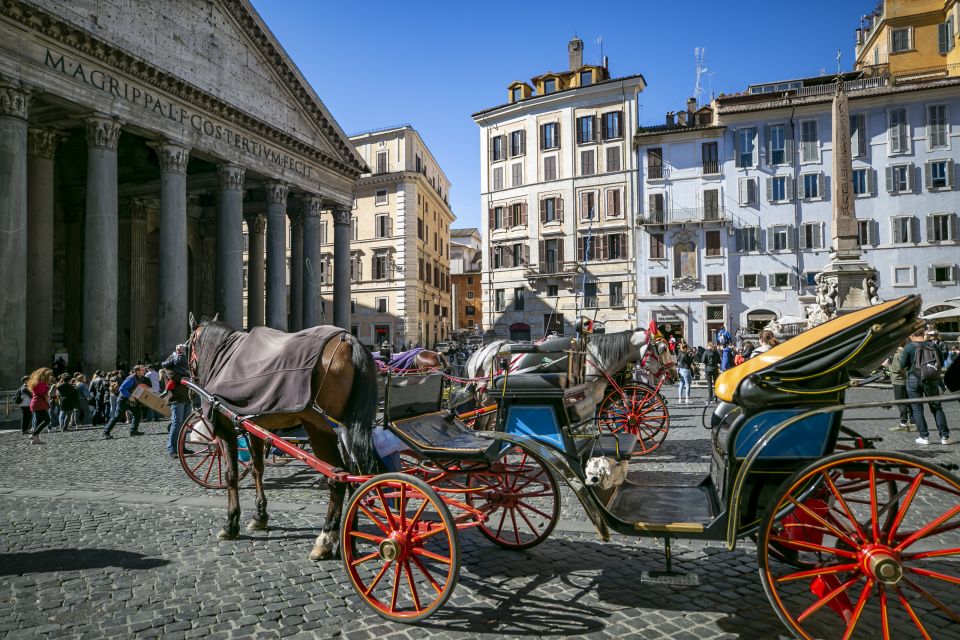
- Pantheon entry: You go inside the ancient temple, not just view it from the outside
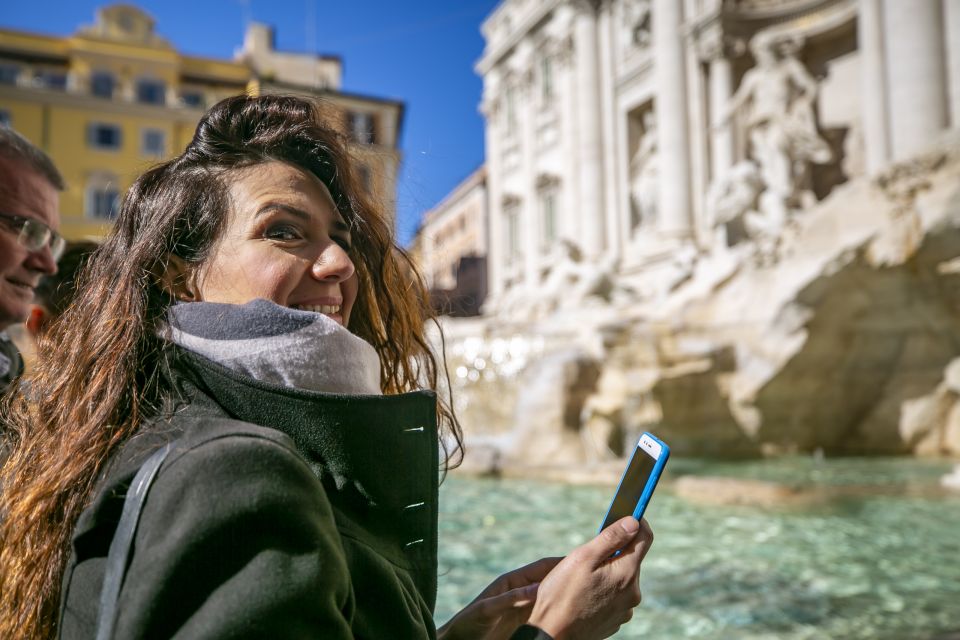
- Trevi Fountain coin toss: Follow the crowd for the classic return-to-Rome legend
- Piazza Navona with key Roman context: You’ll connect Domitian-era space to Bernini’s fountains
- Piazza Colonna details: See the marble column of Marcus Aurelius and nearby historic palaces
- A guide who adapts to your pace: You can ask questions, slow down for photos, and regroup easily
A 3-Hour Rome Walk That Gives You Real Momentum
Rome can feel like a plate of everything at once. This tour helps you pick the most meaningful bites in a short window, without turning your day into a sprint.
The format is simple: you start near the Spanish Steps, walk through a string of top sights, and end back at the meeting point. In three hours, you get a strong sense of how Rome layers time—marble emperors and Renaissance tombs sharing the same street corners.
Because it’s private, you’re not trapped in a herd. That matters most when you hit crowded landmarks like Trevi and the Pantheon area, where patience is the difference between a good experience and a frustrating one.
You can also read our reviews of more walking tours in Rome



Starting at Caffè Greco: Condotti’s Convenient Launch Point
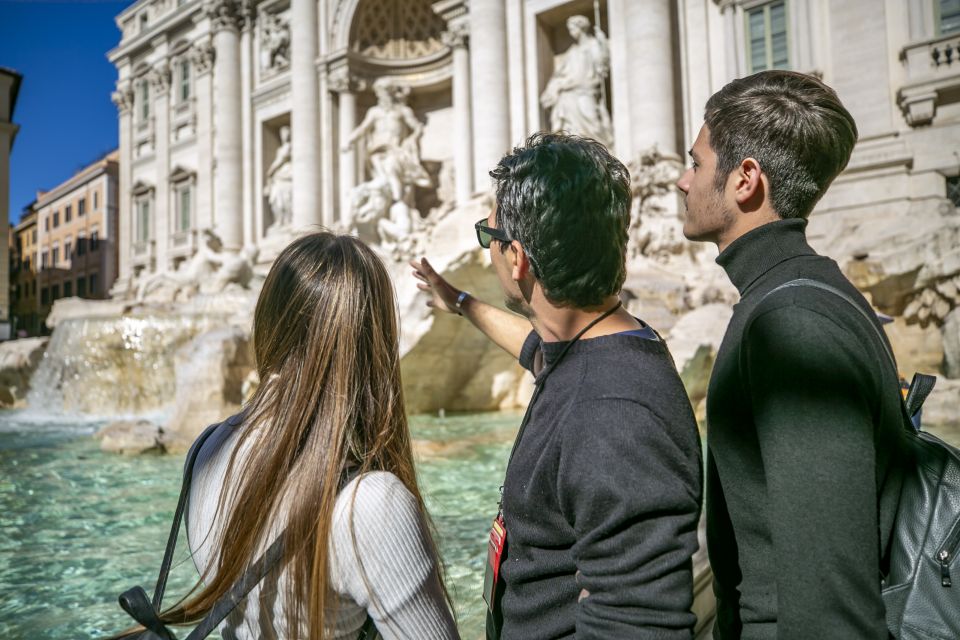
Your tour departs from Caffè Greco on Via dei Condotti (86), close to the Spanish Steps. This is a smart starting location because it drops you right into the classic Rome core, where it’s easy to orient yourself before you start walking.
Also, you’re not dealing with complicated pick-up logistics. The tour doesn’t include accommodation pickup or drop-off, and it doesn’t include food or drink, so you’ll want to plan to meet directly at the café and grab anything you need beforehand or after.
If you’re arriving in Rome and still figuring out timing, this meeting point is practical. You’ll be able to move from “new city mode” into “here’s what matters” quickly.
Spanish Steps and Trevi Fountain: Two Icons, One Guided Thread
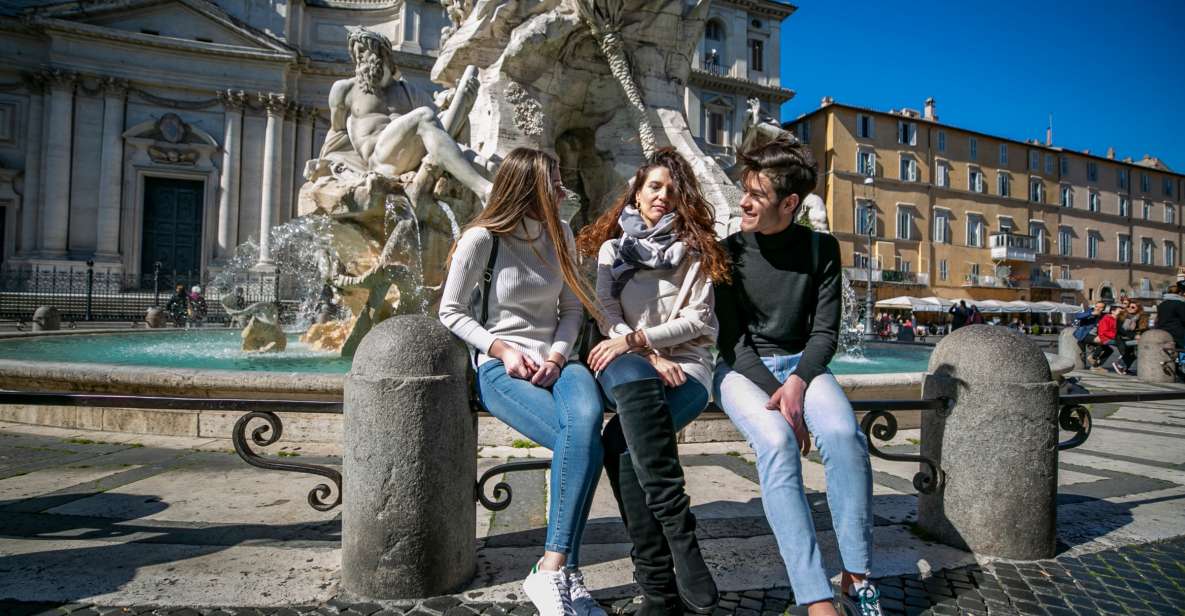
The route threads together Rome’s most photographed moments with enough explanation to make them feel more than postcard scenes.
You’ll begin with the Spanish Steps area, then work your way through the central sights toward Trevi Fountain. Trevi is the kind of place where the legend part is easy to remember, and the “why this spot matters” part is where a guide really earns their pay.
At Trevi, you throw a coin into the fountain to guarantee your return to Rome, according to local legend. You’ll also learn the background context as you’re there, which helps the moment land in your memory beyond the action of the toss.
A practical note: Trevi gets crowded. Going with a guide helps you stay calmer and keep moving without losing your group—or your patience.
Piazza Colonna: Marcus Aurelius in Marble and Power in Plain Sight
After you’ve hit Trevi, the tour turns to Piazza Colonna. This square is less about the big crowd energy of Trevi and more about Rome’s serious, political face—stone, symbols, and continuity.
You’ll see the marble column of the Roman emperor Marcus Aurelius. Even if you’ve seen columns in other cities, this one feels specific to Rome’s self-image: the idea that past emperors still “speak” through monuments in the middle of daily life.
You’ll also pass or see the historic palaces around the area, including Palazzo Chigi and Palazzo Montecitorio. For many first-timers, that mix of ancient and official buildings is the big surprise. Rome isn’t only ancient ruins and museum lines—it’s a working capital built on top of itself.
This is a good stop for a slower moment. If your feet start feeling it, Piazza Colonna is a place where you can pause, look up, and reset.
Piazza Navona: Domitian’s Space and Bernini’s Fountains Working Together
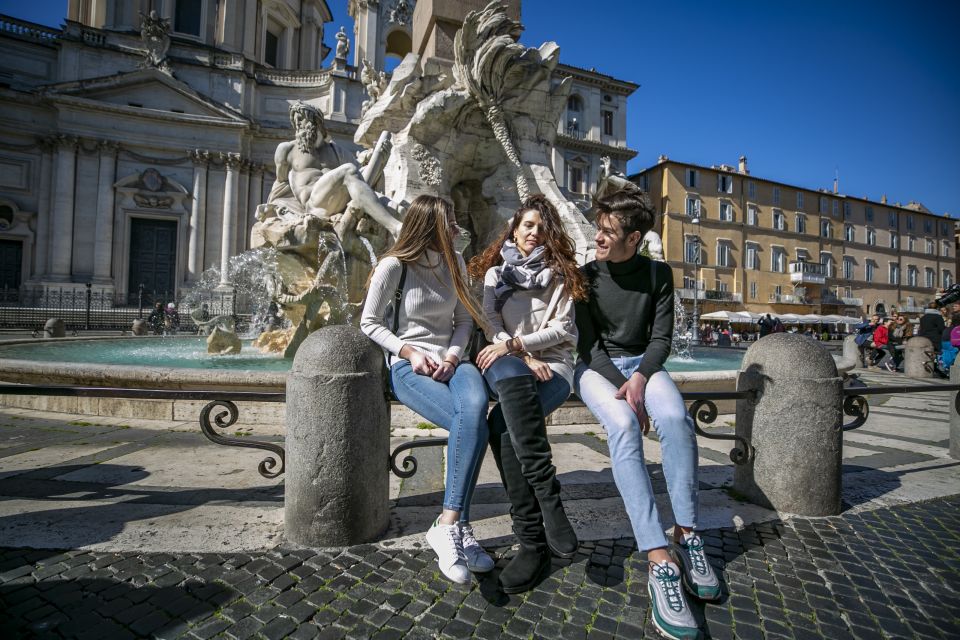
Piazza Navona is one of those squares where everything looks like it’s been staged—because in a way, it has. On this tour, you don’t just get the “pretty fountains” version. You get the layers that explain why the square looks the way it does.
You’ll learn about Rome’s first university and the Senate House on the way to Piazza Navona. You’ll also connect the Senate House to the emperor Domitian, which gives the area a strong anchor in Roman civic life.
When you reach Piazza Navona, the fountains by Bernini come into play. The key value here is how the guide ties art and architecture to place, instead of treating it like isolated decoration. You start to notice the square’s lines, perspectives, and how people naturally move through it.
It’s also a stop that helps you feel what Rome is like between landmarks. Around Piazza Navona you’ll find the kind of street-level life that makes a walking tour worth it—cafés, shops, and plenty of opportunities to grab something while you’re still in the center of it all.
You can also read our reviews of more private tours in Rome



Walking Toward the Pantheon: Hadrian’s Footprints and St. Ignatius
The approach to the Pantheon area is part of the fun. You don’t jump straight from crowd scenes into a single monument. Instead, you walk and pick up context as you go.
Along the route, you pass the remains of the Temple of Hadrian and the Church of St. Ignatius. This is the kind of contrast Rome does well: ancient fabric and later religious architecture existing next to each other in the same walking rhythm.
This is also where you start to understand why Rome’s best experiences often happen on foot. The city’s meaning isn’t confined to the single “big” building; it’s scattered through the street edges you’d otherwise speed past.
If you’re someone who worries about pacing—especially on day one—this is a good section. It gives you time to settle into the tour flow before the Pantheon payoff.
Entering the Pantheon: Why This Stop Is the Main Event
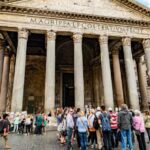
This tour’s signature moment is simple: you enter the Pantheon, the ancient Roman-era temple and one of the best-preserved temples of Ancient Rome.
Walking up to it is one thing. Going inside is a whole different feeling. The space reads as real architecture from an era that usually survives only in fragments elsewhere. It has scale, light, and structure that still works.
You’ll also see tombs inside, including Raphael, Queen Margherita, and King Victor Emmanuel II. That combination is a big deal for first-timers. You get the ancient shell and then the later history layered within it—so the Pantheon isn’t only a Roman monument. It’s also a memorial space tied to major Italian figures.
If you’re the type who wants the “what am I looking at” answered, this is where the guide matters most. The tour’s whole point is to help you connect what you see with what it meant.
And since the experience includes skip-the-ticket-line, you lose less time to delays that can chew up a short itinerary. That makes a big difference when you only have three hours.
A Private Guide Who Keeps the Pace Comfortable
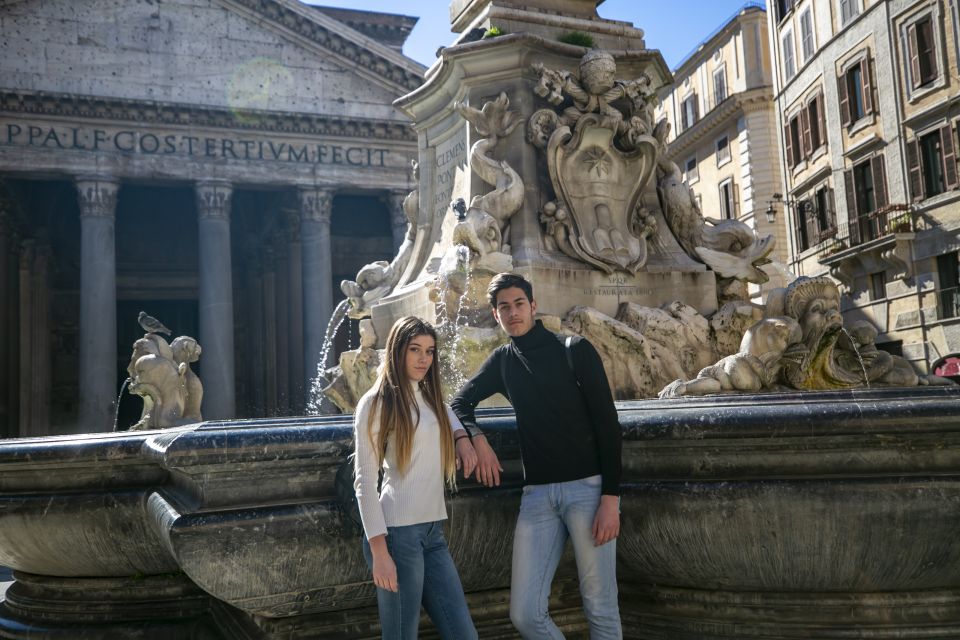
A walking tour lives or dies on pacing. With a private group, the goal isn’t to count steps—it’s to keep you comfortable and paying attention.
The experience is guided in both English and Italian, which is great if you’re split between languages or want options. And the style you should expect is interactive rather than lecture-only: you should feel free to ask questions and move at a tolerable tempo.
One practical advantage of a well-run private tour is photo timing. At big sites, you can’t control the crowds, but you can control whether you’re constantly feeling rushed. A guide who handles pacing well helps you keep the day enjoyable.
Bring your curiosity, not just your camera. The best Rome moments often come when you ask a simple question like why a building looks the way it does, or what a landmark’s position means in the city.
Price and Value: Is $214.11 Per Person Worth It?
At $214.11 per person for a 3-hour private walking tour, you’re paying for three things you can’t easily replicate on your own: a guide, time efficiency, and priority at the Pantheon.
A self-guided plan can absolutely work, but you’d likely spend part of your time figuring out what’s worth attention and part of it waiting where lines form. This tour directly addresses both. You get the major highlights—Spanish Steps, Trevi Fountain, Piazza Navona, Piazza Colonna—and you also get the Pantheon entry experience, where skip-the-line time savings are especially helpful.
The value improves if you’re traveling as a small private group and want flexibility. If you’re tired, adjusting to jet lag, or just want a calmer day, the private setup helps the tour stay usable instead of chaotic.
It’s less of a bargain if you’re a super fast walker who likes to freestyle. But if you want Rome organized for you—without turning it into a bus tour—this price can feel fair.
Who This Tour Suits Best (and Who Might Want Another Plan)
This tour is a good fit if you want a first-stay overview that still includes real interiors, not just street views.
It’s especially suitable for:
- First-timers who want core icons tied to context
- People who prefer a private pace instead of a large group flow
- Visitors who care about seeing inside the Pantheon and understanding what’s inside
It may feel less ideal if you have very limited mobility, because it involves a moderate amount of walking. The good news: the tour is wheelchair accessible, so that’s supported. Still, you should plan for time on your feet.
Also, unaccompanied minors aren’t allowed, and children must be accompanied by an adult. If you’re traveling with kids, you’ll want to keep an eye on energy levels and choose a meeting time that matches your family rhythm.
Should You Book This 3-Hour Rome Highlights Tour?
I’d book it if you want Rome’s biggest hits with a guide who helps you make sense of what you’re seeing, and you don’t want to spend your limited time wrestling with lines.
The strongest reason to choose it is the combination: Spanish Steps and Trevi for the classic Rome energy, Piazza Navona and Piazza Colonna for the city’s civic and artistic identity, and then Pantheon entry for the moment that usually steals the show.
If you already know you love slow roaming and you don’t care about guided context, you could save money and explore on your own. But if you want a short, structured day that still feels authentic, this private walk is a solid plan.
FAQ
FAQ
How long is the Rome 3-hour private walking tour?
The tour lasts 3 hours.
Where does the tour start?
It starts at Caffè Greco, Via dei Condotti 86, 00187 Roma RM, Italy.
Does the tour end back at the same meeting point?
Yes, the tour ends back at the meeting point.
What language is the tour guide?
The guide speaks English and Italian.
Is this a private tour?
Yes, it’s a private group.
Does the tour include Pantheon entry?
Yes, the tour includes entering the Pantheon.
Does the tour skip the ticket line?
Yes, it includes skip-the-ticket-line access.
Is pickup or drop-off included?
No, pickup or drop-off at your accommodation is not included.
What should I bring?
Bring comfortable shoes, since there is a moderate amount of walking.
Is the tour wheelchair accessible and can children join?
The tour is wheelchair accessible. Children must be accompanied by an adult, and unaccompanied minors are not allowed.