REVIEW · ROME
Art Nouveau Rome: Villa Torlonia & Coppedé Private Tour
Book on GetYourGuide →Operated by Eyes of Rome Private Tours · Bookable on GetYourGuide
Art Nouveau Rome can feel like a treasure hunt. This private 3-hour tour pairs Villa Torlonia with its storybook details and political secrets, then sends you into the Coppedè Quarter, a pocket of Gino Coppedè-style fantasy that’s far from the usual crowd lanes. What I like most is how you get both architecture and meaning, from banking-family ennoblement to Mussolini’s 1930s living spaces. I also love the stop that most people miss on their own: the stained-glass Casina delle Civette and its House of the Owls. One possible drawback: you’ll do a fair amount of walking, so it’s not the best pick if you want to minimize steps.
The value here is in the format. You’re not just looking at pretty facades. You’re guided by a specialist who can connect materials, design choices, and Roman history in a way that makes the buildings start talking. In the reviews, guests highlighted how Marco (a history and archeology professor at Sapienza) kept things punctual, clear, and wide-ranging, moving from art to literature as you went.
In This Review
- Quick reasons this tour works
- Getting Oriented at Via Nomentana 70
- Villa Torlonia: Casino Nobile, a banking family, and Mussolini in the 1930s
- Casina delle Civette: the House of the Owls and stained-glass Rome
- Quartiere Coppedè: Piazza Mincio and a residential Art Nouveau fantasy
- How the specialist guide makes these buildings click
- Price and value: what you’re really paying for
- Walking time, pacing, and who this tour suits best
- Should you book this Art Nouveau Rome tour?
- FAQ
- Where does the tour meet, and where does it end?
- How long is the tour?
- What are the main stops on the tour?
- What does the tour cover at Villa Torlonia?
- What is the House of the Owls you’ll see?
- What will I see in the Coppedè Quarter?
- Is this a private tour?
- Do I need to expect a lot of walking?
- Is the tour wheelchair accessible?
- Can I cancel, and is pay later available?
Quick reasons this tour works
- Skip-the-line entry plus museum fees handled, so you lose less time waiting outside.
- Villa Torlonia’s full arc, including how the property shifted from elite banking roots to Mussolini’s residence.
- The House of the Owls shows off stained glass and craft details you can’t really appreciate from a quick look at the outside.
- Coppedè’s Art Nouveau streets, guided on foot through a residential area that feels like a hidden set.
- Private pacing for your group, with fewer stops if you want to slow down.
Getting Oriented at Via Nomentana 70
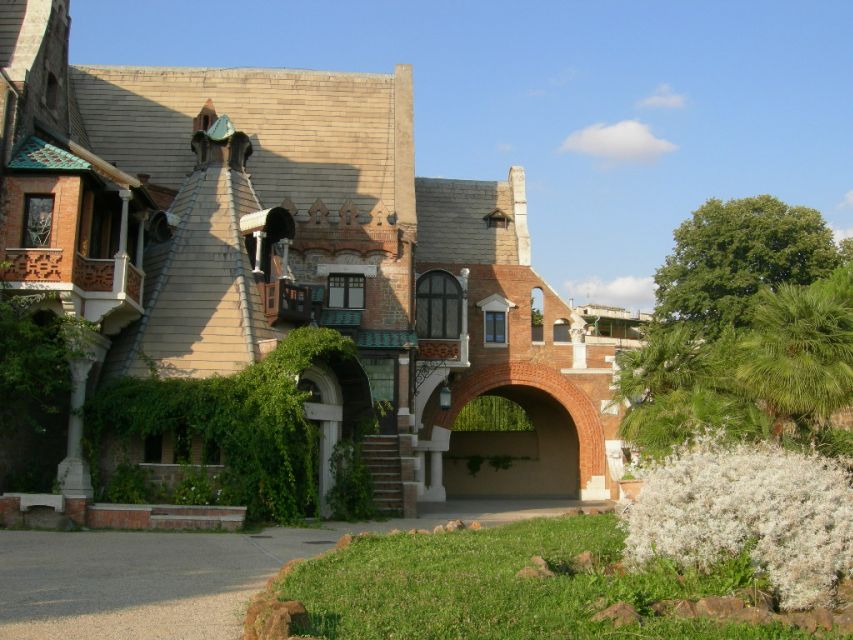
You start at Villa Torlonia, Via Nomentana 70, near the ticket office entrance. The nice thing about this location is how manageable it feels from central Rome: it’s about 10 minutes by taxi from the city center. That matters, because with only 3 hours total, you want your time spent inside and walking—not stuck in transit.
The tour format is a private group with a live guide. That gives you a couple advantages right away. First, you can ask questions as you’re looking at a room or a facade, not after you’ve moved on. Second, your guide can adjust pace because the sites are visited based on the rhythm of the average client.
You can also read our reviews of more private tours in Rome

Villa Torlonia: Casino Nobile, a banking family, and Mussolini in the 1930s
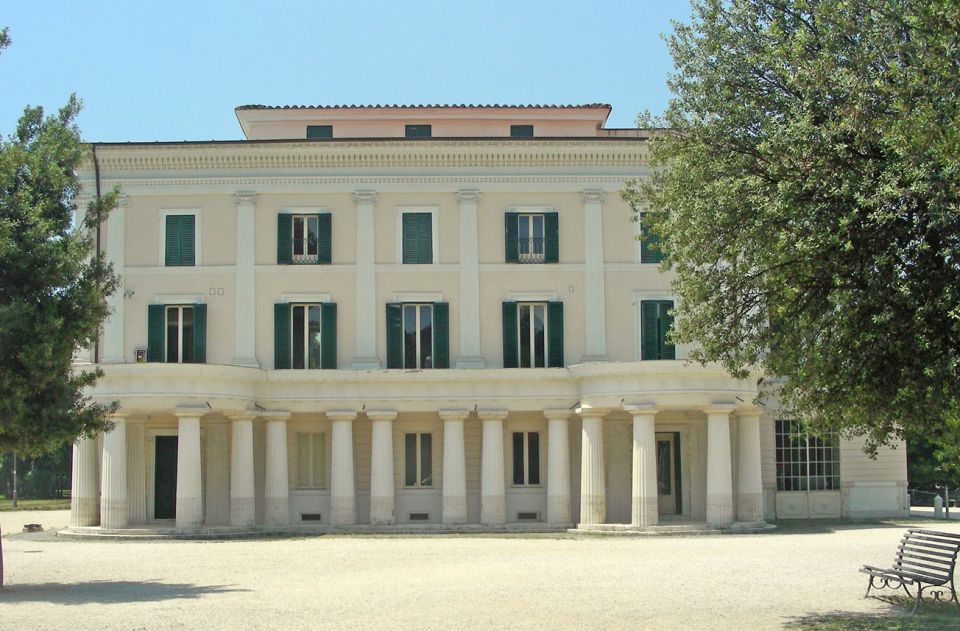
Villa Torlonia is one of those Rome stops where you feel the layers stacking up. You begin with the story of a house built for an early-19th-century banking family that was later ennobled by the pope about a century earlier. That sets the tone: this isn’t just a wealthy residence, it’s a statement piece—one designed to show status and taste.
Inside, you’ll spend time at the Casino Nobile, a building created for a prince in the Torlonia family. The guide explains how the villa evolved over time and why certain choices were made. This is where I like having a specialist: you’re not just learning dates. You’re learning what those choices meant socially, and how architecture communicated power.
Then comes the part that turns the tour from elegant to urgent: Mussolini’s connection. In the 1930s, the villa became his home. The separate bedrooms he and his wife Rachele used were on the upper floor of the Villino Nobile—though the original furniture is no longer there. Even without the furniture, the spaces still help you picture daily life: it’s one thing to read about the era, and another to stand where someone lived.
The basement is also a major moment. You’ll hear about two Mussolini-built bunkers: one intended as a bomb shelter and the other designed as a gas shelter. That detail changes the mood of the building fast. The villa stops being only “pretty Rome” and becomes a snapshot of fear and politics built into domestic space.
What to watch for: ask your guide to point out contrasts between the more decorative areas and the functional ones, like basement access. Those shifts are where the story gets real.
Casina delle Civette: the House of the Owls and stained-glass Rome
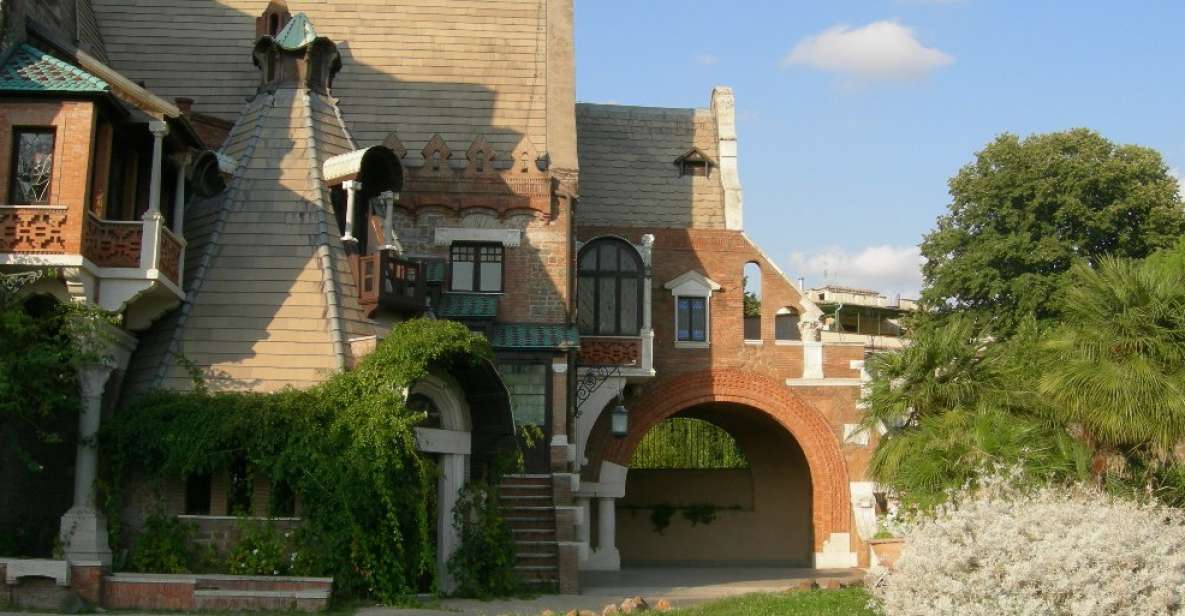
After Villa Torlonia’s formal and historical weight, you move to one of the most theatrical interiors in the area: Casina delle Civette, commonly known as the House of the Owls. This is the Torlonia prince’s refuge-at-the-edge-of-the-park idea: it sat in a discrete spot at the boundary of the grounds, separate from the main residence, and designed as a place to step away from formality.
The House of the Owls belonged to Prince Giovanni Torlonia the Younger until his death in 1938. That date matters, because it helps frame the villa’s later story—especially once you compare how different eras used the same family property.
Architecturally, Casina delle Civette is not a one-time design. It was shaped through a series of transformations and additions planned by different architects. Some elements used artisanal materials; others came from industrial production. That mix is exactly why the building feels slightly off-kilter in the best way. It reads like a work that kept evolving with time and taste, rather than freezing into one static moment.
Then there’s the signature feature: stained glass windows with owl imagery, including the famous “House of the Owls” concept you’ll see up close. It’s one of those designs where you notice craft more than scale. In rooms like this, light becomes part of the architecture—so take a beat when your guide points out the stained glass, because your eyes will catch details faster if you let the windows do their thing.
Inside, you’ll also hear about the rich decorations spread across two internal levels, finished with artistic sculptures and furniture featuring pictorial effects. On top of that, the tour highlights examples of local stained glass and inlaid wood sourced from Rome workshops. That “local workshop” detail is important. It helps you understand Coppedè and Art Nouveau Rome aren’t just about bold facades—they’re also about craft networks and specialized materials.
One practical note: this part of the tour can feel visually intense. If you prefer slower looking, tell your guide. Private tours are designed for that.
Quartiere Coppedè: Piazza Mincio and a residential Art Nouveau fantasy
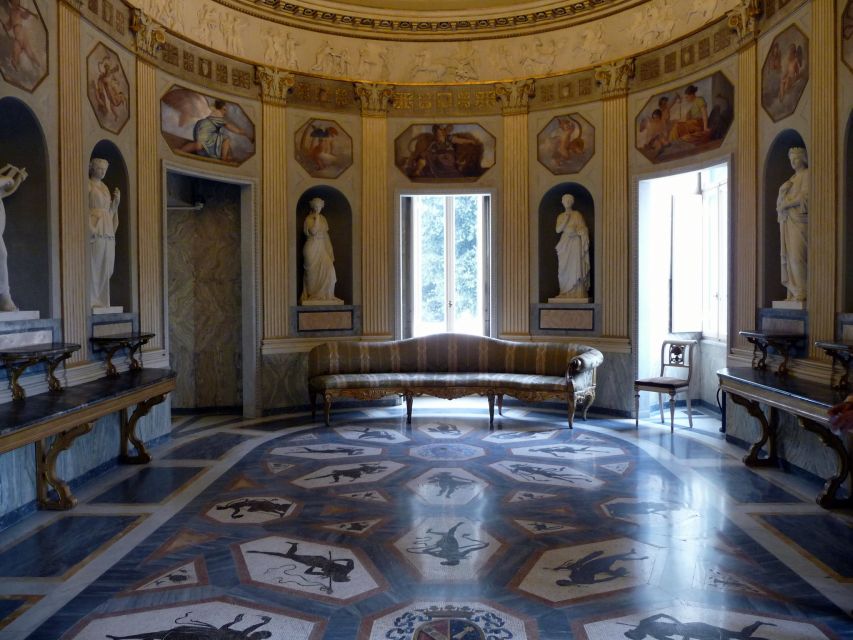
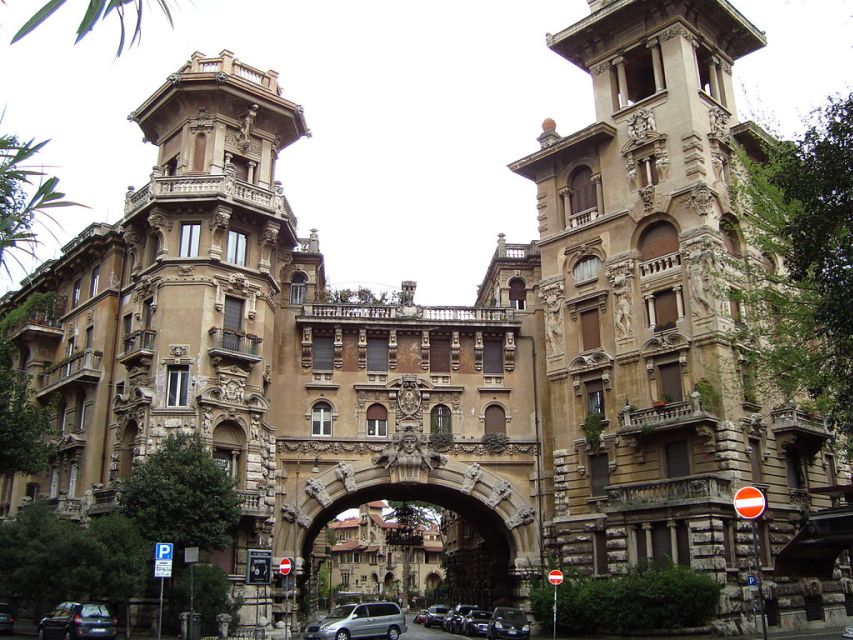
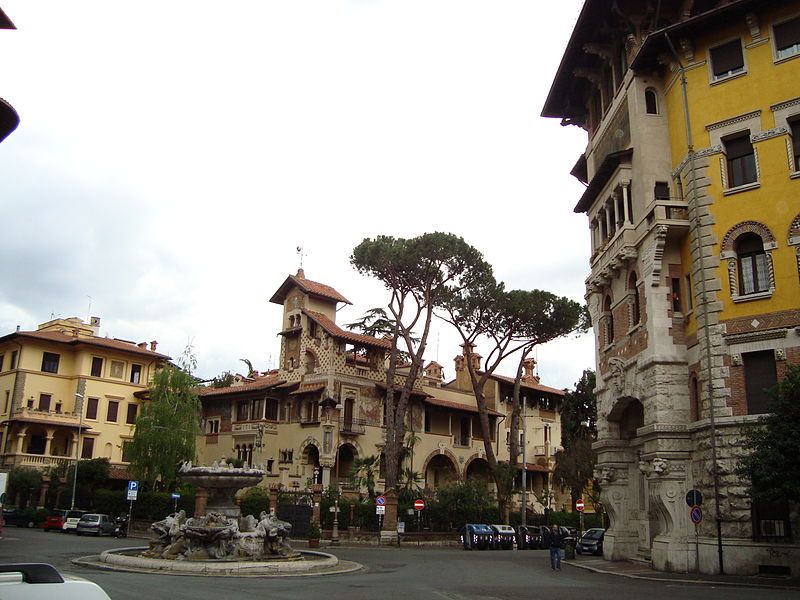
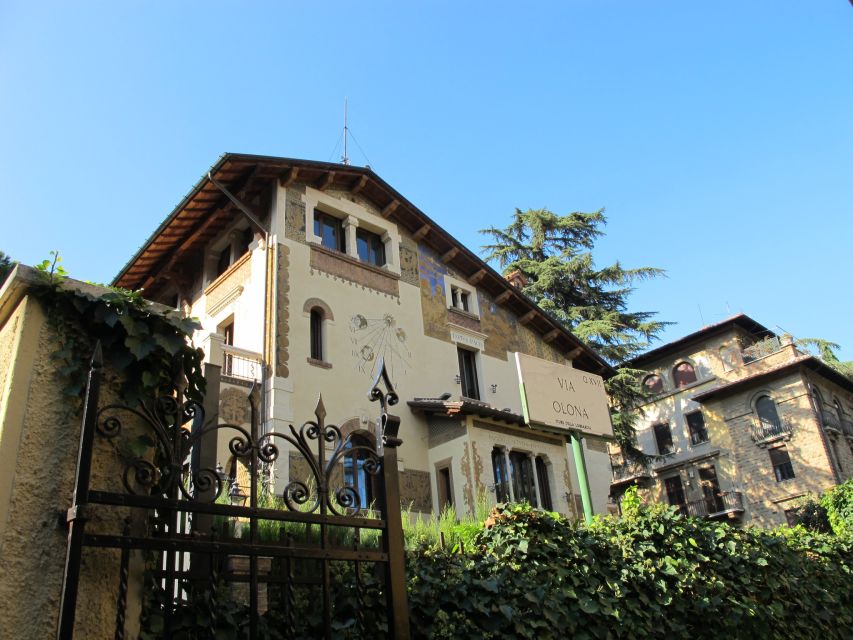
Now you step into a different kind of Rome. The Quartiere Coppedè is an Art Nouveau district created under the vision of Gino Coppedè. The neighborhood is often described as magical, but on foot it’s more specific than that: it’s a mix of playful shapes, theatrical detailing, and an overall sense that the city decided to wear a costume.
Your walk focuses on the atmosphere, and your guide points out the architecture as you go. This is where you’ll likely feel the biggest shift from the formal setting of Villa Torlonia. Instead of grand historical rooms, you get street-level design: windows, entrances, decorative stonework, and the way buildings relate to each other along the block.
A key moment is Piazza Mincio, framed as a sort of kingdom scene inside the neighborhood. It’s the kind of place where you understand why people get curious about the district in photos—but also why photos can miss the scale of detail. From a sidewalk, the façades read differently. You notice how elements stack and how the design guides your eye across space.
The tour also frames Coppedè as more than a visual curiosity. You’ll hear it described as one of the finest residential neighborhoods of Rome, and that’s a real perspective shift. This isn’t only a sightseeing set; people live there. So you’ll experience it with that everyday rhythm in the background.
Tip: when you arrive at Piazza Mincio, pause longer than you think you need. Art Nouveau details reward time. If you rush, you’ll mostly remember the overall look, not the craft.
How the specialist guide makes these buildings click
The most consistent theme in the reviews is the guide quality, and you can see why. Marco is described as a history and archaeology professor at Sapienza, and guests noted he was punctual, kind, and unusually well prepared. That matters in a tour like this because Villa Torlonia and Coppedè can otherwise feel like two different sightseeing products.
With the right guide, you get connecting threads. You hear why certain design features exist, why the villa changed hands, and why certain Art Nouveau choices show up in street-level spaces. The reviews also point out that the explanations ranged from art to literature. That might sound broad, but it changes how you process what you’re seeing. You’re not only collecting facts; you’re learning how to read the buildings.
Also, the tour includes a Blue Badge Guide plus museum entrance fees. Add in the skip-the-line advantage via a separate entrance, and you’re paying for time back as well as expertise. In Rome, that’s not a small thing. A private tour is often worth it when it protects your schedule and your attention span.



Price and value: what you’re really paying for
At $362.51 per person, this isn’t a budget activity. But it also isn’t just “someone shows you around.” You’re paying for a private format that includes:
- entry fees for the sites you visit
- a specialist guide during all key stops
- skip-the-line access
- a guided walk through two architecture-heavy areas in one half-day block
For me, the best value check is this: do you want to spend your morning figuring out what to look at? If you’re willing to walk and read on your own, you can cover some ground. But Villa Torlonia’s Mussolini stories, the House of the Owls’ stained glass craft, and Coppedè’s built symbolism are much easier when a guide frames them.
And because the tour is private, your group isn’t competing with other languages, random pacing, or the need to keep moving on schedule no matter what you’re curious about. If your group includes people who love architecture, history, or both, this price can feel like an upgrade rather than a splurge.
Walking time, pacing, and who this tour suits best
The itinerary covers multiple stops and involves a fair amount of walking. The good part is that private guiding means you can slow down or adjust. The tour notes that sites are selected based on the pace of the average client, and with a private guide you can opt to see fewer sites if you want something more leisurely.
If you’re mobility-limited, you should plan carefully. The tour is listed as wheelchair accessible, but it also says the itinerary may be modified for mobility issues. That’s a fair heads-up because different historic spaces and walking routes can require adjustments. If anyone in your group has mobility challenges, mention it ahead of time so your guide can tailor the day.
This tour is a strong match for:
- architecture lovers who want more than exterior photo stops
- history buffs who like stories tied to specific rooms and design features
- people who want a calmer Art Nouveau experience away from the heaviest tourist gridlines
It may be less ideal if you want minimal walking or if you prefer to only visit one major site rather than pairing Villa Torlonia with Coppedè in the same 3-hour window.
Should you book this Art Nouveau Rome tour?
If you’re the type who notices details and likes to understand what buildings were built for, I’d say yes. This is one of the cleaner ways to connect Villa Torlonia, the Casina delle Civette House of the Owls, and the Quartiere Coppedè neighborhood without wasting time guessing where to focus.
Book it especially if:
- you want a private guide who can explain both art and context (and you’ve seen praise for Marco’s style)
- you care about stained glass and craft materials, not just postcard views
- you want Art Nouveau that feels designed for real life, not only for tourist photos
Hold off if:
- you have very limited mobility and want a mostly indoor, low-walking plan
- you’re trying to squeeze in an ultra-fast Rome day and can’t spare the full half-hour blocks for walking and room time
FAQ
Where does the tour meet, and where does it end?
You meet your guide at the entrance of Villa Torlonia, Via Nomentana 70, near the ticket office, and the tour ends back at the same meeting point.
How long is the tour?
The total duration is 3 hours, with guided time at each stop.
What are the main stops on the tour?
You’ll visit Villa Torlonia, Casina delle Civette, and the Quartiere Coppedè.
What does the tour cover at Villa Torlonia?
You’ll explore the villa with guidance, including the Casino Nobile and the villa’s history, including how it became Mussolini’s home in the 1930s, plus details about bedrooms used by Mussolini and Rachele and the bunkers in the basement.
What is the House of the Owls you’ll see?
You’ll visit Casina delle Civette, known for its stained glass and the “House of the Owls” theme. The tour also covers its decoration, its two internal levels, and the fact it was used by Prince Giovanni Torlonia the Younger until 1938.
What will I see in the Coppedè Quarter?
You’ll walk through the Art Nouveau Coppedè neighborhood, with your guide pointing out architecture by Gino Coppedè, and you’ll spend time around Piazza Mincio.
Is this a private tour?
Yes. It’s listed as a private group tour with a live guide.
Do I need to expect a lot of walking?
Yes. The tour notes that it involves a fair amount of walking. With a private guide, you can often adjust the pace and see fewer sites if you want.
Is the tour wheelchair accessible?
The activity is listed as wheelchair accessible, and the itinerary may be modified if needed due to mobility issues.
Can I cancel, and is pay later available?
The tour offers free cancellation up to 24 hours in advance for a full refund, and it also offers a reserve now & pay later option.