REVIEW · ROME
Baths of Caracalla Exclusive Private Guided Tour and Tickets
Book on GetYourGuide →Operated by Tour in the City - Travel Agency Rome - · Bookable on GetYourGuide
Quiet ruins, big stories. This private visit to the Baths of Caracalla is a smart way to see Rome’s second-largest public bath complex without getting lost in the rubble. I especially love how the guide turns the art-history details into clear stories, and how you can still make out mosaic fragments and monumental vaulted spaces that were built to impress.
You should plan for a short but real walk across uneven ancient surfaces. One practical drawback: there’s a moderate amount of walking, so comfortable shoes matter more than usual.
In This Review
- Key things that make this tour worth your time
- Baths of Caracalla: the Roman mega-spa most people miss
- Starting at Viale delle Terme di Caracalla: getting oriented fast
- How a Roman bath complex worked: heating, movement, and purpose
- Mosaic fragments and the art of everyday luxury
- Your guide matters: Emilio, Evy, and Justine-style storytelling
- What the 1.5-hour experience feels like on the ground
- Price and value: what you’re actually paying for at $191.45 per person
- Who this Baths of Caracalla tour is best for
- Final call: should you book this private tour?
- FAQ
- Where is the meeting point?
- How long is the tour?
- Is this a private tour?
- What language is the guide?
- Does the tour include tickets?
- What should I bring and wear?
- Is food included?
Key things that make this tour worth your time
- Art historian perspective on a real working spa: You see how Roman bathing tied into daily life, not just architecture.
- Visible heating-system remnants: Parts of the bath’s warming system are on display so you can picture how it worked.
- Mosaic floor fragments and colossal ruins: Small bits of decoration help you understand what the whole complex once looked like.
- Private, English-led experience: Guides like Emilio, Evy, and Justine are praised for connecting details to everyday Roman life.
- Skip-the-line entry plus tickets included: You lose less time and spend more time on the site.
Baths of Caracalla: the Roman mega-spa most people miss
The Baths of Caracalla are a serious Roman building. Built between 212 and 217 AD during the reigns of Septimius Severus and Caracalla, this complex was designed for crowds, with capacity for up to 1,500 people at a time. It was more than a place to get clean: the site also included a library, a gym, and public gardens, so the baths worked like a social and cultural hub.
What I like about visiting here on a private guided tour is the focus. Even though the site is large in concept, the experience stays tight and readable. You get to look at the best-preserved parts and interpret what you’re seeing, instead of just staring at walls and hoping everything clicks.
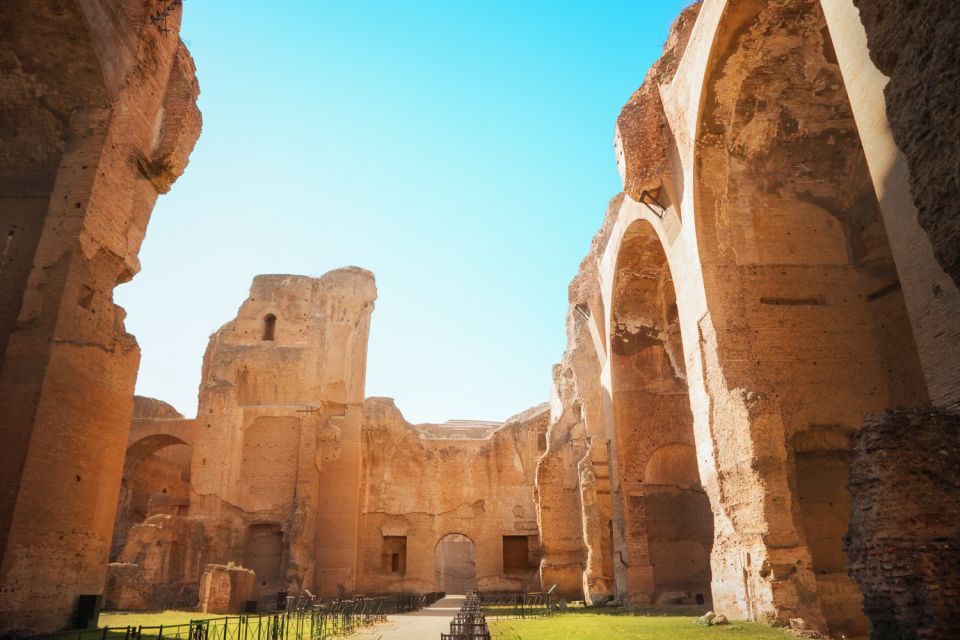
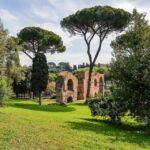
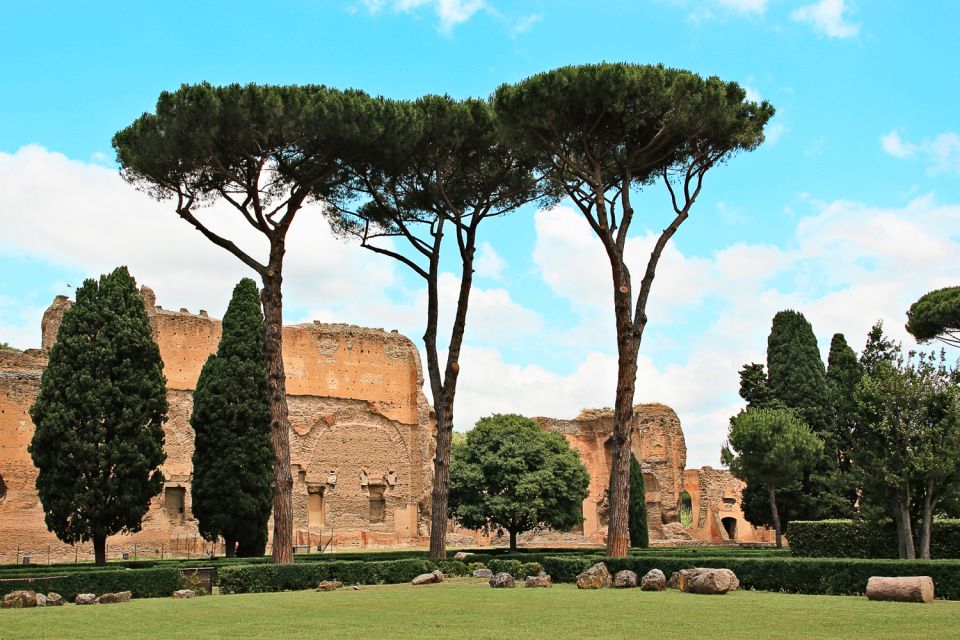
And yes, these are ruins, but the bones are still impressive. You’ll spend your time in areas with imposing vaulted rooms and porticoes, plus fragments that hint at the original decorative scheme—especially mosaic floors and other remnants that show Roman taste for comfort and spectacle.
You can also read our reviews of more tours and experiences in Rome


Starting at Viale delle Terme di Caracalla: getting oriented fast
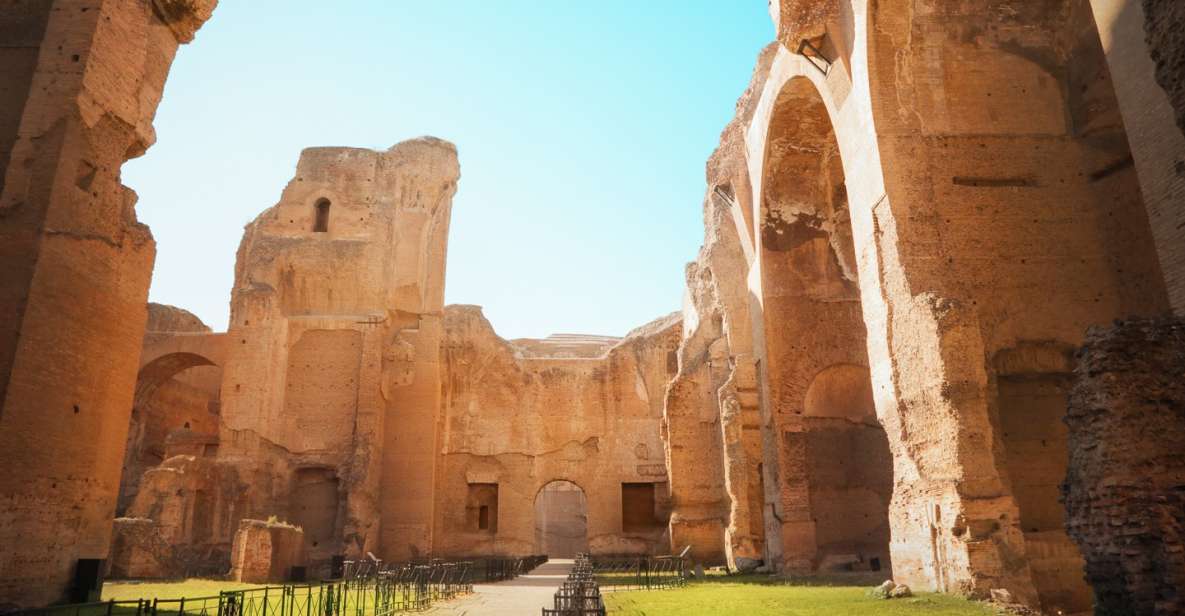
The tour meets at the entrance to the Baths of Caracalla on Viale delle Terme di Caracalla. This matters more than it sounds. When you start on-site with the right context, the ruins stop being random and start being a layout you can understand.
Because it’s a private group with an English live guide, you don’t just follow a script. You can ask questions, move at a good pace, and let the guide point out the features that are worth your attention. Another practical bonus: tickets and entrance fees are included, and you can skip the ticket line, so your time on the ground starts sooner.
If you’ve already planned other Roman stops like the Forum, this kind of targeted introduction is useful. The guide approach is designed to help you connect the Baths of Caracalla to the wider Roman world—how people lived, what they did, and why buildings like this were such a big deal.
How a Roman bath complex worked: heating, movement, and purpose
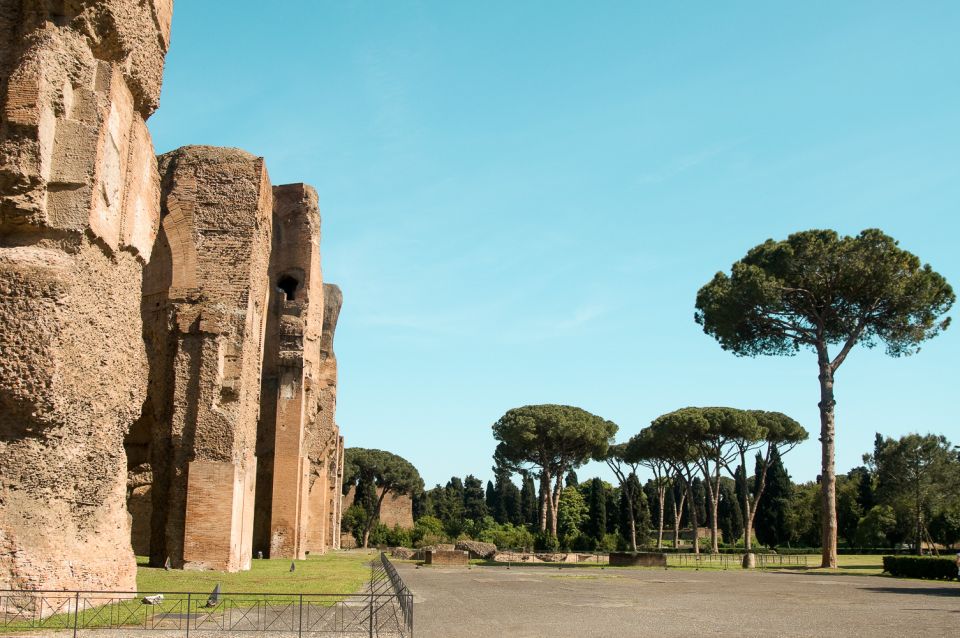
A good Roman bath visit isn’t about one room. It’s about the whole system: how people moved through spaces and how the site controlled temperature and routine. On this tour, you spend time on parts that make the function feel real.
You’ll be shown sections of the heating system—the kind of infrastructure that usually disappears into the background on a self-guided visit. Seeing remnants of the heating approach helps you understand how Roman engineering created warm and comfortable spaces. Even without a museum-style reconstruction, the physical traces make the idea believable: this wasn’t casual. It was planned, technical, and built to scale.
Then there’s the rhythm of the complex. As you walk, you’re guided through the logic of vaulted interiors and colonnaded or portico-like areas. These aren’t just architectural leftovers; they’re cues to how people experienced the baths day-to-day. The guide’s goal is to connect the layout to behavior: where you might gather, where the environment feels dramatic, and why these spaces were built to impress as much as to serve.
Mosaic fragments and the art of everyday luxury
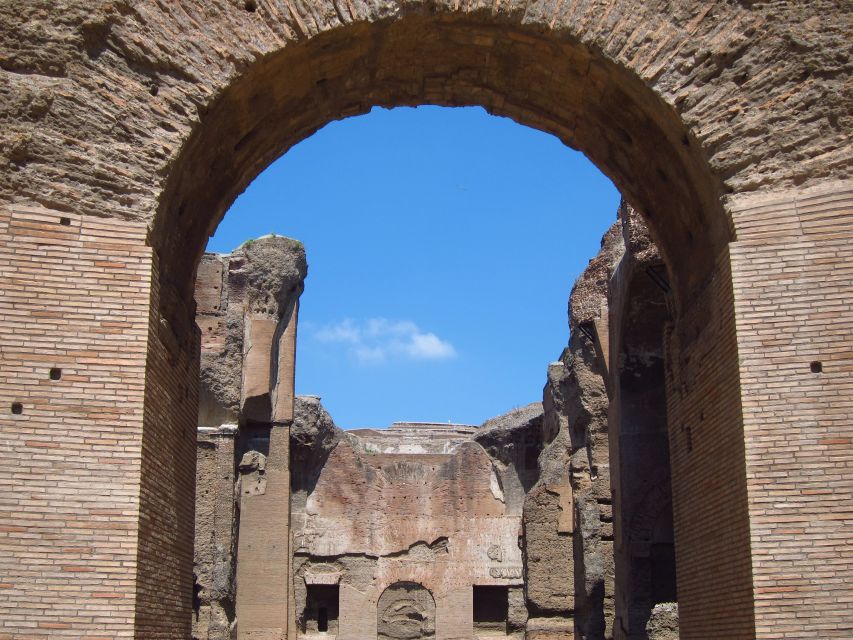
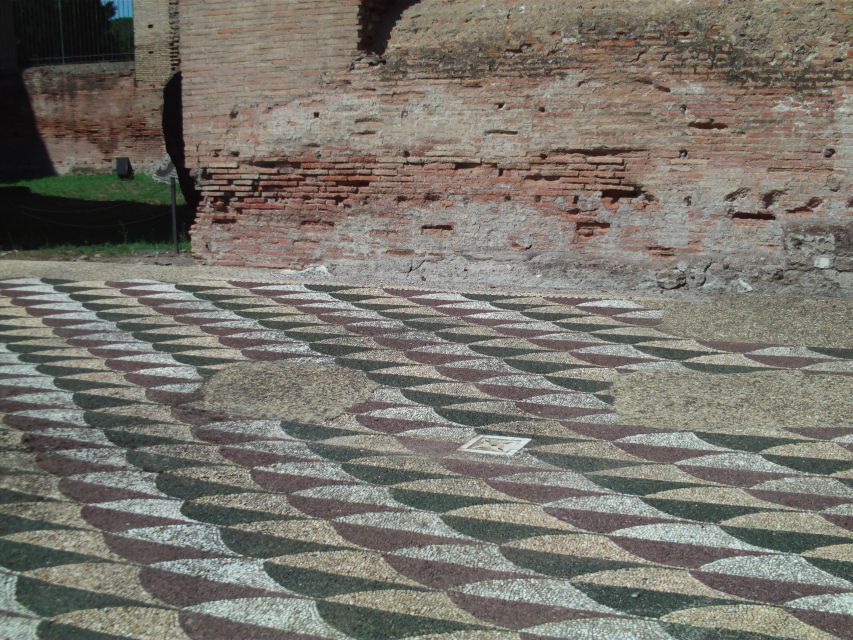
Rome’s baths were also about aesthetics. That’s where the mosaic fragments come in. You’re not seeing the full floor as it once existed, but you are seeing evidence: pieces that survive and remind you that the bathing experience was designed to look and feel special.
Watching a guide interpret these fragments changes your perspective. Instead of asking What is this? you start asking What does this tell me about the original place? The mosaics act like a clue—Roman design wasn’t only about big statements like statues or columns. It also lived in floors, surfaces, and the small details you’d notice while moving through public spaces.
You’ll also spend time with the colossal ruins and monumental scale. It’s easy to underestimate how large these spaces were until you’re standing inside an exterior wall line and looking at how the vaulted rooms hold space. The guide helps you translate scale into meaning: why this complex could handle so many people and still feel like a destination.
Your guide matters: Emilio, Evy, and Justine-style storytelling
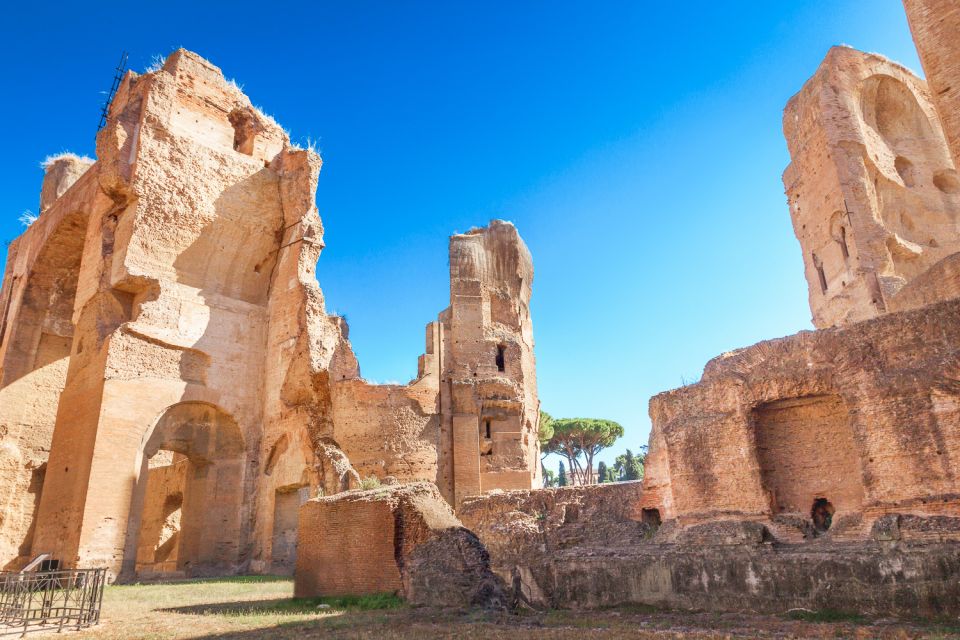
This is where the tour’s praise really concentrates. The guides are described as friendly, responsive, and strong at linking what you see to bigger ideas. Names that came up include Emilio, Evy, and Justine, and the consistent theme is style: the storytelling includes historical and architectural references, plus quotes and context that make the site feel lived-in.
A particularly useful aspect of this kind of art-historian-led guiding is that you don’t just get facts. You get explanation that connects design choices to human routine. The baths had a library, a gym, and gardens, so the complex wasn’t only about washing. With the right guide, you start thinking like a Roman for a moment: public space, leisure, conversation, and routine all mixed together.
This is also why the tour can work well for families. One shared experience highlighted a smooth visit with an 8-year-old, which tells you something important: the guide approach can be flexible, not just lecture-style.
You can also read our reviews of more guided tours in Rome

What the 1.5-hour experience feels like on the ground
The booking duration is listed as 1.5 hours (with starting times depending on availability). The walking tour portion is listed as a guided visit lasting about two hours, so the exact timing can vary by schedule—double-check the selected slot before you go.
Either way, the format is built for focus rather than marathon sightseeing. This is a good choice if you want a memorable Roman stop without spending half a day. You’ll get enough time to walk through key areas, learn the site’s big story, and pick up the small details like mosaic fragments and heating-related remnants.
Because walking is involved, plan to stay comfortable. Bring comfortable shoes and expect to move across uneven ground typical of ancient sites. If you’re traveling with extra gear, note that large bags aren’t allowed, and walking frames aren’t allowed, so travel light.
Price and value: what you’re actually paying for at $191.45 per person
At $191.45 per person, a private tour isn’t bargain-basement. But it can still be good value, depending on how you travel.
Here’s what’s included that affects the math:
- A private art historian guide
- A private walking tour
- Tickets and entrance fees included
- Skip-the-line entry
So you’re not paying extra just to get past the entrance. You’re paying for interpretation, pacing, and the ability to ask questions in real time. With a site like Caracalla—where the ruins need context to land—the guide component is what upgrades the visit from casual viewing to understanding.
The other value factor is group size. This is a private group experience with a requirement of a minimum of 2 people per booking, so if you’re traveling as a couple or small group, the cost per person can feel more reasonable than it first appears.
Who this Baths of Caracalla tour is best for
I’d look at this tour if you want:
- A guided, English-language visit with art-historian storytelling
- A focused stop at one of Rome’s major bath complexes
- A better sense of Roman daily life beyond the big postcard monuments
- A good option before or alongside other central Roman sites (especially if you like learning connections between places)
It may not be ideal if you need very minimal walking or if you rely on equipment like walking frames, since those aren’t allowed. Also, there’s a conflict in the provided info about wheelchair suitability: the tour is listed as wheelchair accessible, but the activity is also marked as not suitable for wheelchair users. If accessibility is a deciding factor for you, I’d confirm directly before booking.
Final call: should you book this private tour?
If you like your Rome with context, not chaos, I think this is a solid book. The best part is how the guide helps you read the Baths of Caracalla: the engineering traces, the mosaic remnants, the vaulted spaces, and the larger idea that these baths were a whole social-world complex. At $191.45 per person, it’s priced like a premium private experience, but the included tickets and the specialized storytelling make it feel less like sightseeing and more like understanding.
If you’re the type who enjoys architecture, daily-life history, and a guided pace over random wandering, book it. If you’re hunting for the absolute cheapest option, this won’t be that.
FAQ
Where is the meeting point?
You meet at the entrance to the Baths of Caracalla on Viale delle Terme di Caracalla, Rome.
How long is the tour?
The duration is listed as 1.5 hours, but it’s best to check the available starting time you choose because the schedule can vary.
Is this a private tour?
Yes. It’s a private group experience, and there is a minimum of 2 people per booking.
What language is the guide?
The live tour guide is listed as English.
Does the tour include tickets?
Yes. Tickets and entrance fees are included, and you can skip the ticket line.
What should I bring and wear?
Bring your passport or ID card and wear comfortable shoes. The dress code is smart casual.
Is food included?
No. Food and drinks aren’t included.